
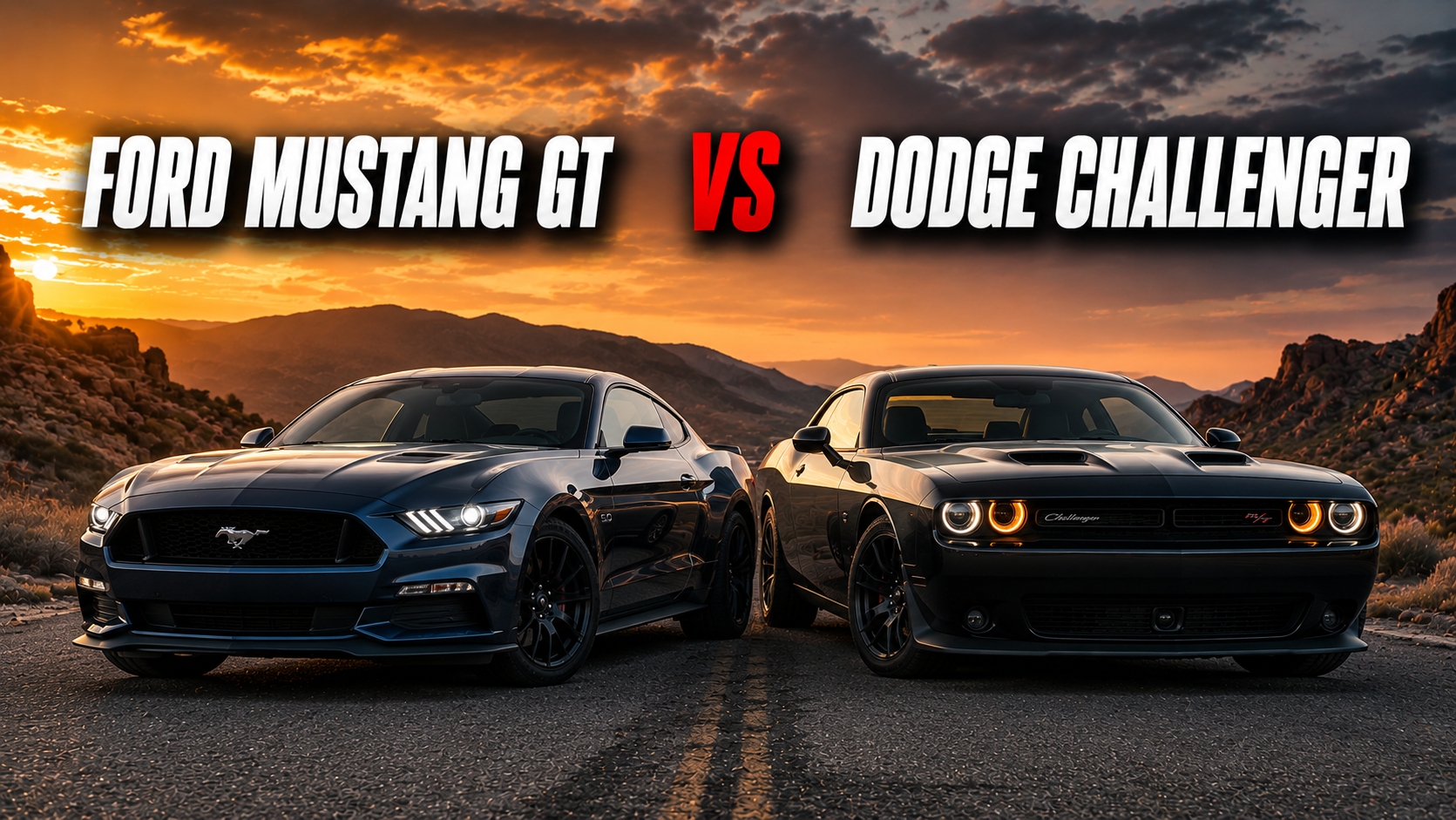
The Ford Mustang GT and Dodge Challenger are two of the most iconic American muscle cars ever produced, representing decades of automotive rivalry, performance engineering, and cultural influence.
Both vehicles have earned loyal fan bases across the world, not just in the United States, because they symbolize raw power, straight-line speed, aggressive styling, and an emotional driving experience that modern turbocharged compact performance cars often struggle to replicate.
The Mustang GT is known for its sharp handling, modern platform, and balanced performance, while the Challenger is celebrated for its brute force, straight-line acceleration, and retro-inspired muscle car presence that feels like a tribute to the golden era of American performance cars.
When buyers compare the Mustang GT and Challenger, they are not just choosing between two cars, but between two philosophies of performance. The Mustang GT, especially in its recent generations, focuses on agility, track capability, and a more refined daily driving experience.
It is built on a lighter platform compared to its rival and benefits from Ford’s continuous evolution of chassis dynamics, steering precision, and suspension tuning. On the other hand, the Dodge Challenger prioritizes power and comfort. It is heavier, more spacious, and designed to deliver a relaxed cruising experience while still offering extremely powerful engine options, including V8 variants that produce massive horsepower figures capable of dominating straight-line acceleration.
Another major factor in this comparison is engine variety and performance tuning. The Mustang GT typically comes with a 5.0-liter V8 engine that delivers a strong balance of horsepower and responsiveness, making it suitable for both daily driving and spirited performance.
The Challenger, however, offers a broader range of engines, including V6 and multiple V8 configurations, culminating in high-performance variants that push performance boundaries in a way few muscle cars can match. This makes the Challenger appealing to those who want raw power at different price points, while the Mustang GT focuses more on consistency and driving dynamics.
Design and personality also play a huge role in buyer preference. The Mustang GT carries a more modern and aerodynamic design language, blending aggression with sleekness. It feels contemporary and performance-oriented.
The Challenger, in contrast, leans heavily into retro styling, with a wide stance, long body, and nostalgic cues that remind drivers of 1970s muscle cars. This design difference often becomes a deciding factor for enthusiasts who value either modern refinement or classic American muscle identity.
In this detailed comparison, we will break down both cars across performance, engine capability, design, interior comfort, technology, driving experience, pricing, and long-term value. By the end, you will have a clear understanding of which muscle car better suits your driving style, lifestyle needs, and performance expectations.
Also Read: 10 Vintage Cars With More Features Than Modern Cars

Performance and Acceleration Comparison
The performance characteristics of the Ford Mustang GT and Dodge Challenger highlight their fundamentally different engineering philosophies.
The Mustang GT is engineered to feel responsive and balanced, with a strong focus on cornering ability and controlled acceleration. Its lighter body structure allows it to change direction quickly, which makes it more suitable for track driving and technical roads where handling matters as much as raw speed.
The Challenger, on the other hand, is designed primarily for straight-line dominance. Its heavier chassis reduces agility, but it helps provide stability during high-speed acceleration. When equipped with powerful V8 engines, the Challenger delivers explosive launch capability that makes it extremely competitive in drag racing scenarios. This makes it appealing to drivers who prioritize quarter-mile performance over corner-carving ability.
Another important aspect is traction and weight distribution. The Mustang GT benefits from a more balanced chassis setup, which improves grip during aggressive driving. It feels more controlled when pushed through corners and maintains composure during quick directional changes.
The Challenger relies more on brute force and stability rather than agility, which means it feels more planted at high speeds but less nimble in tight sections.
Braking performance also plays a role in driving dynamics. The Mustang GT typically offers more precise braking feedback, allowing drivers to confidently push the car on winding roads. The Challenger has strong braking systems, especially in higher trims, but its heavier weight can make repeated hard braking more demanding on the system compared to the Mustang.
Acceleration experience differs as well. The Mustang GT provides a linear and engaging acceleration curve that feels sporty and controlled. The Challenger delivers a more dramatic and forceful acceleration sensation, especially in high-horsepower variants, making it feel more like a traditional muscle car built for raw power delivery.
Also Read: 10 Hidden Features in the Mercedes GLE
Engine Options and Power Delivery
The Ford Mustang GT is powered primarily by a 5.0-liter naturally aspirated V8 engine, which is widely regarded for its responsiveness and high-revving nature.
This engine produces strong horsepower and torque while maintaining smooth power delivery across the rev range. It is designed to offer a balance between performance and everyday usability, making it suitable for enthusiasts who want excitement without sacrificing refinement.
The Dodge Challenger offers a much broader engine lineup. It starts with a V6 engine for entry-level buyers and expands into multiple V8 configurations that deliver significantly higher horsepower.
In its performance-focused variants, the Challenger can produce extreme power outputs that position it among the most powerful muscle cars available in its category. This wide range of engines allows buyers to choose based on budget and performance expectations.
One key difference is how power is delivered. The Mustang GT focuses on linear throttle response and high rev performance, making it feel more predictable and controllable during spirited driving. The Challenger delivers a more aggressive low-end torque experience, especially in V8 models, where acceleration feels immediate and heavy.
Fuel efficiency is another area of distinction. While neither car is designed for economy, the Mustang GT generally offers slightly better efficiency due to its lighter weight and optimized engine tuning. The Challenger, being heavier and often equipped with larger displacement engines, consumes more fuel, especially in high-performance trims.
Reliability and tuning potential also matter for enthusiasts. Both engines have strong aftermarket support, but the Mustang GT’s 5.0-liter engine is particularly popular for modifications due to its durability and responsiveness.
The Challenger’s engines also offer strong tuning potential, especially the larger V8 variants, which can achieve significant horsepower gains with modifications.
Exterior Design and Road Presence
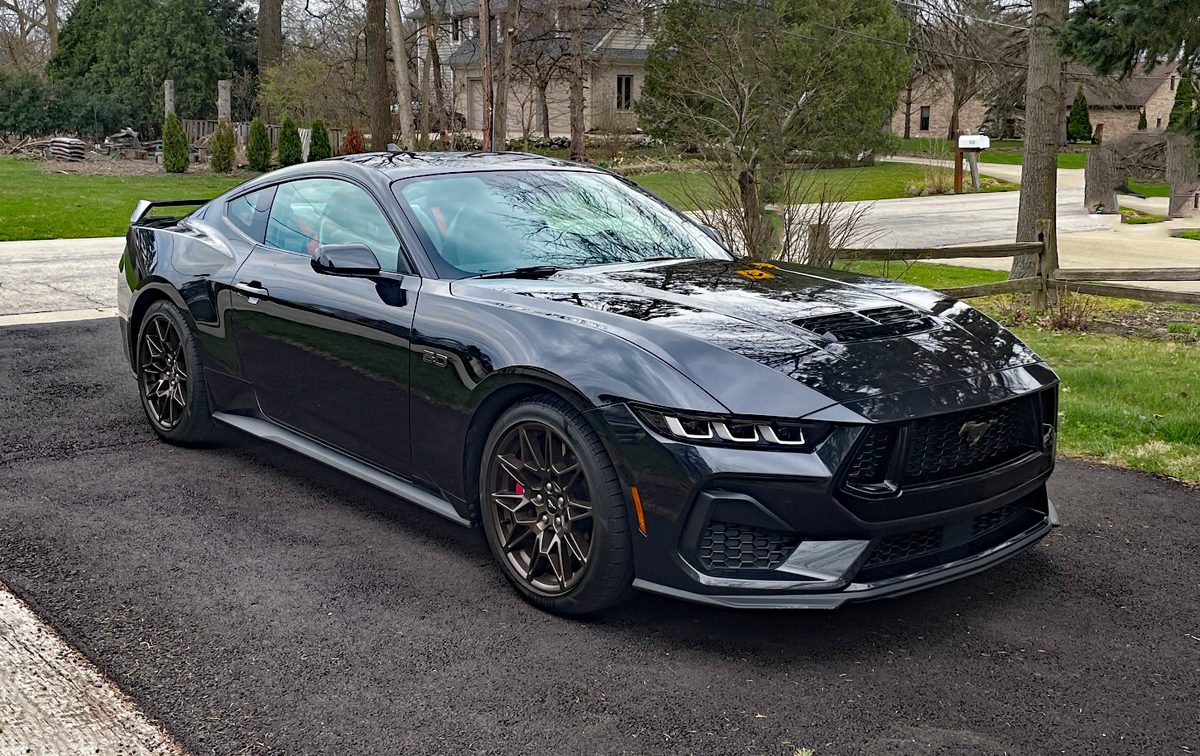
The Ford Mustang GT embraces a modern muscle car design that combines aggression with aerodynamic efficiency. Its front fascia is sharp, with narrow headlights and a sculpted hood that reflects its performance-oriented nature. The design is sleek and purposeful, making it look fast even when stationary. It appeals to drivers who prefer a contemporary sports car appearance with clear performance cues.
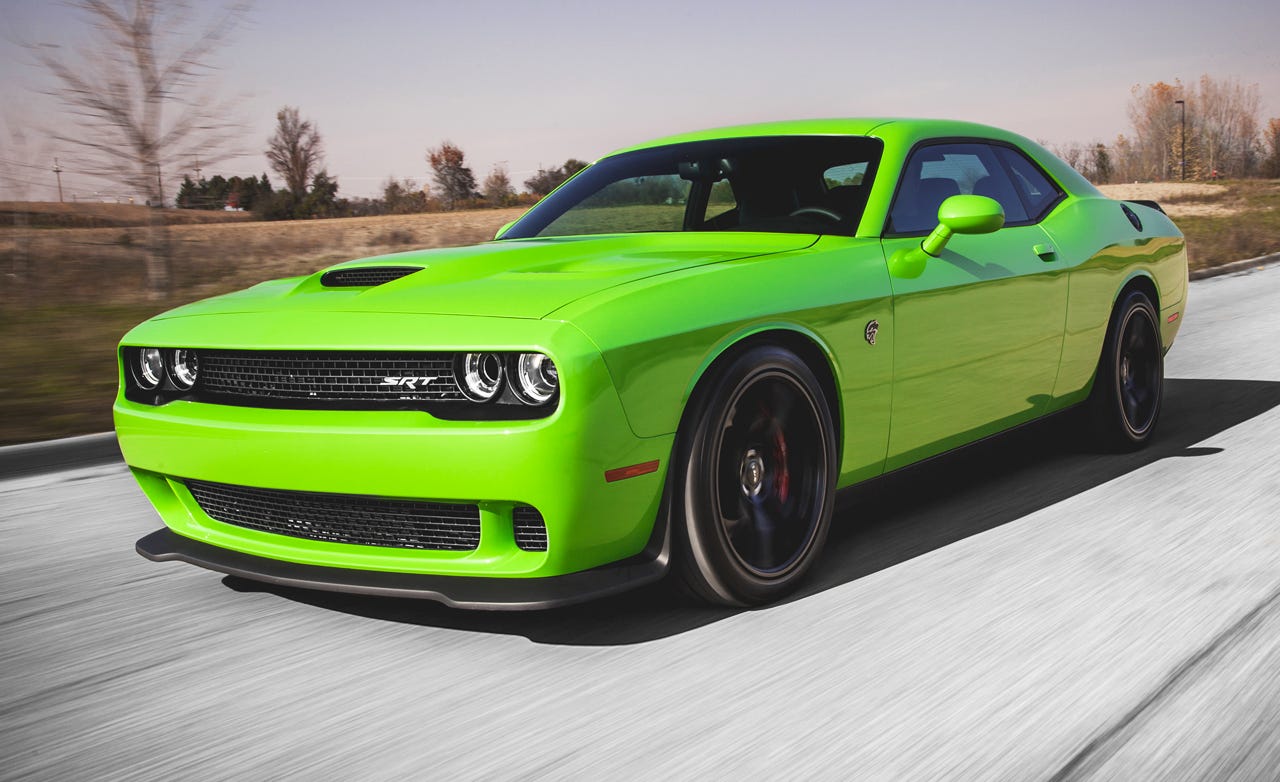
The Dodge Challenger takes a completely different approach by focusing on retro-inspired styling. Its wide body, long hood, and boxy proportions pay homage to classic muscle cars from the 1970s. This design gives it a strong road presence and makes it instantly recognizable. It appeals to enthusiasts who appreciate nostalgic styling and traditional American muscle aesthetics.
In terms of dimensions, the Challenger is larger and heavier, which contributes to its commanding presence on the road. It looks more imposing and substantial, while the Mustang GT appears more compact and athletic. This difference influences how each car is perceived by onlookers and drivers alike.
Aerodynamics also play a role in design efficiency. The Mustang GT benefits from a more modern aerodynamic profile that improves high-speed stability and performance efficiency. The Challenger prioritizes styling and presence over aerodynamic refinement, which is consistent with its muscle car identity.
Customization options further enhance design appeal. Both vehicles offer various trims, stripes, wheel designs, and performance packages. The Mustang GT leans toward modern sporty customization, while the Challenger offers retro-themed appearance packages that enhance its classic muscle identity.
Interior Comfort, Technology, and Practicality
Inside the Ford Mustang GT, the cabin is designed with a driver-focused approach. The seating position is low and sporty, giving the driver a strong connection to the road. Modern digital displays, updated infotainment systems, and performance-oriented controls make it feel technologically advanced. The interior quality has improved significantly in recent generations, offering a balance between sportiness and comfort.
The Dodge Challenger, by contrast, offers a more spacious and comfortable interior. It is one of the most practical muscle cars available, with more rear seat space and better cabin room compared to the Mustang GT. This makes it more suitable for daily use and longer journeys with passengers.
Technology in the Challenger is also competitive, with infotainment systems, driver assistance features, and connectivity options. However, its interior design philosophy is more traditional compared to the modern and tech-forward Mustang GT. The Challenger focuses more on comfort and usability than sporty minimalism.
Cargo space is another area where the Challenger excels. It offers a larger trunk and more usable storage space, making it more practical for road trips or everyday errands. The Mustang GT has limited rear seating and a smaller cargo capacity, which reinforces its sporty nature.
Comfort depends on priorities. The Mustang GT is better for drivers who want a focused, performance-oriented cockpit, while the Challenger is better for those who want muscle car power combined with comfort and practicality.
Pricing, Ownership Experience, and Final Verdict
The Ford Mustang GT is generally positioned as a performance value option that offers strong horsepower and modern features at a competitive price. Its maintenance costs are relatively reasonable for a performance car, and its fuel efficiency is slightly better compared to its rival. It is also known for holding strong resale value due to its global popularity and consistent demand.
The Dodge Challenger varies widely in price depending on engine choice and trim level. Entry-level versions are relatively affordable, while high-performance variants can become significantly more expensive. Ownership costs tend to be higher due to fuel consumption and weight-related wear, but many buyers accept this in exchange for its performance and comfort advantages.
In terms of driving experience, the Mustang GT delivers a more engaging and athletic feel. It is better suited for drivers who enjoy cornering, precision, and a modern sports car experience. The Challenger offers a more relaxed yet powerful experience, prioritizing straight-line speed and cruising comfort.
Resale value tends to favor the Mustang GT slightly due to its broader global appeal and consistent demand among enthusiasts. However, special edition Challenger models can also retain strong value, especially those with high-performance engines.
The choice between the Ford Mustang GT and Dodge Challenger depends on what the driver values more. If precision, handling, and modern performance matter most, the Mustang GT is the better choice. If raw power, comfort, and classic muscle car presence are the priority, the Challenger stands out as the more appealing option.
| Category | Winner | The Edge |
|---|---|---|
| Performance & Handling | Ford Mustang GT | Lighter, more agile, better cornering and track performance |
| Straight-Line Speed | Dodge Challenger | Higher horsepower options, stronger drag racing capability |
| Engine Options | Dodge Challenger | Wider range of engines, from V6 to extreme V8 variants |
| Fuel Efficiency | Ford Mustang GT | Lighter weight and more balanced power delivery |
| Exterior Design | Tie | Mustang is modern and sporty, Challenger is retro and muscular |
| Interior Comfort | Dodge Challenger | More cabin space, especially rear seats and comfort |
| Technology | Ford Mustang GT | More modern, driver-focused digital interface |
| Practicality | Dodge Challenger | More usable rear seats and larger trunk space |
| Daily Driving Comfort | Dodge Challenger | Softer ride and more relaxed cruising experience |
| Driving Engagement | Ford Mustang GT | More responsive steering and better road feedback |
| Price Value | Ford Mustang GT | Strong performance per dollar and better efficiency |
| Resale Value | Ford Mustang GT | Broader global demand and stronger long-term market appeal |
