
The automotive world is often seen as a battlefield of innovation where rival manufacturers compete fiercely for performance, design leadership, and brand prestige. However, beneath this competitive surface lies a fascinating layer of collaboration that has shaped some of the most iconic sports cars ever produced.
While automakers traditionally guard their engineering secrets closely, rising development costs, tightening emissions regulations, and the growing complexity of modern performance vehicles have encouraged even the fiercest competitors to join forces.
These partnerships have resulted in sports cars that blend engineering philosophies, design languages, and performance expertise from multiple brands, often producing vehicles that neither company could have achieved alone.
One of the most compelling aspects of co-developed sports cars is how they merge contrasting automotive cultures. Japanese precision engineering, German performance discipline, Italian emotional design, and American power-centric philosophies have all intersected in surprising ways.
These partnerships go far beyond simply sharing platforms or powertrains. They often include joint research efforts, collaborative manufacturing, and closely coordinated development programs. In many instances, the finished vehicle blends the strengths of both companies so effectively that enthusiasts may not even realize it was created through cooperation between competing automakers.
Developing a modern sports car from scratch requires billions in investment, especially when advanced materials, hybrid systems, and safety technologies are involved.
By pooling resources, automakers can reduce financial risk while still delivering high-performance machines that meet global demand. This is particularly important in niche segments like sports cars, where sales volumes are lower compared to SUVs and sedans, making independent development less economically viable.
These collaborations also benefit consumers by delivering better-engineered vehicles at more competitive prices. Shared expertise often leads to improved reliability, refined handling dynamics, and more efficient powertrains.
For example, one manufacturer may excel in chassis tuning while the other brings superior engine technology. When combined, the result is a balanced and highly capable sports car that appeals to a global audience of driving enthusiasts.
In this article, we explore 10 remarkable sports cars that emerged from collaborations between rival or competing automakers. Each of these vehicles represents a unique story of engineering compromise, innovation, and shared ambition.
From Japanese German joint ventures to transatlantic engineering partnerships, these cars highlight how competition can sometimes evolve into cooperation to create automotive legends that redefine performance driving.
Also Read: 8 SUVs With The Most Space For Comfort
- Engine: 2.0L turbocharged inline 4, 3.0L turbocharged inline 6 (BMW B48, B58)
- Horsepower: 255 hp (2.0L), 382 hp (3.0L)
- Torque: 400 Nm (2.0L), 500 Nm (3.0L)
- Length: approximately 4,379 mm (Supra)
- Width: approximately 1,854 mm (Supra), 1,865 mm (Z4)
1. Toyota GR Supra and BMW Z4 Collaboration
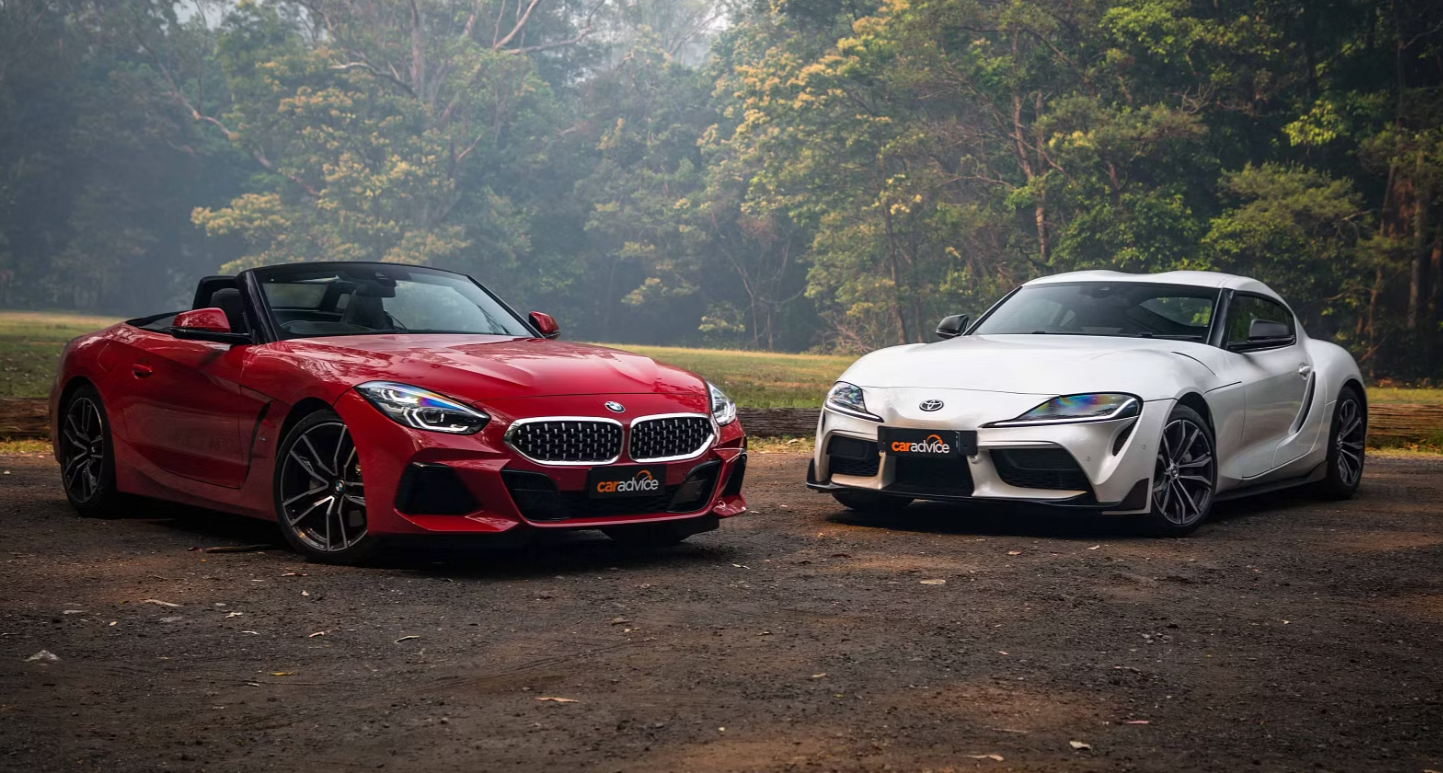
The modern Toyota GR Supra and BMW Z4 are two of the most well-known examples of cross-brand collaboration in the sports car segment.
This joint development was born out of a shared desire to reduce costs while reviving two iconic nameplates that had been absent or underdeveloped for years. Toyota and BMW, despite being strong competitors in several global markets, agreed to co-develop a shared platform while maintaining distinct identities for each vehicle.
At the core of this collaboration is a shared chassis architecture, engine lineup, and transmission system. Both cars are built on the same underlying platform developed primarily by BMW, with Toyota contributing critical input on suspension tuning and driving dynamics.
The result is two vehicles that feel similar in structure but distinct in personality. The BMW Z4 leans toward a more relaxed grand touring character, while the Toyota GR Supra emphasizes sharper handling and a more aggressive driving experience.
The engines used in both cars also highlight the depth of this collaboration. BMW supplies the turbocharged inline six and four-cylinder engines that power both models. These engines are known for their smooth power delivery, strong torque curves, and modern efficiency standards.
Toyota engineers then fine-tuned the Supra version to deliver a more performance-oriented character, ensuring that it meets the expectations of sports car enthusiasts.
Design differentiation plays a major role in separating the two cars. The BMW Z4 adopts a roadster layout with a soft top convertible roof, emphasizing open-air driving enjoyment.
The Toyota GR Supra, on the other hand, features a fixed coupe body designed for rigidity and aerodynamic efficiency. This allows each brand to maintain its identity while still benefiting from shared engineering foundations.
The Supra Z4 partnership demonstrates how rival automakers can successfully collaborate without diluting brand heritage. Instead of competing independently in a shrinking sports car segment, both companies created two distinct yet mechanically related vehicles that continue to attract enthusiasts worldwide.
- Engine: 2.4L naturally aspirated flat 4 boxer (FA24)
- Horsepower: 228 hp
- Torque: 249 Nm
- Length: approximately 4,265 mm
- Width: approximately 1,775 mm
2. Toyota GT86 and Subaru BRZ
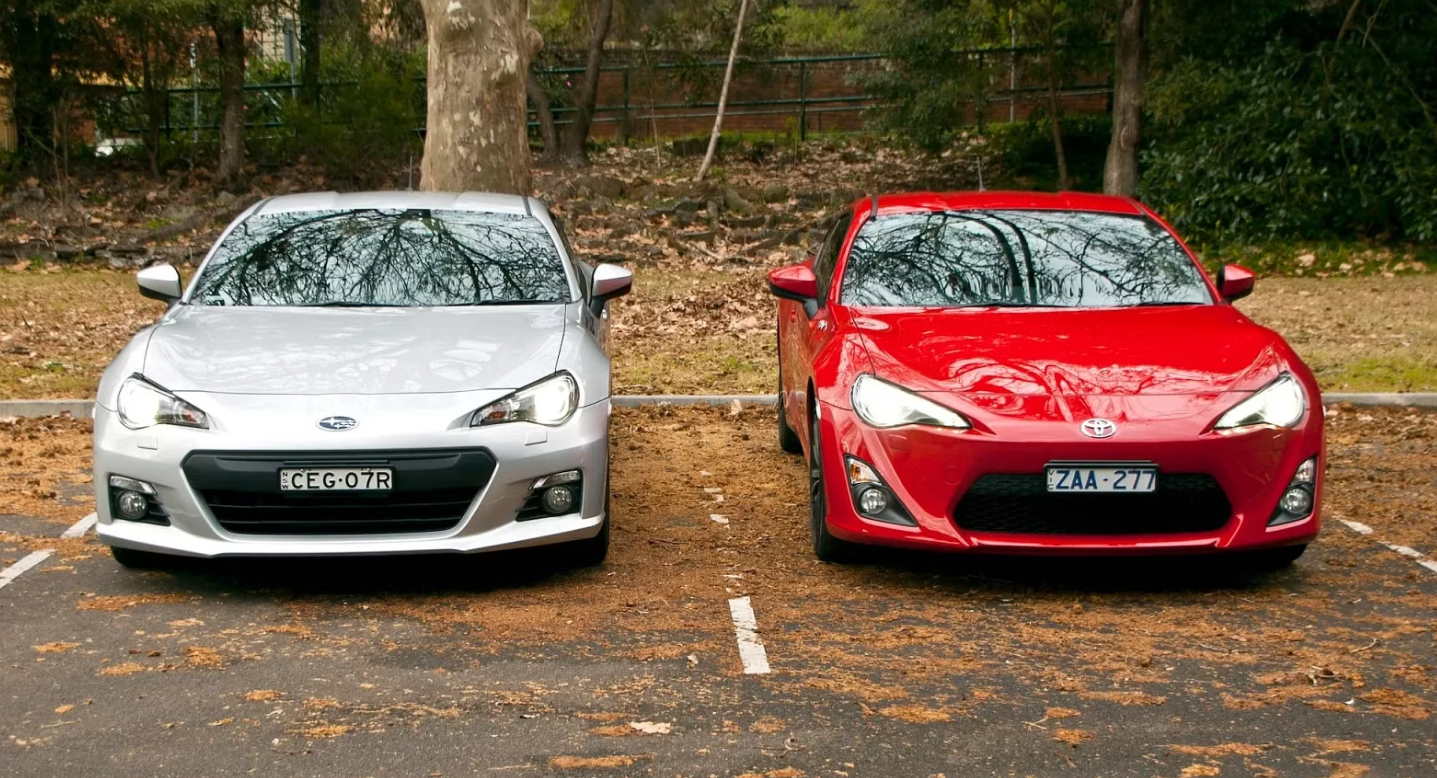
The Toyota GT86 and Subaru BRZ are iconic examples of successful collaboration between two Japanese automakers with different engineering strengths. This partnership was designed to revive the spirit of lightweight, affordable Rear Wheel Drive sports cars at a time when the market was dominated by heavier and more expensive performance vehicles.
Subaru contributed its expertise in horizontally opposed boxer engines and chassis balance, while Toyota focused on fine-tuning handling characteristics and ensuring broad market appeal.
The result was a car that prioritized driving enjoyment over raw horsepower. Both models share the same platform, engine, and core components, but each brand applies its own calibration to steering, suspension, and throttle response.
The shared 2.0-liter boxer engine is central to the identity of both cars. It delivers modest power by modern standards but emphasizes responsiveness and linear acceleration. This philosophy encourages drivers to maintain momentum through corners rather than relying solely on straight-line speed, making the GT86 and BRZ highly engaging on winding roads and track environments.
Design differences between the two cars are subtle but meaningful. The Toyota GT86 features a more aggressive front fascia and sport-oriented styling cues, while the Subaru BRZ adopts a slightly more refined and aerodynamic appearance. Inside, both vehicles prioritize driver focus with simple layouts and supportive seating positions.
It proved that with the right balance of engineering cooperation and brand differentiation, rival manufacturers can create a shared platform that enhances rather than diminishes driving excitement.
- Engine: 1.5L and 2.0L naturally aspirated inline 4 (MX-5), 1.4L turbocharged inline 4 (124 Spider)
- Horsepower: 131 hp to 181 hp (MX-5), 160 hp (124 Spider)
- Torque: 150 Nm to 205 Nm (MX-5), 250 Nm (124 Spider)
- Length: approximately 3,915 mm
- Width: approximately 1,735 mm
3. Mazda MX-5 and Fiat 124 Spider Collaboration
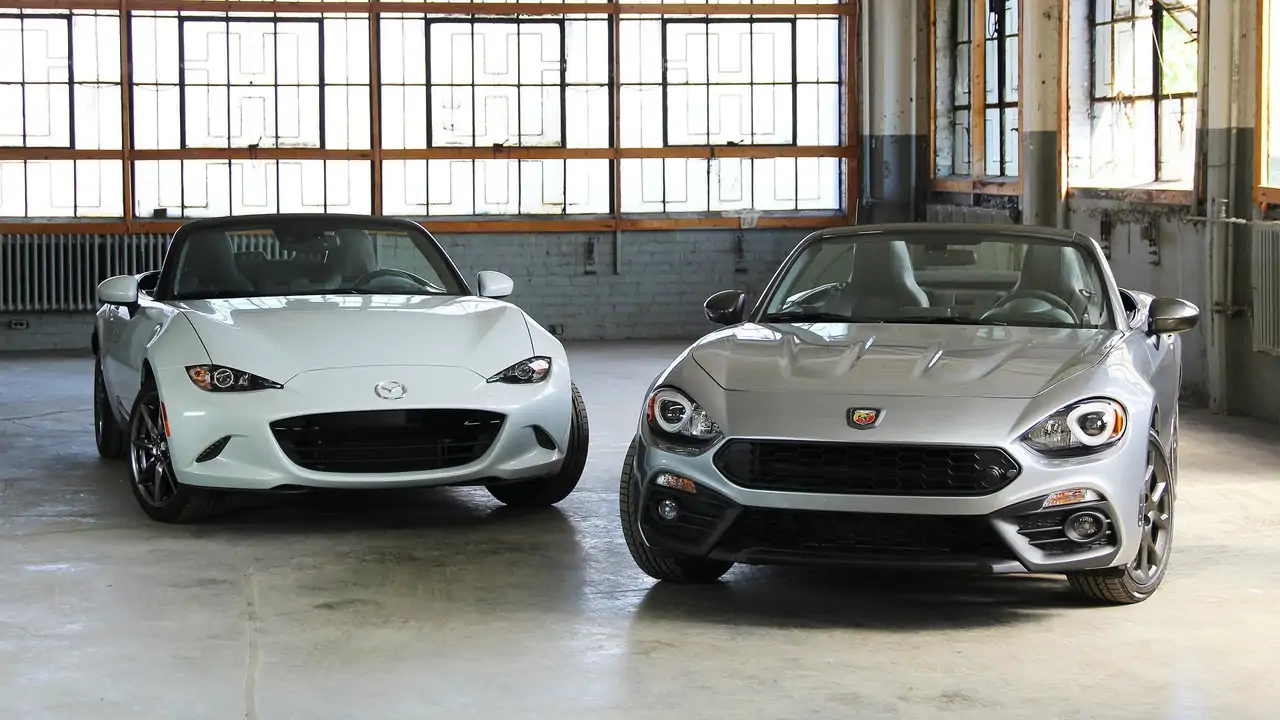
The partnership between Mazda and Fiat that produced the MX-5 Miata-based Fiat 124 Spider is a fascinating example of cross-continent collaboration. While Mazda developed the underlying platform, Fiat used it as a foundation to create a distinct Italian-styled roadster that reflected its own brand identity.
The Mazda MX-5 has long been celebrated as one of the purest lightweight sports cars in automotive history. Fiat saw an opportunity to re-enter the roadster market without the high cost of developing a platform from scratch. As a result, both companies agreed to share the MX-5 architecture while designing separate engines and styling philosophies.
Fiat equipped its version with a turbocharged engine developed to deliver stronger low-end torque compared to Mazda’s naturally aspirated unit. This gave the 124 Spider a different driving personality, emphasizing relaxed cruising and accessible performance. Meanwhile, the MX-5 remained focused on high-revving responsiveness and lightweight agility.
Despite sharing the same structural foundation, the two cars differ significantly in design. The Fiat 124 Spider features retro-inspired styling reminiscent of classic Italian roadsters, while the MX-5 continues Mazda’s modern interpretation of minimalist sports car design. These differences allow each vehicle to appeal to different types of enthusiasts.
- Engine: 5.4L supercharged V8 (M155 AMG)
- Horsepower: 617 hp
- Torque: 780 Nm
- Length: approximately 4,656 mm
- Width: approximately 1,908 mm
4. Mercedes-Benz SLR McLaren
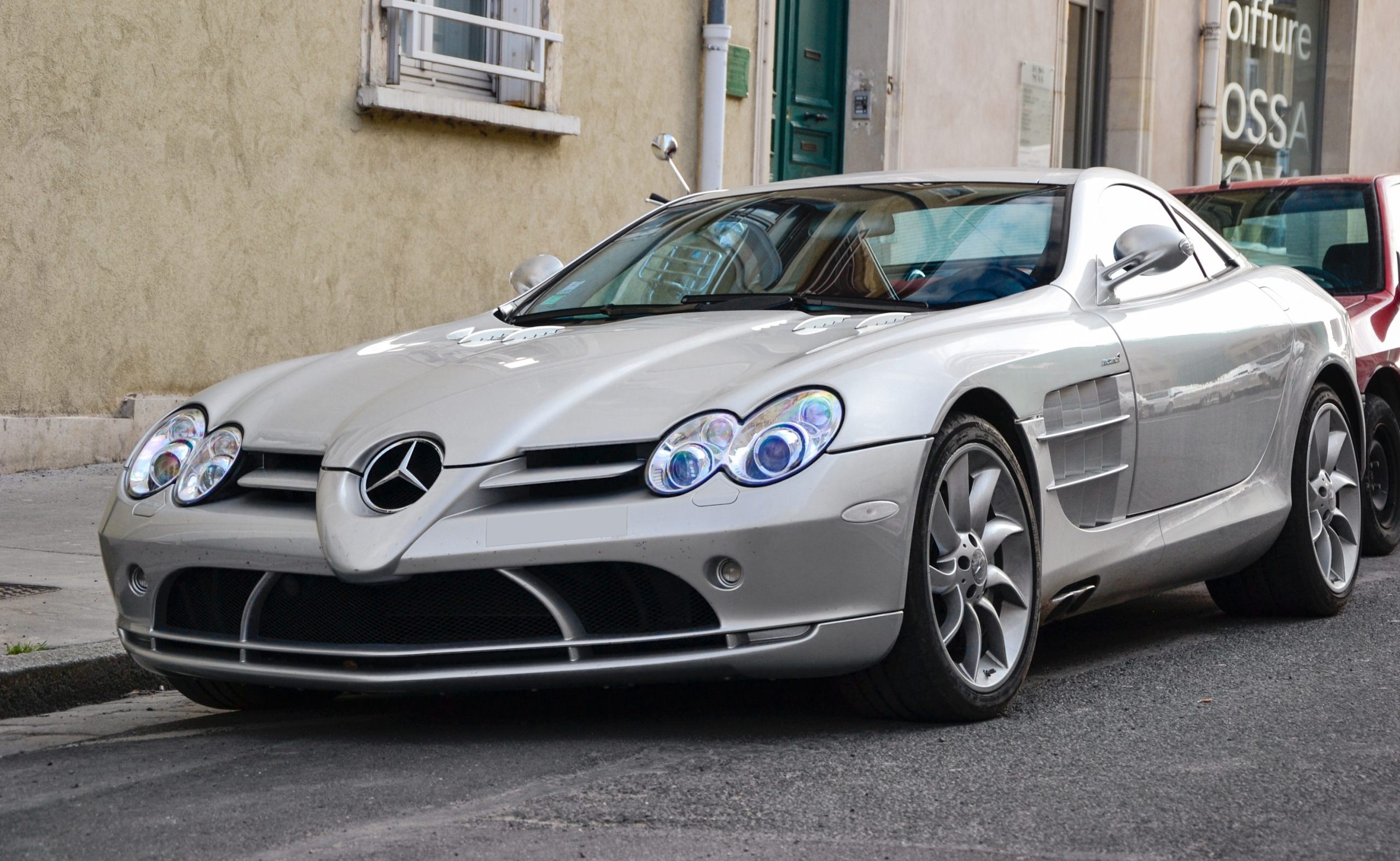
The Mercedes-Benz SLR McLaren stands as one of the most dramatic examples of collaboration between two high-performance automotive giants. Developed during a period of intense motorsport influence, this car combined Mercedes engineering with McLaren Formula 1 expertise.
The SLR McLaren was designed as a grand touring supercar that could deliver extreme performance while maintaining long-distance comfort. Mercedes provided the engine and luxury expertise, while McLaren contributed aerodynamic design, carbon fiber construction knowledge, and chassis tuning derived from Formula 1 technology.
At its heart, the SLR features a supercharged V8 engine that produces immense power and torque. McLaren engineers focused on ensuring that this power could be delivered in a controlled and stable manner, even at high speeds. The result was a front-engine supercar capable of competing with mid-engine rivals of its era.
The design of the SLR reflects its dual heritage. It combines Mercedes luxury styling cues with McLaren aerodynamic efficiency, including distinctive side exhausts and a long sculpted hood. The car’s carbon fiber structure was advanced for its time and contributed significantly to its performance capabilities.
The SLR McLaren remains a landmark collaboration that showcased how two rivals could merge expertise to create a vehicle that pushed the boundaries of both luxury and performance engineering.
Also Read: 7 Most Reliable Motorcycles You Can Buy Today
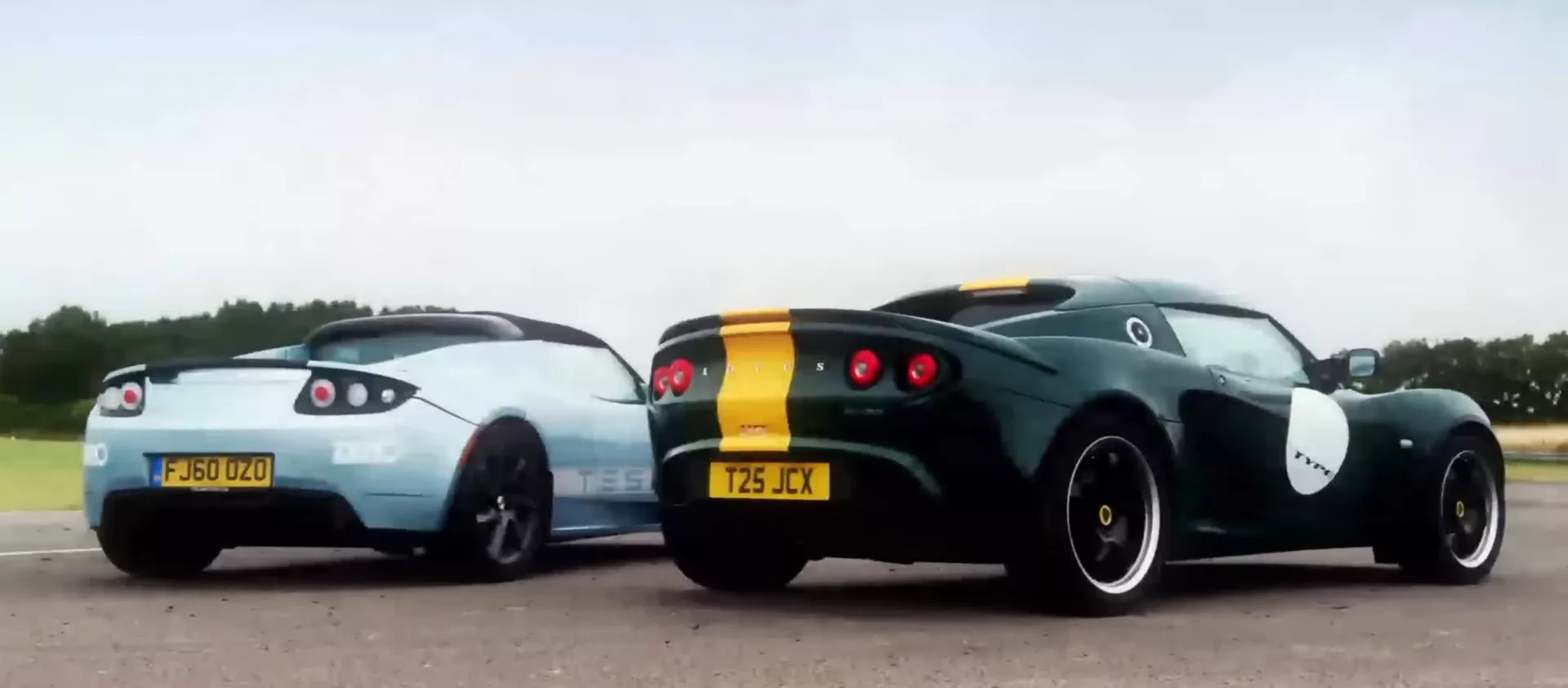
- Engine: 1.8L naturally aspirated inline 4 (Elise), electric motor (Roadster)
- Horsepower: 134 hp to 190 hp (Elise), 248 hp (Roadster)
- Torque: 172 Nm (Elise), 370 Nm (Roadster)
- Length: approximately 3,946 mm
- Width: approximately 1,851 mm
5. Lotus Elise and Tesla Roadster Connection
The original Tesla Roadster owes much of its existence to its engineering relationship with the Lotus Elise. Lotus provided the lightweight chassis and structural foundation that allowed Tesla to develop its first production electric sports car.
The Lotus Elise is known for its minimalist design philosophy and exceptional handling characteristics. Tesla leveraged this platform to integrate an electric drivetrain, replacing the internal combustion engine with a battery-powered system while retaining the Elise’s agile dynamics.
This collaboration was crucial for Tesla, as it allowed the company to enter the automotive market quickly without developing a ground-up vehicle architecture. Lotus benefited by expanding its engineering services business and showcasing the versatility of its lightweight platform.
The Tesla Roadster maintained much of the Elise’s driving feel, but with instant electric torque that dramatically changed acceleration characteristics. This combination of Lotus handling and Tesla innovation created a unique driving experience that helped establish Tesla’s reputation.
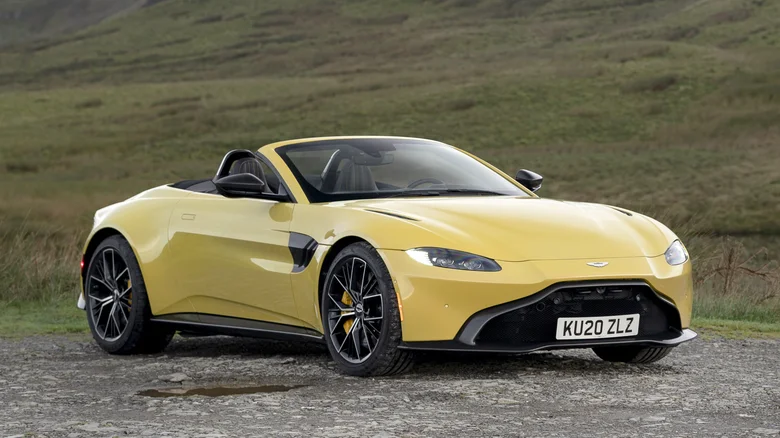
- Engine: 4.0L twin turbocharged V8 (Mercedes AMG sourced)
- Horsepower: 503 hp
- Torque: 675 Nm
- Length: approximately 4,739 mm
- Width: approximately 1,940 mm
6. Aston Martin DB11 and Mercedes AMG Engine
The Aston Martin DB11 represents a modern example of cross-manufacturer collaboration through its use of Mercedes-AMG sourced engines. Facing increasing development costs and stricter emissions regulations, Aston Martin partnered with Mercedes to access advanced powertrain technology.
The DB11 integrates a turbocharged V8 engine derived from Mercedes AMG, which provides strong performance and improved reliability compared to previous in-house engines. Aston Martin then tuned the engine to match its own brand character, focusing on smooth power delivery and refined grand touring performance.
This collaboration allowed Aston Martin to modernize its lineup quickly while maintaining its identity as a luxury sports car manufacturer. The integration of German engineering with British design philosophy created a balanced and sophisticated performance vehicle.
The DB11 also benefits from updated electrical systems and infotainment technology supplied through the partnership, enhancing usability without compromising driving enjoyment.
This collaboration demonstrates how even prestigious sports car brands rely on shared engineering solutions to remain competitive in a rapidly evolving automotive industry.
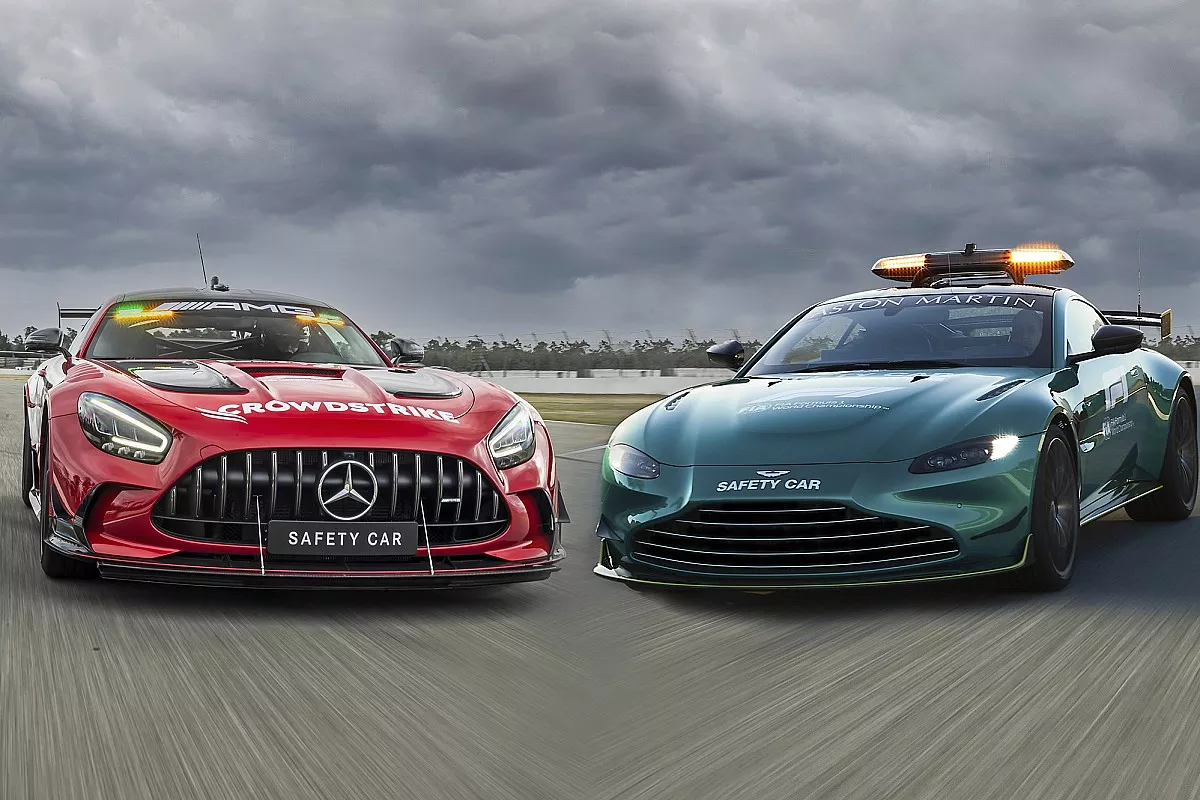
- Engine: 4.0L twin turbocharged V8 (Mercedes AMG sourced)
- Horsepower: 503 hp
- Torque: 685 Nm
- Length: approximately 4,465 mm
- Width: approximately 1,942 mm
7. Aston Martin Vantage and Mercedes AMG Powertrain
The Aston Martin Vantage also benefits from the same strategic partnership with Mercedes AMG, particularly in its engine and electronic systems. This collaboration ensures that the Vantage delivers competitive performance while meeting modern efficiency standards.
The Vantage uses a version of the AMG-sourced V8 engine, tuned specifically by Aston Martin engineers to provide a more aggressive and responsive character compared to its grand touring siblings. This helps position the Vantage as a more focused sports car within the brand lineup.
Chassis tuning remains heavily influenced by Aston Martin’s own engineering team, ensuring that the car retains its British performance identity. The combination of German powertrain technology and British handling philosophy creates a unique driving experience.
The interior and design language of the Vantage remain fully Aston Martin, preserving brand heritage while benefiting from external engineering support. This balance is critical for maintaining brand loyalty in a competitive segment.
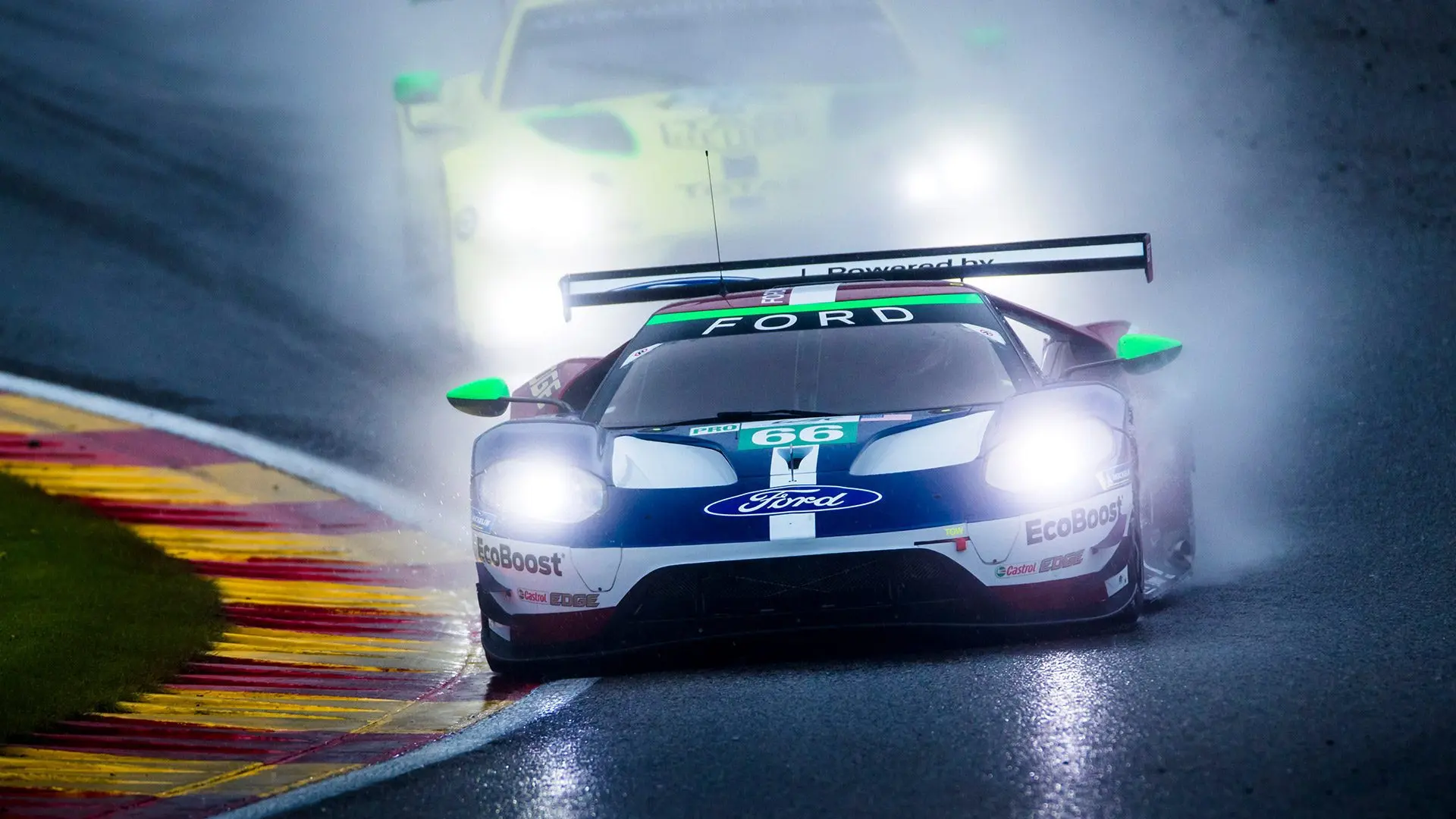
- Engine: 3.5L twin turbocharged V6 EcoBoost
- Horsepower: 660 hp
- Torque: 746 Nm
- Length: approximately 4,763 mm
- Width: approximately 2,040 mm
8. Ford GT and Multimatic Collaboration
The modern Ford GT is the result of collaboration between Ford and engineering firm Multimatic, along with input from various racing partners. While not a traditional rival automaker partnership, it represents a significant cross-industry collaboration in high-performance vehicle development.
The Ford GT was designed with a strong focus on aerodynamics and endurance racing performance. Multimatic played a crucial role in developing the carbon fiber structure and advanced suspension systems that enable the car to perform at a world-class level.
The twin turbocharged V6 engine was engineered to deliver high output while maintaining efficiency and compact packaging. This allowed Ford to achieve a balanced mid-engine layout optimized for track performance.
The GT’s design is heavily influenced by aerodynamics, with active systems that adjust airflow for maximum stability at high speeds. This reflects its racing heritage and engineering focus.
- Engine: 6.0L twin turbocharged V12 (Mercedes AMG)
- Horsepower: 730 hp
- Torque: 1,000 Nm (approximate)
- Length: approximately 4,605 mm
- Width: approximately 2,036 mm
9. Pagani Huayra and Mercedes AMG Engine
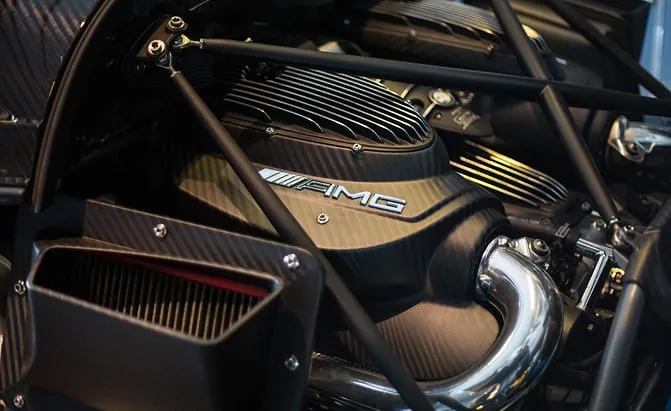
The Pagani Huayra is powered by a handcrafted Mercedes AMG V12 engine, making it a standout example of cross-brand performance collaboration. While Pagani is an independent hypercar manufacturer, its reliance on AMG engineering is central to its identity.
The AMG-supplied V12 engine is extensively modified to meet Pagani’s performance and exclusivity standards. It delivers immense power while maintaining smooth and controlled delivery characteristics essential for a hypercar.
Pagani integrates this engine into a highly advanced carbon fiber chassis, combining German engineering with Italian craftsmanship. The result is a vehicle that emphasizes both performance and artistic design.
The Huayra’s aerodynamic systems and active components are designed to complement the engine’s power output, ensuring stability at extreme speeds. This integration highlights the importance of collaboration in hypercar development.
Pagani Huayra and Mercedes AMG engine show how even the most exclusive automotive brands rely on shared engineering expertise to achieve extraordinary performance goals.
- Engine: 1.6L turbocharged V6 hybrid (Formula 1 derived)
- Horsepower: approximately 1,000 hp (combined system output)
- Torque: not officially disclosed (high voltage hybrid system contribution)
- Length: approximately 4,604 mm
- Width: approximately 2,000 mm
10. Mercedes AMG Project One
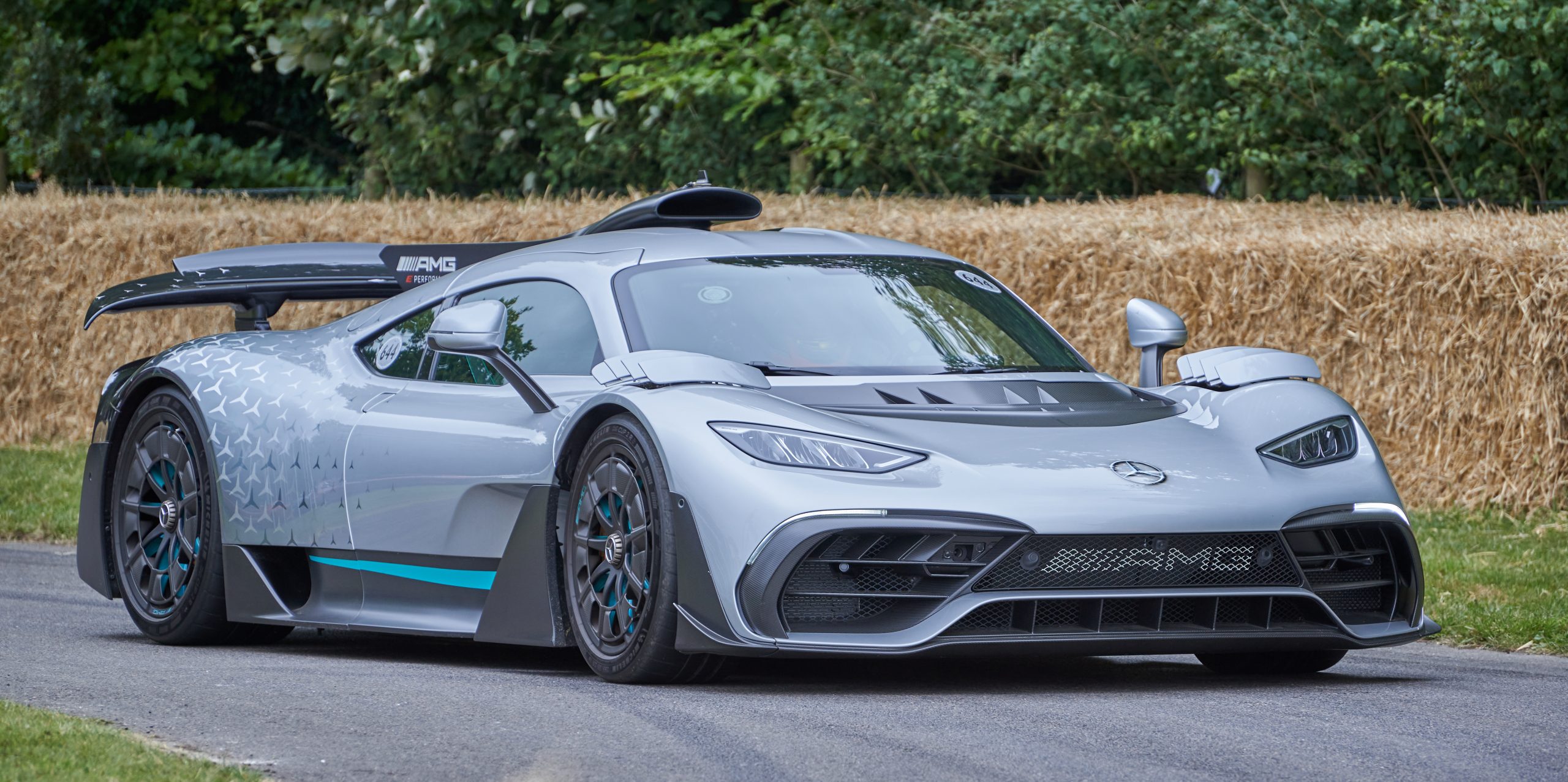
The Mercedes AMG Project One represents one of the most ambitious collaborations between Formula 1 technology and road car engineering. It integrates hybrid powertrain technology directly derived from Mercedes AMG’s Formula 1 program.
The car features a highly complex hybrid system that combines a turbocharged internal combustion engine with multiple electric motors. This system is directly influenced by Formula 1 engineering principles, bringing race technology to the road.
Mercedes engineers worked extensively to adapt race-derived components for road use, balancing extreme performance with reliability and usability. This required significant innovation in thermal management and energy recovery systems.
The aerodynamic design of the Project One is also heavily influenced by racing technology, featuring active elements that optimize downforce and efficiency at high speeds.
Project one is the pinnacle of collaboration between motorsport and production car engineering, showcasing how advanced technology can transition from track to road in a controlled and functional way.
