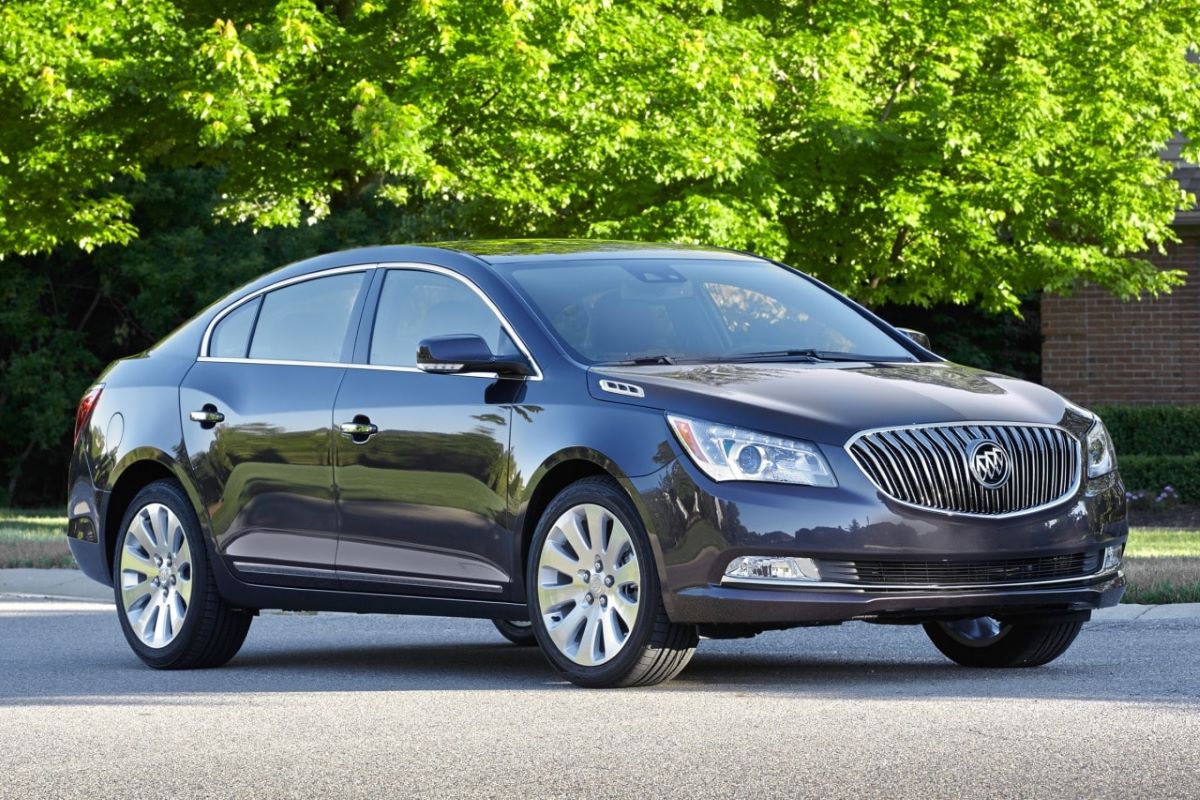
Buick has become the highest-ranked American mass-market automaker in the 2026 J.D. Power U.S. Vehicle Dependability Study, extending a turnaround that would have seemed unlikely only a few years ago.
The General Motors brand finished ahead of Chevrolet, Ford, GMC, Jeep, Ram, Dodge, Chrysler, and other domestic nameplates, placing first among mass-market brands for the second consecutive year.
The result is especially notable because Buick now sells a relatively small lineup made almost entirely of crossovers.
The brand no longer offers sedans in the United States, and it has moved away from the large, traditional cars that once defined its identity. Instead, Buick’s U.S. range is built around the Envista, Encore GX, Envision, and Enclave. That narrower product strategy may be helping.
According to J.D. Power, Buick recorded 160 problems per 100 vehicles in the 2026 study. Lower scores are better. MINI ranked second among mass-market brands with 168 problems per 100 vehicles, while Chevrolet finished third with 178. Lexus led the premium-brand category with 151 problems per 100 vehicles, followed by Cadillac at 175 and Porsche at 182.
Buick’s result does not mean every model is trouble-free, nor does it mean a Buick will automatically be more dependable than every Toyota, Honda, Subaru, or Hyundai. But it does show that the brand has become one of the strongest choices for buyers who want an American vehicle with a better-than-average long-term ownership record.
Also Read: 10 Cars With the Most Comfortable Seats for Bad Backs
What the J.D. Power Study Actually Measures
The J.D. Power U.S. Vehicle Dependability Study does not measure new-car quality during the first few months of ownership. It focuses on vehicles that are three years old.
The 2026 study is based on responses from more than 33,000 original owners of 2023-model-year vehicles. Owners reported problems they experienced during the previous 12 months across nine major vehicle categories.
These include infotainment, features and controls, climate systems, powertrains, driving experience, exterior components, interior components, seats, and driver-assistance technology.
The score is expressed as problems per 100 vehicles, commonly called PP100. A lower score means owners reported fewer problems.
That distinction matters because a brand can perform well in initial-quality surveys but struggle as vehicles age.
A car may leave the factory with no major issues, then develop problems with touchscreen systems, electrical hardware, transmission behavior, climate-control components, sensors, or body hardware after several years on the road.
Buick’s 160 PP100 score means owners of 2023 Buick vehicles reported an average of 160 problems for every 100 vehicles surveyed. That is not the same as saying every Buick owner had 1.6 problems. Some owners may have reported no issues, while others experienced several.
The study is also not a prediction that every future Buick model will perform identically. New engines, new infotainment systems, redesigns, and new vehicle platforms can change dependability results quickly. Still, the study provides a useful view of how vehicles are holding up after the warranty honeymoon period has passed.
Buick’s Rise Is a Major Shift for General Motors
Buick has not always been viewed as General Motors’ reliability leader. For much of its history, Buick occupied a comfortable middle ground between Chevrolet and Cadillac.
It was positioned as a more refined GM brand for buyers who wanted a quieter ride, a better-equipped cabin, and a slightly more premium ownership experience without paying Cadillac prices.
That identity became less clear during the 2000s and early 2010s. Buick’s lineup included aging sedans, large crossovers, and several vehicles that shared heavily with other GM brands. The company struggled to attract younger buyers, and many observers questioned whether Buick still had a clear role in the U.S. market. The brand has since changed direction.
Buick now sells a smaller number of crossover models, many with more distinctive styling and a stronger focus on comfort, technology, and value. The Envista, introduced as an affordable coupe-like crossover, has helped give Buick a younger image.
The Encore GX remains the brand’s entry-level utility vehicle, while the Envision and Enclave cover the compact and three-row family-crossover segments.
A smaller lineup can make quality control easier. Automakers with fewer models may be able to concentrate engineering resources, supplier oversight, software testing, and manufacturing attention on a narrower group of products. That does not guarantee dependability, but it can reduce the complexity that often creates problems.
General Motors said Buick’s first-place mass-market result was accompanied by a third-place finish for Chevrolet and a second-place premium result for Cadillac. The company said four GM models earned top dependability awards in their segments, while eight others placed second or third.
Why Buick May Be Performing Better Than Other American Brands
One reason Buick has improved is that its current lineup does not chase every automotive trend at once.
The brand does not sell a battery-electric vehicle in the United States yet. It does not offer a high-performance sports car, a heavy-duty pickup, a body-on-frame SUV, or a complicated plug-in hybrid system.
Those categories can be profitable and appealing, but they also introduce more hardware, software, and engineering variables.
Buick’s crossovers use relatively conventional turbocharged gasoline engines, automatic transmissions, front-wheel-drive-based platforms, and familiar infotainment systems.
The vehicles still include modern screens, cameras, smartphone connectivity, safety technology, and digital controls, but they are not built around radically new propulsion systems or experimental vehicle architectures.
That matters because modern dependability problems increasingly come from electronics rather than engines.
J.D. Power found that the industry average rose to 204 problems per 100 vehicles in 2026, the highest figure since the study was redesigned in 2022. Complaints involving infotainment systems, software updates, touchscreen controls, phone connectivity, and driver-assistance technology continue to affect owner satisfaction.
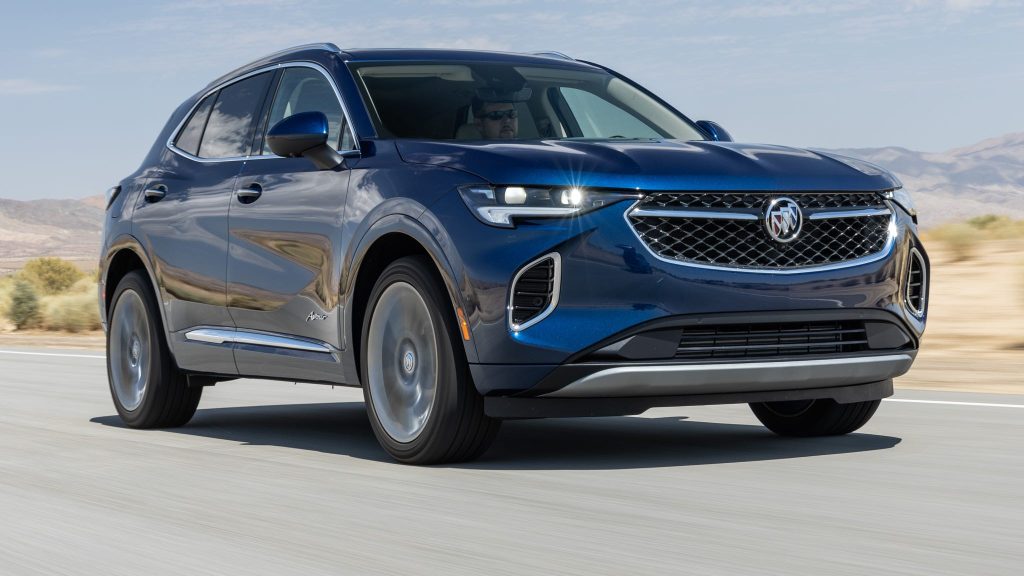
Buick’s approach may not feel as futuristic as the newest electric luxury crossover, but its relative simplicity can be an advantage for buyers who value fewer frustrations after three years of ownership.
The Buick Enclave Was a Key Performer
The Buick Enclave was one of the brand’s strongest contributors to the 2026 result. J.D. Power named the Enclave the most dependable SUV in its segment, giving Buick a model-level award to support its brand ranking.
The Enclave is Buick’s largest vehicle, offering three rows of seating and competing with crossovers such as the Acura MDX, Honda Pilot, Hyundai Palisade, Kia Telluride, Mazda CX-90, and Volkswagen Atlas.
The Enclave’s success is important because three-row crossovers are often more complex than smaller vehicles. They may include rear climate systems, power-folding seats, advanced driver-assistance features, large infotainment displays, multiple charging ports, panoramic roofs, and more electronic modules.
A strong dependability result in this segment suggests Buick has been able to manage that complexity effectively, at least for the 2023-model-year vehicles included in the study.
Buyers should still be careful when comparing the award-winning 2023 Enclave with the redesigned 2025 and 2026 Enclaves. A redesign can bring major changes to the engine, transmission, interior technology, and electrical systems. The study measures the older vehicle, not the latest version.
That does not make the new Enclave a poor choice. It simply means shoppers should not assume that every result transfers directly from one generation to another.
Buick’s Dependability Does Not Mean It Is the Best Brand for Every Buyer
Reliability is important, but it is not the only thing that matters. A Buick may not be the right choice for a buyer who needs serious towing capability, a manual transmission, a dedicated off-road vehicle, a full-size truck, a luxury performance sedan, or a battery-electric vehicle. Buick’s lineup is focused, but it is also limited.
The brand’s crossovers are aimed at buyers who want comfort, easy entry and exit, quiet highway driving, modern technology, and a premium feel without moving into Cadillac, Lexus, BMW, or Mercedes-Benz pricing.
The Envista is particularly important because it gives Buick an entry point below many premium competitors. It is not a luxury SUV in the traditional sense, but it offers a more upscale design and cabin presentation than many mainstream small crossovers.
The Encore GX serves buyers who want a small, city-friendly SUV, while the Envision offers more space and a more premium cabin. The Enclave remains the family-oriented choice for buyers who need three rows.
Each model should still be researched individually. A strong brand ranking cannot replace a test drive, a review of recalls, insurance quotes, ownership-cost estimates, and comparisons of warranty coverage.
Why the Result Matters for American Automakers
Buick’s first-place mass-market ranking is also a positive result for General Motors. American brands have often faced criticism for inconsistent reliability, especially compared with Toyota, Lexus, Honda, Subaru, Mazda, and Hyundai.
Buick’s position shows that domestic manufacturers can compete when they limit complexity, improve supplier quality, and focus on long-term ownership issues rather than only launch-day features.
Chevrolet’s third-place mass-market finish also gives GM a stronger showing than many competitors. Cadillac’s second-place premium result strengthens the company’s position further, placing it ahead of several established European luxury brands.
That does not mean GM has solved every dependability problem. The company still sells a broad mix of trucks, SUVs, performance cars, EVs, and luxury vehicles. Those products face different challenges, particularly as GM expands its electric lineup and adopts more software-driven vehicle systems.
But Buick’s result proves that the company can produce vehicles that remain dependable after several years of real-world ownership.
The Limits of Any Reliability Ranking
No reliability study should be treated as a final verdict. J.D. Power measures owner-reported problems among a specific group of three-year-old vehicles.
Consumer Reports uses a different survey method, covers a broader range of model years, and may produce different brand rankings. Repair-shop data, warranty claims, recall records, and owner forums can also reveal issues that a single survey may not fully capture.
A buyer should also consider the type of problem. Ten minor infotainment complaints are not equal to one major engine or transmission failure. A vehicle with a low problem score may still have an expensive repair risk if one issue is severe.
Maintenance matters as well. Proper oil changes, tire rotations, fluid checks, battery care, and software updates can influence ownership experience. A dependable vehicle can become troublesome if it is neglected, while a more complicated vehicle can provide years of trouble-free service when maintained carefully.
Buick is now the most dependable American mass-market car brand in the 2026 J.D. Power U.S. Vehicle Dependability Study, recording 160 problems per 100 vehicles and finishing ahead of every other domestic mainstream nameplate. It is Buick’s second consecutive first-place result in the mass-market category.
The achievement reflects Buick’s focused crossover lineup, conventional powertrains, stronger quality control, and a product strategy that avoids some of the complexity affecting other brands.
For buyers who want an American crossover with a stronger long-term ownership record, Buick now deserves serious consideration.
Also Read: 10 All New 2027 SUVs Worth Waiting For