Many drivers focus on privacy when it comes to phones and computers, yet modern vehicles often gather even more personal information while sitting in daily use. Today’s connected cars function much like mobile devices on wheels, fitted with built-in cellular systems that turn on automatically and maintain communication with company servers soon after leaving the dealership.
Research carried out by the Mozilla Foundation assessed 25 leading car brands and rated all of them poorly on data privacy. The study pointed out that cars now stand as one of the most data-heavy consumer products ever reviewed by the organization. That finding reflects how far vehicle technology has moved beyond traditional driving functions into constant digital monitoring.
Information collected by these systems includes real-time location, travel routes, driving habits, and detailed trip records. In many cases, this data does not remain within the manufacturer’s control alone. It is also shared or passed on to external companies such as data brokers, insurance platforms, and marketing agencies, sometimes without drivers giving clear permission through active choice.
A large number of popular vehicles on American roads today already operate under this kind of default data collection system. This means the process begins automatically in many cases, without requiring drivers to adjust settings or approve individual data uses. For many owners, the full extent of what is being recorded and where it is sent remains unclear unless they specifically review the privacy terms tied to their vehicle.

1. Tesla Model Y
- Engine: Dual Electric Motors AWD (Long Range variant)
- Horsepower: 384 hp
- Torque: 376 lb-ft
- Size: 187.0 in Long x 75.6 in Wide
Tesla built its entire autonomous driving development program around continuous data collection from its global vehicle fleet, and the Model Y sits at the center of that ongoing data pipeline in ways that make this particular vehicle one of the most data-intensive consumer products currently sold through mainstream channels.
Understanding what the Model Y collects and why requires understanding that Tesla’s approach to building self-driving capability depends on real-world driving data gathered from paying customers rather than exclusively from closed test environments.
Continuous data loops feed Tesla’s automated driving systems with real-world scenarios, edge cases, and environmental conditions that company-operated test fleets alone could never generate at the scale required for meaningful machine learning progress.
The vehicle natively logs exact real-time GPS coordinates, complete driving path histories, and detailed charging location and timing records, creating a comprehensive mobility profile for every registered vehicle owner across the entire ownership period.
An opt-out option exists within the infotainment settings, yet choosing that opt-out triggers consequences that most owners find unacceptable in practice. Disabling data sharing completely removes the vehicle’s remote connectivity, deactivates navigation services, and cuts off access to the over-the-air safety map updates that Tesla uses to push software improvements to the fleet.
Most owners quickly discover that the practical value of these connected features outweighs whatever privacy benefit the opt-out technically provides, making meaningful data opt-out a theoretical option that most people never realistically exercise.
Privacy researchers who reviewed Tesla’s data collection practices through the Mozilla Foundation study noted that the company’s data rights extend broadly across what is collected and how long it is retained, creating a situation where the vehicle’s owner has considerably less practical control over their location history than most consumer privacy frameworks would suggest is reasonable for a purchased product being used on private roads and public highways simultaneously.

2. Ford F-150
- Engine: 3.5L Twin-Turbo EcoBoost V6
- Horsepower: 400 hp
- Torque: 500 lb-ft
- Size: 232.7 in Long x 79.9 in Wide (SuperCrew)
Ford equips the F-150 with built-in connectivity systems that become active once the owner connects a smartphone through the FordPass app. From that point, the vehicle begins operating with a strong focus on data exchange as part of its normal functions. This setup establishes a constant link between the truck, Ford’s central digital systems, and associated dealership networks shortly after the vehicle enters regular use.
At the manufacturing stage, the connectivity system is already enabled before the truck reaches dealerships or the hands of the buyer. During delivery, dealership staff typically guide the owner through the setup process, which includes activating the onboard modem through FordPass.
Once activation is completed, the vehicle begins transmitting location information to Ford. This data is not limited to basic positioning alone, as it also includes driving behavior such as acceleration patterns, trip duration, braking habits, and general usage trends that build a long-term driving record.
Some portions of this information are also accessible to regional dealership networks. This means the data does not remain strictly within Ford’s internal systems but is shared across a broader business structure tied to customer service, maintenance planning, and sales support.
For many F-150 owners who use their trucks across job sites or for daily work activities, this creates a highly detailed record of movement and routine activity, even when they are not fully aware of the level of data being generated and stored. Disabling FordPass connectivity is an available option, though it comes with trade-offs.
Features such as remote engine start, vehicle health notifications, and family location sharing are also affected when the system is turned off. As a result, owners often find themselves weighing convenience against reduced data-sharing control, depending on how they prefer to use the truck in everyday situations.
Also Read: 10 Cars That Lose Half Their Value Before 30,000 Miles

3. Nissan Rogue
- Engine: 1.5L Variable Compression Turbo 3-Cylinder
- Horsepower: 201 hp
- Torque: 225 lb-ft
- Size: 183.0 in Long x 72.4 in Wide
Nissan’s connected vehicle privacy policy attracted specific scrutiny from the Mozilla Foundation’s automotive privacy research team, earning the brand particular attention within a study that failed every manufacturer reviewed. The Rogue’s default data collection behavior reflects corporate policies that extend beyond basic location tracking into territory that consumer advocates find considerably more concerning than simple GPS logging.
By default, the vehicle collects precise GPS telemetry from the moment the telematics system activates, building a detailed location history that covers every trip taken across the vehicle’s connected service period. That location data forms the foundation of a broader behavioral profile that Nissan’s consumer documentation acknowledges in explicit language that most owners never read during the purchasing process.
Nissan’s privacy disclosure policy explicitly notes in its consumer paperwork that the company can collect and infer personal behavioral profiles from vehicle usage data, and that this profiling information can potentially be shared or sold to marketing affiliates and data broker organizations.
The term “infer” carries specific weight, since it indicates that the collected data goes beyond simple logging of what the vehicle does into territory where algorithms draw conclusions about the owner’s personal life, habits, and preferences from patterns in the location and driving behavior data.
A Rogue owner who drives to a medical specialist regularly, visits a particular religious institution weekly, or passes through specific neighborhoods on a consistent schedule is generating location data that, when subjected to behavioral inference analysis, can reveal personal information the owner never consciously provided to Nissan or any affiliated party.
The default opt-in nature of this collection means that most Rogue owners are sharing this information without ever making an active choice to do so, since the system is active unless specifically declined.

4. Chevrolet Silverado 1500
- Engine: 5.3L EcoTec3 V8
- Horsepower: 355 hp
- Torque: 383 lb-ft
- Size: 231.9 in Long x 81.2 in Wide
General Motors built the OnStar telematics platform directly into the Chevrolet Silverado’s electronic system instead of offering it as a separate feature. Because of this design, the truck has data collection capabilities from the moment it leaves the dealership, even if the owner never signs up for an OnStar subscription.
This approach differs from vehicles where connected services can be removed or left inactive, making the Silverado’s communication system a permanent part of its electronic architecture. By default, the onboard system can collect information such as the truck’s location, driving speed, hard braking events, and the routes taken during trips.
As this information accumulates, it creates a detailed record of how the vehicle is used. After months of regular driving, those records can reveal daily routines, driving habits, and frequently visited locations, giving a much clearer picture than a single trip ever could.
At one point, some of this driving information was shared beyond GM’s own systems with third-party companies involved in insurance risk assessment. Those businesses used driving behaviour data to help estimate insurance costs, meaning actions such as sudden braking or driving late at night could affect premiums without many owners fully understanding how the process worked.
Public reports about these practices attracted attention from regulators and raised concerns about transparency. General Motors has faced criticism and official scrutiny over these data-sharing practices. Although the company has responded to those concerns, Silverado owners who want stronger privacy still need to review their connected vehicle settings carefully and understand which data-sharing options remain active on their trucks.

5. Toyota RAV4
- Engine: 2.5L Naturally Aspirated 4-Cylinder
- Horsepower: 203 hp
- Torque: 184 lb-ft
- Size: 180.9 in Long x 73.0 in Wide
Toyota includes Safety Connect hardware in most RAV4 models as part of the standard build, meaning the vehicle already maintains a cellular link to Toyota’s cloud system even before any feature setup is completed by the owner. Emergency functions like crash alerts and roadside assistance are part of what makes the system useful during unexpected situations. At the same time, that same connection also supports wider communication between the vehicle and Toyota beyond urgent events.
Each time the ignition is turned off, the RAV4 can transmit details such as its current location, mechanical status reports, and trip summaries to Toyota’s servers. This does not happen as a constant live feed during driving, but repeated updates build a long-term record as ownership continues. After a long period, the collected information can show travel routines, commonly used routes, and places frequently visited.
Toyota states that this data helps improve services such as maintenance alerts and roadside support, both of which are designed to assist drivers in practical ways. Compared with several other manufacturers, Toyota’s approach to data collection is seen as less aggressive. Still, privacy researchers like the Mozilla Foundation argue that stronger protections should be in place from the start, instead of relying on owners to adjust settings themselves after purchase.
Drivers who want to reduce how much information their RAV4 sends can review their Safety Connect subscription status. Choosing not to renew the service may limit ongoing data transmission, while still allowing certain safety-related features to remain active for emergency use.

6. BMW 3 Series
- Engine: 2.0L Turbocharged 4-Cylinder
- Horsepower: 255 hp
- Torque: 295 lb-ft
- Size: 185.7 in Long x 71.9 in Wide
BMW’s ConnectedDrive platform maintains a persistent network connection throughout the ownership experience of the 3 Series, enabling a range of convenience features that justify the connectivity for most buyers while simultaneously creating the data collection infrastructure that privacy researchers have raised concerns about.
Real-time traffic data, navigation services, and over-the-air software updates all depend on this persistent connection, making the network relationship between the vehicle and BMW’s servers deeply embedded in the features most owners actively enjoy and use.
By default parameters, the vehicle logs precise GPS coordinates continuously to power the real-time traffic update services and navigation accuracy that BMW markets as part of the ConnectedDrive value proposition. The location data required for these navigation services is inherently precise and time-stamped, creating detailed records of exactly where the vehicle has been and when across its operational history.
Privacy research examining BMW’s data practices indicates that the company reserves extensive rights within its terms of service to use collected tracking data for broad business and marketing purposes that extend beyond the service delivery functions that justify the data collection in the owner’s mind.
The gap between why most owners believe their location data is collected to make the navigation system work better and the full scope of purposes for which BMW’s agreements permit that data to be used represents the core privacy concern that the Mozilla Foundation’s review identified across the BMW ConnectedDrive ecosystem.

7. Kia Sportage
- Engine: 2.5L Naturally Aspirated 4-Cylinder
- Horsepower: 187 hp
- Torque: 178 lb-ft
- Size: 183.5 in Long x 73.4 in Wide
Kia’s approach to connected vehicle data reflects a stance that sits somewhere between the most aggressive data commercialization practices and the more privacy-protective end of the automotive industry spectrum, with the brand maintaining a stated position against directly selling individual user profiles to external third parties while still engaging in default location data collection that runs continuously throughout normal vehicle operation.
Vehicles equipped with Kia Connect technology log geographic location data from the moment the telematics system activates through the new vehicle setup process, building a continuous location record that the system uses to power navigation services, remote vehicle monitoring through the Kia Connect smartphone application, and emergency response coordination features.
The collection of this data runs by default without requiring owners to make any active choice to enable it, placing the opt-out burden on consumers who want to limit their data exposure rather than requiring an opt-in choice to begin collection. Geolocation tracking scripts continue running unless an owner explicitly declines the global telematics terms of service, a step that requires specifically seeking out the opt-out mechanism rather than simply not signing up for an optional service.
For most Sportage owners, the telematics system activates during dealer delivery as part of the new vehicle setup process, at a time when most buyers are focused on learning vehicle controls and completing paperwork rather than carefully reviewing data collection terms.
Also Read: 10 Cars That Are Cheapest to Insure for Drivers Under 25
8. Subaru Forester
- Engine: 2.5L Flat-4 Boxer
- Horsepower: 180 hp
- Torque: 178 lb-ft
- Size: 183.3 in Long x 72.0 in Wide
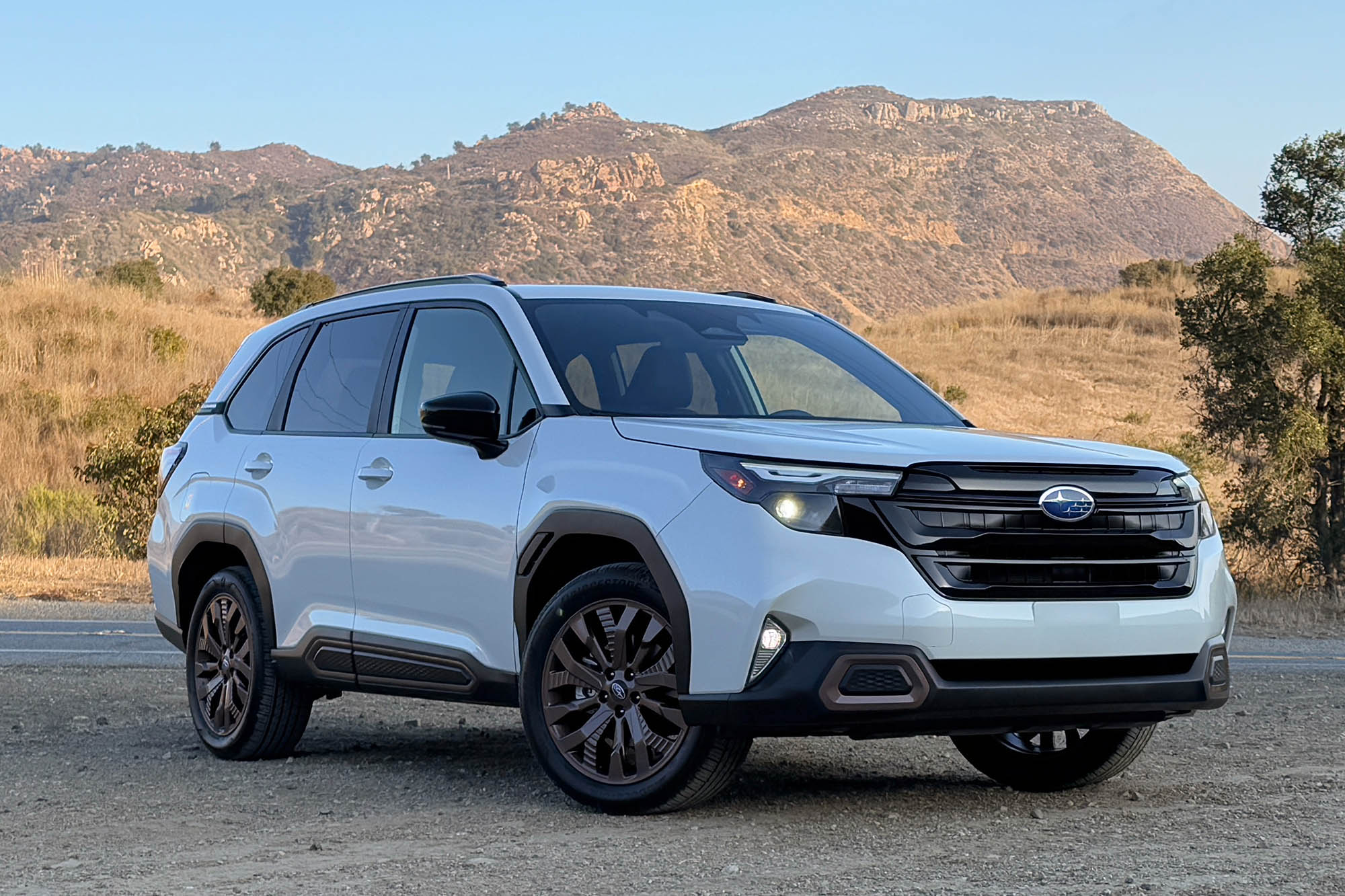
A large number of Subaru Forester owners choose the Starlink Safety Plus package because it offers emergency support and added security features. While these services provide clear benefits during accidents or vehicle theft situations, the same telematics system also allows the vehicle to send operational data through a built-in cellular connection.
Since both emergency services and routine data sharing use the same system, many drivers may not clearly see where one function ends and the other begins during normal use of the vehicle. When the Starlink account is active, the Forester can transmit information such as its location, airbag deployment status, crash sensor data, and other vehicle conditions directly to Subaru’s servers.
These transmissions play an important role in supporting emergency response teams and helping with stolen vehicle recovery. At the same time, they also build a continuous record that shows how the vehicle is used, including travel history, driving times, and general usage patterns collected across months or years of ownership.
Most owners activate Starlink Safety Plus during the purchase and delivery process of a new Forester. Because it is often presented as part of a standard safety package, some buyers may not fully examine the details of the service. As a result, activation is frequently completed without a detailed review of how much data may be shared beyond emergency scenarios.
Drivers who prefer more control over their vehicle information can compare different Starlink subscription options. Certain plans focus mainly on emergency assistance, while others include broader connected services that involve additional data transmission. Taking time to review these choices can help owners select a setup that better matches their expectations for privacy and daily use requirements.