
For many drivers, Chevrolet brings to mind practical pickup trucks, trusted family sedans, and affordable performance cars built for daily use across the United States. That reputation reflects much of the brand’s long manufacturing record. Still, hidden within more than a century of production is a select group of vehicles that sit far outside the idea of affordability.
These particular Chevrolets stand apart because of extreme rarity, direct ties to racing history, or their role in defining major moments in automotive development. That is why collectors have been willing to commit millions of dollars to own them. The prices involved have nothing to do with the original showroom figures.
Each amount comes from verified auction sales where determined bidders competed for cars produced in single digits or preserved as the only surviving example on the planet. Some of these vehicles began life as purpose-built race machines, including lightweight Le Mans entries constructed with magnesium body panels.
Others were open-top muscle cars fitted with some of the most powerful big-block engines the brand ever released. In every case, the value reflects far more than appearance or straight-line speed. Each sale represents history, engineering ambition, and moments that shaped how performance cars were built and understood.
Listed by confirmed auction prices from highest to lowest, the eight Chevrolets that follow illustrate just how far collector demand can climb. Each profile includes background information and technical details that explain why these vehicles exceeded expectations and earned a place among the most expensive Chevrolets ever sold.
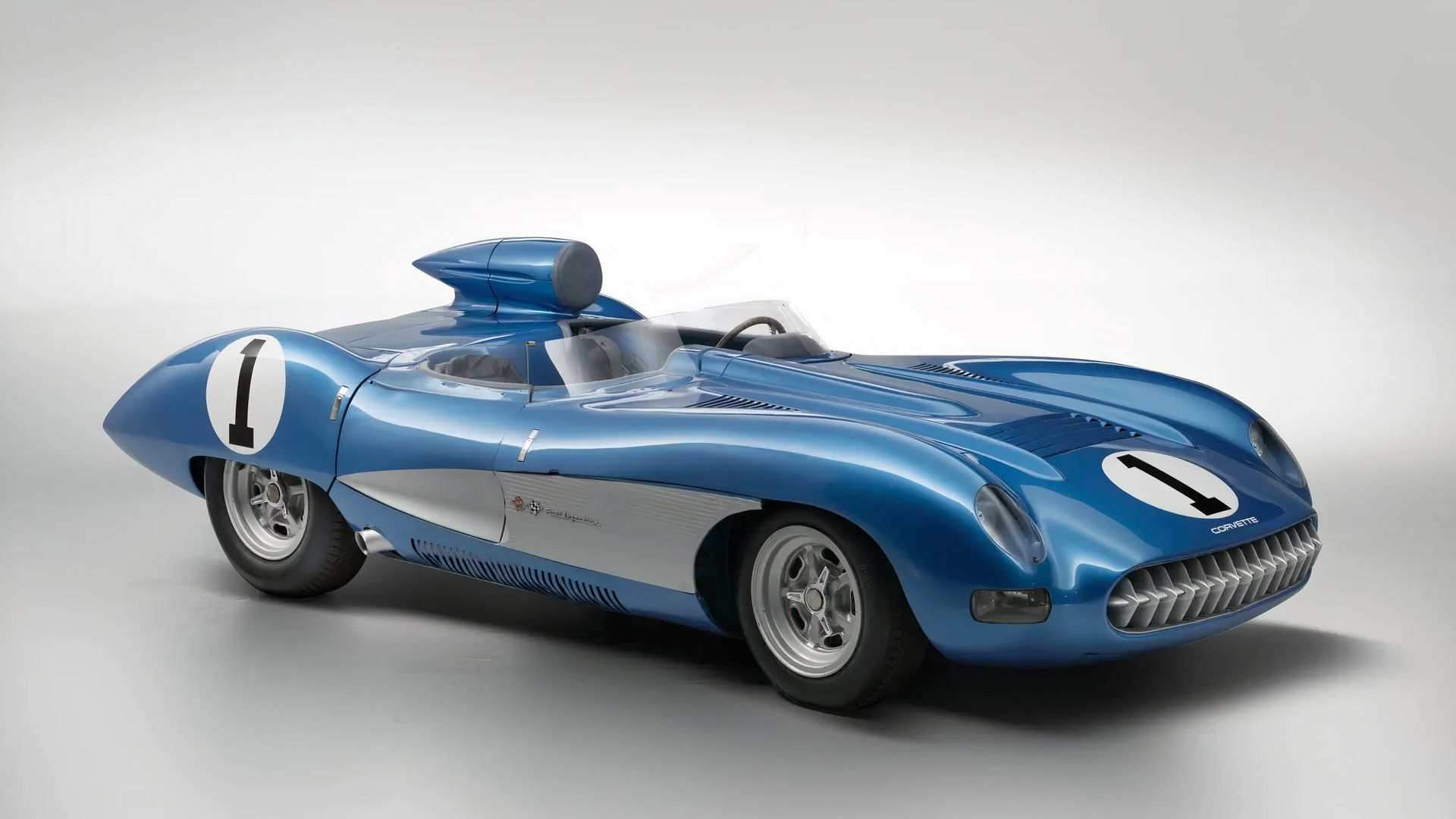
1. 1957 Chevrolet Corvette SS Race Car (Project XP-64)
Auction Record: $7,705,000 (Sold in early 2025, RM Sotheby’s Miami)
- Engine: 4.6L Naturally Aspirated Small-Block V8 (Custom Magnesium Components)
- Horsepower: 307 hp
- Torque: 300 lb-ft
- Size: 168.0 in Long x 68.2 in Wide
No Chevrolet has ever reached a higher sale price than the 1957 Corvette SS racing prototype, and its history explains why collectors value it so highly. This machine carries the direct influence of Zora Arkus-Duntov, the engineer credited with transforming the Corvette into a serious performance car.
Known widely as the guiding force behind the model’s sporting direction, he created Project XP-64 to show that an American sports car could challenge Europe’s best on the toughest endurance stage of all, the 24 Hours of Le Mans. The prototype was constructed around a very low body formed largely from magnesium, selected because it weighed far less than steel. For 1957, this choice reflected forward-thinking engineering rather than convention.
Measuring 168 inches in length and 68.2 inches in width, the car’s proportions were compact and purposeful, shaped entirely around competition needs rather than comfort or daily usability. Power came from a 4.6-liter small-block V8 producing 307 horsepower and 300 pound-feet of torque, figures aimed at delivering speed through lightness rather than brute size.
What truly separates this Corvette SS from every other Chevrolet is its singular existence. There were no follow-up builds, no production versions, and no related chassis sharing its structure. It stands alone as a one-off racing experiment. When the car appeared at the RM Sotheby’s Miami sale, bidding reflected that reality.
The final price of 7,705,000 dollars did more than set a brand record for Chevrolet. It confirmed that original, irreplaceable automotive history carries a level of value no production figure, however impressive, can ever replace.
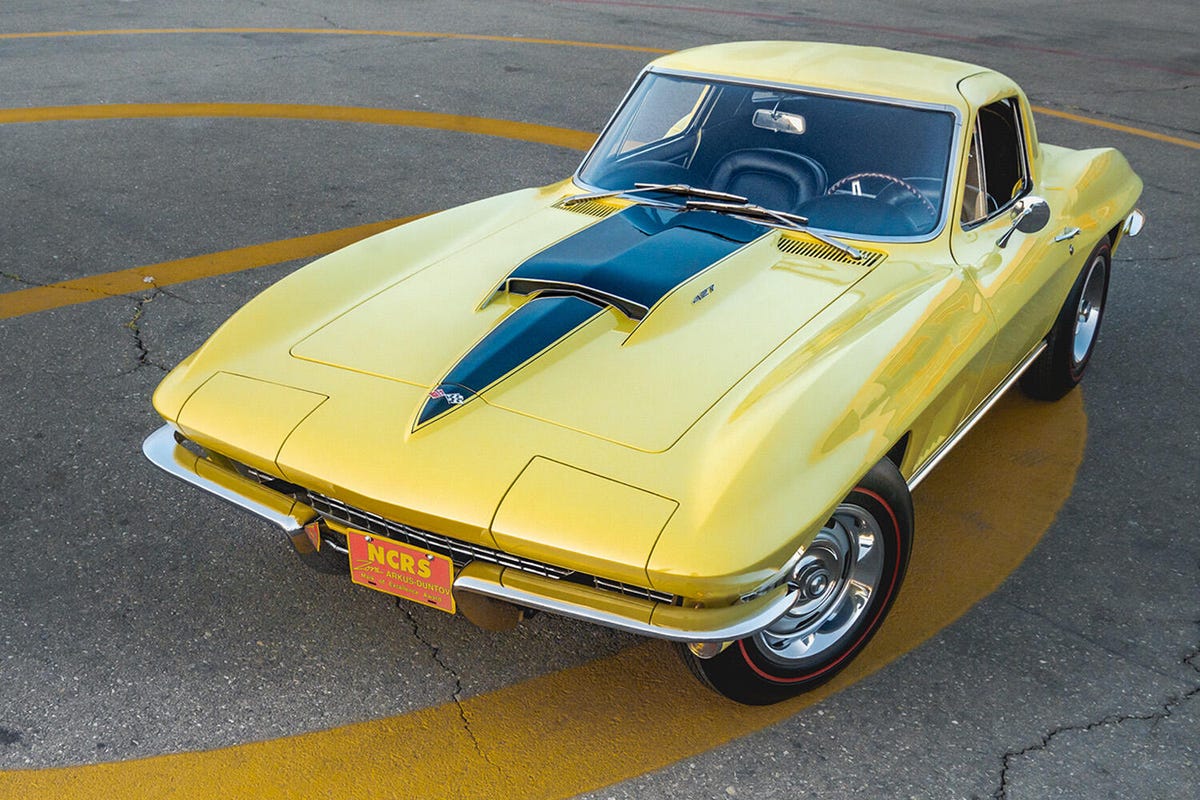
2. 1967 Chevrolet Corvette L88 Coupe
Auction Record: $3,850,000 (Sold at Barrett-Jackson in 2014)
- Engine: 7.0L Naturally Aspirated V8 (427 ci L88 Big-Block)
- Horsepower: 430 hp factory-rated (actual output closer to 560 hp)
- Torque: 460 lb-ft
Size: 175.3 in Long x 69.2 in Wide
Production during the 1967 model year was extremely limited, with Chevrolet assembling only 20 vehicles fitted with the intimidating L88 performance option. Among those few cars, one coupe stands completely by itself. It remains the sole factory L88 example finished in Sunfire Red, placing it in a category that very few collectors will ever encounter in a lifetime.
When rarity is layered on top of another level of rarity, interest from serious buyers rises sharply. This particular car represents the peak of that situation. The L88 name referred to a 427 cubic inch big block V8 that Chevrolet officially rated at 430 horsepower.
Specialists in the field have long understood that this figure was far below the engine’s real output. Later independent testing revealed power levels closer to 560 horsepower. That conservative rating was done on purpose. During the late nineteen sixties, insurers and regulators were already uneasy about the rapid rise in muscle car power figures.
By understating performance, Chevrolet avoided additional scrutiny. Along with its true power, the engine produced 460 pound-feet of torque, transforming what looked like a regular Corvette into one of the fastest production cars available anywhere at the time.
Ordering the L88 meant accepting a very basic specification. Buyers gave up power steering, power brakes, and even a radio, all in the interest of reducing weight and supporting competition-focused use. With dimensions measuring 175.3 inches long and 69.2 inches wide, this Sunfire Red coupe functioned as a road-legal race car with minimal concessions to comfort.
When this Corvette crossed the auction block at Barrett-Jackson in 2014, the result reflected its unique status. The final sale price of 3,850,000 dollars captured both the extreme rarity of the L88 package and the unmatched distinction of its original color, a pairing that is highly unlikely to appear again in the collector market.
Also Read: Top 12 Cheapest Chevrolet Models With Over 300 HP, Ranked
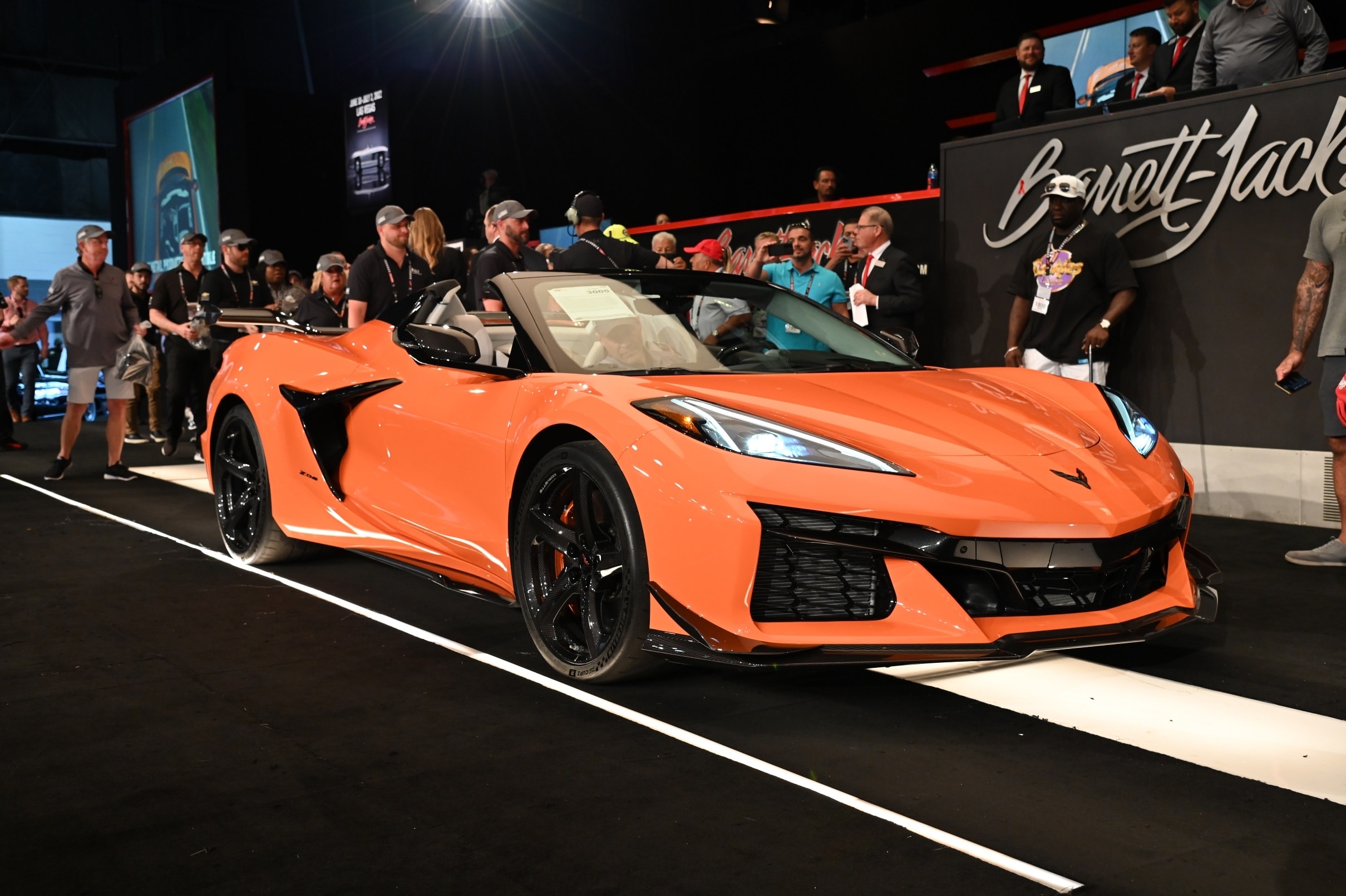
3. 2023 Chevrolet Corvette Z06 VIN 001
Auction Record: $3,600,000 (Sold at Barrett-Jackson in 2022)
- Engine: 5.5L Naturally Aspirated Flat-Plane Crank V8 (LT6)
- Horsepower: 670 hp
- Torque: 460 lb-ft
- Size: 184.6 in Long x 79.7 in Wide
Every other entry on this list earns its valuation through decades of accumulated rarity and racing heritage. The 2023 Corvette Z06 carrying VIN 001 took a completely different path to its $3,600,000 sale price, and the story behind that number is just as compelling as anything from Chevrolet’s classic era.
This is, mechanically, the first production example of the C8 generation Z06 ever built, the very first car off an assembly line that would go on to produce thousands of identical siblings selling at a fraction of this auction price. Powering this groundbreaking mid-engine Z06 is Chevrolet’s LT6 engine, a 5.5-liter naturally aspirated V8 featuring a flat-plane crankshaft design borrowed from European supercar engineering philosophy rather than Chevrolet’s traditional cross-plane big-block approach.
That engine produces 670 horsepower and revs to a redline that rivals dedicated Italian exotic supercars, all while retaining the naturally aspirated character that Corvette enthusiasts have always valued. Measuring 184.6 inches long and 79.7 inches wide, the modern mid-engine Z06 represents a complete architectural departure from every Corvette that came before it.
What pushed VIN 001 to its extraordinary sale price was not just its first-off-the-line status but the charitable destination of the proceeds. The buyer who won the bidding war at Barrett-Jackson’s charity auction event knew that 100% of the hammer price was being donated directly to Operation Homefront, an organization supporting American military families.
Combining genuine automotive history with a charitable cause created a bidding atmosphere that pushed the price well beyond what any standard production Z06 could ever command.
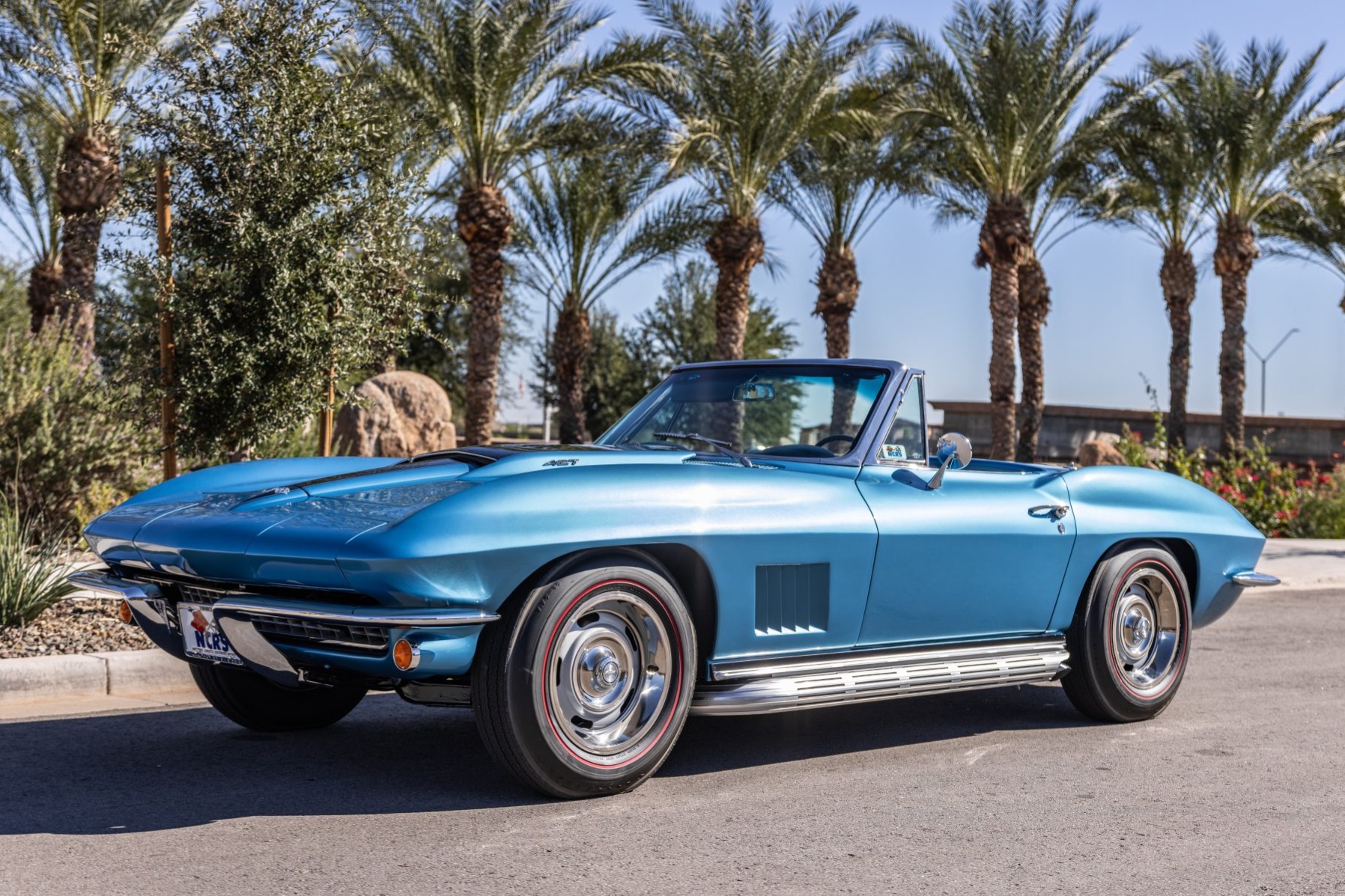
4. 1967 Chevrolet Corvette L88 Convertible
Auction Record: $3,424,000 (Sold at Mecum in 2013)
- Engine: 7.0L Naturally Aspirated V8 (427 ci L88 Big-Block)
- Horsepower: 430 hp factory claim
- Torque: 460 lb-ft
- Size: 175.3 in Long x 69.2 in Wide
Half of the 20 total 1967 L88 Corvettes left the factory configured as convertibles rather than fixed-roof coupes, splitting an already vanishingly rare production run into two even smaller subsets. This particular convertible distinguishes itself within that exclusive group through something collectors value above almost any other attribute: complete originality.
Every major body panel on this vehicle remains the original factory steel it wore when it left the assembly line, with matching numbers confirming that the engine block, transmission, and chassis all correspond to the documentation issued when the car was new.
Sharing its mechanical specification sheet with the Sunfire Red coupe above it on this list, this convertible carries the same 427 cubic inch L88 big-block V8 officially rated at 430 horsepower and 460 lb-ft of torque. Measuring 175.3 inches long and 69.2 inches wide, the convertible body style added open-air driving to the L88’s already formidable straight-line performance credentials, making it a genuinely thrilling car to drive for the small handful of original owners fortunate enough to order one.
Award history compounds this car’s desirability further. Vehicles that have accumulated recognition at major concours and judged collector car events carry documented validation of their condition and authenticity that goes beyond what a casual inspection can confirm.
When this L88 convertible crossed the block at Mecum’s 2013 auction, bidders were not just purchasing one of ten known 1967 L88 convertibles. They were purchasing a documented, awarded, matching-numbers example with a verification trail that collectors trust completely, justifying its $3,424,000 sale price within the context of an already extraordinarily rare production run.
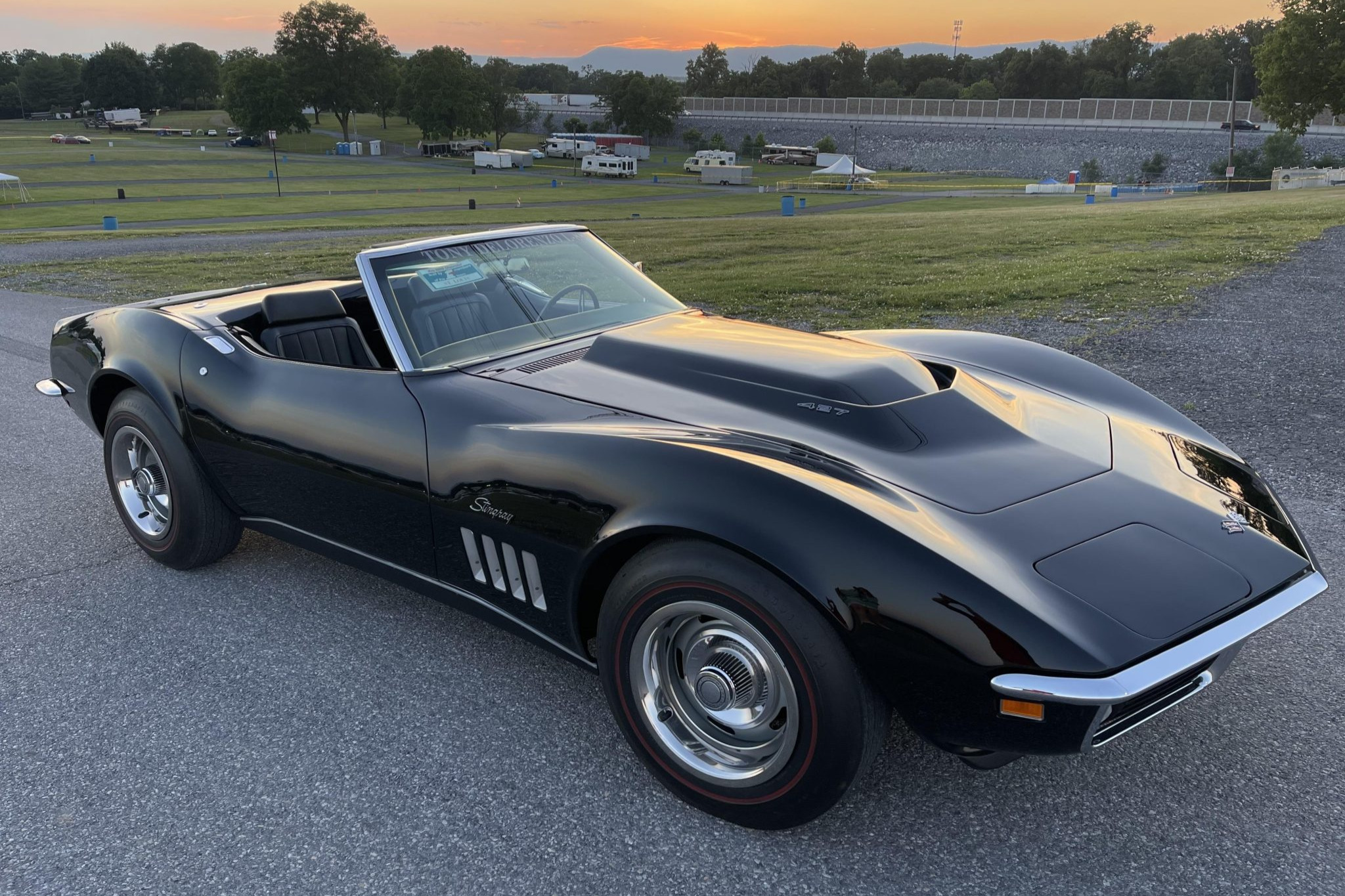
5. 1969 Chevrolet L88 Corvette Convertible
Auction Record: $1,870,000 (Sold at Mecum in 2014)
- Engine: 7.0L Naturally Aspirated V8 (427 ci L88 Big-Block)
- Horsepower: 430 hp
- Torque: 460 lb-ft
- Size: 174.5 in Long x 69.0 in Wide
Production of the L88 Corvette grew in 1969, with Chevrolet assembling 116 examples during that model year instead of the very limited 20 units built in 1967. At first glance, that increase would suggest the 1969 version should attract lower prices and wider availability.
What happened at auction told a different story. A rare mix of condition, documentation, and history surrounding this specific convertible drove bidding to a level that crossed 1.8 million dollars. What places this car far above most others from the same year is its untouched state. The vehicle remains completely unrestored, retains all matching numbers, and still carries its original factory paperwork.
Many L88 Corvettes have changed hands several times, passed through workshops, or undergone engine work across more than fifty years. Those changes often remove the originality that collectors value more than anything else. Discovering an example that has never been taken apart, still holds every original component, and includes its factory build sheet and window sticker is extremely uncommon, regardless of how many were produced.
From a mechanical standpoint, this convertible mirrors the earlier L88 models. The 427 cubic-inch big-block V8 delivers the same officially rated 430 horsepower and 460 pound-feet of torque. Measuring 174.5 inches in length and 69 inches in width, it stays true to the classic Corvette proportions of the era.
When this car appeared at Mecum Auctions in 2014, collectors focused on originality pushed bidding into intense territory. The final sale price of 1,870,000 dollars showed how condition and documentation can outweigh production numbers in the collector market.
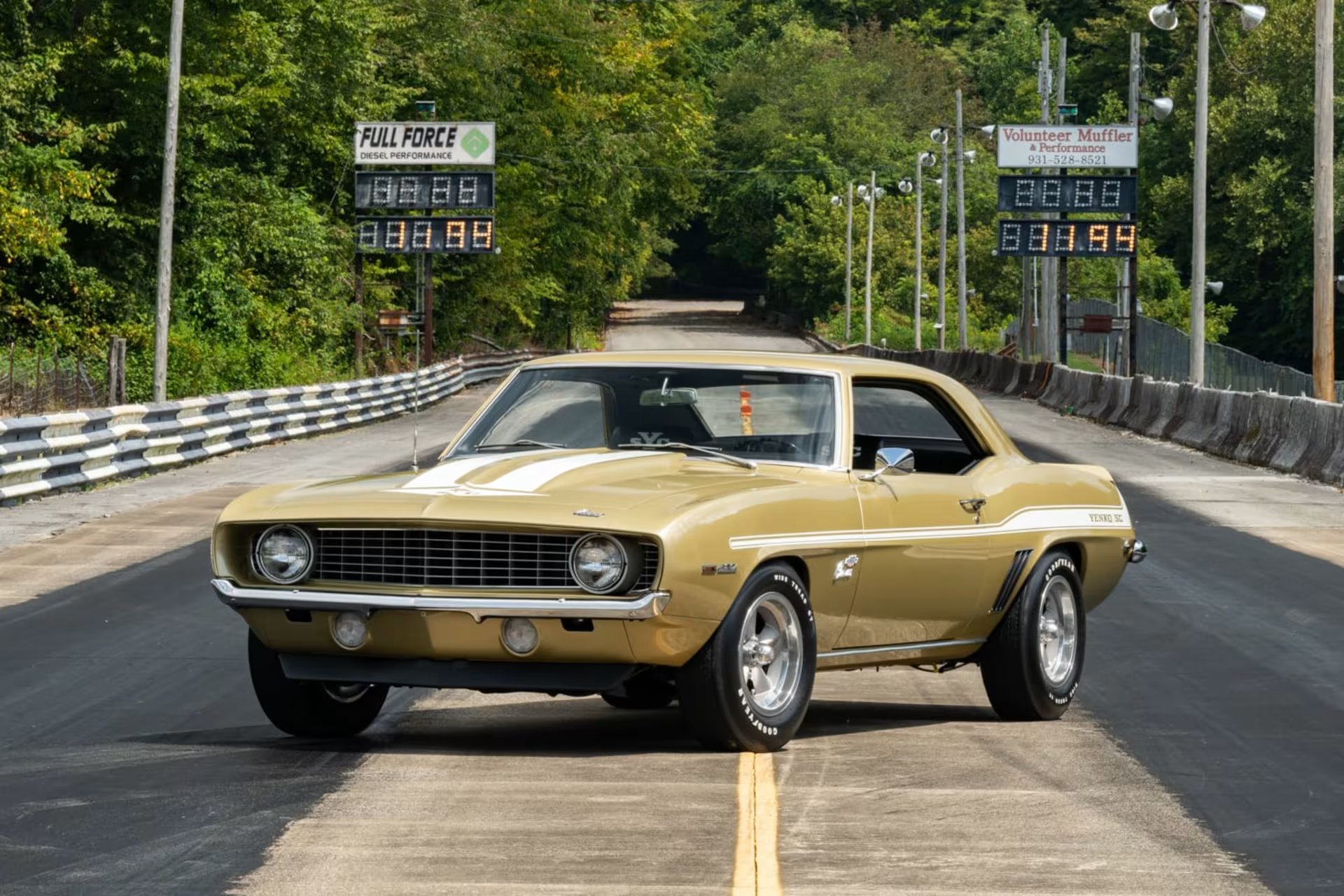
6. 1969 COPO Yenko Camaro Prototype
Auction Record: $1,815,000 (Sold in early 2026)
- Engine: 7.0L Naturally Aspirated V8 (427 ci Big-Block)
- Horsepower: 425 hp
- Torque: 460 lb-ft
- Size: 184.6 in Long x 72.3 in Wide
Standing as the most expensive Chevrolet Camaro ever sold at auction, this particular vehicle holds a place in Chevrolet history that extends well beyond its own individual specifications. This is not simply a rare Camaro. This is the actual engineering prototype that legendary performance car builder Don Yenko personally used to demonstrate the Central Office Production Order concept to General Motors management, proving that a 427 cubic inch big-block engine could be successfully shoehorned into a Camaro chassis never originally designed to accommodate it.
That demonstration mattered enormously to the broader trajectory of American muscle car history. Once GM management saw what Yenko’s prototype could achieve, the COPO ordering system opened the door for factory-built 427-powered Camaros to become an official, dealer-orderable option rather than remaining confined to aftermarket conversions performed by independent tuning shops.
Every COPO Camaro that followed, and the entire collector market built around that designation, traces its origin directly back to this specific prototype proving the concept could work. Producing 425 horsepower and 460 lb-ft of torque from its 427 cubic inch big-block V8, and measuring 184.6 inches long and 72.3 inches wide, this Camaro represents the literal moment of transition between concept and production reality.
Its early 2026 auction sale at $1,815,000 reflects collectors’ recognition that owning this car means owning the foundational artifact behind an entire category of legendary muscle cars that followed in its wake.
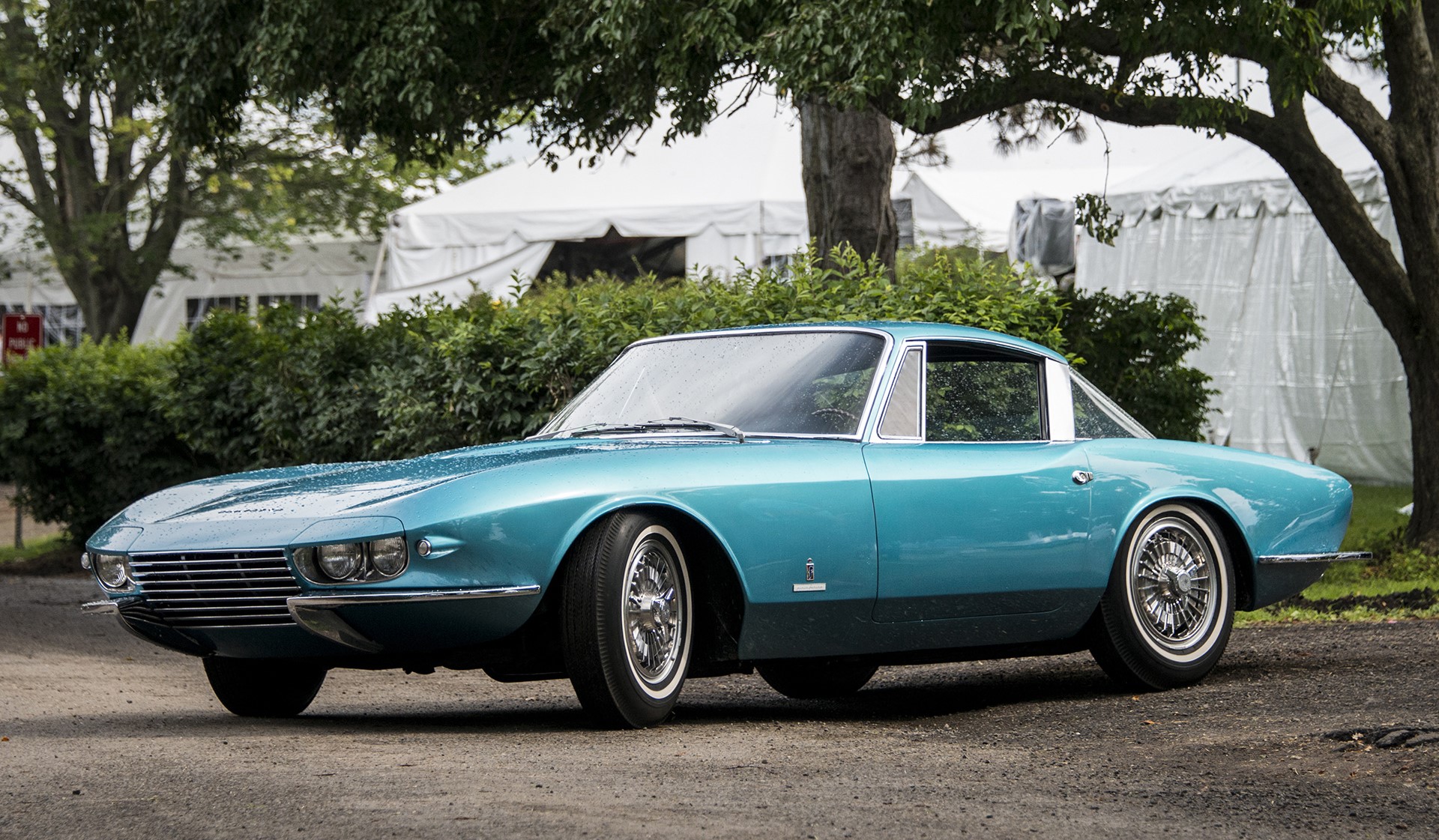
7. 1963 Chevrolet Corvette Rondine Concept
Auction Record: $1,760,000 (Sold at Barrett-Jackson in 2008)
- Engine: 5.4L Naturally Aspirated V8 (327 ci Small-Block)
- Horsepower: 360 hp
- Torque: 352 lb-ft
- Size: 174.5 in Long x 68.1 in Wide
Value for most cars on this list comes from speed, racing history, or limited production numbers. The 1963 Corvette Rondine Concept stands apart for a different reason, which is pure styling talent. Rather than chasing lap times, its worth rests on design creativity that has remained timeless decades later.
General Motors made an uncommon decision by sending a standard 1963 Corvette Sting Ray chassis to Italy. There, the famous design studio Pininfarina shaped a completely custom body by hand. The project blended American engineering with European craftsmanship in a way rarely attempted during that era.
The finished steel and aluminum body shared nothing with the production Sting Ray beneath it. Smooth curves and refined proportions reflected Italian coachbuilding traditions while sitting over familiar Corvette mechanical parts. The concept appeared publicly at the Paris Auto Show and attracted widespread attention from designers and motoring journalists.
Beneath the sculpted exterior sat a 327 cubic inch small block V8 producing 360 horsepower and 352 pound-feet of torque. Dimensions measured 174.5 inches in length and 68.1 inches in width. Only one example was ever created, making the Rondine a truly singular Corvette.
When the car crossed the auction block at Barrett-Jackson in 2008, it sold for 1,760,000 dollars. Buyers were paying for preserved automotive art and cultural history. That sale confirmed design excellence alone can command extraordinary respect in the collector market. Today, it remains a reference piece showing how collaboration can reshape expectations far beyond engineering limits alone for future generations.
Also Read: Every Generation Of The Chevrolet Corvette, Ranked
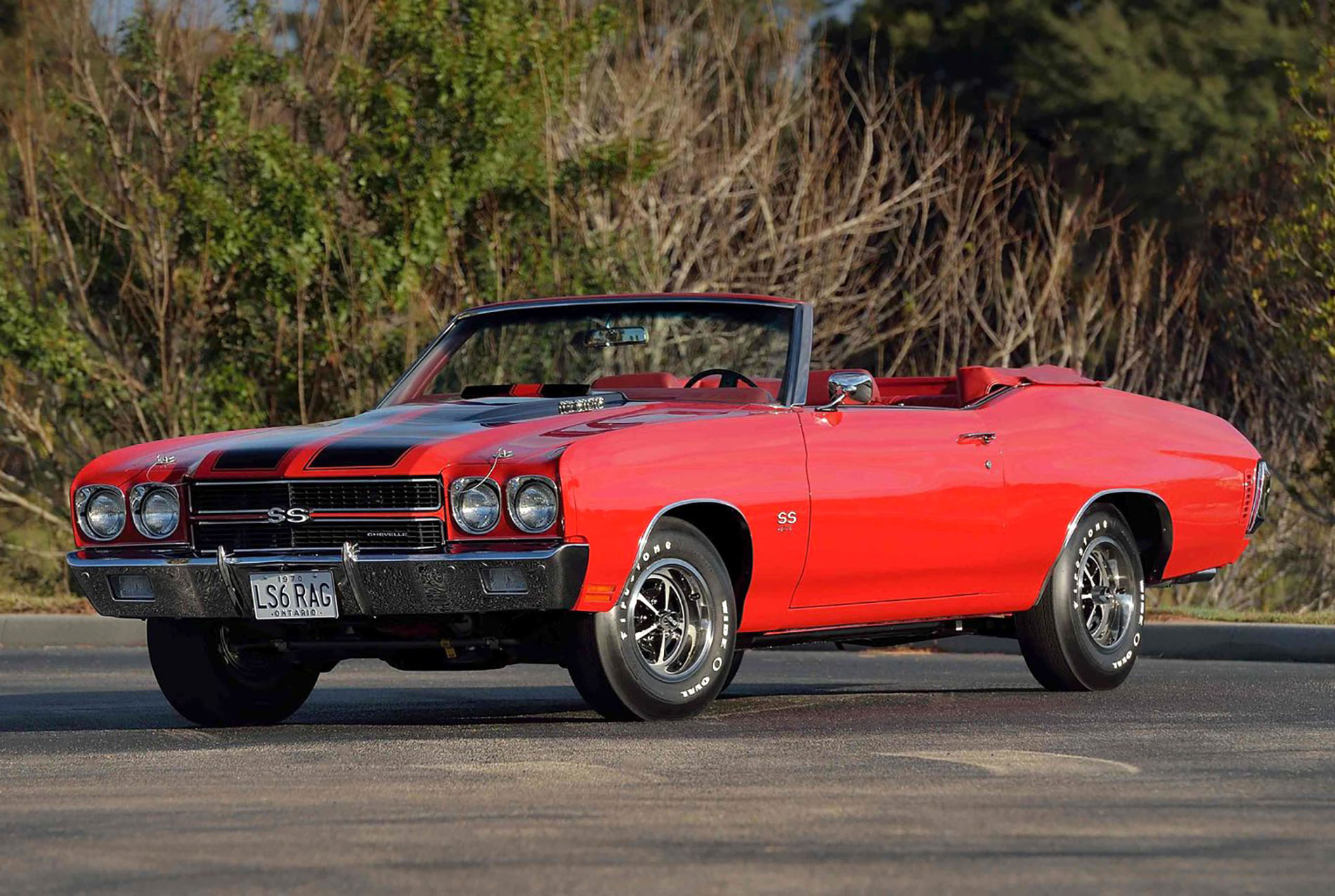
8. 1970 Chevrolet Chevelle SS 454 LS6 Convertible
Auction Record: $1,242,000 (Sold at Mecum in 2006)
- Engine: 7.4L Naturally Aspirated V8 (454 ci LS6 Big-Block)
- Horsepower: 450 hp
- Torque: 500 lb-ft
- Size: 197.2 in Long x 75.4 in Wide
Closing this ranking is a vehicle many muscle car historians regard as the finest factory performance machine of the 1970s. The Chevelle SS 454 fitted with the LS6 package marked the high point of muscle output from Chevrolet, arriving just before insurance penalties, emissions rules, and changing buyer tastes pushed the industry toward smaller, thriftier cars. Under the bonnet sat a 454 cubic inch LS6 big block V8 delivering 450 horsepower and a towering 500 pound-feet of torque.
That figure places it among the strongest production engines built by General Motors during the classic muscle years. With a body measuring 197.2 inches long and 75.4 inches wide, the Chevelle carried serious road presence, matching the force generated beneath the hood. Hardtop versions were produced in higher quantities, yet convertible examples matched to the LS6 were assembled in extremely small numbers, creating sharp scarcity inside an already celebrated model line.
This specific car adds another layer of interest through a verified competition past. From early ownership, it was run at the drag strip rather than stored as a polished display piece. That racing use became part of its identity and was respected during later care, rather than removed or hidden. Collectors responded strongly to that authenticity when the car appeared at Mecum Auctions in 2006.
Bidding climbed as enthusiasts recognized the blend of power, rarity, and lived history. The hammer finally fell at 1,242,000 dollars, a figure that echoed long-held beliefs within the muscle community. The LS6 Chevelle convertible stands as a benchmark for what Detroit engineering could deliver when unrestricted power and bold design met on the production line.
Its reputation continues to guide collectors, reminding buyers how factory ambition, careful assembly, and fearless intent once defined American performance at its highest point during that unforgettable decade alone.
