
There are luxury car brands, there are performance car brands, and then there is Porsche, a company that exists in a category entirely its own. Since Ferry Porsche hand-built the very first 356 in a Gmünd workshop in 1948, the Stuttgart marque has pursued a singular philosophy: engineering excellence above all else. That obsession has produced some of the most coveted automobiles ever to turn a wheel.
What sets Porsche apart from every other manufacturer is the seamless bridge it builds between the racetrack and the road. The cars on this list were not designed to impress in showrooms.
They were designed to win at Le Mans, at Can-Am, at the Nürburgring, and the road versions, where they existed, were barely disguised race machines wearing license plates. Every model here carries a story of engineers pushing beyond what was thought possible, of drivers who risked everything in pursuit of victory, and of a company that refused to accept defeat.
Price, in these cases, is simply the market’s way of acknowledging importance. These are not expensive because they are decorated. They are expensive because they changed the history of motorsport.
From a tiny 1950s spyder that humbled Ferrari to a twin-turbo monster that terrified Can-Am, these ten Porsches represent the absolute pinnacle of what the human desire to go fast has ever produced. Ranked by auction result and estimated value, here are the ten most expensive Porsche models ever made.
10. Porsche 911 Carrera RSR 3.0 IROC (1974), ~$2.3 Million
When the FIA banned the dominant Porsche 917 from World Championship racing in 1972, Porsche needed a new competitive platform. The answer came in the form of the 911 Carrera RSR 3.0, a machine that would go on to define an era of Porsche racing and, decades later, command staggering prices at auction.
The International Race of Champions (IROC) series was one of the most prestigious competition formats of its time. It placed the world’s best drivers from different disciplines into identical cars and let pure talent decide the winner. For the inaugural 1974 IROC season, Porsche built a limited number of specially prepared 911 Carrera RSR 3.0 models.
Porsche’s engineers worked with the wide-body bodywork that had first appeared on the RSR 2.8, extending the rear haunches to accommodate dramatically wider rear tires and a rear spoiler that became iconic.
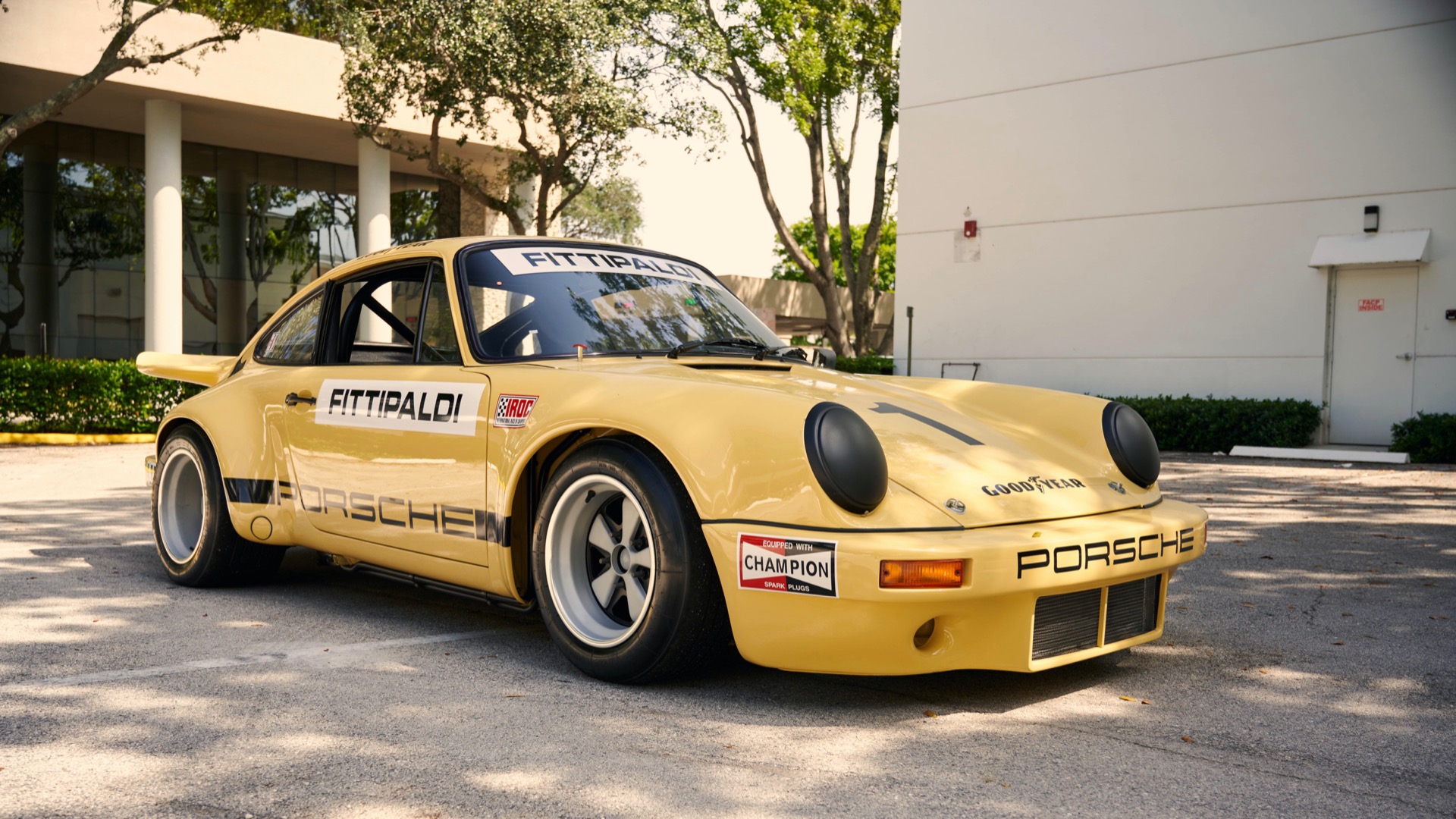
What makes these cars so collectable is their racing pedigree and the calibre of the men who drove them. IROC attracted legends like Mark Donohue, Al Unser, Bobby Unser, George Follmer, and Roger Penske.
Each car was virtually identical to ensure the competition was purely about driving skill. The IROC series validated the 911’s chassis in a unique context, proving that the rear-engined layout could be mastered even by drivers unfamiliar with it.
One of these cars sold at auction for approximately $2.3 million, a reflection of both its historical significance and extreme rarity. The RSR 3.0 also earned outright victories in endurance racing outside IROC, including class wins at Le Mans and Daytona. This was a transitional car connecting the air-cooled 911’s racing past with the turbocharged future Porsche was rapidly developing in parallel.
Specifications:
- Engine: 3.0-liter flat-six twin-plug
- Horsepower: ~330 hp
- Torque: ~217 lb-ft
- Length: 4,163 mm
- Width: 1,828 mm
9. Porsche 918 Spyder (2015), ~$1.7 Million+ (Current Market)
The 918 Spyder was Porsche’s declaration to the world that the future of performance could be electric. It arrived in 2013 as a plug-in hybrid hypercar, sitting alongside the McLaren P1 and Ferrari LaFerrari in what automotive journalists called the “Holy Trinity” of that generation’s supercars. With just 918 examples ever built, the 918 Spyder has become one of the most sought-after modern Porsches in the collector market.
Originally priced at $845,000 when new, examples with the Weissach Package, which shed 41 kilograms through lighter carbon fiber wheels, reduced soundproofing, and magnesium roof components, have been trading well above $1.5 million in recent years.
Condition and mileage drive significant premiums. The 918 was not merely expensive because of its price tag; it was a technological tour de force that justified every dollar.
The powertrain was unlike anything Porsche had produced before. A naturally aspirated 4.6-liter V8 engine producing 599 horsepower was combined with two electric motors, one on each axle, for a combined system output of 887 horsepower and 944 lb-ft of torque.
The all-wheel drive system was intelligent enough to torque-vector between axles in real time. In 2013, the 918 became the first road car to lap the Nürburgring Nordschleife in under 7 minutes, setting a time of 6 minutes and 57 seconds.
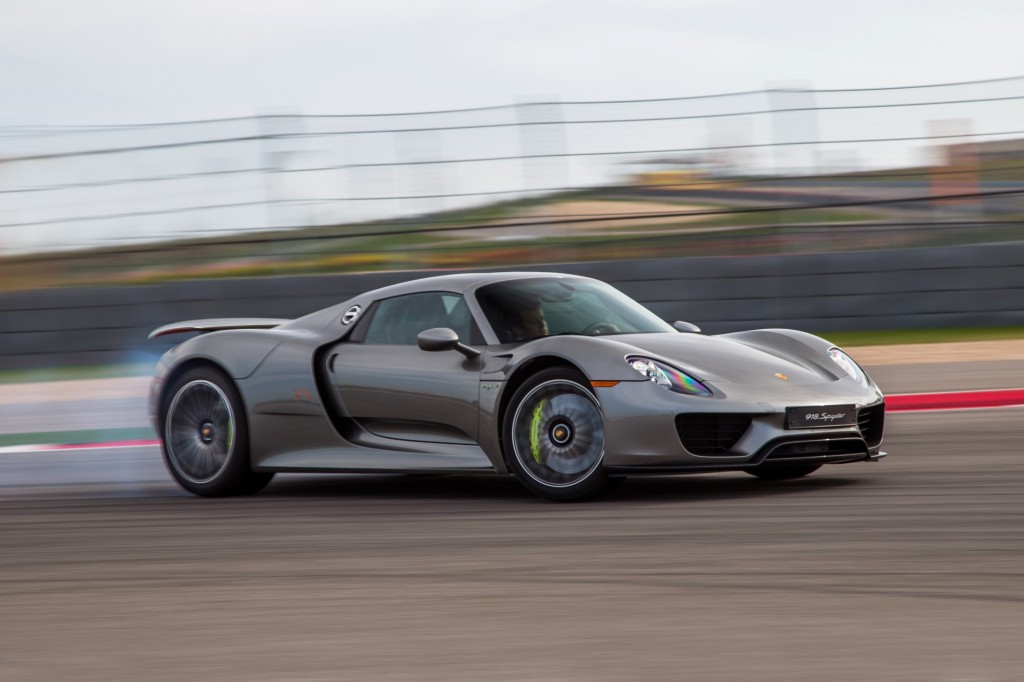
The 918 could sprint from 0 to 100 km/h in a staggering 2.6 seconds. Its electric-only range was 19 km, making it genuinely usable in zero-emission city driving.
Porsche fitted the car with a carbon fiber monocoque chassis, pushrod suspension borrowed from Formula 1, and carbon ceramic brakes. The gearbox was a seven-speed PDK dual-clutch unit.
Each of the 918 units built was individually configured by its owner, meaning no two are identical. That exclusivity only strengthens the car’s collectability.
Specifications:
- Engine: 4.6-liter V8 + two electric motors
- Combined Horsepower: 887 hp
- Torque: 944 lb-ft (combined)
- Length: 4,643 mm
- Width: 1,940 mm
8. Porsche 959 (1986–1988), ~$1.5–2 Million (Current Market)
The Porsche 959 is arguably the most technically advanced road car of the 1980s, full stop. When it appeared at the 1983 Frankfurt Motor Show as a concept, it was so far ahead of anything else that people assumed it was a styling exercise. When Porsche confirmed it would go on sale, the automotive world did not know what to make of it.
Only 292 examples of the road-going 959 were produced, split between the standard “Komfort” version and the lightweight “Sport” version. Each car was hand-built, with a manufacturing process so complex and labour-intensive that Porsche reportedly lost money on every unit sold.
It produced 450 horsepower in road trim, delivered through a six-speed manual gearbox and Porsche’s first fully variable all-wheel drive system, the PSK system, which could apportion torque between the axles from 40/60 front/rear all the way to a 20/80 split in dynamic conditions. This system was operated by a computer that processed information from wheel-speed sensors twenty times per second.
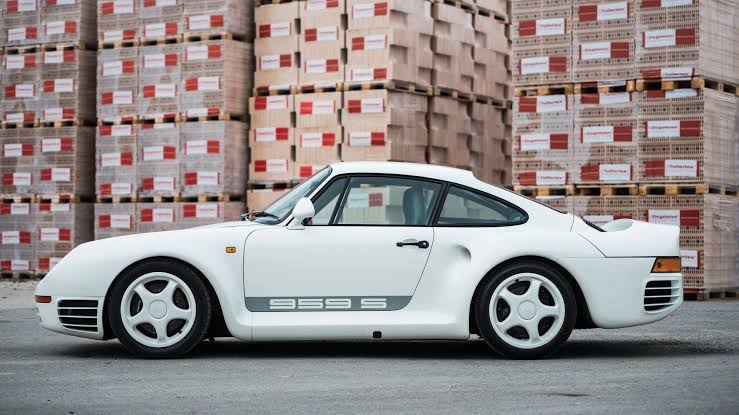
The car also featured tire-pressure monitoring when such technology was decades from mainstream use, active suspension ride-height management, and a body made extensively from Kevlar and aramid composites.
Three 959 prototypes competed in the 1986 Paris-Dakar Rally. René Metge won the event in one of them, with Jacky Ickx finishing second in another. It was an astonishing demonstration of the car’s breadth of capability, a car that could lap a circuit in record time and then traverse the Sahara.
Specifications:
- Engine: 2.85-liter twin-turbocharged flat-six
- Horsepower: 450 hp
- Torque: 500 Nm (369 lb-ft)
- Length: 4,260 mm
- Width: 1,840 mm
7. Porsche Carrera GT (2004–2006), ~$1.5 Million+ (Current Market)
The Carrera GT began life as a cancelled Le Mans prototype. Porsche had developed a radical V10 engine for a mid-engine racing prototype in the late 1990s.
When the racing program was shelved, the engineers could not bring themselves to abandon the engine. The result was the Carrera GT, one of the purest, most demanding, and most celebrated supercars of the 21st century.
Originally priced at around $440,000 new, the Carrera GT has appreciated dramatically. Low-mileage examples now regularly exceed $1.5 million at auction, with particularly significant cars fetching considerably more. Only 1,270 were ever built, and demand from collectors far outstrips supply.
Porsche connected the engine to the rear wheels through a six-speed manual transmission with a ceramic composite clutch, a racing-derived component that required a specific technique to operate and punished the inexperienced.
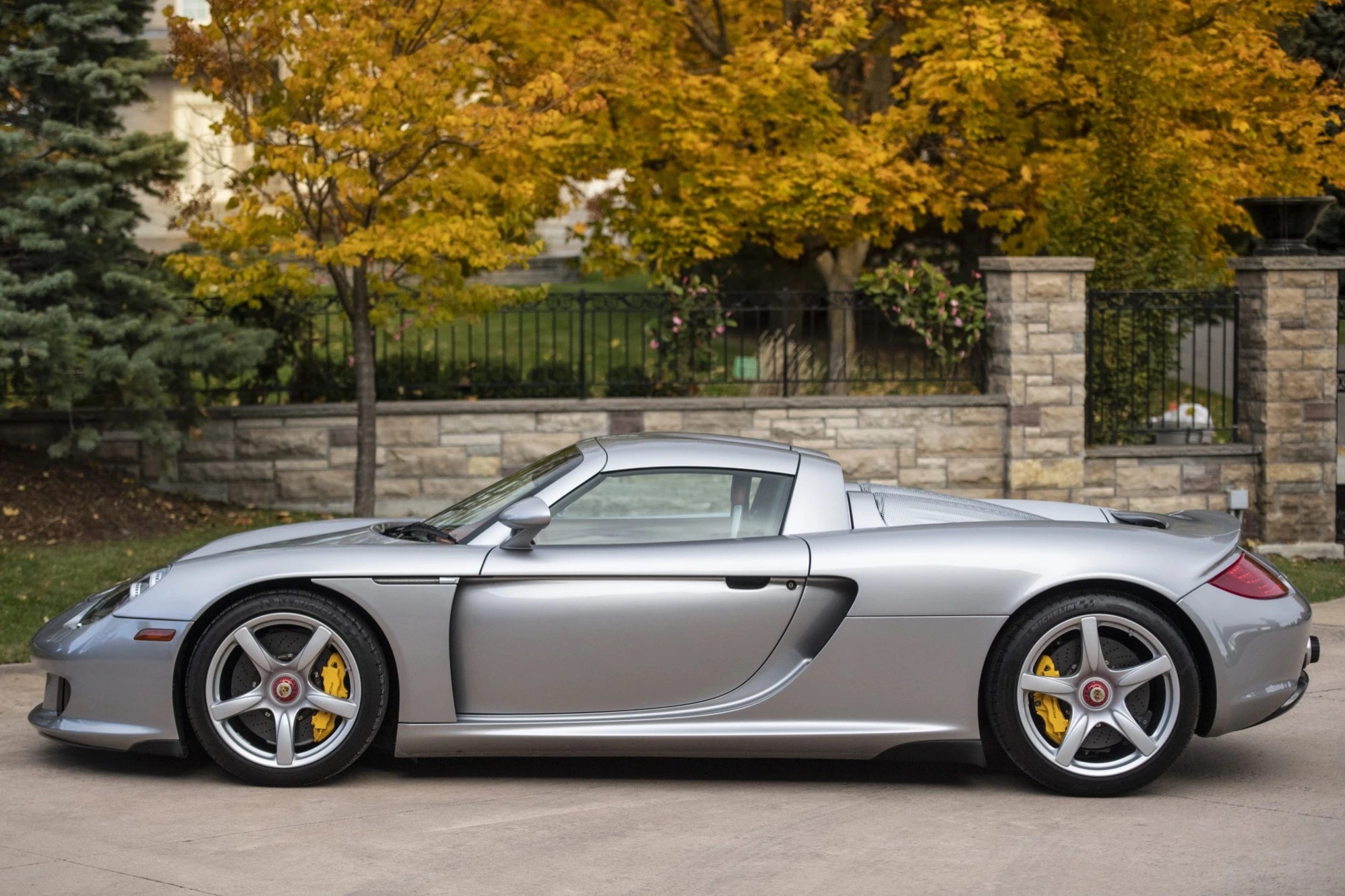
The Carrera GT weighed just 1,380 kilograms. Its carbon fiber body, carbon ceramic brakes, and motorsport-derived pushrod suspension gave it a character that was intensely focused and deeply unforgiving. It could reach 100 km/h in 3.9 seconds and 200 km/h in 9.9 seconds.
The Carrera GT carries additional cultural weight because of a tragedy that embedded it in public consciousness. Actor Paul Walker died in a Carrera GT crash in 2013, a fact that brought the car to the attention of an audience far beyond the traditional Porsche collector community. Whatever the circumstances, the Carrera GT’s reputation for demanding respect from its driver has never been questioned.
Specifications:
- Engine: 5.7-liter naturally aspirated V10
- Horsepower: 612 hp @ 8,000 rpm
- Torque: 590 Nm (435 lb-ft)
- Length: 4,613 mm
- Width: 1,921 mm
6. Porsche 917/30 Can-Am Spyder (1973), ~$3 Million
If the 917K was the car that gave Porsche its first Le Mans victory, the 917/30 was the car that essentially destroyed an entire racing series. The Can-Am Championship was North America’s most prestigious sports car series, an open-regulations category that allowed virtually any engine size and configuration. McLaren had dominated it for years. When Porsche arrived with the 917/30 in 1973, the series never recovered.
The 917/30 was built around the same basic 917 spaceframe as the Le Mans cars, but everything was pushed further. The wheelbase was extended by 184mm compared to the 917/10 to accommodate the extra mechanical stress of the new powertrain.
That powertrain was a 5.4-liter flat-twelve engine with two exhaust-driven turbochargers that produced somewhere between 1,100 and 1,500 horsepower depending on the boost setting. The exact figure was never precisely confirmed because no dyno of the era could reliably measure it.
Mark Donohue, driving for the Penske Racing team, won six of the eight Can-Am rounds in 1973. He described the 917/30 as “the only car I’ve ever driven that can spin the tires at 200 mph.”
In 1975, using a version of the car with power boosted to around 1,230 horsepower, Donohue set a closed-course world speed record of 355.85 km/h (221.1 mph) at Talladega Superspeedway. That record stood for years.
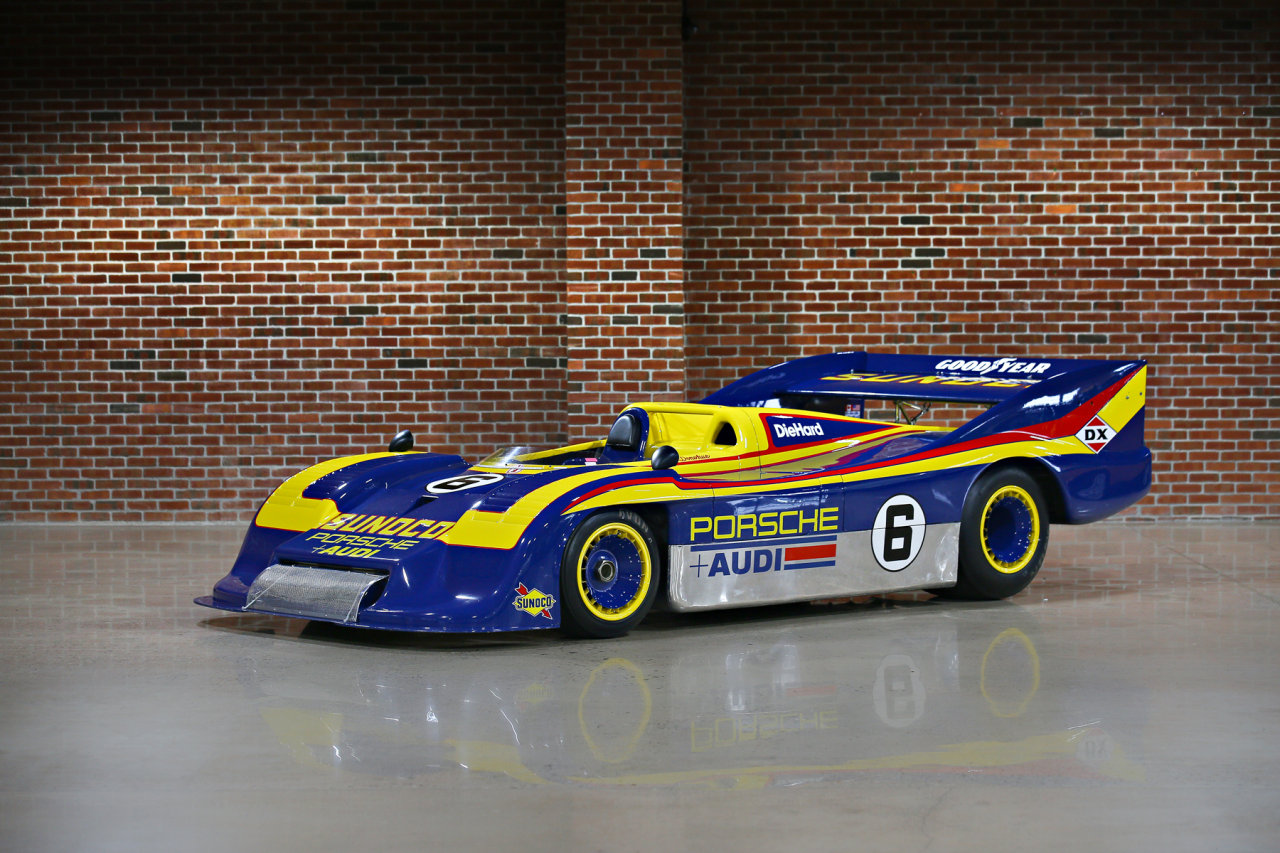
Only a handful of genuine 917/30 chassis were constructed, making surviving examples extraordinarily rare. The car sold at the Gooding & Company Pebble Beach auction for approximately $3 million, though its significance to Porsche’s history places it among the most important competition cars ever built. It’s brutal, elemental power delivery, and the way it terrorized the entire Can-Am grid remains without comparison in motorsport history.
Specifications:
- Engine: 5.4-liter flat-twelve twin-turbocharged
- Horsepower: ~1,100 hp (race boost); ~1,500 hp (qualifying boost)
- Torque: ~1,098 Nm (810 lb-ft)
- Length: ~4,600 mm
- Width: ~2,000 mm
Also Read: 10 Must-Have Tools Every Car Owner Should Keep In The Trunk
5. Porsche 550 Spyder / 550A Spyder (1953–1956), ~$5–6.1 Million
The 550 Spyder was Porsche’s first purpose-built racing car, and it earned one of the great nicknames in motorsport history: “the Giant Killer.” With a 1.5-liter engine producing around 110 to 135 horsepower and a total weight of approximately 590 kilograms, it repeatedly defeated cars with double and triple its engine displacement.
It was a triumph of lightness and balance over raw power, a philosophy that would define Porsche forever. The concept that became the 550 emerged in the early 1950s, when Porsche recognized that building a lightweight, mid-engined purpose racer was the only way to compete against better-funded manufacturers with larger machinery.
The improved 550A, introduced in 1956 with a tubular spaceframe chassis rather than the original sheet-steel structure, delivered Porsche its first outright victory in a major race, the 1956 Targa Florio, where Umberto Maglioli drove solo for nearly eight hours across the brutal Sicilian mountain roads.
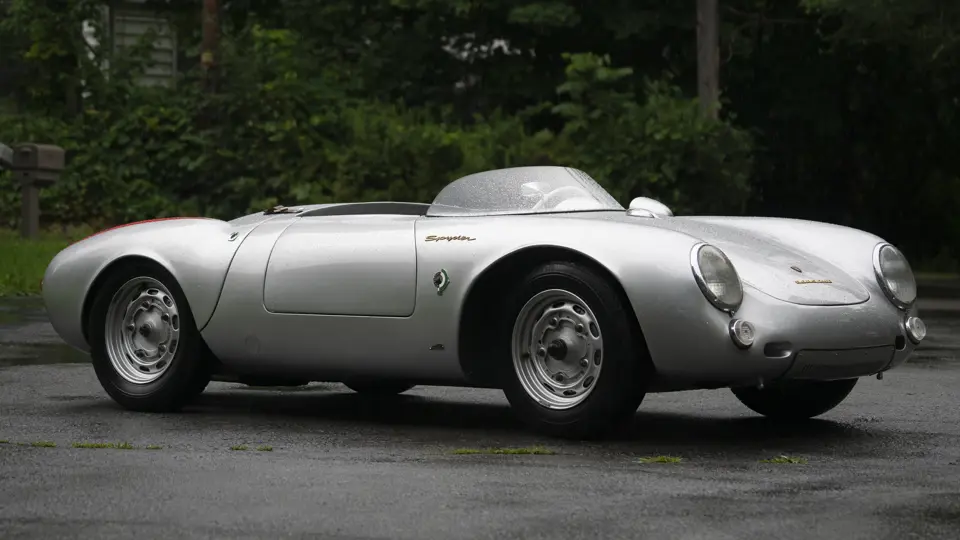
Only around 90 examples of the 550 and 550A combined were ever produced. A 1958 Porsche 550A Spyder sold at Bonhams for $5,170,000. A 1956 550 Rennsport Spyder, notable for having never been raced and thus retaining all original components sold at Bonhams’ Goodwood Revival sale in 2015 for $6.1 million. The car is forever linked to James Dean, who died in his 550 Spyder in September 1955.
Specifications:
- Engine: 1.5-liter flat-four Type 547, four-cam (Dr. Ernst Fuhrmann)
- Horsepower: 110–135 hp @ 7,200 rpm
- Torque: 107 lb-ft (145 Nm)
- Length: 3,600 mm
- Width: 1,560 mm
4. Porsche 911 GT1 Strassenversion (1998), ~$5.665 Million
The 911 GT1 Strassenversion is the rarest street-legal Porsche ever built, and it came about because motorsport rules demanded it. To homologate the 911 GT1 race car for the GT1 class at Le Mans, Porsche was required to produce at least twenty road-legal examples.
The result was a mid-engined, carbon-bodied racing machine that happened to carry a license plate. Only 21 were made, making it more exclusive than almost any other car in automotive history.
Despite carrying the 911 name, the GT1 had very little in common with the production model of its era. Its front-end styling was inspired by the 993-generation 911, while the rear section was based on the proven 962C racing prototype. This unique combination reflected Porsche’s focus on creating a purpose-built race car rather than a modified road-going 911.
The body was almost entirely carbon fiber, and the curb weight was just 1,150 kilograms. It could reach 100 km/h in 3.9 seconds and had a top speed of approximately 310 km/h. A 1998 example sold at Gooding & Company’s Amelia Island auction in March 2017 for $5,665,000 at the time, the highest price ever paid for a modern Porsche road car.
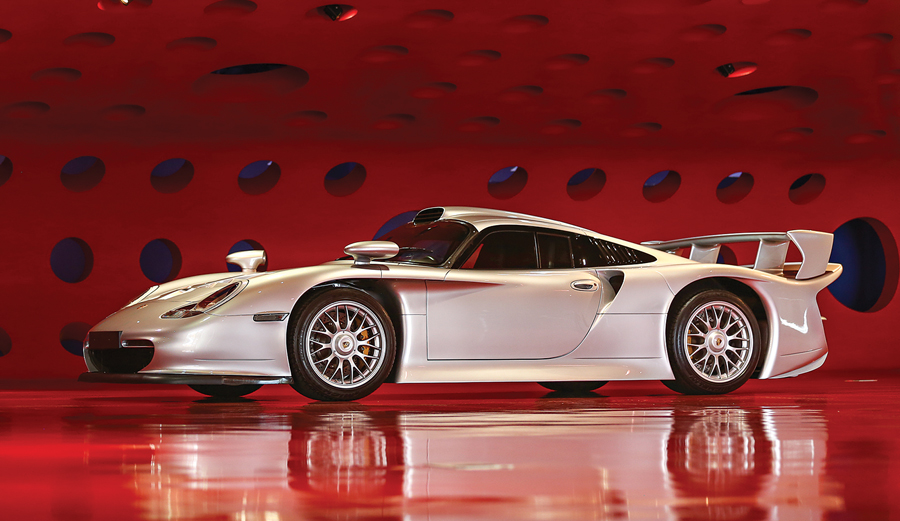
The GT1 race car won the 24 Hours of Le Mans outright in 1998, finishing first and second a crushing result that vindicated the entire project. The Strassenversion carries that victory as part of its identity. To own one is to own a direct relative of a Le Mans winner, built in the most limited numbers imaginable.
Specifications:
- Engine: 3.2-liter twin-turbocharged flat-six
- Horsepower: 536 hp (road); ~600 hp (race)
- Torque: 443 lb-ft (600 Nm)
- Width: 1,990 mm
- Weight: 1,150 kg (2,535 lbs)
3. Porsche 718 RS60 Spyder (1960), ~$5.4 Million
The 718 RS60 was the direct evolution of the legendary 550 Spyder, refined and developed for the new FIA regulations that came into effect for the 1960 season. It carried forward the 550’s philosophy of absolute lightness and mechanical sophistication while incorporating significant engineering advances that made it both faster and more versatile
The RS60 was the tool with which Porsche competed at the very top of international sports car racing during one of the most dramatic periods in the sport’s history.
New rules for 1960 mandated a taller windscreen and a wider cockpit, changes that Porsche’s engineers incorporated into a revised body design that subtly altered the 718’s silhouette from its predecessor.
Porsche built four works-specification RS60 Spyders, fitted with special equipment unavailable on the customer versions, including separate front torsion bars for left and right corners, integrated driving lamps, and a flat-black dashboard with an exposed fuse box.
These factory cars had larger chassis tubes for additional rigidity, making them meaningfully different from the fourteen customer cars that were also produced.
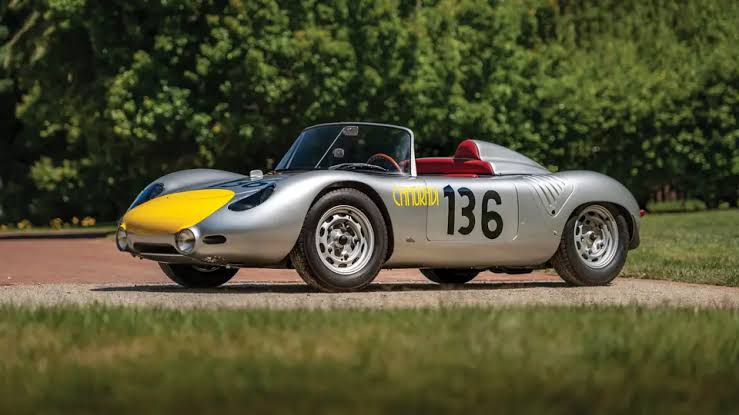
The cars that wore Porsche’s factory racing colours at the time carried an extraordinary passenger list. Stirling Moss, Dan Gurney, Graham Hill, Jo Bonnier, Edgar Barth, and Hans Herrmann all turned laps in RS60 Spyders.
Chassis number 044 competed at the 1,000 km Nürburgring, the 24 Hours of Le Mans, and the 12 Hours of Sebring. The last of the four factory RS60 Spyders sold at Gooding & Company’s Pebble Beach auction in 2015 for $5,400,000, reflecting its unique status as the most raced of all factory examples.
Specifications:
- Engine: 1.6-liter flat-four Type 547, four-cam
- Horsepower: 160 hp
- Torque: ~140 Nm (103 lb-ft)
- Length: ~3,600 mm
- Width: ~1,560 mm
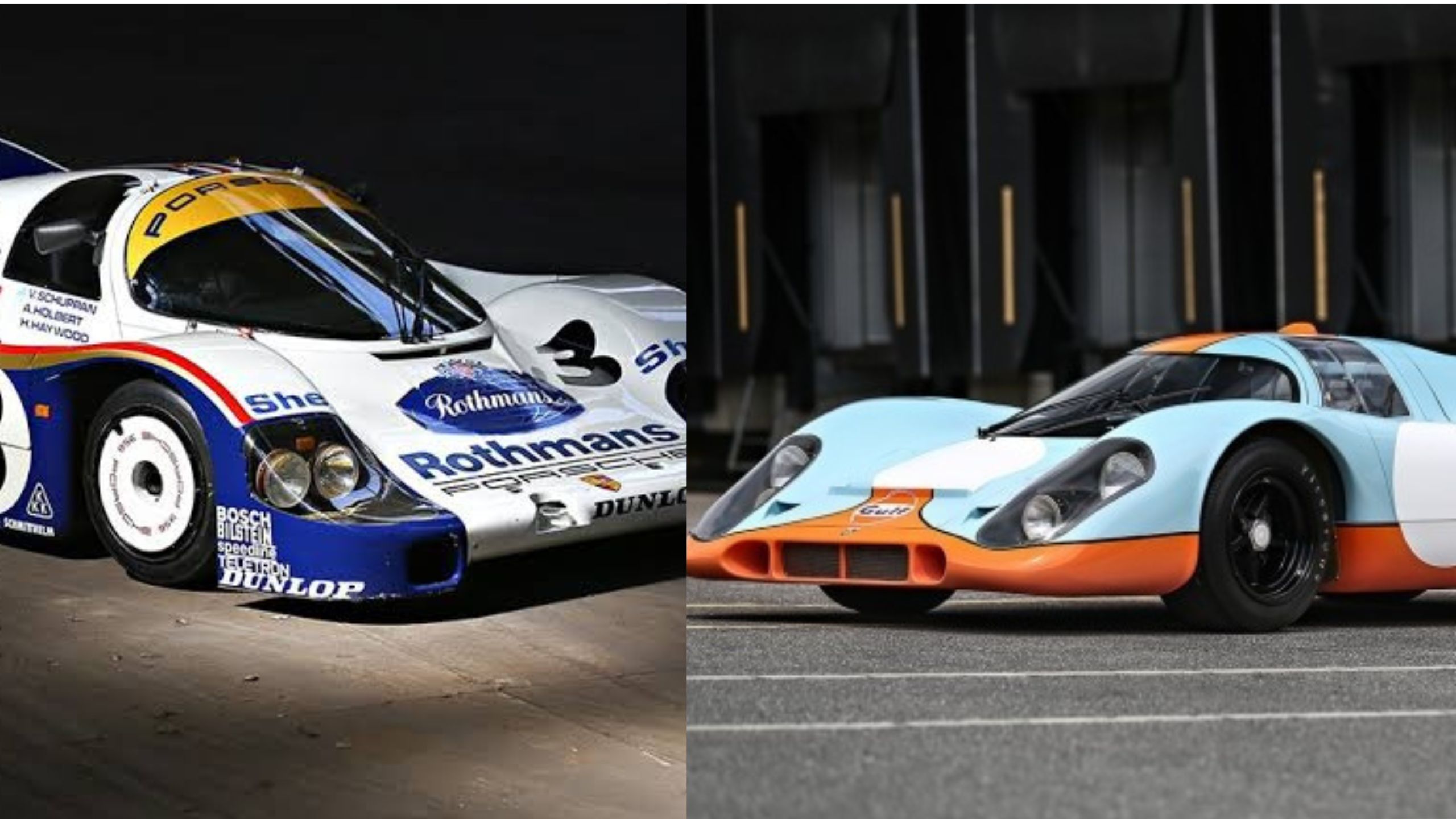
2. Porsche 956 (1982–1984), ~$10.12 Million
The Porsche 956 was not just a great racing car, it was a revolution in motorsport engineering. Designed by Norbert Singer for the new Group C regulations introduced in 1982, the 956 brought ground-effect aerodynamics to Porsche for the first time.
Using a carefully shaped underbody with two sealed venturi tunnels, the car generated enormous downforce at racing speeds, allowing it to corner at velocities that its predecessors could not approach.
The 956 was built around a twin-turbocharged 2.65-liter flat-six engine. The exhaust note of this engine under boost was unlike anything else on a racing circuit, a distinctive, crackling roar accompanied by flames spitting from the side exhausts as the turbochargers cycled.
Only ten examples of the 956 were ever built. The car dominated Le Mans in a manner that has rarely been matched, first, second, and third in 1982 on its debut, followed by another outright victory in 1983 driven by the trio of Jacky Ickx, Derek Bell, and Al Holbert.
The third chassis ever built, numbered 956-003, was the actual car that won Le Mans in 1983. This specific example sold at a Gooding & Company auction in 2015 for $10,120,000, well beyond its pre-sale estimate of $9 million.
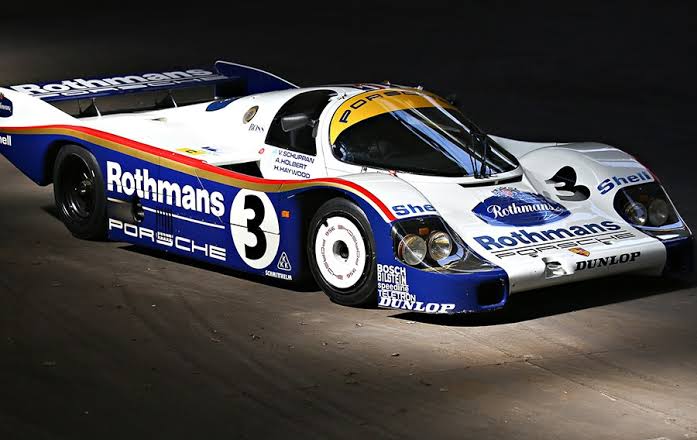
Stefan Bellof set what would become a 35-year lap record at the Nürburgring Nordschleife in a 956 during the 1983 1000 km race, 6 minutes and 11.13 seconds. The record was not broken until 2018, when Timo Bernhard drove a derestricted Porsche 919 Evo around the same circuit.
The 956’s combination of engineering innovation, motorsport dominance, and extreme rarity makes it among the most significant competition cars of the twentieth century.
Specifications:
- Engine: 2.65-liter twin-turbocharged flat-six
- Horsepower: ~620 hp
- Torque: ~550 Nm (406 lb-ft)
- Length: 4,800 mm
- Width: 2,000 mm
1. Porsche 917 K (1970–1971), $14,080,000
There is no more important Porsche in history than the 917. It was the car that gave Porsche its first victory at the 24 Hours of Le Mans in 1970, ending years of near-misses and establishing the Stuttgart manufacturer as the dominant force in endurance racing.
It was built around a Hans Mezger-designed flat-twelve engine, Porsche’s first non-horizontally opposed engine, and it was created specifically to exploit FIA regulations allowing 5.0-liter sports cars for which a minimum of 25 examples had to be produced.
The 917K, “K” standing for Kurzheck, meaning “short tail,” was the definitive version of the car. It evolved from the dangerously unstable long-tail 917L through a famous aerodynamic breakthrough achieved by engineers working overnight with aluminum tape and improvised sheet metal in a racing pit.
The short tail produced the downforce the long tail lacked and transformed the car’s handling. John Wyer’s Gulf Oil-sponsored team and the Porsche Salzburg team ran the 917K through 1970 and 1971, winning virtually every race entered.
It was an air-cooled design constructed with magnesium alloy blocks and titanium components, using Bosch mechanical fuel injection and a dry sump lubrication system. A five-speed manual gearbox with a three-disc clutch and limited-slip differential put the power to the rear wheels. The 917K’s top speed exceeded 340 km/h in its most powerful form.
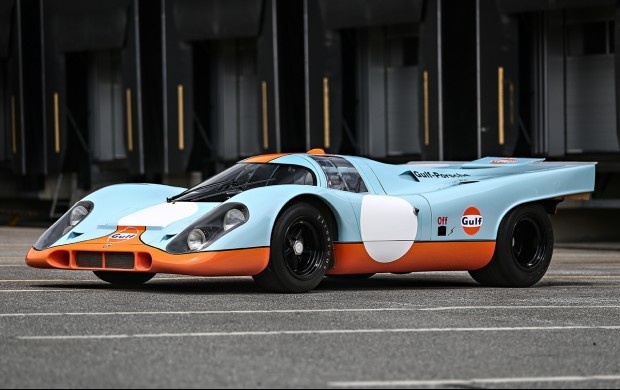
The specific car that commands the top price is chassis 917-024, the car driven by actor/racer Jo Siffert in Steve McQueen’s 1971 film Le Mans, making it one of the most cinematically famous racing cars ever built.
In 2017, it was sold at a Monterey auction for $14,080,000, making it not only the most expensive Porsche ever sold but also one of the most significant transactions in collector car history.
Beyond its Hollywood connection, the 917 K earned its value on the track. It won seven out of ten races entered in 1970 alone and is directly responsible for launching Porsche’s four-decade domination of Le Mans.
Specifications:
- Engine: 4.5–5.0-liter air-cooled flat-twelve
- Horsepower: 580–630 hp @ 8,400 rpm
- Torque: 562 Nm (414 lb-ft) @ 6,400 rpm
- Width: 1,975 mm
- Weight: 800 kg (1,763 lbs)
