
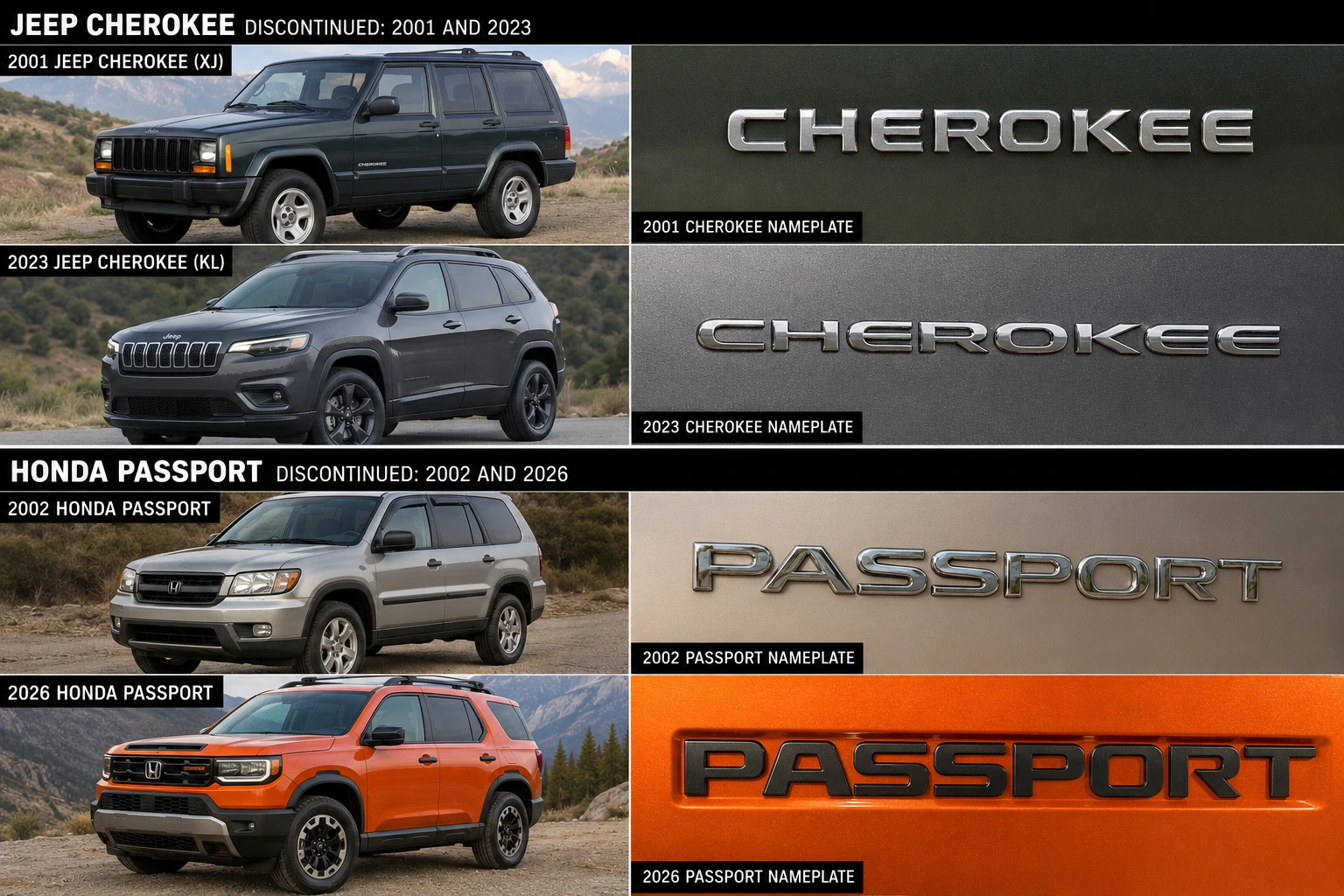
Car names carry weight that goes well beyond the sheet metal they are attached to. A strong automotive nameplate accumulates decades of cultural identity, racing heritage, and buyer loyalty that no amount of advertising can fully manufacture from scratch.
Manufacturers know this, which is why when sales slow and a beloved badge gets retired, the temptation to bring it back is almost always too strong to resist. The problem is that a second chance does not always go better than the first. Some resurrections succeed brilliantly, reconnecting a name with a new generation of buyers and restoring the badge to commercial relevance.
Others discover that what made the original nameplate special was inseparable from the era that produced it, and that attaching a famous name to a different vehicle in a different market does not automatically transfer the emotional equity that made the name worth reviving.
Ten automotive nameplates experienced the same fate twice. They debuted, disappeared, returned to the market, and were discontinued once again. Some were iconic muscle cars that struggled under stricter emissions rules. Others fell behind as consumer preferences shifted, leaving them unable to keep up with the changing market.
A few were genuinely good vehicles that arrived at the wrong moment. All of them left behind a story worth understanding, complete with the factory specifications of their final production versions.
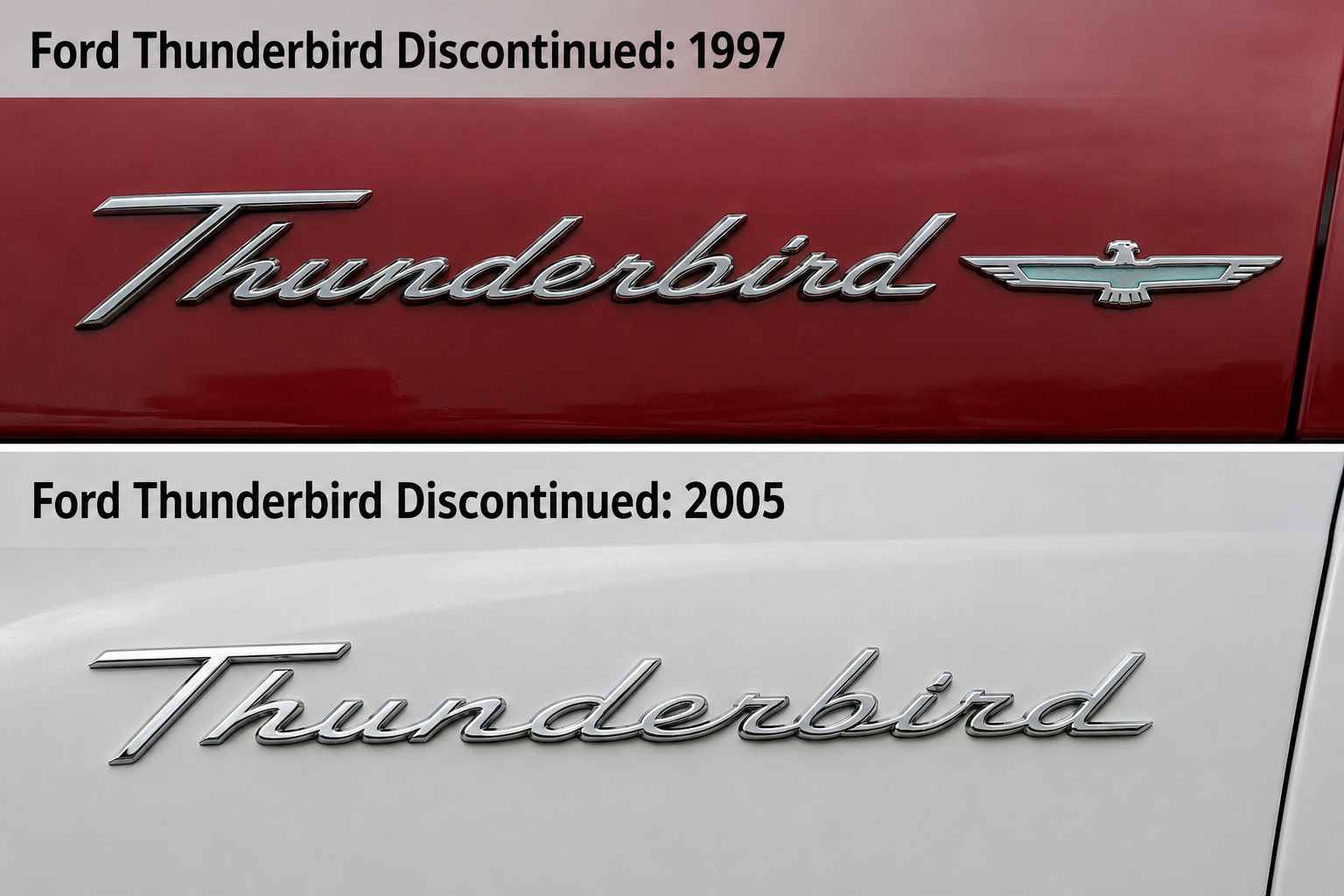
1. Ford Thunderbird
Discontinued: 1997 and 2005
- Engine: 3.9L Naturally Aspirated V8 (Final generation)
- Horsepower: 252 hp to 280 hp
- Torque: 267 lb-ft to 286 lb-ft
- Size: 186.3 in Long x 72.0 in Wide
For 42 continuous years, the Ford Thunderbird occupied a specific and cherished space in American automotive culture as the definitive personal luxury coupe. From its debut as a two-seat sports car in 1955 through its transformation into a full-size personal cruiser and back again through various reinventions, the Thunderbird remained in continuous production longer than almost any other nameplate in American automotive history before Ford finally pulled the plug in 1997, as sales had been declining for years with no credible recovery path in sight.
Ford chose nostalgia as the strategy for the resurrection. The 2002 Thunderbird arrived as a retro-styled convertible with rounded, 1950s-inspired body panels, a porthole hardtop option that directly echoed the original 1957 design, and a 3.9-liter V8 producing between 252 and 280 horsepower.
Measuring 186.3 inches long and 72 inches wide, it had the proportions of a proper personal luxury car and generated substantial media attention at launch. Advance orders were strong, and Ford initially struggled to meet demand. The problem that emerged was structural.
High pricing pushed the Thunderbird into a competitive bracket where buyers could also purchase established European roadsters with more driver-focused dynamics and stronger brand prestige for similar money. The retro styling that initially attracted attention began to feel limiting as the model aged without substantial updates.
Sales that started strong deteriorated quickly, and Ford made the difficult decision to end production a second time in 2005 after just four model years. The Thunderbird’s second discontinuation closed the chapter on a nameplate that had defined an entire American automotive category for nearly half a century.
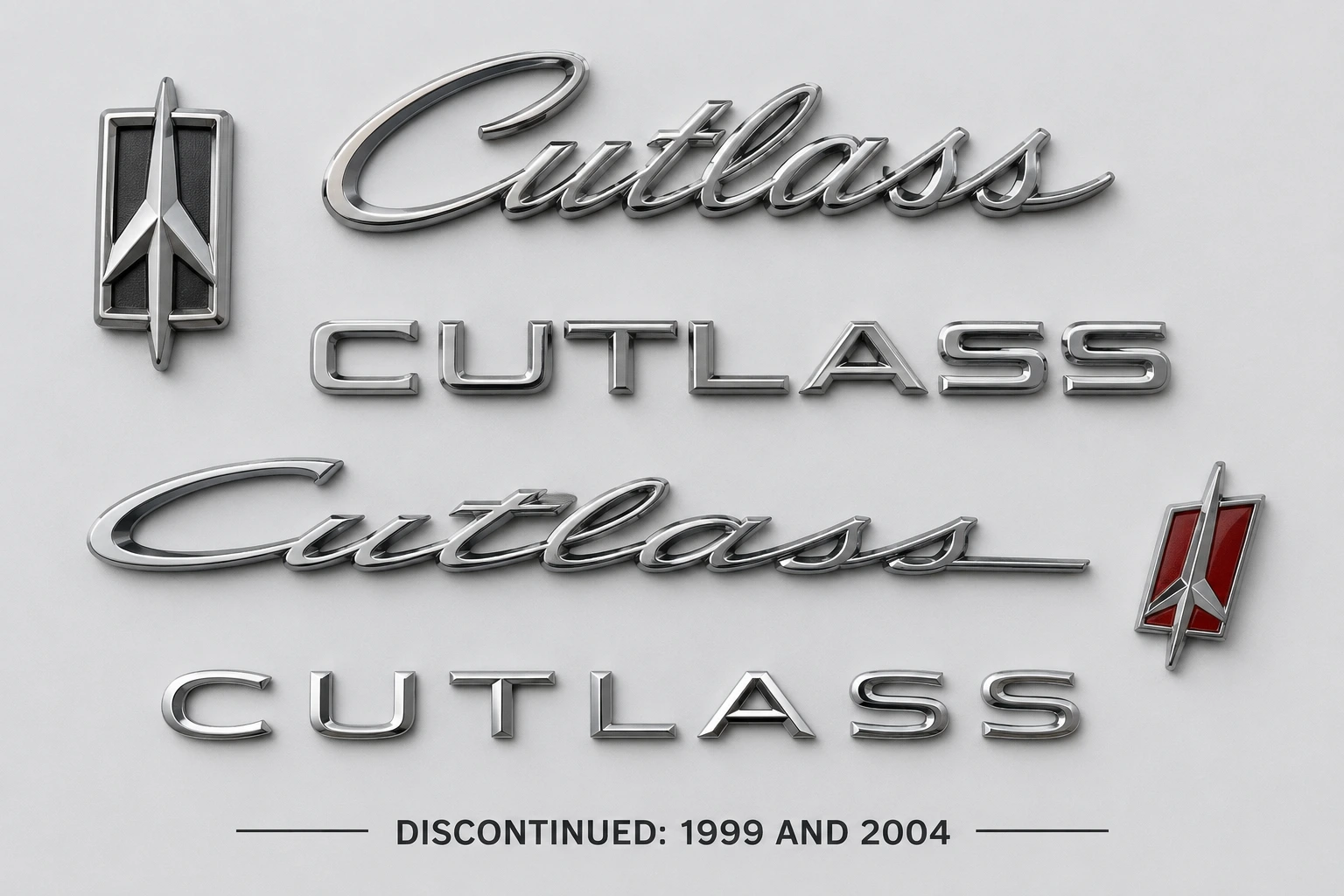
2. Oldsmobile Cutlass
Discontinued: 1999 and 2004
- Engine: 3.1L Naturally Aspirated V6 (Final generation)
- Horsepower: 150 hp
- Torque: 185 lb-ft
- Size: 190.4 in Long x 69.4 in Wide
Long before Oldsmobile left the automotive market, the Cutlass had already built a reputation as one of the brand’s most successful and familiar nameplates. Introduced in the early 1960s, it started life as a compact performance car before growing into a popular midsize sedan known for comfort, reliability, and everyday practicality.
During the 1970s and 1980s, the Cutlass consistently ranked among America’s best-selling passenger cars, becoming a dependable choice for families and commuters alike. Its combination of smooth driving, spacious interiors, and reasonable ownership costs helped make it one of Oldsmobile’s biggest success stories.
Things began to change during the 1990s as General Motors reorganized several of its vehicle brands. Production of the original Cutlass family ended in 1999, although the company had already brought the name back on a redesigned midsize sedan introduced for the 1997 model year.
This newer version focused more on comfort than sporty performance and came equipped with a 3.1-liter V6 engine producing 150 horsepower and 185 lb ft of torque. Measuring 190.4 inches long and 69.4 inches wide, it offered generous cabin space and a smooth ride for everyday driving.
Even with those qualities, the revived Cutlass struggled to attract enough buyers. Many customers preferred Japanese sedans that had built strong reputations for quality and resale value, while Oldsmobile itself was approaching the end of its life as a brand.
General Motors announced plans to discontinue Oldsmobile, bringing production of the Cutlass to a close in 2004. The second version never matched the popularity enjoyed by its predecessor, ending the story of a nameplate that had served American drivers faithfully for several decades.
Also Read: 8 Discontinued Car Nameplates Coming Back for 2027
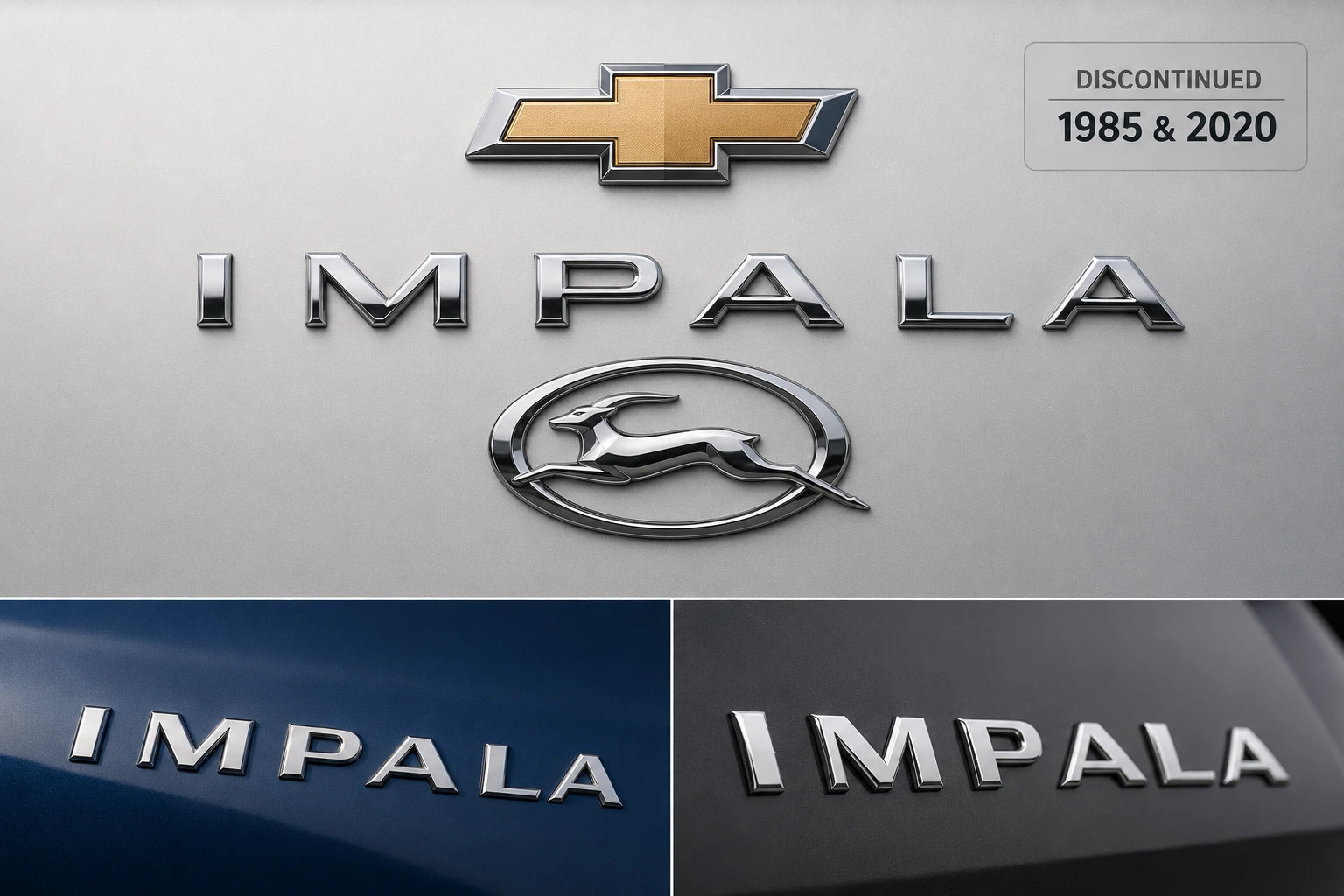
3. Chevrolet Impala
Discontinued: 1985 and 2020
- Engine: 2.5L Naturally Aspirated 4-Cylinder (Final generation)
- Horsepower: 197 hp
- Torque: 191 lb-ft
- Size: 201.3 in Long x 73.0 in Wide
For decades, the Chevrolet Impala ranked among the most familiar full-size sedans on American roads. First introduced in 1958, it quickly became one of Chevrolet’s best-known passenger cars, earning a reputation for comfort, spacious interiors, and dependable performance.
The Impala appealed to a wide range of buyers, from growing families to police departments, while the high-performance SS versions also built a strong following during the muscle car years. As buyer preferences changed during the 1980s and rear-wheel-drive full-size sedans became less popular, Chevrolet brought production of the original Impala to an end after the 1985 model year.
Several years later, Chevrolet brought the famous name back with the 1994 Impala SS, a performance-focused sedan that reminded many drivers of the badge’s sporty heritage. That version had a short production run, ending in 1996. The Impala returned again in 2000, this time serving as a front-wheel-drive full-size sedan designed for everyday transportation.
Its final generation came with a naturally aspirated 2.5-liter four-cylinder engine producing 197 horsepower and 191 lb ft of torque. Measuring 201.3 inches long and 73 inches wide, it delivered generous passenger space and a comfortable ride suited to long-distance travel.
Even though the Impala remained a dependable choice for private owners, rental companies, and government fleets, changing buying habits worked against traditional sedans. More drivers began choosing crossovers and sport utility vehicles, reducing demand for large passenger cars across the industry.
Chevrolet eventually ended Impala production in 2020, bringing another chapter of one of its longest-running and most respected nameplates to a close after more than six decades of service.
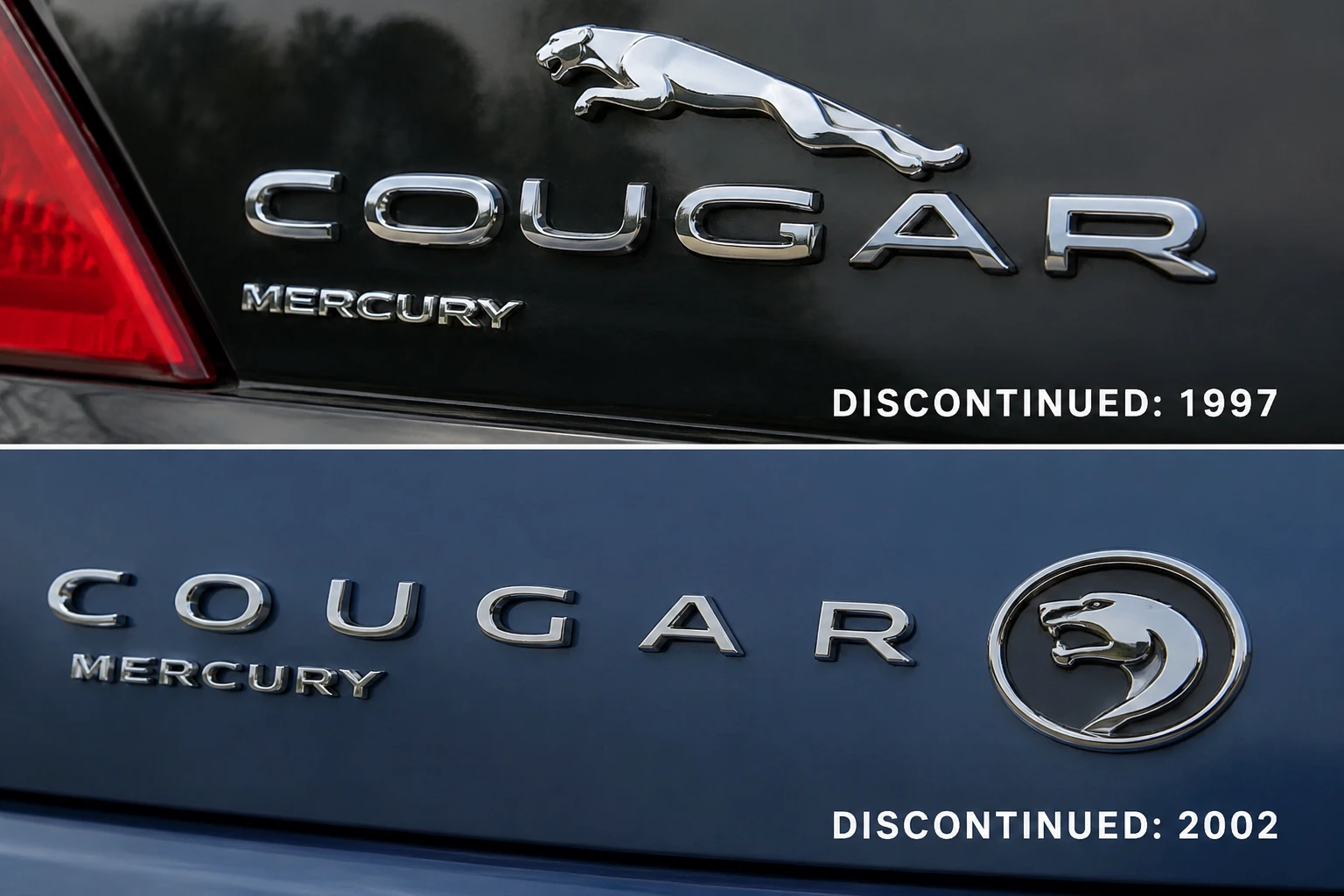
4. Mercury Cougar
Discontinued: 1997 and 2002
- Engine: 2.5L Naturally Aspirated V6 (Final sports-coupe baseline)
- Horsepower: 170 hp
- Torque: 165 lb-ft
- Size: 185.1 in Long x 70.0 in Wide
Mercury launched the Cougar in 1967 as an upscale sibling to the Ford Mustang, sharing the pony car’s basic architecture while adding premium interior appointments and slightly longer, more refined bodywork aimed at buyers who wanted sporty styling without the raw performance focus of the Mustang. That positioning worked well during the late 1960s, and the Cougar developed its own loyal following as a personal luxury coupe that combined accessible performance with a premium feel.
Through the 1970s and 1980s, the Cougar grew progressively larger and heavier as Mercury attempted to reposition it as a full-size personal luxury vehicle competing against the Thunderbird and Eldorado. By the early 1990s, the car had lost its original sporty identity entirely, and slow sales led Ford to discontinue the nameplate in 1997 as Mercury’s product lineup underwent consolidation.
Ford attempted a fresh start with the Cougar in 1999, this time completely reversing the positioning strategy. Where the final first-generation Cougar had been a large, soft personal cruiser, the resurrected version was a sharp, front-wheel-drive sport compact coupe with European-influenced styling and a chassis tuned for driver engagement.
At 170 horsepower and 165 lb-ft of torque from a 2.5-liter V6, and measuring 185.1 inches long and 70 inches wide, it was a genuinely attractive car that received positive driving reviews. Buyers did not respond in sufficient numbers, partly because the Cougar name carried no emotional connection to the sporty compact it now represented, and Ford discontinued it a second time in 2002.
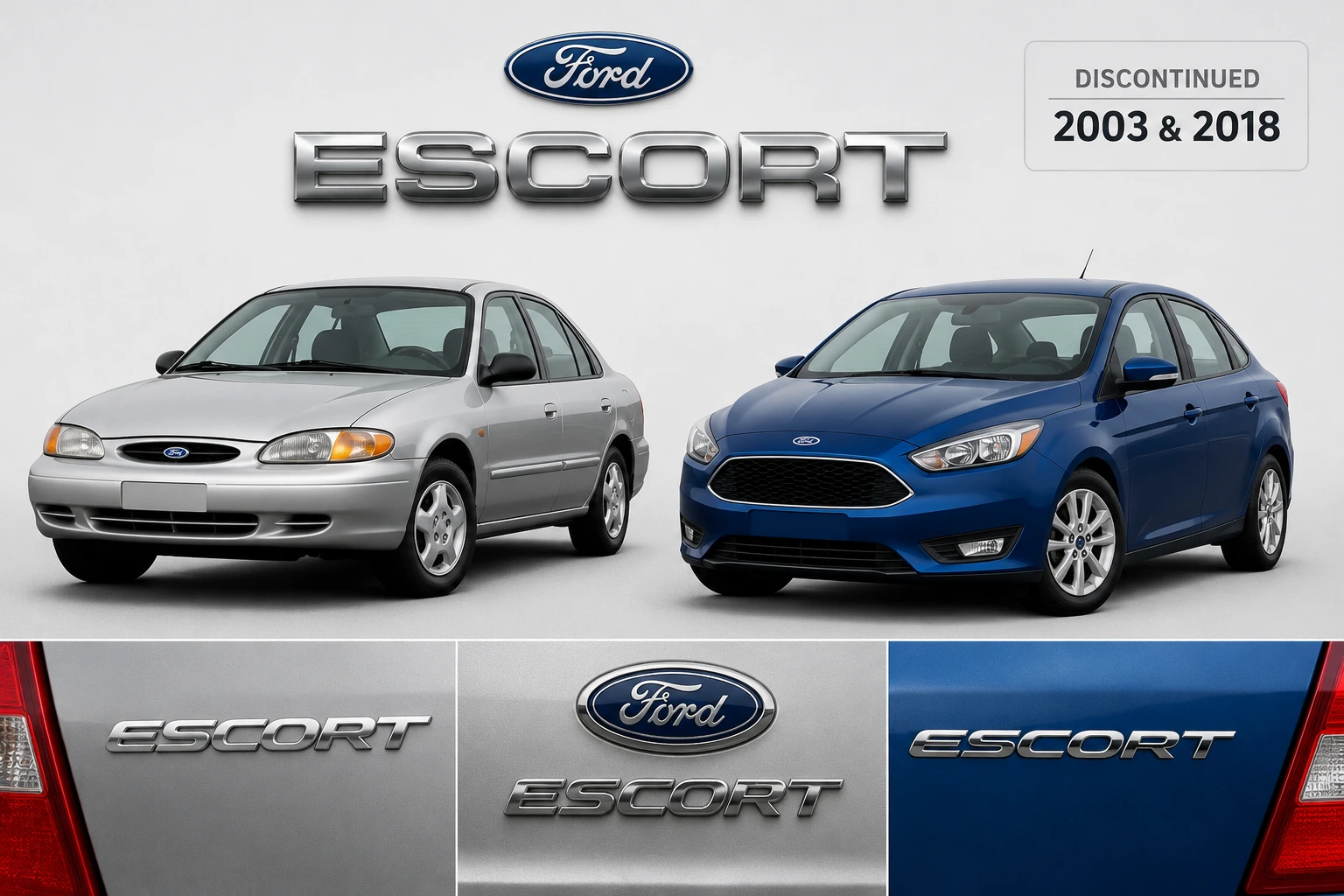
5. Ford Escort (North America)
Discontinued: 2003 and 2018
- Engine: 2.0L Naturally Aspirated 4-Cylinder (Final generation)
- Horsepower: 110 hp
- Torque: 125 lb-ft
- Size: 174.7 in Long x 67.0 in Wide
For more than 20 years, the Ford Escort played an important role in Ford’s compact car lineup across North America. First introduced for the 1981 model year, it gave buyers an affordable vehicle that combined good fuel economy with practical hatchback and sedan body styles.
Families, students, and first-time car owners appreciated its low running costs and dependable performance. As new generations arrived, the Escort continued improving while earning strong recognition in several international markets. Its long run in North America came to an end in 2003 when Ford replaced it with the newer Focus, which was better suited to the company’s plans.
Many years later, Ford decided the Escort name still had value and brought it back for the Chinese market. Instead of building a sporty compact car, the revived Escort was developed as a comfortable sedan for everyday driving. It placed more attention on interior space, ride quality, and affordability than outright performance.
Under the hood sat a naturally aspirated 2.0-liter four-cylinder engine producing 110 horsepower and 125 lb ft of torque. The sedan measured 174.7 inches in length and 67 inches in width, giving buyers a compact size that remained practical for city driving.
Early sales showed that the revived Escort had potential, but competition in China’s compact sedan segment became much stronger as more manufacturers introduced newer alternatives. Buyers had many choices, making it difficult for the Escort to maintain its position.
Demand gradually declined, prompting Ford to discontinue the model again in 2018. That decision marked the second time the Escort name disappeared from production, closing the chapter on a badge that had served drivers across multiple continents for many years.
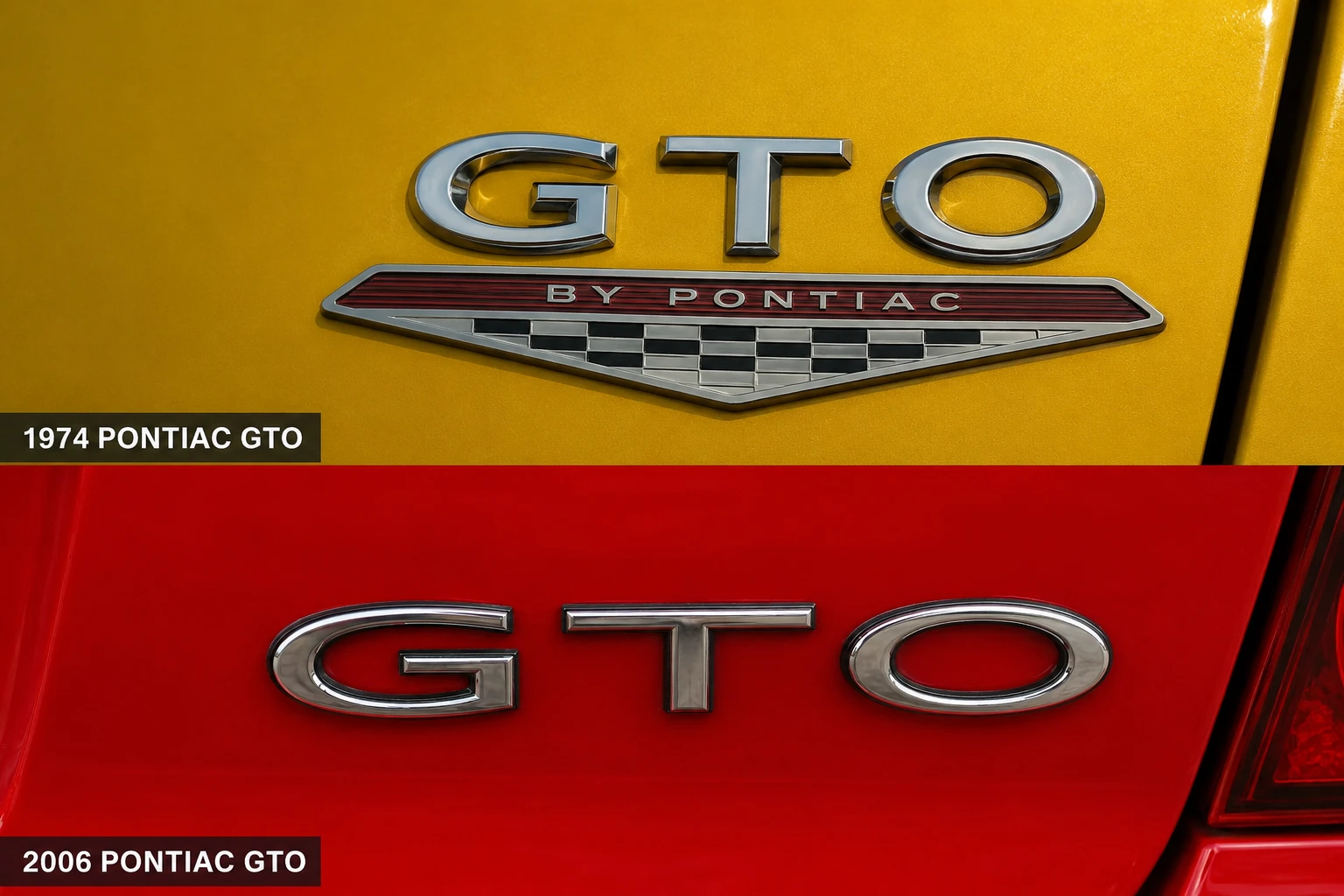
6. Pontiac GTO
Discontinued: 1974 and 2006
- Engine: 6.0L Naturally Aspirated V8 LS2 (Final generation)
- Horsepower: 400 hp
- Torque: 400 lb-ft
- Size: 189.8 in Long x 72.5 in Wide
Credit for creating the American muscle car as a distinct vehicle category belongs, by most historical accounts, to the 1964 Pontiac GTO. Shoving a large-displacement V8 into a mid-size body and selling it at an accessible price point was the formula that launched an entire industry segment, and the GTO’s early years generated sales numbers and cultural impact that defined American automotive performance through the late 1960s.
The combination of stricter emissions regulations, rising insurance costs for high-performance vehicles, and the 1973 oil crisis progressively eroded the GTO’s performance credentials until Pontiac discontinued it in 1974 as a shadow of what it had once been.
Pontiac attempted a resurrection in 2004 by importing a high-output, rear-wheel-drive coupe from General Motors’ Holden division in Australia, fitting it with a 6.0-liter LS2 V8 producing 400 horsepower and 400 lb-ft of torque. The mechanical credentials were genuinely strong, and automotive journalists who drove the car recognized its performance ability immediately. At 189.8 inches long and 72.5 inches wide, it had the proportions of a proper performance coupe.
What sank the second GTO was styling so understated that many buyers had difficulty distinguishing it from a Pontiac Grand Am or Grand Prix at a distance. Pontiac’s marketing team failed to communicate the car’s performance credentials through its visual design, and showroom traffic never reached the volume required to justify continued production.
A performance car with 400 horsepower that buyers overlooked on dealership lots is one of the more ironic outcomes in American muscle car history. The GTO was discontinued a second time in 2006, taking the Pontiac performance torch with it.
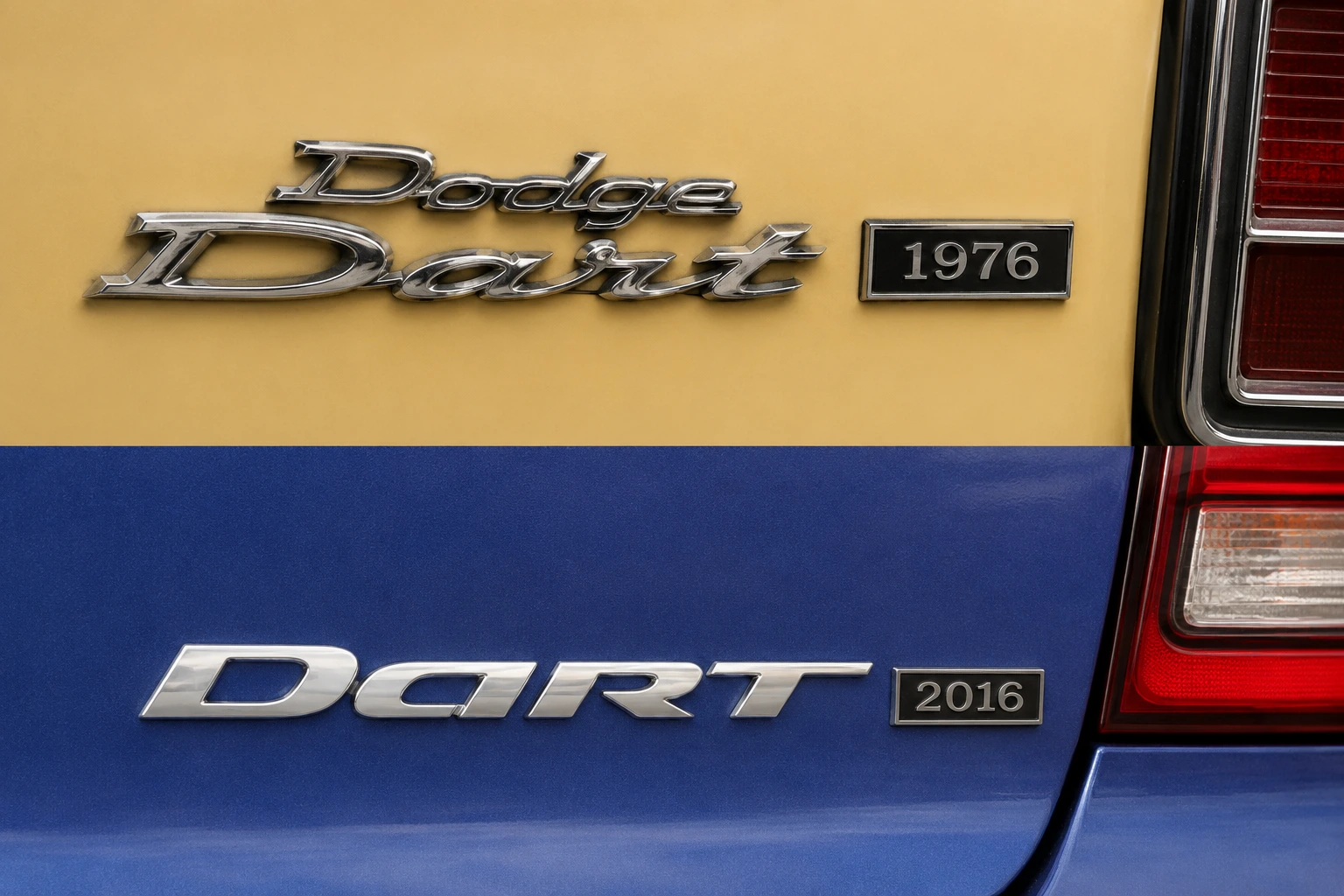
7. Dodge Dart
Discontinued: 1976 and 2016
- Engine: 2.4L Naturally Aspirated 4-Cylinder (Final generation baseline)
- Horsepower: 184 hp
- Torque: 174 lb-ft
- Size: 183.9 in Long x 72.0 in Wide
For many mechanics and long-time drivers, the early Dodge Dart earned respect because it kept working when others failed. Models from the 1960s into the early 1970s were built on a small, straightforward platform with drivetrain choices that favored strength over sophistication.
That approach helped the car last for years with basic care. Versions fitted with 340 and 360 cubic-inch V8 engines also gave the Dart proper muscle credentials, allowing it to appeal to buyers who wanted both dependability and strong performance. Interest stayed steady until 1976, when changing compact car demand led Chrysler to remove it from the US lineup.
Although the name lived on quietly in Mexico for some time, the real American return came in 2013. This time, the Dart arrived as a modern compact sedan using an Alfa Romeo-influenced platform. The base model delivered 184 horsepower and 174 pound-feet of torque from a 2.4-liter four-cylinder engine.
With balanced proportions and a carefully designed interior, it offered a solid driving feel that reviewers appreciated. Many praised its road manners and cabin layout, viewing it as good value within its class. Market behavior, however, moved in a different direction.
Buyers began favoring small crossovers and SUVs, drawn to higher seating and available All Wheel Drive. Vehicles like the Jeep Renegade and Cherokee attracted shoppers who once chose compact sedans. As this preference grew, demand for the Dart weakened, leading Chrysler to discontinue it again in 2016.
8. Nissan Pulsar
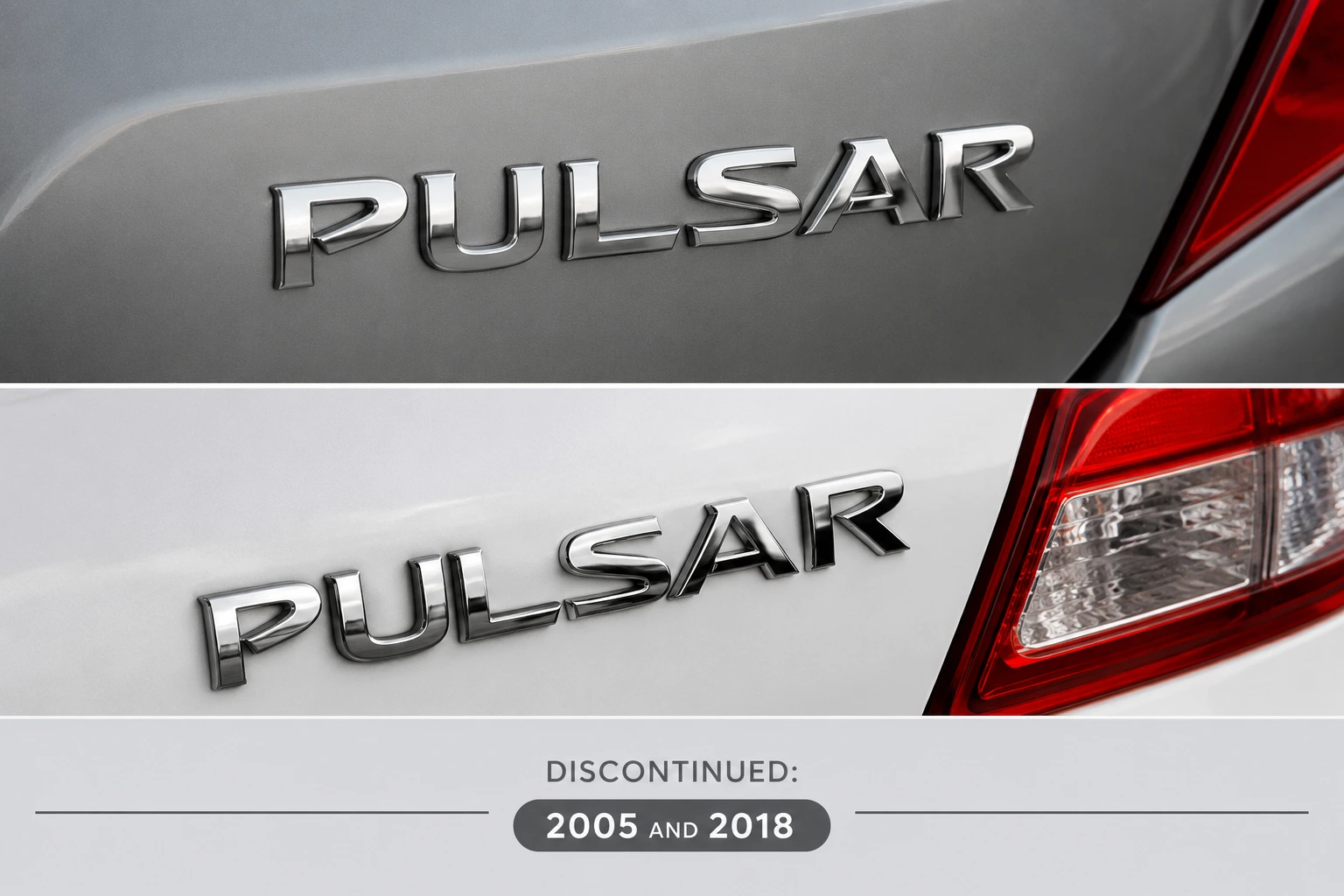
Discontinued: 2005 and 2018
- Engine: 1.2L Turbocharged 4-Cylinder (Final generation)
- Horsepower: 113 hp
- Torque: 140 lb-ft
- Size: 172.7 in Long x 71.3 in Wide
For many years, the Nissan Pulsar built a strong reputation as a dependable compact car across Europe, Asia, and Australia. It was offered in several body styles and appealed to buyers looking for an affordable vehicle that delivered good fuel economy, everyday practicality, and dependable performance.
Through multiple generations, Nissan continued improving the Pulsar to match changing customer preferences while keeping its reputation for reliability intact. As newer compact models joined the lineup during the mid-2000s, the company gradually removed the Pulsar name from many markets, believing other vehicles could better meet future demand.
Several years later, Nissan gave the Pulsar name another opportunity by introducing a completely new five-door hatchback for the European market in 2014. The revived model was designed to compete with some of the segment’s biggest names while offering generous interior space and a comfortable driving experience.
Power came from a turbocharged 1.2-liter four-cylinder engine producing 113 horsepower and 140 lb ft of torque. Measuring 172.7 inches in length and 71.3 inches in width, it provided enough room for families without becoming difficult to drive or park in crowded urban areas.
Road tests praised the Pulsar for its comfortable ride, quiet cabin, and spacious interior. Many reviewers also appreciated its value for money and user-friendly layout. Even with those strengths, buyers continued choosing long-established rivals like the Volkswagen Golf and Ford Focus in greater numbers.
Those competitors already had stronger recognition in the European hatchback market, making it difficult for the Pulsar to attract enough attention despite being a capable vehicle. Demand remained below Nissan’s expectations, leaving the company with little reason to continue production. The Pulsar was discontinued once again in 2018, bringing another chapter of the nameplate to a close.
Its story serves as a reminder that producing a well-rounded car does not always guarantee commercial success, especially when competing against established models that have already earned the trust and loyalty of buyers across multiple generations.
9. Toyota Venza
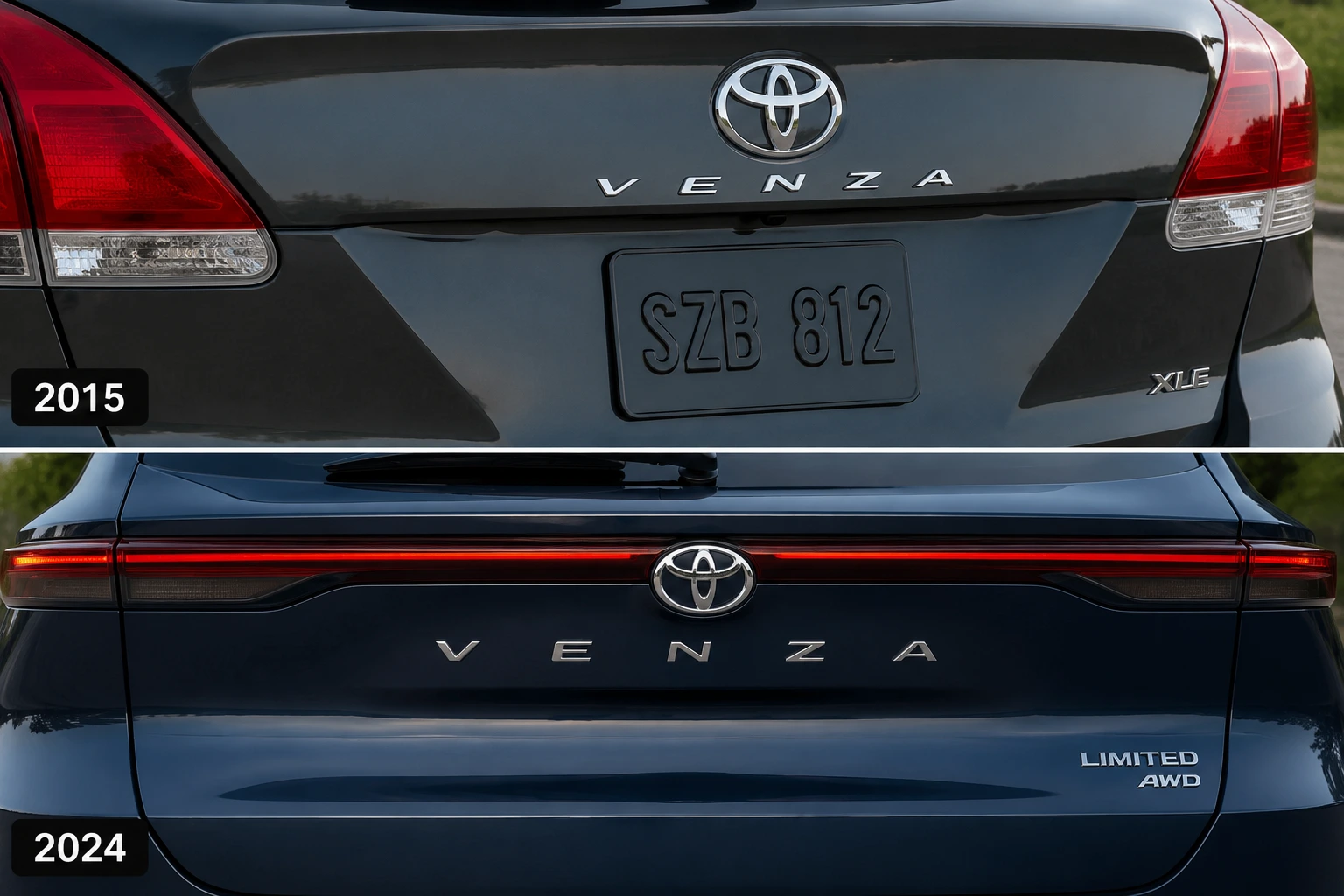
Discontinued: 2015 and 2024
- Engine: 2.5L 4-Cylinder Hybrid Architecture (Second generation)
- Horsepower: 219 hp
- Torque: 163 lb-ft (Engine mechanical)
- Size: 186.6 in Long x 73.0 in Wide
Back in 2009, Toyota introduced the first Venza as a low and wide crossover that did not fit neatly into existing categories. It sat between a wagon and a sport utility vehicle, offering a smooth highway ride, a roomy cabin, and a design that avoided tall and boxy styling.
This made it appealing to drivers who wanted comfort and space without the height of a traditional SUV. Sales stayed moderate, and by 2015 Toyota stepped away from the model to concentrate on stronger sellers like the RAV4 and the Highlander, which performed better in North America.
A different approach was followed in 2021 when Toyota brought the Venza name back. Instead of repeating the earlier formula, the new version arrived only as a hybrid. It combined a petrol engine with electric assistance, offering All Wheel Drive through a rear electric motor.
Total system output reached 219 horsepower, and the vehicle delivered quiet operation with improved fuel use. Its size and interior finish placed it above the RAV4 Hybrid, appealing to buyers who wanted efficiency paired with a more refined look and feel. Production of this second generation continued until 2024. Toyota then chose to end it again, not because of poor acceptance, but to make room for the Crown Signia.
That decision reflected product planning priorities rather than dissatisfaction with the Venza itself. The model’s exit showed how brand direction can matter just as much as public response when lineup changes are made.
Also Read: 8 Cars That Were Discontinued in 2026
10. Studebaker Avanti
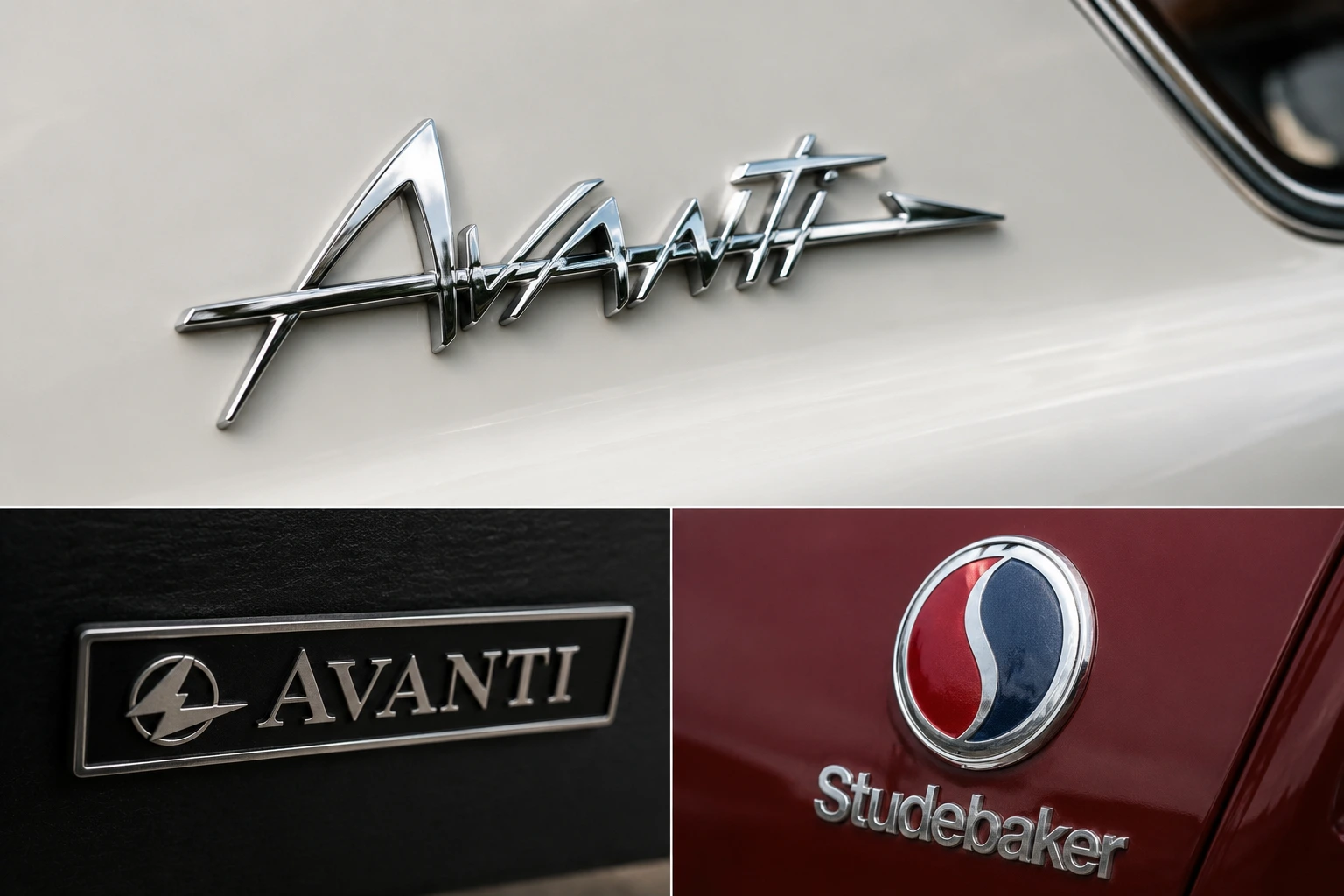
Discontinued: 1963 and 2006
- Engine: 4.6L Naturally Aspirated V8 (Final production)
- Horsepower: 300 hp
- Torque: 320 lb-ft
- Size: 192.5 in Long x 71.3 in Wide
Studebaker entered the luxury performance market in 1963 with the Avanti, a coupe that looked unlike almost anything else on American roads at the time. Its smooth fiberglass body, clean lines, and aviation-inspired styling gave it a fresh identity that separated it from the brand’s traditional models.
Built as a grand touring car, the Avanti combined bold styling with advanced engineering, showing that Studebaker was still capable of producing something modern despite facing serious financial pressure. The car attracted attention for its design and performance, giving buyers a fresh alternative in a market crowded with more conventional coupes.
Financial problems soon caught up with the company, making it difficult to keep production moving at the pace required. Studebaker ended automobile manufacturing in the United States later in 1963, cutting short the Avanti’s first chapter. Even so, the car refused to disappear completely.
A group of independent investors saw value in the design, purchased the production rights and tooling, and brought it back as the Avanti II. Although ownership changed several times during the following decades, each new company tried to preserve the coupe’s unique identity while making gradual updates to keep it relevant for buyers.
During its last years, the Avanti received a 4.6-liter Ford Modular V8 engine that delivered around 300 horsepower and 320 lb ft of torque. Measuring 192.5 inches in length and 71.3 inches in width, it remained a stylish grand tourer that blended classic looks with more modern mechanical components.
Even with those improvements, production numbers stayed low, and repeated ownership changes made it difficult to build long-term stability. The Avanti’s journey finally ended in 2006 when production stopped once again. Few American car nameplates have followed such an unusual path, continuing for decades after the original manufacturer had disappeared.
Its long survival reflected the dedication of those who believed the design still deserved a place on the road, even as the automotive industry continued to change around it.
