
SUVs remain a popular choice for families because they combine space, comfort, and practicality. However, vehicle size alone does not guarantee safety. Modern crash tests conducted by organizations such as the IIHS and NHTSA assess a wide range of factors, including occupant protection, structural integrity, rollover resistance, crash avoidance systems, and advanced driver assistance technologies.
Strong safety ratings result from a combination of durable construction, effective airbags, well-designed crumple zones, and intelligent safety software. For the 2026 model year, SUVs, including the Honda Passport, Hyundai Palisade, Hyundai Ioniq 9, Kia EV9, Mazda CX-70, Rivian R1S, and Volvo EX90, have earned high marks for crash protection and accident prevention.
Meanwhile, some SUVs continue to fall short in specific test categories, highlighting areas for improvement. Understanding crash test results helps buyers make informed decisions, as the safest SUVs combine excellent crash protection with advanced technologies that help prevent collisions before they occur.
Also Read: 10 SUVs With the Most Affordable Replacement Parts
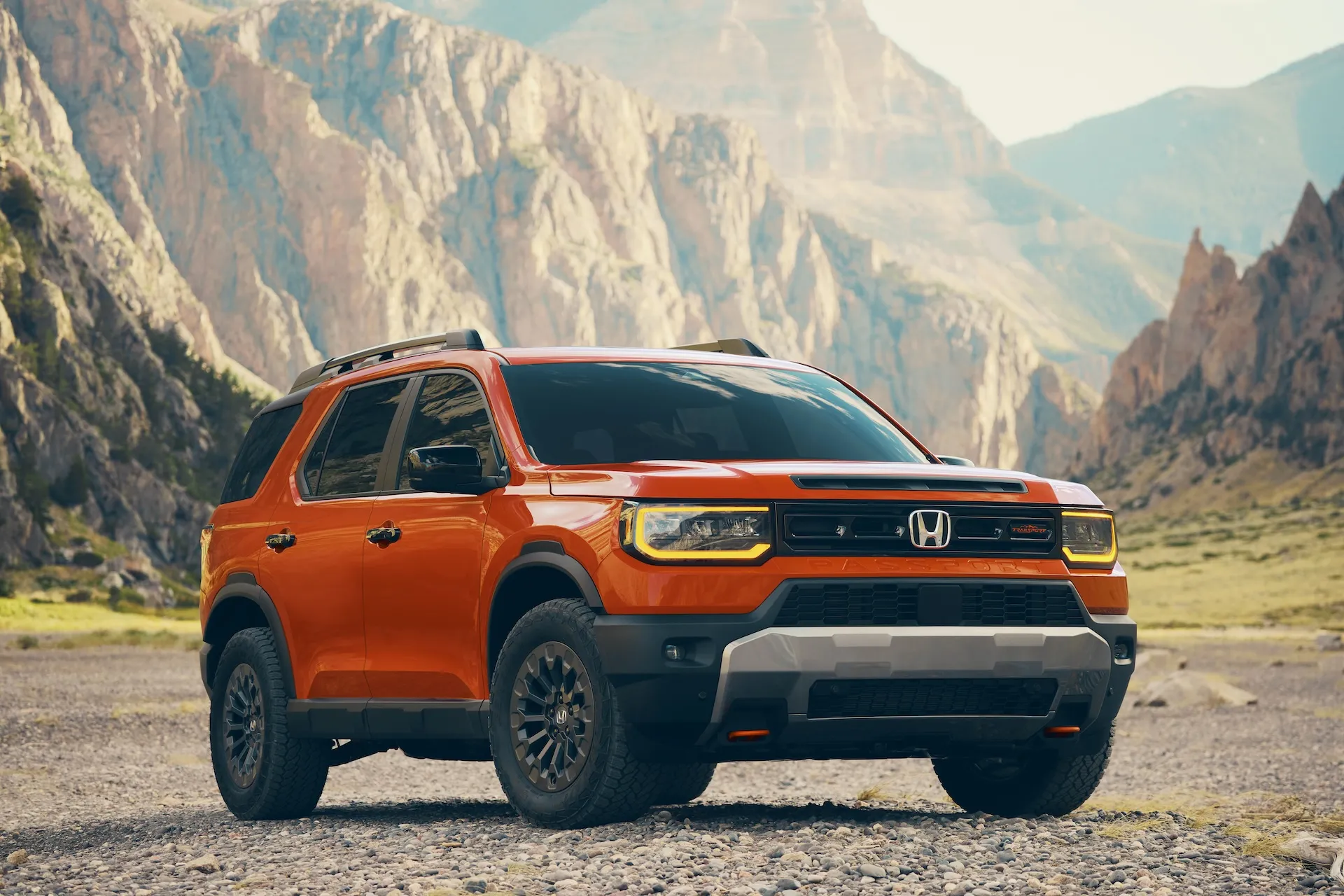
- Engine: 3.5-liter V6 gasoline engine
- Horsepower: 285 hp
- Torque: 262 lb-ft
- Length: 191.5 inches (approximately 4,864 mm)
- Width: 79.5 inches (approximately 2,019 mm)
1. Honda Passport: A Strong Performer in Modern SUV Safety
The Honda Passport has become one of the standout midsize SUVs in safety evaluations because it combines a strong body structure with advanced driver assistance features.
The latest versions of the Passport have demonstrated impressive performance in crash assessments, earning top safety recognition from IIHS. The vehicle’s design focuses on protecting occupants through a reinforced cabin, carefully engineered impact zones, and a wide range of standard safety technologies.
One of the reasons the Passport performs well is Honda’s approach to vehicle architecture. Modern Honda SUVs use advanced compatibility engineering designed to manage crash forces effectively.
Instead of allowing energy from an impact to reach passengers directly, the vehicle structure is designed to absorb and redirect those forces away from the cabin. This approach reduces the likelihood of severe injuries during serious collisions.
The Passport also benefits from Honda Sensing, a collection of driver assistance technologies designed to help drivers avoid accidents.
Features such as collision warning, automatic emergency braking, and lane assistance provide additional protection during everyday driving. These systems have become increasingly important because many accidents happen due to delayed reactions or driver distraction.
Another strength of the Passport is its balance between practicality and safety. Many buyers choose SUVs for family transportation, and the Passport provides generous interior space without sacrificing crash protection. A vehicle that performs well in safety tests while offering comfort and versatility is especially appealing to families who regularly carry passengers.
The success of vehicles like the Honda Passport shows how safety has become a major priority in SUV development. Manufacturers can no longer rely only on size and weight to create a safe vehicle.
Engineering quality, electronic safety systems, and crash-tested performance are now equally important factors. The Passport represents how modern SUVs can deliver both everyday usefulness and strong occupant protection.
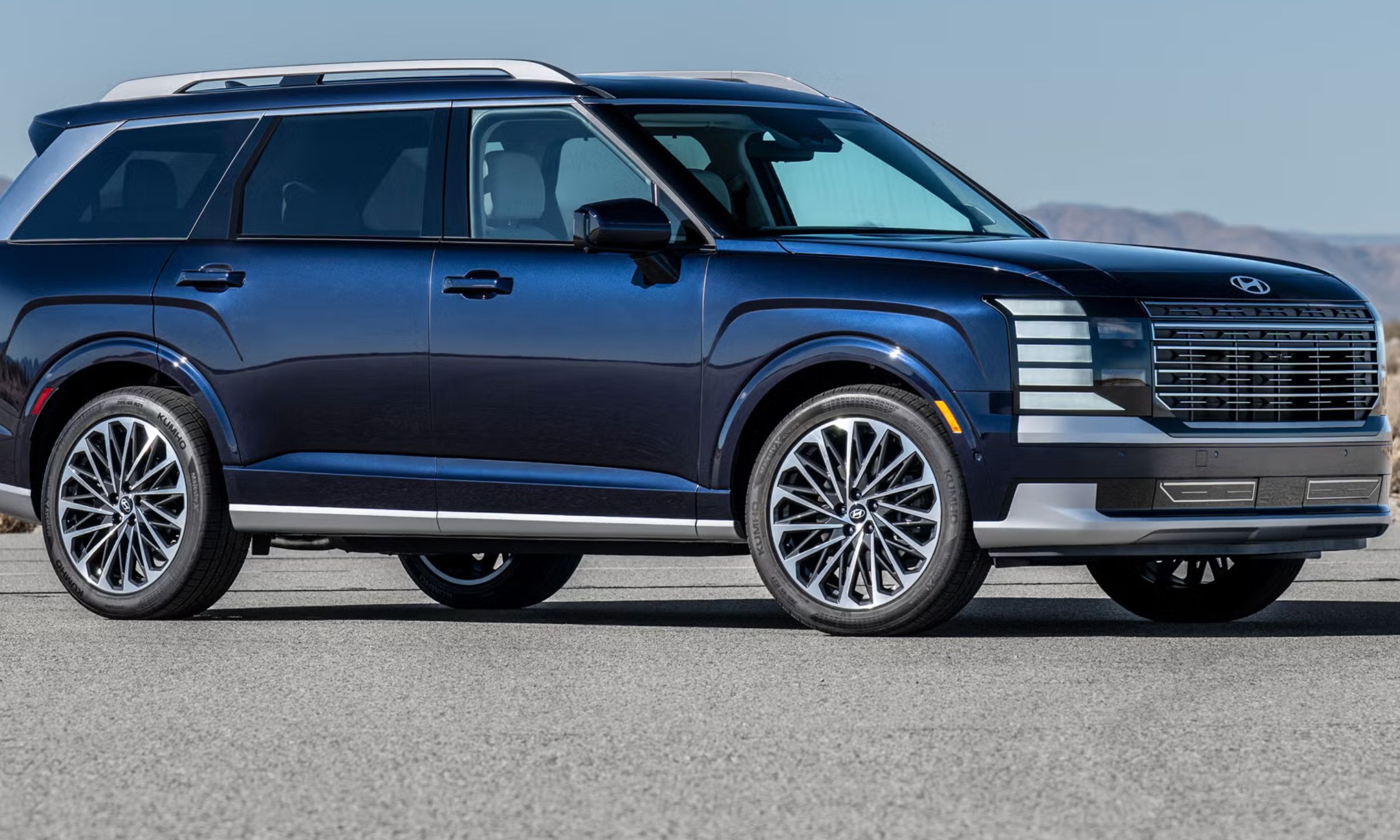
- Engine: 3.5-liter V6 gasoline engine (new-generation Palisade also offers hybrid powertrain options in some markets)
- Horsepower: Around 287 hp
- Torque: Around 260 lb-ft
- Length: 199.2 inches (approximately 5,060 mm)
- Width: 78.0 inches (approximately 1,981 mm)
2. Hyundai Palisade: Family-Friendly Safety Engineering
The Hyundai Palisade has built a reputation as a family SUV that places safety near the top of its priorities. The three-row SUV combines spacious seating with a strong collection of safety features, making it popular among buyers who need room for passengers while still wanting strong crash protection.
The 2026 Palisade received top safety recognition in IIHS testing when built within the specified production period.
A major advantage of the Palisade is its focus on protecting occupants in different seating positions. Many families choose three-row SUVs because they frequently transport children or additional passengers. Engineers must therefore consider not only the driver and front passenger but also people sitting in the second and third rows.
The Palisade’s safety technology package includes systems designed to monitor surrounding traffic and assist the driver in avoiding potential collisions. Automatic braking systems, lane assistance technology, and monitoring features help reduce the risk of accidents caused by common driving mistakes.
Structural design also plays a major role in the Palisade’s safety performance. During a crash, the vehicle must maintain enough cabin strength to protect occupants while allowing controlled deformation in areas designed to absorb impact energy. A well-designed SUV manages this balance effectively.
The Palisade demonstrates that family vehicles do not have to compromise between comfort and safety. Buyers looking for a practical SUV with multiple seats often prioritize reliability and protection, and strong crash test results provide confidence that a vehicle has been engineered with occupant safety in mind.
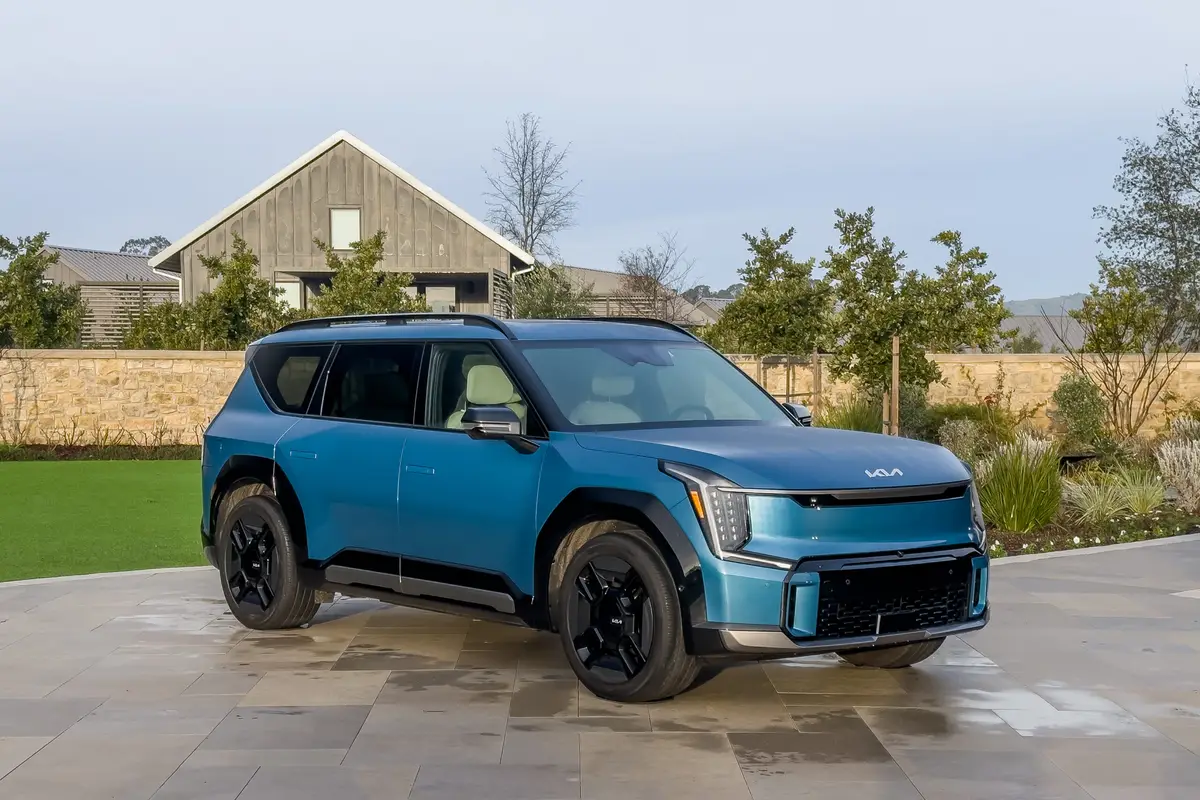
- Engine: Dual electric motors (AWD version) or single electric motor (RWD version)
- Horsepower: Up to 379 hp (GT-Line AWD)
- Torque: Up to 516 lb-ft
- Length: 197.2 inches (approximately 5,010 mm)
- Width: 78.1 inches (approximately 1,984 mm)
3. Kia EV9: Electric SUV Safety With Advanced Protection
The Kia EV9 represents how electric SUVs are changing expectations around safety, technology, and vehicle design. As one of the newer entries in the three-row electric SUV segment, the EV9 benefits from a platform created specifically for electric power.
Its design allows engineers to rethink weight distribution, cabin protection, and battery placement, creating a vehicle that performs strongly in modern safety evaluations. The EV9 has earned recognition from safety organizations for its ability to protect occupants and provide advanced crash avoidance technology.
One of the biggest advantages of the EV9 is its electric vehicle architecture. Unlike traditional gasoline SUVs that require space for an engine and transmission system, electric vehicles place large battery packs beneath the floor.
This creates a lower center of gravity, which can improve stability and reduce rollover risks. The battery structure also contributes to vehicle stiffness, helping create a strong foundation around the passenger compartment.
The EV9 includes a wide range of active safety features designed to prevent accidents before they happen. Systems such as automatic emergency braking, lane keeping assistance, blind spot monitoring, and driver attention warnings help support drivers in different traffic conditions. These technologies have become increasingly important because crash prevention is now considered just as valuable as crash protection.
Passenger protection is an area where the EV9 demonstrates modern SUV engineering. Electric vehicles must meet strict safety requirements because battery systems introduce additional challenges during collisions.
Engineers must protect occupants while also ensuring the battery remains secure and isolated from damage. The EV9’s design reflects the growing focus on making electric vehicles safe in real-world accidents.
The success of the Kia EV9 highlights how electric SUVs are no longer viewed as experimental alternatives. They are becoming mainstream family vehicles that compete directly with traditional SUVs in comfort, practicality, and safety. Strong crash performance shows that electric vehicle technology can deliver both environmental benefits and excellent occupant protection.
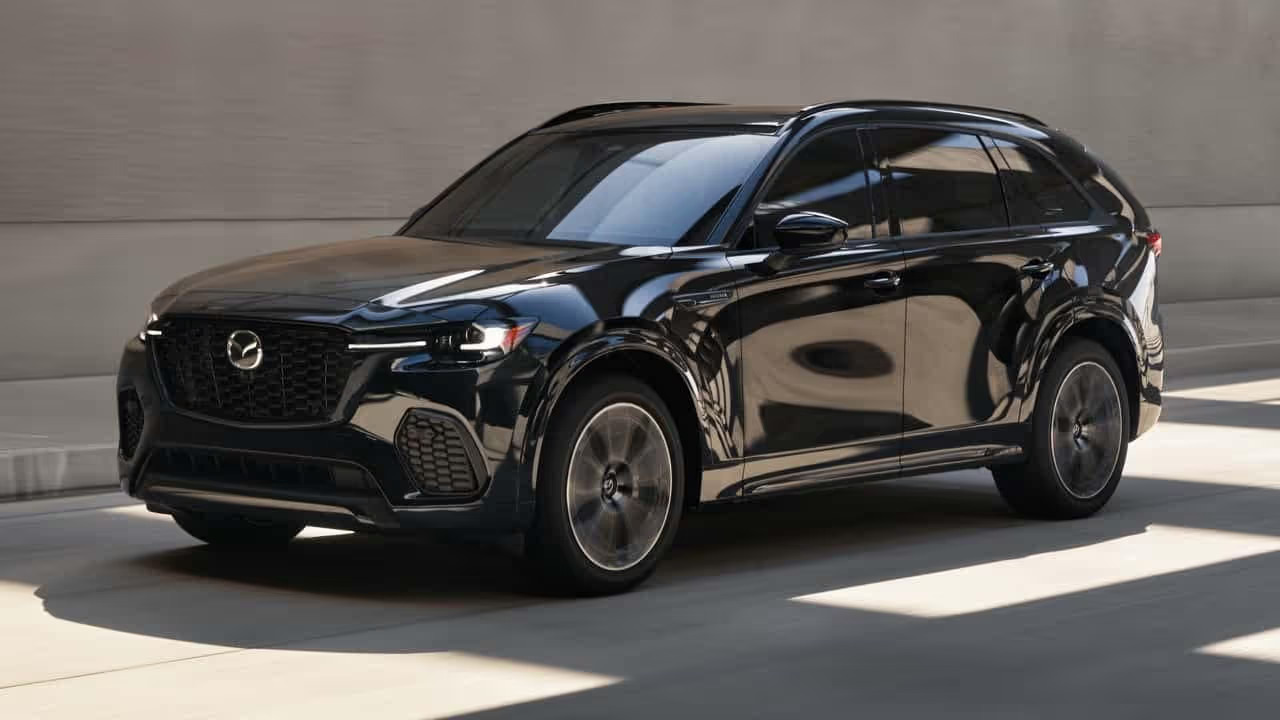
- Engine:
- 3.3-liter turbocharged inline-six gasoline engine
- 3.3-liter turbocharged inline-six plug-in hybrid option
- Horsepower:
- Turbo inline-six: up to 340 hp
- Plug-in hybrid: around 323 hp
- Torque:
- Turbo inline-six: up to 369 lb-ft
- Plug-in hybrid: around 369 lb-ft
- Length: 200.8 inches (approximately 5,100 mm)
- Width: 84.9 inches including mirrors (approximately 2,157 mm)
4. Mazda CX-70: Premium Safety in a Midsize SUV Package
The Mazda CX-70 has gained attention for combining premium styling, driving enjoyment, and strong safety engineering.
Mazda has traditionally focused on creating vehicles that feel refined while maintaining high safety standards, and the CX-70 continues that approach. The SUV’s structure, driver assistance technology, and careful engineering contribute to its strong performance in safety assessments.
Mazda’s safety philosophy focuses on creating vehicles that help drivers avoid accidents while protecting passengers when collisions occur.
The CX-70 includes advanced driver assistance systems designed to recognize potential hazards and provide warnings or intervention when necessary. These features are especially useful in situations involving sudden braking, changing lanes, or unexpected obstacles.
The vehicle’s construction plays an important role in its safety capability. Mazda uses high-strength materials in key areas of the body structure to improve rigidity while controlling vehicle weight.
A stronger passenger compartment helps reduce intrusion during crashes, while carefully designed impact zones absorb energy before it reaches occupants.
An important factor is visibility and driver control. Safety is not only determined by crash test performance. A vehicle that provides good visibility, predictable handling, and comfortable controls can help drivers make better decisions on the road. Mazda has historically emphasized these characteristics as part of its safety approach.
The CX-70 represents a growing category of SUVs that combine luxury features with practical safety engineering. Many buyers now expect more than basic transportation from their vehicles. They want advanced technology, comfort, performance, and confidence. Strong safety ratings help demonstrate that premium design and protection can exist together.
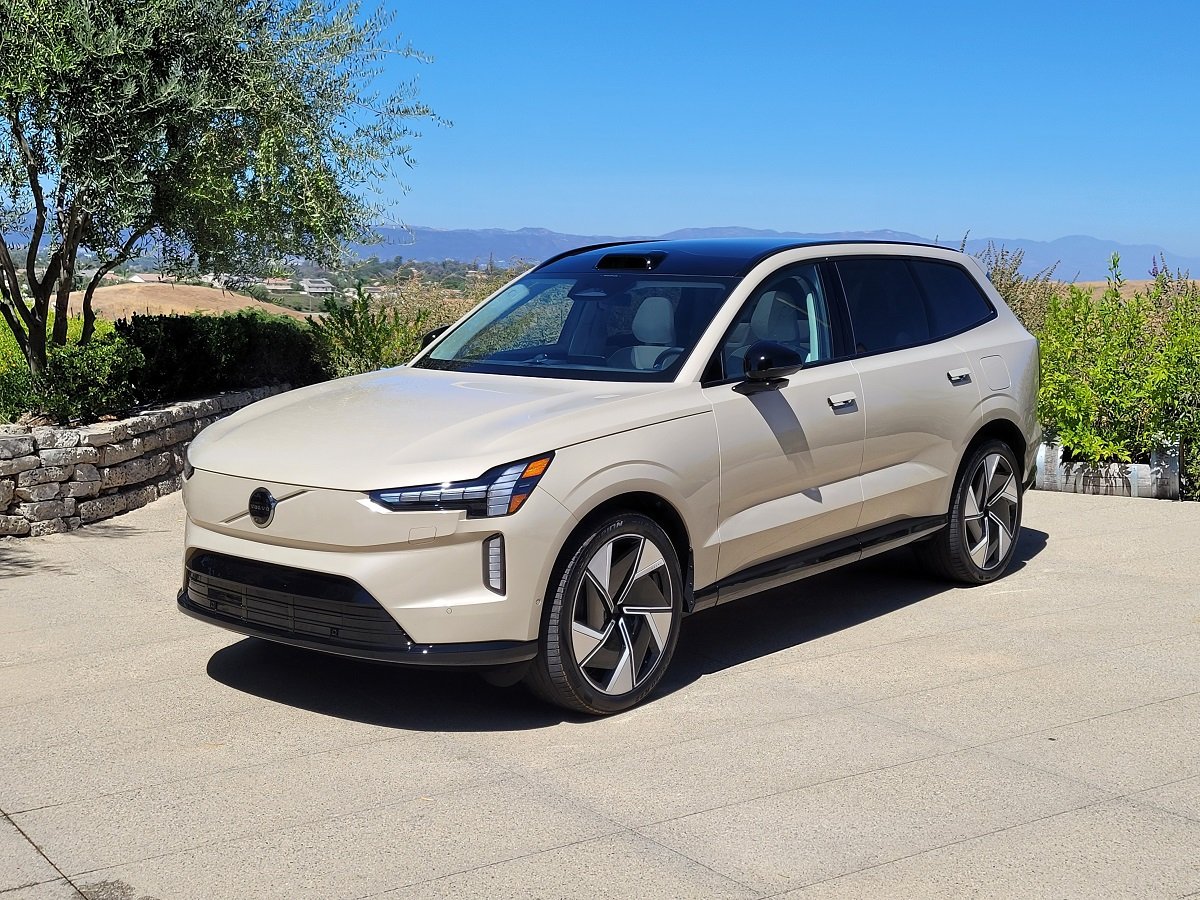
- Engine: Dual electric motors with all-wheel drive
- Horsepower: Up to 496 hp (Twin Motor Performance version)
- Torque: Up to 671 lb-ft
- Length: 198.3 inches (approximately 5,037 mm)
- Width: 83.7 inches including mirrors (approximately 2,126 mm)
5. Volvo EX90: Technology-Focused Safety Leadership
Volvo has long been associated with automotive safety, and the EX90 continues that reputation in the electric SUV market. Designed as a modern three-row electric SUV, the EX90 focuses heavily on crash prevention technology, passenger protection, and advanced sensors.
Volvo’s approach emphasizes reducing accidents through intelligent systems while maintaining strong protection during unavoidable collisions.
The EX90 uses a combination of cameras, radar systems, and other sensors to monitor the environment around the vehicle. These systems are designed to help identify potential dangers, including vehicles, pedestrians, and other road users. The goal is to provide drivers with additional support and reduce the likelihood of serious accidents.
Electric vehicle construction provides additional opportunities for safety improvements, and Volvo has used these advantages in the EX90. The vehicle’s battery placement contributes to a strong structure, while the absence of a traditional engine allows engineers to create different solutions for absorbing crash energy.
Inside the cabin, Volvo focuses on protecting all passengers, including those in the rear seats. Three-row SUVs must account for different passenger sizes and seating positions, making safety engineering more complex. The EX90 demonstrates how manufacturers are adapting traditional safety expertise to new electric vehicle designs.
The Volvo EX90 shows where SUV safety technology may be heading in the future. Vehicles are becoming increasingly intelligent, using software and sensors alongside traditional engineering. While technology cannot replace responsible driving, it can provide an additional layer of protection for drivers and passengers.
Also Read: 10 Heaviest Pickup Trucks Ever Built & Ranked by Weight
5 SUVs That Faced Safety Challenges or Lower Ratings
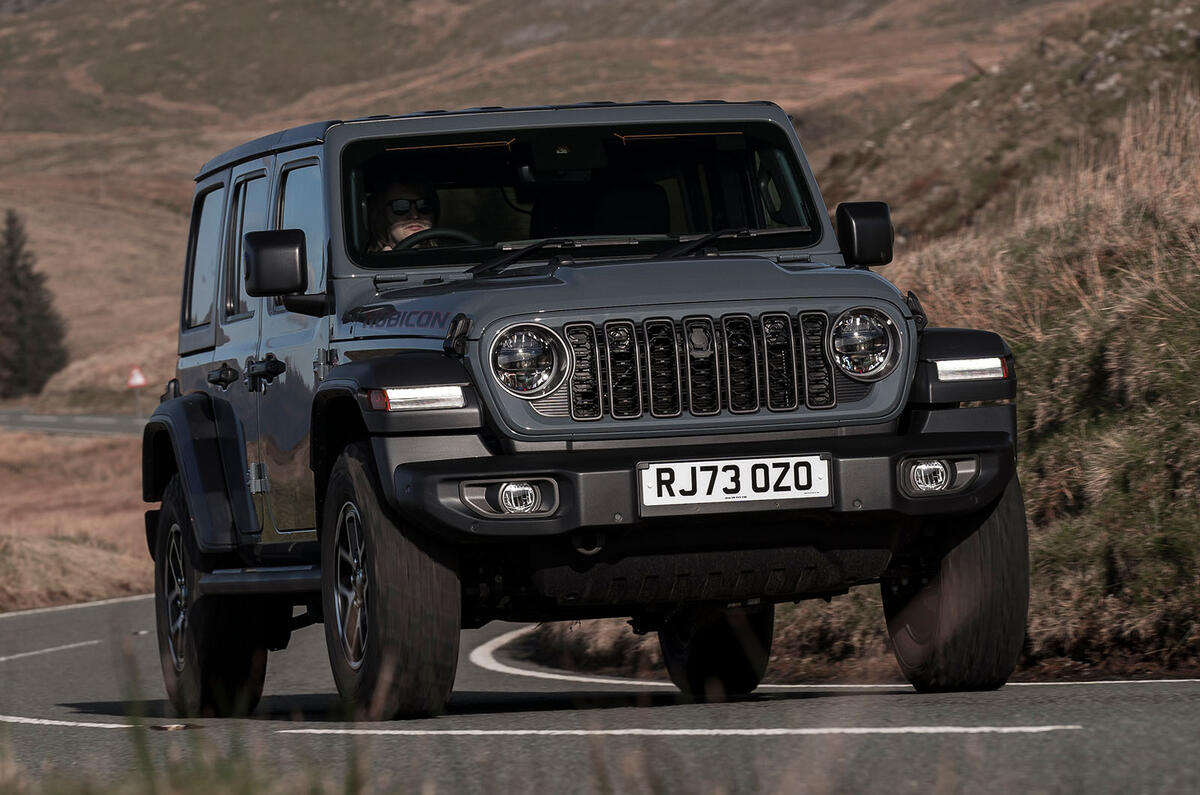
- Engine:
- 2.0-liter turbocharged four-cylinder gasoline engine
- 3.6-liter Pentastar V6
- 3.0-liter EcoDiesel (availability varies)
- 4xe plug-in hybrid option
- Horsepower:
- 2.0L Turbo: 270 hp
- 3.6L V6: 285 hp
- 4xe Hybrid: around 375 hp
- Torque:
- 2.0L Turbo: 295 lb-ft
- 3.6L V6: 260 lb-ft
- 4xe Hybrid: 470 lb-ft
- Length: 166.8 to 188.4 inches, depending on the two-door or four-door version
- Width: 73.9 inches
1. Jeep Wrangler: Strong Off-Road Ability but Safety Trade-Offs
The Jeep Wrangler is one of the most recognizable SUVs in the world because of its legendary off-road capability and unique design. However, its traditional body style and rugged construction create challenges when measured against modern crash test standards.
While the Wrangler offers certain strengths, including durability and off-road performance, it has not always achieved the highest safety ratings compared with newer SUV designs.
One reason for mixed crash performance is the Wrangler’s design priorities. The vehicle was created primarily for adventure and off-road use, where features such as a removable roof, solid axles, and specialized construction provide advantages. However, these characteristics can make it more difficult to optimize performance in certain crash scenarios.
The Wrangler has historically faced challenges related to rollover risk compared with some other SUVs. Its tall body shape and off-road-focused design mean that stability characteristics differ from those of lower passenger vehicles. Modern safety systems help reduce risks, but vehicle design still influences crash behavior.
Driver assistance technology has also been an area where newer SUVs often move ahead faster. Many modern family SUVs include extensive standard safety features, while rugged vehicles sometimes prioritize mechanical capability over advanced electronic assistance.
The Wrangler remains popular because buyers choose it for specific reasons. Its lower safety ratings in some areas do not mean it is unsuitable for every driver, but they show the compromises involved when designing a vehicle around extreme off-road performance.
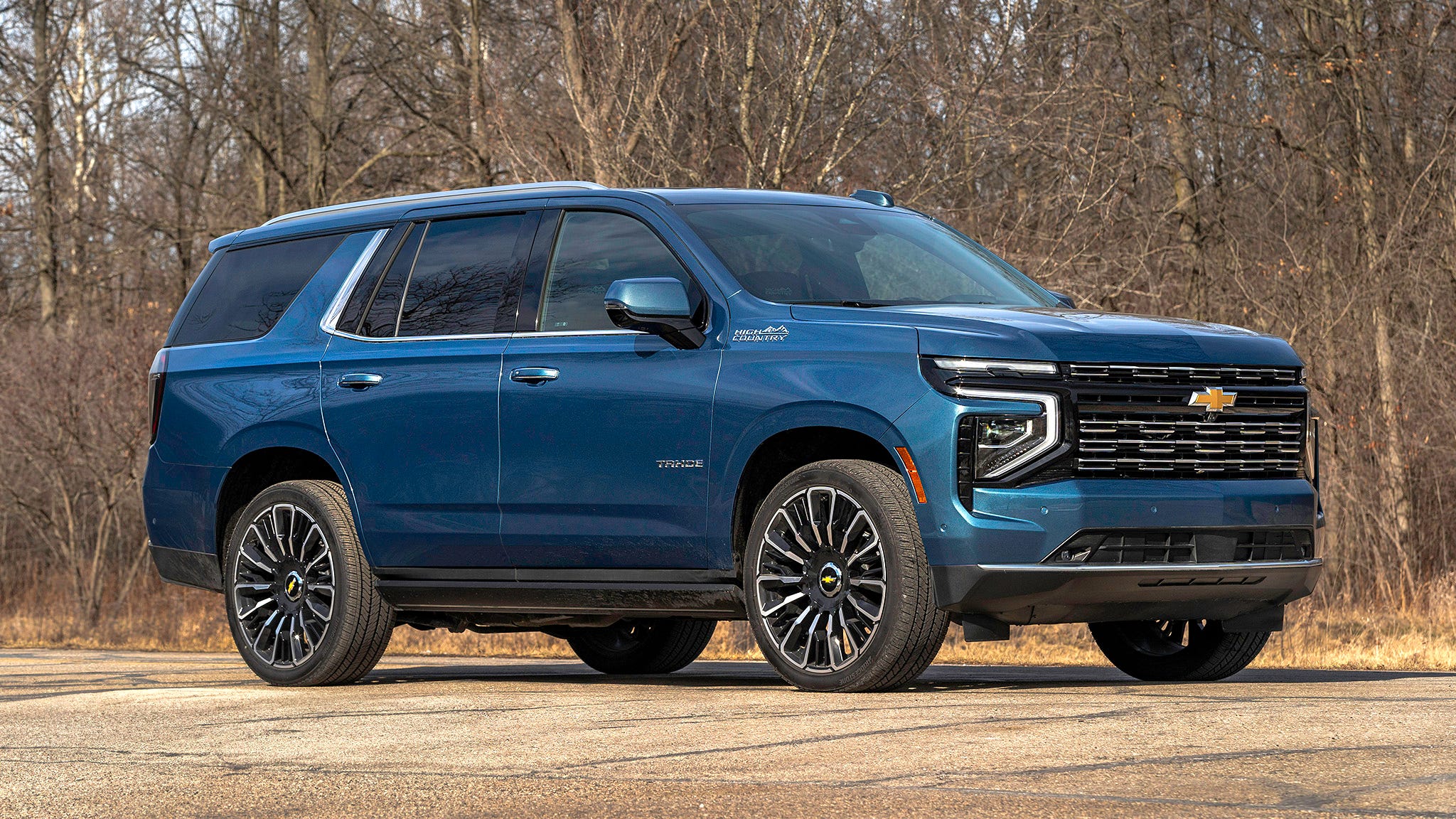
- Engine:
- 5.3-liter V8 gasoline engine
- 6.2-liter V8 gasoline engine
- 3.0-liter Duramax turbo-diesel inline-six
- Horsepower:
- 5.3L V8: 355 hp
- 6.2L V8: 420 hp
- 3.0L Diesel: 305 hp
- Torque:
- 5.3L V8: 383 lb-ft
- 6.2L V8: 460 lb-ft
- 3.0L Diesel: 495 lb-ft
- Length: 210.7 inches (approximately 5,352 mm)
- Width: 81.1 inches (approximately 2,060 mm)
2. Chevrolet Tahoe: Size Does Not Guarantee Perfect Safety
The Chevrolet Tahoe is one of the largest SUVs available, offering powerful engines, impressive towing capability, and a spacious interior. However, being large does not automatically make a vehicle safer. Modern crash testing evaluates how effectively a vehicle protects occupants, and size alone cannot replace strong engineering.
Large SUVs face unique challenges because their weight and dimensions affect crash behavior. Engineers must ensure that a vehicle protects its own passengers while also managing interactions with smaller vehicles during collisions.
The Tahoe has improved significantly over previous generations, adding more advanced safety technology and improved structural engineering. However, some testing areas have shown that even large SUVs must continue evolving to meet increasingly demanding standards.
One challenge with large SUVs is that they often require more advanced systems to compensate for their size. Features such as automatic emergency braking, pedestrian detection, and lane assistance become especially important because larger vehicles can create greater consequences during accidents.
The Tahoe remains a capable and popular SUV, especially among families and towing-focused buyers. However, its safety performance demonstrates that bigger does not always mean better when it comes to crash protection.
- Engine:
- 2.3-liter turbocharged EcoBoost four-cylinder
- 3.0-liter twin-turbocharged EcoBoost V6
- Horsepower:
- 2.3L EcoBoost: 300 hp
- 3.0L EcoBoost: 400 hp
- Torque:
- 2.3L EcoBoost: 310 lb-ft
- 3.0L EcoBoost: 415 lb-ft
- Length: 198.8 inches (approximately 5,050 mm)
- Width: 78.9 inches (approximately 2,003 mm)
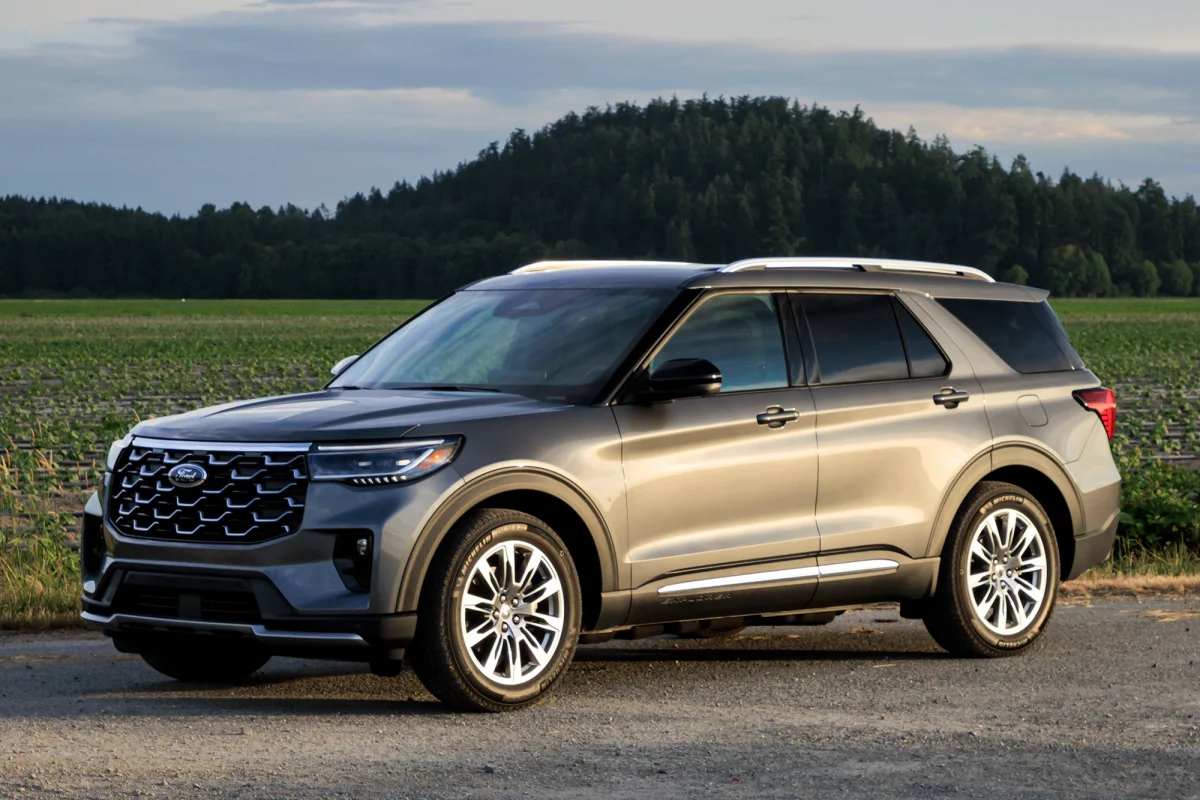
3. Ford Explorer: Improvements but Room for Progress
The Ford Explorer has been one of America’s most popular SUVs for decades. It offers strong performance, three-row seating, and a wide range of features. However, like many long-running models, it has experienced changing safety results as testing standards have become stricter.
The latest Explorer generations include improved safety technology and stronger engineering compared with older versions. However, some versions have faced criticism in certain testing categories, showing that even established SUV models must continue adapting.
One important factor in modern safety evaluations is how well driver assistance systems perform. Crash avoidance technology has become a major part of vehicle ratings, and manufacturers must ensure these systems work effectively in different conditions.
The Explorer’s popularity means that improvements can have a significant impact because millions of drivers rely on the model. Enhancing safety in a widely used SUV can help improve road safety.
The Explorer demonstrates that automotive safety is constantly changing. A vehicle that performs well today must continue improving as new testing methods and technologies develop.
- Engine: Dual electric motors (Long Range AWD/Performance versions) or single rear motor (RWD versions)
- Horsepower: Estimated up to around 450 hp depending on version
- Torque: Estimated up to around 500 lb-ft
- Length: 187.0 inches (approximately 4,751 mm)
- Width: 75.6 inches (approximately 1,921 mm)
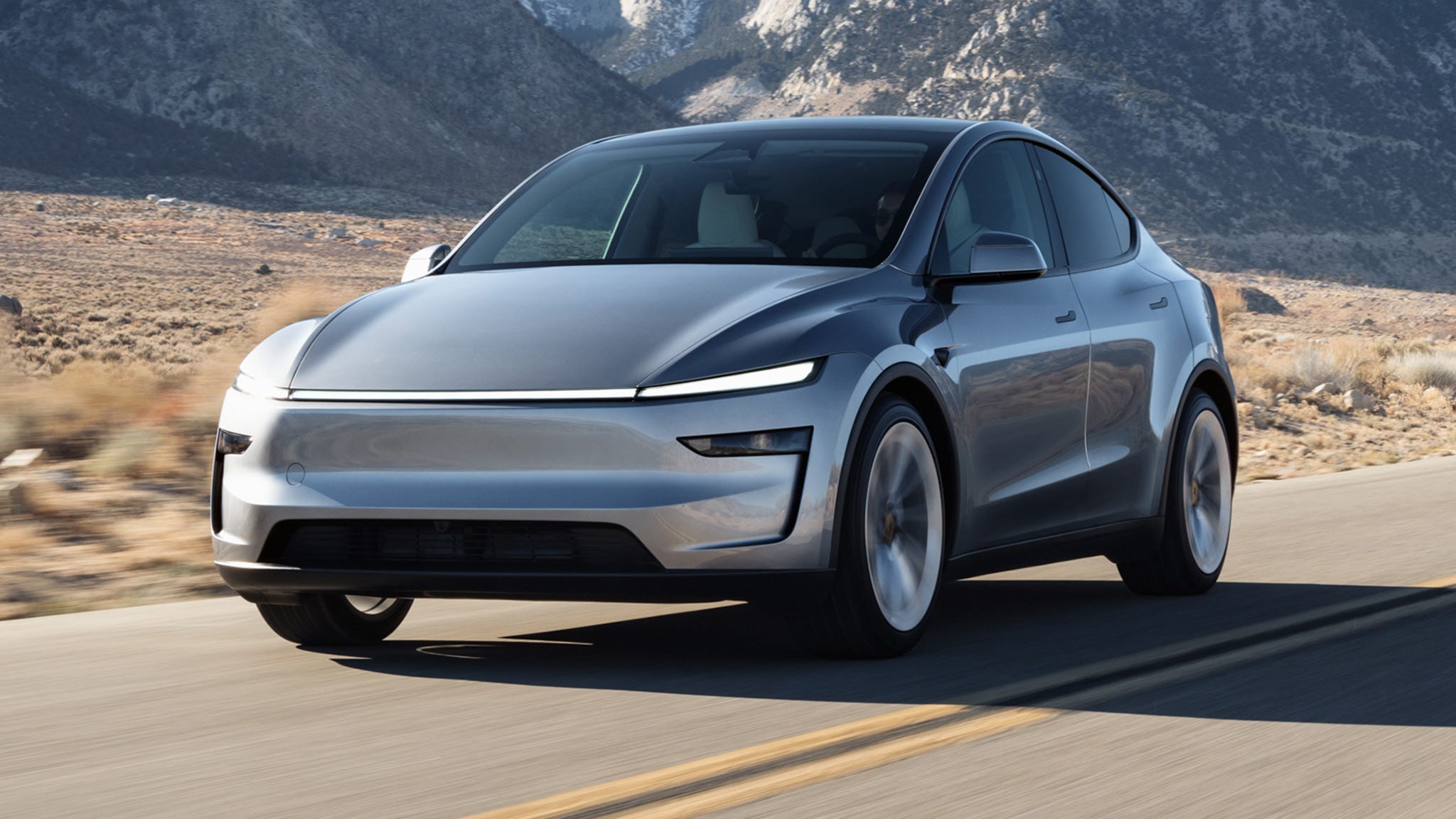
4. Tesla Model Y: Technology Strengths With Safety Debate
The Tesla Model Y has become one of the world’s most popular electric SUVs because of its long driving range, strong performance, and advanced technology.
Tesla has also built a reputation around vehicle safety, with many of its models performing well in several crash tests. However, the Model Y has also faced scrutiny as testing standards evolve and as safety organizations place more attention on driver assistance systems, real-world performance, and software reliability.
One of the Model Y’s biggest safety advantages comes from its electric vehicle design. Like many electric vehicles, the Model Y benefits from a low center of gravity because the battery pack sits beneath the floor.
This reduces the chance of rollover incidents and allows engineers to create a strong passenger compartment. The absence of a traditional engine also provides additional space for energy absorption in some collision situations.
The vehicle’s active safety technology is a major part of its identity. Tesla vehicles are known for advanced driver assistance features that use cameras and software to monitor road conditions. Systems designed to assist with braking, lane control, and collision warnings can help reduce accidents when they operate correctly.
However, modern safety evaluations increasingly examine more than hardware. They also consider how effectively assistance systems communicate with drivers and how reliably they perform in different situations. A vehicle can have impressive technology, but safety depends on how well those systems support human decision-making.
The Model Y demonstrates the changing nature of SUV safety. Electric vehicles and software-based systems are transforming how manufacturers approach protection. While the Model Y has many strengths, its safety story also shows that technology must continue developing alongside traditional crash engineering.
- Engine: 3.5-liter V6 gasoline engine
- Horsepower: 284 hp
- Torque: 259 lb-ft
- Length: 197.7 inches (approximately 5,022 mm)
- Width: 77.9 inches (approximately 1,979 mm)
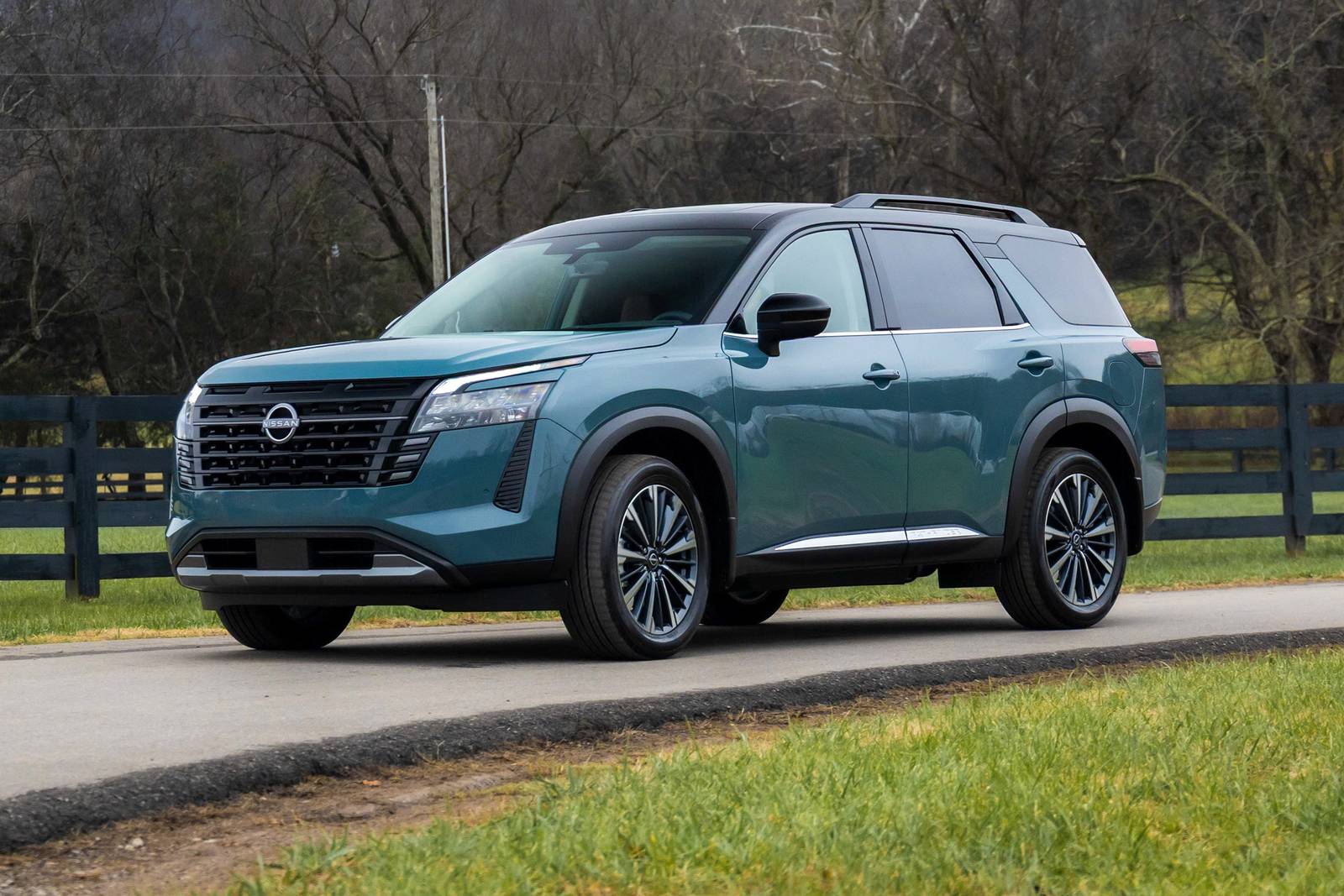
5. Nissan Pathfinder: A Capable SUV Facing Modern Competition
The Nissan Pathfinder has been a familiar name in the SUV market for decades. The latest generations have improved significantly, offering better design, stronger technology, and more refined driving characteristics. However, the Pathfinder operates in an extremely competitive segment where safety expectations continue rising.
Modern SUV buyers expect more than basic crash protection. They want vehicles that can actively help avoid accidents through advanced driver assistance systems. As safety organizations introduce stricter evaluations, manufacturers must continually improve features such as automatic braking, pedestrian detection, and lane support.
The Pathfinder benefits from Nissan’s focus on safety technology through systems designed to provide additional driver support. These features help monitor surrounding traffic and assist in emergency situations. However, competition from newer SUVs means every area of safety performance receives greater attention.
The challenge for midsize three-row SUVs is balancing size, comfort, and efficiency with structural protection. Engineers must create vehicles that provide enough space for families while maintaining strong crash performance. This requires careful planning of materials, vehicle shape, and safety equipment.
The Pathfinder remains a practical choice for many families because of its space, comfort, and capability. Its position in safety comparisons highlights an important point: even good SUVs must continue improving as crash tests become more demanding and consumer expectations increase.
