
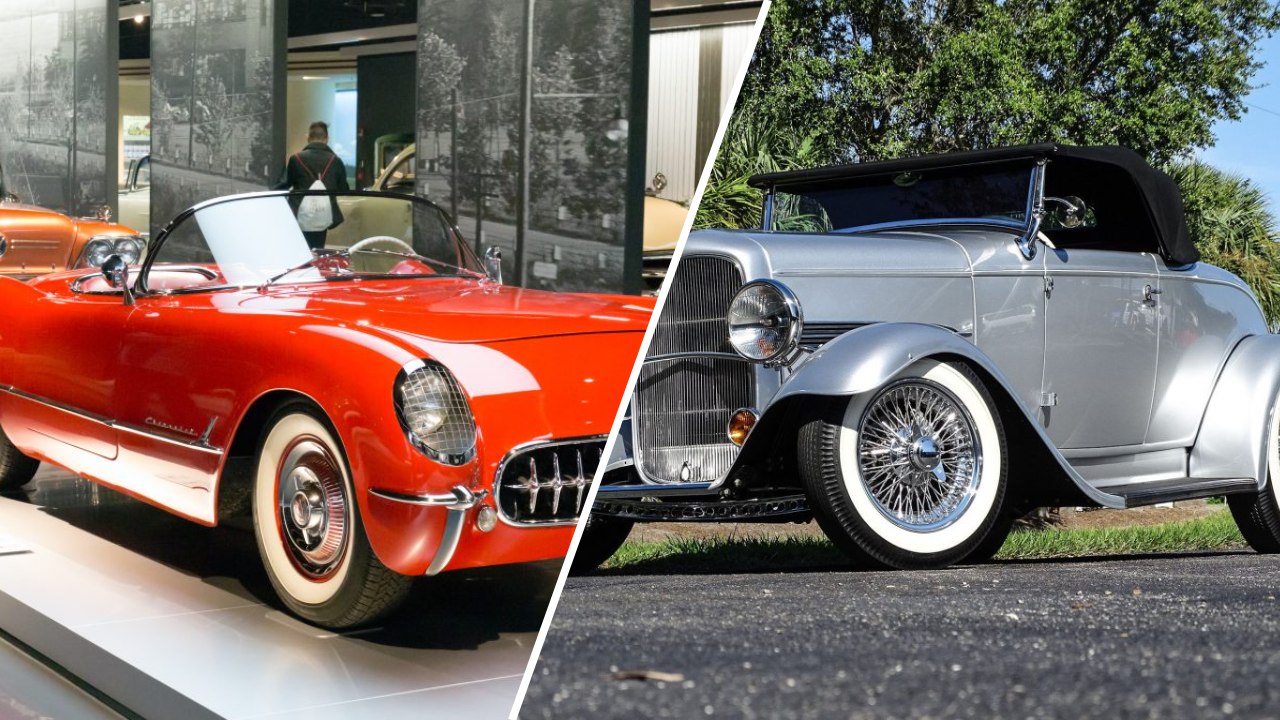
Many classic American cars are remembered for their styling or performance, but a select group changed the course of automotive history. Their innovations influenced how vehicles were designed, built, and marketed, leaving a legacy that extends far beyond their years in production.
The eight vehicles featured in this list represent some of the most influential American automobiles ever produced. Whether through groundbreaking engineering, industry-changing manufacturing techniques, or lasting cultural significance, each model helped shape the vehicles that followed and continues to be celebrated by collectors and enthusiasts across the United States.
Also Read: 10 Vehicles With the Worst Reliability Scores in 2026
1. 1908 Ford Model T
No American automobile changed the automotive landscape more profoundly than the Ford Model T. Introduced for the 1908 model year, it transformed the automobile from an expensive luxury into practical transportation that ordinary Americans could afford.
While earlier automobiles existed, they were largely handcrafted and financially out of reach for most families. Henry Ford’s vision centered on producing a dependable car in enormous numbers while steadily lowering its price through manufacturing efficiency.
The Model T became the first automobile built using moving assembly-line production on a large scale. Introduced at Ford’s Highland Park plant in 1913, this manufacturing method dramatically reduced assembly time and production costs.
Those savings were passed directly to consumers, allowing millions of Americans to purchase their first automobile. By the time production ended in 1927, more than 15 million Model Ts had been built, an unprecedented achievement for the era.
Mechanically, the Model T emphasized simplicity and durability. Its rugged chassis, generous ground clearance, and reliable four-cylinder engine enabled drivers to travel on the rough, unpaved roads common throughout the United States during the early twentieth century.
Maintenance was straightforward, and replacement parts were widely available, further contributing to its popularity.
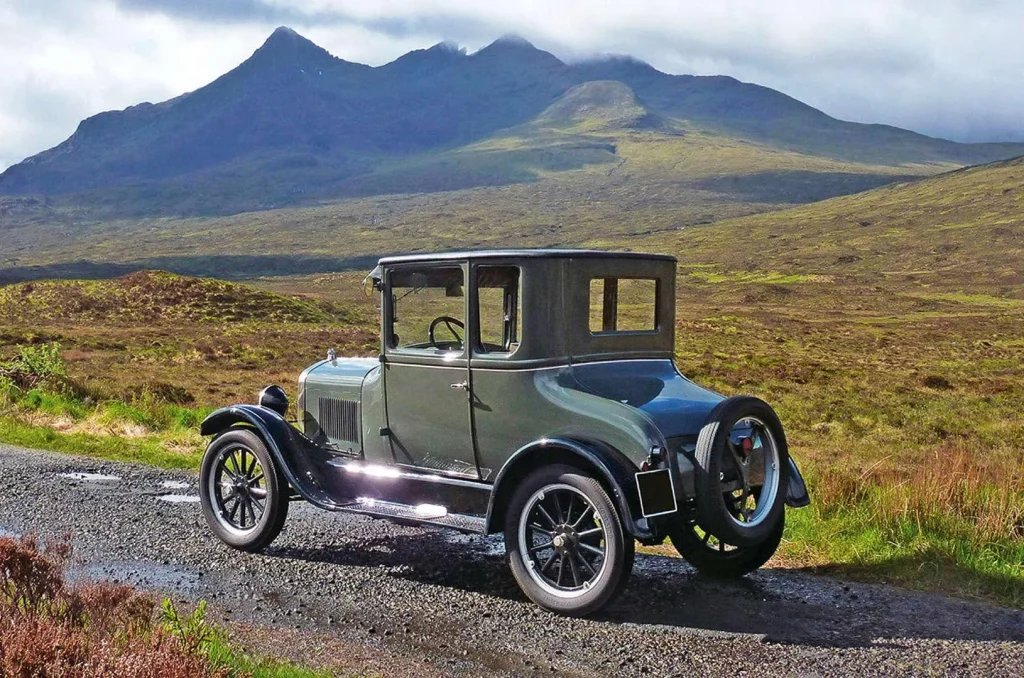
Beyond transportation, the Model T reshaped American society. It expanded personal mobility, encouraged suburban growth, stimulated road construction, and fundamentally changed how people worked, traveled, and conducted business. Few vehicles in automotive history have produced such widespread economic and cultural influence.
Specifications
- Engine: 2.9-liter naturally aspirated inline-four
- Torque: Approximately 83 lb-ft
- Horsepower: 20 hp
- Length/Width: 134.0 inches / 66.0 inches
2. 1955 Chevrolet Bel Air
The 1955 Chevrolet Bel Air occupies a special place in American automotive history because it combined attractive styling with one of General Motors’ most important engineering breakthroughs.
Although previous Bel Air models had already gained popularity, the redesigned 1955 version introduced Chevrolet’s new small-block V8, an engine family that would influence performance cars, trucks, racing programs, and aftermarket tuning for generations.
The compact 265-cubic-inch V8 offered an exceptional balance of power, efficiency, and reliability for its time. It quickly earned a reputation for durability while providing considerably stronger performance than many competing engines.
Over the decades, Chevrolet continued refining the small-block architecture, making it one of the longest-running and most successful engine families ever produced.
The Bel Air’s styling also captured the optimism of postwar America. Clean body lines, tasteful chrome accents, and available two-tone paint schemes helped define the appearance of 1950s American automobiles. Buyers appreciated that the car looked upscale without reaching luxury-car pricing.
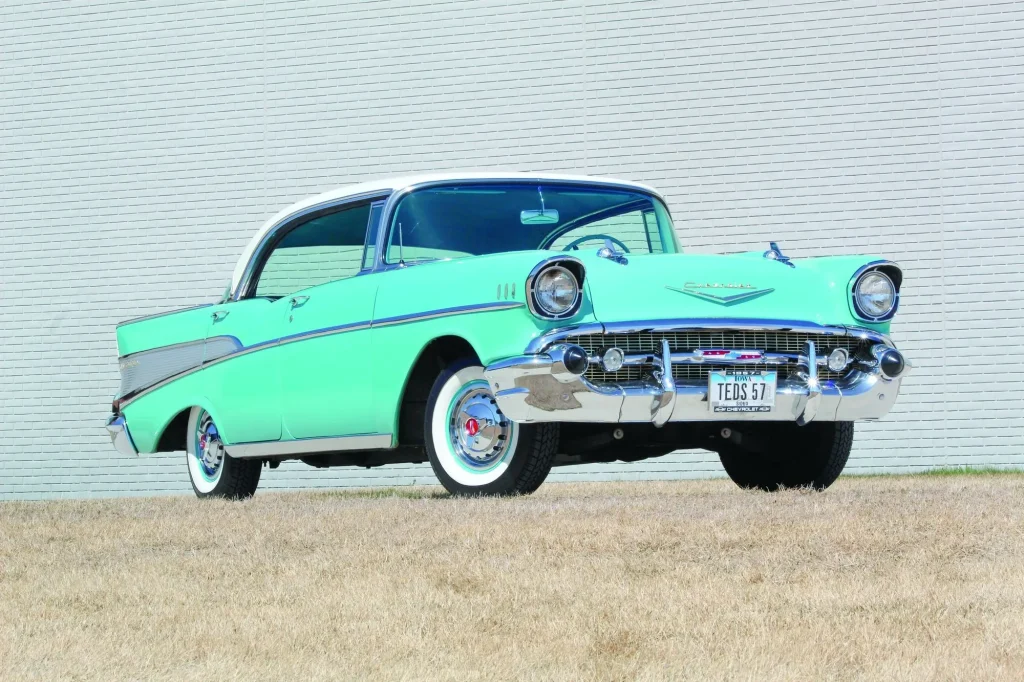
Its legacy extends well beyond its production years. The 1955 Bel Air became a favorite among drag racers, custom builders, and collectors because the engine responded exceptionally well to performance modifications.
Even today, restored examples remain among the most recognizable classic cars in the United States, frequently appearing at auctions, museums, and automotive events.
By introducing an iconic V8 while establishing a timeless design, the 1955 Chevrolet Bel Air secured its place as one of the most influential American cars ever built.
Specifications
- Engine: 4.3-liter (265 cubic-inch) small-block V8
- Torque: 257 lb-ft
- Horsepower: 180 hp
- Length/Width: 197.5 inches / 73.0 inches
3. 1964½ Ford Mustang
Few vehicles have changed the American automotive market as dramatically as the 1964½ Ford Mustang. Introduced on April 17, 1964, at the New York World’s Fair, the Mustang immediately created an entirely new vehicle category that would later become known as the pony car.
Its combination of sporty styling, affordable pricing, and extensive customization options appealed to younger buyers while remaining practical enough for everyday transportation.
Ford’s strategy proved remarkably successful. More than 22,000 Mustangs were sold on the first day, and nearly 419,000 examples found buyers during the first full production year.
Those figures exceeded Ford’s expectations and encouraged competitors to develop their own sporty coupes, ultimately leading to cars such as the Chevrolet Camaro, Pontiac Firebird, Dodge Challenger, and Plymouth Barracuda.
The Mustang’s appeal extended beyond performance. Buyers could select from multiple engines, transmissions, body styles, and option packages, allowing the car to suit a wide range of budgets and preferences.
Whether equipped with an economical inline-six or a powerful V8, every Mustang shared the same unmistakable design that quickly became an American icon.
Hollywood appearances, motorsports success, and continuous production for more than six decades have further strengthened the Mustang’s legacy. Very few automobiles remain instantly recognizable across multiple generations, yet the Mustang continues doing exactly that.
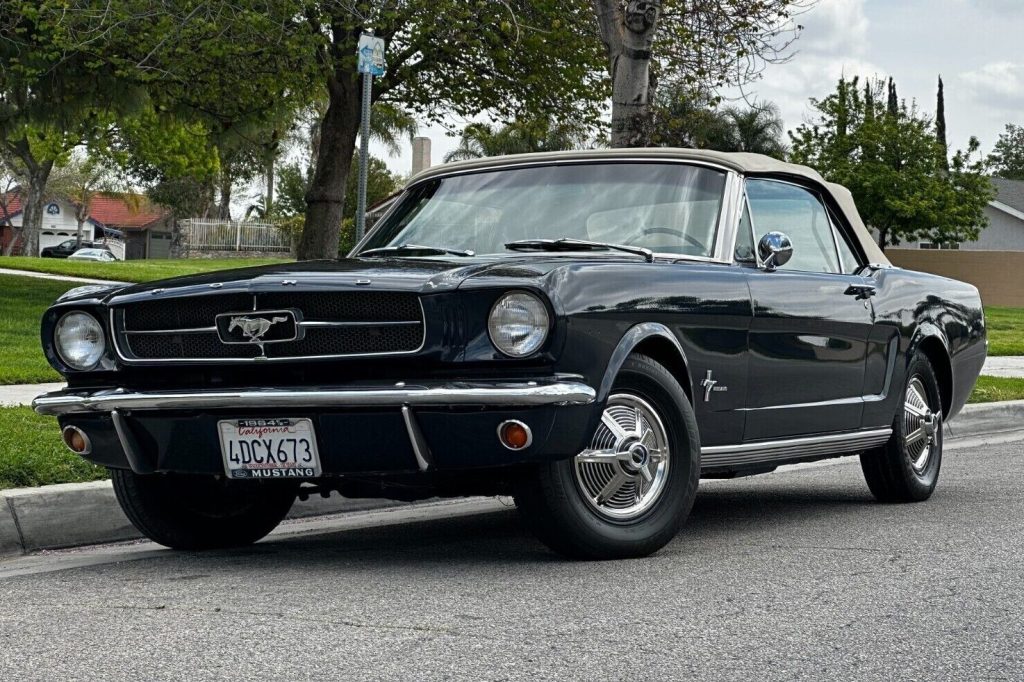
Its influence reaches far beyond Ford. By proving that affordable performance and stylish design could coexist, the original Mustang permanently changed the direction of the American automotive industry and remains one of the most celebrated classics ever produced.
Specifications
- Engine: 4.7-liter (289 cubic-inch) Windsor V8
- Torque: 305 lb-ft
- Horsepower: 271 hp
- Length/Width: 181.6 inches / 68.2 inches
4. 1963 Chevrolet Corvette Sting Ray Coupe
When Chevrolet introduced the second-generation Corvette for 1963, it represented one of the boldest design and engineering advancements in American sports car history.
The Corvette Sting Ray Coupe departed dramatically from its predecessor, featuring independent rear suspension for the first time and a striking fastback body highlighted by the famous split rear window, a feature exclusive to the 1963 model year.
The independent rear suspension transformed the Corvette’s handling characteristics. Compared with the previous solid rear axle, the new suspension improved ride quality, cornering stability, and driver confidence.
This advancement allowed the Corvette to compete more effectively with European sports cars while maintaining the powerful V8 performance American buyers expected.
The split-window coupe became an instant design icon. Although the divided rear glass was eliminated after one year because it limited rearward visibility, it eventually became one of the most collectible styling elements in Corvette history. Today, authentic 1963 split-window coupes command some of the highest prices among classic Corvettes.
The Sting Ray also reinforced Chevrolet’s commitment to motorsports. High-performance versions equipped with fuel-injected V8 engines earned success in road racing and endurance events, helping establish the Corvette as America’s premier sports car.
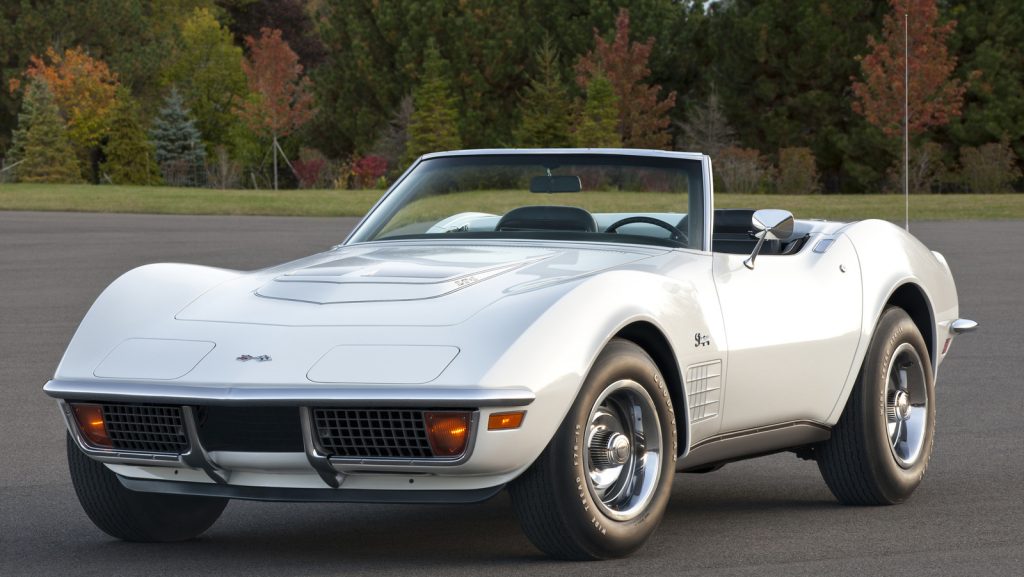
Collectors continue seeking the 1963 Corvette not only for its rarity but also because it marked a turning point in American engineering. It demonstrated that a domestic sports car could combine sophisticated suspension technology, breathtaking styling, and strong V8 performance into one unforgettable package.
Specifications
- Engine: 5.4-liter (327 cubic-inch) V8
- Torque: 360 lb-ft
- Horsepower: 360 hp
- Length/Width: 175.3 inches / 69.6 inches
5. 1970 Plymouth Hemi ‘Cuda
By the late 1960s, the American muscle car era had reached its peak, and few vehicles captured that moment better than the 1970 Plymouth Hemi ‘Cuda. Built on Chrysler’s E-body platform, the redesigned ‘Cuda combined aggressive styling with one of the most legendary production engines ever installed in an American automobile: the 426 cubic inch Hemi V8.
Officially rated at 425 horsepower, the Hemi engine was widely regarded as being conservatively advertised. Its hemispherical combustion chambers, massive airflow capability, and exceptional durability made it a dominant force on drag strips across the United States.
Buyers seeking maximum straight-line performance viewed the Hemi ‘Cuda as one of the ultimate factory muscle cars available.
Beyond raw performance, the 1970 model introduced dramatic styling that remains instantly recognizable today. A wide grille, bold shaker hood, muscular rear fenders, and distinctive hockey-stick graphics gave the car a presence unlike almost anything else on American roads. Optional high-impact paint colors further emphasized its performance-focused identity.
Production numbers were extremely limited, especially for Hemi-equipped versions. As emissions regulations, rising insurance costs, and the fuel crisis began changing the automotive landscape during the early 1970s, cars like the Hemi ‘Cuda quickly disappeared.
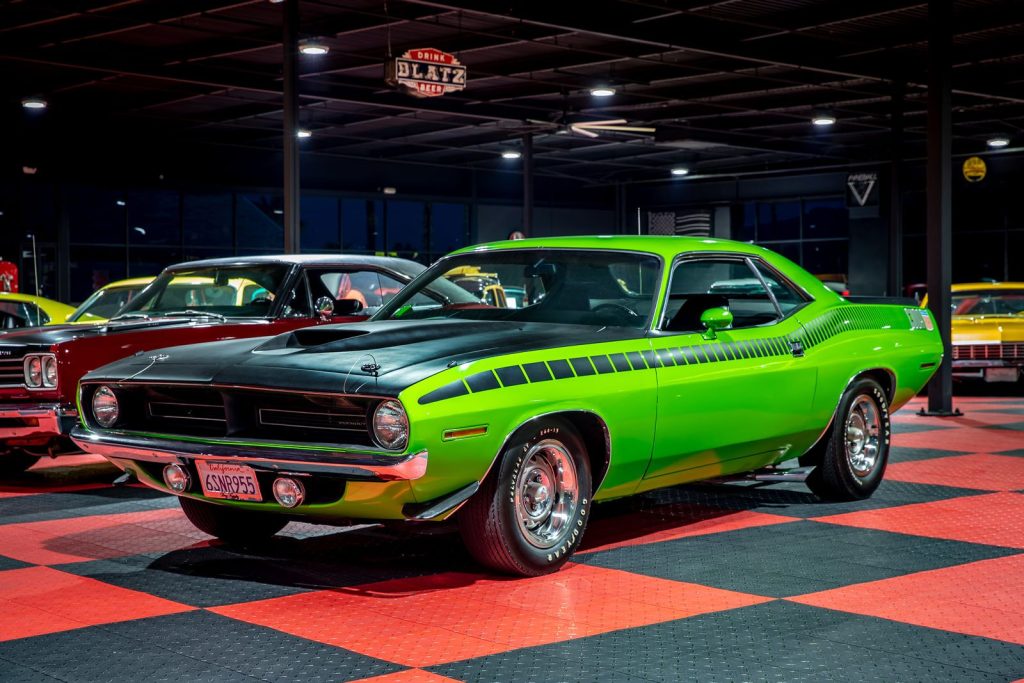
That scarcity has made surviving examples some of the most valuable American collector cars ever sold, frequently bringing well over seven figures at major auctions.
The Hemi ‘Cuda represents the high point of Detroit’s original horsepower wars. Its combination of rarity, engineering excellence, and unmistakable styling ensures its legacy remains firmly intact among enthusiasts and collectors.
Specifications
- Engine: 7.0-liter (426 cubic-inch) Hemi V8
- Torque: 490 lb-ft
- Horsepower: 425 hp
- Length/Width: 186.0 inches / 74.9 inches
6. 1953 Chevrolet Corvette
The Chevrolet Corvette debuted in 1953 as America’s first mass-produced fiberglass sports car, marking the beginning of what would become the longest-running sports car nameplate in the United States.
Although production totaled only 300 hand-built examples during its inaugural year, the Corvette established a foundation that continues more than seven decades later.
One of the car’s most innovative features was its fiberglass body. At a time when nearly every automobile relied on traditional steel construction, Chevrolet adopted lightweight fiberglass to reduce weight and create distinctive styling that would have been difficult to manufacture using conventional methods.
This decision influenced future Corvette generations and demonstrated that American manufacturers were willing to embrace unconventional engineering solutions. The original Corvette was powered by Chevrolet’s dependable Blue Flame inline-six paired with a two-speed Powerglide automatic transmission.
While later V8-powered Corvettes dramatically increased performance, the 1953 model’s historical importance lies in introducing an American-built sports car capable of competing in a market largely dominated by European manufacturers.
Its Polo White exterior, Sportsman Red interior, and black convertible top became iconic, creating one of the most recognizable color combinations in automotive history. Every 1953 Corvette shared the same appearance because Chevrolet offered no alternative colors or major options during the first production year.
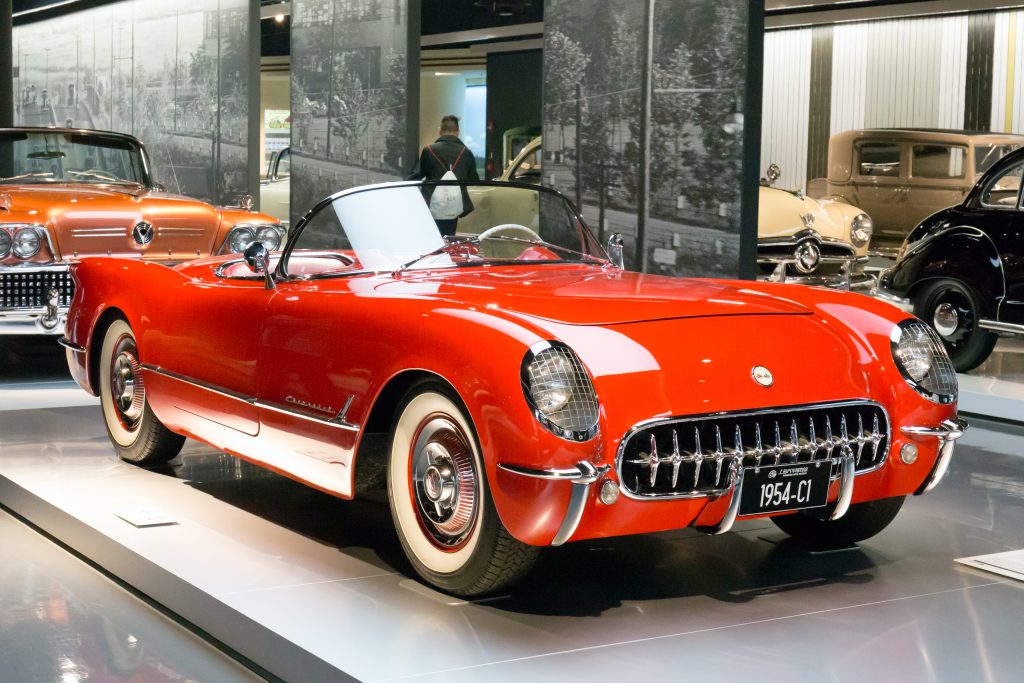
Today, surviving examples rank among the most valuable and historically significant Corvettes ever produced. More importantly, the 1953 model began a legacy that has shaped American performance engineering for generations.
Specifications
- Engine: 3.9-liter (235 cubic-inch) Blue Flame inline-six
- Torque: 223 lb-ft
- Horsepower: 150 hp
- Length/Width: 167.1 inches / 72.2 inches
7. 1949 Cadillac Series 62
The 1949 Cadillac Series 62 earned its place in American automotive history by introducing one of the most influential engines ever developed by General Motors.
That year marked the debut of Cadillac’s revolutionary overhead-valve 331 cubic-inch V8, an engine that became the benchmark for smoothness, durability, and performance during the postwar era. It was lighter, more compact, and significantly more efficient than the flathead V8 engines that many competitors still relied upon.
The new V8 transformed Cadillac into America’s premier luxury performance brand. Producing 160 horsepower in standard form, it delivered effortless acceleration and refined highway cruising at a time when interstate travel was becoming increasingly common.
Engineers also designed the engine with future development in mind, allowing Cadillac to increase displacement and power in later years while retaining the same fundamental architecture.
The Series 62 was equally important from a design perspective. It introduced the first production Cadillac tailfins, inspired by the Lockheed P-38 Lightning fighter aircraft. Although modest compared with the dramatic fins of the late 1950s, this styling cue would become one of the defining characteristics of American automobiles for the next decade.
Luxury buyers appreciated the Series 62’s spacious cabin, excellent ride quality, and premium craftsmanship. The combination of advanced engineering and distinctive styling helped Cadillac establish itself as a global symbol of American luxury.
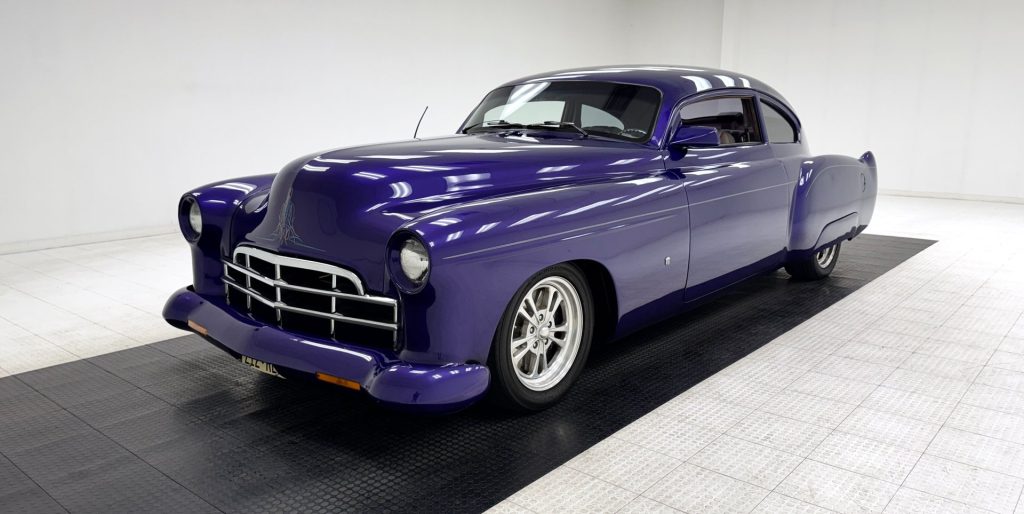
The influence of the 1949 Series 62 extended far beyond Cadillac. Its overhead-valve V8 inspired engine development throughout Detroit, while its tailfin styling shaped an entire generation of American automotive design. Few postwar cars changed both engineering and styling trends as successfully.
Specifications
- Engine: 5.4-liter (331 cubic-inch) OHV V8
- Torque: 312 lb-ft
- Horsepower: 160 hp
- Length/Width: 217.0 inches / 77.8 inches
8. 1932 Ford Model 18
The 1932 Ford Model 18, commonly called the “Deuce,” concluded one chapter of American automotive history while beginning another. It became the first affordable production car powered by Ford’s famous flathead V8, making eight-cylinder performance available to ordinary Americans rather than limiting it to expensive luxury automobiles.
Ford’s 221 cubic-inch flathead V8 was a remarkable engineering achievement for its time. Compact, durable, and relatively inexpensive to manufacture, it delivered noticeably stronger performance than the four-cylinder engines that powered many competing vehicles.
The availability of a reasonably priced V8 permanently changed buyer expectations and forced competitors to accelerate their own engine development programs.
The Model 18 also became one of the most important vehicles in hot rod culture. After World War II, enthusiasts discovered that the lightweight chassis and simple mechanical layout made it an ideal platform for modification.
Thousands of customized Deuces appeared at drag strips, dry lake racing events, and local car shows, helping establish hot rodding as a uniquely American automotive movement.
Its influence reached well beyond racing. The Model 18 appeared in countless magazines, films, and television programs, becoming an enduring symbol of American performance culture. Even today, builders continue creating replica and restored Deuce hot rods because of the car’s timeless proportions and historical importance.
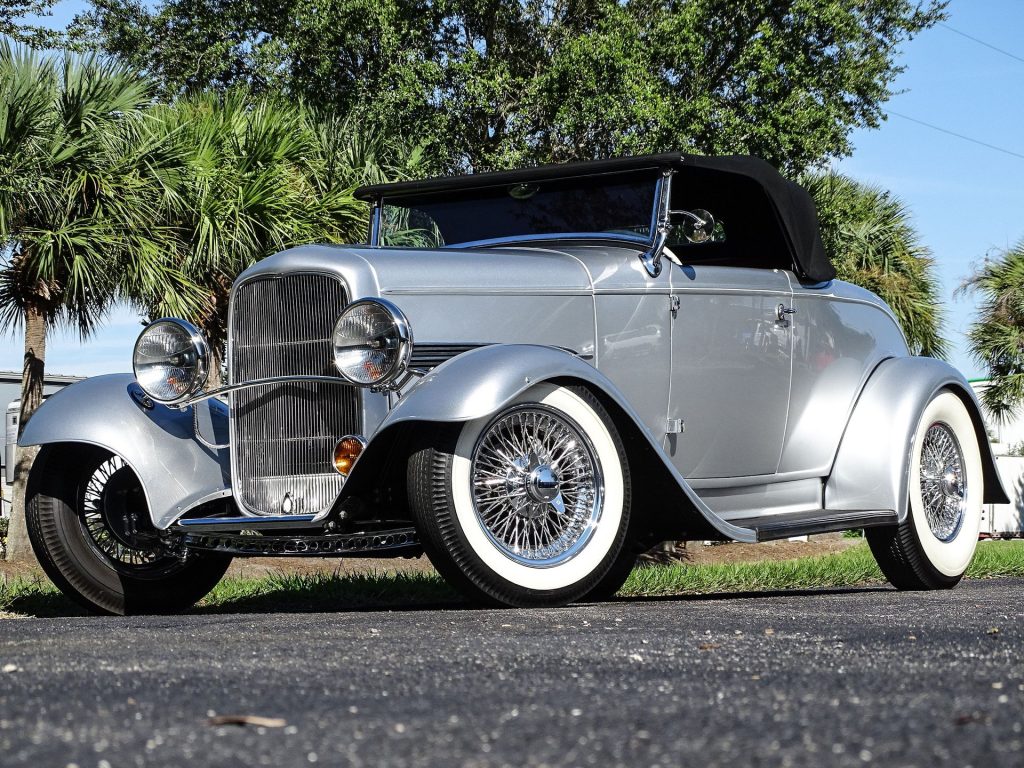
Very few automobiles have shaped both factory engineering and grassroots enthusiast culture to the same extent. The 1932 Ford Model 18 accomplished both, ensuring its place among the most influential vintage American cars ever produced.
Specifications
- Engine: 3.6-liter (221 cubic-inch) flathead V8
- Torque: 180 lb-ft
- Horsepower: 65 hp
- Length/Width: 166.3 inches / 67.0 inches
Also Read: 10 Sports Cars With The Most Expensive Repair Costs
