
The United States remains one of the world’s largest vehicle manufacturing hubs, with millions of cars, SUVs, pickup trucks, and commercial vehicles assembled every year.
While some of the biggest automakers are headquartered overseas, many operate massive factories across the country that produce vehicles for both domestic buyers and export markets.
According to the latest production estimates from Automotive News, S&P Global Mobility, automaker manufacturing reports, and industry data, a handful of companies account for the majority of vehicles built in America.
Ranked by approximate annual U.S. production volume, these automakers stand out for their manufacturing capacity, investment in American factories, and contribution to jobs, suppliers, and the broader U.S. economy.
Also Read: 10 Used Cars Under $20,000 With Excellent Reliability and IIHS-Recommended Safety
1. General Motors
Approximate U.S. vehicle production: 2.0 to 2.2 million vehicles annually
General Motors ranks first as the largest vehicle manufacturer in the United States by annual production volume. Every year, the company assembles approximately two million to 2.2 million vehicles across its extensive network of manufacturing facilities located in Michigan, Texas, Indiana, Kansas, Kentucky, Tennessee, and several other states.
Through Chevrolet, GMC, Cadillac, and Buick, GM builds one of the broadest lineups in the industry, including full-size pickup trucks, SUVs, luxury vehicles, commercial vans, and an expanding range of electric models.
Much of GM’s production is driven by its full-size trucks and SUVs, which remain among the best-selling vehicles in America.
Facilities such as Fort Wayne Assembly in Indiana and Arlington Assembly in Texas operate at high capacity to meet demand for models like the Chevrolet Silverado, GMC Sierra, Chevrolet Tahoe, Chevrolet Suburban, GMC Yukon, and Cadillac Escalade.
These vehicles generate a significant share of the company’s revenue while keeping its assembly plants operating at high volumes.
General Motors has also committed billions of dollars to upgrading American factories for the future. Investments in Factory ZERO, battery production facilities, and advanced manufacturing technologies are preparing the company for increased electric vehicle production while maintaining strong output of gasoline-powered vehicles.
Beyond assembly plants, GM supports thousands of American suppliers that manufacture engines, transmissions, electronics, steel components, seating, and safety systems. Producing more than two million vehicles annually secures General Motors’ position as America’s largest vehicle manufacturer.
2. Toyota Motor North America
Approximate U.S. vehicle production: 1.3 to 1.5 million vehicles annually
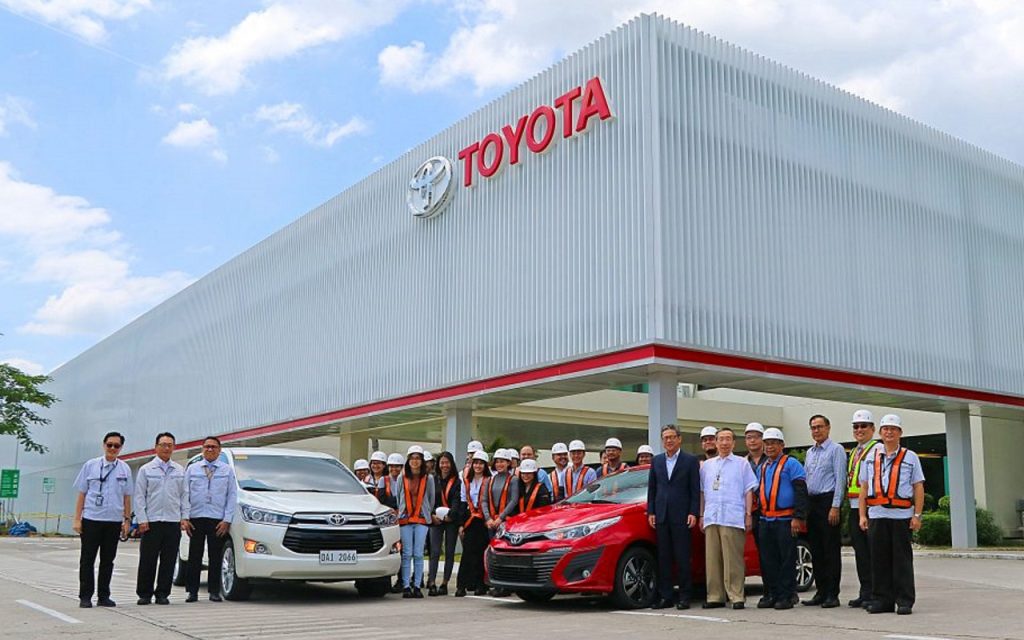
Toyota ranks second among automakers building the most vehicles in America, assembling approximately 1.3 to 1.5 million vehicles each year at its U.S. manufacturing facilities.
Although headquartered in Japan, Toyota has spent decades expanding its American production footprint and now operates some of the country’s largest assembly plants in Kentucky, Indiana, Texas, Mississippi, Alabama, and West Virginia.
The Georgetown, Kentucky, facility is Toyota’s largest manufacturing plant anywhere in the world. Along with its other American factories, it produces high-volume sedans, SUVs, pickup trucks, engines, and transmissions that supply dealerships across North America.
Building vehicles close to customers helps Toyota reduce shipping costs while responding more quickly to market demand.
Toyota’s manufacturing success is built on the Toyota Production System, which emphasizes efficiency, continuous improvement, and strict quality control. These principles have made the company’s American factories some of the most productive in the automotive industry.
Toyota also relies on hundreds of U.S.-based suppliers that provide steel, electronics, seating, glass, and countless other components used in its vehicles.
The company continues investing billions of dollars in American manufacturing through battery plants, hybrid production, and factory modernization.
These investments ensure Toyota remains one of the largest vehicle producers in the United States while supporting thousands of jobs and strengthening its domestic supply chain. Producing well over one million vehicles annually firmly secures Toyota’s second-place ranking.
3. Ford Motor Company
Approximate U.S. vehicle production: 1.1 to 1.3 million vehicles annually
Ford Motor Company ranks third, producing approximately 1.1 to 1.3 million vehicles annually at its American assembly plants. As one of the oldest automakers in the country, Ford maintains a massive manufacturing network that spans Michigan, Kentucky, Missouri, Ohio, and Illinois.
Its factories produce pickup trucks, SUVs, commercial vans, performance vehicles, and an increasing number of electrified models. The backbone of Ford’s domestic production is the F-Series pickup lineup, which has remained America’s best-selling truck for decades.
The Dearborn Truck Plant and Kentucky Truck Plant produce hundreds of thousands of F-150 and Super Duty pickups every year. Ford also manufactures popular SUVs such as the Explorer and Bronco, along with Transit commercial vans that serve businesses nationwide.
In recent years, Ford has invested billions of dollars in modernizing its U.S. factories with advanced robotics, digital inspection systems, and flexible assembly lines capable of producing multiple vehicle types.
The company is also expanding battery manufacturing and electric vehicle production while continuing to support strong demand for gasoline-powered trucks and SUVs.
Ford’s American manufacturing operations support an extensive supplier network producing engines, transmissions, electronics, chassis components, and interior systems. With more than one million vehicles assembled annually, Ford remains one of the country’s largest automotive manufacturers and a major contributor to the U.S. economy.
4. Honda of America
Approximate U.S. vehicle production: 950,000 to 1.1 million vehicles annually
Honda ranks fourth among automakers building the most vehicles in America, assembling approximately 950,000 to 1.1 million vehicles each year at its U.S. manufacturing facilities.
The company has been producing automobiles in the United States since 1982 and has steadily expanded its manufacturing footprint through major investments in Ohio, Indiana, Alabama, and North Carolina.
Today, many of Honda’s best-selling vehicles sold in America are assembled domestically, reducing reliance on imports while supporting thousands of American jobs.
Ohio serves as the center of Honda’s U.S. manufacturing operations. The Marysville Auto Plant and East Liberty Auto Plant have produced millions of vehicles over the past four decades, while the Alabama Auto Plant manufactures SUVs, pickup trucks, and minivans that are popular with American buyers.
Honda also operates engine and transmission plants that supply powertrains for its U.S.-built vehicles, increasing the amount of domestic content in many models.
A major strength of Honda’s manufacturing strategy is flexibility. Its assembly lines are designed to build multiple vehicle models on the same line, allowing production to shift quickly as consumer preferences change.
This approach has helped Honda maintain efficient operations while adapting to growing demand for SUVs and hybrid vehicles.

Honda’s manufacturing network is supported by hundreds of American suppliers producing steel, electronics, seating, plastics, and numerous powertrain components. Billions of dollars are spent annually on U.S.-sourced parts, creating economic benefits far beyond Honda’s assembly plants.
With annual production approaching one million vehicles and continued investment in future technologies, Honda remains one of America’s largest vehicle manufacturers.
5. Stellantis North America
Approximate U.S. vehicle production: 900,000 to 1.0 million vehicles annually
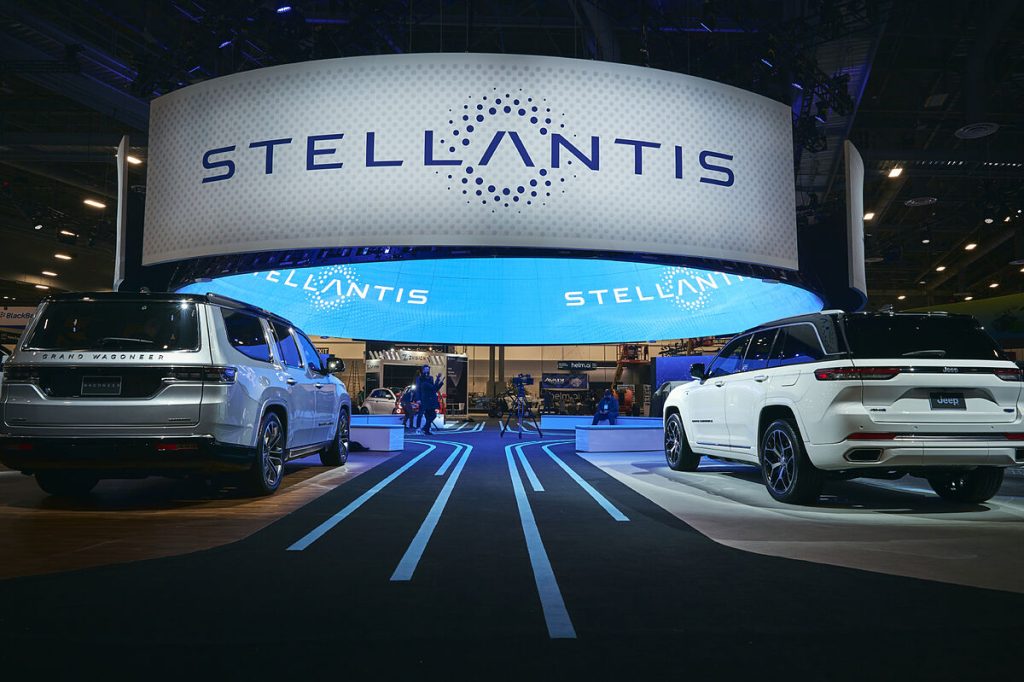
Stellantis ranks fifth, producing approximately 900,000 to one million vehicles annually at its American manufacturing facilities. Through brands such as Jeep, Ram, Chrysler, and Dodge, the company operates major assembly plants in Michigan, Ohio, Illinois, and Indiana.
Its production focuses heavily on pickup trucks, SUVs, muscle cars, and minivans, many of which remain among the most recognizable vehicles on American roads.
Jeep continues to be one of Stellantis’ biggest production drivers. The Toledo Assembly Complex builds the Wrangler and Gladiator, while Detroit Assembly produces the Grand Cherokee and other SUVs.
The Sterling Heights Assembly Plant manufactures the Ram 1500, one of the highest-volume pickup trucks sold in the United States. These models account for a substantial share of the company’s annual production and revenue.
Since the formation of Stellantis through the merger of Fiat Chrysler Automobiles and PSA Group, the company has invested billions of dollars in modernizing its American factories. New robotics, flexible assembly systems, and electrification upgrades allow plants to build both traditional gasoline-powered vehicles and future hybrid or battery-electric models.
The company also maintains a large domestic supplier network that provides engines, transmissions, electronics, steel stampings, interiors, and advanced safety systems.
These partnerships support thousands of additional jobs throughout the United States. Producing close to one million vehicles annually ensures Stellantis remains one of the country’s largest vehicle manufacturers.
6. Nissan North America
Approximate U.S. vehicle production: 650,000 to 800,000 vehicles annually
Nissan ranks sixth among automakers building the most vehicles in America, assembling approximately 650,000 to 800,000 vehicles annually at its manufacturing facilities in Tennessee and Mississippi.
Since opening its first U.S. assembly plant in the early 1980s, Nissan has built a substantial domestic manufacturing presence that now produces passenger cars, SUVs, pickup trucks, engines, and electric vehicles for customers across North America.
The Smyrna Vehicle Assembly Plant in Tennessee is one of the largest automotive manufacturing facilities on the continent and has produced millions of vehicles over its history.
Nearby, the Decherd Powertrain Plant manufactures engines that supply several Nissan assembly facilities, while the Canton Assembly Plant in Mississippi builds popular trucks and SUVs that continue to perform well in the American market.
Nissan has consistently invested in factory modernization, introducing advanced robotics, automated quality inspection systems, and flexible production lines capable of building multiple vehicle models.
These investments improve manufacturing efficiency while allowing the company to respond more quickly to changing consumer demand. Nissan also played an important role in early electric vehicle manufacturing through domestic production of the Leaf.

Supporting its assembly plants is a broad network of American suppliers that manufacture components ranging from steel and electronics to seating systems and powertrain parts. Together, these operations contribute significantly to the U.S. economy.
With production approaching three-quarters of a million vehicles annually, Nissan continues to rank among America’s largest automakers.
7. Hyundai Motor Group
Approximate U.S. vehicle production: 600,000 to 700,000 vehicles annually
Hyundai Motor Group ranks seventh, assembling approximately 600,000 to 700,000 vehicles annually in the United States through its Hyundai and Genesis brands.
The company has significantly expanded its American manufacturing footprint over the past two decades, making the U.S. one of its most important production markets outside South Korea.
Its primary manufacturing facility in Montgomery, Alabama, builds several of Hyundai’s best-selling SUVs and sedans, while the recently opened Hyundai Motor Group Metaplant America in Georgia is increasing domestic production capacity for Hyundai, Genesis, and select Kia electric vehicles.
The Montgomery plant has earned a reputation for high production efficiency and consistently strong build quality. Models assembled there are sold throughout North America, helping Hyundai reduce shipping costs and respond more quickly to changing consumer demand.
The addition of the Georgia facility further strengthens the company’s long-term commitment to manufacturing in the United States, particularly as the industry shifts toward battery-electric vehicles.
Hyundai has invested billions of dollars in advanced manufacturing technologies, including automated assembly systems, robotics, digital quality inspections, and battery production. These investments improve productivity while supporting future growth in hybrid and electric vehicle manufacturing.

The company also purchases components from hundreds of American suppliers, creating thousands of additional jobs across multiple states.
Strong consumer demand for Hyundai SUVs and continued investment in domestic production have steadily increased the company’s manufacturing output. Producing well over half a million vehicles annually secures Hyundai Motor Group’s position among the largest vehicle manufacturers operating in the United States.
8. Tesla
Approximate U.S. vehicle production: 500,000 to 650,000 vehicles annually
Tesla ranks eighth with an estimated annual U.S. production of 500,000 to 650,000 vehicles, making it the largest American manufacturer focused exclusively on electric vehicles. Unlike legacy automakers that divide production between gasoline, hybrid, and electric models, Tesla’s entire manufacturing operation is dedicated to battery-electric vehicles.
Its primary production facilities include the Fremont Factory in California and Gigafactory Texas near Austin, both of which play central roles in supplying the North American market. The Fremont Factory remains one of the highest-volume automotive plants in the country, producing the Model S, Model 3, Model X, and Model Y.
Gigafactory Texas has rapidly expanded production of the Model Y while also building the Cybertruck, increasing Tesla’s full manufacturing capacity. Together, these factories represent billions of dollars in investment and employ tens of thousands of workers.
Tesla’s vertically integrated manufacturing strategy sets it apart from most competitors. The company produces many critical components in-house, including battery packs, electric motors, power electronics, and portions of its software systems. This approach reduces dependence on outside suppliers and allows Tesla to quickly implement manufacturing improvements.

Continued expansion of battery production and factory capacity positions Tesla for additional growth in the coming years.
While its production volume remains below that of traditional industry leaders, Tesla has established itself as one of the largest vehicle manufacturers operating in America and the nation’s leading producer of battery-electric vehicles.
9. BMW Manufacturing
Approximate U.S. vehicle production: 400,000 to 450,000 vehicles annually
BMW ranks ninth, producing approximately 400,000 to 450,000 vehicles annually at its Spartanburg, South Carolina, manufacturing complex. Although BMW operates only one vehicle assembly plant in the United States, it is the company’s largest factory anywhere in the world by production volume.
Since opening in 1994, Spartanburg has become one of America’s most successful automotive manufacturing facilities and one of the country’s leading vehicle exporters by value.
The plant focuses almost entirely on BMW’s X-family of sport utility vehicles, including the X3, X4, X5, X6, X7, and XM. These vehicles are sold throughout the United States and exported to more than 120 international markets.
This global reach allows BMW to maximize production efficiency while making Spartanburg a cornerstone of its worldwide manufacturing strategy.
BMW has invested more than $14 billion in its South Carolina operations since the factory opened, continuously expanding production capacity and adding advanced manufacturing technologies.

Robotics, automated quality control systems, and digital production management help the plant maintain premium build quality while supporting high-volume output.
The Spartanburg facility also supports thousands of jobs through an extensive supplier network located across the southeastern United States. Producing nearly half a million vehicles annually from a single factory demonstrates BMW’s manufacturing efficiency and secures its place among the country’s largest vehicle builders.
10. Mercedes-Benz U.S. International
Approximate U.S. vehicle production: 250,000 to 320,000 vehicles annually
Mercedes-Benz U.S. International completes the top ten with annual production of approximately 250,000 to 320,000 vehicles at its Tuscaloosa, Alabama, manufacturing complex.
Opened in 1997, the facility has grown into one of the company’s most important production centers outside Germany. It assembles a wide range of luxury SUVs that are sold across North America and exported to numerous international markets, making it a key contributor to both U.S. manufacturing and American vehicle exports.
The Tuscaloosa plant primarily produces the GLE, GLS, GLE Coupe, Mercedes-Maybach GLS, and the battery-electric EQS SUV and EQE SUV.
This combination of gasoline-powered luxury vehicles and electric models allows Mercedes-Benz to meet evolving customer demand while keeping its American manufacturing operations competitive.
The company continues to invest heavily in expanding production capacity and supporting future electric vehicle assembly through nearby battery manufacturing facilities. Advanced automation, digital quality monitoring, and flexible production lines help the Alabama factory maintain the high standards expected of the Mercedes-Benz brand.
The facility is also supported by hundreds of suppliers located throughout the southeastern United States, providing components ranging from stamped steel and electronics to seating systems and advanced driver assistance technologies.

Together, these suppliers support thousands of additional jobs and contribute significantly to the regional economy.
Although Mercedes-Benz produces fewer vehicles than the companies ranked above it, its Alabama plant remains one of the most productive luxury vehicle manufacturing facilities in North America.
Consistent production volumes exceeding a quarter-million vehicles annually secure Mercedes-Benz’s place among the largest automakers building vehicles in the United States.
Also Read: 10 SUVs That Outperform the Toyota Land Cruiser in Specific Categories
