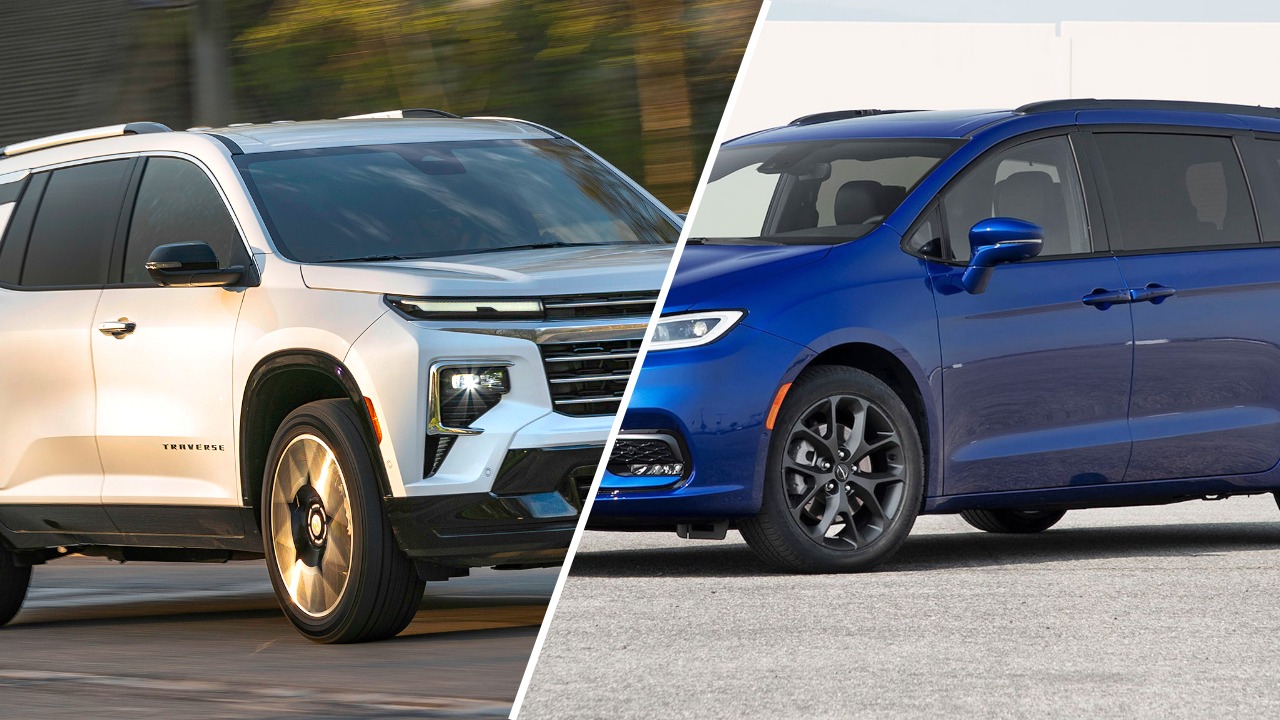
Choosing a vehicle for wheelchair transportation involves much more than cargo capacity. Lift-over height, door opening size, cargo floor design, seat-folding flexibility, and interior space all determine how easily a manual or lightweight folding wheelchair can be loaded.
For families transporting a wheelchair daily, even a few inches of cargo floor height can make a noticeable difference.
The vehicles below stand out in the U.S. market because they combine wide openings, low load floors, generous cargo areas, and practical interior layouts. These features reduce lifting effort while making everyday travel more convenient for caregivers and wheelchair users alike.
Also Read: 10 Chevrolet Camaro Model Years That Tell the Whole Story
1. Honda Odyssey
The Honda Odyssey has long been considered one of the most wheelchair-friendly vehicles sold in the United States, even before aftermarket accessibility conversions are added. While many buyers recognize its spacious interior, its low cargo floor and wide sliding doors are what make loading a folding wheelchair especially convenient.
Power sliding doors create a large opening that allows caregivers to maneuver a wheelchair into the cabin without squeezing through a narrow entrance.
For owners transporting a folded manual wheelchair, the Odyssey’s rear cargo area behind the third row provides approximately 38.6 cubic feet of storage, while folding the third-row Magic Seat dramatically expands available space.
The lift-over height at the rear hatch is relatively low compared with most SUVs, reducing the amount of lifting required.
The flat cargo floor also prevents the wheelchair from catching on uneven surfaces during loading. If additional room is required, the third-row seats fold directly into the floor, creating a long and unobstructed cargo area capable of holding a wheelchair along with luggage, medical equipment, or mobility aids.
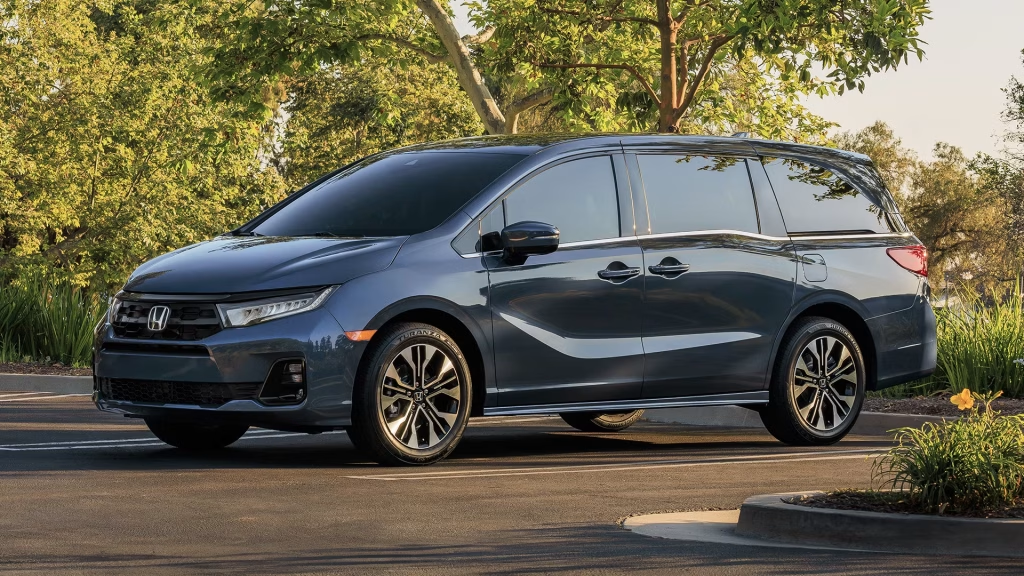
Another advantage is the Odyssey’s interior height. Caregivers can often position and secure a folded wheelchair without excessive bending. Families considering future wheelchair conversions also benefit from the Odyssey’s popularity among adaptive mobility companies, making specialized equipment easier to install if mobility needs change later.
Comfort, reliability, and practical packaging have made the Odyssey one of the most frequently recommended family vehicles for transporting mobility equipment. Its combination of wide access points, low loading height, and versatile seating continues to set a high standard in the minivan segment.
Specifications
- Engine: 3.5-liter naturally aspirated V6
- Torque: 262 lb-ft
- Horsepower: 280 hp
- Length/Width: 205.2 inches / 78.5 inches
2. Toyota Sienna
The Toyota Sienna approaches wheelchair practicality from a slightly different perspective. Every Sienna sold in the United States is powered by a hybrid drivetrain, but its greatest advantage for families transporting mobility equipment is its intelligently designed interior.
The combination of a low rear cargo opening, wide power sliding doors, and generous cargo space makes loading a folding wheelchair considerably easier than with most crossovers or SUVs.
Behind the third row, the Sienna provides approximately 33.5 cubic feet of cargo space, enough for many folded manual wheelchairs along with groceries or travel bags.
Folding the third-row seats into the floor increases available storage significantly, producing a long, flat cargo area that can accommodate larger mobility equipment. The cargo floor remains relatively low, reducing lifting effort during everyday use.
The large sliding doors add another level of everyday convenience by providing wide, unobstructed access to the cabin. Compared with traditional hinged doors, they require less clearance to open, making it much easier to load passengers or cargo in tight parking spaces.
This can be especially valuable in crowded parking lots where opening a traditional SUV door fully may be difficult. Higher trims include power sliding doors that can be operated remotely, adding another level of convenience for caregivers carrying medical supplies or assisting passengers.
Toyota also designed the rear hatch with a broad opening and minimal intrusion from the taillights, allowing bulkier items to pass through without awkward angles. The hybrid battery placement has little effect on everyday cargo usability, preserving the practical interior dimensions that have made the Sienna a favorite among families.
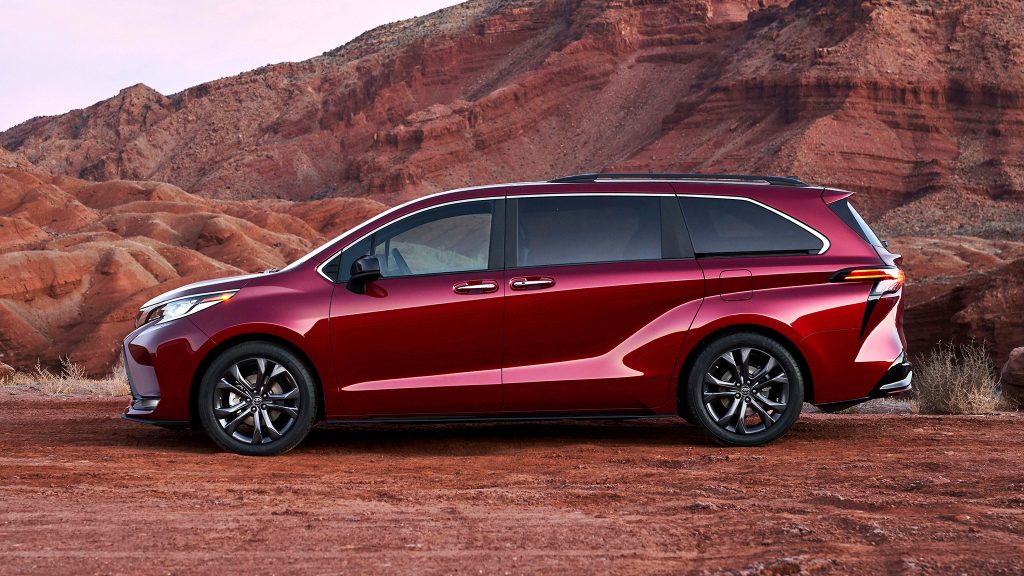
Another important consideration is reliability. The Sienna has earned a strong reputation for long-term durability, making it a dependable option for households that depend on daily transportation.
Combined with excellent fuel economy and one of the most versatile interiors in its class, the Sienna remains among the easiest vehicles for loading a folding wheelchair in regular daily use.
Specifications
- Engine: 2.5-liter hybrid inline-four
- Torque: 176 lb-ft (engine)
- Horsepower: 245 hp (combined system)
- Length/Width: 203.7 inches / 78.5 inches
3. Kia Carnival
The Kia Carnival combines the appearance of an SUV with the practicality of a minivan, making it one of the most convenient vehicles for transporting a folding wheelchair.
Its exceptionally wide sliding doors, low step-in height, and generous cargo opening reduce the effort required to load mobility equipment. Families who need a spacious people mover without sacrificing modern styling often find the Carnival to be an excellent solution.
Behind the third row, the Carnival offers approximately 40.2 cubic feet of cargo space, one of the largest figures in the minivan segment. This area is large enough to accommodate many folded manual wheelchairs while still leaving room for luggage, groceries, or medical supplies.
Folding the third-row seats into the floor expands the cargo area dramatically, creating a long, flat loading surface with minimal obstructions.
The low rear lift-over height helps caregivers avoid excessive lifting, while the square-shaped cargo opening makes maneuvering a wheelchair much easier than through the narrower hatch openings found on many SUVs. The available hands-free power liftgate further simplifies loading when both hands are occupied.
The Carnival also offers power sliding side doors that open exceptionally wide, allowing caregivers to assist passengers comfortably even in tight parking spaces. Numerous storage compartments throughout the cabin provide convenient locations for medications, mobility accessories, and personal items.
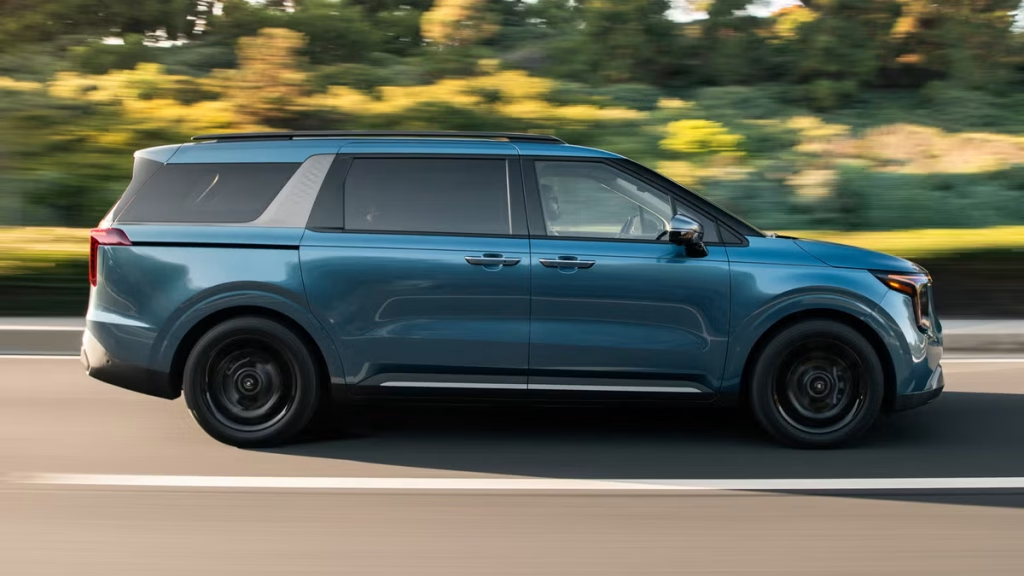
Its quiet cabin, comfortable suspension, and strong safety ratings make it well suited for long-distance travel as well as daily transportation. The Carnival’s thoughtful packaging and spacious interior place it among the easiest mainstream vehicles for transporting a wheelchair without requiring an aftermarket accessibility conversion.
Specifications
- Engine: 3.5-liter naturally aspirated V6
- Torque: 260 lb-ft
- Horsepower: 287 hp
- Length/Width: 203.0 inches / 78.5 inches
4. Chrysler Pacifica
The Chrysler Pacifica has become one of the most popular platforms for wheelchair transportation in the United States because of its practical interior and compatibility with many aftermarket accessibility conversions. Even in its standard factory configuration, it offers features that make loading a folding wheelchair quick and convenient.
The Pacifica provides approximately 32.3 cubic feet of cargo space behind the third row. Once the innovative Stow ‘n Go seating system is folded into the floor, the interior transforms into a large, flat cargo area with very few height differences.
This design allows a folded wheelchair to slide into place instead of being lifted over raised seatbacks or uneven cargo floors.
Wide power sliding doors improve passenger access while making side loading easier in confined parking spaces. At the rear, the broad liftgate opening allows wheelchairs and other mobility equipment to pass through without awkward positioning.
Because the cargo floor sits relatively low compared with many SUVs, caregivers often find loading less physically demanding.
Another advantage is the Pacifica’s extensive availability of factory convenience features. Available power liftgates, numerous USB ports, tri-zone climate control, and multiple storage compartments make everyday transportation more comfortable for both passengers and caregivers.
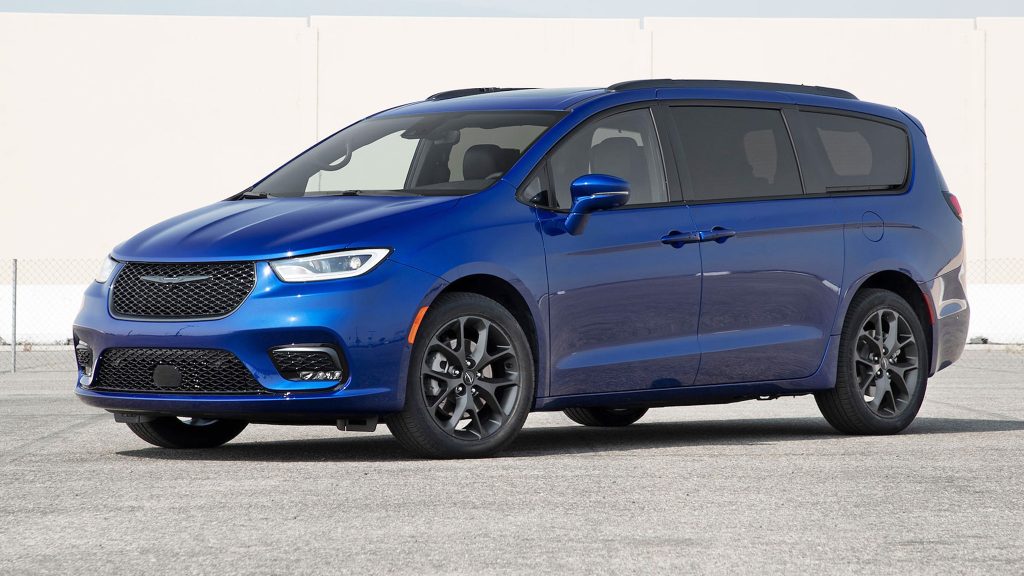
The Pacifica is also one of the most commonly modified vehicles by mobility conversion companies, meaning replacement parts and accessibility equipment are widely available throughout the United States.
For families needing flexibility, comfort, and outstanding cargo versatility, the Chrysler Pacifica remains one of the strongest choices on the market for transporting wheelchairs and other mobility devices.
Specifications
- Engine: 3.6-liter Pentastar V6
- Torque: 262 lb-ft
- Horsepower: 287 hp
- Length/Width: 204.3 inches / 79.6 inches
5. Subaru Forester
Not every household needs a minivan, and the Subaru Forester demonstrates that a compact SUV can also be practical for transporting a folding wheelchair. One of its biggest advantages is its low cargo floor.
Compared with many compact SUVs, the Forester’s lift-over height is relatively modest, reducing the amount of lifting required to place a wheelchair into the cargo area.
Behind the second row, the Forester offers 29.6 cubic feet of cargo space. Folding the rear seats expands capacity to 74.2 cubic feet, creating a long and nearly flat load floor that easily accommodates most folded manual wheelchairs.
The cargo opening is both wide and tall, allowing caregivers to load equipment without twisting it into awkward positions.
The Forester’s upright rear hatch design also enhances its practicality. Compared with SUVs that feature sharply sloping rooflines, it offers greater vertical cargo space, making it easier to load taller mobility equipment into the rear compartment. For added convenience, the available hands-free power liftgate allows easier access when your hands are occupied with shopping bags, medical equipment, or other everyday essentials.
Subaru’s standard symmetrical all-wheel drive gives the Forester an advantage for families living in regions with snow or frequent rain. It provides added confidence without compromising interior practicality.
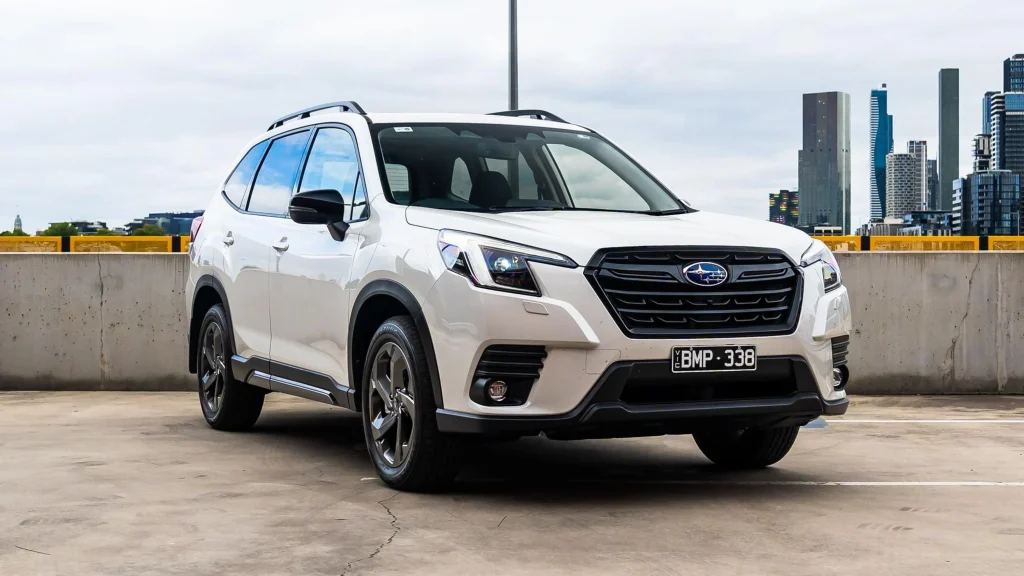
The SUV also features wide-opening rear doors, making passenger entry and exit easier for individuals with limited mobility.
For buyers who prefer a compact footprint while still requiring everyday accessibility, the Forester strikes an impressive balance between maneuverability, cargo flexibility, and ease of loading. Its reputation for safety and long-term reliability further enhances its appeal as a dependable daily vehicle.
Specifications
- Engine: 2.5-liter naturally aspirated flat-four
- Torque: 178 lb-ft
- Horsepower: 180 hp
- Length/Width: 183.3 inches / 72.0 inches
6. Honda CR-V
The Honda CR-V has consistently ranked among America’s most practical compact SUVs because of its intelligently designed cargo area. While it is smaller than a minivan, its low cargo floor, generous rear opening, and flexible interior make it well suited for transporting a folding wheelchair during everyday errands or longer road trips.
The CR-V provides 39.3 cubic feet of cargo space behind the second row and expands to 76.5 cubic feet with the rear seats folded. Those figures place it near the top of the compact SUV class. More importantly, the cargo floor remains nearly flat after the seats are folded, allowing a wheelchair to slide farther into the cargo area instead of catching on raised seatbacks.
Honda designed the rear hatch opening to maximize usable width, helping caregivers load a folded wheelchair with minimal effort. The available hands-free power liftgate is especially useful when both hands are occupied.
The cargo area also features a relatively low load floor compared with many larger SUVs, making it easier to load and unload heavy items while reducing the physical effort required for repeated lifting.
The rear doors also open wide, improving passenger accessibility. Combined with a spacious rear seat and a comfortable ride, the CR-V serves families who need a practical daily driver without moving into a larger vehicle segment.
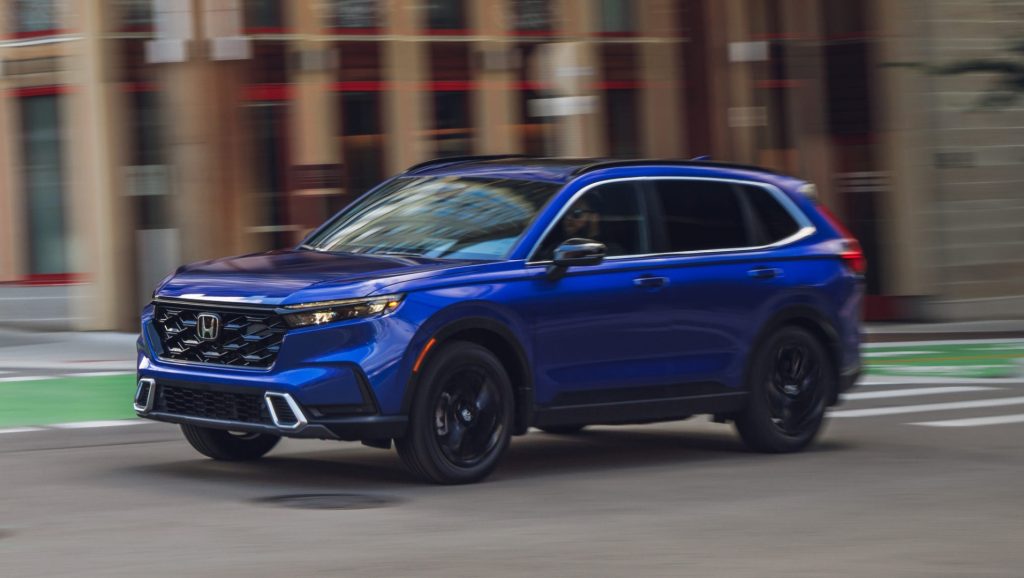
Hybrid models maintain nearly identical cargo dimensions, meaning buyers can choose greater fuel efficiency without sacrificing wheelchair storage.
With excellent reliability, strong resale value, and one of the most accommodating cargo areas in the compact SUV category, the Honda CR-V remains one of the easiest non-minivan vehicles for transporting a folding wheelchair.
Specifications
- Engine: 1.5-liter turbocharged inline-four
- Torque: 179 lb-ft
- Horsepower: 190 hp
- Length/Width: 184.8 inches / 73.5 inches
7. Toyota Grand Highlander
The Toyota Grand Highlander was developed with interior space as a priority, and that design philosophy makes it exceptionally practical for transporting a folding wheelchair.
Compared with many midsize SUVs, it offers a wider rear cargo opening, a lower cargo floor, and a larger storage area behind the rear seats. These features reduce the effort required to lift and position mobility equipment during everyday use.
With all three rows in place, the Grand Highlander provides approximately 20.6 cubic feet of cargo space behind the third row. Folding the third row expands capacity to 57.9 cubic feet, while lowering both rear rows creates an impressive 97.5 cubic feet of maximum cargo volume.
The resulting cargo floor is long and nearly level, allowing a folded wheelchair to slide into position instead of needing to be lifted over multiple height changes.
The rear hatch opens high and wide, making it easier to load larger mobility devices. Available hands-free liftgate operation adds convenience for caregivers who may already be assisting a passenger or carrying additional medical equipment.
The wide-opening rear passenger doors also improve accessibility when helping individuals enter or exit the vehicle.
Rather than prioritizing sleek styling at the expense of practicality, the Grand Highlander features a more upright rear design that maximizes usable cargo space. Its family-friendly interior is further enhanced by thoughtfully placed storage compartments, multiple USB-C charging ports, and a smooth, comfortable ride that helps reduce fatigue during long journeys.
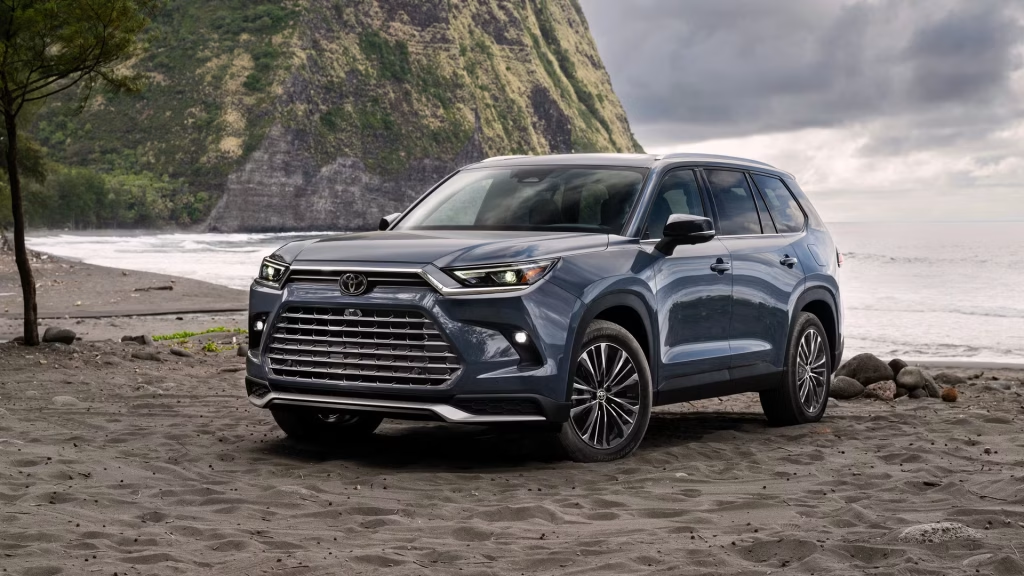
For buyers who want the passenger capacity of a three-row SUV without compromising cargo flexibility, the Grand Highlander delivers one of the most wheelchair-friendly interiors currently available in the midsize segment.
Specifications
- Engine: 2.4-liter turbocharged inline-four
- Torque: 317 lb-ft
- Horsepower: 265 hp
- Length/Width: 201.4 inches / 78.3 inches
8. Chevrolet Traverse
The Chevrolet Traverse combines three-row seating with one of the largest cargo areas in its class, making it an excellent choice for families regularly transporting a folding wheelchair. Its practical rear design emphasizes usable space instead of sacrificing functionality for aggressive styling, resulting in a cargo compartment that is both wide and easy to access.
Behind the third row, the Traverse offers approximately 22.9 cubic feet of cargo capacity. Folding the third row increases storage to 56.6 cubic feet, while folding both rear rows creates a maximum of 97.6 cubic feet of cargo space.
The nearly flat load floor allows a folded wheelchair to be placed into the cargo area with minimal lifting effort, while the generous width leaves room for additional bags, walkers, or medical equipment.
The rear liftgate opening is among the largest in the midsize SUV class, helping caregivers load bulky items without awkward maneuvering. Available hands-free power liftgate operation further improves convenience during everyday use.
The Traverse also features a spacious cabin with generous headroom and wide door openings that make getting in and out easier, particularly for passengers with limited mobility.
Another advantage is its long wheelbase, which contributes to a smoother ride on highways and rough pavement. Families traveling frequently with mobility equipment often appreciate the comfortable suspension and quiet cabin during extended trips.
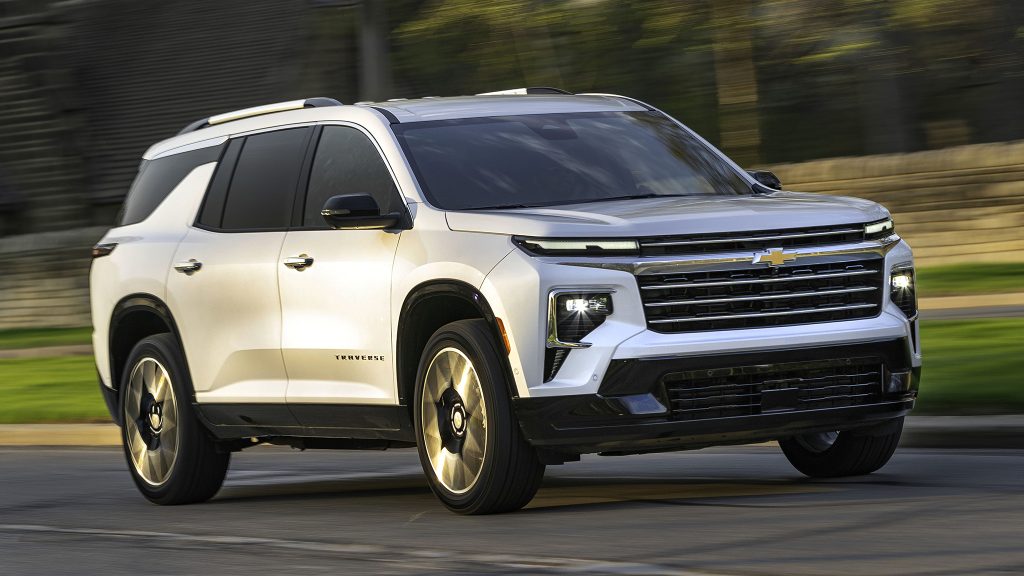
The Chevrolet Traverse delivers a combination of spacious interior dimensions, low cargo loading effort, and practical seating flexibility that makes it one of the strongest SUV choices for transporting a wheelchair without stepping up to a full-size vehicle.
Specifications
- Engine: 2.5-liter turbocharged inline-four
- Torque: 328 lb-ft
- Horsepower: 328 hp
- Length/Width: 204.5 inches / 79.6 inches
Also Read: 10 Most Reliable Volkswagen Jetta Generations Ranked