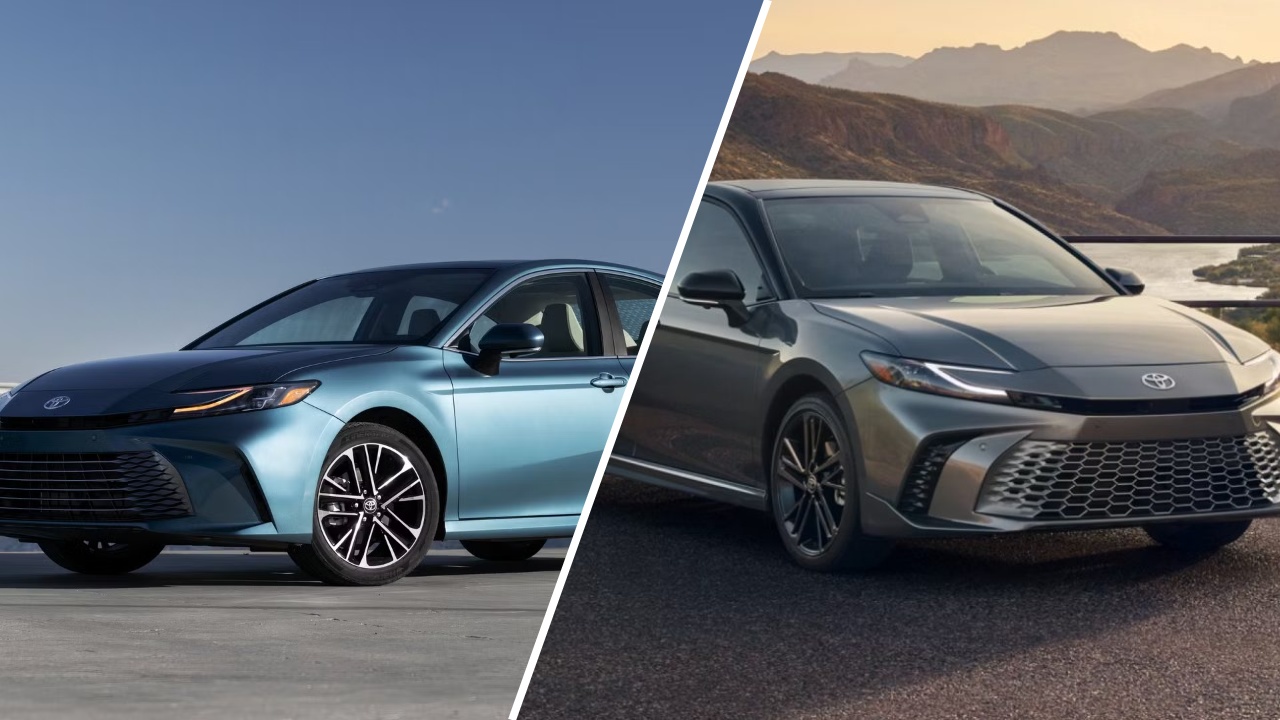
For decades, the Toyota Camry has been one of America’s best-selling sedans because it offers something many competitors struggle to balance: reliability, fuel efficiency, comfort, and long-term value.
The latest generation has strengthened that formula by making every Camry a hybrid, improving both performance and fuel economy while maintaining Toyota’s reputation for low ownership costs.
Choosing the right trim, however, is not as straightforward as selecting the cheapest or the most expensive model. The Camry lineup spans from the value-focused LE to the feature-packed XSE, with the SE, Nightshade, and XLE sitting between them. Every trim shares the same hybrid powertrain and Toyota Safety Sense suite, but each targets a different type of buyer.
The real question is not which trim has the most equipment, but which delivers the best value for the money. Looking at pricing, standard equipment, fuel economy, resale value, and long-term ownership costs, one trim stands out as the smartest purchase for most buyers.
Also Read: 10 Muscle Cars From the 1980s That Are Still Cheap to Buy
Understanding What Each Camry Trim Offers
Toyota offers the 2026 Camry in five trims: LE, SE, Nightshade, XLE, and XSE. Every model comes standard with Toyota’s fifth-generation hybrid system, pairing a 2.5-liter four-cylinder engine with electric motors.
Front-wheel-drive models produce 225 horsepower, while all-wheel-drive versions gain a rear electric motor for a combined 232 horsepower.
According to Toyota, every trim also includes Toyota Safety Sense 3.0 with features such as Pre-Collision System with Pedestrian Detection, Dynamic Radar Cruise Control, Lane Tracing Assist, Lane Departure Alert, Road Sign Assist, Blind Spot Monitor, and Rear Cross Traffic Alert.
The LE serves as the entry point to the lineup, yet it is far from basic. Standard equipment includes an 8-inch Toyota Audio Multimedia touchscreen, wireless Apple CarPlay and Android Auto, wireless phone charging, push-button start, dual-zone automatic climate control, LED lighting, and a full suite of safety technologies.
Toyota also equips the LE with 16-inch alloy wheels designed to maximize fuel efficiency. According to EPA estimates published by Toyota, the front-wheel-drive LE achieves up to 51 mpg combined, making it the most fuel-efficient Camry available.
Moving to the SE introduces a sportier appearance and a few worthwhile upgrades. Buyers receive 18-inch black-finished alloy wheels, SofTex and fabric-trimmed sport seats, a power-adjustable driver’s seat, paddle shifters, aluminum sport pedals, and a firmer suspension calibration.
Fuel economy drops slightly because of the larger wheels, but it remains among the best in the midsize sedan segment at around 46 mpg combined for front-wheel-drive models. The Nightshade is essentially an SE with additional black exterior styling elements, including black wheels, a grille, mirror caps, badging, and a spoiler.
Toyota introduced the Nightshade to appeal to buyers looking for a more aggressive appearance without moving into luxury-oriented pricing. Mechanically, it remains almost identical to the SE.
The XLE shifts the Camry toward comfort and refinement. Buyers gain upgraded leather- and microfiber-trimmed seating surfaces, a larger 12.3-inch infotainment display, additional sound insulation, heated front seats, available ventilated seats, premium interior materials, and extra convenience features.
The suspension remains comfort-oriented, making the XLE particularly attractive for commuters and highway drivers.
At the top of the lineup sits the XSE. It combines many of the luxury features found in the XLE with a sportier exterior, 19-inch wheels, sport-tuned suspension, dual exhaust finishers, unique interior trim, and more aggressive styling.
Although it looks sharper than the rest of the lineup, the larger wheels slightly reduce fuel economy and increase tire replacement costs over time.
Which Trim Delivers the Best Value?
The answer depends on what buyers prioritize, but for most consumers, the SE offers the best balance of price, equipment, comfort, and resale value.
The LE undoubtedly offers the lowest purchase price and the highest fuel economy. For drivers who simply want dependable transportation with minimal operating costs, it remains an outstanding choice.
According to Toyota, its efficiency exceeds 50 mpg combined in front-wheel-drive form, helping owners save hundreds of dollars in fuel over several years compared with many competing midsize sedans.
However, the relatively modest price increase to the SE brings noticeable improvements that owners experience every day. The larger wheels improve appearance, the power driver’s seat increases comfort, the SofTex seating surfaces are easier to maintain than cloth, and the sport suspension provides more responsive handling without significantly sacrificing ride quality.
MotorTrend concluded that the SE strikes one of the strongest balances in the lineup because buyers receive meaningful equipment upgrades while avoiding the higher prices attached to the premium trims.
The publication also noted that all trims share the same hybrid powertrain, meaning buyers are not sacrificing performance by choosing the mid-level model.
Car and Driver reached a similar conclusion, recommending the SE as the trim that offers the best value for most buyers. The publication highlighted its relatively small price premium over the LE while adding features such as 18-inch wheels, a power driver’s seat, and a more engaging suspension setup.
It also pointed out that buyers can selectively add option packages without stepping into the significantly more expensive XLE or XSE trims.
The XLE becomes worthwhile for buyers who spend long hours commuting or frequently travel on highways. Features like heated seats, premium cabin materials, a larger touchscreen, and additional comfort amenities noticeably enhance daily driving. Buyers planning to keep the vehicle for many years may find the additional investment worthwhile.
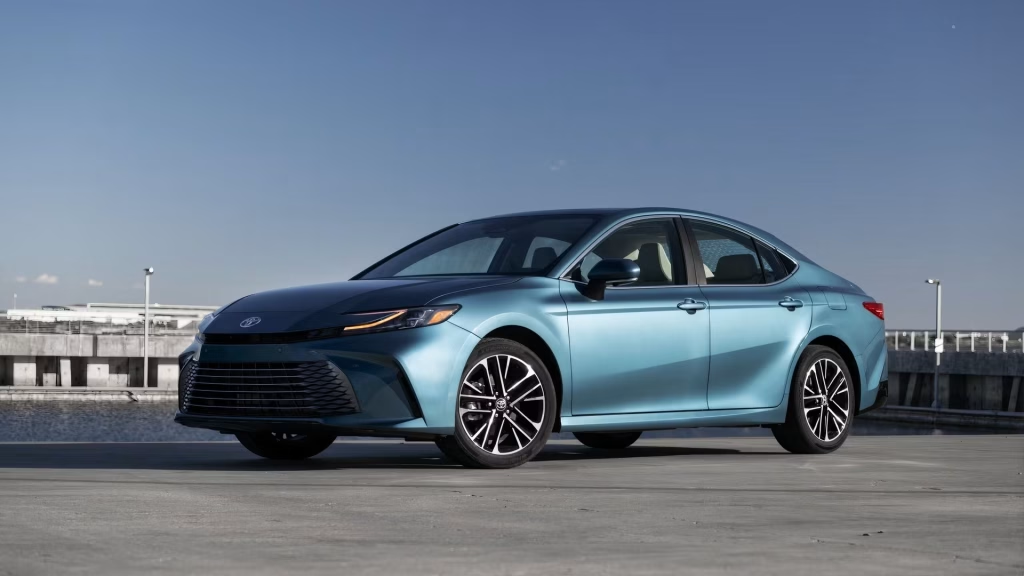
The XSE appeals primarily to customers who prioritize styling over outright value. Its 19-inch wheels, unique exterior appearance, and sport-oriented suspension certainly make the Camry look more premium, but those upgrades come with higher purchase prices, lower fuel economy, and more expensive replacement tires.
Unless appearance is a major priority, the extra cost is difficult to justify purely from a value perspective.
One factor supporting any Camry trim is Toyota’s historically strong resale value. According to Toyota’s fleet ownership guidance, depreciation is often the largest ownership expense for any vehicle, and models with stronger resale values reduce long-term ownership costs considerably.
The Camry has consistently remained one of the strongest-performing midsize sedans in retained value because of its reputation for reliability and widespread demand in the used-car market.
Maintenance costs also remain relatively low. Since every trim shares the same hybrid drivetrain, scheduled servicing costs differ very little across the lineup. The primary long-term cost differences come from wheel and tire sizes, optional equipment, and insurance premiums rather than mechanical complexity.
For budget-conscious buyers, the LE remains the most economical choice. For luxury seekers, the XLE offers genuine premium features without entering luxury-brand pricing. Enthusiasts who appreciate a sportier appearance may naturally gravitate toward the XSE.
Yet when balancing purchase price, standard equipment, ownership costs, fuel economy, and resale value, the SE consistently delivers the strongest complete package.
It avoids the stripped-down feel some buyers associate with entry-level models while steering clear of the rapidly increasing prices found at the top of the lineup. It also maintains nearly all of the Camry’s outstanding efficiency and reliability while adding enough everyday comfort and technology to make the ownership experience noticeably more enjoyable.
For most shoppers, that combination makes the Toyota Camry SE the trim that offers the best value for the money. It provides the features buyers use every day, retains excellent fuel economy, benefits from Toyota’s dependable hybrid system, and should remain highly desirable on the used market years down the road.
Buyers with specific luxury or styling preferences may find the XLE or XSE worth the extra investment, but for the average driver looking for the smartest financial decision, the SE remains the sweet spot in the Camry lineup.
Also Read: 10 Most Reliable Volkswagen Jetta Generations Ranked