
Engine trouble is every car owner’s nightmare. It rarely announces itself gently. Some sedans wear their reputation for reliability like a badge. Others carry the opposite reputation, and it usually traces back to what happens under the hood.
RepairPal’s Fair Price Estimator tracks real-world repair costs across thousands of shops. It pulls from actual parts and labor data, not guesswork. When a sedan’s engine architecture gets complicated, the bill follows. Turbochargers, air suspension tie-ins, and tightly packaged engine bays all add labor hours.
European luxury brands dominate this list for a reason. Their engines are engineered for performance first, and serviceability second. That tradeoff shows up clearly once the warranty period ends. Owners suddenly face bills that rival a used car’s price tag.
This list looks at seven sedans where engine-related repairs routinely climb into four and five figures. Each entry pulls from RepairPal’s documented repair data.
1. BMW 7 Series
The 7 Series has long been BMW’s technological flagship. That ambition comes with a dense, turbocharged engine bay that’s expensive to open up. Owners on RepairPal’s data consistently report high-cost engine work. Valve cover gaskets, timing chain guides, and motor mount replacements often run into the thousands.

One documented repair for cracked engine block damage exceeded $8,000. That case involved factory valve seal failure that led to carbon buildup and cylinder cracking. Transmission-adjacent engine work isn’t cheap either. Fair repair ranges for major drivetrain jobs on the 7 Series have quoted well above $7,000 at dealership rates.
The turbocharged V8 and inline-six variants used in later generations add further complexity. More electronics mean more diagnostic time before a wrench even touches the engine.
BMW’s engine bay design packs components tightly together. Technicians often need to remove auxiliary parts just to access a single failed component.
This adds labor hours regardless of the actual part cost. It’s a recurring theme across nearly every BMW flagship repair estimate. Owners report frequent engine-related complaints across model years.
Engine issues account for over a third of all reported repairs on some 7 Series model years. That percentage is unusually high for a full-size luxury sedan. It reflects both complexity and the sheer number of engine-adjacent systems.
Specifications:
- Engine: 3.0L turbocharged inline-six or 4.4L twin-turbo V8
- Horsepower: 335 hp (740i) to 536 hp (M760i)
- Torque: 330 lb-ft to 553 lb-ft
- Length: 206.6 inches
- Width: 74.9 inches
Buyers considering a used 7 Series should budget accordingly. An extended warranty or a dedicated repair fund is worth serious consideration here.
2. Mercedes-Benz S-Class
The S-Class is Mercedes’ halo sedan, and it’s engineered without much compromise. That philosophy extends to engine complexity as much as luxury features. RepairPal-sourced data shows engine problems account for a meaningful share of all S-Class repairs. Roughly a fifth of reported issues trace back to the engine itself.

Timing belt replacement is a known pain point on V8 and V12 variants. One comparison noted that a comparable job on a Mazda Miata might run $500.
The same service on an S550 can exceed $2,100. That gap illustrates how much engine architecture influences labor time. Turbocharged and hybrid S-Class variants add further cost layers. NOx sensor failures, boost hose replacement, and turbo-specific repairs have run into the thousands per documented case.
One owner-reported repair for turbo and sensor failure totaled over $5,400. That single visit covered multiple interconnected engine components.
The S-Class’s air suspension and engine management systems are deeply integrated. A failure in one system frequently cascades into diagnostic work across several others. Over a quarter of documented S-Class repairs exceed $2,500 per visit. That’s a notably higher share than most non-luxury full-size sedans.
Specifications:
- Engine: 3.0L turbocharged V6 or 4.0L twin-turbo V8
- Horsepower: 362 hp (S 500) to 496 hp (S 580)
- Torque: 369 lb-ft to 516 lb-ft
- Length: 208.6 inches
- Width: 76.9 inches
The S-Class remains one of the most refined sedans on sale. That refinement, though, carries a real cost once major engine work becomes necessary.
3. Audi A8
The A8 is Audi’s aluminum-intensive flagship, and that construction philosophy extends under the hood. Lightweight engineering doesn’t always translate to lower repair costs.
RepairPal data on Audi’s larger models shows engine mount and turbo-related repairs sit well above segment averages. A related Audi S7 engine mount job alone runs close to $2,200.
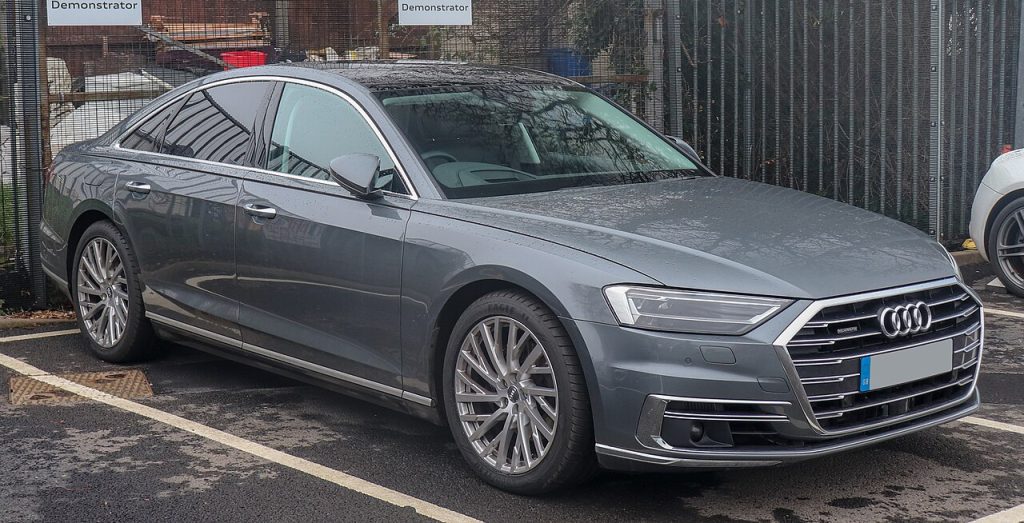
The A8’s twin-turbo V6 and V8 engines are tightly packaged. Reaching components buried behind the intake and turbo housings adds significant labor time. Audi’s quattro all-wheel-drive system further complicates engine bay access. Technicians often must remove more surrounding hardware than on rear-drive competitors.
Turbocharger assembly replacement is one of the costliest engine jobs across Audi’s lineup broadly. Industry estimates put this repair starting near $4,000, and often higher. The A8’s air suspension compressor, which sits near the engine bay, adds another common failure point. Replacement costs on this component alone can run into the thousands.
Audi’s brand-level annual repair cost sits notably above the industry average. Complex engineering is frequently cited as the underlying reason by independent shop owners.
One shop manager described German engineering as fundamentally “over-engineered” compared to Japanese rivals. That extra complexity is exactly what drives up A8 engine labor bills.
Specifications:
- Engine: 3.0L turbocharged V6 or 4.0L twin-turbo V8
- Horsepower: 335 hp (A8) to 453 hp (S8)
- Torque: 369 lb-ft to 442 lb-ft
- Length: 208.0 inches
- Width: 76.4 inches
Audi’s A8 delivers a genuinely rewarding driving experience. Owners simply need to plan financially for the labor-intensive nature of its engine bay.
4. Jaguar XJ
Jaguar’s flagship sedan carries one of the highest repair cost profiles in the luxury segment. RepairPal ranks Jaguar near the bottom of its reliability list. Jaguar’s brand-wide annual repair and maintenance cost averages over $1,100. That’s substantially higher than the roughly $650 industry-wide average across all brands.
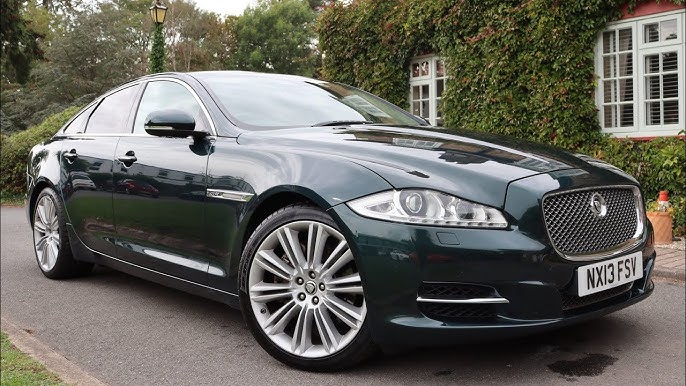
The XJ’s supercharged V8 and V6 engines are performance-tuned, which raises parts complexity. Powertrain control module replacement alone runs above $2,000 in documented estimates.
Jaguar vehicles also visit repair shops more frequently than most competitors. They carry a higher probability of severe, high-cost repairs compared to mainstream luxury brands.
Engine and cooling system issues are frequently cited among the XJ’s most common complaints. Aluminum-intensive construction, similar to the A8, adds labor complexity during engine service.
Timing chain tensioner failures have been a persistent issue on Jaguar’s supercharged engines. Left unaddressed, this problem can escalate into full internal engine damage. Jaguar dealers can also charge premium labor rates due to limited service network density. Fewer independent shops specialize in Jaguar powertrains compared to German rivals.
That scarcity pushes many owners toward dealership service exclusively. Dealership rates tend to run notably higher than independent shop pricing for comparable work.
Specifications:
- Engine: 3.0L supercharged V6 or 5.0L supercharged V8
- Horsepower: 340 hp to 550 hp (XJR575)
- Torque: 332 lb-ft to 517 lb-ft
- Length: 206.6 inches
- Width: 74.9 inches
The XJ offers a genuinely distinctive alternative to German luxury sedans. That distinctiveness, though, comes bundled with real long-term ownership risk.
Also Read: What It Costs to Keep a 250,000-Mile Toyota Running
5. Porsche Panamera
Porsche builds performance into every part of the Panamera, including cost of ownership. RepairPal data places Porsche among the highest annual repair cost brands. The brand averages close to $1,200 per year in repair costs. That figure sits well above most luxury competitors, let alone mainstream sedans.
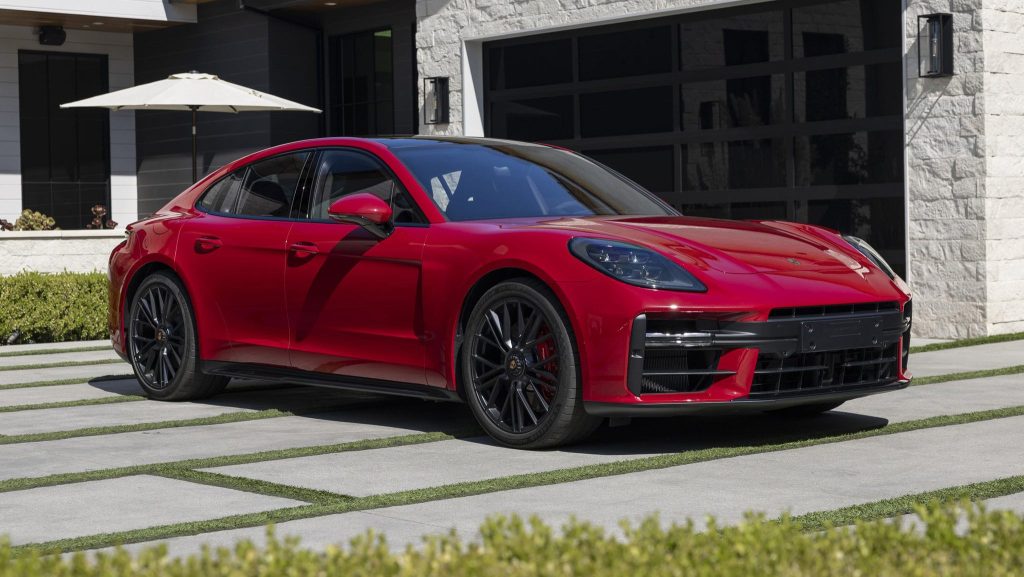
Engine front cover replacement is one particularly costly Panamera job. Documented estimates place this repair between roughly $4,300 and $5,600 depending on location. That single repair alone approaches the price of a reliable used car. It reflects how deeply integrated the Panamera’s timing components are within the block.
Engine mount replacement is another frequent expense on this model. Estimates for this job run between roughly $2,100 and $2,600 per repair visit. The Panamera’s twin-turbo V6 and V8 engines sit low and tight within the chassis. Technicians often need specialized lifts and extended labor time for basic access.
Porsche’s performance-first engineering philosophy rarely accounts for easy serviceability. Every component swap tends to require removing several adjacent parts first.
Independent Porsche specialists exist, but many owners still default to dealership service. Diagnostic software and proprietary tools favor factory-trained technicians for complex engine work.
Specifications:
- Engine: 2.9L twin-turbo V6 or 4.0L twin-turbo V8
- Horsepower: 348 hp to 630 hp (Turbo S E-Hybrid)
- Torque: 368 lb-ft to 685 lb-ft
- Length: 198.8 inches
- Width: 76.3 inches
The Panamera drives like a true sports car in a sedan body. That performance pedigree, unfortunately, extends directly into its repair invoices.
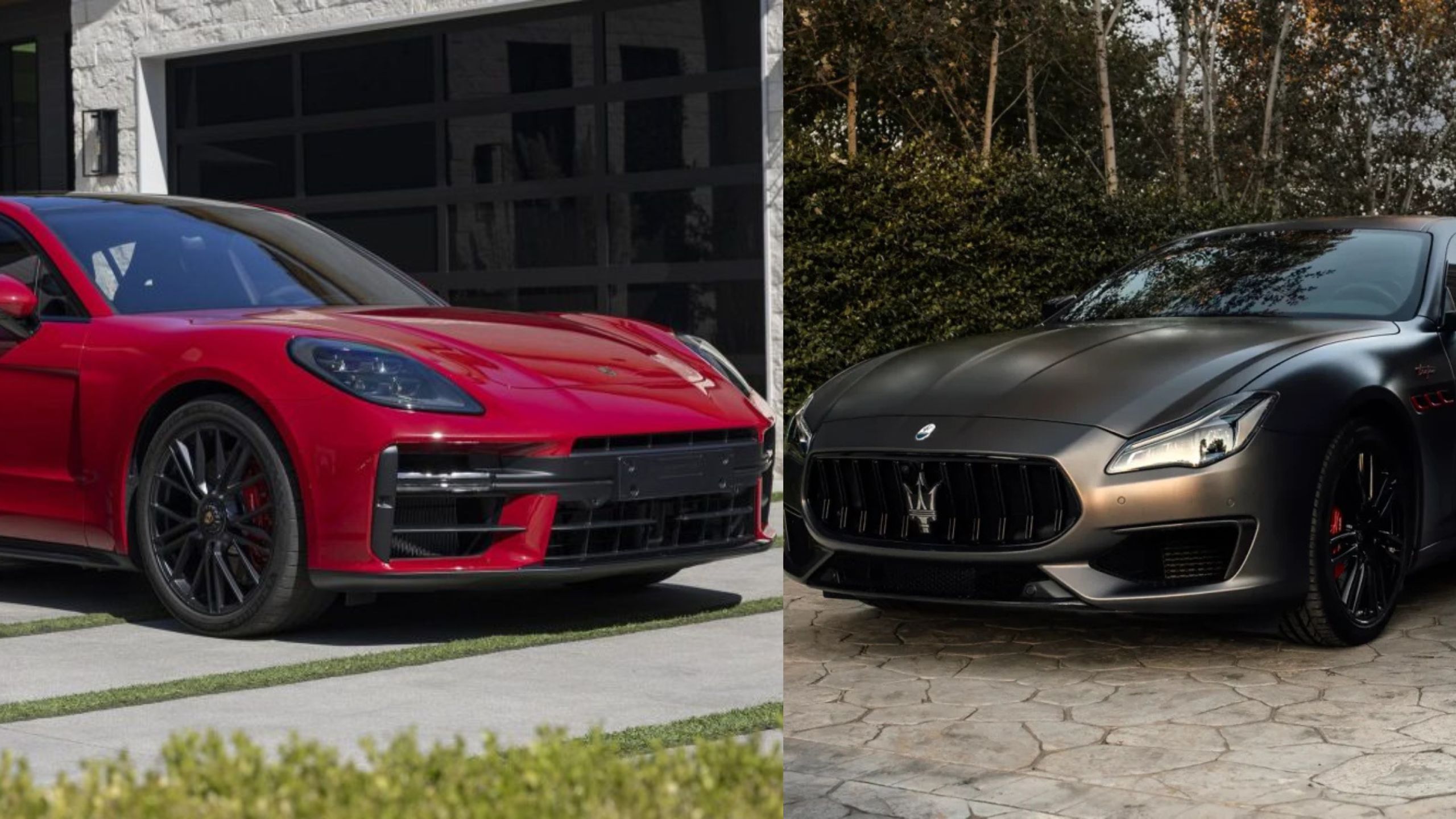
6. Maserati Quattroporte
Maserati’s flagship sedan pairs Italian styling with genuinely exotic engine hardware. That exclusivity translates into some of the highest repair costs on this list. Data shows Quattroporte engines average a notably shorter usable lifespan than rivals. Estimates put the average around 66,000 miles before major issues typically surface.

That’s a strikingly low figure for a full-size luxury sedan. It reflects both the intensity of the performance-tuned V6 and V8 engines and part scarcity. Scheduled maintenance alone runs around $1,500 annually for most Quattroporte owners. Unscheduled major repairs push well beyond that baseline figure.
The Quattroporte’s engines share significant DNA with Ferrari-built powertrains historically. That heritage means parts are lower volume and considerably more expensive to source. Specialized independent shops for Maserati are rare across most of the country. Owners frequently must rely on dealership networks that charge premium labor rates.
Software complexity compounds the issue further on modern Quattroporte models. Diagnostic work alone can take hours before a technician identifies the actual failure point.
Common problem areas include turbocharger wear and electrical gremlins tied to engine management. Both issues tend to require deep diagnostic time before any parts get ordered.
Specifications:
- Engine: 3.0L twin-turbo V6 or 3.8L twin-turbo V8
- Horsepower: 424 hp to 580 hp (Trofeo)
- Torque: 428 lb-ft to 538 lb-ft
- Length: 207.1 inches
- Width: 76.5 inches
Owning a Quattroporte means embracing genuine exclusivity. It also means budgeting seriously for engine work that few shops can perform quickly or cheaply.
7. Volkswagen Passat
The Passat is the surprise entry on this list, given its mainstream positioning. RepairPal’s own institute research flagged it as an unexpectedly costly model to repair. Passat repair costs have been documented at roughly $2,087 on average per major visit. That figure made it the fifth most expensive model in a 20-car mid-size comparison.

This placed the Passat above several nameplates carrying genuine luxury badges. It’s a notable outlier among otherwise affordable, mainstream-branded sedans.
Turbocharged four-cylinder and narrow-angle VR6 engines used across Passat generations both carry known issues. Timing chain tensioner failure has been a particularly persistent complaint among owners.
Left unresolved, tensioner failure can lead to catastrophic internal engine damage. Repair costs in these worst-case scenarios can approach full engine replacement territory.
Direct-injection turbo engines used in later Passat generations also suffer carbon buildup issues. Intake valve cleaning becomes a recurring, non-trivial maintenance expense over time.
Volkswagen’s engineering pulls from the same European complexity playbook as pricier rivals. Unfortunately, that complexity arrives without the same dealership service infrastructure many luxury brands offer.
Independent VW specialists are more common than for Jaguar or Maserati. Even so, labor rates and parts costs remain higher compared to Japanese and Korean mid-size rivals.
Specifications:
- Engine: 1.8L or 2.0L turbocharged inline-four
- Horsepower: 174 hp to 174 hp
- Torque: 184 lb-ft to 207 lb-ft
- Length: 191.6 inches
- Width: 72.2 inches
The Passat proves that European engineering complexity isn’t limited to luxury badges. Even a mainstream sedan can carry a surprisingly luxury-grade repair bill.
Also Read: 8 Cars With Low Quality Interiors That Wear Out by 60,000 Miles
