
Modern NASCAR competition depends on far more than driver skill alone. Success is often determined by a combination of high-performance V8 engines, carefully engineered aerodynamics, and the technical expertise of well-funded racing teams. These factors work together to maximize speed, handling, and consistency throughout a race.
During the early years of stock car racing, however, success depended just as much on chassis design, handling, and durability as it did on outright horsepower. One manufacturer understood that better than anyone else, and surprisingly, it wasn’t Ford, Chevrolet, or Chrysler. It was Hudson.
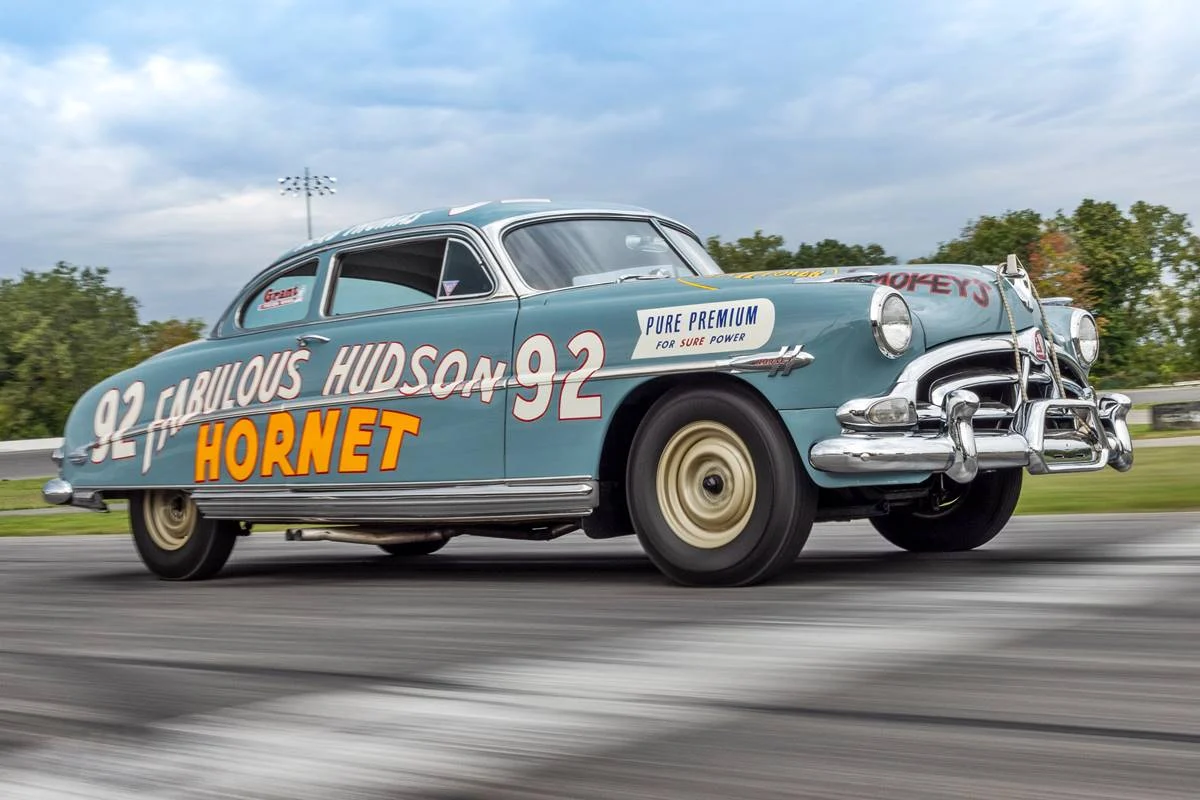
In 1952, the Hudson Hornet dominated NASCAR’s Grand National season despite using a 308-cubic-inch straight-six engine instead of the V8s that would later define American performance.
Thanks to its revolutionary step-down chassis, exceptional handling, and robust powertrain, the Hornet captured an astonishing 27 NASCAR victories during the season, establishing itself as one of the most successful stock cars of the era.
According to NASCAR historical records, Hudson won 27 of the 34 Grand National races held in 1952, an achievement that remains one of the most dominant seasons by a single manufacturer in the sport’s history.
The Hornet’s success transformed Hudson from a respected independent automaker into a racing legend. More importantly, it proved that intelligent engineering could overcome the perceived advantage of larger or more powerful engines, making the Hornet one of the most influential race cars ever built.
Also Read: 10 Cars With the Longest Single-Generation Production Runs
The step-down chassis changed everything.
When Hudson introduced the “step-down” design in 1948, it represented one of the most innovative passenger-car platforms in America. Unlike conventional body-on-frame automobiles, the Hudson’s floorpan was recessed between the frame rails, allowing passengers to literally step down into the cabin.
This lowered the vehicle’s center of gravity significantly while maintaining generous interior space. The design also increased structural rigidity, improved weight distribution, and enhanced handling without sacrificing comfort.
Those advantages became even more valuable on NASCAR’s rough dirt tracks and high-speed paved ovals.
Drivers immediately noticed that the Hornet cornered with far greater stability than many competitors.
The lower center of gravity reduced body roll, while the rigid chassis allowed the suspension to work more effectively during long races. Instead of relying purely on engine output, Hudson engineers had created a platform that could carry greater speed through corners and remain composed over uneven racing surfaces.
Power came from Hudson’s legendary 308-cubic-inch (5.0-liter) L-head straight-six, nicknamed the “Twin H-Power” when equipped with dual carburetors.
In standard road-going form, the engine produced up to 170 horsepower, impressive for a naturally aspirated inline-six in the early 1950s. NASCAR race teams further optimized the engine through careful tuning while remaining within the rules of stock competition.
Although rivals increasingly experimented with V8 power, the Hudson’s large-displacement inline-six delivered abundant low-end torque, exceptional reliability, and remarkably smooth power delivery.
The engine’s long stroke helped generate strong pulling power exiting corners, while its rugged construction allowed drivers to run flat out for hours with minimal mechanical trouble.
The Hornet’s suspension also contributed significantly to its racing success. Long leaf springs, carefully tuned dampers, and durable steering components allowed the car to absorb bumps without upsetting its balance.
Tire technology remained primitive during this era, making predictable handling one of the greatest competitive advantages a team could possess.
Mechanics appreciated the engine’s straightforward design as well. The flathead straight-six was relatively easy to service between races, and its proven durability reduced the likelihood of race-ending mechanical failures. In endurance events lasting hundreds of miles on rough circuits, reliability often proved just as important as outright speed.
The combination of a low-slung chassis, balanced handling, dependable engine, and excellent traction created a race car capable of consistently outperforming competitors with more conventional engineering.
Marshall Teague and the Fabulous Hudson Hornets
The Hornet’s dominance wasn’t achieved by engineering alone. Its success was also driven by talented drivers, most notably Marshall Teague, whose performances behind the wheel helped turn the Hudson into a motorsports icon.
Teague became closely associated with the car, earning widespread recognition for demonstrating just how capable the step-down chassis could be against the competition. Hudson’s factory-backed racing efforts quickly became known as the “Fabulous Hudson Hornets,” a nickname that remains synonymous with one of NASCAR’s earliest golden eras.
During the 1952 Grand National season, Hudson drivers collectively won 27 races, an extraordinary accomplishment considering the championship schedule consisted of only 34 events.
The manufacturer also secured numerous pole positions and consistently placed multiple cars near the front of the field, showcasing the Hornet’s remarkable competitiveness across different tracks and conditions.
The Hornet excelled on both dirt and paved circuits because its superior chassis inspired driver confidence. While many rivals struggled with excessive body roll or inconsistent handling, Hudson drivers could carry greater speed through corners and maintain control over long race distances.
The car’s reputation spread rapidly among private teams as well. Independent racers recognized that purchasing a Hudson often provided a competitive advantage even without extensive modifications.
That popularity further increased the Hornet’s presence throughout NASCAR and reinforced Hudson’s dominance during the early 1950s.
The racing success translated directly into showroom appeal. Hudson heavily promoted its NASCAR victories in advertising, emphasizing that customers could purchase essentially the same engineering that had defeated the nation’s best competitors.
This “win on Sunday, sell on Monday” philosophy became one of the earliest and most successful examples of motorsports marketing in the American automobile industry.
A Racing Legend That Outlived Its Manufacturer
Despite its extraordinary NASCAR success, Hudson Motor Car Company faced increasing financial pressure during the early 1950s.
Competition from Detroit’s larger manufacturers made it increasingly difficult for independent automakers to fund new product development. In 1954, Hudson merged with Nash-Kelvinator to form American Motors Corporation (AMC), effectively ending the company’s independent existence.
Although the Hornet name continued for several years under AMC ownership, the original step-down platform disappeared, and with it much of the engineering advantage that had made the early Hornets so dominant on the racetrack.
Yet the car’s legacy never faded. Automotive historians continue to regard the 1952 Hudson Hornet as one of NASCAR’s greatest early success stories because it proved that chassis engineering could be just as important as horsepower.
Rather than relying on the largest engine or the highest top speed, Hudson built a car that maximized balance, stability, durability, and driver confidence.
Collectors have embraced that legacy. Authentic 1951 to 1954 Hudson Hornets, particularly those with documented racing history or equipped with the desirable Twin H-Power setup, have become highly sought-after collector cars.
Restored examples regularly attract significant attention at major auctions and concours events, while genuine NASCAR race cars command premium values because of their historical importance.
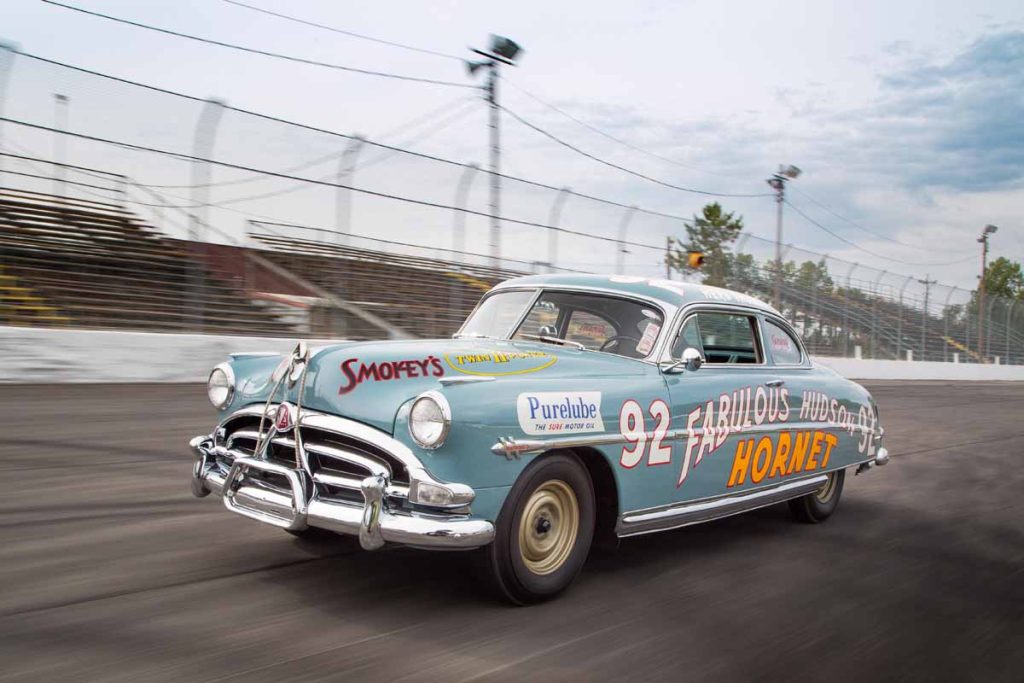
The Hornet’s popularity also extends beyond the collector community. Its racing heritage introduced the car to a new generation through Disney and Pixar’s Cars, where the character Doc Hudson was inspired by the legendary NASCAR champion.
While fictional, the character accurately reflected the real Hornet’s remarkable racing achievements and helped preserve its story for younger enthusiasts.
More than seventy years after its greatest triumph, the 1952 Hudson Hornet remains a symbol of engineering ingenuity. Its 27 NASCAR victories, innovative step-down chassis, and dependable straight-six engine demonstrated that championships are not won by horsepower alone.
Instead, Hudson showed that thoughtful design, exceptional handling, and unwavering reliability could outperform larger rivals, securing a permanent place in both NASCAR history and American automotive legend.
Lasting Influence on NASCAR and Automotive Engineering
The Hudson Hornet’s dominance extended far beyond its race wins. Its success fundamentally changed how automakers and race teams approached stock car development. Before the Hornet, many believed raw engine power was the primary key to victory.
Hudson demonstrated that chassis balance, weight distribution, suspension tuning, and driver confidence could deliver a greater competitive advantage than horsepower alone.
That philosophy influenced NASCAR teams for decades, encouraging manufacturers to invest more heavily in suspension geometry, structural rigidity, and vehicle dynamics rather than focusing solely on engine output.
The Hornet’s remarkable 1952 campaign is still referenced by NASCAR historians as one of the sport’s greatest examples of engineering excellence overcoming conventional wisdom. Although Hudson eventually disappeared as an independent automaker, its innovations lived on throughout the industry.
Today, collectors, racing enthusiasts, and automotive historians continue to celebrate the Hornet not only for its 27 victories in 1952 but also for proving that intelligent engineering could outperform larger competitors.
Few race cars from NASCAR’s formative years have left such a lasting legacy, making the Hudson Hornet one of the most influential American performance cars ever built.
Also Read: 10 Greatest Dodge Muscle Cars Ever Built
