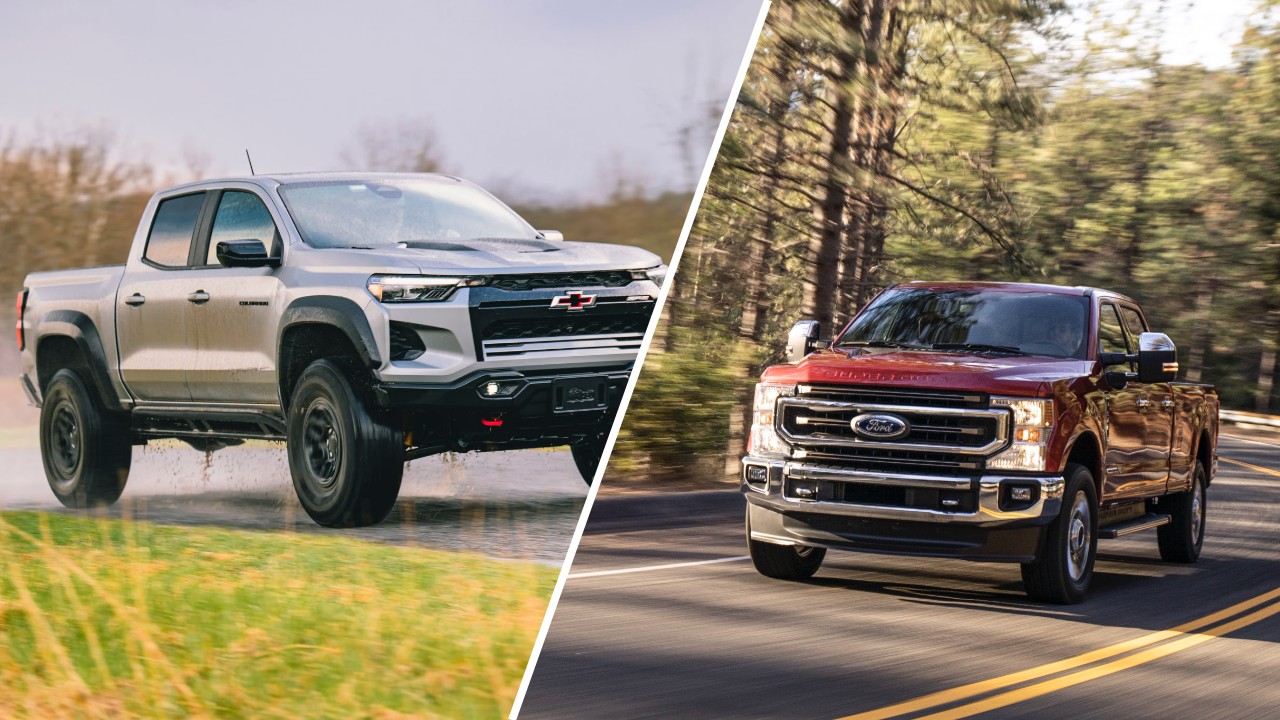
Fuel economy is not the first specification most truck buyers consider, especially when towing capacity, payload, and off-road capability take priority. However, city driving can significantly increase fuel costs, particularly for owners who spend most of their time commuting rather than hauling.
According to the latest EPA fuel economy estimates published on fueleconomy.gov, several full-size and heavy-duty pickups post city fuel economy figures in the low teens, with some falling into single digits under certain configurations.
This list highlights ten new trucks with the worst EPA-rated city MPG, explains why their fuel consumption is high, and identifies the buyers who still benefit from these powerful workhorses.
Also Read: 10 SUVs With Turning Circles Under 37 Feet
1. Ram 2500 Power Wagon
The Ram 2500 Power Wagon is designed to conquer terrain that would stop many other pickups. It comes standard with locking front and rear differentials, a disconnecting front sway bar, heavy-duty skid plates, a factory-installed winch, and aggressive off-road suspension.
Those features make it one of the most capable factory-built off-road heavy-duty trucks sold in America, but they also contribute to poor city fuel economy.
Unlike most light-duty pickups, the Power Wagon is not rated by the EPA because of its gross vehicle weight rating. However, FuelEconomy.gov notes that heavy-duty pickups are generally exempt from official EPA fuel economy labeling.
Independent testing and owner fuel logs consistently place the gasoline-powered 6.4-liter HEMI V8 at roughly 10 to 12 MPG in city driving, making it one of the thirstiest new trucks available.
The reasons are easy to understand. The truck weighs well over 7,000 pounds, rides on large all-terrain tires, uses shorter axle gearing for crawling, and carries permanent four-wheel-drive hardware.
Stop-and-go traffic forces the massive V8 to repeatedly move substantial weight from a standstill, dramatically increasing fuel consumption.
For buyers who frequently navigate rocky trails, recover other vehicles, or tow heavy equipment into remote locations, these compromises are acceptable. For drivers using the truck primarily as a commuter, however, fuel costs can add up quickly compared with a half-ton pickup.
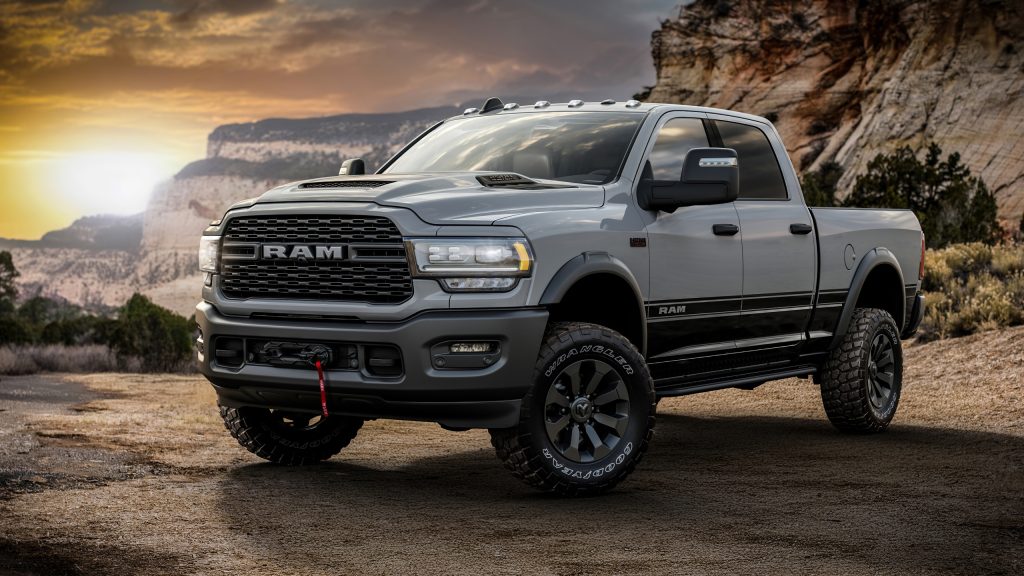
The Power Wagon demonstrates that maximum off-road capability often comes with a measurable penalty at the fuel pump.
Representative Truck Specifications
- Engine: 6.4-liter HEMI V8
- Torque: 429 lb-ft
- Horsepower: 405 hp
- Length/Width: 238.8 inches / 83.5 inches
2. Ford F-350 Super Duty 7.3L Gas V8
Ford’s Super Duty lineup is engineered for commercial work, large trailers, and demanding job sites rather than maximizing fuel economy. The naturally aspirated 7.3-liter “Godzilla” V8 has earned praise for durability and straightforward engineering, but moving a heavy-duty pickup through city traffic requires considerable fuel.
Like other heavy-duty trucks, the F-350 is exempt from official EPA fuel economy testing because of its weight classification.
Nevertheless, owner-reported data collected through FuelEconomy.gov and independent fuel tracking consistently shows approximately 10 to 12 MPG in city-oriented driving, depending on cab configuration, drivetrain, and axle ratio.
The truck’s size plays a major role in these numbers. A crew cab with four-wheel drive, reinforced frame, heavy-duty suspension, and large tires can weigh thousands of pounds more than a typical half-ton pickup.
Frequent acceleration from traffic lights requires the V8 to work much harder than an engine in a lighter vehicle.
Ford intentionally tuned the 7.3-liter engine for low-end torque instead of fuel efficiency. That approach benefits contractors towing equipment trailers, horse trailers, RVs, or construction machinery, but it also means higher fuel consumption during everyday commuting.
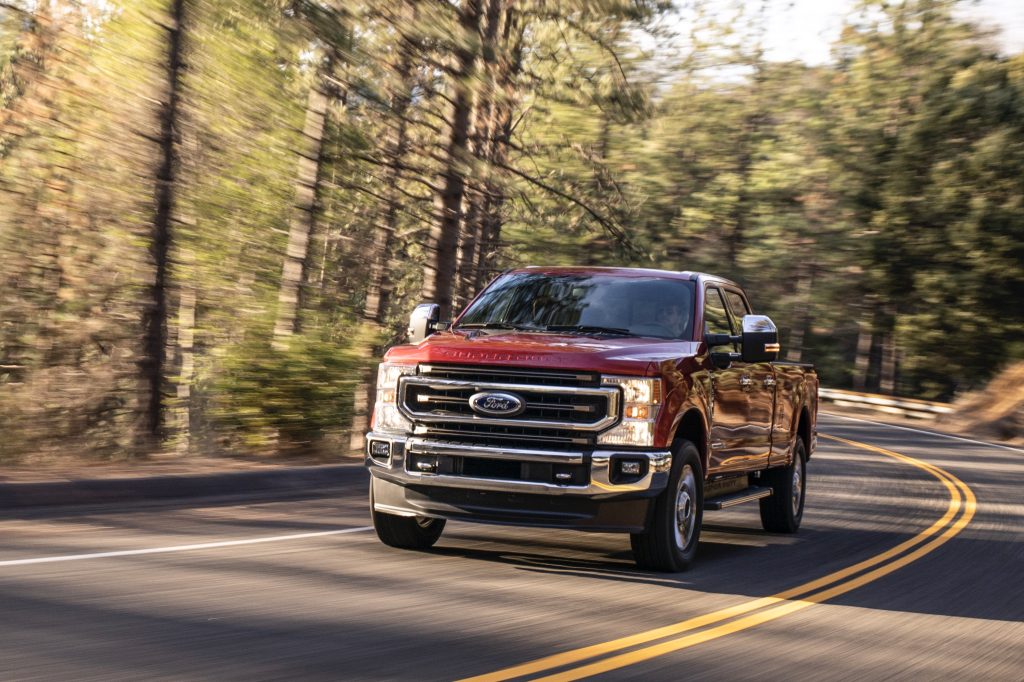
Drivers who regularly use the truck’s impressive payload and towing capabilities often accept the additional fuel expense because the performance advantages outweigh the operating costs.
Buyers who rarely utilize those capabilities may find that a lighter F-150 or another half-ton pickup provides substantially better city efficiency while still meeting their needs.
Representative Truck Specifications
- Engine: 7.3-liter naturally aspirated V8
- Torque: 485 lb-ft
- Horsepower: 430 hp
- Length/Width: 250.0 inches / 80.0 inches
3. Chevrolet Silverado 2500 HD 6.6L Gas V8
Not every truck is built with fuel economy in mind, and the Chevrolet Silverado 2500 HD is a clear example. Chevrolet designed this heavy-duty pickup to tow large fifth-wheel trailers, carry substantial payloads, and withstand years of commercial use.
Those priorities naturally push fuel efficiency lower, especially in urban driving where constant stops and starts demand repeated bursts of power.
Like other heavy-duty pickups with a gross vehicle weight rating above the EPA testing threshold, the Silverado 2500 HD does not receive an official EPA fuel economy label. FuelEconomy.gov notes that these trucks are exempt from EPA fuel economy ratings.
However, owner-submitted fuel logs and independent testing regularly place the gasoline-powered 6.6-liter V8 at approximately 10 to 12 MPG in city driving, depending on drivetrain, cab style, and axle ratio.
Several engineering decisions contribute to these numbers. The truck uses a heavy-duty frame, reinforced suspension components, larger brakes, and substantial cooling systems designed to handle demanding towing conditions.
All of that equipment increases curb weight. Pair that with a large-displacement V8 producing abundant low-end torque, and city fuel consumption climbs quickly.
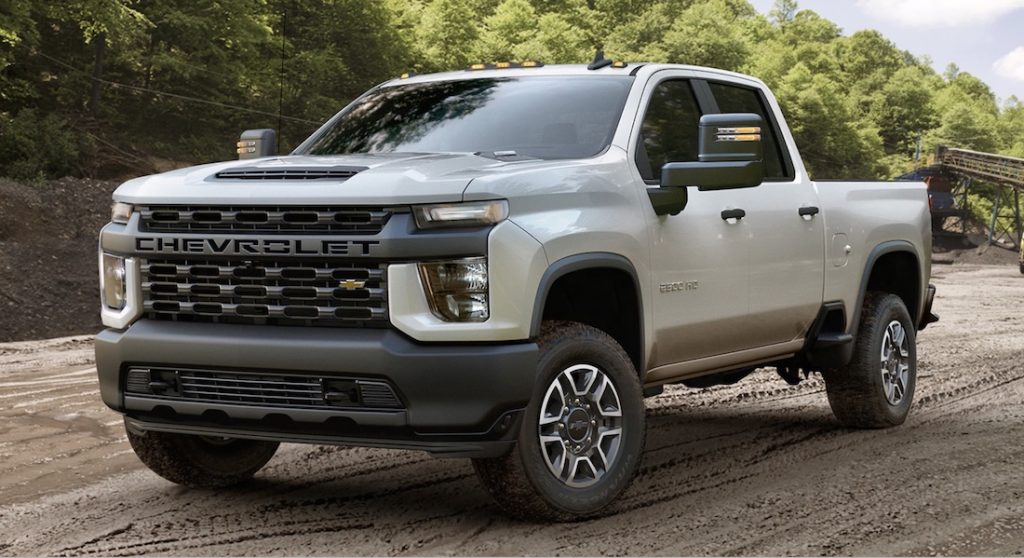
Another factor is the transmission’s calibration. It prioritizes pulling power and durability instead of maximizing fuel savings during stop-and-go traffic. While highway cruising allows the engine to settle into higher gears, urban driving rarely provides those conditions.
For contractors, ranch owners, and RV enthusiasts who routinely tow loads exceeding 15,000 pounds, these fuel costs are often considered part of doing business. Buyers who rarely use the truck’s heavy-duty capability, however, may find that a lighter half-ton pickup offers considerably lower fuel expenses without sacrificing everyday practicality.
Representative Truck Specifications
- Engine: 6.6-liter naturally aspirated V8
- Torque: 464 lb-ft
- Horsepower: 401 hp
- Length/Width: 250.0 inches / 81.9 inches
4. GMC Sierra 2500 HD 6.6L Gas V8
The GMC Sierra 2500 HD shares much of its engineering with the Chevrolet Silverado 2500 HD, but it targets buyers seeking a more premium experience without compromising work capability.
Whether configured as a Pro work truck or a luxurious Denali Ultimate, the Sierra remains a heavy-duty pickup engineered primarily for hauling and towing. Fuel economy ranks much lower on its list of priorities.
Because the Sierra 2500 HD exceeds the EPA’s light-duty testing classification, it is not assigned official EPA city MPG ratings. FuelEconomy.gov identifies these heavy-duty pickups as exempt from mandatory fuel economy labeling.
Even so, owner reports consistently indicate that the gasoline-powered 6.6-liter V8 typically returns around 10 to 12 MPG during city driving.
Weight is one of the biggest contributors. Crew cab four-wheel-drive versions equipped with larger wheels, off-road packages, and premium interiors can weigh well over 7,000 pounds before passengers or cargo are added.
Moving that mass through congested traffic requires significant fuel, regardless of transmission technology.
Unlike smaller turbocharged engines designed for efficiency, the Sierra’s 6.6-liter V8 delivers naturally aspirated power with a broad torque curve. It excels at launching heavy trailers and maintaining performance under demanding workloads, but those strengths come with higher fuel consumption in everyday commuting.
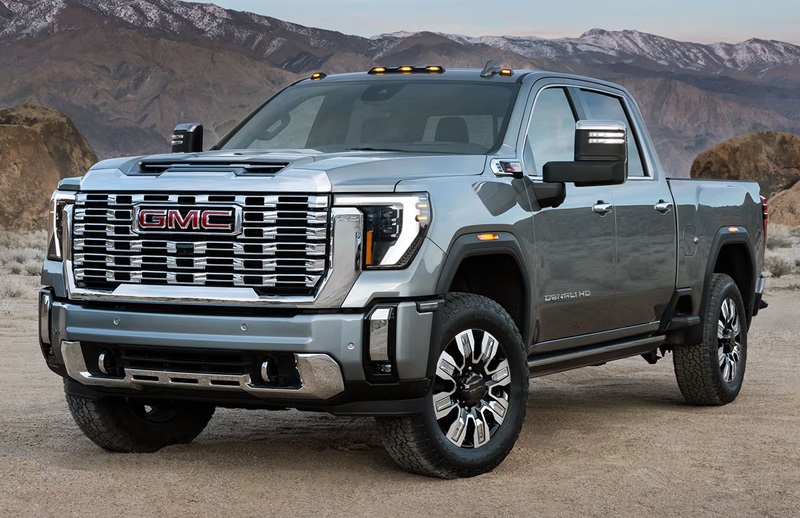
The Sierra remains an excellent choice for buyers who regularly tow construction equipment, livestock trailers, or large recreational vehicles. For drivers whose daily routine consists mainly of city traffic and occasional weekend hauling, the additional fuel expense should be considered alongside the truck’s impressive capability.
Representative Truck Specifications
- Engine: 6.6-liter naturally aspirated V8
- Torque: 464 lb-ft
- Horsepower: 401 hp
- Length/Width: 250.0 inches / 81.9 inches
5. Ram 1500 RHO
The Ram 1500 RHO replaces the TRX as Ram’s flagship high-performance off-road pickup, but despite switching from a supercharged V8 to a twin-turbocharged inline-six, fuel economy is still far from economical.
Massive all-terrain tires, long-travel suspension, permanent four-wheel drive, and nearly 540 horsepower make efficiency a secondary consideration.
According to the EPA ratings published on FuelEconomy.gov, the Ram 1500 RHO is rated at 15 MPG city, placing it among the least fuel-efficient light-duty pickups currently on sale in the United States.
Unlike heavy-duty trucks that are exempt from EPA testing, the RHO carries official fuel economy figures because it falls within the light-duty classification. The truck’s off-road hardware plays a significant role in its consumption.
Its wider track, reinforced suspension, skid plates, performance shocks, and aggressive tire package all increase rolling resistance and weight.
Performance tuning also affects efficiency. The Hurricane High-Output engine delivers rapid throttle response and exceptional acceleration, characteristics that naturally require more fuel during repeated city driving.
Even with an advanced eight-speed automatic transmission, frequent stop-and-go traffic prevents the engine from operating in its most efficient range.
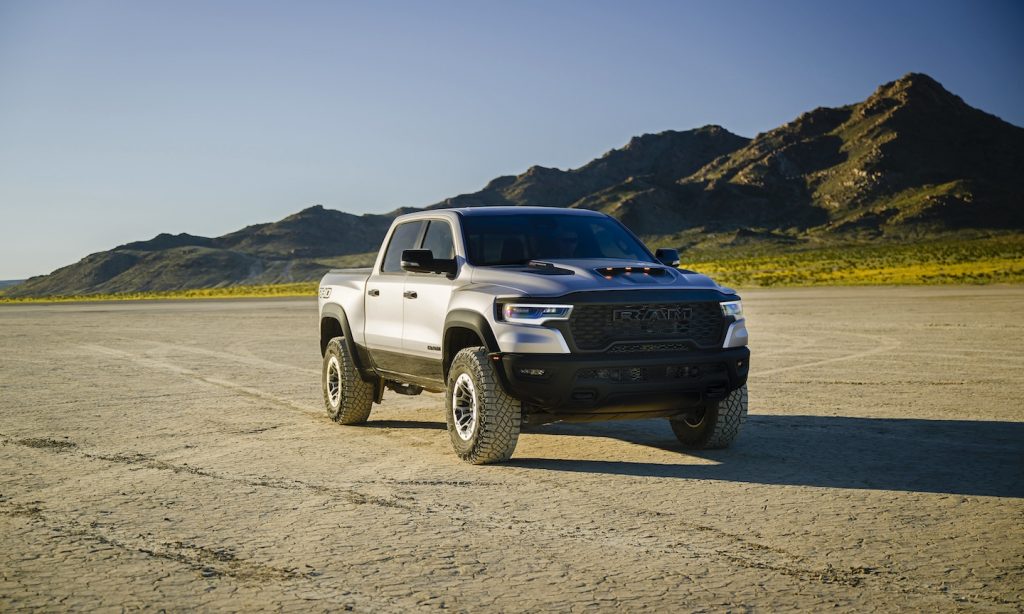
For buyers seeking Baja-style off-road capability, the trade-off is understandable. The RHO offers performance that few factory pickups can match while retaining practical towing and payload capability.
Drivers who spend most of their time commuting, however, should be prepared for noticeably higher fuel expenses than they would experience in a conventional half-ton pickup equipped with a smaller turbocharged engine.
Representative Truck Specifications
- Engine: 3.0-liter twin-turbocharged Hurricane High Output inline-six
- Torque: 521 lb-ft
- Horsepower: 540 hp
- Length/Width: 232.9 inches / 88.0 inches
- EPA City MPG: 15
6. Ford F-150 Raptor 3.5L EcoBoost
The Ford F-150 Raptor has become one of America’s most recognizable high-performance pickups. Its reputation comes from exceptional desert-running capability, sophisticated Fox suspension components, locking differentials, and a powerful twin-turbocharged EcoBoost V6.
Those features make it incredibly capable away from pavement, but they also contribute to higher fuel consumption in urban driving.
According to the official EPA ratings listed on FuelEconomy.gov, the Ford F-150 Raptor with the 3.5-liter EcoBoost V6 is rated at 15 MPG city. Although that figure is better than many heavy-duty trucks, it remains among the lowest city ratings available in the light-duty pickup segment.
The Raptor’s efficiency is affected by much more than engine size. Thirty-seven-inch tires on certain configurations, increased ride height, specialized off-road suspension, wider bodywork, and permanent four-wheel-drive hardware all increase aerodynamic drag and rolling resistance.
These components are essential to the truck’s mission but reduce fuel efficiency during everyday commuting.
Turbocharging helps improve highway performance compared with a naturally aspirated engine of similar output, yet city traffic rarely allows the powertrain to operate under ideal conditions. Frequent acceleration and braking force the engine to work harder while moving a truck weighing well over 5,700 pounds.
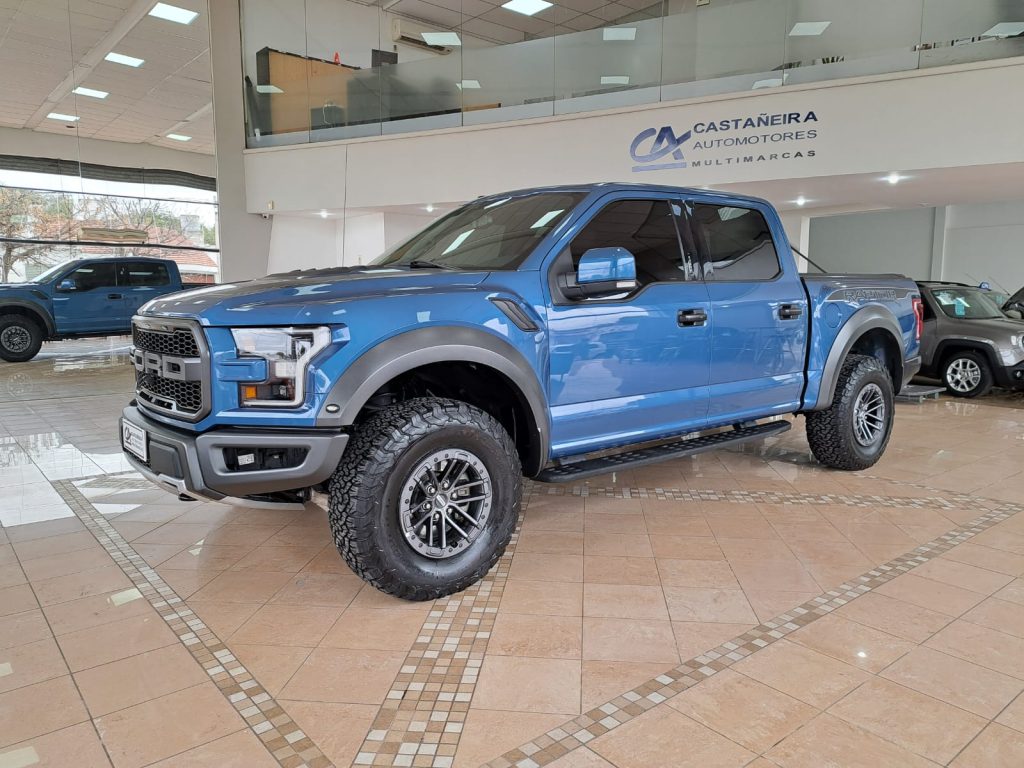
Despite its modest city MPG, the Raptor remains one of the most capable factory off-road pickups sold in America. Buyers seeking high-speed trail performance and advanced suspension technology generally accept the additional fuel cost as part of owning a purpose-built performance truck.
Representative Truck Specifications
- Engine: 3.5-liter twin-turbocharged EcoBoost V6
- Torque: 510 lb-ft
- Horsepower: 450 hp
- Length/Width: 232.6 inches / 87.0 inches
- EPA City MPG: 15
7. Toyota Tundra TRD Pro
The Toyota Tundra TRD Pro is engineered for buyers who want serious off-road capability without moving into the heavy-duty truck segment.
Standard four-wheel drive, Fox internal bypass shocks, skid plates, an electronically controlled locking rear differential, and aggressive all-terrain tires make it highly capable on rough trails. Those upgrades, however, reduce efficiency during everyday city driving.
According to the official EPA ratings published on FuelEconomy.gov, the Toyota Tundra TRD Pro is rated at 18 MPG city. While this figure is noticeably better than heavy-duty pickups and high-performance trucks such as the Raptor or Ram 1500 RHO, it still ranks among the least efficient new light-duty pickups currently sold in the United States.
Unlike many competitors that rely on naturally aspirated V8 engines, the TRD Pro uses Toyota’s i-FORCE MAX hybrid powertrain.
The electric motor helps improve torque and responsiveness, but it cannot fully offset the truck’s weight, off-road tires, lifted suspension, and increased aerodynamic drag. Frequent stops and acceleration in city traffic reduce many of the efficiency gains normally associated with hybrid systems.
Owners choosing the TRD Pro usually prioritize durability, trail capability, and towing performance over fuel savings. The truck’s suspension is tuned to handle challenging terrain while maintaining comfort on the highway, making it attractive to outdoor enthusiasts who regularly venture beyond paved roads.
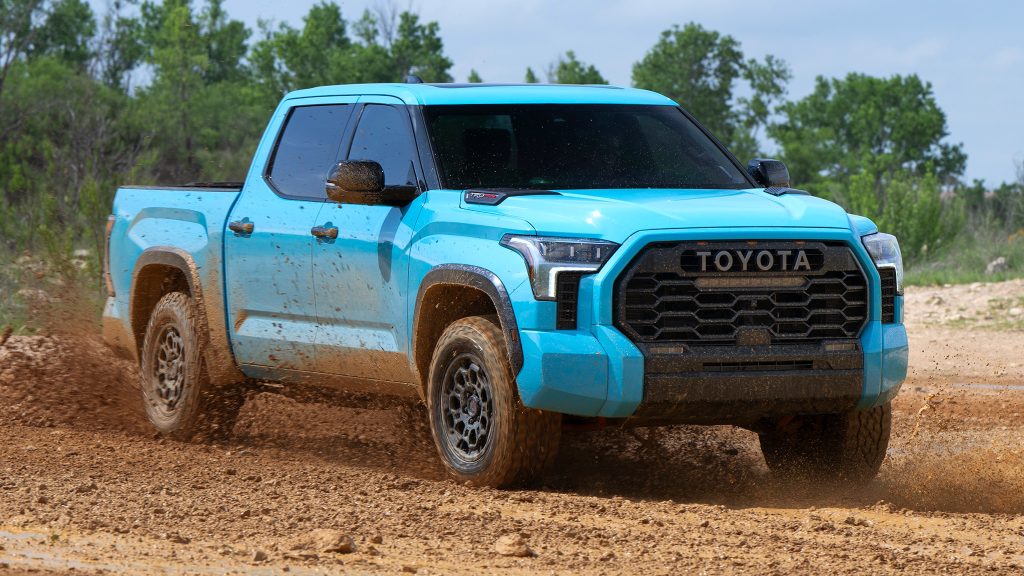
Although an 18 MPG city rating is lower than many mainstream pickups, buyers receive a truck capable of tackling demanding off-road conditions while maintaining Toyota’s reputation for reliability and long-term durability.
Representative Truck Specifications
- Engine: 3.4-liter twin-turbocharged V6 hybrid
- Torque: 583 lb-ft
- Horsepower: 437 hp
- Length/Width: 233.6 inches / 80.2 inches
- EPA City MPG: 18
8. Chevrolet Colorado ZR2 Bison
Unlike the full-size trucks earlier in this list, the Chevrolet Colorado ZR2 Bison proves that even a midsize pickup can post relatively poor city fuel economy when engineered for extreme off-road use.
Developed with American Expedition Vehicles (AEV), the Bison package transforms the Colorado into a serious trail machine with steel bumpers, skid plates, larger tires, beadlock-capable wheels, and additional underbody protection.
The EPA rates the Colorado ZR2 Bison at 17 MPG city, placing it among the least fuel-efficient midsize pickups currently available. Although its turbocharged four-cylinder engine is smaller than the V8s found in heavy-duty trucks, the off-road equipment significantly affects efficiency.
The truck’s larger all-terrain tires increase rolling resistance, while the raised suspension and protective armor add weight. Aerodynamics also suffer because of the wider stance and more aggressive exterior components. During stop-and-go city driving, these factors require the engine to work harder than it would in a standard Colorado.
Despite its modest fuel economy, the ZR2 Bison appeals to buyers who regularly travel over rocky trails, desert terrain, or remote backcountry routes. Its Multimatic DSSV dampers, locking front and rear differentials, and extensive factory protection eliminate the need for many aftermarket upgrades.
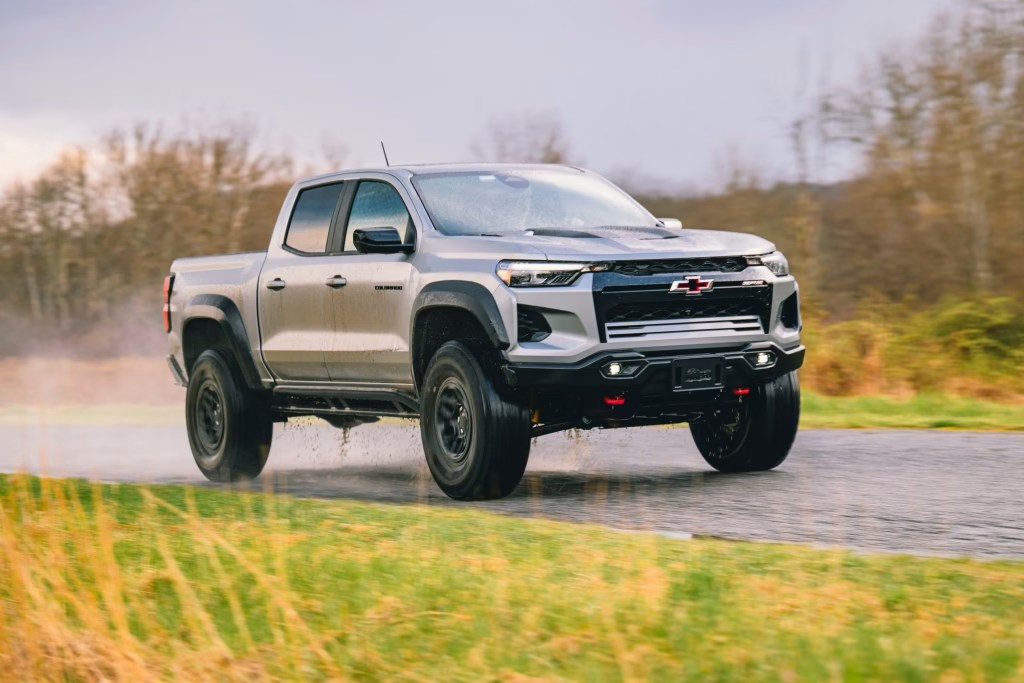
For drivers who spend nearly all of their time on pavement, the standard Colorado offers significantly better efficiency. The Bison is designed for capability first, and its EPA city fuel economy reflects the compromises necessary to achieve that mission.
Representative Truck Specifications
- Engine: 2.7-liter turbocharged inline-four
- Torque: 430 lb-ft
- Horsepower: 310 hp
- Length/Width: 212.7 inches / 84.4 inches
- EPA City MPG: 17
9. GMC Canyon AT4X AEV Edition
The GMC Canyon AT4X AEV Edition is built for buyers who expect a midsize truck to handle demanding trails without requiring extensive aftermarket modifications.
Developed in partnership with American Expedition Vehicles, it receives steel front and rear bumpers, heavy-duty skid plates, rock sliders, beadlock-capable wheels, and 35-inch mud-terrain tires. These upgrades dramatically improve off-road capability, but they also affect fuel economy in everyday driving.
According to the official EPA ratings listed on FuelEconomy.gov, the GMC Canyon AT4X AEV Edition is rated at 16 MPG city, placing it among the least fuel-efficient midsize pickups currently available in the U.S. market.
Several factors contribute to this rating. The aggressive mud-terrain tires generate more rolling resistance than highway-oriented tires, while the taller ride height increases aerodynamic drag. Additional steel armor and off-road equipment add weight, requiring the turbocharged engine to work harder every time the truck accelerates from a stop.
The 2.7-liter TurboMax engine delivers outstanding low-end torque, making it exceptionally capable on steep grades and technical trails. However, its tuning emphasizes pulling power instead of maximizing fuel economy. In city traffic with frequent acceleration, fuel consumption naturally rises.
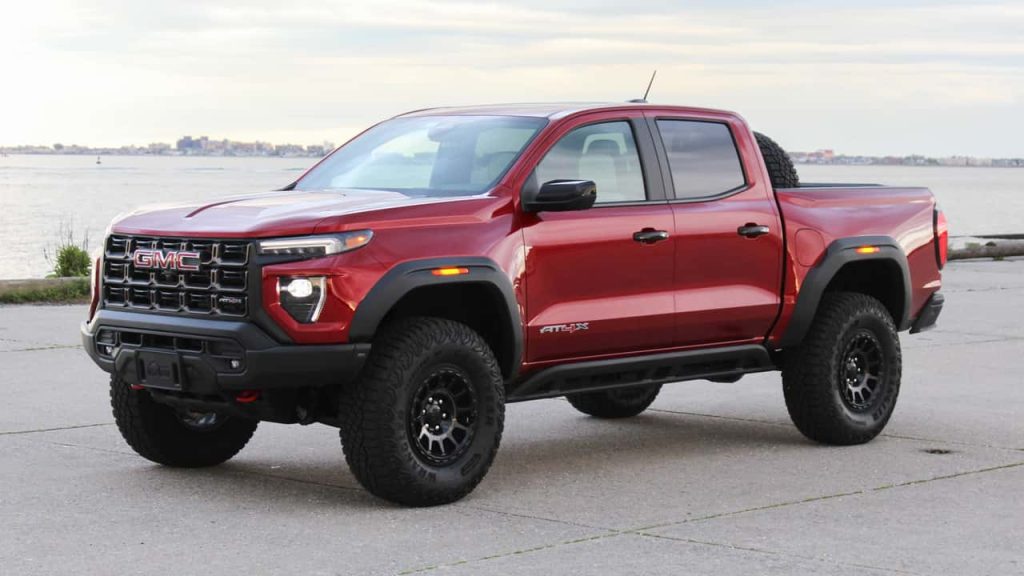
For outdoor enthusiasts who regularly travel to remote campsites or challenging off-road destinations, the AT4X AEV Edition delivers factory-backed capability that few competitors can match.
Buyers who rarely leave paved roads, however, should recognize that these specialized components come with a noticeable penalty at the fuel pump.
Representative Truck Specifications
- Engine: 2.7-liter TurboMax turbocharged inline-four
- Torque: 430 lb-ft
- Horsepower: 310 hp
- Length/Width: 213.2 inches / 84.4 inches
- EPA City MPG: 16
10. Nissan Frontier PRO-4X
The Nissan Frontier PRO-4X closes this list because it prioritizes off-road capability over maximum efficiency.
Although it is smaller than most full-size pickups featured earlier, its naturally aspirated V6, four-wheel-drive system, all-terrain tires, Bilstein off-road suspension, and locking rear differential contribute to fuel economy figures that trail many newer turbocharged rivals.
According to the official EPA ratings published on FuelEconomy.gov, the Nissan Frontier PRO-4X is rated at 17 MPG city. While this is significantly better than heavy-duty gasoline trucks, it still ranks among the lowest city fuel economy figures in the midsize pickup segment.
One reason is the powertrain itself. Nissan continues to use a 3.8-liter naturally aspirated V6 rather than a smaller turbocharged engine. The V6 provides smooth, predictable power delivery and proven durability, but it generally consumes more fuel in stop-and-go traffic than downsized turbocharged alternatives.
The PRO-4X package also adds equipment designed specifically for off-road travel. Skid plates, all-terrain tires, upgraded suspension components, and four-wheel drive all increase rolling resistance and vehicle weight. These improvements are valuable on dirt trails and rocky terrain but reduce efficiency during daily commuting.
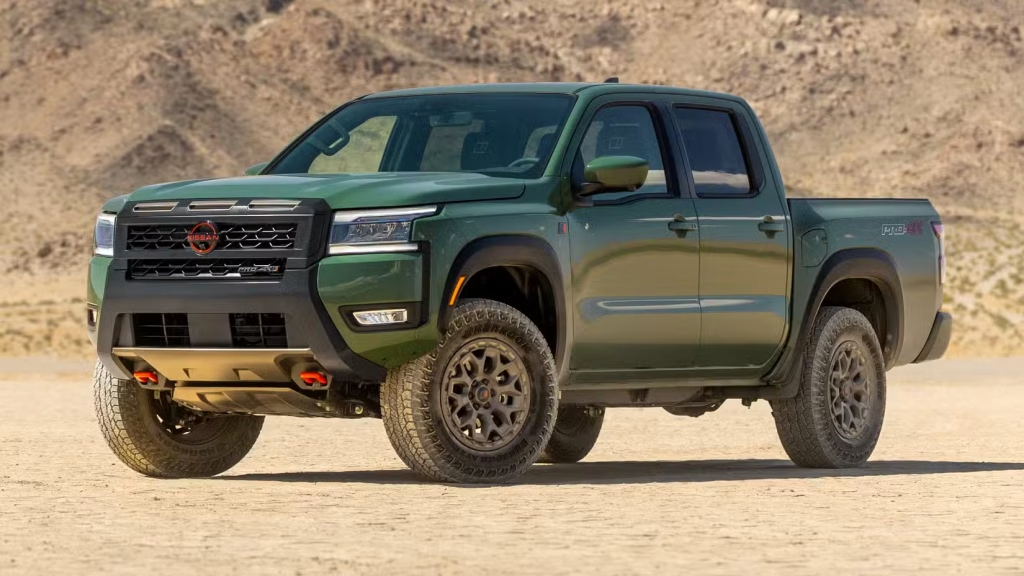
Many Frontier buyers appreciate the truck’s straightforward mechanical design and dependable V6. For drivers who frequently venture off pavement, the trade-off in city MPG may be worthwhile. Buyers focused primarily on urban commuting, however, should expect higher fuel costs than with several competing midsize pickups.
Representative Truck Specifications
- Engine: 3.8-liter naturally aspirated V6
- Torque: 281 lb-ft
- Horsepower: 310 hp
- Length/Width: 210.2 inches / 73.0 inches
- EPA City MPG: 17
Also Read: 10 Cars That Need AGM Batteries and Not a Cheap Swap