
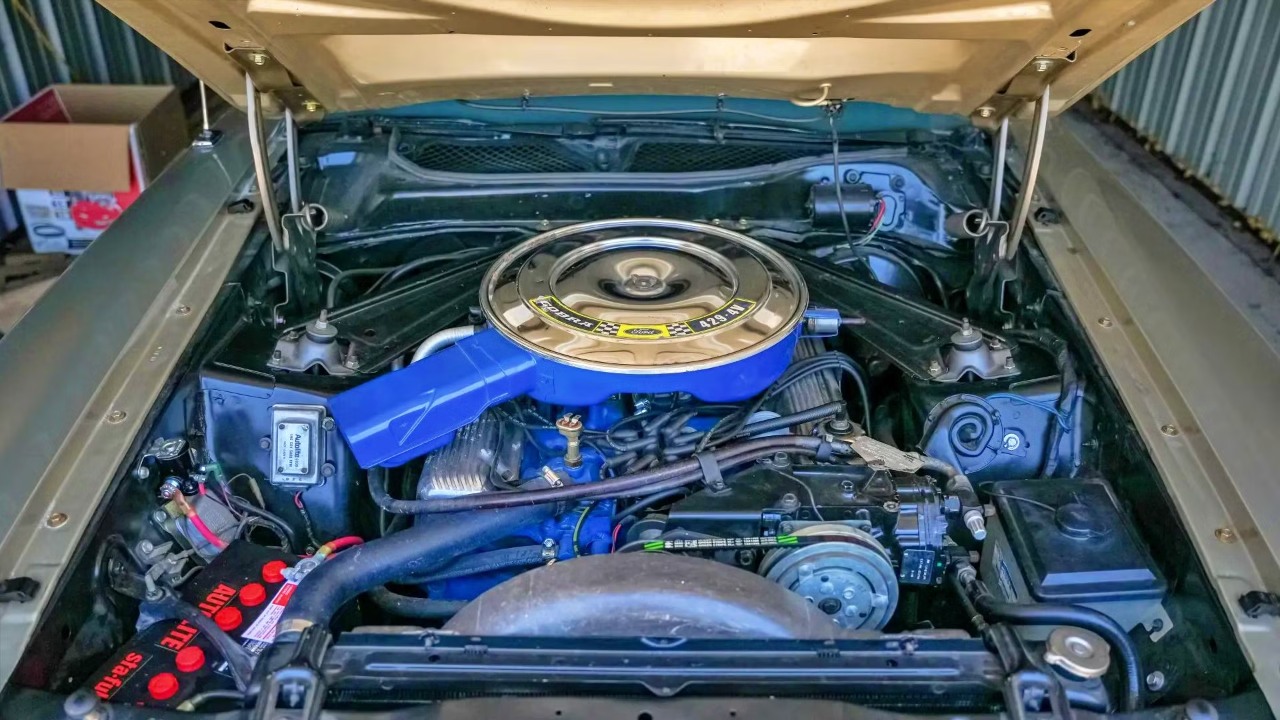
Automotive legends never truly disappear, but emissions regulations can eventually bring their production to an end. Many of the greatest American V8 engines earned their reputation during an era when horsepower mattered far more than fuel economy or exhaust emissions.
Today, every new passenger vehicle sold in the United States must meet strict Environmental Protection Agency emissions standards and federal onboard diagnostics requirements. As a result, several iconic engines could never be installed in a newly manufactured street-legal vehicle without major redesigns.
These engines remain legal in classic cars, restorations, crate engine applications, and racing, but not in a brand-new U.S. production vehicle built under today’s regulations.
Also Read: 10 SUVs Moving to a New Platform for 2027
1. Chevrolet 454 Big Block V8 (LS5 Carbureted)
The Chevrolet 454 Big Block became one of the defining engines of the American muscle car era. Introduced during a period when manufacturers competed fiercely for horsepower, the carbureted LS5 version delivered effortless torque and impressive straight-line performance.
Installed in legendary vehicles such as the Chevelle SS, Corvette, and El Camino, the 454 earned a reputation for overwhelming low-end power that enthusiasts still admire decades later.
Despite its legendary status, a carbureted 454 in original specification could never power a newly manufactured street-legal vehicle in today’s American market. The reason has little to do with durability and everything to do with emissions compliance.
Modern EPA regulations require engines to operate with sophisticated electronic fuel injection, catalytic converters, oxygen sensors, evaporative emissions controls, onboard diagnostics, and precise computer management. The original carbureted 454 lacks virtually all of those systems.
Fuel metering through a carburetor simply cannot provide the precision necessary to satisfy today’s emissions standards during cold starts, idle operation, acceleration, and cruising conditions. Carbon monoxide, hydrocarbons, and nitrogen oxide emissions would exceed allowable federal limits by a considerable margin.
That does not mean the engine is illegal. Owners may continue operating classic vehicles originally equipped with the 454, and Chevrolet Performance still offers modern crate engines derived from the big-block family for approved applications.
The restriction applies only to installing the original emissions configuration into a newly manufactured passenger vehicle intended for public roads.
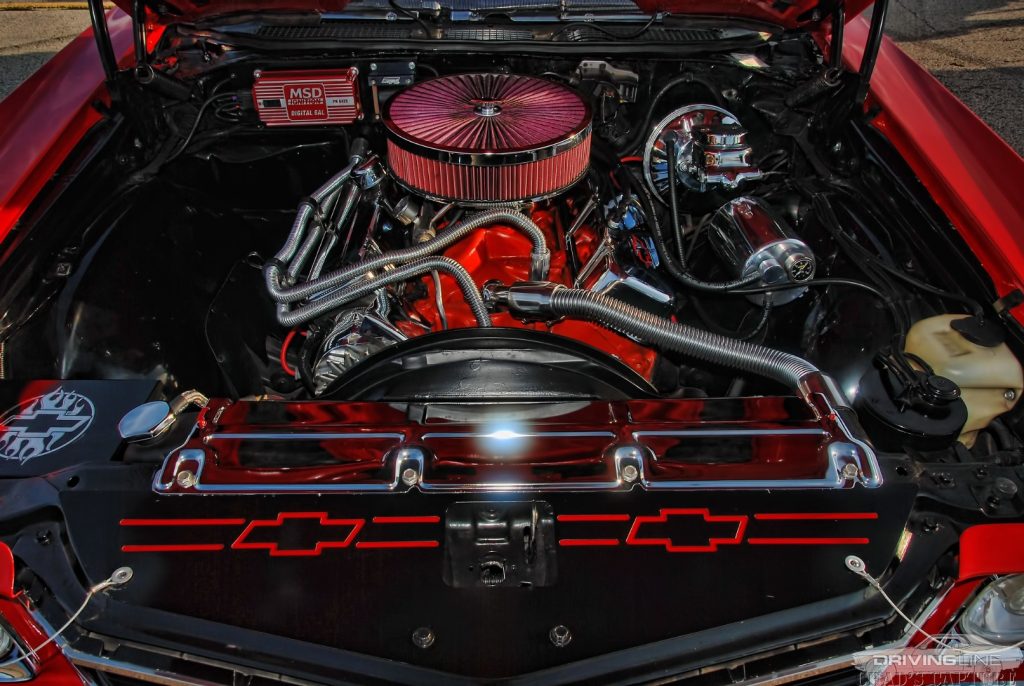
The 454 remains one of America’s most celebrated V8 engines because of its immense displacement, unmistakable exhaust note, and abundant torque.
Its legacy continues at classic car shows, drag strips, and restoration projects, even though modern environmental standards have permanently closed the door on using its original design in a brand-new production automobile.
Specifications
- Engine: 7.4-liter naturally aspirated OHV V8
- Torque: 500 lb-ft
- Horsepower: 390 hp
- Length/Width: Approximately 31 inches / 28 inches
2. Chrysler 426 Street HEMI V8
Few engines command as much respect among collectors as the Chrysler 426 Street HEMI. Introduced during the height of the muscle car era, this massive V8 became synonymous with exceptional performance thanks to its hemispherical combustion chambers, oversized valves, and race-derived engineering.
Installed in iconic Dodge and Plymouth muscle cars, the Street HEMI quickly developed a reputation for producing remarkable horsepower while remaining surprisingly street-friendly for its time.
Those same engineering characteristics, however, make the original engine incompatible with today’s federal emissions standards. Like many high-performance engines of the 1960s, the 426 relied on large carburetors, mechanical tuning, and relatively simple emissions equipment compared with modern powertrains.
Contemporary passenger vehicles must meet lower emissions limits dramatically while simultaneously providing excellent fuel economy, onboard diagnostics, evaporative emissions control, and long-term emissions durability.
A factory-original 426 Street HEMI lacks the sophisticated electronic controls required to achieve those objectives.
Without redesigning nearly every aspect of the engine, including its fuel delivery, combustion management, and exhaust after-treatment systems, it could not receive certification for installation in a newly manufactured U.S. passenger vehicle.
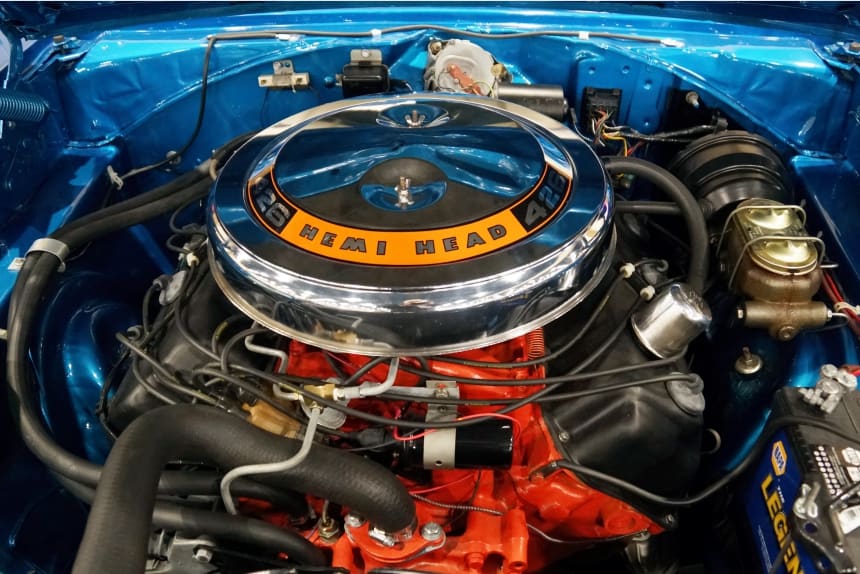
Collectors should not confuse certification rules with ownership restrictions. Existing HEMI-powered classics remain perfectly legal to own, restore, buy, and sell under applicable federal and state laws. The limitation applies only to manufacturing a new street-legal vehicle using the engine’s original emissions configuration.
The 426 HEMI remains one of the greatest achievements in American engine history. Its combination of raw power, unmistakable appearance, and racing heritage continues to make it one of the most valuable and recognizable V8 engines ever produced, even if modern emissions regulations prevent its return in original form.
Specifications
- Engine: 7.0-liter naturally aspirated OHV V8
- Torque: 490 lb-ft
- Horsepower: 425 hp
- Length/Width: Approximately 30 inches / 28 inches
3. Ford 429 Super Cobra Jet V8
The Ford 429 Super Cobra Jet arrived at the peak of the American horsepower wars, giving enthusiasts one of the most formidable big-block engines ever installed in a production muscle car.
Found in select versions of the Mustang, Torino, and Cougar, the Super Cobra Jet was engineered with heavy-duty internal components, improved cylinder heads, and a large four-barrel carburetor to withstand high-performance driving.
It delivered massive low-end torque and became a favorite among drag racers looking for factory-backed power.
If Ford attempted to install the original Super Cobra Jet in a newly manufactured passenger vehicle today, the engine would fail to satisfy current federal certification requirements almost immediately. The carbureted fuel system cannot meter fuel with the precision demanded by today’s emissions regulations.
Modern engines rely on electronically controlled fuel injection, sophisticated ignition timing, variable valve timing, catalytic converters, exhaust gas monitoring, evaporative emissions controls, and continuous onboard diagnostics. None of those systems existed on the original 429 Super Cobra Jet.
Another challenge involves fuel economy. The large displacement and emissions calibration used during the late 1960s and early 1970s were designed to maximize performance rather than minimize fuel consumption.
Current EPA certification standards require manufacturers to balance performance with significantly cleaner exhaust emissions and improved efficiency.
Despite those limitations, the 429 Super Cobra Jet remains perfectly legal in classic vehicles originally equipped with the engine. Restoration projects, collector cars, and approved racing applications continue to preserve its legacy across the United States.
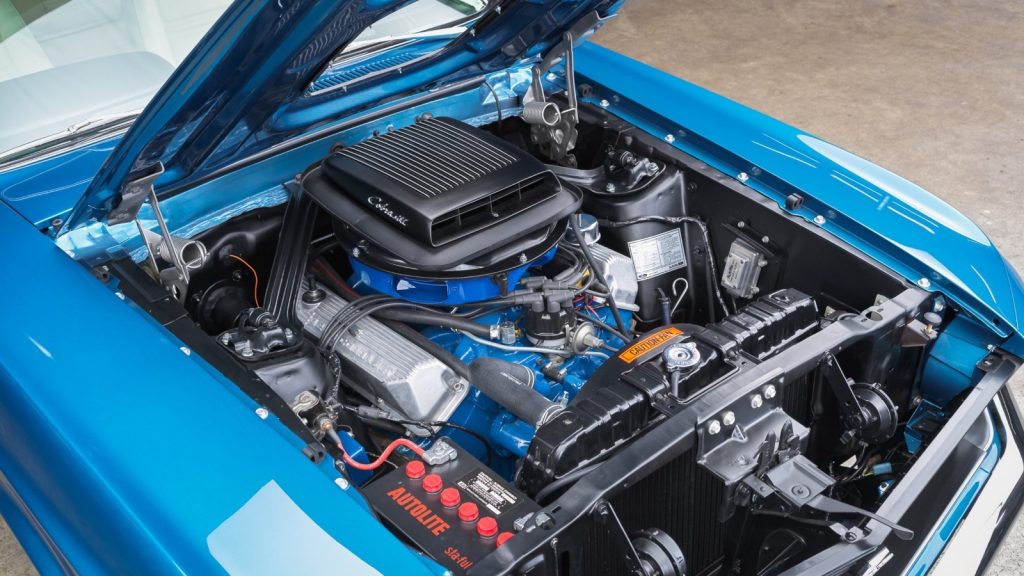
Few engines better represent the golden age of American muscle than the Super Cobra Jet. Its thunderous exhaust note, exceptional torque, and racing pedigree continue attracting collectors, even though federal emissions regulations prevent its original design from returning to a brand-new street-legal production vehicle.
Specifications
- Engine: 7.0-liter naturally aspirated OHV V8
- Torque: 450 lb-ft
- Horsepower: 375 hp
- Length/Width: Approximately 30 inches / 28 inches
4. Pontiac 455 HO V8
Pontiac’s 455 HO occupies a special place in muscle car history because it combined enormous displacement with impressive drivability.
Unlike some high-performance engines that sacrificed everyday usability, the 455 HO delivered abundant torque across a broad operating range, making it equally comfortable on highways and drag strips. Installed in legendary Pontiac models, including the GTO, Firebird Trans Am, and Grand Prix, it remains one of the division’s most celebrated powerplants.
However, the characteristics that made the engine famous also prevent it from meeting today’s emissions standards in its original form. The carbureted induction system, combustion design, ignition technology, and exhaust configuration were engineered decades before modern emissions regulations became significantly stricter.
Current passenger vehicles require precise electronic fuel management capable of maintaining optimal combustion under virtually every driving condition.
Federal certification also requires onboard diagnostic systems capable of continuously monitoring emissions performance throughout the vehicle’s life. The original 455 HO was never designed with that technology in mind.
Without extensive redesign, including electronic controls, advanced catalytic converters, revised cylinder heads, and numerous additional emissions systems, the engine could not legally power a newly manufactured passenger vehicle intended for public roads.
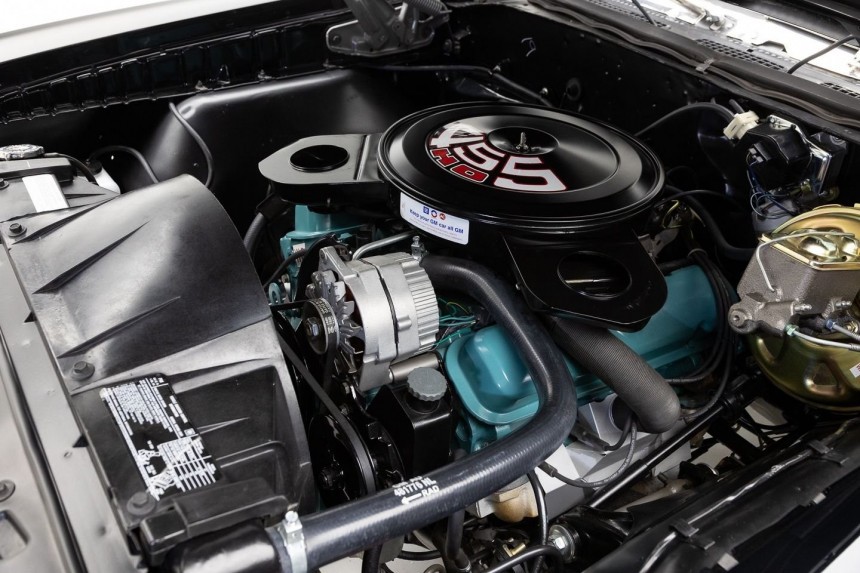
Collectors should remember that this restriction applies only to new production vehicles. Original Pontiac 455 HO engines remain completely legal in restored classic cars, museum collections, and properly registered historic vehicles throughout the United States.
The 455 HO symbolizes an era when manufacturers prioritized effortless torque and large displacement above all else.
Although its original configuration belongs to automotive history rather than modern production lines, the engine continues to be admired for its durability, distinctive sound, and outstanding performance during the final years of the classic muscle car era.
Specifications
- Engine: 7.5-liter naturally aspirated OHV V8
- Torque: 480 lb-ft
- Horsepower: 335 hp
- Length/Width: Approximately 31 inches / 28 inches
5. Oldsmobile 455 Rocket V8
The Oldsmobile 455 Rocket proved that massive displacement could deliver both luxury-car smoothness and muscle-car performance. Introduced during the late 1960s, the engine became a favorite in vehicles such as the 4-4-2 and Toronado, where its tremendous low-end torque made effortless acceleration possible.
Unlike some of its competitors that demanded high engine speeds to produce peak power, the Rocket 455 excelled by generating strong pulling power almost immediately off idle.
If General Motors attempted to certify the original Rocket 455 for installation in a newly manufactured passenger vehicle today, the process would fail because the engine was never designed around modern emissions technology.
Its carbureted fuel delivery, combustion chamber design, ignition system, and exhaust configuration cannot meet today’s stringent Environmental Protection Agency emissions standards without fundamental redesign.
Modern passenger vehicles rely on high-pressure electronic fuel injection, sophisticated engine control modules, multiple oxygen sensors, evaporative emissions systems, advanced catalytic converters, and continuous onboard diagnostics.
These technologies allow engines to maintain extremely low emissions while preserving fuel economy and drivability. The original Rocket 455 predates all of these requirements.
Fuel efficiency also presents a challenge. During the muscle car era, engineers prioritized displacement and torque over fuel consumption because regulatory requirements were far less restrictive than they are today.
Current certification standards demand cleaner exhaust emissions alongside improved efficiency.
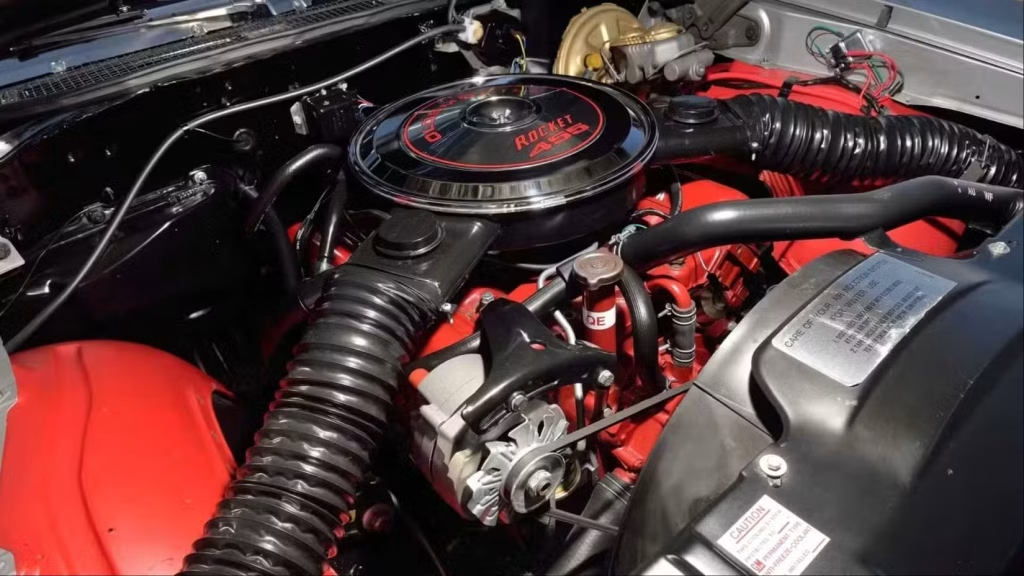
That does not diminish the Rocket 455’s historical importance. Classic Oldsmobiles equipped with the engine remain legal to own, restore, and drive under applicable registration laws.
Collectors continue valuing original examples because they represent one of the last great big-block V8 engines built before emissions regulations permanently reshaped the American automotive industry.
Specifications
- Engine: 7.5-liter naturally aspirated OHV V8
- Torque: 500 lb-ft
- Horsepower: 365 hp
- Length/Width: Approximately 31 inches / 28 inches
6. Buick 455 Stage 1 V8
Among enthusiasts, the Buick 455 Stage 1 is remembered for producing astonishing torque while maintaining the refinement expected from a Buick.
Although the company was known primarily for comfortable luxury vehicles, the Stage 1 package transformed the 455 into one of the most formidable muscle car engines of its era. Peak torque arrived at relatively low engine speeds, allowing effortless acceleration that rivaled many dedicated performance cars.
Despite those achievements, the original Stage 1 engine could never satisfy today’s federal certification standards for a newly manufactured passenger vehicle. The engine relied on carburetion, mechanical tuning, and combustion technology developed decades before current emissions regulations took effect.
Modern engines must control fuel delivery with extraordinary precision while continuously monitoring emissions performance throughout their operating life.
Federal requirements also demand sophisticated onboard diagnostic capabilities capable of detecting emissions-related faults almost immediately. Original muscle car engines simply were not engineered with electronic control systems of that complexity.
Meeting today’s standards would require redesigned cylinder heads, electronic fuel injection, variable valve timing, revised combustion chambers, catalytic converters, evaporative emissions controls, and advanced computer management. At that point, the engine would no longer represent its original configuration.
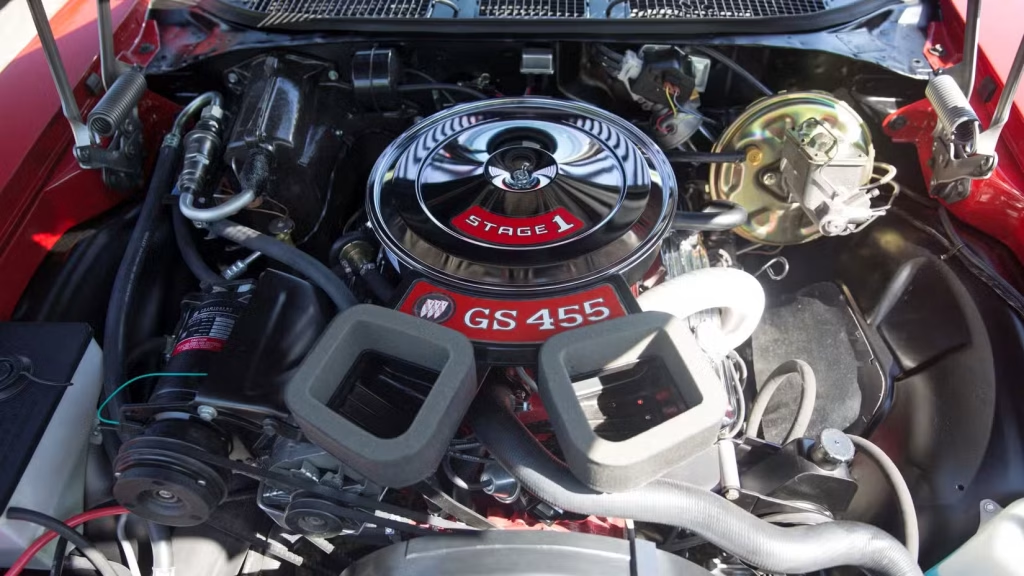
Collectors continue seeking authentic Buick Stage 1 vehicles because relatively few were produced compared with other muscle cars. Their combination of understated styling and exceptional performance has made them increasingly valuable at collector auctions.
The Stage 1 remains a symbol of Buick’s unexpected contribution to the horsepower wars. While its original emissions package belongs to another era, its remarkable torque output and smooth performance continue earning admiration from enthusiasts across the United States.
Specifications
- Engine: 7.5-liter naturally aspirated OHV V8
- Torque: 510 lb-ft
- Horsepower: 360 hp
- Length/Width: Approximately 31 inches / 28 inches
7. AMC 401 V8
The AMC 401 V8 may not receive the same attention as Chevrolet, Ford, or Chrysler big blocks, but among enthusiasts it remains one of the most respected American performance engines of the muscle car era.
Produced by American Motors Corporation, the 401-powered vehicles, such as the AMX, Javelin, Rebel Machine, and later several Jeep models. It combined a relatively compact design with impressive torque, giving AMC a legitimate competitor during the peak years of the horsepower race.
From a modern regulatory standpoint, however, the original AMC 401 could never be certified for installation in a newly manufactured street-legal passenger vehicle. The engine was engineered long before today’s EPA emissions standards, onboard diagnostic requirements, and evaporative emissions controls became mandatory.
Its carbureted fuel system and combustion technology simply cannot deliver the precise air-fuel control needed to meet current emissions limits.
Modern engines constantly monitor combustion using multiple sensors, electronic throttle control, adaptive ignition timing, oxygen sensors, catalytic converters, and advanced engine management software.
These technologies dramatically reduce hydrocarbon, nitrogen oxide, and carbon monoxide emissions while maintaining fuel efficiency. The original AMC 401 lacks these systems entirely, making certification impossible without extensive redesign.
That does not affect the legality of existing vehicles. Classic AMC muscle cars and vintage Jeep models equipped with the 401 remain legal to own, restore, and operate under applicable federal and state regulations.
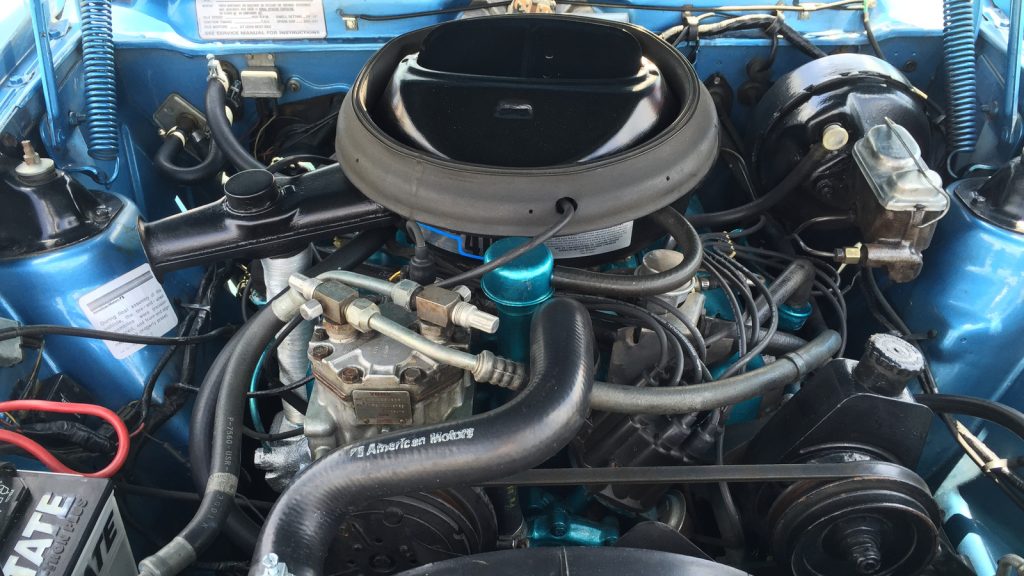
The restriction applies only to installing the engine in a newly manufactured passenger vehicle that must comply with current emissions certification.
Although American Motors disappeared decades ago, the 401 continues to represent the company’s engineering ambition. Its rarity, durability, and excellent performance have helped it become one of the most sought-after engines among collectors who appreciate overlooked classics from the golden age of American muscle.
Specifications
Engine: 6.6-liter naturally aspirated OHV V8
Torque: 430 lb-ft
Horsepower: 330 hp
Length/Width: Approximately 30 inches / 28 inches
8. Chevrolet 350 Small Block (Carbureted Specification)
Few engines have influenced American automotive history more than the Chevrolet 350 small block. Introduced in 1967, it became one of the most successful V8 engines ever produced, powering millions of Chevrolet cars, pickup trucks, SUVs, boats, and performance vehicles over several decades.
Its affordability, reliability, compact dimensions, and outstanding aftermarket support made it the benchmark for American V8 design.
The important distinction, however, is that this article refers specifically to the original carbureted production version of the 350.
While later fuel-injected variants evolved significantly and complied with progressively stricter emissions standards, the classic carbureted configuration could never satisfy today’s certification requirements for installation in a newly manufactured passenger vehicle.
Current EPA regulations require precise electronic fuel control, advanced catalytic converters, onboard diagnostics, evaporative emissions management, continuous emissions monitoring, and sophisticated computer-controlled ignition systems.
The original carbureted 350 was engineered during a period when those technologies either did not exist or were only beginning to appear. As a result, its emissions output would exceed modern certification limits without comprehensive redesign.
This does not mean the famous small block has disappeared. Chevrolet Performance continues producing modern crate engines based on the small-block architecture, many featuring electronic fuel injection and emissions-compliant technology for approved applications.
Meanwhile, millions of classic vehicles equipped with original carbureted 350 engines remain legally registered and driven throughout the United States.
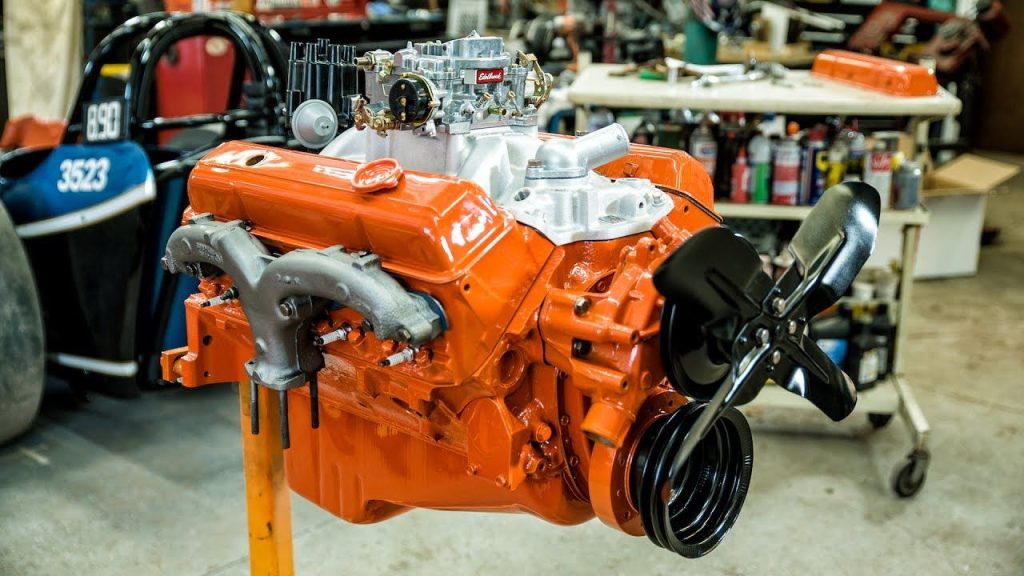
The Chevrolet 350’s legacy extends far beyond horsepower figures. Its remarkable longevity, versatility, and influence on performance engineering have secured its place as one of the greatest V8 engines ever built.
Although its original carbureted form belongs to another era, it continues to power countless restorations, collector vehicles, and racing projects across America.
Specifications
- Engine: 5.7-liter naturally aspirated OHV V8
- Torque: 380 lb-ft
- Horsepower: 300 hp
- Length/Width: Approximately 28 inches / 26 inches
Also Read: 8 Warning Signs Mean Your Car Has Under a Year Left
