
The 1990s were a golden decade for automotive extremism. Engineers chased a single, almost mythical number: 200 miles per hour. Turbochargers grew bigger, carbon fiber replaced steel, and V12 engines screamed past 8,000 rpm in pursuit of bragging rights.
Unlike today’s hypercars, these machines had no electronic nannies, no launch control, and no active aerodynamics to hold them steady. Drivers relied on raw skill and nerve to keep four wheels pointed straight at nearly four times the legal highway limit. Some of these speed runs were sanctioned and independently timed.
Others were company claims later confirmed by journalists on closed test tracks like Nardò or Ehra-Lessien. Either way, each of these eight cars proved that a road-legal, buyer-purchasable vehicle could outrun contemporary race cars. This list covers verified 200-mph production cars built and tested before the year 2000.
Each entry includes real specifications: engine architecture, horsepower, torque, and physical dimensions. These weren’t concept cars or one-off prototypes hidden in a lab. They were sold to customers, registered for the road, and driven at speeds that still humble modern supercars.
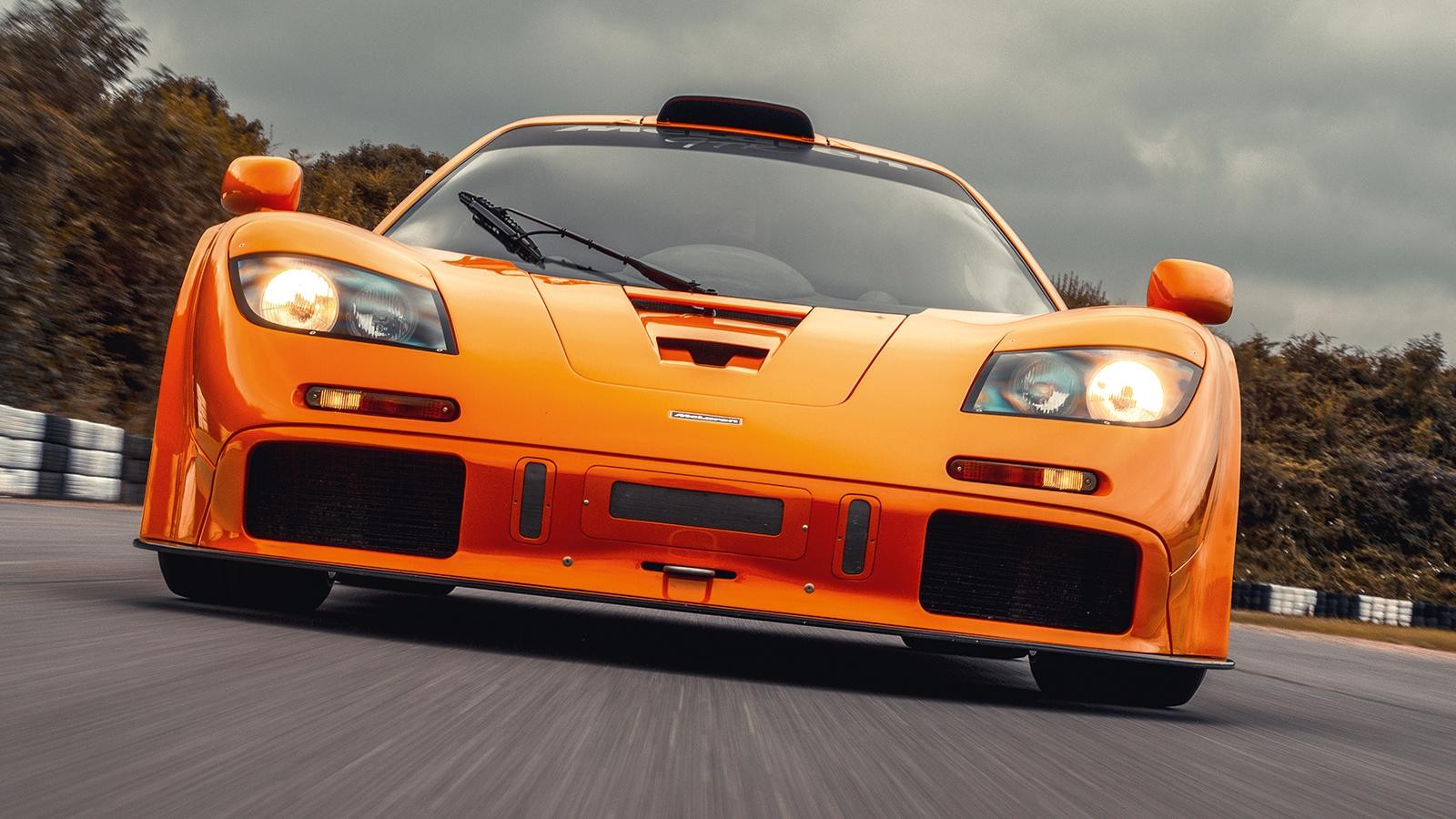
1. McLaren F1
The McLaren F1 remains the fastest naturally aspirated production car ever built. In March 1998, at Volkswagen’s Ehra-Lessien test track in Germany, it hit 240.1 mph. That run was conducted with the rev limiter removed, and it still stands as the record for an unassisted, non-turbocharged production car.
Gordon Murray designed the F1 with a central driving position, flanked by two passenger seats. At its heart sat a BMW-built S70/2 engine, a 6.1-liter naturally aspirated V12.
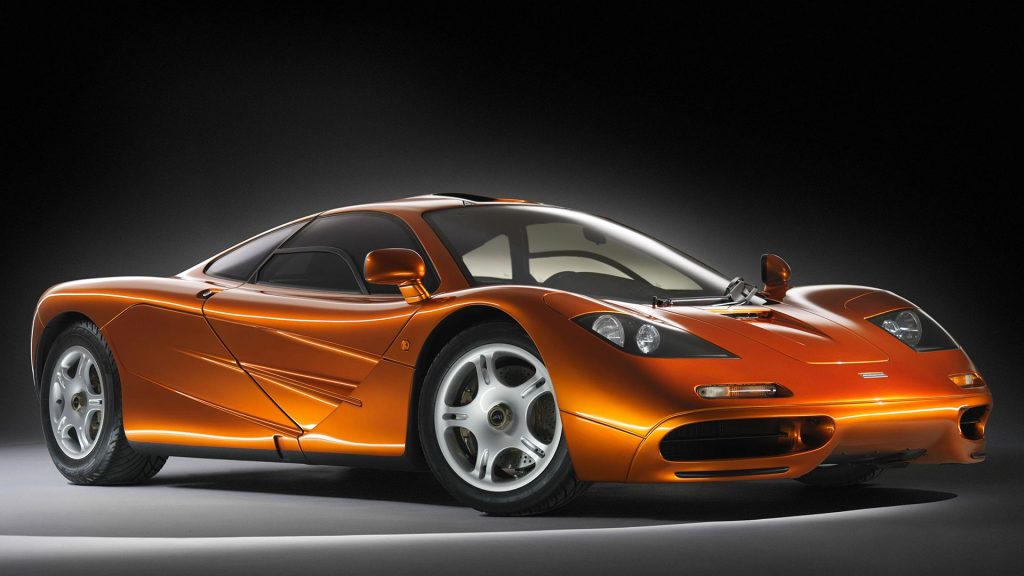
This engine produced 627 horsepower at 7,400 rpm, an astonishing figure for 1992 without forced induction. Torque peaked at 480 lb-ft (651 Nm) at 4,000 rpm, delivered through a six-speed manual gearbox.
The engine bay itself was lined with gold foil, chosen for its heat-reflective properties rather than luxury appeal. Murray insisted on lightweight construction throughout the entire chassis.
The F1’s monocoque was built from carbon fiber composite, a material rarely used in road cars at the time. Total curb weight came in around 2,509 pounds (1,138 kg), remarkably light for a car with this much power.
That power-to-weight ratio is what allowed it to outrun purpose-built race cars of its era. Only 106 units were produced between 1992 and 1998, with 64 built as full road cars. Each one carried a price tag exceeding £540,000, positioning it among the most expensive cars of its time.
Specifications:
- Engine: 6.1L naturally aspirated BMW S70/2 V12
- Horsepower: 627 hp @ 7,400 rpm
- Torque: 480 lb-ft (651 Nm) @ 4,000 rpm
- Length: 4,287 mm (168.7 in)
- Width: 1,820 mm (71.7 in)
2. Lamborghini Diablo SE30/6.0 VT
The Lamborghini Diablo carried the raging-bull torch into the 1990s with pure V12 theater. Later variants like the SE30 Jota and Diablo 6.0 VT pushed verified top speeds past 205 mph.
Marcello Gandini’s original wedge-shaped design was softened slightly by Chrysler-era engineers, but the aggression remained. Pop-up headlights and scissor doors made it an instant poster car for a generation.
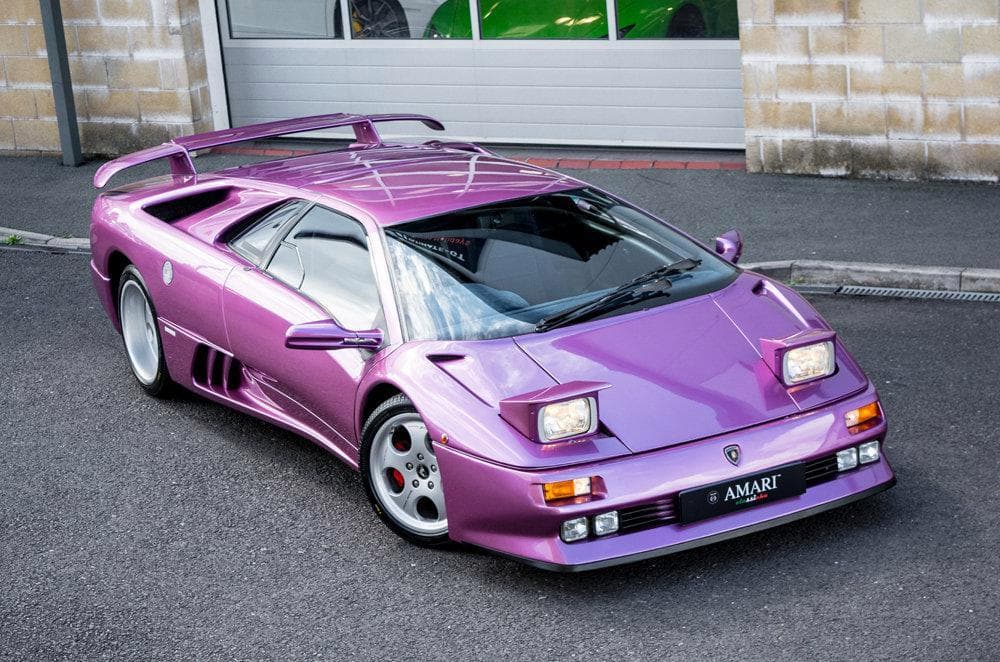
Under the rear glass sat a 5.7-liter (later 6.0-liter) naturally aspirated V12 engine. Output climbed over the Diablo’s production run, eventually reaching 575 horsepower in the 6.0 VT. Torque measured around 456 lb-ft (620 Nm), sent through either rear-wheel or all-wheel drive depending on trim.
The SE30 Jota variant, built for track-focused buyers, shed weight and added even sharper throttle response. Lamborghini built the Diablo on a steel spaceframe chassis with composite body panels.
This kept weight manageable at roughly 3,500 pounds (1,587 kg) despite the car’s substantial size. The engine’s exotic intake trumpets and dry-sump lubrication system reflected genuine racing-derived engineering.
Few road cars of the era sounded as ferocious at 7,000 rpm. Dimensionally, the Diablo stretched 4,460 mm (175.6 inches) in length, longer than the McLaren F1.
Its width measured 2,040 mm (80.3 inches), among the widest production cars of the decade. That width gave it a planted, aggressive stance that matched its performance credentials. Production ran from 1990 through 2001, spanning multiple engine and drivetrain updates.
Specifications:
- Engine: 6.0L naturally aspirated V12
- Horsepower: 575 hp @ 7,100 rpm
- Torque: 456 lb-ft (620 Nm) @ 5,200 rpm
- Length: 4,460 mm (175.6 in)
- Width: 2,040 mm (80.3 in)
3. Bugatti EB110 Super Sport
The Bugatti EB110 Super Sport marked the French-Italian marque’s dramatic 1990s revival. Independently verified, it reached 216 mph, making it one of the fastest cars of its era. Romano Artioli resurrected the Bugatti name in 1991, building a factory in Campogalliano, Italy.
The EB110 combined Italian styling with genuinely radical engineering underneath its aluminum and carbon fiber body. Its 3.5-liter V12 engine used four turbochargers, an unusual configuration even by supercar standards.
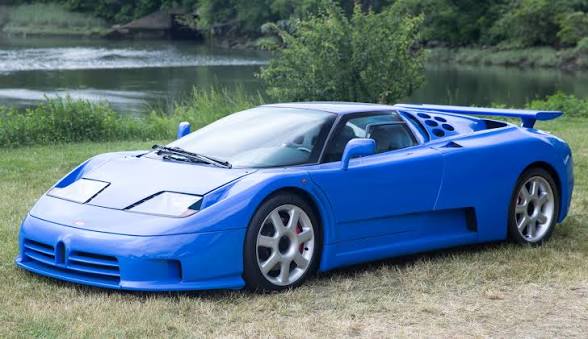
This quad-turbo setup helped the Super Sport variant produce 603 horsepower at 8,000 rpm. Torque reached 480 lb-ft (651 Nm), delivered through a permanent all-wheel-drive system for maximum traction.
The engine also featured five valves per cylinder, a highly unusual arrangement for a production road car. Bugatti built the EB110’s monocoque entirely from carbon fiber, one of the first road cars to do so.
This construction technique came directly from Formula One and endurance racing programs of the period. Curb weight for the Super Sport dropped to around 2,822 pounds (1,280 kg) through aggressive lightweighting.
That combination of power and lightness explains its exceptional acceleration for the era. The EB110 measured 4,400 mm (173.2 inches) in length, compact by supercar standards.
Width came in at 1,940 mm (76.4 inches), wide enough to house its all-wheel-drive hardware. Only 139 EB110s were built before the company collapsed financially in 1995.
Specifications:
- Engine: 3.5L quad-turbocharged V12
- Horsepower: 603 hp @ 8,000 rpm
- Torque: 480 lb-ft (651 Nm) @ 4,200 rpm
- Length: 4,400 mm (173.2 in)
- Width: 1,940 mm (76.4 in)
4. Jaguar XJ220
The Jaguar XJ220 briefly held the title of world’s fastest production car in 1992. Independent testing at Nardò confirmed a top speed of 212.3 mph.
Jaguar originally showed a V12, all-wheel-drive concept in 1988 to rapturous public reaction. The production version switched to a twin-turbo V6 and rear-wheel drive, disappointing some early buyers. That change sparked controversy, but the performance figures silenced most critics quickly.
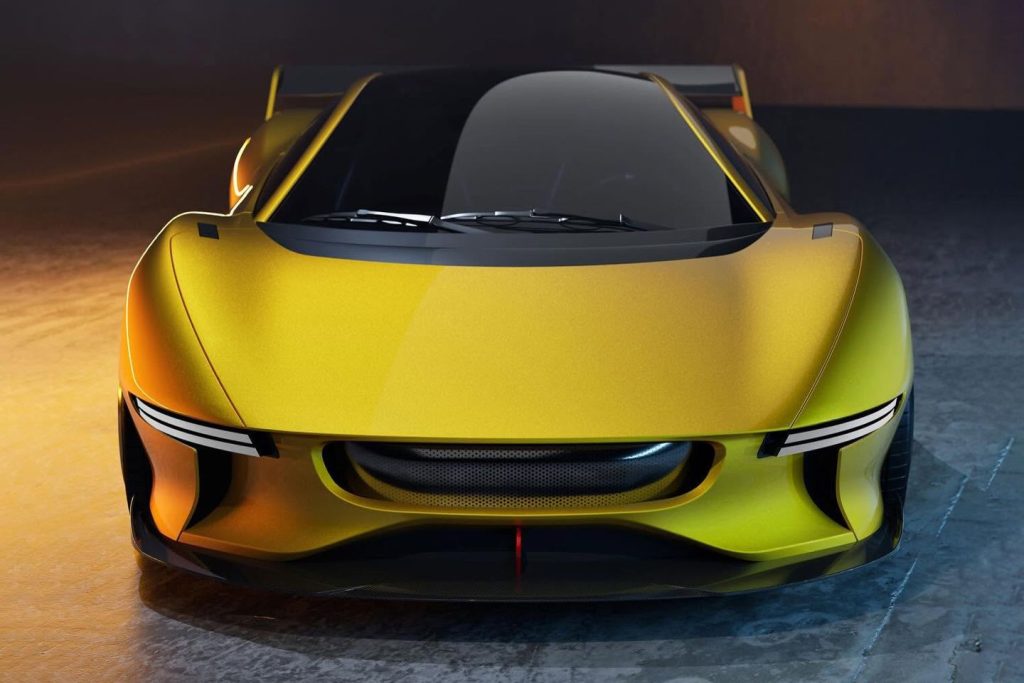
Under the long hood sat a 3.5-liter twin-turbocharged V6, derived from Jaguar’s Group C racing program. It produced 542 horsepower at 6,500 rpm, exceptional output for a six-cylinder engine at the time.
Torque measured 475 lb-ft (644 Nm), arriving early in the rev range for strong mid-range pull. Aluminum honeycomb construction kept the XJ220’s structure light despite its enormous footprint.
Curb weight settled around 3,197 pounds (1,450 kg), reasonable given the car’s size and turbo hardware. The XJ220’s aerodynamic underbody used ground-effect principles borrowed directly from racing prototypes.
This helped generate genuine downforce without large, drag-inducing wings. Length stretched to an enormous 4,930 mm (194.1 inches), among the longest cars on this list.
Width measured 2,000 mm (78.7 inches), giving it a dramatically low and wide stance. Jaguar built 275 examples between 1992 and 1994 at a dedicated facility in Bloxham, England.
Specifications:
- Engine: 3.5L twin-turbocharged V6
- Horsepower: 542 hp @ 6,500 rpm
- Torque: 475 lb-ft (644 Nm) @ 4,500 rpm
- Length: 4,930 mm (194.1 in)
- Width: 2,000 mm (78.7 in)
Also Read: 7 Reasons a Factory Immobilizer Does Not Stop a Relay
5. Ferrari F50
The Ferrari F50 arrived in 1995 as a road-legal tribute to Formula One engineering. Ferrari claimed a top speed of 202 mph, achieved through an engine borrowed almost directly from racing. Unlike typical supercars, the F50 used its engine as a structural, load-bearing chassis member.
This approach mirrored exactly how Ferrari’s contemporary Formula One cars were constructed. The heart of the F50 was a 4.7-liter naturally aspirated V12, derived from the 1990 Ferrari 641 F1 engine
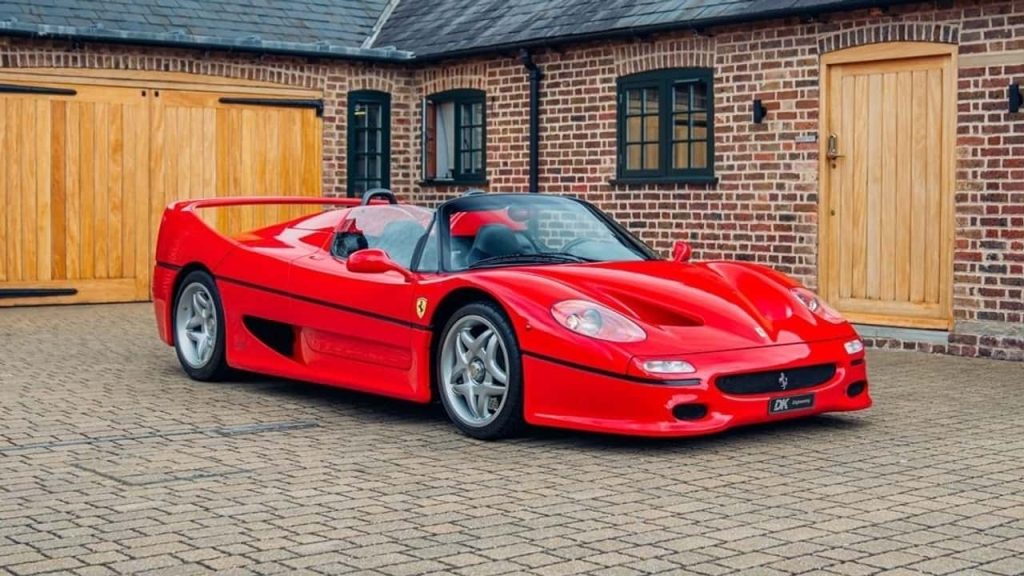
It screamed to 8,500 rpm and produced 513 horsepower, remarkable for an engine without forced induction. Torque reached 347 lb-ft (471 Nm), delivered through a six-speed manual gearbox with no synchromesh assistance for downshifts.
Every gear change demanded precise driver technique, much like an actual racing car. Ferrari mounted the engine solidly to the carbon fiber tub, eliminating rubber isolators entirely.
This transmitted every vibration and sound directly into the cabin for an unfiltered driving experience. Curb weight came in at 2,712 pounds (1,230 kg), aided heavily by extensive carbon fiber body panels.
Suspension arms and control components were machined from aerospace-grade materials for minimal unsprung weight. The F50 measured 4,480 mm (176.4 inches) in length.
Width stood at 1,986 mm (78.2 inches), giving it a wide, muscular stance. Just 349 units were built between 1995 and 1997, each sold with a removable hardtop.
Specifications:
- Engine: 4.7L naturally aspirated V12
- Horsepower: 513 hp @ 8,000 rpm
- Torque: 347 lb-ft (471 Nm) @ 6,500 rpm
- Length: 4,480 mm (176.4 in)
- Width: 1,986 mm (78.2 in)
6. Ruf CTR “Yellowbird”
The Ruf CTR, nicknamed Yellowbird after its factory paint color, redefined what a tuned Porsche could achieve. In 1987, Road & Track magazine independently clocked it at 211 mph, a figure that shocked the industry. Alois Ruf built the CTR using a heavily modified Porsche 911 shell as his starting point.
German authorities classified Ruf as an independent manufacturer, not merely a tuner, due to the extent of modifications. Power came from a 3.4-liter twin-turbocharged flat-six, extensively reworked from Porsche’s original architecture.
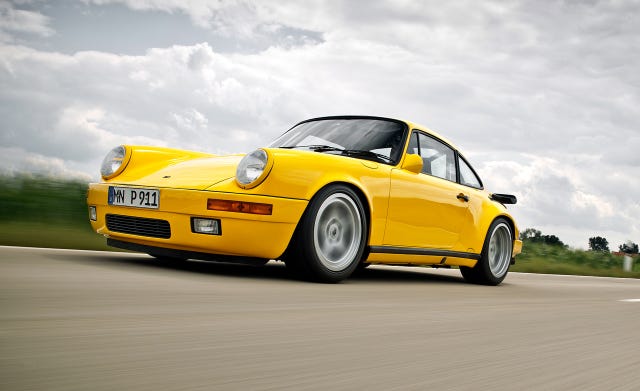
Output reached 463 horsepower at 6,100 rpm, exceptional for a car weighing barely over a ton. Torque measured 408 lb-ft (553 Nm), delivered through a five-speed manual gearbox of Ruf’s own design.
The lightweight body used thin-gauge steel and aluminum panels to minimize mass. Curb weight dropped to just 2,491 pounds (1,130 kg), giving it a phenomenal power-to-weight ratio.
That lightness, combined with a lag-heavy turbo delivery, made the CTR notoriously demanding to drive fast. Its infamous magazine test run became one of the most replayed pieces of automotive footage ever recorded.
The car’s twitchy rear-engine handling at triple-digit speeds terrified even experienced test drivers. Length measured 4,291 mm (168.9 inches), based closely on the standard 911 platform.
Width came in at 1,650 mm (65 inches), notably narrower than the purpose-built supercars on this list. Ruf built only 29 examples of the original CTR between 1987 and 1989.
Specifications:
- Engine: 3.4L twin-turbocharged flat-six
- Horsepower: 463 hp @ 6,100 rpm
- Torque: 408 lb-ft (553 Nm) @ 4,800 rpm
- Length: 4,291 mm (168.9 in)
- Width: 1,650 mm (65 in)
7. Vector W8 Twin Turbo
The Vector W8 represented America’s boldest attempt to challenge European supercar dominance. Independent testing recorded speeds exceeding 200 mph, positioning it among the era’s true speed kings.
Founder Gerald Wiegert designed the W8 with an aircraft-inspired philosophy, using aerospace materials throughout. The car’s angular, futuristic bodywork looked unlike anything else on American roads in the late 1980s. Power came from a twin-turbocharged 6.0-liter V8, based on a Rodeck racing block.
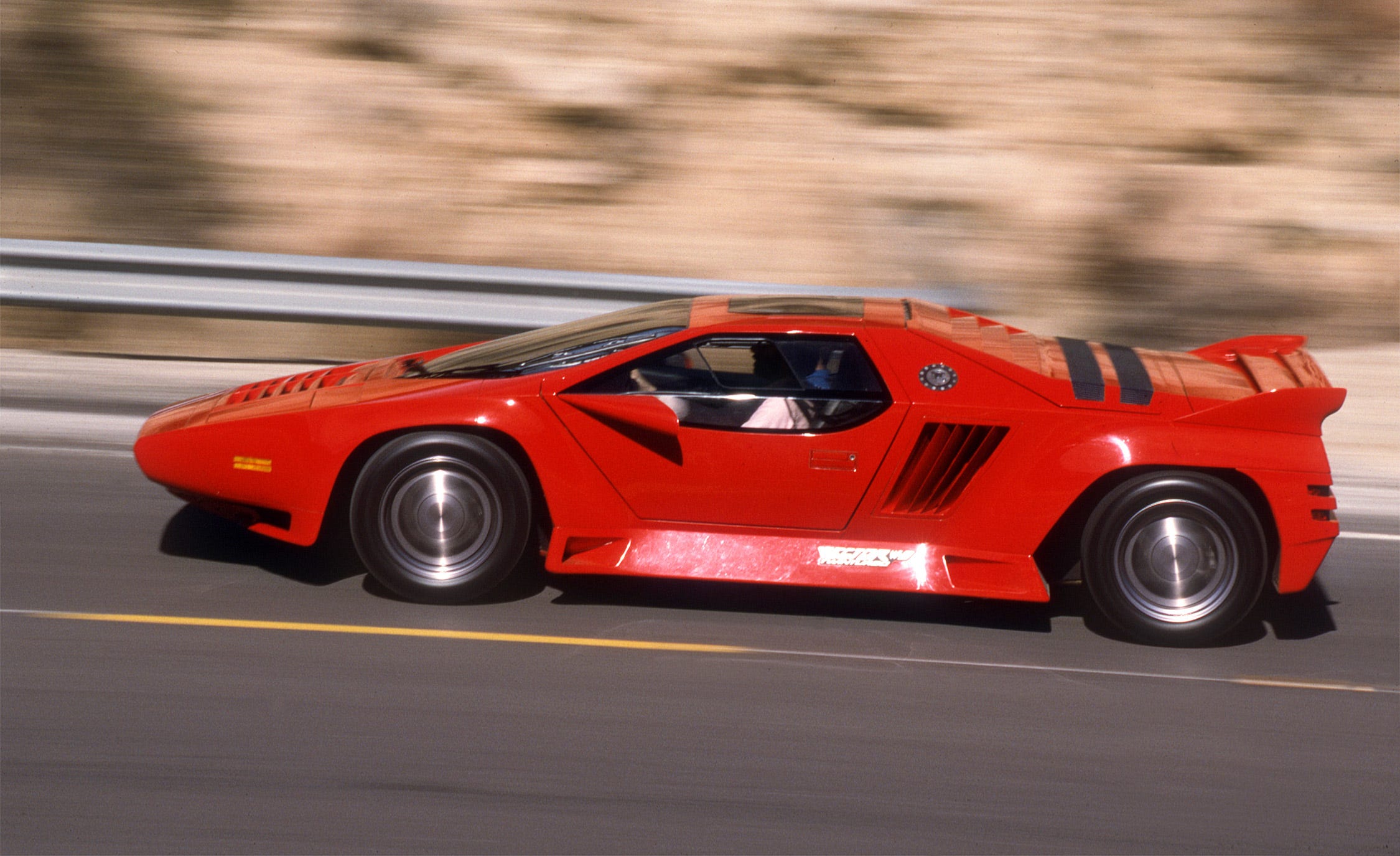
This engine produced 625 horsepower at 5,700 rpm, figures that rivaled contemporary Italian exotics. Torque reached an enormous 630 lb-ft (854 Nm), among the highest figures of any car on this list.
Power routed through a three-speed automatic transmission, an unusual choice for a supercar of this caliber. Vector built the W8’s chassis from aircraft-grade aluminum honeycomb and carbon fiber composite panels.
This construction technique came directly from Wiegert’s background in aerospace engineering. Curb weight settled around 3,662 pounds (1,661 kg), heavier than most European rivals due to its robust construction.
Despite the added mass, the massive torque output ensured explosive acceleration from a standstill. The W8 measured 4,470 mm (176 inches) in length.
Width stood at 1,880 mm (74 inches), giving it a wide, low-slung profile. Vector produced only 17 examples of the W8 between 1989 and 1993 before financial troubles ended the run.
Specifications:
- Engine: 6.0L twin-turbocharged V8
- Horsepower: 625 hp @ 5,700 rpm
- Torque: 630 lb-ft (854 Nm) @ 4,900 rpm
- Length: 4,470 mm (176 in)
- Width: 1,880 mm (74 in)
8. Dauer 962 Le Mans
The Dauer 962 Le Mans stands as one of the most extreme cars ever legally registered for public roads. Verified testing placed its top speed near 251 mph, though realistic road-use figures hovered closer to 220 mph.
Jochen Dauer built this car by converting genuine Porsche 962 Group C endurance racers into street-legal machines. German type-approval regulations of the era were surprisingly lenient, allowing this remarkable loophole to exist. The car retained its racing-spec 3.0-liter twin-turbocharged flat-six engine almost entirely unmodified.
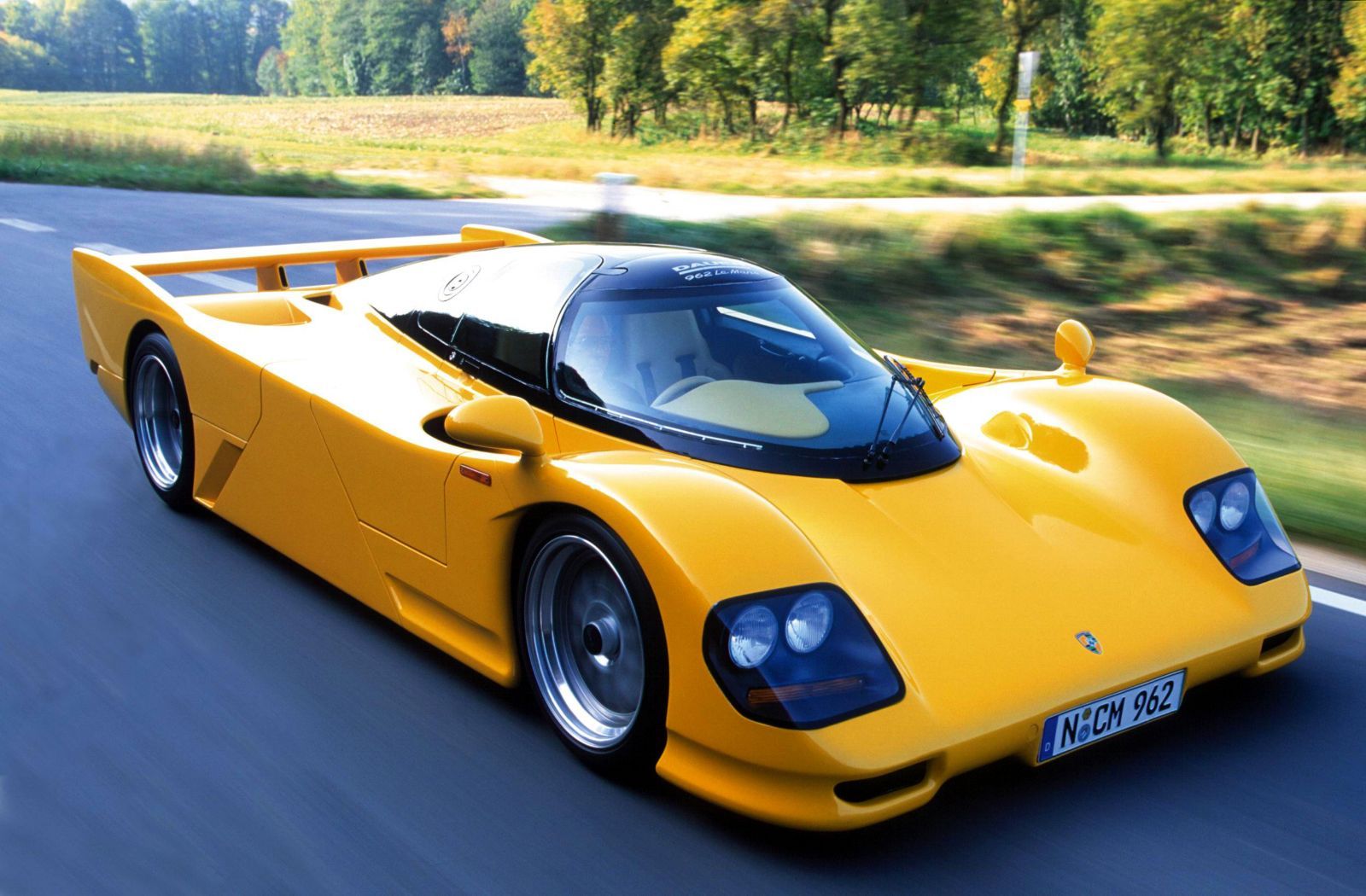
Output reached approximately 730 horsepower, figures that dwarfed every other car on this list. Torque measured around 500 lb-ft (678 Nm), delivered through a five-speed manual sequential-style gearbox.
Ground-effect aerodynamics and a full carbon fiber monocoque came straight from Le Mans racing regulations. Dauer added minimal road-going equipment, including basic soundproofing and a slightly upgraded interior.
Curb weight remained astonishingly low at around 1,918 pounds (870 kg), close to actual racing specification. This combination of racing power and minimal weight created performance figures that remain staggering decades later.
A Dauer 962 famously won the 1994 24 Hours of Le Mans outright, exploiting its street-legal GT classification. Length measured 4,790 mm (188.6 inches), dictated entirely by its Group C racing origins.
Width came in at 1,994 mm (78.5 inches), optimized purely for aerodynamic efficiency. Dauer built roughly a dozen street-legal 962 conversions during the mid-1990s, each essentially a race car with license plates.
Specifications:
- Engine: 3.0L twin-turbocharged flat-six
- Horsepower: 730 hp @ 7,800 rpm
- Torque: 500 lb-ft (678 Nm) @ 5,500 rpm
- Length: 4,790 mm (188.6 in)
- Width: 1,994 mm (78.5 in)
Also Read: 8 EVs With Range Held Back by Software
