
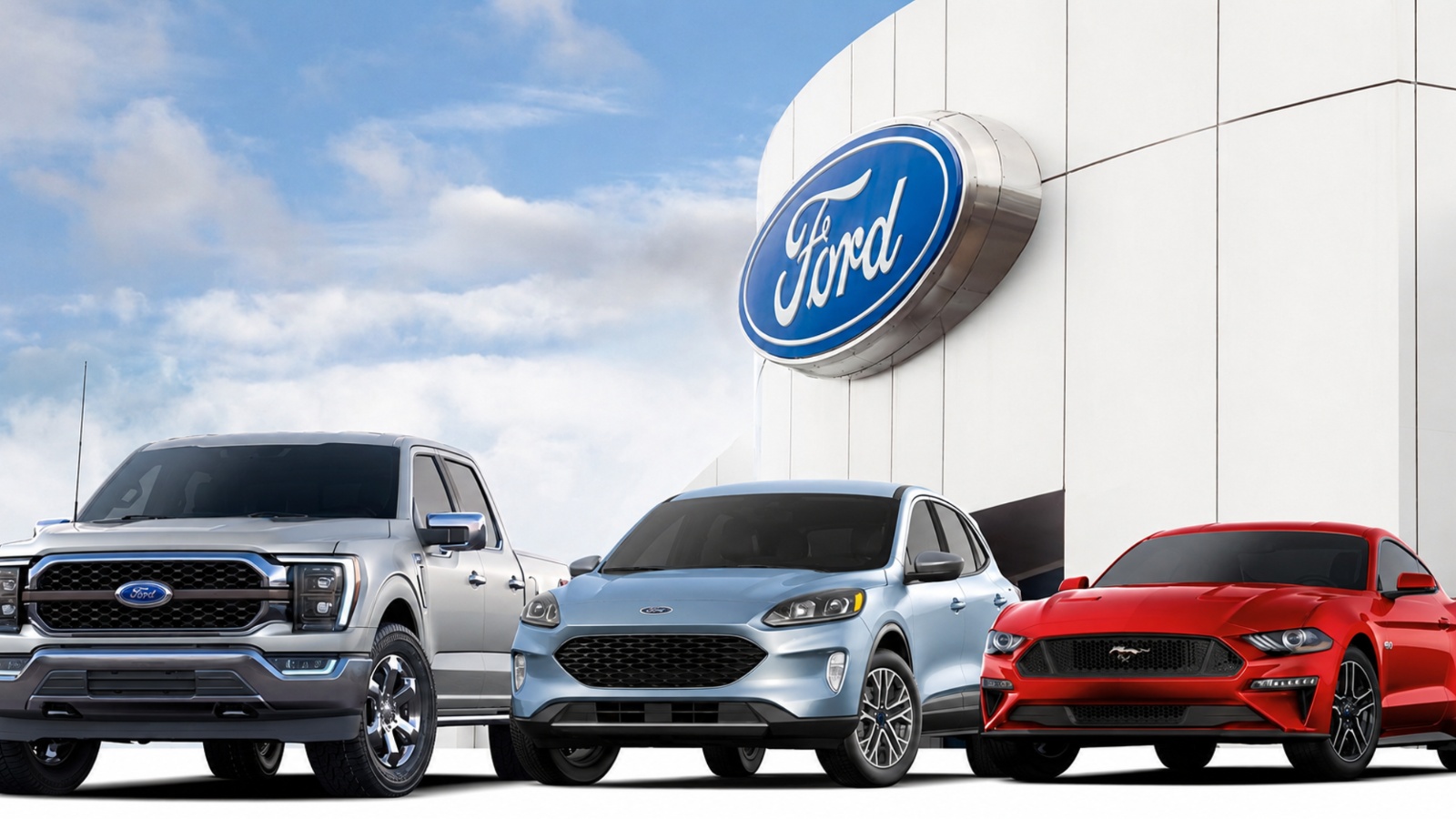
For much of the last decade, Ford found itself battling an issue that had little to do with horsepower, towing capacity, or sales figures.
Despite producing some of America’s best-selling vehicles, including the F-Series pickup and a growing lineup of SUVs and electric vehicles, the company struggled to convince buyers that its products were as dependable as those from long-established reliability leaders.
Frequent recalls, warranty costs, software glitches, and inconsistent build quality repeatedly overshadowed Ford’s engineering achievements, prompting CEO Jim Farley to make quality improvement one of the company’s highest priorities.
That effort now appears to be producing measurable results. According to Consumer Reports’ 2026 Auto Reliability Survey, Ford climbed to 11th place among all automotive brands, its highest reliability ranking in 15 years.
Consumer Reports specifically highlighted improvements in the Ford F-150, F-150 Hybrid, and F-150 Lightning, all of which improved from below-average to average predicted reliability, helping lift the brand’s full standing.
The improvement is significant because Consumer Reports remains one of the most influential sources of vehicle reliability data in North America.
Unlike initial quality studies that evaluate vehicles during their first few months of ownership, Consumer Reports bases its reliability predictions on extensive owner surveys covering approximately 380,000 vehicles across multiple model years and up to 20 different problem areas, ranging from engines and transmissions to electronics and climate-control systems.
While Ford has not yet reached the level of Toyota, Subaru, or Lexus in full reliability, its latest ranking suggests that years of engineering changes, manufacturing improvements, and quality-control initiatives are beginning to deliver tangible results.
Also Read: 10 Longest Cars Ever Sold in America
Years of Quality Problems Forced Ford to Change Its Approach
Ford’s climb to 11th becomes even more impressive when viewed against its recent history. During the late 2010s and early 2020s, Ford faced mounting criticism over vehicle quality.
The company issued numerous recalls involving powertrains, rearview cameras, transmission components, fuel systems, and electrical equipment. Warranty expenses climbed sharply, costing Ford billions of dollars while damaging consumer confidence.
Industry analysts frequently noted that many of Ford’s vehicles offered competitive performance and technology but lagged rivals in long-term dependability.
Chief Executive Officer Jim Farley openly acknowledged these shortcomings after taking over leadership of the company. Rather than treating recalls as isolated incidents, Ford began restructuring how engineering, manufacturing, purchasing, and supplier teams worked together.

According to Ford, the company broke down internal organizational “silos” that previously allowed individual departments to fix immediate problems without fully addressing their root causes.
Cross-functional engineering teams were established to improve communication between design engineers, assembly plants, quality specialists, and suppliers before vehicles reached customers.
Manufacturing quality also became a greater priority during vehicle development. Ford increased durability testing, strengthened supplier oversight, and invested more heavily in identifying defects before production began.
The company also expanded software validation procedures as vehicles became increasingly dependent on digital systems, driver-assistance technologies, and over-the-air updates.
These initiatives required several years before producing measurable improvements because reliability rankings depend on owner experiences accumulated over time rather than immediate engineering changes. Consumer Reports’ latest survey suggests those efforts are finally beginning to pay off.
The publication highlighted significant gains across Ford’s flagship pickup lineup, particularly the F-150 family. The gasoline-powered F-150, the F-150 Hybrid, and the all-electric F-150 Lightning all improved from below-average reliability to average predicted reliability.
Because pickup trucks represent one of Ford’s highest-volume product lines, improvements in these models had an outsized impact on the brand’s full score.
Consumer Reports also noted that Ford’s full new-car reliability is now above average, although performance still varies across individual models. The publication continues recommending buyers evaluate specific vehicles rather than relying solely on brand-wide rankings.
Why Consumer Reports’ Rankings Matter to Buyers
Unlike many automotive rankings that focus primarily on performance, Consumer Reports emphasizes long-term ownership experience.
Every year, the nonprofit organization surveys hundreds of thousands of vehicle owners about problems encountered during the previous 12 months.
These issues are grouped into approximately 20 categories, including engine performance, transmission operation, electrical accessories, climate systems, suspension, steering, brakes, fuel systems, body hardware, paint quality, infotainment, and advanced driver-assistance systems.
The organization combines this owner-reported reliability data with its own road tests, owner satisfaction surveys, and safety evaluations to produce both brand rankings and predicted reliability scores for individual models.
Because the data reflects real ownership experiences rather than laboratory testing alone, the rankings carry considerable weight among consumers shopping for new vehicles.
For Ford, improving its Consumer Reports standing carries practical business benefits. Vehicle reliability directly influences resale values, warranty expenses, customer loyalty, and fleet purchasing decisions.
Consumers considering expensive purchases such as pickup trucks often plan to keep their vehicles for many years, making reliability one of the most important factors influencing buying decisions.
The latest rankings also provide validation for Ford’s internal quality initiatives. Josh Halliburton, Ford’s Executive Director of Quality, said the improved Consumer Reports performance demonstrates that the company’s quality improvements are moving in the right direction while emphasizing that additional work remains.
Consumer Reports’ recognition extended beyond reliability alone. The publication also selected the Ford F-150 as one of its 2026 Top Picks, citing improvements in reliability alongside its strong powertrain options, comfortable cabin, towing capability, and practical innovations such as its multifunction tailgate and advanced trailer-assistance technology.
It marked the first time since 2019 that a full-size pickup earned a Consumer Reports Top Pick designation.
Challenges Still Remain Despite Ford’s Progress
Although Ford’s reliability improvement represents a major milestone, the company is far from finished.
Consumer Reports’ latest rankings still place several competitors ahead of Ford. Toyota reclaimed the top position for reliability, narrowly ahead of Subaru, while brands including Lexus, Honda, BMW, Hyundai, and Acura also ranked higher.
Ford also continues facing significant recall challenges. According to Reuters, Ford led the U.S. auto industry in recalls during 2026 despite improving initial quality. Many of those recalls involved older vehicle programs rather than newly launched products, but they nevertheless illustrate the long-term consequences of earlier quality issues.
Federal regulators have also continued monitoring Ford’s recall processes following previous investigations into delayed safety campaigns. Software complexity presents another ongoing challenge.
Modern vehicles contain dozens of electronic control modules, advanced driver-assistance systems, wireless connectivity features, digital instrument clusters, and increasingly sophisticated infotainment systems.
Consumer Reports has repeatedly noted that software-related issues now represent one of the fastest-growing categories of owner complaints across the automotive industry, regardless of manufacturer. Ford’s rapid expansion into electric vehicles also creates additional reliability challenges.
The Mustang Mach-E and F-150 Lightning introduce entirely new battery systems, charging hardware, power electronics, and software architectures that require years of real-world experience before long-term durability can be fully understood.
Encouragingly for Ford, Consumer Reports observed measurable improvements in the Lightning’s predicted reliability compared with previous evaluations.
For consumers, the latest rankings suggest Ford is becoming a stronger choice than it has been in many years. Buyers considering models such as the F-150, Maverick, Escape Hybrid, Bronco Sport, and Mustang Mach-E now have independent evidence that the company’s quality initiatives are beginning to translate into improved ownership experiences.
Consumer Reports specifically identifies several of these models as standouts within Ford’s current lineup.
Ford’s climb to 11th place may not yet place it among the industry’s reliability elite, but it represents a meaningful turnaround for a manufacturer that has spent years confronting quality concerns.
More importantly, the improvement reflects sustained engineering and manufacturing changes rather than short-term gains from a single successful model.
If Ford can maintain this momentum while continuing to reduce recalls, improve software quality, and strengthen consistency across its expanding lineup of trucks, SUVs, hybrids, and electric vehicles, it could move even closer to the industry’s traditional reliability leaders in the years ahead.
For now, Consumer Reports’ latest findings provide one of the clearest indications yet that Ford’s long-running quality transformation is beginning to deliver the results both the company and its customers have been waiting for.
Also Read: 10 Free Service Offers That Legally Bind You to the Dealer
