
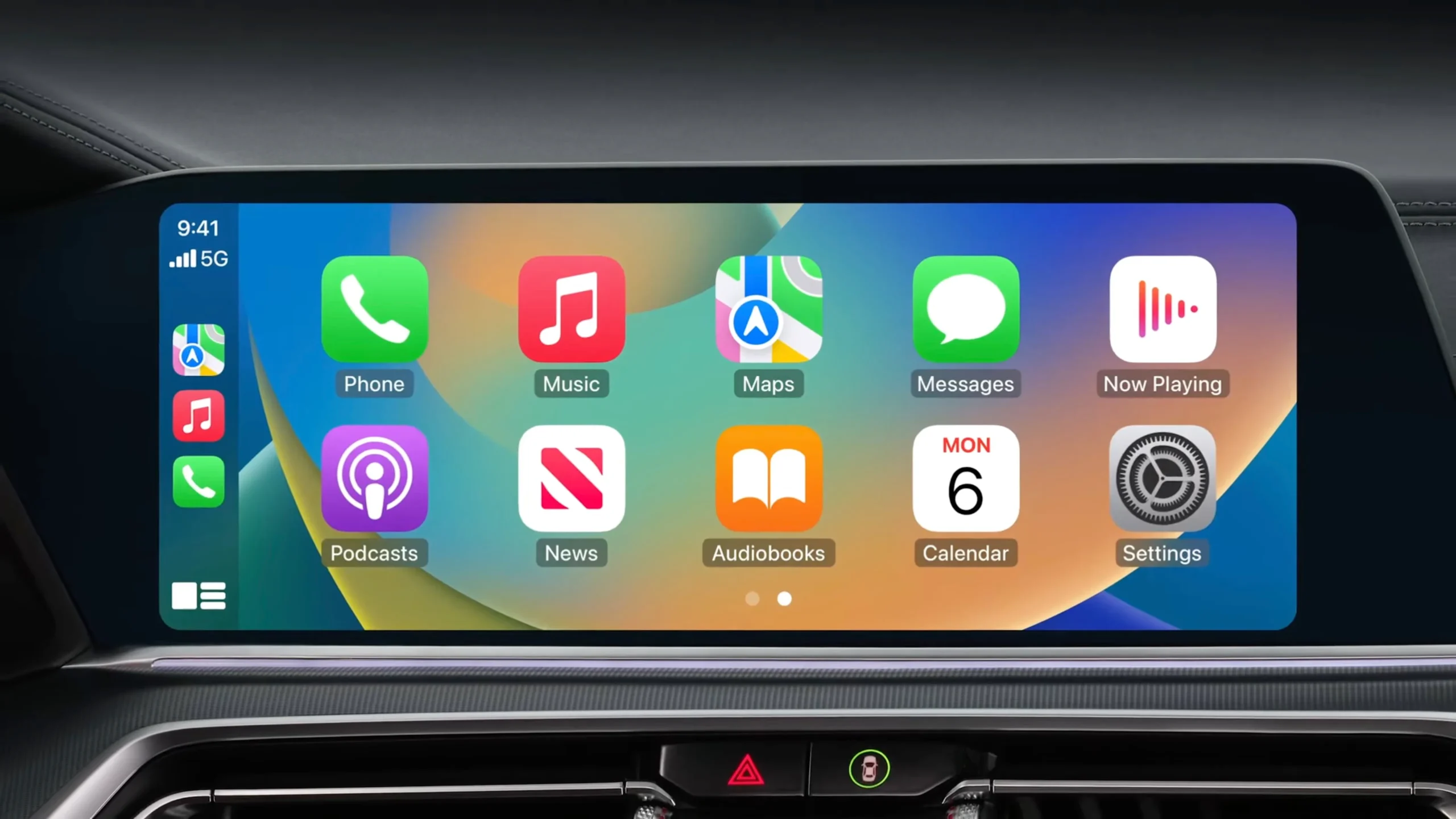
For decades, automakers invested enormous amounts of money in developing increasingly sophisticated infotainment systems. Manufacturers viewed these systems as an opportunity to differentiate themselves from competitors, create brand loyalty, and showcase technological innovation.
Every new generation promised faster processors, sharper graphics, more features, and improved user experiences. Then Apple CarPlay arrived.
What was initially viewed as a useful smartphone integration tool has gradually transformed into something much larger. Today, CarPlay has become so widespread and so capable that it has fundamentally changed how drivers interact with their vehicles.
For millions of people, the factory infotainment system no longer serves as the primary interface. It simply acts as a screen that displays Apple’s software. The result is a surprising reality for the automotive industry.
Many modern infotainment systems have become largely irrelevant the moment a driver plugs in an iPhone or connects wirelessly. Regardless of whether the vehicle costs $25,000 or $100,000, drivers often bypass the manufacturer’s carefully designed interface within seconds of starting the engine.
This shift raises an uncomfortable question for automakers: if nearly everyone uses CarPlay, why spend billions creating infotainment systems that few people actually want to use?
Also Read: Top 10 Hybrid SUVs With Best Fuel Economy
Drivers Immediately Abandon Factory Software
The strongest evidence of CarPlay’s dominance is what happens every time someone gets into a vehicle.
Many drivers do not spend time exploring the manufacturer’s menus, trying proprietary applications, or learning unique interface layouts. Instead, they connect their phone and switch directly to CarPlay.
The transition often happens automatically. Within moments, the vehicle’s native software disappears behind Apple’s familiar interface. Navigation becomes Apple Maps, Google Maps, or Waze.
Music comes from Spotify, Apple Music, or YouTube Music. Messaging, calls, and podcasts all operate through smartphone applications rather than manufacturer-developed alternatives.
The automaker’s software becomes little more than a gateway. This behavior is remarkably consistent across brands.
Drivers who move from a Toyota to a Ford, a Hyundai to a BMW, or a Honda to a Chevrolet can continue using the same interface they already know. The learning curve effectively disappears. For consumers, that convenience is difficult to ignore.
Apple Updates Faster Than Automakers Ever Could
One of the biggest weaknesses of traditional infotainment systems is how quickly they become outdated.
Automotive development cycles move slowly. A vehicle introduced today may remain largely unchanged for five or six years. During that time, smartphones and mobile operating systems underwent multiple generations of improvements.
Historically, this created a frustrating gap. Vehicles often felt technologically outdated long before the rest of the car aged. Navigation graphics looked old, voice recognition lagged behind modern standards, and software updates arrived infrequently.
CarPlay changed the equation. Because most of the functionality originates from the phone, improvements arrive whenever Apple updates iOS. New features, enhanced performance, better voice controls, and expanded application support become available without requiring the automaker to redesign its infotainment platform.
The experience continuously evolves. Factory systems rarely match that pace.
Factory Navigation Became Obsolete Overnight. Perhaps no feature suffered more from CarPlay’s arrival than built-in navigation.
Automakers once treated navigation systems as premium options. Buyers often paid hundreds or even thousands of dollars for factory-installed maps and routing capabilities. Today, many drivers never use them.
Apple Maps, Google Maps, and Waze offer real-time traffic information, live route adjustments, crowd-sourced hazard reporting, and continuously updated mapping data. They also benefit from massive user bases and constant software development.
Traditional factory navigation systems struggle to compete. Even premium automotive navigation platforms frequently feel less intuitive and less responsive than smartphone alternatives. Updating map databases often requires dealership visits, subscriptions, or manual downloads.
Smartphone navigation simply works better. As a result, one of the most important features in traditional infotainment systems has effectively lost its relevance.
Voice Assistants Exposed Automotive Weaknesses
Automakers spent years attempting to develop voice-control systems capable of handling navigation, communication, and entertainment functions.
Most drivers found them frustrating. Commands were often misunderstood, response times were inconsistent, and functionality remained limited. Even luxury vehicles frequently struggled with tasks that smartphones handled effortlessly.
CarPlay introduced Siri into the equation. While not perfect, Siri offered a more familiar and capable experience than many factory alternatives. Drivers could dictate messages, place calls, request directions, and control media without learning vehicle-specific command structures.
The advantage extended beyond functionality. Users already understood how Siri worked because they used it elsewhere in daily life. There was no need to memorize special commands or adapt to unique automotive interfaces. This familiarity further reduced the value of proprietary infotainment ecosystems.
Automakers Keep Reinventing What Already Exists
One of the strangest aspects of modern infotainment development is how often manufacturers attempt to replicate smartphone functionality.
Automakers create app stores, navigation platforms, media services, messaging systems, and digital assistants despite the existence of smartphone solutions that many consumers already prefer. The effort rarely produces superior results.
Consumers spend years building digital ecosystems around their phones. Their contacts, playlists, podcasts, navigation preferences, calendars, and communication tools already exist within those environments.
CarPlay integrates seamlessly with them. Factory infotainment systems often require users to start over. This duplication creates unnecessary complexity.
Rather than enhancing the ownership experience, proprietary software frequently adds additional layers that many drivers immediately bypass.
It Made Vehicle Technology Universal
Before smartphone integration became common, switching vehicle brands often meant learning an entirely new infotainment system.
Every manufacturer used different menu structures, navigation logic, button layouts, and voice-control systems. Some were intuitive. Others were notoriously difficult to operate.
CarPlay standardized much of the experience. A driver familiar with CarPlay in one vehicle can use it in virtually any other vehicle offering the feature. The interface remains consistent regardless of manufacturer.
This standardization benefits consumers enormously. The familiarity reduces frustration and shortens learning curves. Drivers spend less time figuring out how to access basic functions and more time focusing on the road.
Ironically, this consistency also reduces the importance of manufacturer-specific infotainment design. The automaker’s software matters less because the user’s preferred interface remains the same.
Automakers Know This Is a Problem
The industry’s reaction to CarPlay reveals how significant the issue has become. Several manufacturers have attempted to limit or replace smartphone integration in recent years.
General Motors attracted considerable attention when it announced plans to phase out Apple CarPlay and Android Auto in future electric vehicles, favoring its own software ecosystem instead. The decision sparked immediate controversy.
Many consumers viewed the move as a downgrade rather than an upgrade. Buyers had become accustomed to smartphone integration and were reluctant to return to proprietary systems.
The backlash highlighted an uncomfortable reality. Drivers increasingly view CarPlay as an essential feature rather than an optional convenience. Removing it often generates stronger reactions than adding new infotainment capabilities.
The Screen Matters More Than the Software
As CarPlay’s influence has grown, the role of the infotainment system itself has changed. Consumers increasingly care about screen size, responsiveness, and display quality rather than the underlying software platform.
The vehicle’s screen functions as hardware supporting smartphone integration rather than a destination in its own right. This shift fundamentally alters the value proposition.
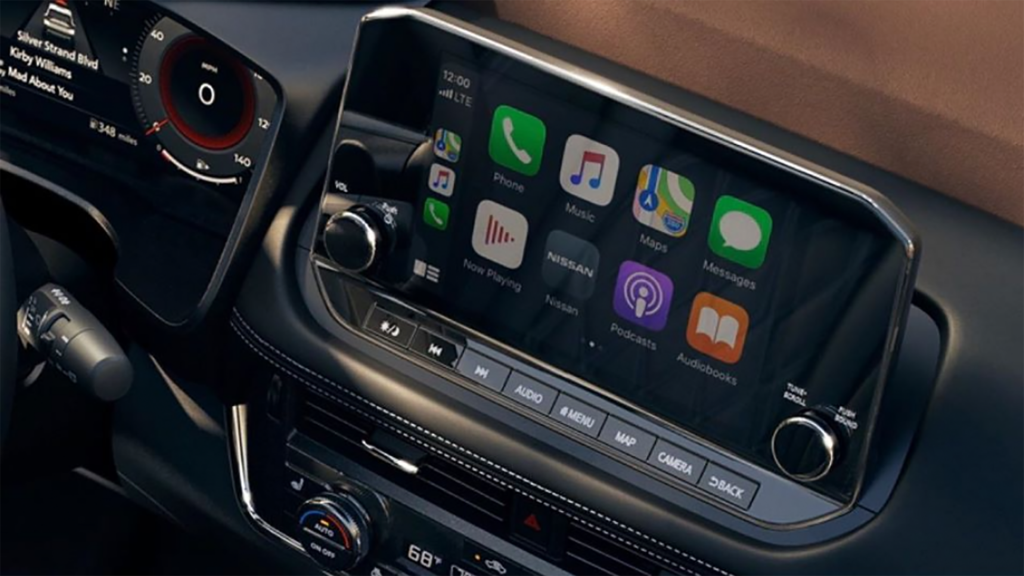
Automakers once competed based on the capabilities of their proprietary software. Today, many buyers simply want a large, clear display capable of running CarPlay effectively.
The software behind the scenes becomes secondary. That reality explains why some infotainment systems receive little attention from owners after the first few days of ownership. The vehicle provides the screen. Apple provides the experience.
CarPlay Won the Battle for the Dashboard
Apple CarPlay succeeded because it solved a problem that automakers struggled with for years.
Drivers wanted familiar, continuously updated software that integrated seamlessly with the devices they already used every day. Automakers responded by creating increasingly complex infotainment systems. Apple responded by bringing the smartphone experience directly into the vehicle.
Consumers overwhelmingly embraced the latter approach. As CarPlay became standard equipment across much of the industry, it transformed infotainment from a competitive advantage into a largely invisible background feature.
Navigation, communication, entertainment, and voice controls increasingly originate from the smartphone rather than the vehicle itself.
That does not mean factory infotainment systems are completely worthless. They still manage vehicle settings, climate controls, driver-assistance features, and numerous functions that smartphones cannot access directly.
However, their role has changed dramatically. For millions of drivers, the automaker’s software is no longer the reason they use the screen. It is simply the platform that allows CarPlay to take over.
In that sense, Apple achieved something remarkable. It did not just improve the infotainment experience. It made much of the traditional infotainment industry irrelevant.
Also Read: 10 Analog-Era Super Cars
