

A new vehicle sitting under showroom lights may look like a simple sales tool. It is clean, fully detailed, unlocked for customers, and positioned to show off the newest design, technology, and trim features. But behind that display vehicle is a surprisingly expensive chain of costs.
The first important distinction is that automakers usually do not directly own the cars sitting in franchised dealership showrooms. In the traditional U.S. retail model, the automaker builds the vehicle and sells or allocates it to an independent dealer.
From that point, the dealer carries most of the day-to-day inventory expense. However, the automaker still has a financial stake because it may provide inventory incentives, subsidize financing programs, support advertising, manage allocation, offer dealer assistance, and absorb the consequences when vehicles remain unsold too long.
Keeping one car available for display is therefore not free for either side. A showroom vehicle ties up capital, takes up valuable floor space, requires cleaning and maintenance, accumulates depreciation risk, and may eventually need discounts or incentives to sell.
If it is used as a demonstrator for test drives, the costs rise further because mileage, wear, insurance exposure, and resale value all become part of the equation.
The real cost depends on the vehicle, the dealership, the brand, interest rates, inventory levels, and how long the car remains in stock. A fast-selling compact SUV might create modest carrying costs because it is sold quickly. A luxury EV, large pickup, or slow-moving specialty model can become expensive within a few months.
Also Read: 8 Brands With the Best New-Car Warranty Coverage in 2026
The Car Is Usually Financed Before It Is Sold
Most dealerships do not pay cash for every new vehicle they receive from the manufacturer. Instead, they use a type of inventory financing known as floorplan financing. A lender provides a line of credit that allows the dealer to stock vehicles, then the dealer repays that loan when each vehicle is sold.
Cox Automotive explains the process simply: a dealer opens a line of credit, purchases inventory with that credit, sells the vehicle, and pays back the loan.
That system allows dealerships to maintain a large selection without tying up all of their own cash. It also creates a cost every day the vehicle remains unsold.
Interest accrues on the financed inventory. Depending on the dealer’s agreement, the store may also face curtailment payments, fees, audits, and other requirements as the vehicle ages. A car that sells quickly may produce little financial pressure. A vehicle that remains on the lot for 60, 90, or 120 days becomes a much more expensive asset.
This is why dealers closely track inventory age. A showroom car is not simply sitting there waiting for the right buyer. It is consuming financing capacity that could otherwise be used for another vehicle with a better chance of selling quickly.
Floorplan Interest Is the Most Visible Daily Cost
The most direct cost of holding a display vehicle is floorplan interest. Consider a new vehicle with an invoice or financed value of $40,000. If the dealer’s effective inventory financing rate is 7%, the interest cost works out to roughly $7.67 per day.
That may not sound dramatic. But after 60 days, the dealer has spent about $460 simply on financing. After 120 days, the interest expense approaches $920 before accounting for other costs.
A $70,000 luxury SUV or heavy-duty pickup can generate much higher daily interest costs. At the same 7% rate, financing $70,000 can cost roughly $13.42 per day. Over 90 days, that is more than $1,200 in carrying expenses.
The numbers become even more significant when a dealership holds hundreds of vehicles. Cox Automotive has illustrated how inventory holding costs can erode profit quickly.
In one example, the company calculated a daily holding cost of $44.63 per vehicle once financing and dealership overhead were included. At that rate, a vehicle sitting for 60 days consumes $2,677 of potential profit.
That figure is not a universal number for every dealer or every vehicle. But it shows why dealerships care so much about turning inventory quickly.
The longer a showroom vehicle stays unsold, the more likely the dealer is to reduce the price, increase incentives, or move it to another store.
The Automaker May Help, but That Help Has a Cost
Automakers understand that dealers cannot stock vehicles indefinitely without support. To keep dealerships willing to accept inventory, manufacturers often provide floorplan assistance. This can take several forms, including interest support, cash allowances, delayed payment terms, or special incentives for vehicles that need to be displayed and sold.
The exact arrangements vary by brand, vehicle, region, and market conditions. A manufacturer may offer a dealer a set amount of money per vehicle to offset inventory financing costs for a certain period. In other cases, the automaker may provide incentives tied to sales targets, model-year clearance programs, or vehicles that have been in stock too long.
This helps dealers maintain selection for customers, but it is not free money. The automaker must treat that assistance as part of its sales and marketing expense. If a company provides several hundred dollars of floor plan support on thousands of vehicles, the total can quickly reach millions of dollars.
Manufacturers use these programs because an empty showroom is also costly. Customers expect to see vehicles in person, compare trims, sit in different interiors, and take test drives. If a dealer has only one or two examples of a model, shoppers may simply visit a competitor.
The automaker, therefore, has a strong interest in ensuring that dealerships carry enough inventory to create a convincing retail experience.
A Display Car Must Be Clean, Charged, and Ready
A showroom vehicle also requires constant preparation. The car must be washed, vacuumed, polished, and kept free of fingerprints, dust, and damage. Staff may need to clean the interior several times a day, especially if customers are opening doors, testing seats, using touchscreen controls, and bringing children into the vehicle.
For an electric vehicle, the battery must be charged. For a gasoline or hybrid model, the fuel level must be maintained. A car used for demonstrations may require frequent refueling, tire-pressure checks, software updates, and battery maintenance.
These costs are small individually, but they add up across a dealership’s inventory. A showroom vehicle may also need accessories installed before it is displayed. Floor mats, wheel locks, cargo liners, protective film, roof racks, bed liners, running boards, or dealer-installed packages can raise the amount of money tied up in the vehicle.
If the vehicle is positioned as a premium display model, the dealer may also invest in special lighting, signage, window stickers, digital screens, and showroom space. The car is not merely inventory. It is part of the dealership’s marketing presentation.
Insurance and Damage Risk Are Always Present
Every vehicle on a dealership lot carries insurance exposure. A display car can be scratched by a customer, damaged during a test drive, hit by another vehicle in the lot, affected by hail, flooded during severe weather, or stolen. The dealership must ensure the vehicle while it remains in inventory.
Even minor cosmetic damage can create expense. A scratch on a door, curb rash on a wheel, a cracked windshield, or damage to a bumper sensor may require repair before the vehicle can be sold as new.
Modern cars make these repairs more expensive because bumpers, mirrors, windshields, and headlights often contain cameras, radar units, sensors, and advanced driver-assistance hardware.
A simple bumper repair may now require recalibration of automatic emergency braking, adaptive cruise control, parking sensors, or lane-assistance cameras.
The vehicle can still be new after a repair, but the dealer has absorbed additional reconditioning costs and may need to explain the repair history if the damage was significant. For a display vehicle, the risk is greater because more people interact with it.
Test Drives Turn Some Cars Into Demonstrators
Not every showroom vehicle remains untouched. Many dealerships use certain cars as demonstrators, meaning they are regularly driven by sales staff, customers, managers, or service personnel.
Demonstrators are important because buyers want to experience how a vehicle rides, accelerates, brakes, and handles before committing to a purchase. But every mile affects value.
A vehicle with 15 miles may be sold as new without concern. A vehicle with 1,500 or 3,000 miles may still be legally new in many cases, but buyers often expect a discount because it has been used for demonstrations.
The dealer may eventually sell the demonstrator at a lower price, reducing gross profit. The automaker may also support the discount through special programs, particularly when a model is being replaced or when inventory needs to move.
Demo vehicles can also experience more wear than normal inventory. Seats, tires, brakes, paint, interior trim, and infotainment systems all receive more use. If the vehicle has been driven aggressively or exposed to frequent short trips, it may require more attention before sale.
The dealer accepts this because test drives are essential. A car that cannot be driven is much harder to sell.
Floor Space Has a Real Financial Value
Showroom space is limited. A dealership may have room for only a handful of vehicles inside, especially in high-cost urban areas where real estate, utilities, property taxes, and building maintenance are expensive. Every vehicle displayed inside displaces another potential vehicle.
That creates an opportunity cost. A dealer may choose to display a fully loaded SUV, a high-performance model, a new EV, or a premium pickup because those vehicles create excitement and help customers understand the brand. But the same floor space could have been used for a faster-selling model.
The decision is not always based on which car sells first. Some vehicles act as halo products. They attract shoppers, create showroom traffic, and improve the brand’s image even if they are not the dealership’s highest-volume sellers.
A performance model may convince a customer to buy a lower trim. A luxury EV may bring shoppers into the store even if they ultimately purchase a gasoline crossover. That means the display car can function as advertising.
The automaker may spend heavily on national marketing, but the showroom vehicle is where that advertising becomes tangible.
Aging Inventory Forces Discounts
The biggest expense often arrives when the vehicle does not sell quickly. As a car ages on the lot, the dealer may need to lower the price. The store may offer additional discounts, increase trade-in allowances, advertise special financing, or accept a lower profit margin to move the vehicle.
Cox Automotive has warned that inventory holding costs rise as vehicles sit longer and that aged units can become frozen capital. Its guidance for dealers notes that used inventory often needs to turn within about 45 days to protect profitability, though new-vehicle targets can vary by brand and market.
New cars can also become difficult to sell once a newer model year arrives. A 2026 vehicle may look less attractive when a 2027 version is displayed beside it, even if the two models are mechanically similar. The dealer may then need manufacturer incentives or larger discounts to clear the older unit.
Cox Automotive reported that new-vehicle inventory averaged 70 days of supply in June 2025, while the average listing price was $48,883. The market has continued shifting, but the basic lesson remains the same: holding a large amount of expensive inventory creates meaningful financial pressure.
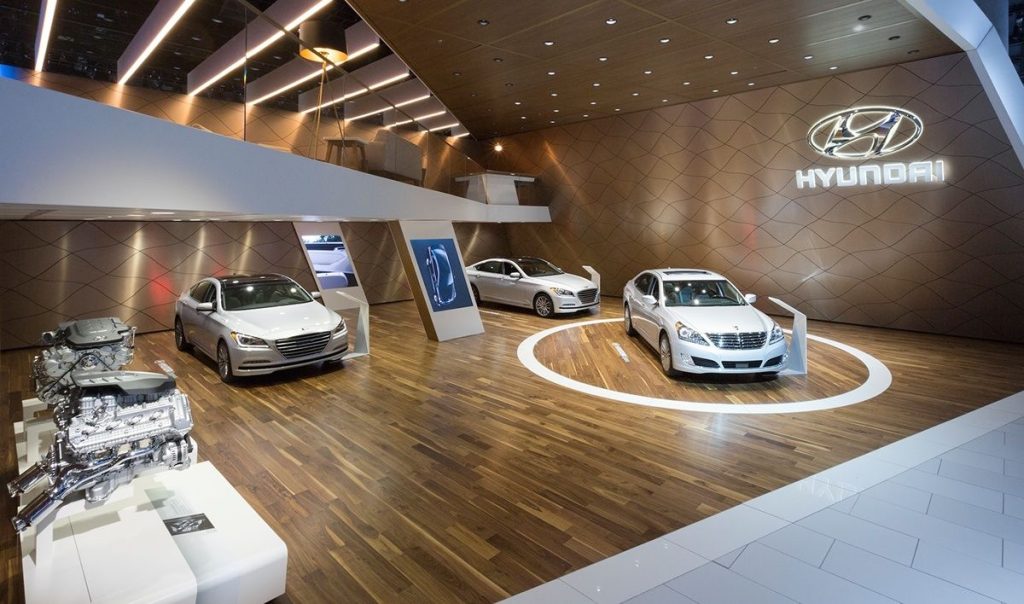
A vehicle that becomes outdated on the showroom floor can cost far more than its original financing expense.
Why Some Vehicles Are More Expensive to Display
A basic compact sedan is cheaper to keep in inventory than a $90,000 luxury SUV. The expensive vehicle requires more financing, more insurance coverage, more valuable showroom space, and potentially more expensive incentives if it does not sell.
It may also have costly features that need protection, including premium wheels, advanced lighting, panoramic glass roofs, high-end leather, large displays, and complex electronics.
Electric vehicles can create a different kind of cost challenge. They need charging access, software updates, battery management, and staff capable of explaining range, charging networks, incentives, and ownership requirements. If demand is weak, they can remain in inventory longer than expected.
Cox Automotive noted in 2023 that some dealers were holding EV inventory for more than six months because consumer interest did not match the number of vehicles available.
That does not mean every EV is difficult to sell. It means the cost of displaying one depends heavily on local demand, pricing, incentives, and how well the dealer understands the customer base.
The Real Cost Is Shared Across the Retail System
The cost of keeping one car on a showroom floor is not paid by one company alone. The dealer pays the most direct day-to-day expenses through financing, insurance, staffing, detailing, utilities, floor space, and discounting.
The automaker supports the retail system through inventory programs, marketing, incentives, allocation, training, and sometimes floorplan assistance. The customer may eventually see part of that cost reflected in pricing.
A dealership needs enough inventory to give buyers a choice. An automaker needs dealers to display its products effectively. But neither side wants cars sitting for months because every additional day increases the financial burden.
A showroom vehicle can be a powerful sales tool. It lets customers touch the paint, test the seats, compare trim levels, and take a drive before making a major purchase.
It is also a financed asset, a marketing expense, an insurance risk, and a potential discount waiting to happen.
That is why the best vehicle on a showroom floor is not simply the most attractive one. It is the one that sells before its display cost starts eating into the profit.
Also Read: 8 Sedans That Outrun Sports Cars Costing Twice as Much
