
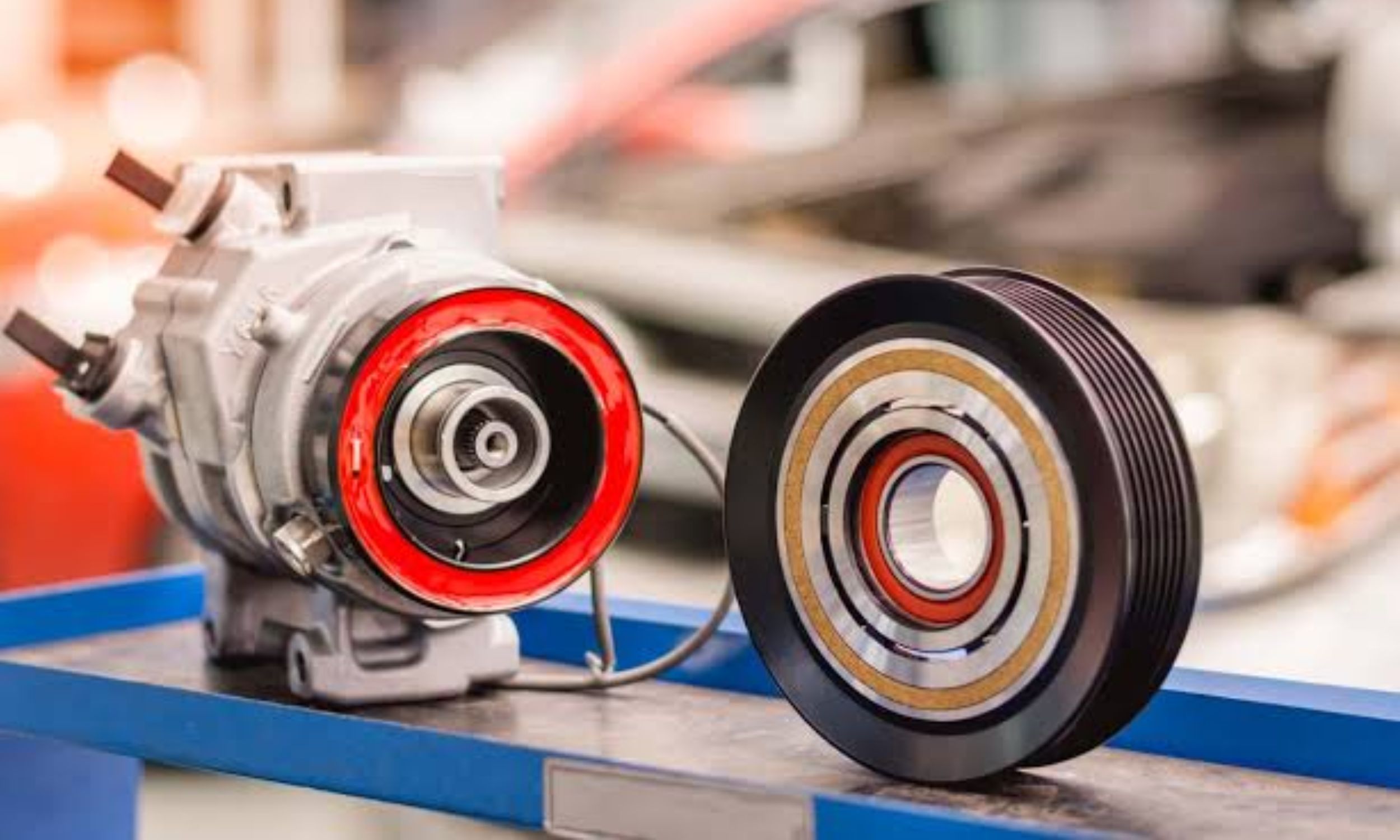
Sweating through a summer commute with a broken AC system is enough to make anyone reach for the phone and call a mechanic in a panic. But before you agree to whatever price a shop quotes, it helps to understand exactly what you’re paying for.
A car AC compressor failure doesn’t always mean an expensive full replacement. Sometimes it’s a worn seal or a bad relay causing all the trouble, and sometimes the whole system needs attention. The real answer depends on what’s actually failed, how old the vehicle is, and whether other components have already been contaminated.
Get it wrong, and you could spend hundreds fixing something that breaks again within weeks. Get it right, and you’ll walk away with cold air and a bill that actually makes sense. This guide breaks down the real signs of compressor trouble, what drives the price up or down, when replacement genuinely pays off, and what happens if you keep putting the whole thing off.
How Much Does an A/C Compressor Replacement Cost?
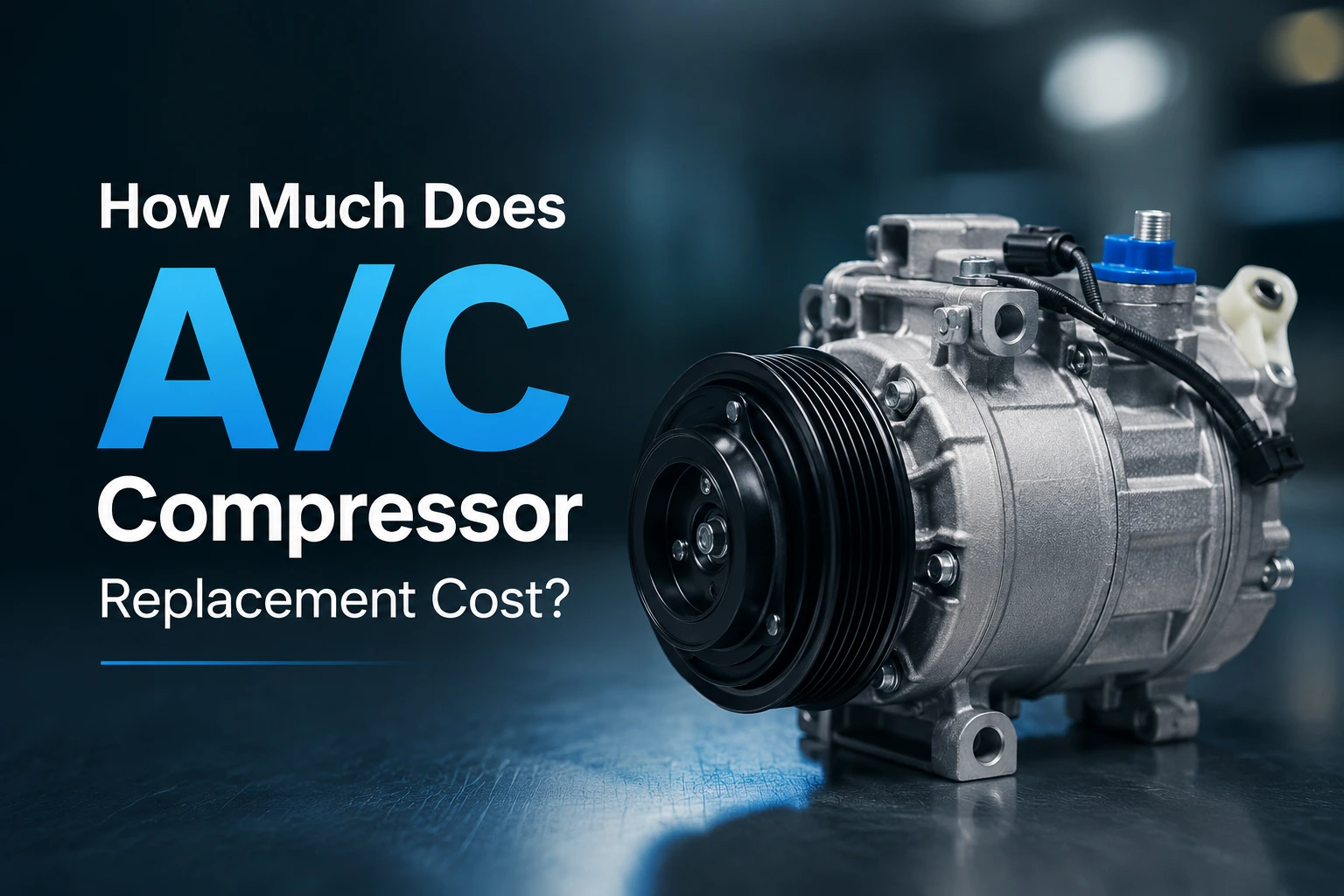
Money is usually the first question on anyone’s mind once a mechanic mentions the word “compressor,” and fair enough, since this is one of the pricier repairs a car AC system can throw at you. A full replacement typically runs between $800 and $1,500, though the final number depends heavily on your specific vehicle, the quality of parts chosen, and local labor rates in your area.
Doing the job yourself can trim costs considerably if you already own the right tools and have some mechanical experience. Most of the expense in a professional repair comes from the compressor itself and the components tied to it, not necessarily the labor alone, though labor still plays a meaningful role once refrigerant handling gets involved.
Here’s where things often catch owners off guard. That $800 to $1,500 figure rarely covers just the compressor swap. Additional services like refrigerant recovery, full system flushing, and recharging the AC afterward all add to the total, and skipping these steps isn’t really optional if you want the repair to actually last. A shop that quotes a suspiciously low price might be cutting corners on exactly these steps, which tends to backfire within a matter of months.
Vehicle type matters more than most people expect, too. A compact sedan with a widely available compressor will almost always cost less to fix than a larger SUV or a less common import, simply because parts availability and labor complications vary so much between makes and models. Getting a written estimate before work begins remains the smartest way to avoid surprises once the final invoice arrives.
Is It Worth Replacing the A/C Compressor?
Here’s a question worth sitting with before signing off on any repair order: does swapping the compressor alone actually solve the problem, or just delay it? When a compressor fails, it’s frequently a sign that the entire AC system is aging or has become contaminated in ways that aren’t immediately obvious from the outside.
Replacing only the compressor without addressing what caused it to fail in the first place can set you up for a repeat visit sooner than you’d like. If the compressor was the first domino to fall, other components like the condenser, receiver/drier, or expansion valve may not be far behind, especially in a system that’s been running for years without regular servicing.
This is exactly why some mechanics recommend looking at the AC system as a whole rather than treating the compressor as an isolated part. Replacing supporting components alongside the compressor, particularly the receiver/drier, which filters moisture and debris out of the refrigerant loop, often improves long-term reliability far more than a standalone compressor swap ever could on its own.
That said, a full system overhaul isn’t always necessary or worth the added cost. If everything surrounding the compressor still looks clean and functions properly, there’s a reasonable case for a more targeted repair instead of paying for parts that don’t actually need replacing yet. The right call really comes down to how the rest of the system is holding up, not just what caused the compressor itself to quit.
Talking through this with a trusted mechanic and asking specifically what they found during inspection goes a long way toward avoiding an expensive repeat repair later.
Also Read: 8 Cars With Common AC Compressor Failures
When Replacing the Compressor Makes Sense
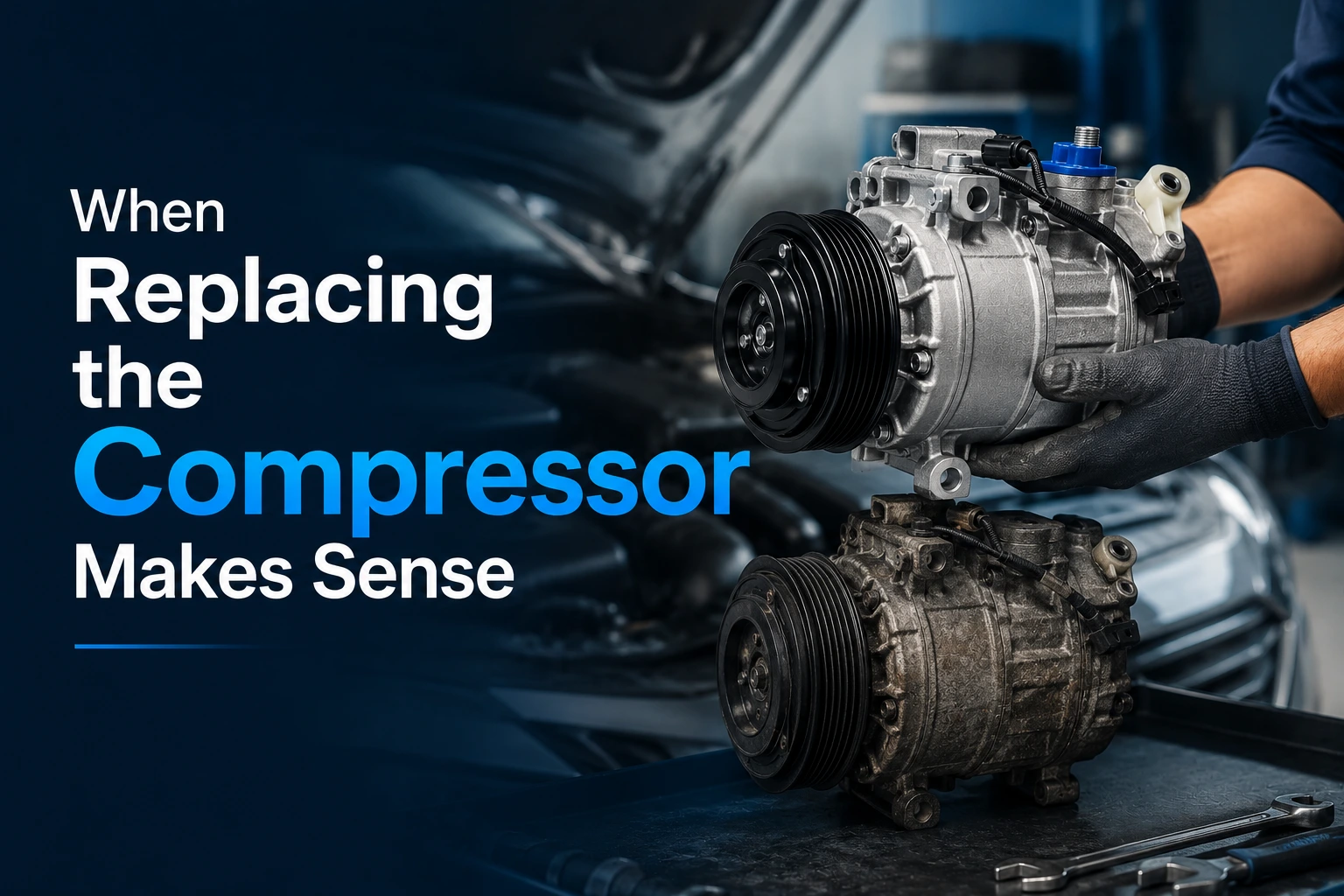
Not every AC failure calls for tearing apart the whole system, and knowing when a standalone compressor replacement genuinely makes sense can save you from paying for work you don’t actually need. The clearest case is a newer vehicle where the rest of the AC system remains in solid condition, free from contamination, corrosion, or worn-out supporting parts.
In situations like these, replacing just the compressor can restore full cooling performance without requiring a complete system overhaul. The surrounding components, lines, condenser, and expansion valve are all still doing their job properly, so there’s little reason to spend extra money replacing parts that haven’t shown any signs of trouble.
This scenario comes up more often than you’d think, particularly when a compressor fails due to something sudden and isolated rather than gradual wear spread across the whole system. A clutch that seizes unexpectedly, a bearing that fails prematurely, or a one-time electrical fault can all take out a compressor while leaving everything else completely unaffected.
Mileage and the entire vehicle condition matter here too. A car with a strong maintenance history and no other looming repairs is a much better candidate for a targeted compressor swap than a higher-mileage vehicle already showing signs of wear elsewhere in the AC system. Pouring money into just the compressor on a car that’s likely to need condenser or drier work within the next year rarely makes financial sense.
Why A/C Compressors Fail (and Why It Matters for Your Wallet)
Understanding why compressors actually fail changes how you think about repair costs, because the root cause often determines whether you’re looking at a quick fix or a much bigger bill. Compressor failure ties closely to system age in plenty of cases, but several specific issues can trigger it far earlier than expected.
Clogged condensers rank high on this list. When airflow through the condenser gets restricted, heat can’t escape the system properly, forcing the compressor to work harder than it was ever designed to. As time goes on, that added strain shortens its lifespan considerably, turning what should have been years of service into a much shorter run.
Restricted receiver/driers or filters cause similar trouble. These components are responsible for keeping moisture and debris out of the refrigerant loop, and once they become clogged, contaminants start circulating freely through the system, accelerating wear on every part they touch, the compressor included.
Faulty expansion valves or orifice tubes disrupt the pressure balance that the entire AC system depends on. When refrigerant flow becomes irregular, the compressor compensates in ways it wasn’t designed to handle, often leading to overheating and eventual failure.
Low refrigerant levels or slow leaks round out the list, and this one catches plenty of owners off guard since a slow leak isn’t always obvious until the AC stops blowing cold entirely. Running a compressor with insufficient refrigerant essentially starves it of the lubrication it needs, causing internal wear that adds up fast.
Poor airflow and internal contamination compound all of these issues further. Knowing which of these caused your specific failure helps determine whether a simple fix will hold or whether you’re looking at a more involved repair down the road.
Also Read: 6 SUVs Where the AC Compressor Lasts Forever vs 6 Where It Fails Twice
What Happens If You Delay Repairs?
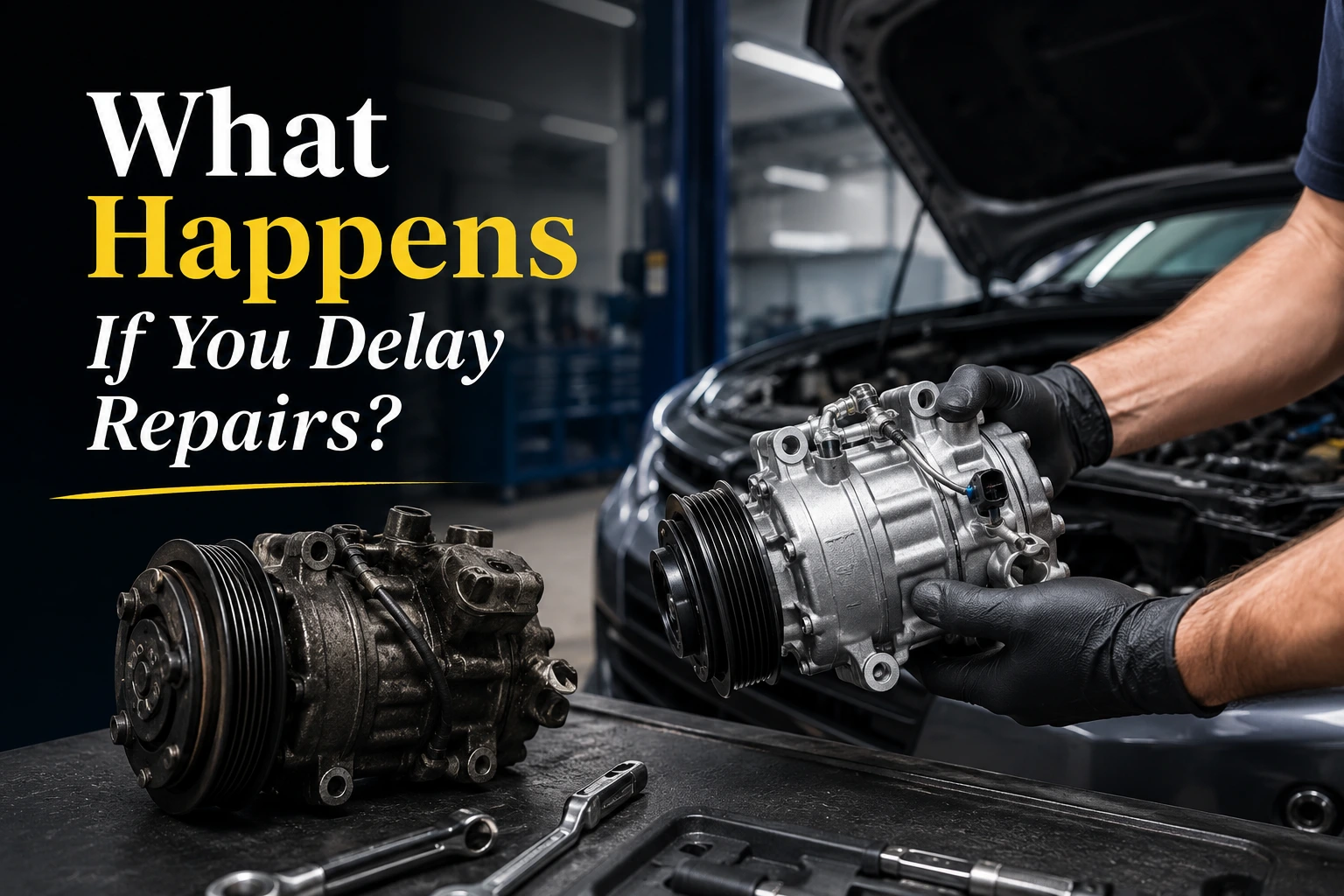
Putting off a compressor repair might feel like the easier choice in the moment, especially with cooler months on the horizon, but delaying rarely saves money in the long run. Continuing to drive with a faulty compressor tends to create a chain reaction of problems that only grow more expensive the longer they’re ignored.
A seized compressor represents one of the more serious risks here. When the internal components lock up completely, the strain doesn’t stay contained to the AC system alone. It can damage or strain the serpentine belt, a component connected to several other critical engine functions, turning what started as a comfort issue into something that affects your vehicle’s broader mechanical health.
Internal compressor failure creates another expensive issue in the form of metal debris. As internal components break down and rub against each other, tiny metal particles are released into the refrigerant lines, where they spread contamination throughout the entire air conditioning system. Once this debris begins circulating, it does not remain confined to one area. Instead, it continues moving through the system and gradually damages each component it comes into contact with, driving repair costs even higher over time.
There’s also the simple reality that ignoring a known issue rarely makes it disappear. What might have been a $400 targeted repair early on can snowball into a full system replacement once contamination spreads or a marginal component finally gives out completely. Addressing problems while they’re still isolated is almost always the more affordable path compared to waiting until multiple parts fail at once.
So, is it cheaper to repair or replace a car AC compressor? Isolated issues on a system that’s otherwise clean and well-maintained are almost always cheaper to fix through a targeted repair. But once contamination, age, or repeated failures enter the picture, paying more upfront for a broader replacement is usually the choice that saves real money down the road.
