
For years, one of the biggest concerns surrounding electric vehicles has been the battery. Potential buyers have worried about what happens if the battery fails, how much a replacement costs, and whether an EV will still be usable after a decade.
Those concerns have persisted despite rapid improvements in battery technology, thermal management systems, and software that have fundamentally changed how modern electric vehicles age.
Recent data paints a very different picture from the common perception. According to battery analytics company Recurrent, which monitors more than 30,000 electric vehicles across over one billion miles of driving data, just 0.3% of EVs built from the 2022 model year onward have required a battery replacement outside of manufacturer recalls.
Kelley Blue Book highlighted the findings, noting that today’s EV batteries are proving substantially more durable than many consumers expected.
The statistic is particularly significant because battery replacement has long been viewed as the single greatest financial risk associated with EV ownership. While replacing a high-voltage battery can still cost thousands of dollars if it falls outside warranty coverage, the latest evidence suggests that such failures are becoming exceptionally uncommon.
Instead, most owners are far more likely to sell or replace their vehicle before the battery reaches the end of its useful life.
Also Read: 10 Cars With the Lowest 15-Year Cost to Own
Modern Battery Technology Has Dramatically Improved Reliability
The impressive 0.3% replacement figure did not happen overnight. It reflects more than a decade of engineering improvements across nearly every aspect of battery design.
Early electric vehicles faced challenges that today’s models largely avoid. Some first-generation EVs relied on passive air cooling or lacked sophisticated battery management systems, making them more vulnerable to heat-related degradation.
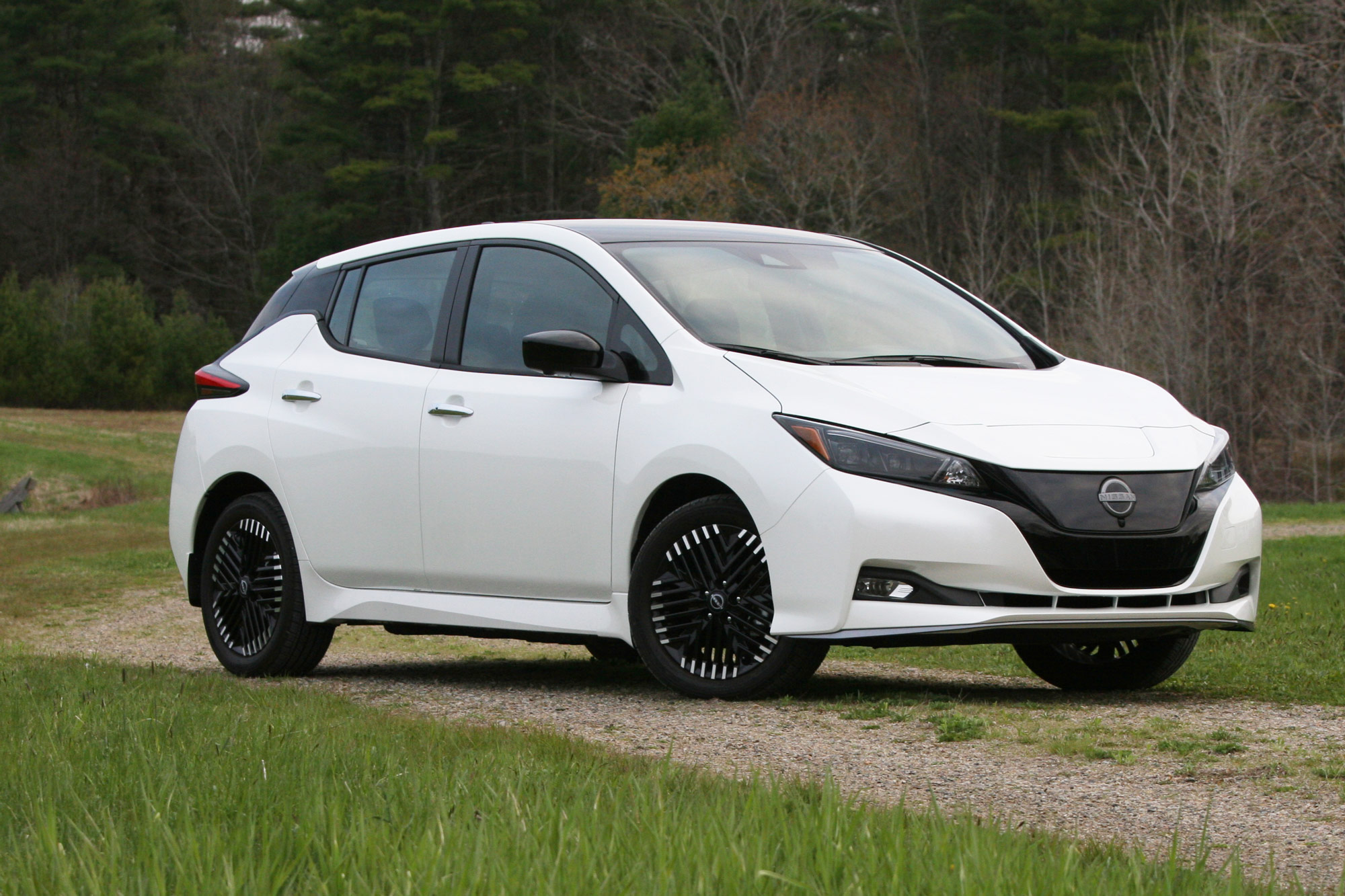
The original Nissan Leaf is perhaps the best-known example, with many early models experiencing accelerated capacity loss in hotter climates due to the absence of liquid cooling.
Modern EVs are engineered differently. Manufacturers now employ advanced liquid thermal management systems that maintain battery temperatures within an optimal operating range during charging, driving, and even while parked.
Battery management software continuously monitors individual cells, balances charging across the pack, limits harmful charging conditions, and adjusts power delivery to maximize long-term health.
According to Recurrent’s latest battery research, improvements in battery chemistry have also played a major role. Battery packs have grown substantially larger since 2015, while advances in lithium-ion cell chemistry and battery management systems have significantly reduced the likelihood of catastrophic failures.
As battery technology has matured, replacement rates have steadily declined from early-generation vehicles to today’s models.
The trend becomes even clearer when comparing different generations of EVs. Recurrent found that first-generation electric vehicles now show battery replacement rates of roughly 8.5%, largely because many of those vehicles are more than a decade old and were built with much earlier technology.
Second-generation models, including vehicles such as the early Tesla Model 3 and Chevrolet Bolt EV, have replacement rates closer to 2%, while modern EVs have dropped to just 0.3%.
Battery Degradation Is Not the Same as Battery Failure
One of the biggest misconceptions among prospective EV buyers is confusing battery degradation with battery failure.
All lithium-ion batteries gradually lose capacity over time. This process is normal and occurs whether the battery is used in a smartphone, laptop, or vehicle. However, gradual degradation does not mean the battery is defective or requires replacement.
According to Kelley Blue Book’s summary of Recurrent’s 2026 EV Market & Trends Report, the average electric vehicle retains approximately 97% of its original driving range after three years and about 95% after five years.
In practical terms, an EV originally rated for 325 miles would still deliver roughly 309 miles after five years of ownership. Even more impressively, Recurrent found that 68% of 2023 model-year EVs continue to exceed their original EPA range estimates, thanks to conservative manufacturer estimates and software improvements.
This distinction matters because most drivers never experience a sudden battery failure. Instead, they may notice a gradual reduction in maximum driving range over many years, often amounting to only a few miles annually depending on climate, charging habits, and mileage.
Battery degradation can be accelerated by frequent exposure to extreme temperatures, repeated fast charging, and consistently keeping the battery at either 100% or nearly empty for extended periods. Even so, research indicates that modern battery management systems substantially reduce these effects compared with earlier EV generations.
Government data supports these findings as well. The U.S. Department of Energy, using Recurrent’s battery database, previously reported that battery replacement rates due to failure were well under 1% for plug-in vehicles from model years 2016 onward, with most replacements occurring under manufacturer warranty.
Why Consumers Still Worry About Battery Replacement
Despite mounting evidence, battery anxiety remains one of the biggest psychological barriers to EV adoption.
Much of that concern stems from headlines highlighting battery replacement costs that can exceed $10,000 or even $20,000 for certain premium vehicles. While those numbers are accurate in some circumstances, they often fail to reflect how rarely complete battery replacements are actually needed.
High-profile battery recalls have also shaped public perception. Chevrolet Bolt EVs and Hyundai Kona Electrics equipped with defective battery cells required widespread battery replacements after manufacturing defects were identified.
Those recalls generated extensive media coverage but do not accurately represent the reliability of today’s battery technology. Recurrent excludes those recall-related replacements when calculating normal battery failure rates because they resulted from manufacturing defects rather than ordinary battery wear.
Warranty coverage further reduces the financial risk for owners. In the United States, federal regulations require automakers to provide battery warranty coverage of at least 8 years or 100,000 miles for electric vehicles, while some manufacturers offer even longer protection or additional capacity retention guarantees depending on the model and market.
Real-world ownership experiences increasingly support the statistical evidence. Numerous high-mileage Teslas, Hyundai Ioniq 5s, Rivians, Ford Mustang Mach-Es, and other modern EVs continue operating with their original battery packs after hundreds of thousands of miles.
Recent reporting has documented examples of Tesla Model 3s exceeding 200,000 miles while retaining strong driving range, reinforcing the conclusion that modern battery packs are lasting significantly longer than many expected.
Another factor helping modern EV batteries is smarter software. Manufacturers frequently release over-the-air updates that optimize charging behavior, improve thermal management, and refine battery calibration. Unlike traditional internal combustion vehicles, software improvements can extend battery performance without replacing hardware.
Battery prices have also fallen dramatically over the past decade, meaning that even if replacements become necessary years from now, the long-term cost is expected to continue declining as production scales and manufacturing techniques improve.
Meanwhile, growing battery repair expertise means technicians can increasingly replace individual battery modules rather than entire packs in some vehicles, reducing repair costs.
The latest evidence suggests that consumer fears have not kept pace with technological progress. Early electric vehicles understandably created uncertainty because there was little long-term data available. Today, researchers have billions of miles of real-world driving information demonstrating that battery failure is becoming increasingly rare.
For prospective buyers, the takeaway is straightforward. A modern EV battery will gradually lose some capacity over time, just like any rechargeable battery. However, that is very different from requiring a complete replacement.
According to Recurrent’s extensive database, only 0.3% of modern EVs built from 2022 onward have needed a new battery outside of recalls, while Kelley Blue Book reports that the average EV still retains about 95% of its original driving range after five years.
Those numbers indicate that for most owners, the battery is likely to outlast the period they keep the vehicle, making one of the biggest fears surrounding EV ownership increasingly unsupported by real-world data.
Also Read: 8 Things to Do the Week Before Your Car’s Lease Ends
