
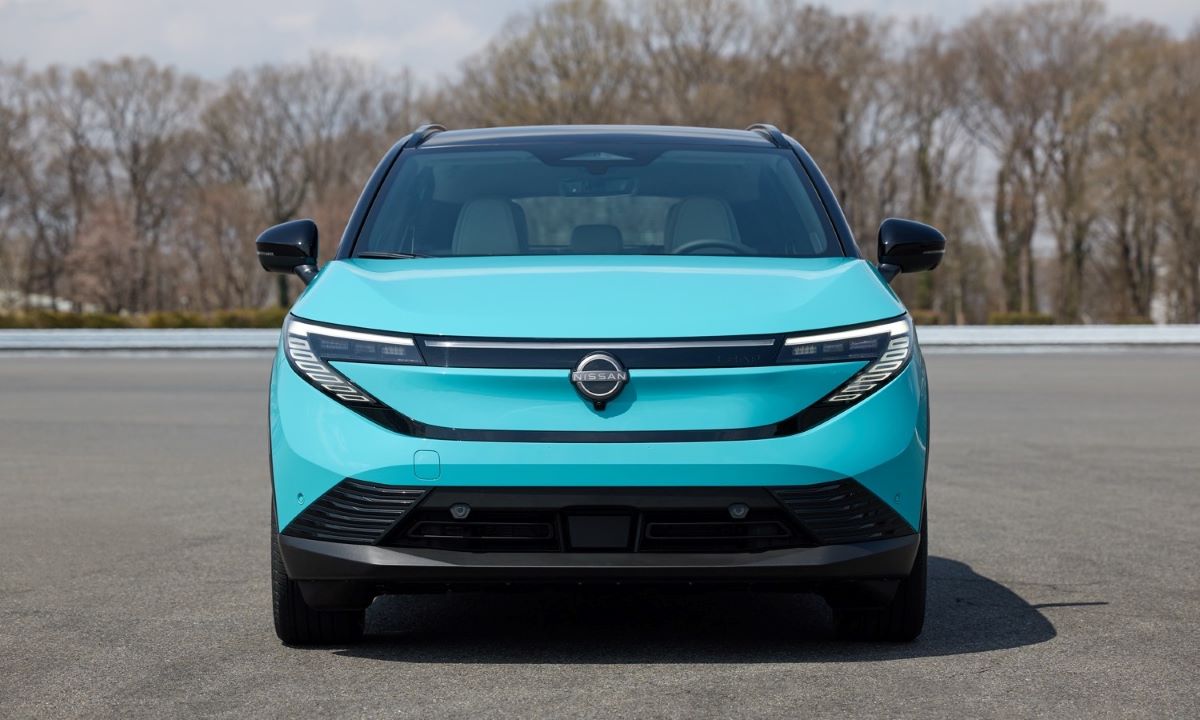
The Nissan Leaf holds a unique place in electric vehicle history. Introduced for the 2011 model year, it became the world’s first mass-market battery-electric vehicle and helped prove that EVs could serve as practical daily transportation.
At the time, however, many buyers questioned whether the battery would last long enough to justify the purchase. With little real-world experience available, concerns about rapid battery degradation, expensive replacements, and sharply reduced driving range dominated discussions surrounding early EV ownership.
More than a decade later, those questions can finally be answered with real-world evidence. Thousands of first-generation Leafs have now surpassed 100,000 and even 150,000 miles, providing valuable insight into how early lithium-ion batteries age.
According to data highlighted by CarPro and supported by long-term battery studies, even 14-year-old Nissan Leafs with around 150,000 miles can still retain approximately 80% of their original real-world driving range, demonstrating that battery degradation is generally gradual rather than catastrophic.
While the earliest Leafs were not immune to battery aging, many continue operating with their original battery packs well beyond what early critics expected.
The findings are especially noteworthy because the first-generation Leaf lacked several technologies now considered standard in modern EVs, making its long-term durability an important benchmark for how far electric vehicle battery engineering has progressed.
Also Read: 10 Cars That Are Easiest to Repair Outside the Dealership
The Early Nissan Leaf Was a Simpler EV Than Today’s Models
When the Nissan Leaf launched, battery technology was still in its infancy compared with today’s standards.
The original Leaf used a 24-kWh lithium-ion battery pack and carried an EPA driving range of 73 miles for the 2011 and 2012 model years. At the time, this represented a significant achievement, but the vehicle also reflected the technological limitations of the era.
Perhaps the most discussed characteristic of the first-generation Leaf was its battery cooling system. Unlike most modern electric vehicles, the original Leaf relied on passive air cooling rather than an active liquid-cooled thermal management system.
Without liquid coolant circulating through the battery pack, temperatures could rise significantly during repeated fast charging or prolonged exposure to hot climates.
As a result, battery degradation varied considerably depending on where the vehicle was driven. Owners in moderate climates such as the Pacific Northwest often reported relatively slow capacity loss, while drivers in extremely hot regions, including Arizona, Nevada, and parts of Texas, experienced noticeably faster degradation.
Despite those limitations, many high-mileage Leafs have continued performing reliably after well over a decade of daily use. Battery analytics company Recurrent and several long-term ownership studies have consistently found that battery degradation is influenced by temperature, charging habits, and time rather than mileage alone.
While the Leaf’s battery chemistry was more vulnerable to heat than current-generation designs, the battery still generally aged gradually instead of experiencing sudden failures.
CarPro highlighted examples showing that 14-year-old Leafs with approximately 150,000 miles continue delivering around 80% of their original real-world driving range, illustrating that even one of the earliest mass-produced EVs remains usable for everyday commuting.
For many owners, that means a vehicle originally capable of roughly 70 to 75 miles of driving may still provide approximately 55 to 60 miles under similar conditions. Although that reduction limits long-distance usability, it remains sufficient for many daily commuting needs.
Why Some Leafs Aged Better Than Others
One of the biggest lessons learned from the Nissan Leaf concerns the importance of thermal management.
Heat is one of the primary contributors to lithium-ion battery degradation. Higher temperatures accelerate the chemical reactions inside battery cells that gradually reduce usable capacity over time.
Modern electric vehicles largely address this challenge through sophisticated liquid cooling systems that actively regulate battery temperature during driving, charging, and even while parked.
The original Leaf did not include that technology. Instead, battery temperatures largely followed ambient conditions, making the vehicle more susceptible to long-term degradation in consistently hot climates.
Research from Idaho National Laboratory and subsequent battery studies has shown that higher temperatures can significantly increase long-term capacity loss, particularly when combined with frequent high states of charge and repeated DC fast charging.
Charging behavior also influences battery health. Regular Level 2 AC charging generally places less stress on lithium-ion batteries than repeated high-power DC fast charging, although the earliest Leafs supported considerably slower charging speeds than today’s electric vehicles.
Battery chemistry has also evolved substantially since the Leaf first entered production. Modern nickel-rich lithium-ion batteries and increasingly common lithium iron phosphate (LFP) batteries offer improved durability, greater energy density, and better resistance to thermal degradation than the chemistry available in 2011.
Software improvements have made an equally important contribution. Today’s battery management systems continuously monitor individual battery cells, optimize charging rates, regulate temperatures, and maintain balanced cell voltages to maximize long-term durability.
Early EVs used much simpler battery management strategies that lacked many of these capabilities.
Even with those disadvantages, the Leaf demonstrated that catastrophic battery failures were uncommon. Capacity gradually declined over many years rather than disappearing suddenly, allowing owners to continue using their vehicles for local transportation even after noticeable range reductions.
The Leaf Helped Prove That EV Batteries Can Last
The first-generation Nissan Leaf ultimately became one of the industry’s most valuable long-term durability experiments.
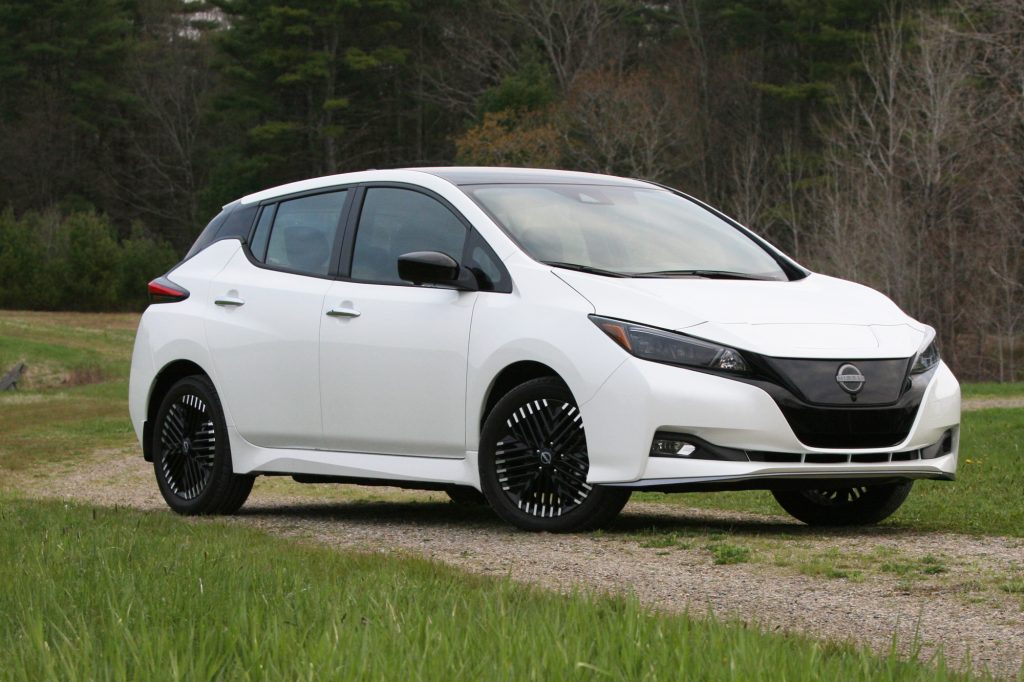
Unlike laboratory testing, thousands of real-world owners accumulated millions of miles under every imaginable climate and driving condition. That experience helped manufacturers understand how batteries age and directly influenced the design of modern electric vehicles.
Current-generation EVs benefit from nearly every lesson learned from the Leaf. Liquid thermal management, improved battery chemistries, advanced battery management software, larger battery packs, and more efficient charging strategies have all dramatically reduced long-term degradation.
Recent studies highlight just how much progress has been made. Geotab’s analysis of more than 22,700 electric vehicles projects that the average modern EV battery will retain approximately 81.6% of its original capacity after eight years, while battery analytics company Recurrent reports that modern EVs retain roughly 95% of their original driving range after five years.
Recurrent has also found that only 0.3% of 2022 model-year and newer EVs have required battery replacement outside manufacturer recalls, underscoring how reliable current battery technology has become.
Those figures place the Leafs’ long-term performance into perspective. Although its passive air-cooled battery experienced greater degradation than many current EVs, the fact that numerous examples continue operating after 14 years and roughly 150,000 miles with around 80% of their original real-world range demonstrates the inherent durability of lithium-ion batteries when properly maintained.
For used EV buyers, the Leaf remains an important reminder that battery condition depends far more on maintenance history, climate exposure, and charging habits than age alone. Two vehicles with identical mileage may have substantially different battery health depending on where and how they were driven.
The Nissan Leaf may no longer lead the electric vehicle market in range or charging speed, but its legacy extends well beyond sales numbers. It provided the first large-scale proof that EV batteries could survive years of daily driving without requiring replacement.
The latest long-term ownership data show that even one of the earliest mainstream electric vehicles continues delivering practical transportation after more than a decade on the road, reinforcing how dramatically battery technology has matured since the Leaf first introduced millions of drivers to electric mobility.
Also Read: 10 Sports Cars With The Most Expensive Repair Costs
