
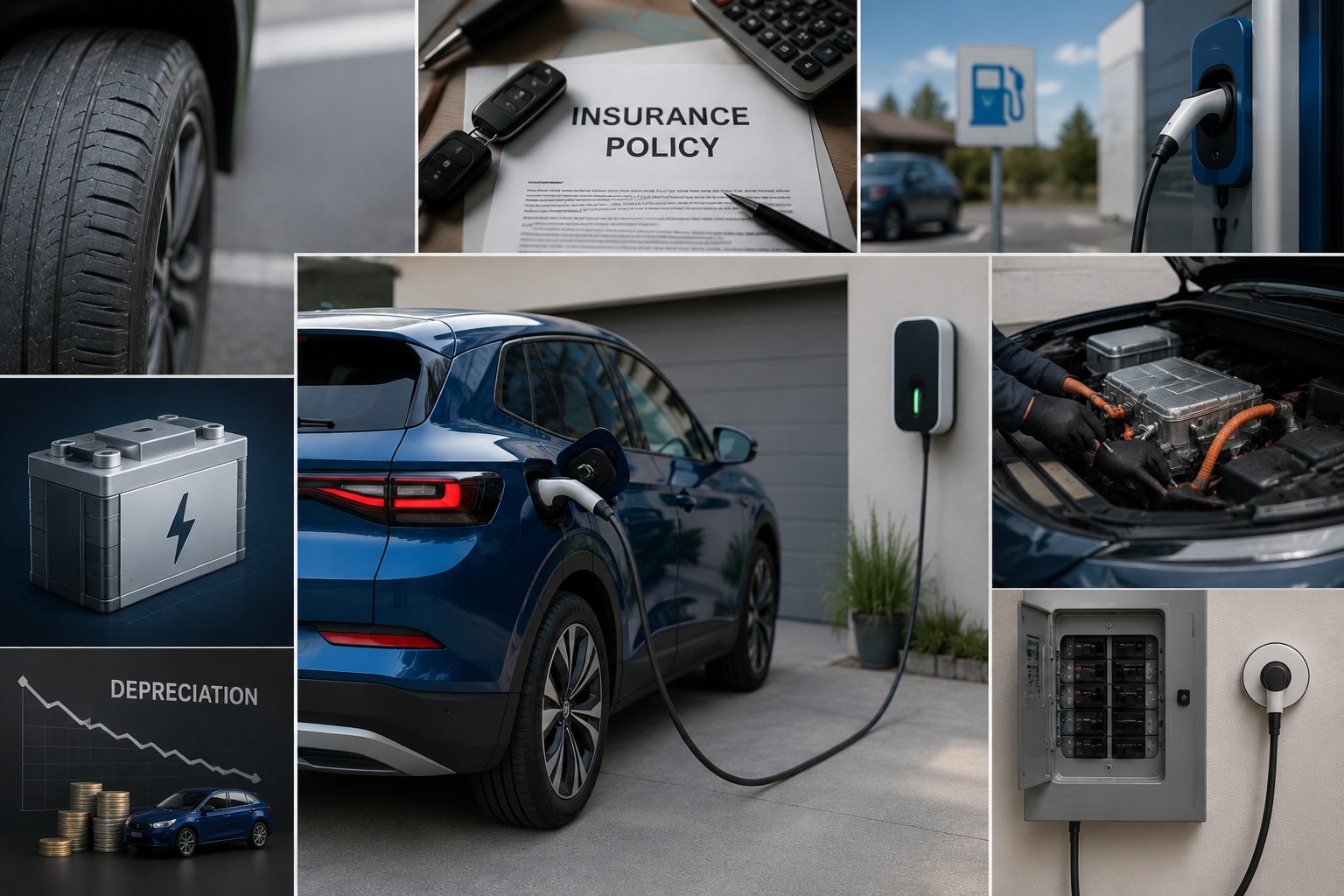
Electric vehicles have taken the world by storm. Millions of people are making the switch, drawn in by the promise of lower fuel costs and a greener future. Governments are offering generous incentives. Automakers are flooding the market with sleek, high-tech models. Everything about the EV revolution sounds like a dream come true.
But here is the truth nobody puts in the brochure. Owning an electric vehicle comes with a set of hidden costs that can quietly drain your wallet. These are expenses that dealerships rarely mention. These are financial surprises that most EV reviews completely overlook.
The upfront price of an EV is just the beginning. What follows is a long list of ongoing, unexpected, and often unavoidable expenses. Some of these costs sneak up on you in the first year. Others are hit hard when your vehicle gets older.
This is not an argument against buying an EV. Electric vehicles are genuinely impressive machines. They are efficient, powerful, and better for the environment in many ways. But being a smart buyer means knowing the full picture before you sign anything.
Whether you already own an EV or are thinking about getting one, this guide is for you. These are the seven hidden costs of owning an EV that nobody talks about until now.
1. Home Charging Infrastructure: The Installation Bill That Shocks Most Buyers
Most people assume they can just plug their new EV into a regular wall outlet. They imagine it will be as simple as charging a smartphone. That assumption is one of the most expensive mistakes a new EV owner can make.
A standard household outlet operates at 120 volts. This is called a Level 1 charger. It is the slowest possible way to charge an electric vehicle. Depending on your battery size, charging from empty to full on Level 1 can take anywhere from 24 to 60 hours. That is simply not practical for daily driving.
Most EV owners quickly discover they need a Level 2 home charger. This operates at 240 volts and can fully charge most vehicles overnight. It is a massive upgrade in speed and convenience. But it does not come free.
The charger unit itself costs between $300 and $900, depending on the brand and features. That is just the hardware. Installation is a completely separate cost. A licensed electrician must install a dedicated 240-volt circuit in your garage or parking area. Labor and materials for this job typically run between $500 and $1,500. In older homes with outdated electrical panels, the costs can climb far higher.

If your electrical panel cannot handle the additional load, you may need a full panel upgrade. Panel upgrades can cost anywhere from $1,500 to $4,000 or more. This is a cost that shocks most new EV buyers into silence. Nobody mentioned this at the dealership.
Permit fees add another layer of expense. Many cities and counties require permits for electrical work of this scale. Permit costs vary widely but can add $50 to $500 to the total bill. Inspections may also be required after the work is done.
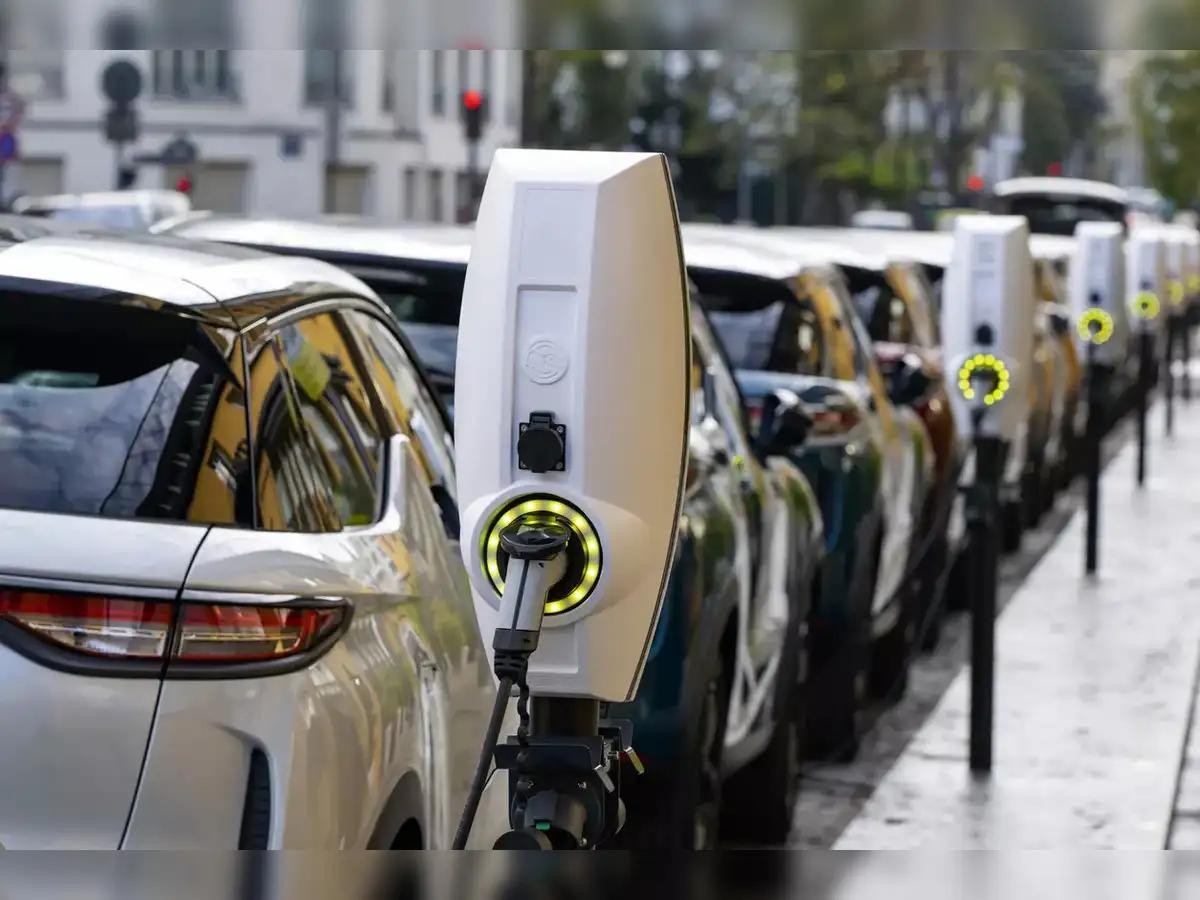
Renters face an entirely different challenge. If you do not own your home, installing a Level 2 charger may not even be possible. You will depend entirely on public charging infrastructure. Public chargers are often scarce, busy, and more expensive per kilowatt-hour than home charging.
Apartment dwellers and condo residents face similar struggles. Even if your building has charging stations, demand often outpaces availability. Waiting for a charger is a real and frustrating experience that many urban EV owners deal with regularly.
Smart buyers should budget at least $1,000 to $2,500 for a home charging setup before purchasing an EV. This is not optional spending. It is a near-essential investment that makes EV ownership actually work in real life. Skipping this calculation is one of the most common financial mistakes first-time EV buyers make.
The irony is that home charging is supposed to be one of the great benefits of owning an EV. It is far more convenient than gas stations once the system is properly set up. But getting to that point of convenience carries a price tag that almost no advertisement ever mentions.
2. Battery Degradation and Replacement: The Ticking Clock Under Your Hood
The battery is the heart of an electric vehicle. It is also the most expensive single component in the entire car. What most EV buyers do not realize is that this heart is slowly aging with every charge cycle. That aging process has real financial consequences.
Lithium-ion batteries, the type used in virtually all modern EVs, degrade over time. They do not fail suddenly like a flat tire. Instead, they slowly lose their ability to hold a full charge. A battery that once gave you 300 miles of range might only deliver 240 miles after eight years of ownership. That is a 20% reduction in your vehicle’s core capability.
Degradation is affected by several factors. Frequent use of DC fast charging accelerates battery wear. Extreme heat and cold both damage lithium-ion cells over time. Consistently charging to 100% or letting the battery drain to zero also shortens battery life. Most of these situations are difficult to avoid in daily driving.
The financial impact of battery degradation is multi-layered. First, your vehicle’s resale value drops significantly as the battery ages. Used EV buyers are becoming increasingly sophisticated. They test battery health before purchasing and negotiate hard when degradation is apparent. A vehicle with 25% battery degradation can lose tens of thousands of dollars in resale value.
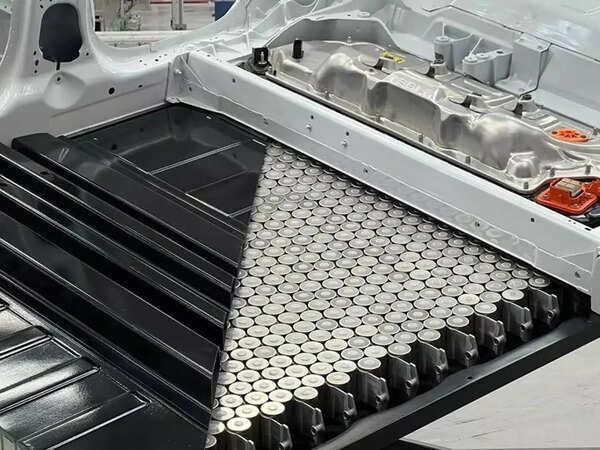
Second, if your battery degrades beyond the warranty threshold, replacement becomes the only option. Battery replacement is extraordinarily expensive. Depending on the make and model, a new battery pack can cost anywhere from $10,000 to $25,000 or more. This is not a repair most people can budget for casually.
Most manufacturers offer battery warranties covering 8 years or 100,000 miles. This sounds reassuring on paper. But the warranty typically only covers complete battery failure or degradation below 70% capacity. Significant degradation that falls just above that threshold is not covered. You are on your own for anything in the gray zone.
Third-party battery refurbishment services are emerging as an alternative. These services can sometimes restore degraded cells at a lower cost than full replacement. But this industry is still young and not universally available. Quality and reliability vary significantly between providers.
Battery technology is improving rapidly. Newer models coming to market have better chemistry and longer-lasting cells. Solid-state batteries, which promise superior longevity, are on the horizon. But if you are buying an EV today, you are buying the technology that exists today. Plan accordingly.
Smart EV owners take steps to minimize degradation. They avoid frequent fast charging when possible. They keep their state of charge between 20% and 80% for daily use. They garage their vehicles in climates with extreme temperatures. These habits help. But they do not eliminate degradation entirely. The clock is always ticking, and eventually the bill comes due.
3. Higher Insurance Premiums: The Monthly Cost Nobody Calculates
When people calculate the cost of switching to an EV, they almost always forget to factor in insurance. This is a significant oversight. Electric vehicles cost substantially more to insure than comparable gasoline-powered cars. The difference can add up to thousands of dollars over the life of the vehicle.
Insurance companies base premiums on the cost to repair or replace a vehicle. EVs are more expensive to buy than equivalent gas cars. They are also more expensive to repair. This combination drives insurance rates significantly higher. Studies show that EV owners pay anywhere from 20% to 30% more for auto insurance than owners of comparable internal combustion vehicles.
The repair cost issue is particularly important to understand. EVs have specialized components that most traditional repair shops cannot service. Fewer certified repair facilities mean less competition and higher labor rates. Replacement parts for EVs are often proprietary and expensive. A fender bender that costs $800 to fix on a regular car might cost $2,000 or more on an EV.
Battery damage from accidents is a major insurance concern. Even a minor collision can damage battery cells in ways that are not immediately visible. Insurance companies know this. They often write off vehicles with battery damage because repair costs exceed the vehicle’s value. This increases the risk profile of every EV and pushes premiums higher.
Theft rates for certain EV models are also surprisingly high in some markets. High-value vehicles attract more theft attempts. Catalytic converter theft, a major problem for gas cars, is replaced by new vulnerabilities in EVs, including software exploits and charging equipment theft. These factors contribute to higher comprehensive coverage costs.
For a mid-range EV, the annual insurance premium can easily run $2,000 to $3,500 or more, depending on your location, driving history, and coverage level. Compare this to $1,200 to $1,800 for a comparable gas vehicle. The difference over five years can exceed $5,000. That is a number worth knowing before you buy.
Many buyers focus heavily on fuel savings when justifying an EV purchase. They calculate exactly how much they will save on gasoline. But they rarely subtract the additional insurance costs from those savings. When you do the full math, the financial case for EV ownership becomes significantly more complicated.
Shopping around for EV-specific insurance providers can help reduce costs. Some companies have developed better actuarial models for electric vehicles and offer more competitive rates. Bundling home and auto insurance is another cost-reduction strategy. But even with optimization, EV insurance will almost certainly cost more than insuring a gas-powered vehicle of similar size and value.
4. Tire Wear and Replacement: The Road Expense That Accelerates Fast
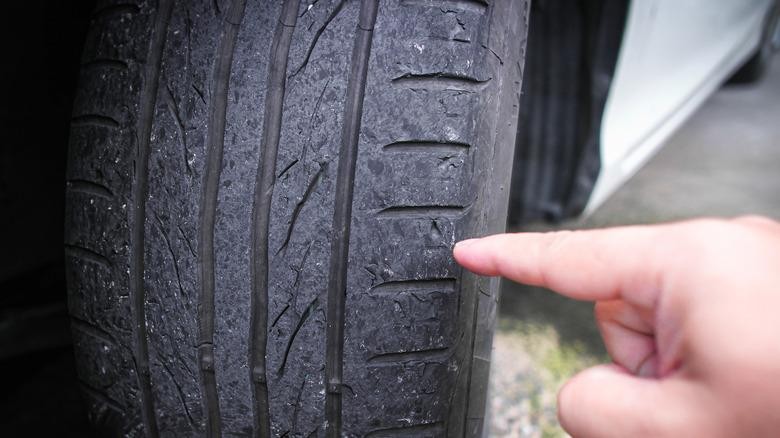
Tires are a maintenance cost that every car owner expects. What most EV owners do not expect is how dramatically faster their tires wear out compared to gas-powered vehicles. This accelerated tire wear is one of the most consistently underestimated ongoing costs of EV ownership.
Electric vehicles are significantly heavier than their gasoline counterparts. The battery packs alone can weigh 1,000 pounds or more. All that extra weight translates directly into increased tire stress. The contact patches work harder. The rubber wears down faster. Physics is unforgiving in this regard.
EVs also deliver instant torque. When you press the accelerator in an electric vehicle, maximum torque is available immediately. This is one of the thrilling aspects of EV driving. But it also means the tires experience massive rotational forces with every acceleration. This compounds the wear issue beyond just the weight factor.
Studies and real-world data from EV owners consistently show that EV tires wear out 20% to 30% faster than tires on equivalent gas-powered vehicles. Some performance-oriented EVs show even higher wear rates. Where a standard car might get 50,000 miles from a set of tires, an EV owner might see those same tires worn out at 35,000 to 40,000 miles.
Most EVs also require special tires designed for their unique demands. These tires need to handle the extra weight, support regenerative braking systems, and often reduce road noise to compensate for the absence of engine sound. EV-specific tires are not cheap. A set of four can cost $800 to $1,500 or more for premium models.
Standard tires mounted on EVs without the proper load rating can degrade even faster. They may also create safety issues. Using the wrong tires voids some manufacturer warranties. EV owners are often locked into purchasing specific, higher-cost tire options as a result.
Tire rotation is more frequent for EVs as well. Most manufacturers recommend rotating EV tires every 5,000 to 6,000 miles instead of the typical 7,500 miles. More frequent rotations mean more service visits and more labor costs over time. Small expenses accumulate into significant totals over the years of ownership.
The math on tire costs over a 10-year ownership period is sobering. An EV owner might go through six or seven sets of tires, whereas a gas car owner goes through four or five. At $1,000 to $1,500 per set, that represents an additional $2,000 to $4,500 in tire costs over a decade. Budget for it now before it catches you off guard later.
5. Public Charging Costs: When Convenience Comes With a Steep Price Tag
One of the most seductive promises of EV ownership is the ability to fuel your vehicle at home for pennies per mile. That promise is real when you are charging at home with a properly set up system. The moment you step outside and rely on public charging networks, the economics change dramatically.
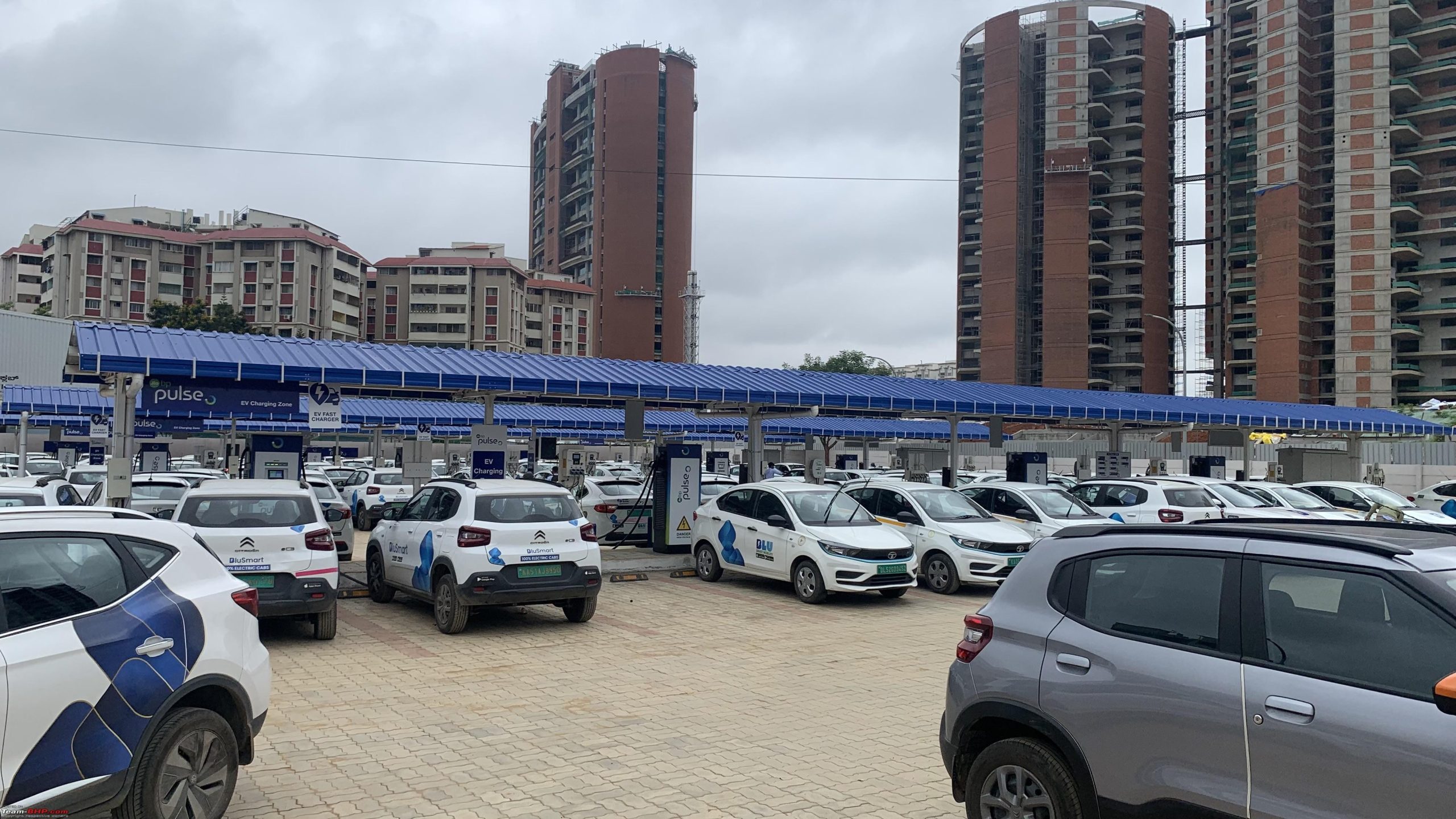
Public charging is expensive. This is the part of the EV story that tends to get buried under enthusiasm and marketing. When you break down the cost per mile of using a DC fast charger at a public station, you will often find the per-mile cost approaching or even exceeding what you would pay for gasoline in a fuel-efficient car. The savings narrative collapses under real-world conditions.
DC fast chargers, the kind that can give your vehicle an 80% charge in 20 to 40 minutes, are the most expensive type of public charging. Pricing varies by network and location. Some networks charge per kilowatt-hour. Others charge per minute. Rates frequently range from $0.25 to $0.70 per kilowatt-hour at fast charging stations. When gas prices are moderate, this can be surprisingly cost-competitive with gasoline.
Network membership fees add another layer of cost. Many charging networks offer subscription plans that reduce per-session costs. But these subscriptions carry monthly fees of $5 to $15 or more. If you use public charging irregularly, these fees can exceed your savings. Juggling multiple network memberships to access different chargers adds both cost and complexity to daily life.
Charging session initiation fees is another hidden charge. Some networks charge a flat fee of $1 to $3 just to start a session, regardless of how much electricity you use. If you make frequent short stops at public chargers, these initiation fees add up quickly. They are rarely advertised prominently on the charger itself.
Idle fees are charged when your vehicle remains plugged in after charging is complete. The intention is to keep chargers available for other users. But if you forget to move your car promptly, or if you are stuck in traffic, idle fees of $0.40 to $1.00 per minute can accumulate fast. A simple oversight can cost $20 or more in idle penalties.
Long road trips in an EV require careful planning around charging stops. Unlike gas stations, charging infrastructure is not uniform or reliable. Charging stations go offline, get damaged, or develop technical problems. Arriving at your planned charging stop only to find a non-functional unit is a real and stressful experience. It may force you to backtrack, take longer detours, or pay premium rates at an alternative network.
The honest financial reality is that EV owners who rely heavily on public charging, particularly apartment dwellers, renters, or frequent road-trippers, may save far less on energy costs than they expected. For some, the per-mile cost of public charging can actually exceed the per-mile cost of gasoline. Calculate your actual charging habits carefully before assuming the economics will always work in your favor.
6. Depreciation: Electric Vehicles Lose Value Faster Than You Think
Depreciation is the single largest cost of owning any vehicle. Most car buyers acknowledge this in theory but ignore it in practice. With electric vehicles, depreciation is a particularly sharp and fast-moving force that can represent a massive hidden cost over the ownership period.
New EVs depreciate rapidly. Industry data consistently shows that electric vehicles lose value faster than comparable gasoline-powered vehicles in many segments. The average EV can lose 40% to 50% of its original value within the first three years. Some models in oversaturated markets or those with older battery technology depreciate even faster than that.
Several factors drive this aggressive depreciation curve. Government incentive structures play a major role. When federal or state tax credits reduce the effective purchase price of a new EV, used EV prices must compete with those subsidized new vehicle prices. A buyer choosing between a $30,000 used EV and a new EV that effectively costs $27,000 after incentives will almost always choose new. Used EV prices collapse as a result.
Rapid technological advancement accelerates depreciation further. EV technology is evolving at a pace that makes three-year-old models feel noticeably outdated. Battery ranges are increasing dramatically with each new generation. Charging speeds are improving. Software features are becoming more sophisticated. A vehicle that was state-of-the-art in 2022 looks significantly less impressive in 2025. Buyers know this and price used EVs accordingly.
Model discontinuities create particularly severe depreciation events. When a manufacturer stops producing a specific model, parts availability and software support become legitimate concerns. Buyers avoid discontinued models. Prices of those vehicles on the used market drop sharply as a result. Investors in those specific vehicles absorb significant losses.
Lease return floods also depress used EV prices. As the first wave of 3-year EV leases matured, the market was suddenly flooded with returned vehicles. Supply exceeded demand. Prices fell across multiple segments simultaneously. Owners who purchased those vehicles new took substantial depreciation hits that they did not anticipate when signing their loan documents.
For buyers who finance their EV purchase, aggressive depreciation creates another dangerous problem: being underwater on the loan. This is the situation where you owe more on the vehicle than it is worth. If you need to sell, trade in, or if the car is totaled in an accident, you may owe thousands of dollars beyond what you receive from the sale or insurance payout.
Depreciation is not a cost you pay in cash each month like a car payment. But it is a very real financial loss. Calculate the expected depreciation of any EV you are considering over your expected ownership period. For many buyers, this calculation alone represents the largest hidden cost of EV ownership, often exceeding $10,000 to $20,000 over three to five years of ownership.
7. Software, Updates, and Feature Unlocking Fees: Paying for What You Already Own
The final hidden cost of EV ownership is the most modern and, in many ways, the most insidious. It is the growing trend of charging ongoing fees for software features, over-the-air updates, and capability unlocks in vehicles that you already own outright. This is a genuinely new form of automotive cost that previous generations of car buyers never had to consider.
Electric vehicles are, in many ways, smartphones on wheels. They run sophisticated software ecosystems. They receive over-the-air updates regularly. Some of these updates bring genuine improvements and new features. But increasingly, manufacturers are discovering that software is a powerful way to create recurring revenue streams from existing customers.
Feature unlocking fees are perhaps the most controversial example. Some manufacturers have sold vehicles with certain hardware already installed, such as heated seats, enhanced autopilot systems, and range-extending battery modes, but locked behind a software paywall. The hardware is physically present in your car. But you must pay a monthly or annual subscription fee to access it. This practice feels deeply problematic to many consumers. You buy the car. You own it. But you are renting the features.

Connectivity subscriptions are another recurring cost. Many EVs require active data plans to access navigation, remote start, climate preconditioning, and over-the-air updates.
These subscriptions may be bundled free for the first few years. After the introductory period expires, fees kick in. Monthly charges for connected services typically run $10 to $25 per month. Annually, that is $120 to $300 in fees for features that felt standard when you bought the car.
Navigation map updates, which were once a one-time purchase on older vehicles, are increasingly subscription-based. Autopilot and driver assistance features that require ongoing computational updates may also carry subscription fees. The cumulative cost of all these software subscriptions can easily reach $500 to $1,000 per year, depending on the manufacturer and the features you use.
Cybersecurity vulnerabilities in software-dependent vehicles create another layer of financial risk. EVs have been shown to be susceptible to remote hacks, software exploits, and unauthorized access in ways that traditional vehicles are not.
Manufacturers push security updates over the air. But if software support ends for your vehicle, as it inevitably will at some point, your car becomes increasingly vulnerable. An older EV without active software support is not just less capable. It is a security liability.
Software bugs and glitches are another underappreciated cost. Unlike a mechanical failure that has obvious physical causes, software problems can be intermittent, difficult to diagnose, and frustrating to resolve.
Service visits for software-related issues are becoming increasingly common at EV dealerships. Some problems require physical visits to authorized service centers even when the fix is ultimately software-based. Each service visit carries its own time and potential cost implications.
The broader principle at work here represents a fundamental shift in the ownership model of automobiles. Traditional car ownership meant paying once and owning fully. The new EV software model means ongoing payments for the life of the vehicle.
Manufacturers are deliberately designing revenue streams that extend well beyond the initial sale. Consumers who do not read subscription terms carefully may find themselves paying far more over time than they ever anticipated when they drove off the lot.
Also Read: How to Catch Air Suspension Failure Before It Strands You
