
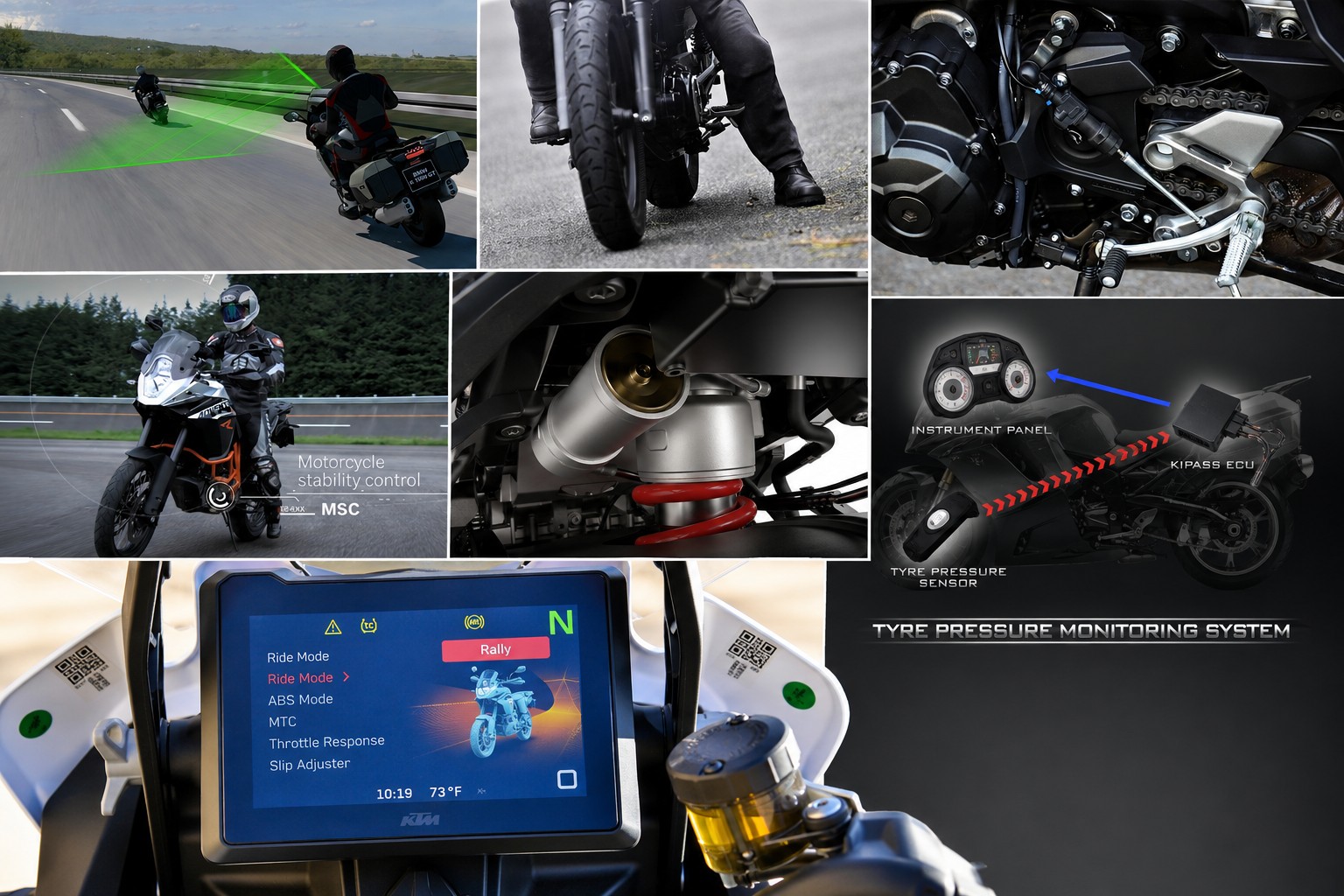
Modern motorcycles are no longer just mechanical machines built for speed and thrill. They have evolved into sophisticated, technology-packed vehicles loaded with features that most riders never fully discover.
Manufacturers like BMW, Ducati, Honda, Kawasaki, and Yamaha now pack their flagship bikes with systems borrowed from aerospace, automotive, and even military engineering. These hidden features are not always advertised loudly on spec sheets. They quietly operate in the background, making every ride safer, smoother, and more exhilarating.
From intelligent braking systems that think faster than human reflexes to cornering lights that illuminate every blind curve, today’s motorcycles are more capable than most riders realize. Ride modes that remap the entire engine character with a single button press.
Tire pressure monitoring systems now send alerts before a blowout can occur, while lean-sensitive traction control continuously calculates real-time physics to maintain stability. These technologies are no longer theoretical ideas, as they are already available on motorcycles sold in showrooms around the world.
Many riders purchase a premium motorcycle, read the basic manual, and never dig deeper. They miss a remarkable layer of engineering excellence hiding just beneath the surface.
This guide explores ten of the most impressive, underappreciated, and genuinely surprising hidden features found in modern motorcycles. Each one changes how you ride, how you survive, and how you connect with your machine on every road you choose to take.
1. Cornering ABS (Anti-Lock Braking System)
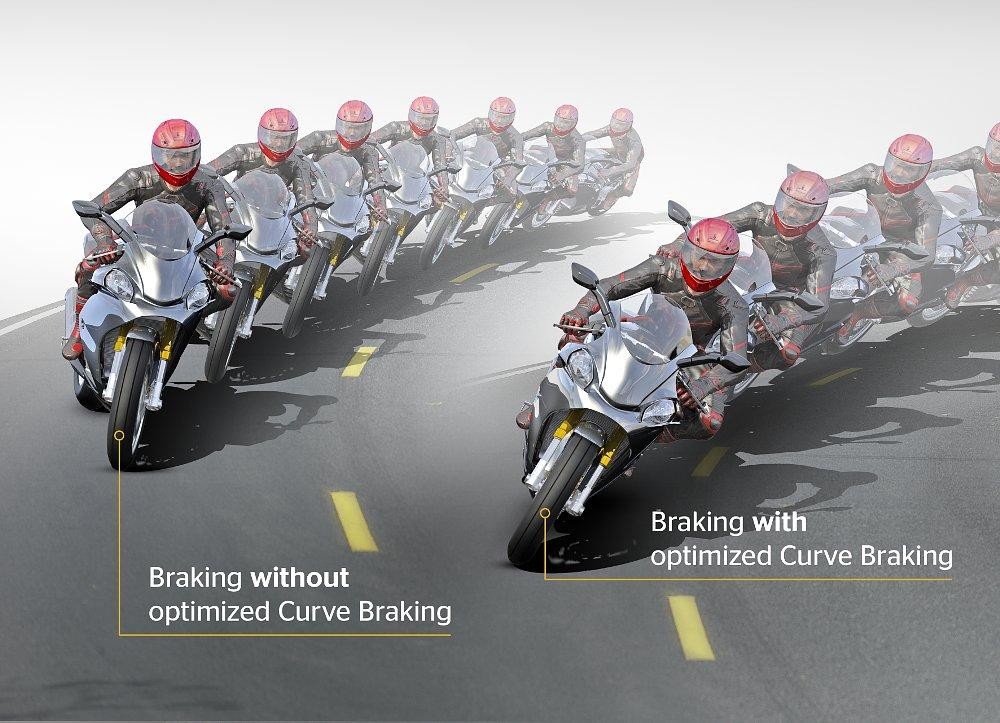
Standard ABS prevents wheel lock-up during straight-line braking. Cornering ABS takes that technology to an entirely new dimension. It monitors the motorcycle’s lean angle and adjusts braking pressure individually on each wheel while the bike is mid-corner.
Traditional ABS would simply reduce brake force when a wheel locks. Cornering ABS uses inertial measurement units (IMUs) to calculate lean angle, deceleration rate, and wheel speed simultaneously. It then modulates front and rear brake pressure independently to maintain the optimal slip ratio for both wheels, even at extreme lean angles.
This system is especially critical when a hazard appears mid-corner, such as a patch of gravel, a sudden car stop, or an unexpected traffic light. Without cornering ABS, braking hard while leaned over almost guarantees a lowside crash. With it, the system intervenes within milliseconds, keeping both tyres gripping the road surface.
Manufacturers such as BMW, Ducati, and KTM have refined these systems through multiple generations. In their latest form, they operate almost imperceptibly, with riders noticing only a subtle pulse through the brake lever as the system intervenes. It is even common for riders to cover thousands of kilometres without ever deliberately activating it.
The system operates at a processing speed of over 100 calculations per second. It communicates directly with the traction control and engine management units. No older mechanical system comes close to this level of integration and precision.
2. Cornering Headlights (Adaptive Lighting)
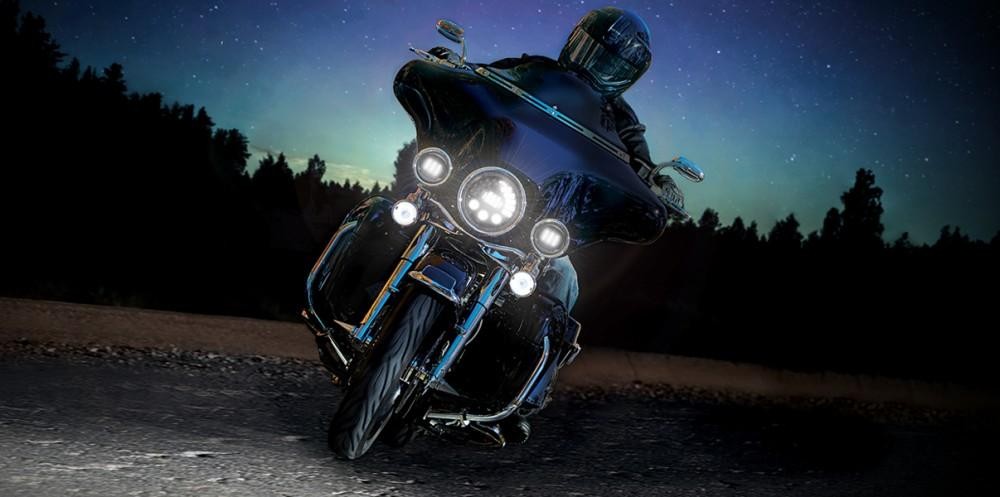
Most riders assume their headlight simply points forward. On modern premium motorcycles, the headlight physically moves or switches between multiple LED segments to illuminate the exact direction the bike is leaning toward.
Adaptive cornering lights use the same IMU data that feeds the cornering ABS. As the bike leans into a right-hand curve, the system activates additional LED segments on the right side of the headlight cluster. The illuminated zone shifts precisely with the lean angle, projecting light exactly where the road curves ahead.
This technology was first developed for cars. Lexus, Mercedes, and BMW introduced swivelling headlights in the early 2000s. Motorcycle engineers adapted the concept and made it more dynamic, since motorcycles lean far more aggressively than any car ever could. The lean angles involved can exceed 50 degrees from vertical.
Without adaptive lighting, riders entering night corners face a dark zone directly ahead of their lean path. The fixed headlight illuminates straight ahead while the road curves away into blackness. Cornering lights eliminate this dangerous blind zone completely.
The system adds zero weight penalty compared to a conventional headlight. It runs cooler, lasts longer, and consumes less battery power than halogen alternatives. This is a feature most riders use every single night without consciously appreciating it.
3. Multiple Ride Modes With Full Engine Remapping
Pressing a button on the handlebars and completely changing your motorcycle’s personality sounds like science fiction. It is actually standard on most modern middleweight and litre-class motorcycles available today.
Ride modes do not simply throttle the power output. They remap the entire engine management system, fuel injection timing, throttle response curves, rev limiter positions, engine braking characteristics, and power delivery linearity, all change simultaneously. Some modes also reconfigure the suspension damping rates if the bike is equipped with semi-active dampers.
A typical modern superbike offers at least three ride modes: Rain, Road or Street, and Sport or Track. Rain mode softens throttle response dramatically and reduces peak power to around 75-80 percent.
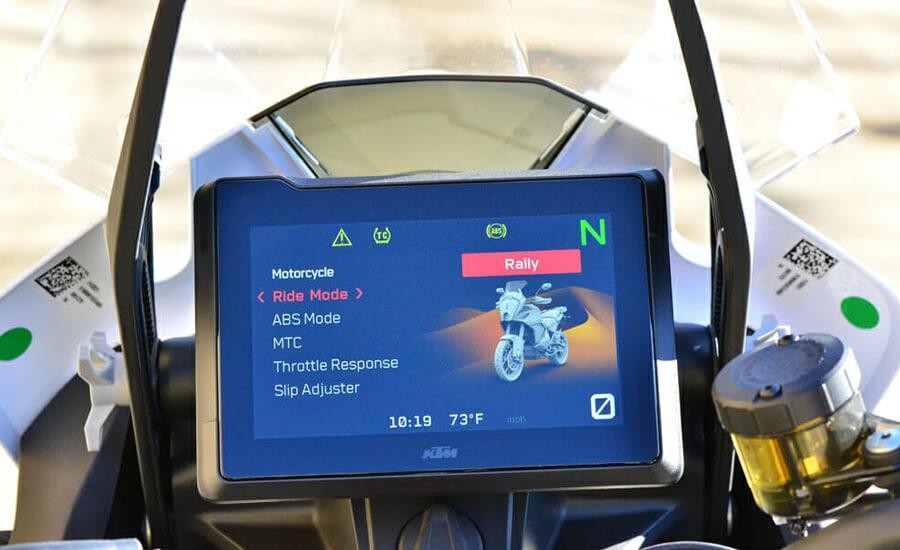
Road mode provides linear, predictable power suitable for everyday riding. Sport or Track mode opens everything up, with instantaneous throttle response, maximum power, and sharper engine braking.
Premium motorcycles from Aprilia, BMW, and Ducati offer five or more modes. Some even allow riders to build fully custom modes, adjusting each parameter independently and saving them as personal profiles. Ducati’s MotoGP-derived electronics package allows 8 levels of engine braking adjustment alone.
Switching modes takes under one second and can be done at any speed on most modern machines. The transformation is immediate and profound. Riders who never explore beyond the default mode are leaving significant capability and safety on the table.
4. Tire Pressure Monitoring Systems (TPMS)
A tyre losing pressure is one of the most dangerous situations a motorcyclist can face. Unlike a car, a motorcycle running on a deflating tyre can become catastrophically unstable within seconds. Modern bikes now include built-in Tire Pressure Monitoring Systems that warn riders before the situation becomes critical.
TPMS sensors are mounted inside each tyre, attached directly to the valve stem. They continuously measure air pressure and temperature inside the tyre. When pressure drops below a pre-set threshold, typically 25 percent below the recommended inflation, an alert appears on the instrument cluster immediately.
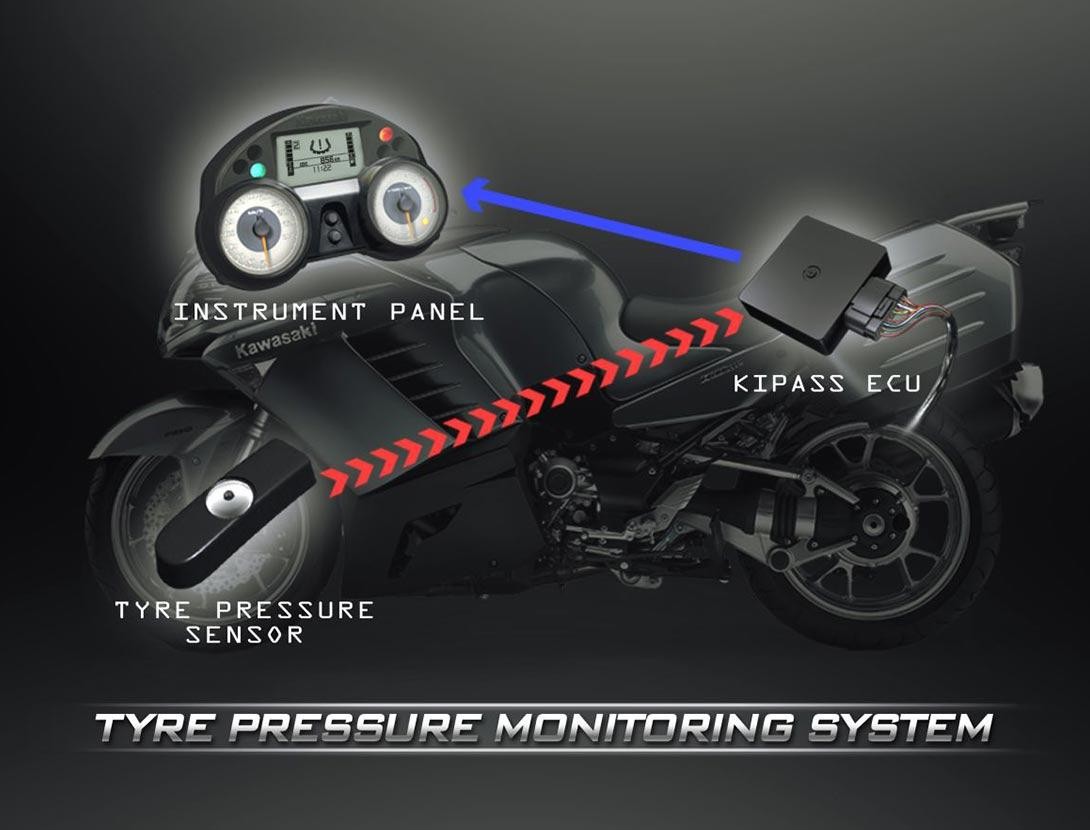
Temperature monitoring is equally important. An overheated tyre loses structural integrity and grip characteristics. TPMS systems on premium motorcycles track both variables and display them live on the digital dashboard at all times. Riders can glance down and see 2.5 bar / 38°C for each tyre in real time.
This feature prevents the catastrophic scenario of riding on a slow puncture unknowingly. Many riders have reported only noticing tyre pressure loss when the handling felt “different,” often by which point pressure had dropped dangerously low. TPMS eliminates this guesswork entirely.
The sensors transmit data wirelessly to the central ECU via a dedicated RF frequency. Battery life inside each sensor typically exceeds five years. Replacement sensors cost between £50 and £120 per wheel, depending on the manufacturer.
Also Read: 8 Cars That Failed the New Side Impact Test
5. Semi-Active Electronic Suspension
Motorcycle suspension has traditionally required a spanner and a manual to adjust. Riders would physically compress or extend preload rings, adjust damping clickers, and fine-tune rebound by hand, often on the side of a road. Semi-active suspension eliminated all of that mechanical work and replaced it with continuous electronic intelligence.
Semi-active suspension systems use electronically controlled actuators inside both the front fork and rear shock. These actuators can alter the oil flow rate through the damping valves within milliseconds. The system samples road surface data and rider inputs hundreds of times per second and adjusts damping forces continuously to match conditions.
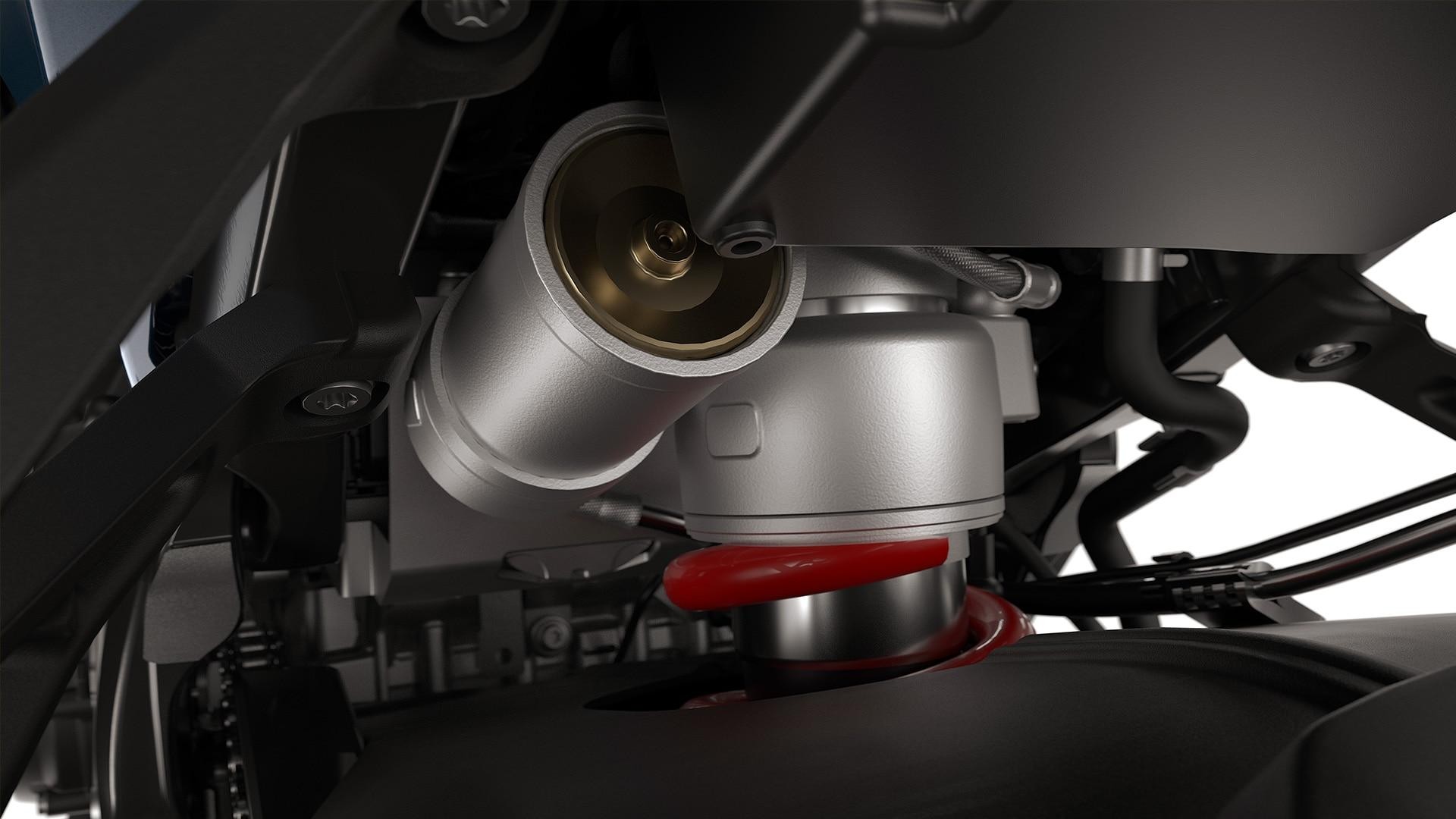
When the system detects a sharp bump, a pothole, a railway crossing, or a speed bump, it softens the suspension instantaneously to absorb the impact. When the rider brakes hard, it stiffens the front fork to prevent dive. During aggressive cornering, it firms both ends for maximum stability and feedback.
The rider never feels the mechanical adjustments happening. They simply experience a motorcycle that feels perfectly set up at all times, on all roads, regardless of whether they are carrying luggage, a passenger, or riding solo on a mountain pass.
Riders who commute on bumpy urban roads and then head out for weekend canyon carving no longer need to compromise their suspension setup. The system adapts in real time to serve both scenarios flawlessly.
6. Lean-Sensitive Traction Control
Basic traction control cuts engine power when the rear wheel spins. Lean-sensitive traction control is exponentially more sophisticated, as it considers the motorcycle’s lean angle, speed, acceleration rate, and wheel slip ratio simultaneously before making any intervention decision.
A motorcycle can safely tolerate more rear wheel slip when riding upright than when leaned over at 45 degrees. Standard traction control systems ignore lean angle entirely.
They use a single intervention threshold, whether the motorcycle is upright or leaned over in a corner. This leads to unnecessary power cuts during fast straight-line riding and delayed intervention when the bike is leaned into a turn, which can reduce safety and performance.
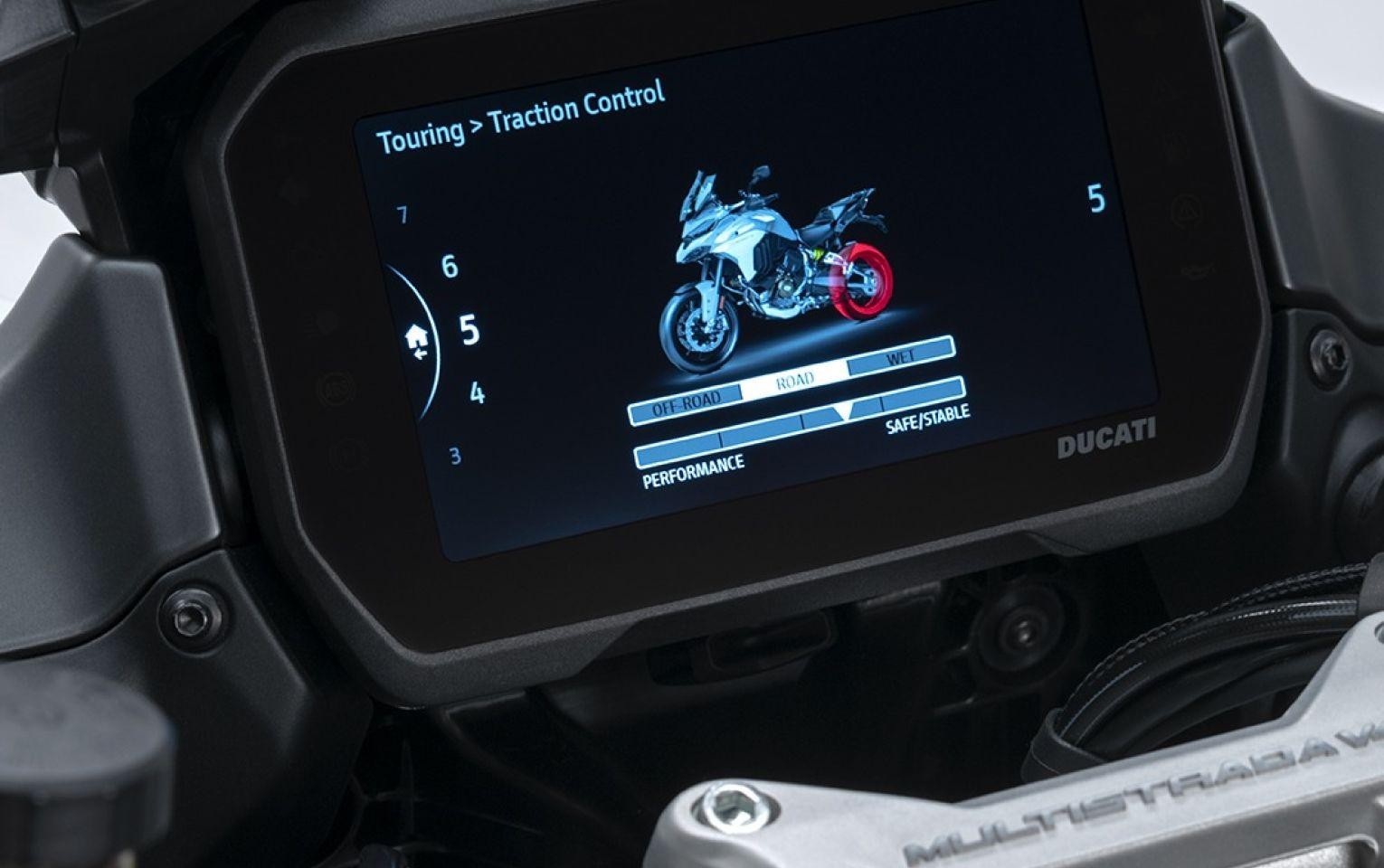
Lean-sensitive systems use the IMU to know the bike’s exact lean angle at every moment. At high lean angles, the system becomes more aggressive and intervenes at lower slip percentages. At low lean angles on the straight, it permits higher slip to allow more dynamic acceleration. The result feels natural and unobtrusive to the rider.
MotoGP engineers pioneered this technology. It trickled down to production bikes from Ducati first, with the introduction of their Ducati Traction Control Evolution (DTC EVO) system. Today, virtually every flagship production motorcycle uses lean-sensitive traction control as standard equipment.
The system can distinguish between controlled, intentional slides and dangerous, uncontrolled wheelspin. This distinction matters enormously for experienced riders who want to use the rear tyre aggressively without electronic nannying at inappropriate moments.
7. Motorcycle Stability Control (MSC)
Motorcycle Stability Control is the two-wheeled equivalent of a car’s electronic stability programme. It represents the highest level of integrated electronic safety intervention currently available on production motorcycles. MSC ties together braking, throttle, traction, and lean angle data into one unified safety brain.
When MSC detects that the motorcycle is departing from its intended path through excessive lean, unexpected surface grip changes, or rider input errors, it coordinates interventions across multiple systems simultaneously. It may reduce engine torque, apply individual brake pressure on one wheel, and adjust electronic damping all within the same fractions of a second.
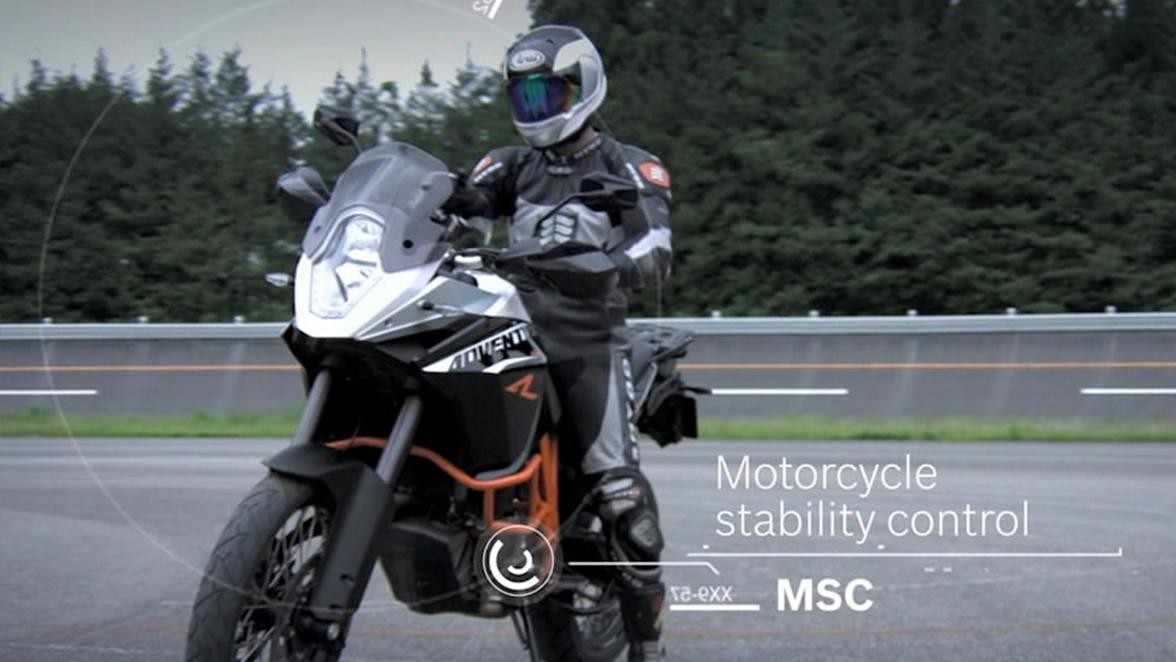
The genius of MSC is its invisibility. Riders are typically unaware that any intervention has occurred. The system corrects errors before the rider can perceive that anything went wrong. Only in extreme situations, a sudden ice patch or emergency braking mid-corner does the system become apparent through subtle pulsing of the brakes or a momentary engine response change.
Bosch developed the motorcycle MSC system and licenses it to multiple manufacturers. BMW Motorrad was among the first to implement it on production motorcycles around 2013. Today, Yamaha, Honda, KTM, and Kawasaki all offer their own versions with varying levels of sophistication.
The computational power required for MSC rivals early aerospace navigation computers. All of this processing happens in a unit roughly the size of a cigarette packet mounted discreetly on the motorcycle’s frame.
8. Bi-Directional Quickshifter
Traditional gear changes involve a coordinated sequence where the rider closes the throttle, pulls the clutch lever, shifts gears, releases the clutch, and then reapplies throttle. Skilled riders can complete this process in under half a second. A bi-directional quickshifter streamlines the process by removing the need for clutch and throttle coordination during both upshifts and downshifts.
For upshifts, the quickshifter momentarily cuts ignition timing or fuel injection for a few milliseconds just long enough for the transmission dogs to disengage and re-engage in the higher gear. The rider simply pushes the gear lever up without touching the clutch or closing the throttle. The gear change happens in under 50 milliseconds, faster than any mechanical clutch pull could ever achieve.
Downshifts are more complex. The system must match engine speed to the lower gear ratio before engagement, otherwise the rear wheel receives a sudden jolt of engine braking that can cause wheel lock or instability.
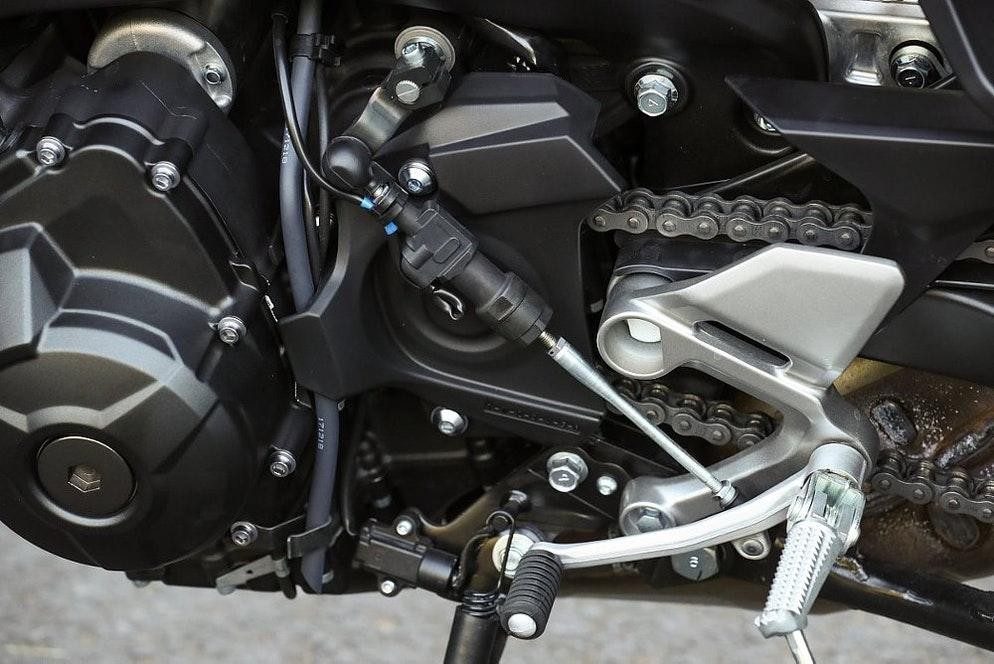
The auto-blipper function electronically opens the throttle fractionally during downshifts to raise engine revs and match speed automatically. This is called rev-matching and was previously a highly skilled rider technique.
Professional riders in MotoGP have relied on quickshifters exclusively since the 2010s. The technology has now reached motorcycles priced under £10,000, making this MotoGP-derived feature accessible to everyday riders.
Riders who use the quickshifter report feeling a deeper connection to the motorcycle’s powertrain. Gear changes become instantaneous and seamless, maintaining full momentum through every ratio change.
9. Hill Start Assist
Every motorcyclist who has faced a steep uphill junction knows the anxiety of balancing the bike, managing clutch slip, feeding the throttle, and hoping gravity does not win the battle. Hill Start Assist is a feature that removes this challenge entirely by holding the rear brake automatically for a brief period after the rider releases the hand brake.
The system uses the motorcycle’s IMU to detect when the bike is stationary on an incline. When the rider releases the brake lever to operate the clutch and throttle for moving off, the system maintains rear brake pressure automatically for up to three seconds. During this window, the rider can smoothly feed the clutch and throttle without the bike rolling backward.
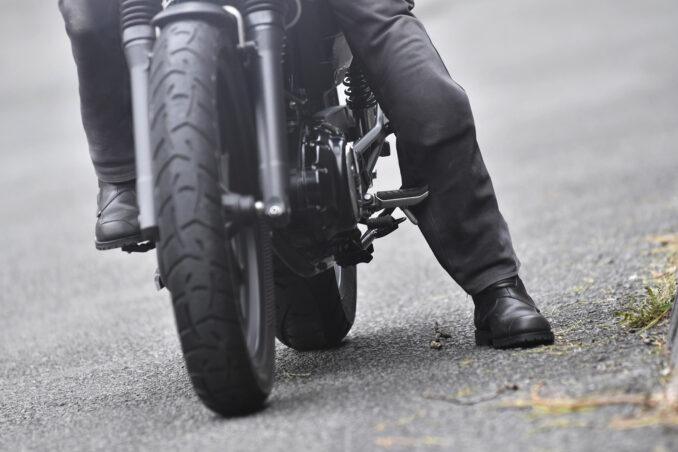
When forward motion is detected through throttle application and clutch engagement, the system releases the rear brake automatically and hands control back to the rider. The entire process is seamless and requires no button presses or special activation. It simply works in the background whenever the conditions require it.
This feature is particularly valuable for riders on touring motorcycles carrying heavy panniers, top boxes, and passenger weight. A fully loaded adventure tourer can weigh over 300 kilograms. Managing that mass on a steep hill without hill assist demands significant skill and experience.
Many riders purchase motorcycles with hill start assist and never appreciate it consciously. They simply notice that uphill starts feel more relaxed and controlled than they expected. That quiet competence is precisely the point.
10. Intelligent Cruise Control With Following Distance Management
Adaptive cruise control has been standard on premium cars for over a decade. Modern flagship motorcycles now offer the same capability, maintaining a set speed while automatically adjusting to match the speed of traffic ahead using radar technology mounted in the nose fairing.
Motorcycle adaptive cruise control uses a forward-facing radar unit, typically mounted behind the front fairing, to detect vehicles ahead and measure closing speeds.
When a slower vehicle enters the radar detection zone, typically up to 150 metres ahead, the system automatically reduces engine throttle to slow the motorcycle to a safe following distance. When the vehicle ahead moves away or changes lane, the system smoothly accelerates back to the set cruise speed.
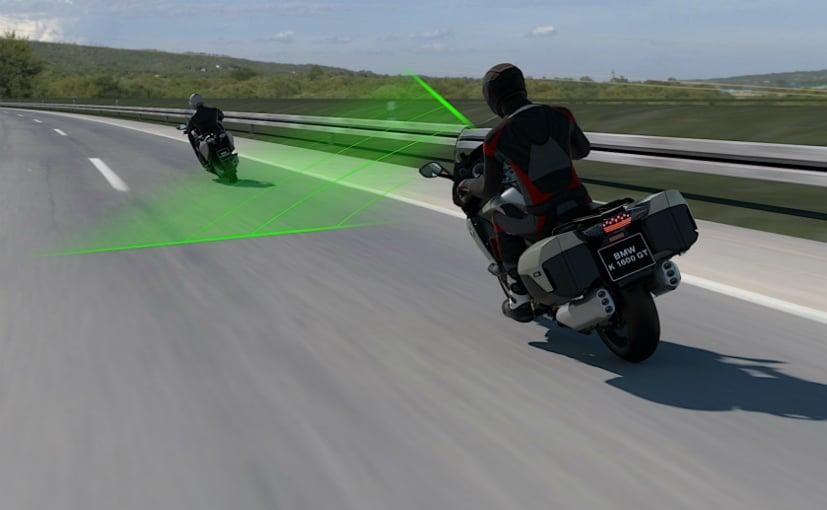
The rider sets their desired cruising speed and preferred following distance gap, usually selectable between short, medium, and long gaps. The system then handles speed management completely. On long motorway journeys, this dramatically reduces rider fatigue. The constant micro-throttle adjustments that characterise motorway riding are handled electronically, leaving the rider free to focus entirely on observation and positioning.
BMW introduced radar-assisted cruise control to motorcycles on the K 1600 range. Ducati followed with their Multistrada V4. Today, Honda’s Gold Wing and Kawasaki’s Versys 1000 S also feature radar-guided adaptive systems.
The radar unit adds only 200 grams to the motorcycle’s weight. It operates in all weather conditions, including heavy rain, though heavy fog can reduce its effective range. This is touring technology that transforms long-distance riding from an endurance exercise into a genuinely relaxing journey.
Also Read: 10 Cars Cheapest to Own in High-Gas States Like California
