
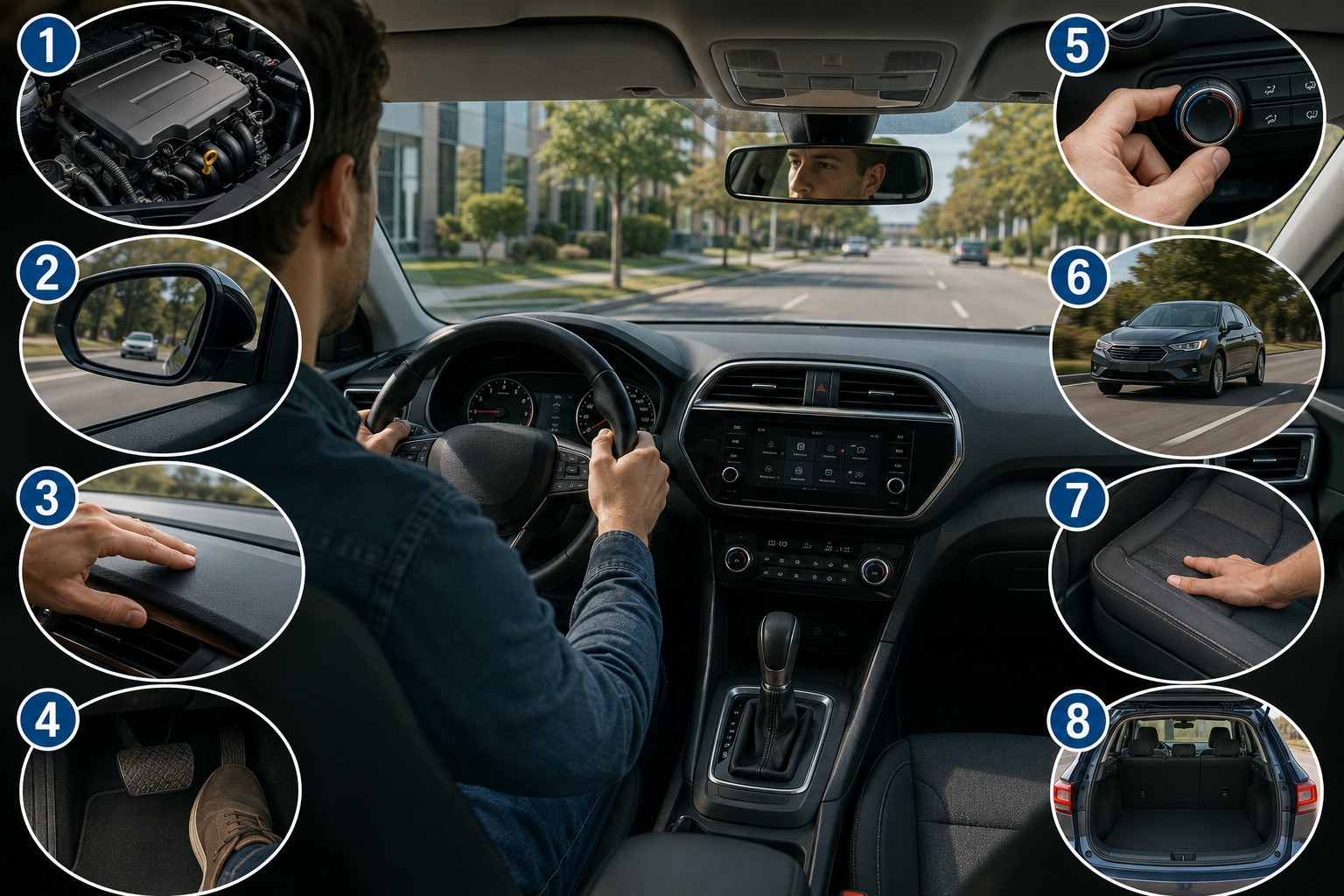
Buying a car is one of the biggest financial decisions you will ever make. Most people spend weeks researching prices, colors, and fuel economy before stepping into a dealership. Yet when the moment finally arrives to take the car for a spin, they miss the most critical details that truly matter.
A test drive is not just about how a car feels on a smooth highway. It is your only real chance to uncover hidden problems before signing on the dotted line. Salespeople are trained to keep your attention on the excitement of a new vehicle. They want you distracted by the sunroof and the touchscreen, not focused on the subtle clues the car is giving you.
Most buyers spend less than 30 minutes on a test drive. That is simply not enough time if you do not know what to look for. The untrained eye misses brake fade, transmission hesitation, suspension wear, and a dozen other red flags.
This guide was created to change that. Whether you are buying brand new or certified pre-owned, these eight overlooked checkpoints will give you a massive advantage. You will walk away either confident in your purchase or saved from a very expensive mistake. Pay close attention, your wallet will thank you.
1. Cold Start Behavior
Most people arrive at the dealership to find the car already warmed up and running. This is not an accident. Salespeople often start the vehicle well before you arrive. A warm engine hides an enormous number of mechanical problems that only reveal themselves during a cold start.
Always request that the car be turned off completely before your test drive begins. Watch and listen carefully to the moment the key turns or the start button is pressed. The engine should fire up quickly and settle into a smooth, steady idle almost immediately.
A healthy engine does not cough, sputter, or hesitate during startup. It does not produce excessive smoke from the exhaust, especially on a mild-temperature day. Blue or white smoke during startup can signal oil burning or coolant leaks, both of which are serious and expensive problems.

Pay close attention to any warning lights that flash on and then disappear quickly. Some vehicles are programmed to briefly show warning indicators during startup before clearing them. However, any light that stays on longer than two or three seconds deserves an explanation from the salesperson.
Listen for ticking or knocking noises in the first thirty seconds of operation. A slight ticking that gradually fades as the engine warms up can indicate low oil pressure or worn valve components. These sounds are easy to miss once the engine has been running for ten minutes.
Notice how the idle settles. A smooth engine will hold a consistent RPM without surging up and down. An engine that hunts for its idle, rising and falling rhythmically may have vacuum leaks or a dirty throttle body that needs attention.
The transmission should not clunk or shudder when you first shift into drive or reverse from a cold state. Hard engagement at low temperatures can signal transmission wear or low fluid levels. These early signs are the car’s way of communicating its true health.
Do not let the salesperson rush you past this moment. Take a full sixty seconds to observe, listen, and absorb what the car is telling you. That one minute of patience could save you thousands of dollars in repairs down the road.
2. Brake Feel and Fade
The vast majority of test drive routes provided by dealerships are carefully chosen. They include gentle turns, smooth roads, and very little need for hard braking. This is a problem, because brakes are one of the most safety-critical systems on any vehicle.
You need to test the brakes properly, and that means going beyond a gentle tap at a traffic light. Find a safe, open section of road where you can accelerate to around 40 to 50 miles per hour. Then apply firm, steady pressure to the brake pedal and bring the vehicle to a complete stop.
Pay attention to how the pedal feels beneath your foot. A properly functioning brake pedal should feel firm and responsive, with resistance increasing smoothly as pressure is applied. If it feels soft or spongy, that is a warning sign that may point to air in the brake lines or worn seals in the master cylinder.
Pay attention to whether the car pulls to one side during braking. If the steering wheel tugs left or right when you slow down, it can mean a stuck brake caliper or uneven brake pad wear. This creates unpredictable handling in emergency situations.
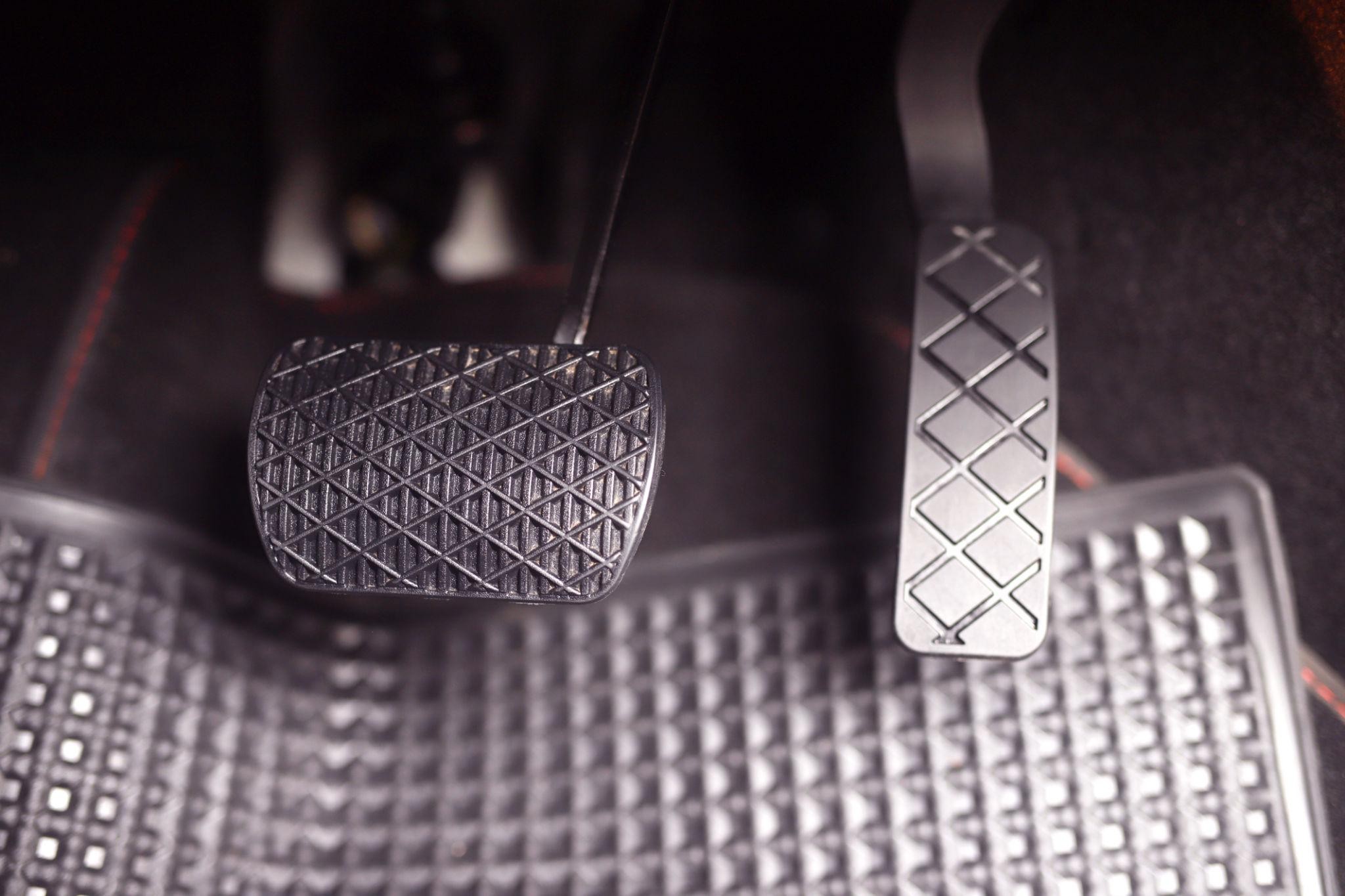
Pay close attention to any squealing, grinding, or scraping noises when the brakes are used. A squealing sound usually indicates that the brake pad wear indicators are making contact with the rotor. Grinding is a more serious warning, as it suggests the brake pads are fully worn down, and metal is now rubbing directly against metal.
Perform this braking test more than once during your drive. On a longer test drive, do it after the brakes have had time to warm up through normal use. Brake fade, where stopping power decreases after repeated use, is a real issue with worn rotors and overheated pads.
Also test the parking brake or electronic brake hold feature. It should hold the vehicle firmly on any incline without any rolling. A parking brake that slips is both a safety hazard and a maintenance item that adds to your immediate post-purchase costs.
Pay attention to any pulsing in the brake pedal. A vibration during braking typically points to warped rotors. While this issue is common and often preventable, it is also something many buyers overlook during a short, comfortable test drive.
3. Steering Response and Wheel Centering
Steering feel is one of the most underappreciated aspects of any vehicle evaluation. Most buyers simply turn the wheel a few times and decide the car steers “fine.” But there is so much more information hidden in how a car responds to steering inputs.
Find a long, straight, flat road for this test. Bring the car up to highway speed, ideally 55 to 65 miles per hour. Then, very carefully and briefly, release your grip on the steering wheel and observe what the car does on its own.
A properly aligned vehicle should track perfectly straight without any input. It may drift very slightly in the direction of a road’s natural crown, but it should not pull noticeably in one direction. A strong, persistent pull to either side indicates an alignment problem or uneven tire pressure.

After completing a turn, observe how the steering wheel behaves as it is brought back toward the center. In a properly functioning vehicle, it should return smoothly with steady, natural resistance. If the wheel feels sticky, resists movement, or does not self-center properly, it may indicate problems with the power steering system or lack of lubrication in key steering components.
Pay attention to any play or looseness at the center of the steering wheel’s movement. There should be very little free movement before the front wheels actually begin to turn. Excessive play is a serious safety concern and often indicates worn steering rack components.
Vibrations through the steering wheel at highway speeds are another red flag. Light vibration can mean tire balance issues are easily fixed, but it signals the vehicle has not been properly maintained. Heavy or persistent vibration can indicate deeper suspension or wheel bearing problems.
Pay attention to whether the steering feels light and electronically assisted or heavier and more mechanical. Either character can be completely normal depending on the vehicle’s design. The key is consistency, with the steering response feeling uniform whether turning left or right, and whether driving at low or high speeds.
Take the car over a bumpy surface if you can find one. The steering wheel should not jerk or pull harshly when the tires hit imperfections. If the wheel moves aggressively through rough patches, the vehicle may have worn tie rod ends or damaged steering components.
4. Suspension Behavior Over Real-World Road Conditions
Dealerships will almost never direct you toward a pothole-riddled side street or a rough railroad crossing. That is precisely where you need to go. Suspension systems reveal their true condition only when they are put under real stress.
Intentionally seek out speed bumps, rough pavement, expansion joints, and uneven surfaces during your test drive. Drive over them at normal speeds, not crawling. The car’s response will tell you far more than any smooth highway lap ever could.
A healthy suspension absorbs impacts and returns to normal quickly. You should feel the bump, but the car should settle immediately afterward without bouncing, wallowing, or continuing to oscillate. Multiple bounces after hitting a single bump indicate worn shock absorbers or struts.
Listen for clunking, knocking, or rattling sounds when you hit uneven surfaces. These noises often come from worn sway bar links, loose strut mounts, or failing ball joints. These components are critical to handling safety and can be expensive to replace.

Test the suspension’s behavior during sharp cornering as well. Take a tight on-ramp or a roundabout at a moderate speed. The car should lean slightly but stay composed and predictable. Excessive body roll or an unsettled feeling through a corner signals worn anti-roll bars or soft shocks.
Drive over a rough patch and then listen during the seconds that follow. Squeaks and creaks that appear after bumps rather than during them often indicate dry rubber bushings. These are less critical but add up to a real maintenance cost over time.
Pay attention to how the steering wheel responds when you hit a pothole or road imperfection. It should absorb the hit without extreme reaction. A wheel that kicks sharply sideways when hitting a bump can indicate failing steering dampers or worn rack bushings.
Do not be afraid to ask the salesperson if you can drive on a specific road you know to be rough. They may resist, but you have every right to test the vehicle on conditions you will actually encounter in daily life. This is your money and your safety on the line.
Also Read: The True Cost of Charging an EV vs Filling a Gas Tank
5. Transmission Smoothness
Whether a car has an automatic, dual-clutch, or continuously variable transmission, the way it shifts gears is one of the most revealing indicators of its mechanical health. Yet most test drivers pay almost no attention to what the gearbox is doing beneath them.
Start your transmission evaluation from a complete stop. Accelerate gently and pay attention to how the car builds speed. Each gear change should be smooth and nearly imperceptible. You should feel forward momentum without any lurching, hesitation, or sudden engagement.
Then accelerate more firmly, not a full-throttle launch, but a brisk, confident pull onto a highway entrance ramp. Under heavier load, transmission problems that hide during gentle driving become far more apparent. Watch for hesitation, slipping, or a noticeable “searching” feeling between gears.

Pay close attention to downshifts when you need to accelerate from low speed. When you press the accelerator at 30 miles per hour to overtake a slow vehicle, the transmission should kick down quickly and cleanly. A delayed or jerky downshift is a common sign of worn transmission clutch packs or a software issue.
Test the transmission in stop-and-go traffic conditions if possible. City driving puts far more demand on a gearbox than smooth highway cruising. Shuddering at low speeds in an automatic transmission, particularly in the 25 to 40 mph range, is a well-known symptom of torque converter problems.
Notice whether the engine revs and the car’s acceleration match each other properly. If the engine revs climb without a corresponding increase in vehicle speed, the transmission is slipping. This is one of the most serious transmission symptoms and often signals a very expensive repair ahead.
Listen for any whining, humming, or clunking sounds that change with engine speed. Transmission-related noises are often subtle and easy to miss in a noisy dealership lot. This is another excellent reason to keep the radio off during your entire test drive.
Always test the reverse gear specifically. Engage reverse from a complete stop and notice whether it engages smoothly. A harsh or delayed engagement into reverse is a classic early sign of automatic transmission wear that many buyers completely overlook.
6. Electrical Systems and Technology
Modern vehicles are more computer than car. The average new vehicle contains over 100 million lines of software code. Electrical gremlins are among the most frustrating and expensive problems any car owner can face, yet most test drivers spend their time listening to the Bluetooth rather than testing the systems.
Begin by testing every button, switch, and control surface in the cabin. Turn each window up and down individually. Test each mirror adjustment direction. Activate every seat heating and cooling setting if the car has them. These individual tests take only a few minutes but reveal a great deal about how the vehicle has been used and maintained.
Pay particular attention to the infotainment system. Does it boot up quickly? Does it freeze or lag when you switch between functions? An infotainment system that runs slowly or crashes during a test drive will only get worse over time as the vehicle ages and software becomes more outdated.

Test the climate control system thoroughly. Switch between heating and cooling. Test each individual vent by directing airflow manually. Check that the fan operates correctly at every speed setting. A blower motor that makes noise at certain speeds or a vent that does not direct airflow properly signals an issue hiding in the dashboard.
Test all exterior lighting if possible. Ask the salesperson to confirm that all brake lights, turn signals, and reversing lights are functioning. Burned-out bulbs are a minor fix but indicate a vehicle that has not been regularly inspected or maintained between ownership.
Check every USB port and charging outlet by plugging in your phone. Non-functional ports are a common overlooked detail. On a used vehicle, they may indicate water damage or electrical faults in the vehicle’s wiring harness.
Test the driver assistance systems if the vehicle has them. Lane-keeping assist, adaptive cruise control, and automatic emergency braking all require sensor calibration. A system that activates inappropriately or fails to activate when it should signals a sensor alignment or software problem that can be costly to diagnose.
Do not ignore warning lights or error messages that appear on the instrument cluster. Ask for a clear explanation of every icon or message that appears. If the salesperson cannot explain it confidently, request that the vehicle be connected to a diagnostic scanner before you commit to the purchase.
7. Noise, Vibration, and Harshness
Automotive engineers refer to noise, vibration, and harshness, or NVH, as one of the most important measures of a vehicle’s refinement and structural integrity. Excessive NVH is not just annoying. It often signals mechanical problems that are expensive to address.
Begin your NVH evaluation the moment you close the car door. A solid, planted thud suggests strong body structure and excellent door sealing. A tinny, hollow sound or a door that requires multiple slams to close properly indicates poor build quality or a body that has been in a collision.
Drive with the radio completely off for at least the first ten minutes of your test drive. This is non-negotiable. Road noise, wind noise, mechanical vibrations, and drivetrain sounds are all impossible to detect if the stereo is covering them up.
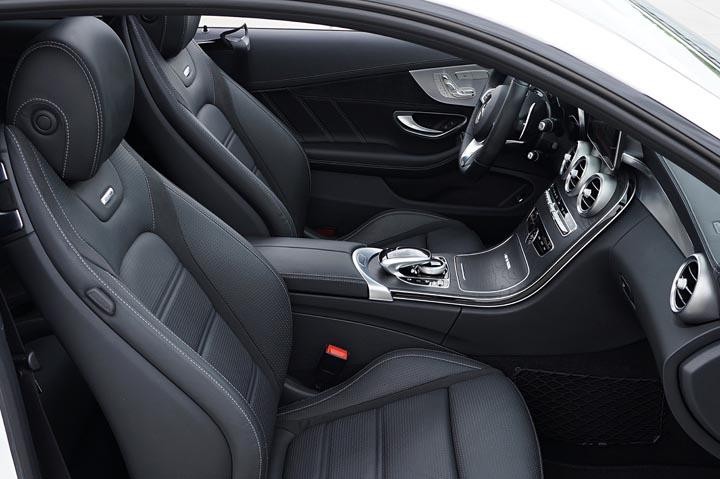
Notice the level of road noise at highway speeds. Some tire noise is normal and unavoidable. However, excessive droning from the tires at 60 miles per hour can mean the wrong tire size has been fitted, the tires are unevenly worn, or wheel bearings are beginning to fail.
Pay attention to wind noise around the door seals, window edges, and mirror mounts. A slight whistle or rush of air at highway speed may seem minor. However, it often indicates damaged or incorrectly fitted weather stripping that will allow water intrusion in heavy rain.
Feel for vibrations through the seat, floor, and steering wheel at various speeds. Vibrations that appear at a specific speed and then fade at higher or lower speeds are a classic symptom of tire imbalance or a bent wheel. Vibrations that persist across all speeds suggest something more serious.
Listen for rattles and squeaks from the interior trim. Open and close the glove box, sunroof, and center console while parked. Press on panels and surfaces lightly to see if any produce noise. Interior rattles are minor individually but collectively suggest a vehicle that was poorly assembled or has been treated roughly.
Finally, notice how quiet the cabin is when the car is completely stationary. Start the engine from cold, let it idle, and sit in silence. A healthy modern vehicle should be remarkably quiet at idle. Excessive vibration through the seat or wheel at idle can indicate engine mount deterioration, a repair that is often overlooked but important.
8. The Post-Drive Inspection
This final checkpoint is one that almost every single buyer skips entirely. Once you return from the test drive, most people immediately go back inside the dealership to talk numbers. Instead, you should spend five minutes examining the vehicle before stepping away from it.
After the car has been running and is now parked again, walk around the entire exterior and look underneath the vehicle. Look at the ground beneath the engine bay, beneath the transmission, and under the rear differential if it is an all-wheel-drive vehicle. Any fresh drips or puddles on the ground are a serious red flag.
Not all fluids are cause for immediate alarm. A few drops of clear water beneath the air conditioning condenser drain are completely normal on a hot day. However, oil spots, green or orange coolant drips, red or brown transmission fluid, or dark power steering fluid on the ground signal active leaks that need immediate investigation.
Touch the inside surfaces of each wheel with the back of your hand carefully, as they can be very hot after driving. All four wheels should feel similarly warm. A wheel that is significantly hotter than the others likely has a sticking brake caliper. A wheel that is noticeably cooler than the others may have a brake that is not engaging properly.

Look at the tires carefully one more time after driving. Check that each tire’s contact patch, the area touching the ground, looks even and consistent. Uneven tire wear visible after driving can confirm alignment or suspension problems that were felt during the drive, but not clearly visible when the car was stationary.
Look at the exhaust pipe opening. Reach in and rub your finger around the inside of the tailpipe. A small amount of dry, dark carbon is normal. Wet, oily residue inside the tailpipe is a sign of oil burning. White, chalky residue can indicate coolant entering the combustion chamber, a potential head gasket issue.
Open the hood one final time and look at the engine bay after it has been running. Look for fresh steam, new fluid on the engine surfaces, or any hoses that look swollen or cracked after heat exposure. A cold engine hides many leaks that only appear once everything has reached operating temperature.
Check the oil dipstick one more time now that the engine is warm. Not only can you confirm the oil level is correct, but you can also assess the oil condition. Healthy oil is amber-colored and translucent. Dark, gritty, or milky-colored oil signals poor maintenance or a serious internal engine problem.
This post-drive inspection takes five minutes. It costs you nothing. But it is the final filter that separates confident, informed buyers from people who discover expensive surprises three weeks after driving their new car off the lot.
Also Read: How Much It Really Costs to Own a Truck for 5 Years
