
The Insurance Institute for Highway Safety raised its bar again this year. The 2026 criteria push automakers harder on crash avoidance and rear-seat protection. Sixty-three vehicles have qualified for IIHS honors so far. Forty-five of them earned the top-tier Top Safety Pick+ distinction.
For families, this matters more than ever. The IIHS now requires good ratings in pedestrian crash prevention. It also demands acceptable or better performance in vehicle-to-vehicle crash avoidance tests. Notably, no minivans made this year’s list. Rear-seat protection remains their weak point. SUVs have stepped into that gap instead.
This list focuses on ten genuinely family-friendly vehicles. Each one earned Top Safety Pick+ recognition for 2026. We cover three-row SUVs, compact crossovers, a midsize sedan, and an electric option. Every entry balances safety with everyday usability. That means real cargo room and comfortable second-row seating. It also means dependable crash-avoidance technology as standard equipment.
Below, we break down what makes each vehicle stand out. We cover engines, dimensions, safety tech, and practical family features. Whether you need three rows or just dependable everyday transportation, there’s something here worth considering.
1. Subaru Ascent
The Ascent remains Subaru’s largest and most family-oriented SUV. It seats up to eight passengers across three rows. For 2026, the lineup carries over largely unchanged.
Every trim uses the same turbocharged Boxer engine. Power delivery feels consistent across the lineup. That simplifies shopping for buyers comparing trims.
Standard all-wheel drive comes from Subaru’s Symmetrical AWD system. X-Mode optimizes traction on snow and mud. Ground clearance reaches 8.7 inches, which helps in winter climates.
Interior space is genuinely generous for this class. Up to 153.2 cubic feet combines passenger and cargo room. Nineteen cup holders show Subaru’s attention to family details.
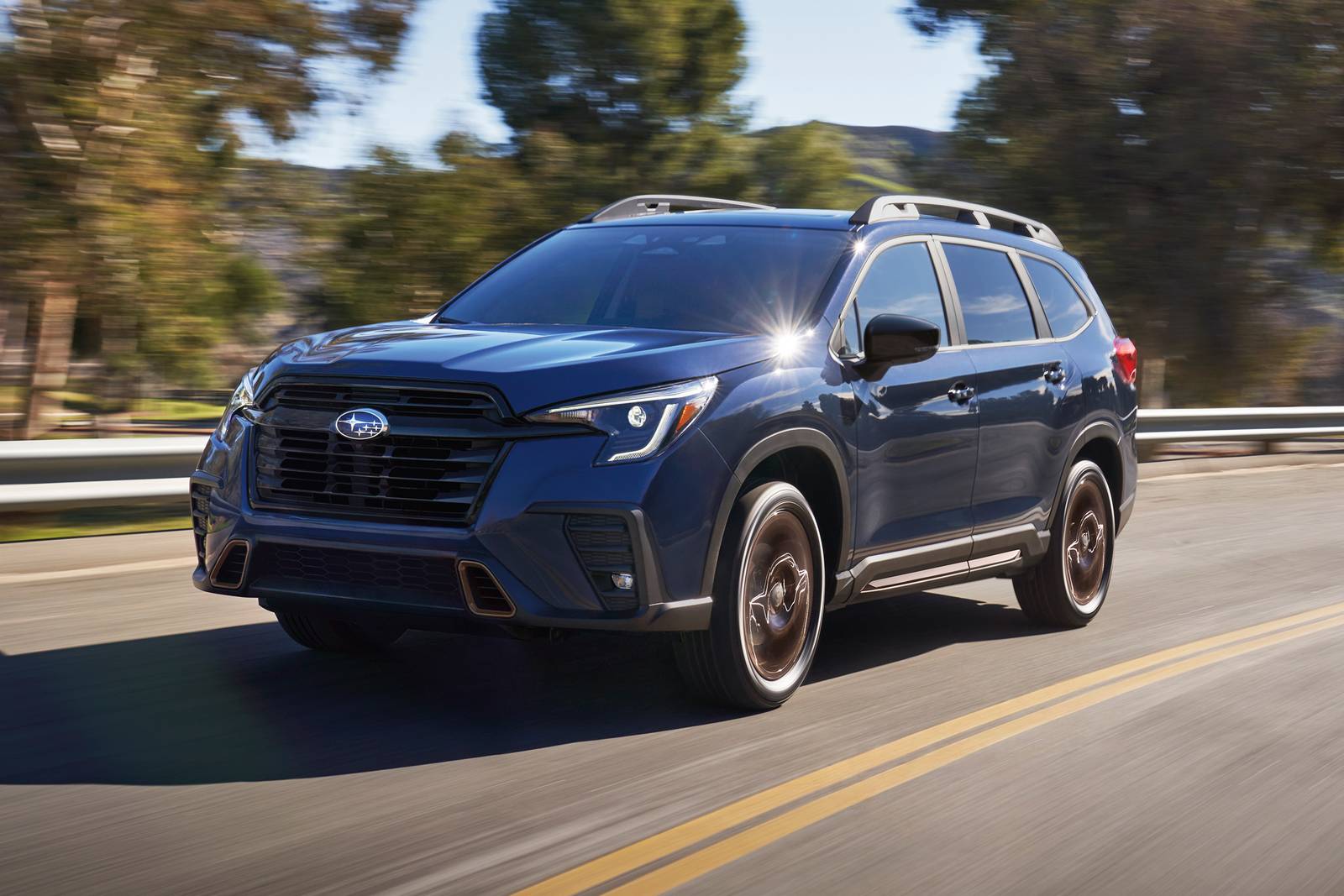
Standard EyeSight Driver Assist Technology underpins its safety credentials. This includes forward collision mitigation as standard. A driver attention monitor watches for fatigue and distraction.
Second-row captain’s chairs are available on higher trims. They ease access to the third row significantly. A 60/40 split bench is standard elsewhere, fitting up to eight.
The cabin stays quiet at highway speeds. Sound insulation is noticeably improved over older Subaru models. Long road trips feel less fatiguing as a result.
Towing capacity reaches 5,000 pounds across the lineup. That covers small trailers, campers, or boats comfortably. Few competitors in this price range match that figure.
This is a vehicle built for unpredictable weather and unpredictable kids. The blend of capability and cabin space is hard to beat.
Specifications:
- Engine: 2.4-liter turbocharged Subaru Boxer 4-cylinder
- Horsepower: 260 hp @ 5,600 rpm;
- Torque: 277 lb-ft @ 2,000–4,800 rpm
- Length: 196.8 inches (approx., varies by trim)
- Width: 76 inches (approx.)
2. Hyundai Santa Fe
The Santa Fe leans into a boxy, upright design philosophy. That choice maximizes usable interior volume. It’s a deliberate departure from softer, rounder competitors.
Two powertrains anchor the 2026 lineup. A turbocharged 2.5-liter engine handles base and mid trims. A hybrid variant adds efficiency without sacrificing much capability.
The gas engine pairs with a new eight-speed automatic. This replaces last year’s dual-clutch unit. Shifts feel smoother and more relaxed around town.
Seating configurations for six or seven passengers. Base trims use a three-person bench in row two. Higher trims swap in captain’s chairs for easier third-row access.
Cargo space behind the third row sits at 14.6 cubic feet. That expands to 79.6 cubic feet with all seats folded. Real-world testing fit 34 carry-on suitcases with everything down.
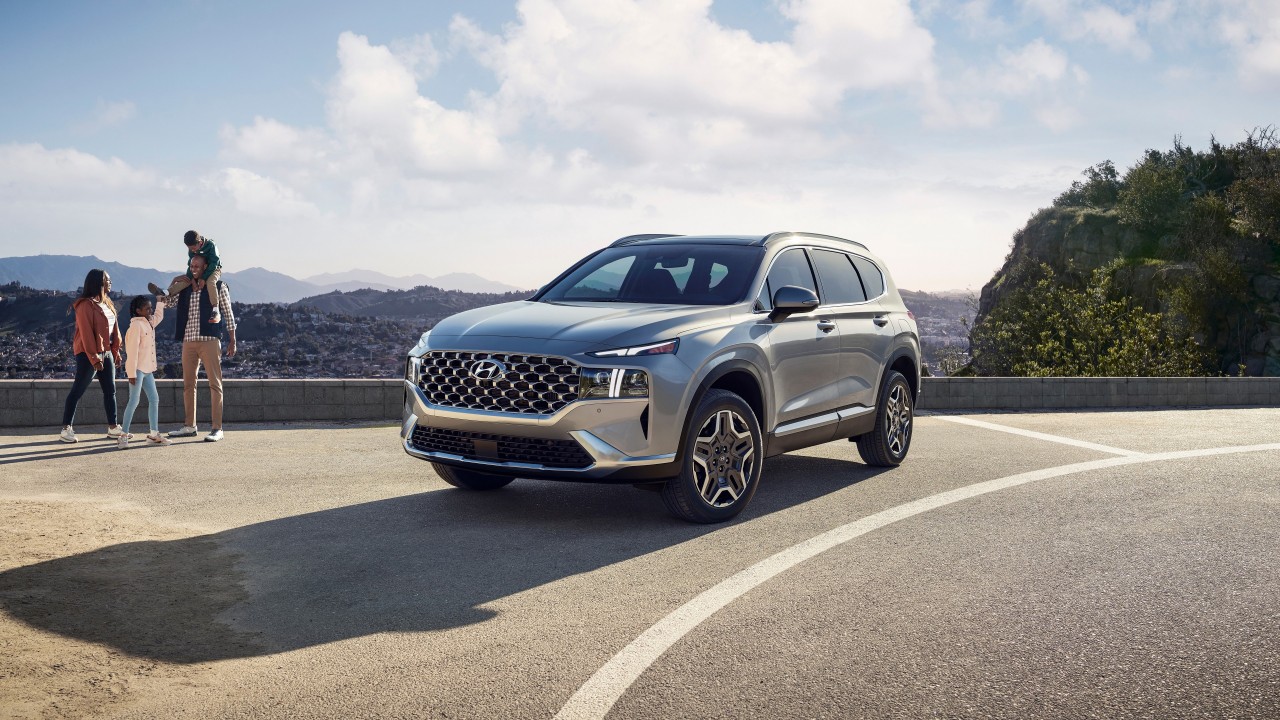
Dual 12.3-inch displays anchor the dashboard. The look feels modern without overwhelming first-time users. Wireless charging and a head-up display are available higher up.
HTRAC all-wheel drive electronically shifts power between axles. It responds quickly to changing road conditions. Rain, snow, and gravel all become less stressful.
Third-row legroom measures 30 inches, which is workable for kids. Adults will find it cramped on longer trips. Shorter errands and school runs are no problem at all. The Santa Fe earned its 2026 Top Safety Pick+ award outright. Strong crash-test performance pairs with genuinely useful interior packaging.
Specifications:
- Engine: 2.5-liter turbocharged 4-cylinder (gas) or 1.6-liter turbocharged hybrid
- Horsepower: 277 hp (gas) / 231 hp combined (hybrid);
- Torque: 311 lb-ft (gas) / 271 lb-ft (hybrid)
- Length: 190.2 inches
- Width: 74.8 inches
3. Kia Sorento
The Sorento sits as Kia’s value-driven midsize three-row option. It undercuts many rivals on price. Yet it doesn’t skimp on technology or safety equipment.
Two engines headline the gas lineup. The base 2.5-liter is tuned for efficiency. A turbocharged version adds real punch for highway merging and towing.
The turbo pairs with an eight-speed dual-clutch transmission. Shifts come quickly and smoothly under hard acceleration. Front-wheel drive is standard, with AWD optional from the EX trim up.
Hybrid and plug-in hybrid versions extend the lineup further. Combined fuel economy on the hybrid reaches an EPA-estimated 37 mpg. The plug-in variant pushes efficiency even higher.
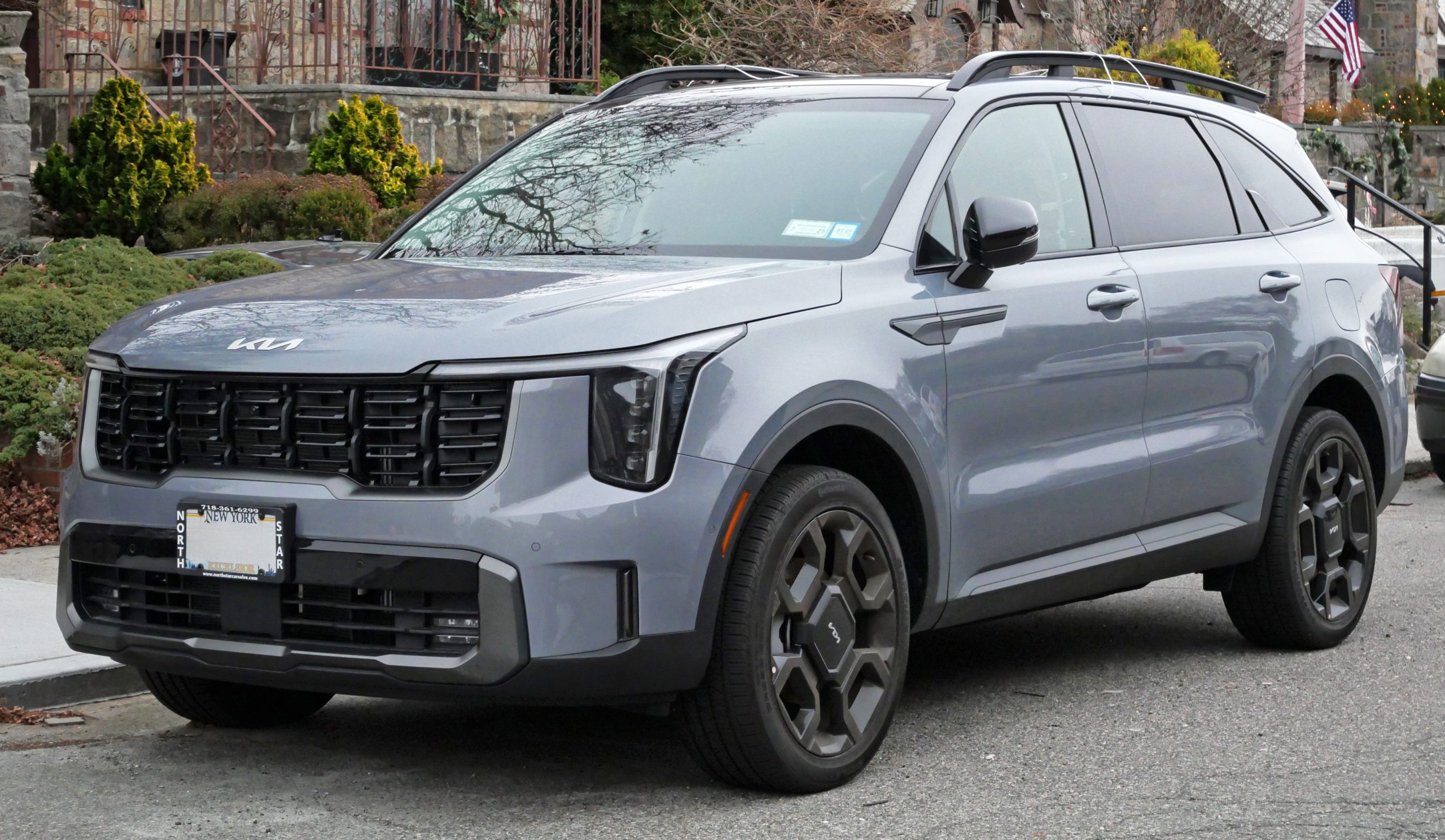
A panoramic curved display is available on upper trims. Dual 12.3-inch screens sit under one piece of glass. Lower trims still get a respectable 12.3-inch touchscreen standard.
Towing tops out at 4,500 pounds with the proper package. That’s enough for small trailers or modest campers. Base trims are limited to 2,000 pounds without the upgrade.
X-Line and X-Pro trims add genuine off-road styling. Skid plates and a locking differential appear on the X-Pro. Most family buyers will gravitate toward the simpler EX or SX trims.
Standard safety tech includes forward collision avoidance with junction detection. Rear cross-traffic warning and lane-keeping assist also come standard. This 2026 model earned Top Safety Pick+ for vehicles built after September 2025.
Specifications:
- Engine: 2.5-liter 4-cylinder or 2.5-liter turbocharged 4-cylinder
- Horsepower: 191 hp (base) / 281 hp (turbo)
- Torque: 181 lb-ft (base) / 311 lb-ft (turbo)
- Length: 189.6 inches (189.8 inches on X-Line/X-Pro)
- Width: 74.8 inches
4. Mazda CX-90
The CX-90 is Mazda’s flagship three-row SUV. It blends genuine driving engagement with three-row practicality. That combination is rare in this segment.
A turbocharged inline-six anchors the lineup. Lower trims produce 280 horsepower. Upper “Turbo S” trims push that figure to 340 horsepower. A 48-volt mild-hybrid system supports the engine at low loads. It smooths out stop-and-go driving noticeably. An eight-speed automatic transmission handles shifting duties throughout.
Rear-biased i-Activ AWD comes standard across every trim. Mazda’s Kinematic Posture Control reduces body roll in corners. That technology originated on the lightweight MX-5 Miata.
Towing capacity ranges from 3,500 to 5,000 pounds. The higher figure requires the available towing mode. G-Vectoring Control helps keep things stable while pulling a trailer.
Interior space totals 141.6 cubic feet for passengers alone. Second-row captain’s chairs are available for added comfort. A bench seat configuration bumps capacity to eight passengers total.
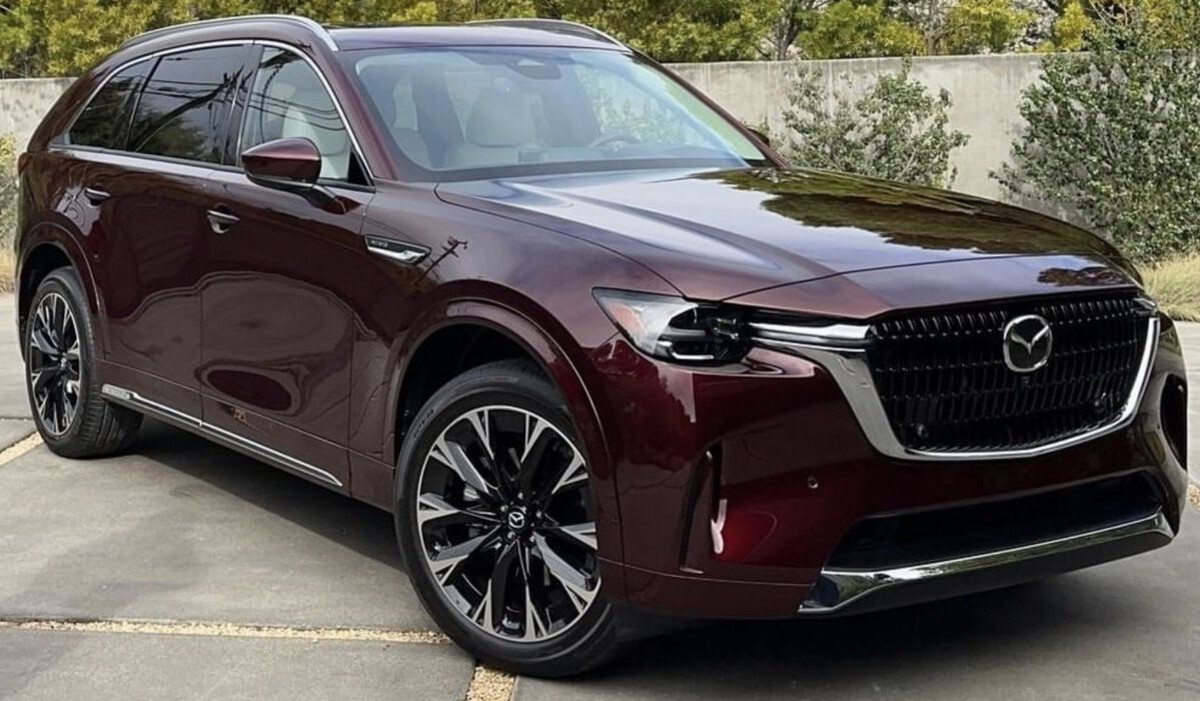
The cargo room behind the third row sits at 14.9 cubic feet. Folding both rear rows opens up 74.2 cubic feet. That’s competitive among three-row family SUVs.
A plug-in hybrid variant joins the lineup as well. It offers a meaningfully different ownership experience for efficiency-focused buyers. Both versions earned 2026 IIHS Top Safety Pick+ recognition. For families who still want a satisfying drive, this is the pick.
Specifications:
- Engine: 3.3-liter turbocharged inline-6 (e-Skyactiv-G)
- Horsepower: 280 hp or 340 hp (Turbo S)
- Torque: 332 lb-ft or 369 lb-ft
- Length: 200.8–201.6 inches
- Width: 84.9 inches (including mirrors)
Also Read: 10 Upcoming Hybrid Cars In 2027
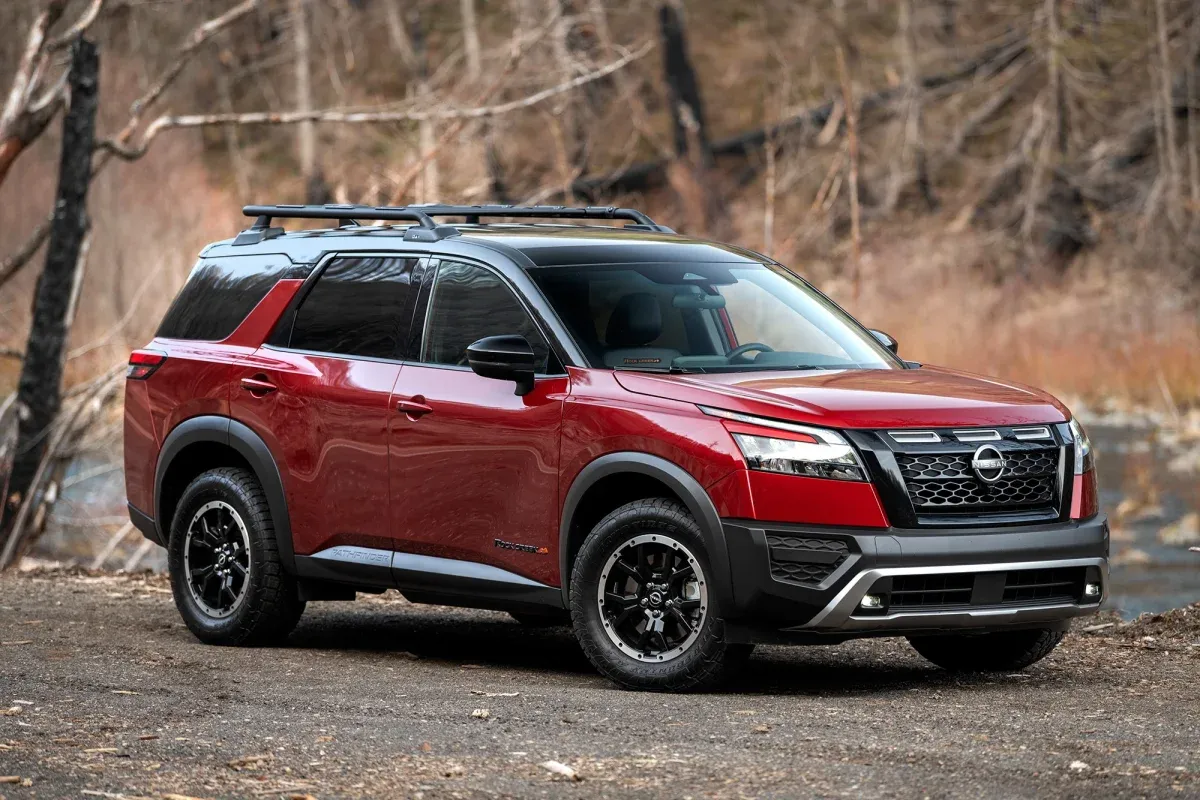
5. Nissan Pathfinder
The Pathfinder returns for 2026 as part of Nissan’s broader recovery push. It leans on a proven V6 rather than chasing turbocharged trends. That choice favors long-term reliability.
The 3.5-liter V6 produces 284 horsepower in most trims. The off-road-focused Rock Creek trim gets a slight bump to 295 horsepower. A nine-speed automatic transmission handles both.
Seating accommodates eight passengers with the standard bench. Captain’s chairs are available on Rock Creek, SL, and Platinum trims. Either way, three usable rows are the norm here.
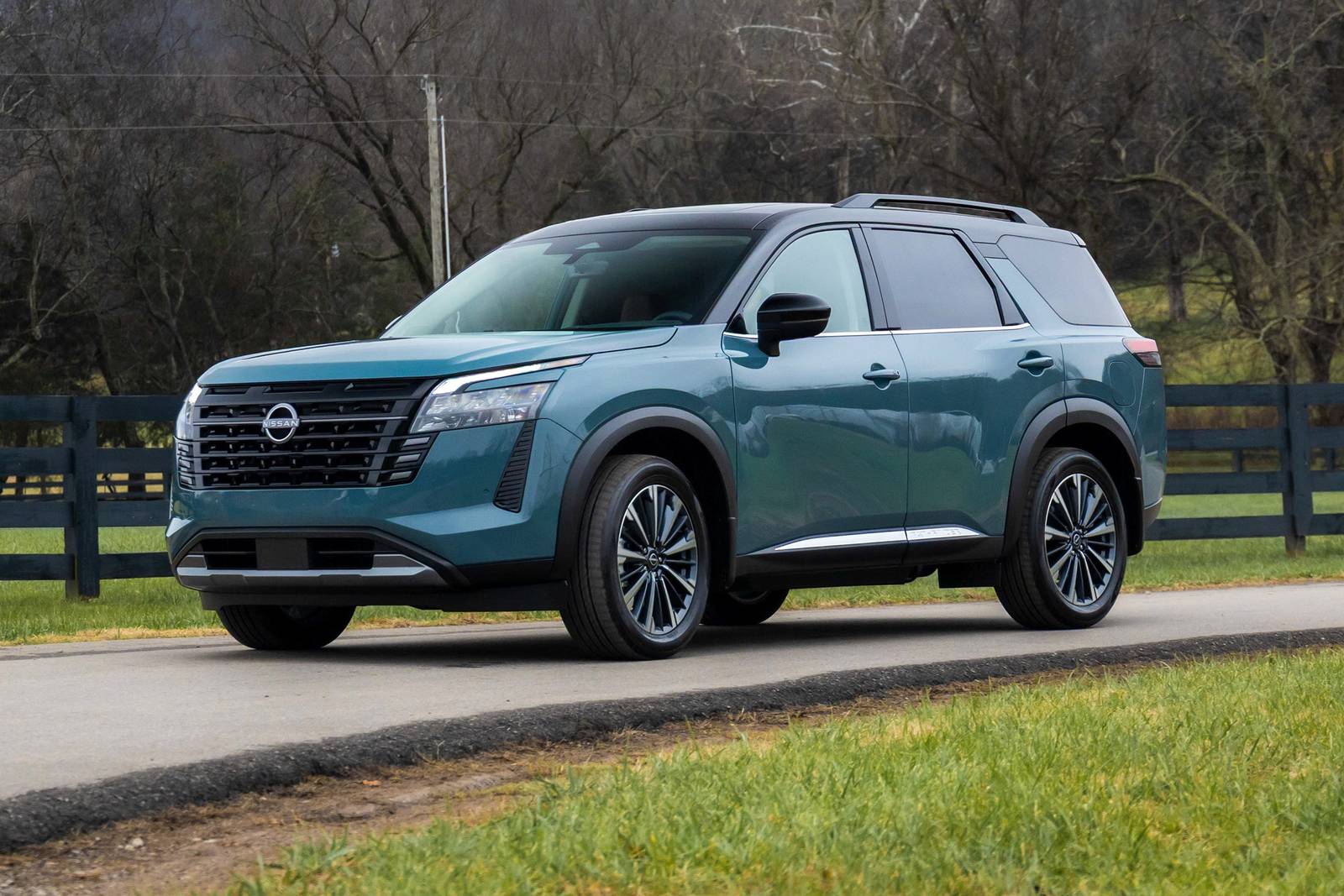
Nissan’s LATCH AND GLIDE technology stands out for families. Second-row seats tip and slide even with a child seat installed. That’s a genuinely useful detail for parents juggling car seats.
Cargo space behind the third row measures 16.6 cubic feet. Folding the third row opens 45 cubic feet. With everything down, that figure reaches 80.5 cubic feet.
Towing capacity reaches 6,000 pounds when properly equipped. That leads most competitors in the midsize SUV class. It’s enough for a small camper or boat trailer.
Standard Safety Shield 360 covers every trim level. ProPILOT Assist helps manage acceleration, braking, and steering on highways. Intelligent Around View Monitor is available for tighter parking situations.
Acceleration to 60 mph takes roughly 6.6 to 6.7 seconds. That’s competitive, if not class-leading, for the segment. Daily driving manners remain composed and predictable throughout. The Pathfinder earned its 2026 IIHS award through consistent, no-drama engineering.
Specifications:
- Engine: 3.5-liter V6
- Horsepower: 284 hp (most trims) / 295 hp (Rock Creek)
- Torque: 259 lb-ft
- Length: 197 inches (approx.)
- Width: 77.9 inches
6. Toyota Camry
The Camry goes hybrid-only for 2026, a significant shift for Toyota’s best-selling sedan. Every trim now uses the fifth-generation hybrid system. That move alone reshapes its appeal for families.
Front-wheel-drive models produce 225 horsepower combined. All-wheel-drive variants add a rear electric motor for 232 horsepower. Either way, the 2.5-liter engine pairs with electric assistance.
Fuel economy is the headline feature here. The LE FWD trim reaches an EPA-estimated 51 mpg combined. Even AWD models manage roughly 43 to 46 mpg combined.
Five trim levels structure the lineup: LE, SE, Nightshade, XLE, and XSE. Pricing starts around $29,300 and climbs toward $37,225 with AWD. That keeps it accessible for budget-conscious families.
Toyota Safety Sense 3.0 comes standard across every trim. This includes pedestrian detection, lane-keeping assist, and adaptive cruise control. Traffic sign recognition rounds out the standard suite.
Rear legroom measures roughly 38 inches, decent for a midsize sedan. Five passengers fit comfortably for daily errands and carpools. The trunk holds 15.1 cubic feet of cargo.
A 10-year, 150,000-mile hybrid battery warranty backs the powertrain. That’s among the longest coverage periods in the class. It offers real peace of mind for long-term ownership.
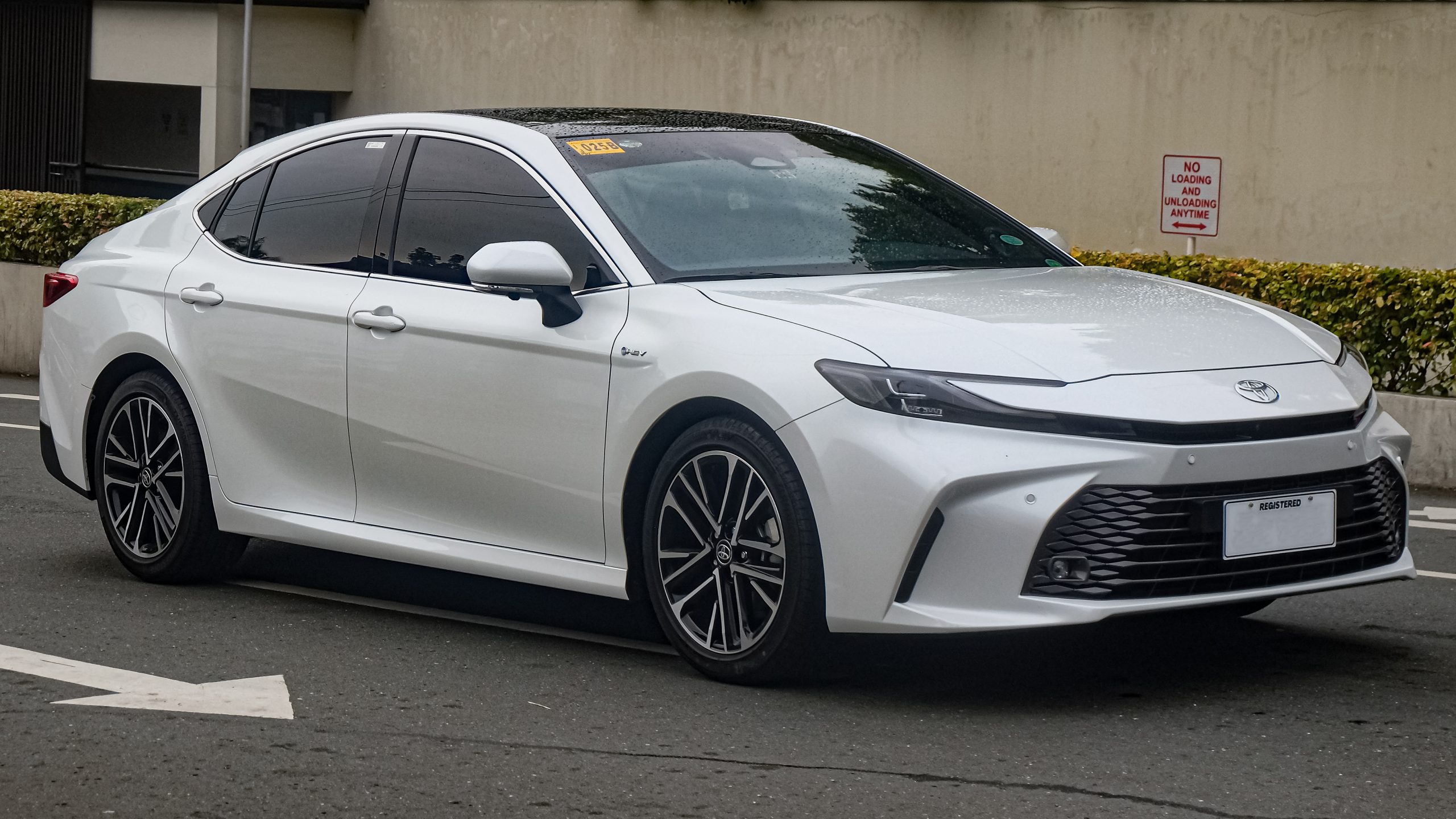
The XLE and XSE trims add a larger 12.3-inch touchscreen. A digital instrument cluster matches that screen size on those trims. Wireless charging and CarPlay come standard everywhere. For families who want a sedan instead of an SUV, this is the safest hybrid choice on the market.
Specifications:
- Engine: 2.5-liter 4-cylinder hybrid
- Horsepower: 225 hp (FWD) / 232 hp (AWD)
- Torque: 163 lb-ft
- Length: 193.5 inches
- Width: 72.4 inches
7. Kia Sportage
The Sportage anchors Kia’s compact SUV lineup at a genuinely affordable price point. It’s one of the least expensive Top Safety Pick+ winners this year. That affordability doesn’t come with compromised safety tech.
A 2.5-liter four-cylinder is the sole gas engine offered. It produces a modest 187 horsepower. An eight-speed automatic transmission handles shifting duties throughout the lineup.
Front-wheel drive is standard on lower trims. All-wheel drive becomes available starting at the EX trim. Highway fuel economy reaches up to 33 mpg on FWD versions.
A long 108.5-inch wheelbase pays real dividends inside. Rear legroom measures an impressive 41.3 inches. That figure beats several larger competitors in the same price range.
Dual 12.3-inch displays form the “Digital Stage” cockpit. Both screens sit under one continuous pane of glass. Wireless Apple CarPlay and Android Auto come standard across every trim.
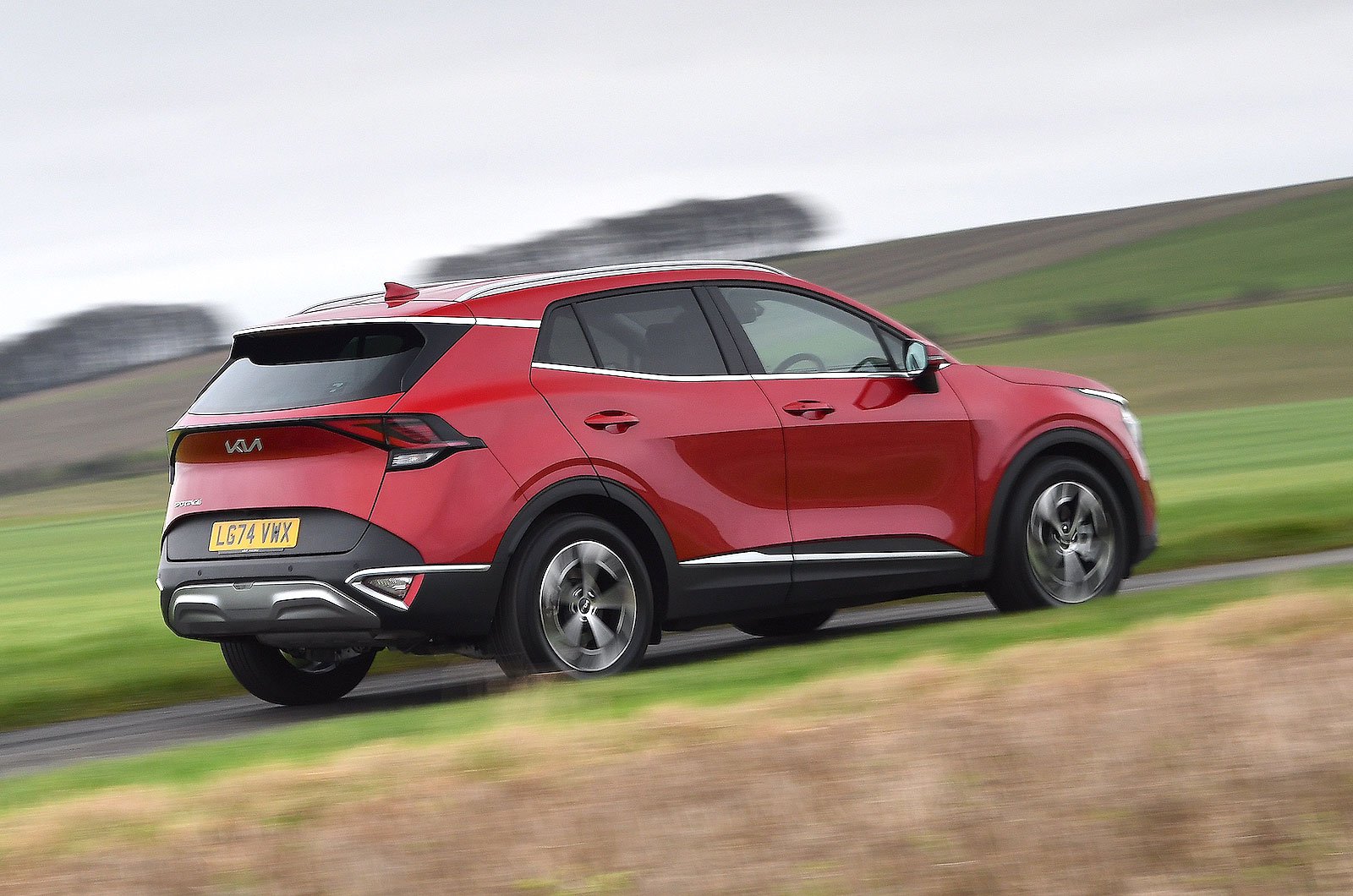
Fifteen standard collision-avoidance features come built in. Forward collision avoidance detects pedestrians, cyclists, and oncoming traffic at intersections. A blind-spot view monitor is available on higher trims.
Ground clearance reaches 8.3 inches on AWD and X-Pro variants. That helps with light snow or unpaved roads. It’s not a true off-roader, but it handles rough weather fine.
Hybrid and plug-in hybrid versions extend the Sportage lineup. Both offer better fuel economy than the standard gas engine. Families who drive a lot of miles should consider them seriously. This compact SUV proves that family-grade safety doesn’t require a luxury price tag.
Specifications:
- Engine: 2.5-liter 4-cylinder
- Horsepower: 187 hp @ 6,100 rpm
- Torque: 178 lb-ft @ 4,000 rpm
- Length: 183.5 inches
- Width: 73.4 inches
8. Honda Passport
The Passport returns fully redesigned for 2026. Honda widened the body and lengthened the wheelbase. That translates directly into more usable interior space.
A 3.5-liter V6 powers every single trim level. It produces 285 horsepower and 262 pound-feet of torque. A re-tuned 10-speed automatic transmission replaces the previous nine-speed unit.
All-wheel drive is standard across the entire lineup. Honda’s second-generation i-VTM4 system actively shifts torque side to side. That helps significantly in slippery or uneven conditions.
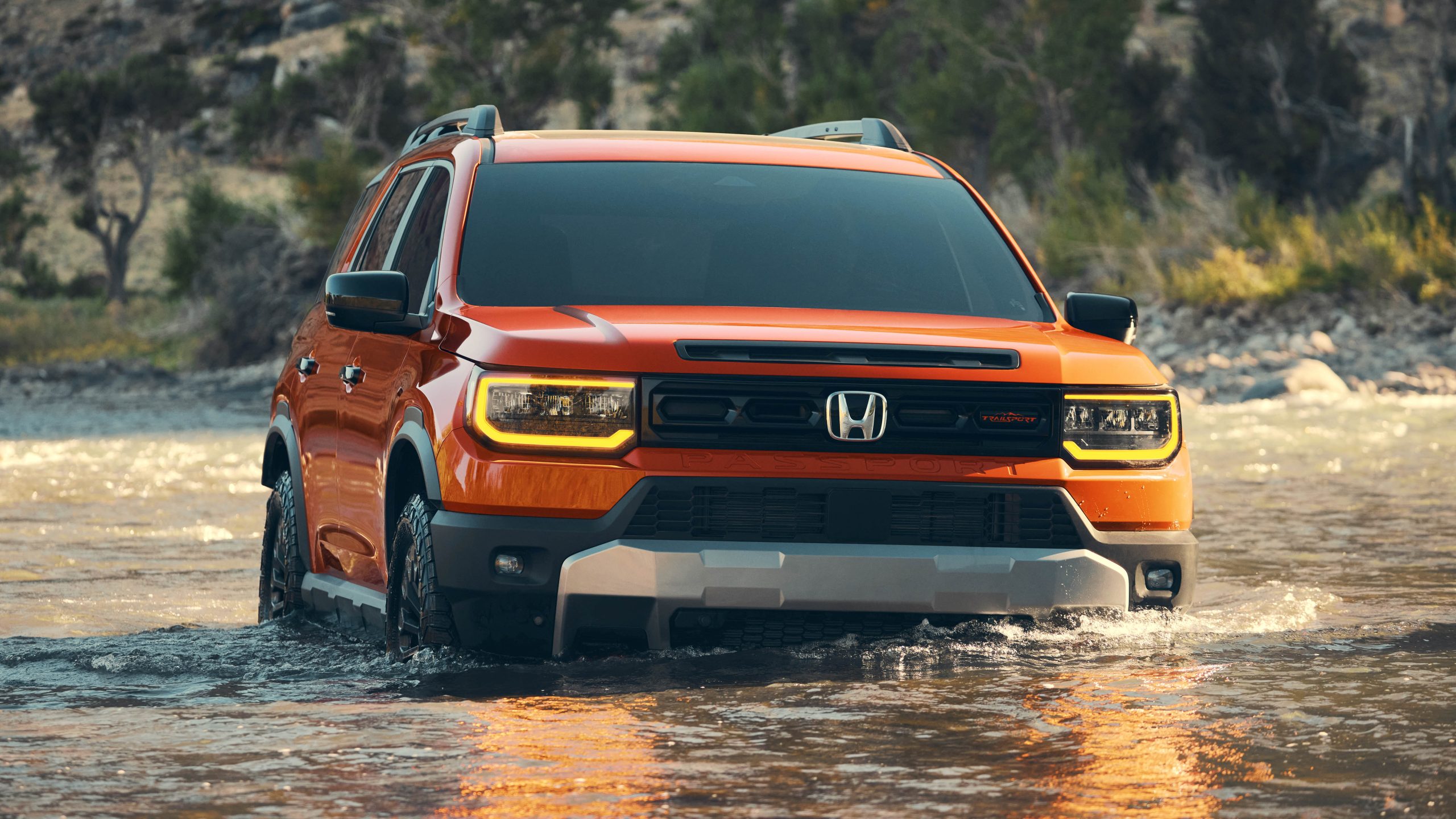
This is strictly a two-row SUV, unlike most entries on this list. Cargo space compensates with up to 83.5 cubic feet available. Rear legroom grew by 1.3 inches over the previous generation.
TrailSport trims add genuine off-road hardware. Skid plates, all-terrain tires, and recovery points come standard there. An approach angle of 23 degrees helps on rocky trails.
The Honda Sensing suite comes standard throughout the lineup. This includes collision mitigation braking and adaptive cruise control. Road departure mitigation rounds out the core safety package.
A 12.4-inch infotainment screen anchors the redesigned dashboard. Google built-in supports voice commands, maps, and select streaming apps. A 10.2-inch digital driver display sits ahead of the wheel.
Towing capacity reaches 5,000 pounds when properly equipped. That covers small trailers, boats, or modest campers comfortably. Seven drive modes adapt the Passport to different terrain. For families who don’t need three rows but want serious capability, the Passport delivers.
Specifications:
- Engine: 3.5-liter DOHC V6
- Horsepower: 285 hp @ 6,100 rpm
- Torque: 262 lb-ft @ 5,000 rpm
- Length: 191.5 inches
- Width: 79.4 inches
9. Hyundai Tucson
The Tucson carries over largely unchanged for 2026, building on last year’s well-received redesign. It remains one of the most popular compact SUVs on sale. Strong value and consistent safety scores explain why.
The standard 2.5-liter engine produces 187 horsepower. An eight-speed automatic transmission pairs with it throughout the lineup. Front-wheel drive is standard, with HTRAC AWD available.
Towing capacity increased slightly for 2026. Gas models now handle up to 2,750 pounds with trailer brakes. That’s a modest but welcome improvement over last year.
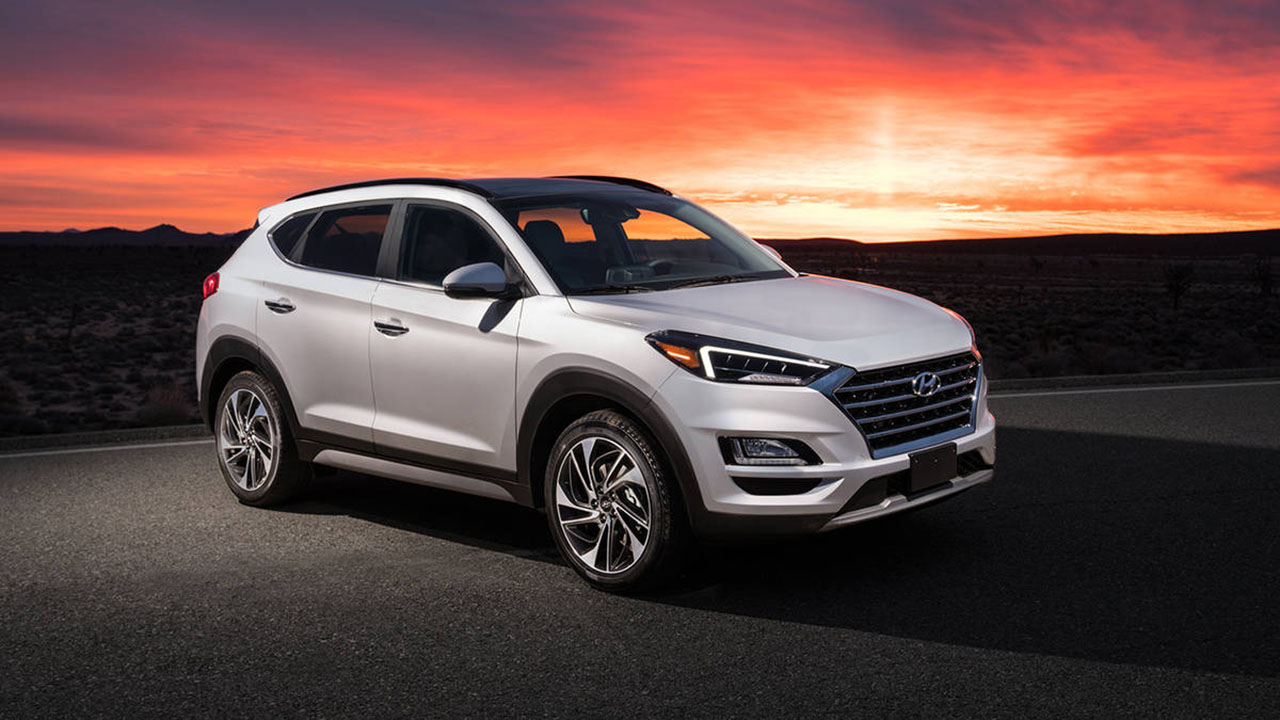
Hybrid and plug-in hybrid variants extend the lineup considerably. The Tucson Hybrid reaches an EPA-estimated 38 mpg combined on certain trims. That’s a substantial efficiency advantage over the standard gas engine.
A 12.3-inch touchscreen comes standard across every single trim. Wireless Apple CarPlay and Android Auto are included from the base SE upward. That’s unusually generous for this price segment.
Cargo space behind the rear seats reaches 41.2 cubic feet. Folding the second row opens up 80.3 cubic feet. Both figures are competitive within the compact SUV class.
Standard safety equipment includes forward collision avoidance with pedestrian detection. Lane-keeping assist and driver attention warning also come standard. Blind-spot collision warning rounds out the base package.
The XRT trim adds Terrain Mode with Mud, Sand, and Snow settings. It also includes a tow hitch and blacked-out exterior accents. The Limited trim tops the lineup with leather and a Bose audio system. This remains an easy, low-drama choice for families wanting dependable everyday transportation.
Specifications:
- Engine: 2.5-liter GDI + MPI 4-cylinder
- Horsepower: 187 hp
- Torque: 178 lb-ft
- Length: 182.7 inches
- Width: 73.4 inches
10. Hyundai Ioniq 9
The Ioniq 9 is Hyundai’s first all-electric three-row SUV. It shares its size class with the gas-powered Palisade. That familiarity helps ease the transition for EV-curious families.
Three powertrain configurations are offered. The base S trim uses a single rear motor producing 215 horsepower. Dual-motor AWD versions reach as high as 422 horsepower on Performance trims.
A 110.3-kWh battery underpins every configuration. Combined fuel economy starts at 92 MPGe on the base trim. Higher-output AWD trims still manage roughly 85 MPGe combined.
Seating flexes between six and seven passengers. Second-row captain’s chairs reduce capacity to six. A bench seat configuration keeps the total at seven.
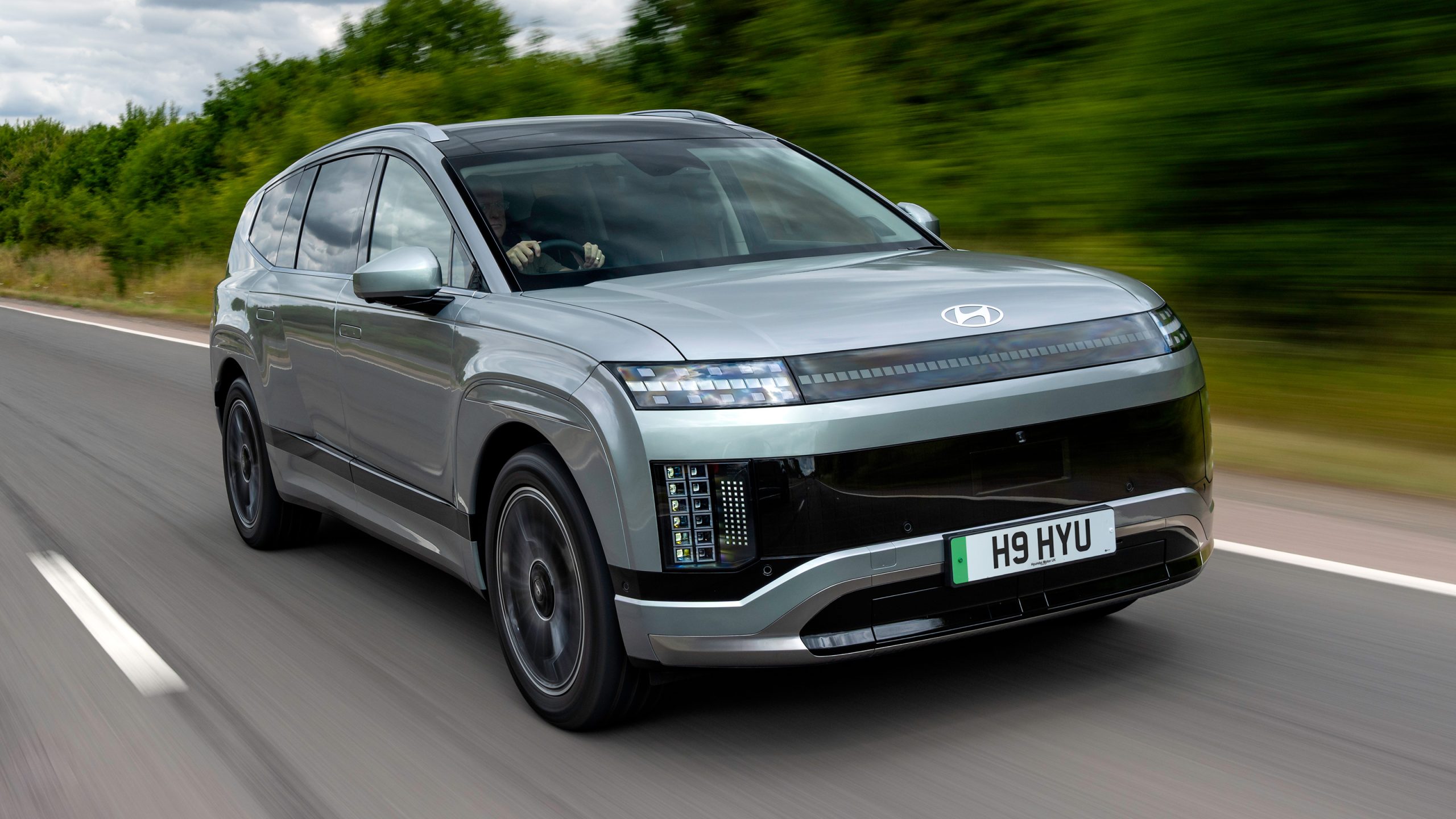
Third-row legroom measures 32 inches, genuinely usable for adults. That’s a rare achievement among three-row SUVs of any powertrain type. Front and second-row seats include extending leg rests.
Cargo space totals 86.9 cubic feet with all seats folded. Behind the third row alone, that figure drops to 21.9 cubic feet. Both numbers compete well against gas-powered rivals.
DC fast charging brings the battery from 10 to 80 percent in as little as 24 minutes. That’s quick enough for a highway rest stop. Home Level 2 charging takes roughly 10 to 12 hours overnight.
Towing capacity ranges from 3,500 to 5,000 pounds, depending on configuration. That’s respectable for an electric three-row SUV. Few EV competitors in this segment match it. For families ready to go electric without sacrificing interior space, this is currently the most compelling option on the market.
Specifications:
- Engine: Single or dual electric motor (110.3-kWh battery)
- Horsepower: 215 hp (RWD) / 303 hp (AWD SE/SEL) / 422 hp (AWD Performance)
- Torque: varies by configuration
- Length: 199.2 inches
- Width: 78 inches
Also Read: 8 Cheapest Armored Cars You Can Buy
