

For more than a century, Ford Motor Company has built its reputation around trucks, cars, commercial vans, and manufacturing strength. That identity is now expanding in a direction that reaches far beyond transportation. On May 13, 2026, the company officially introduced Ford Energy, a wholly owned subsidiary created to manufacture battery energy storage systems for utilities, data centres, and large industrial customers across the United States.
The announcement marks one of the largest strategic moves made by the company in recent years. Rather than focusing only on electric vehicles, Ford is now positioning itself inside the rapidly growing battery storage sector, a market analysts estimate could exceed $20 billion in the United States within the next few years.
The timing is deliberate. Electricity demand from artificial intelligence infrastructure, cloud computing operations, renewable energy projects, and industrial expansion continues to rise sharply across North America. Battery storage has become one of the fastest-growing parts of the energy business because utilities and large commercial operators need systems capable of balancing demand and storing excess electricity.

Ford Expands Beyond Vehicles With a New Energy Division
Ford Energy plans to manufacture at least 20 gigawatt-hours of battery storage annually from its Kentucky facility by late 2027. Reports indicate the company will invest approximately $2 billion into the programme while repurposing existing battery production capacity that had originally been intended for electric vehicle expansion.
The operation will focus on containerised battery energy storage systems assembled in the United States. Ford’s flagship product, called the Ford Energy DC Block, is expected to use lithium iron phosphate battery chemistry packaged into large-scale modular units intended for commercial deployment.
This move also reflects changing realities inside the automotive sector. Demand growth for electric vehicles has slowed compared with earlier projections, leaving several manufacturers with more battery production capacity than they currently require.
Instead of allowing those factories to remain underutilised, Ford appears determined to redirect part of that investment into a market showing stronger near-term demand and potentially healthier profit margins. The strategy has already attracted attention from investors and analysts.
Ford shares climbed sharply following the announcement, with some financial firms describing the energy business as an overlooked opportunity capable of improving Ford’s financial performance beyond traditional vehicle manufacturing.
Also Read: Ford on Track to Break Its Own Recall Record
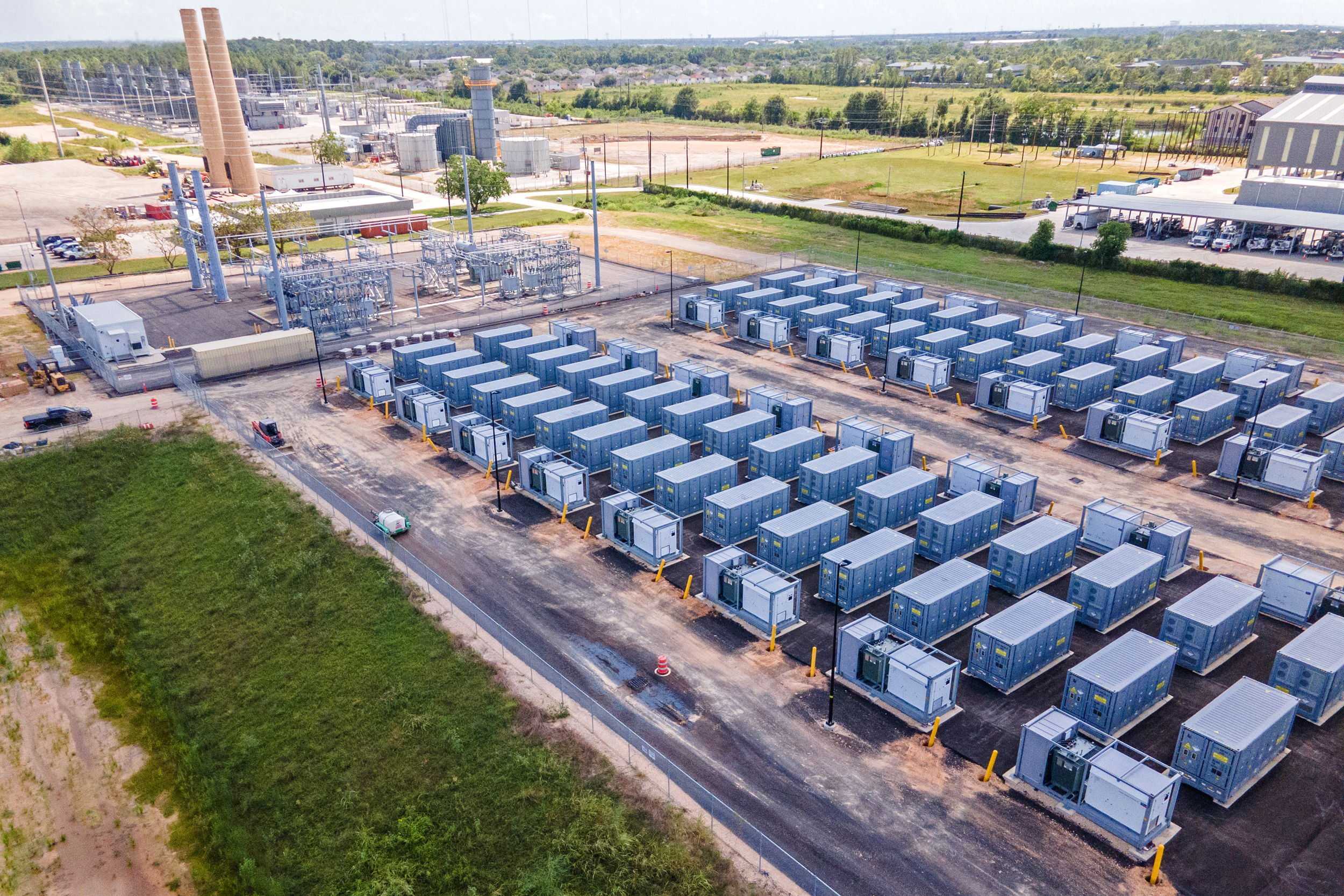
Why Battery Storage Has Become One of America’s Fastest-Growing Industries
Battery storage is no longer treated as a niche technology tied only to renewable energy projects. It has become a central part of modern power infrastructure. Electricity grids now face increasing pressure from rising consumption, unpredictable weather conditions, and the expansion of energy-intensive facilities such as AI data centres.
Large battery systems help solve several of these problems at once. They can store excess electricity generated during periods of low demand and release it later when demand rises sharply. They also help stabilise the grid during outages or fluctuations, reducing strain on power networks that were originally designed decades ago.
The rapid growth of artificial intelligence has intensified this demand. Data centres supporting AI systems consume extraordinary amounts of electricity, often operating continuously at high loads. Major technology firms are now searching for dependable energy storage systems capable of supporting uninterrupted operations. Ford Energy appears designed to serve exactly this category of customer.
Industry projections show that battery storage installations in the United States continue to expand at a rapid pace. Reuters reported that American battery storage installations rose by approximately 30 percent during 2025, with additional growth expected throughout 2026.
Ford’s decision to move into this business also places it into direct competition with companies already active in grid-scale storage, including Tesla and General Motors. Tesla’s Megapack business has already shown that large-scale battery storage can become highly profitable under the right conditions. Analysts now believe traditional automakers may increasingly view energy storage as an extension of their battery manufacturing operations rather than a completely separate industry.
Ford’s Kentucky operation is expected to produce lithium iron phosphate batteries, commonly known as LFP cells. This battery chemistry has gained popularity because of its durability, lower production cost, and improved thermal stability compared with some alternative battery types. The company is reportedly using technology licensed from Chinese battery giant CATL as part of the programme.
The production process is expected to include battery cells, modules, and large 20-foot container systems designed for utility-scale use. Ford also plans to provide installation support, service operations, and long-term maintenance for customers purchasing these systems.
For Ford, the business opportunity extends beyond electricity storage itself. It creates a pathway to generate revenue from battery manufacturing investments already made during the company’s aggressive electric vehicle expansion plans earlier in the decade.
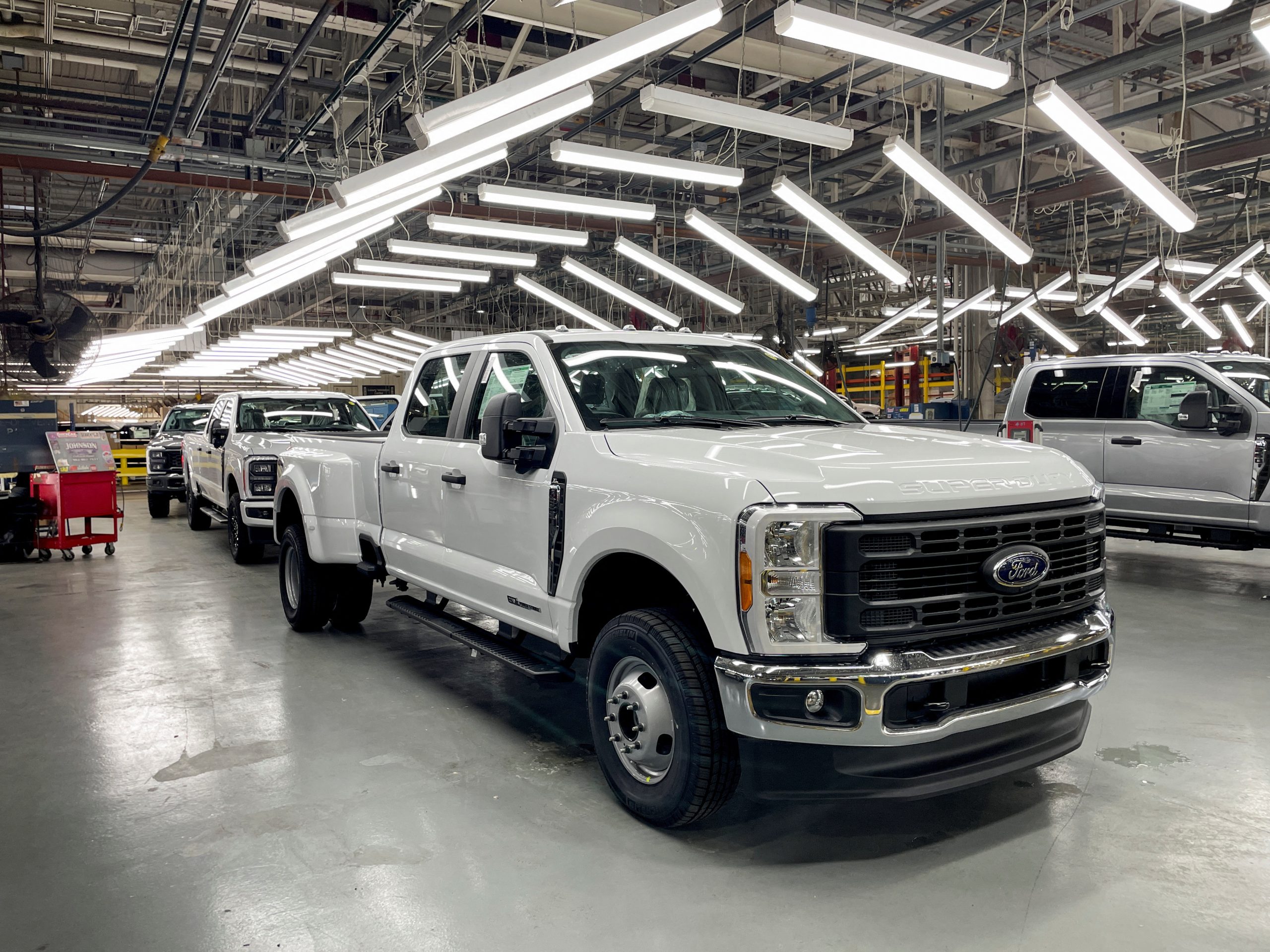
Kentucky Gigafactory Becomes Central to Ford’s New Strategy
The Kentucky facility now sits at the centre of Ford’s changing industrial direction. What began as part of a massive electric vehicle battery expansion effort is being transformed into a major battery storage manufacturing hub.
Ford originally invested heavily in battery production as automakers raced to prepare for rapid electric vehicle adoption. During that period, manufacturers across the industry announced enormous spending programmes tied to EV production, battery plants, and supply chain expansion. Market conditions changed faster than many expected. Slower EV demand growth, changing government policies, and rising production costs forced several companies to reconsider those plans.
Ford responded by redirecting underused production capacity toward energy storage systems rather than abandoning the investment entirely. Reports from late 2025 indicated that portions of the BlueOval SK battery operation in Glendale, Kentucky, would be converted to support the energy storage business.
The company expects the operation to begin initial production within approximately 18 months, with large-scale deployment targeted by late 2027.
Lisa Drake, who now leads Ford Energy, has described the effort as part of a broader attempt to maximise the value of Ford’s battery manufacturing capabilities. According to company statements, the division spent much of the past year preparing supply chains, manufacturing systems, and customer relationships before the public launch.
The Kentucky facility also places Ford in a stronger position regarding domestic manufacturing incentives. Federal policies supporting American battery production and domestic energy infrastructure continue to shape investment decisions across the industry. Companies assembling products within the United States may qualify for tax incentives and procurement advantages unavailable to imported systems.
Ford’s emphasis on US-assembled storage systems appears designed partly around those regulatory and financial considerations. Utilities and commercial operators increasingly prefer domestic supply chains because imported battery systems can face tariff uncertainty and changing trade restrictions.
At the same time, domestic production remains difficult. Reuters recently reported that while the United States is expanding battery assembly capacity rapidly, much of the upstream supply chain still depends heavily on Chinese manufacturing.
Ford’s partnership structure attempts to balance those realities by combining American assembly operations with internationally sourced battery technology.
Also Read: Ford on Pace to Break Its Own Recall Record With 34 Recalls Already in 2026

Ford’s Energy Move Could Reshape Its Financial Future
Ford Energy arrives at a moment when traditional automakers face pressure from multiple directions. Electric vehicle investments remain expensive, competition continues to intensify, and profit margins in the automotive business remain difficult to maintain consistently.
Battery storage offers a different financial profile. Analysts covering the sector believe grid-scale energy systems may produce steadier returns than electric vehicle manufacturing, especially as electricity demand continues rising nationwide.
Morgan Stanley analysts reportedly estimate that Ford Energy could generate hundreds of millions of dollars in operating profit within the next several years. Some projections place the long-term valuation of the business near $10 billion if growth targets are achieved successfully.
That optimism explains why investors reacted strongly after the announcement became public. Ford’s stock recorded one of its strongest daily gains in years following renewed attention toward the energy division.
Still, challenges remain. The battery storage market is becoming increasingly competitive. Large energy companies, technology firms, utilities, and existing battery manufacturers are all competing for market share. Ford must also prove that it can operate effectively outside the traditional vehicle business while managing manufacturing costs and supply chain risks.
Another question involves execution speed. Battery storage demand is rising quickly, but competitors are already expanding aggressively. Ford will need to secure large commercial contracts and deliver projects reliably if it intends to become a major player.
Yet the company’s manufacturing scale may provide an advantage few newcomers can match. Ford already understands high-volume industrial production, logistics management, dealer support systems, and nationwide service infrastructure. Those strengths could become valuable as battery storage projects grow larger and more widespread.
Ford Energy also represents something larger than a simple business expansion. It signals how major automakers are redefining themselves during a period when transportation, electricity, software, and industrial infrastructure are increasingly interconnected.
For decades, Ford sold machines powered by fuel. Now the company is preparing to sell energy systems designed to power parts of the American economy itself.
