
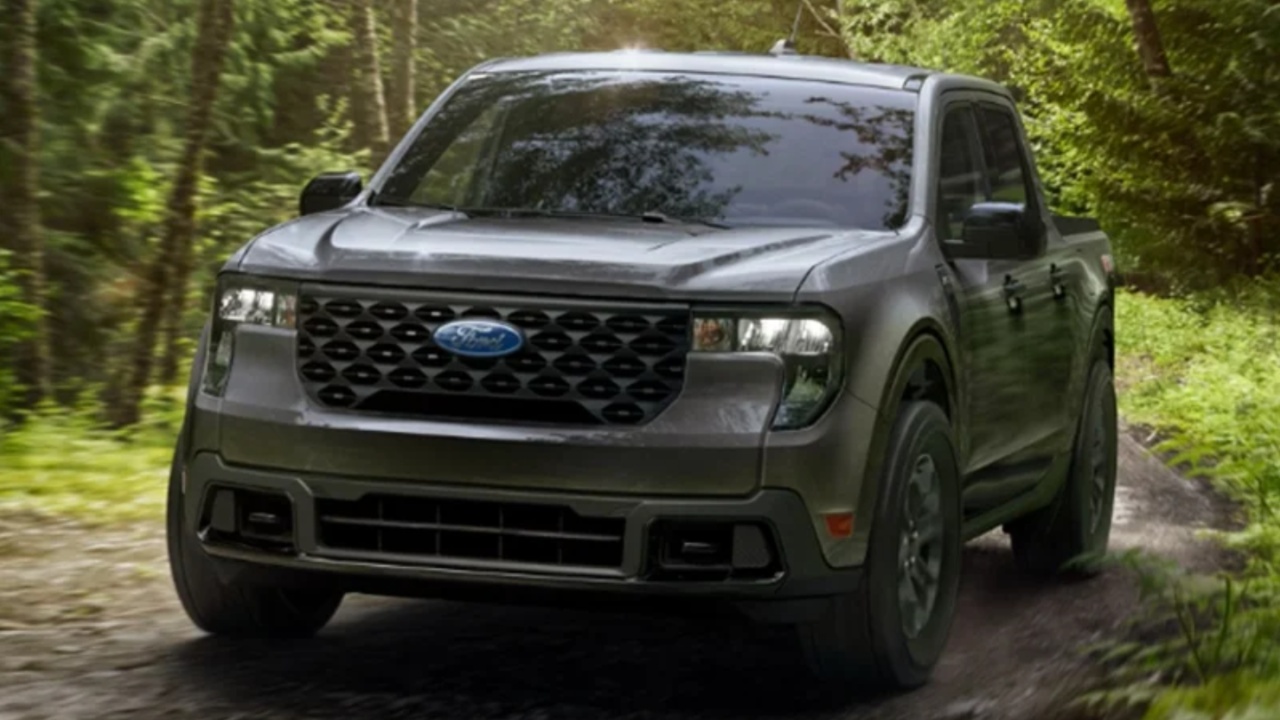
The 2026 Ford Maverick has secured another major victory for Ford after performing strongly in the latest Insurance Institute for Highway Safety crash evaluations.
The compact pickup earned top ratings in both frontal-crash and side-impact testing, reinforcing its growing reputation as one of the safest and most practical affordable vehicles currently available in the American market.
The achievement arrives at a crucial moment for both Ford and the wider automotive industry. New vehicle prices in the United States continue climbing beyond the reach of many buyers, with the average transaction price now exceeding $50,000.
In that environment, the Maverick has become one of Ford’s most important products because it offers truck capability, strong fuel economy, everyday usability, and relatively attainable pricing in a market increasingly dominated by expensive full-size pickups and SUVs. Safety has now become another major selling point.
The Insurance Institute for Highway Safety, commonly known as IIHS, subjected the Maverick to its updated crash testing procedures, which place greater emphasis on rear passenger protection and side impact strength.
The compact truck performed well in critical categories, including moderate overlap frontal crash evaluations and updated side collision testing. For consumers shopping in the compact truck segment, the results matter significantly.
Smaller pickups have grown enormously popular in recent years because buyers want versatility without the size, fuel costs, or pricing associated with traditional full-size trucks. Yet some consumers still question whether compact trucks can provide the same level of occupant protection as larger vehicles. The Maverick’s latest ratings directly address those concerns.
Ford executives have consistently positioned the Maverick as an affordable truck designed for younger buyers, urban customers, and first-time pickup owners. Unlike many modern trucks that have grown larger and more luxurious over time, the Maverick focuses heavily on efficiency and practicality. Now it can also market itself as a top safety performer.
The strong IIHS results further strengthen Ford’s position in the compact truck category, where the Maverick already enjoys substantial demand. Since its introduction, the truck has attracted buyers who previously would not have considered owning a pickup at all. That expanding audience makes safety performance even more important.
Also Read: 10 Forgotten Sports Cars From the 1960s
The Maverick Changed the Modern Truck Market
When Ford first introduced the Maverick, many industry analysts questioned whether American buyers would embrace a smaller unibody pickup in large numbers. The market had become heavily focused on oversized full-size trucks loaded with luxury features and six-figure price tags.
The Maverick challenged that formula directly. Built on the same platform as compact crossover SUVs rather than traditional body-on-frame trucks, the Maverick prioritized affordability, fuel economy, and maneuverability instead of extreme towing or off-road capability. The strategy worked far better than many expected.
Demand quickly surged beyond Ford’s initial production expectations. The truck appealed to younger buyers, commuters, small business owners, and customers who wanted truck utility without the compromises associated with massive full-size pickups.
Buyers appreciated its compact dimensions, practical bed design, strong hybrid fuel economy, and lower starting price compared with larger trucks.
In many ways, the Maverick revived a part of the market that had largely disappeared from American showrooms.
Compact pickups once played an important role in the industry during the 1980s and 1990s. Models like the Ford Ranger, Toyota Tacoma, Nissan Hardbody, and Chevrolet S10 attracted buyers seeking simple, affordable utility vehicles.
Over time, however, trucks became larger, more expensive, and increasingly focused on luxury and high profit margins. The Maverick reversed that trend.
Ford recognized that many consumers no longer needed massive towing numbers or oversized dimensions.
Instead, they wanted practical transportation capable of carrying bikes, furniture, home improvement supplies, or outdoor equipment while remaining easy to park and economical to operate. Safety played a critical role in broadening the truck’s appeal further.
Many Maverick buyers come from sedan and crossover backgrounds rather than traditional truck ownership. Those consumers often prioritize crash protection and advanced safety technology more heavily than longtime pickup buyers.
The latest IIHS ratings, therefore, carry importance beyond simple marketing headlines. They validate Ford’s strategy of creating a compact truck that feels approachable and family-friendly rather than purely rugged.
Updated IIHS Testing Has Become Much Tougher
The Maverick’s strong performance becomes even more impressive considering how much more demanding IIHS evaluations have become in recent years.
The organization has updated several crash procedures to better reflect real-world accident scenarios, especially regarding rear passenger protection. Automakers that previously performed well under older standards have struggled to maintain top ratings under the revised testing system.
The updated moderate overlap frontal crash test now places greater emphasis on injuries that could affect rear seat occupants during collisions. Evaluators examine structural integrity, restraint effectiveness, and full passenger protection more thoroughly than before.
Side impact testing has also become more severe. Modern side crash evaluations now simulate impacts involving heavier vehicles traveling at higher speeds, reflecting the reality that American roads are increasingly dominated by large SUVs and trucks. Smaller vehicles often face disadvantages in those situations because of size and weight differences.
The Maverick’s ability to earn strong scores despite its compact footprint represents a significant engineering accomplishment for Ford.
Crash protection in smaller vehicles requires careful structural design, advanced restraint systems, and sophisticated energy absorption strategies. Automakers must balance safety requirements against weight reduction goals, fuel economy targets, and affordability pressures. That balancing act becomes especially challenging in lower-priced vehicles.
Manufacturers often reserve expensive safety technologies and structural enhancements for higher-margin luxury products. Yet the Maverick demonstrates that affordable vehicles can still perform strongly in demanding crash evaluations.
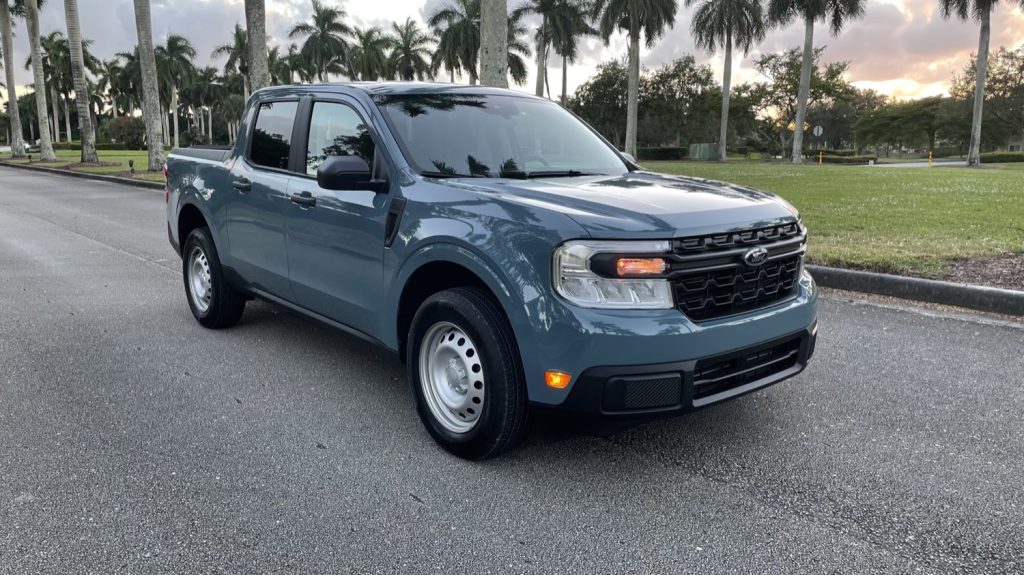
Ford has invested heavily in safety engineering across its lineup over the past decade. The Maverick benefits from many modern driver assistance systems and structural technologies previously found mainly in more expensive vehicles.
The latest IIHS results suggest those investments are paying off. For buyers, the ratings provide reassurance that choosing a lower-priced compact truck does not necessarily require sacrificing occupant protection.
Affordability Has Become One of the Maverick’s Biggest Advantages
The Maverick’s safety success arrives during a period when affordability has become one of the most important issues facing the automotive industry.
New vehicle prices continue climbing due to inflation, rising technology costs, stricter emissions regulations, and growing consumer demand for larger vehicles loaded with premium features. Many Americans now struggle to afford new cars at all.
Full-size pickups illustrate the problem clearly. Modern trucks from Ford, Chevrolet, Ram, and GMC can easily exceed $70,000 or even $100,000 in higher trim levels. Monthly payments have risen dramatically, pushing many traditional buyers out of the market entirely.
The Maverick occupies a very different position. Although prices have increased since launch, the truck remains substantially more affordable than most midsize and full-size pickups. That accessibility has made it one of Ford’s most strategically important vehicles.
The hybrid version has proven especially attractive because it combines truck utility with impressive fuel economy numbers that many SUVs struggle to match. Rising fuel prices and economic uncertainty have only strengthened that appeal.
The Maverick also benefits from changing consumer attitudes toward vehicle ownership. Many buyers no longer want oversized trucks designed primarily for towing heavy trailers or conquering extreme off-road terrain. Instead, they prefer practical vehicles that fit urban lifestyles while still offering versatility for weekend projects and recreational activities.
Ford recognized the shift earlier than many competitors. The strong safety ratings now reinforce the idea that the Maverick is not simply an affordable compromise.
Instead, it represents a carefully designed product capable of meeting the needs of modern buyers without sacrificing key priorities like crash protection. That distinction matters greatly in today’s market.
The Maverick’s Success Could Influence the Industry
The continued success of the Ford Maverick may ultimately reshape how automakers think about the American truck market.
For years, the industry moved steadily toward larger and more expensive pickups because those vehicles generated enormous profits. Compact trucks nearly disappeared as manufacturers focused on luxury trims, massive towing figures, and increasingly upscale interiors.
The Maverick proved there was still substantial demand for something different. Consumers responded positively to a truck that emphasized affordability, efficiency, practicality, and approachable dimensions rather than excess size and power. The latest IIHS safety ratings strengthen that formula even further.
Competitors are paying attention. Other automakers are already considering smaller and more affordable truck options as market conditions change. Rising interest rates, higher insurance costs, and increasing vehicle prices have forced companies to reconsider how many buyers can realistically afford traditional full-size pickups.
The Maverick’s performance in crash testing also sends an important message about affordable transportation.
Consumers often assume safer vehicles must also be more expensive. Ford’s compact truck challenges that assumption by delivering strong safety credentials alongside relatively attainable pricing.
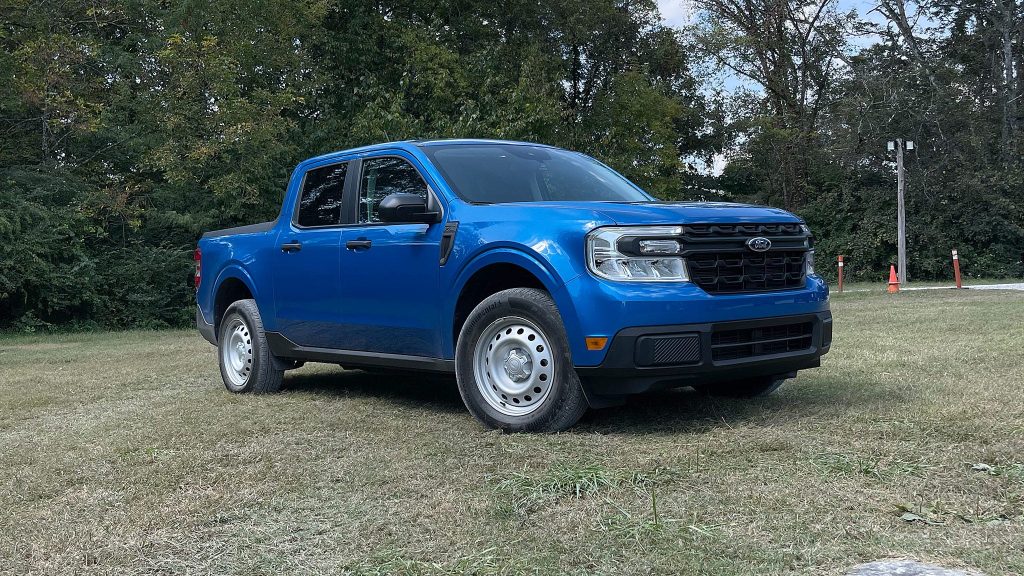
That combination could become increasingly important as younger buyers enter the market. Many first-time vehicle shoppers face tighter budgets than previous generations while still expecting modern safety technology, fuel efficiency, and everyday practicality.
The Maverick fits that reality unusually well. Ford now finds itself holding one of the industry’s most valuable positions.
The Maverick is affordable by modern standards, practical for daily life, fuel-efficient in hybrid form, and now officially recognized as a strong safety performer.
In an automotive market where many vehicles continue growing larger, heavier, and dramatically more expensive, the compact pickup’s success story looks increasingly important for the future of the industry.
Also Read: 10 Forgotten Japanese Superbikes
