
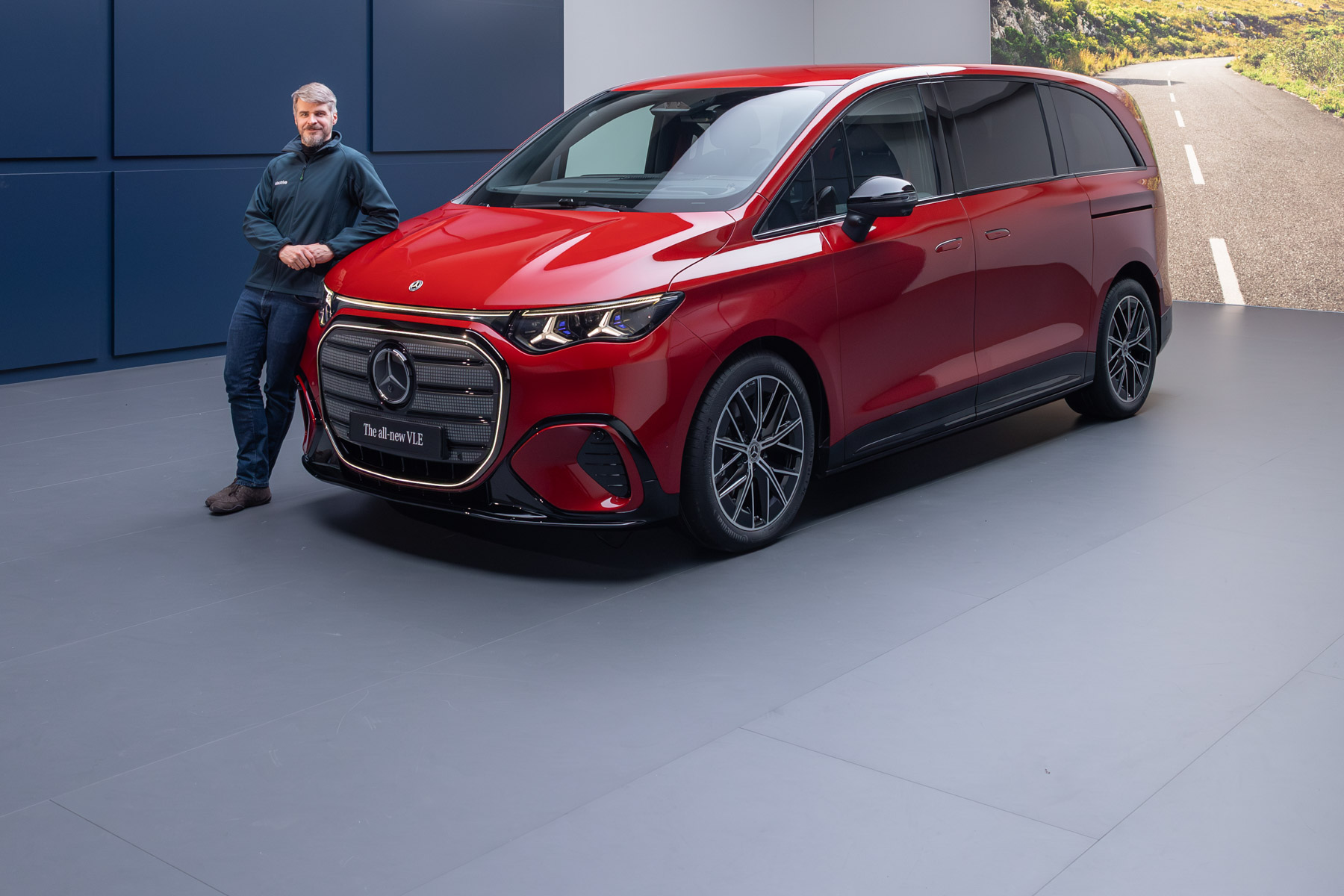
Mercedes-Benz is preparing to bring a new kind of passenger van to the United States. The all-electric VLE, scheduled to reach American customers in 2027, is not being positioned as a conventional minivan, cargo van, or replacement for the old Metris.
Mercedes calls it a “Grand Limousine,” placing it closer to a luxury SUV or executive shuttle than a traditional people mover.
The VLE will combine seating for up to eight people with an 800-volt electrical architecture, fast-charging capability, flexible seating, rear-wheel steering, and a cabin filled with technology normally associated with flagship sedans.
Mercedes-Benz says the VLE offers a combination no other van currently delivers: the space and practicality of a large multi-purpose vehicle with the ride comfort, digital features, and premium cabin experience expected from the brand’s expensive products. The claim is ambitious, but the VLE enters a U.S. market where luxury vans remain rare.
The Volkswagen ID. Buzz has brought electric van styling back to America, but it emphasizes retro design and family-friendly character. Chrysler’s Pacifica remains the dominant mainstream minivan, while the Toyota Sienna offers hybrid efficiency and all-wheel-drive availability.
None of those vehicles is designed to function as an executive lounge, chauffeur vehicle, airport shuttle, luxury family transporter, and electric long-distance van at the same time. Mercedes believes the VLE can create its own category.
Also Read: 10 Cars Faster Than a Lamborghini for Under $50,000
A Dedicated Electric Platform Changes the Formula
The VLE is the first major passenger vehicle based on Mercedes-Benz’s new VAN.EA architecture, short for Van Electric Architecture. Unlike the outgoing EQV, which was adapted from an existing van platform, the VLE was developed from the beginning as an electric vehicle.
That distinction matters because a dedicated EV platform allows engineers to package the battery, motors, electronics, suspension, and cabin more efficiently.
The VLE uses a large battery mounted low in the floor, helping preserve interior space while lowering the center of gravity. That can improve handling and ride comfort compared with a traditional van that carries a combustion engine and fuel tank.
Mercedes has confirmed that the VLE will use an 800-volt electrical system. This architecture is increasingly common in premium EVs because it supports faster charging and can improve efficiency under heavy electrical loads. The company says the VLE can charge at up to 300 kW on a suitable DC fast charger.
Under ideal conditions, Mercedes says the van can add roughly 220 miles of driving range in 15 minutes. That figure will depend on battery temperature, charger capability, weather, and the state of charge when the vehicle arrives at the station. Still, it is a major claim for a large passenger vehicle designed to carry multiple people and their luggage.
The VLE 300 is expected to use a single front-mounted electric motor producing about 268 horsepower. A more powerful VLE 400 4MATIC will add a second motor and all-wheel drive, with output expected to reach approximately 409 horsepower.
Those numbers place the VLE well above traditional minivans in straight-line performance. More importantly, the electric powertrain should provide immediate torque, quiet operation, and smooth acceleration when the van is carrying a full load of passengers.
Range Will Be Central to Its U.S. Appeal
Mercedes has not released final EPA range ratings for the U.S.-spec VLE, but European information gives a strong indication of the company’s goals.
The VLE uses a 115-kWh battery pack, and Mercedes has quoted a WLTP range of more than 700 kilometers for certain versions. WLTP figures are usually more optimistic than EPA ratings, so American buyers should not assume they will receive the same number in real-world driving.
Even so, previews suggest the VLE could deliver a competitive range for a large electric van. Edmunds has estimated that the vehicle could offer between 350 and 430 miles, depending on configuration, while Car and Driver suggested that the VLE 300’s European range estimate could translate to roughly 370 miles under EPA testing.
A large electric van needs more energy than a compact sedan because it has more frontal area, more weight, and a larger cabin to heat or cool. Mercedes is trying to offset those challenges with aerodynamic design, the 800-volt system, and a battery large enough to make longer trips realistic.
For families, hotel operators, airport-transfer services, and executive transport companies, the ability to travel several hundred miles between charging stops could make the VLE more useful than existing electric vans.
Mercedes Is Selling a Luxury Cabin, Not Just More Seats
The VLE’s cabin is likely to be the vehicle’s biggest selling point. Mercedes says the van can seat up to eight people, but its interior can be configured for different uses. A family may choose multiple rows of seats and maximize passenger capacity.
A business customer may prioritize second-row comfort, extra luggage room, and a more private rear cabin. A chauffeur service may use the VLE as an alternative to a luxury SUV or executive sedan.
The company has developed new seating systems intended to make the interior more flexible. Mercedes describes the VLE as capable of shifting between practical passenger transport and a lounge-style space without requiring the owner to buy separate vehicles for different needs.
The most dramatic available feature is a 31.3-inch retractable panoramic screen mounted in the roof. Mercedes says the screen offers 8K resolution and can be used for movies, games, video calls, and business presentations. The system works with a Dolby Atmos audio setup and can be activated through the MBUX voice assistant.
Mercedes-Benz USA says a command such as “Hey Mercedes, start the cinema experience” can move the seats into a viewing position and deploy the screen.
The VLE will also offer a panoramic glass roof, ambient lighting, advanced climate controls, premium seating, and a dashboard centered around Mercedes’ latest MBUX digital interface. A 10.3-inch driver display and a 14-inch central touchscreen are expected to be standard, while a passenger-side display will be optional.
Rear-Wheel Steering Could Make a Large Van Easier to Use
The VLE is a large vehicle, but Mercedes is trying to make it feel less intimidating in city driving and parking lots.
Rear-wheel steering will be available, allowing the rear wheels to turn in the opposite direction to the fronts at low speeds. This reduces the turning circle and makes it easier to maneuver through tight streets, parking garages, hotel entrances, and crowded airport pickup areas.
At higher speeds, rear-wheel steering can turn in the same direction as the front wheels to improve stability during lane changes and highway driving.
Mercedes also plans to offer Airmatic air suspension. The system can adjust ride height and damping, helping the VLE deliver a more comfortable ride while maintaining control when loaded with passengers and luggage.
These features are common on high-end SUVs and sedans but uncommon in vans. Their presence supports Mercedes’ effort to position the VLE as a premium passenger vehicle rather than a commercial shuttle.
The VLE Will Face a Difficult U.S. Market
The VLE’s biggest challenge may not be engineering. It may be convincing American buyers to spend luxury-car money on a van.
Minivans have practical advantages, including sliding doors, low floors, spacious interiors, and easy access to third-row seating. Yet many U.S. buyers continue to choose three-row SUVs because they believe SUVs offer more style and status.
Mercedes is attempting to change that perception by avoiding the word “minivan” entirely.
The company’s “Grand Limousine” language is designed to make the VLE feel aspirational. It is likely to be marketed toward affluent families, luxury hotels, executive transportation companies, entertainers, and customers who want more interior space than an SUV can provide.
Pricing has not been announced for the United States. European reports indicate that the VLE will be positioned well above mainstream vans, and the American model is expected to be longer than the standard-wheelbase European version.
That suggests the VLE will not compete directly with a base Chrysler Pacifica or Toyota Sienna. It will compete more with high-end SUVs, luxury shuttle services, and premium electric vehicles.
Production Has Already Begun in Spain
Mercedes-Benz has begun series production of the VLE at its Vitoria plant in Spain, a facility that has long been important to the company’s van business.
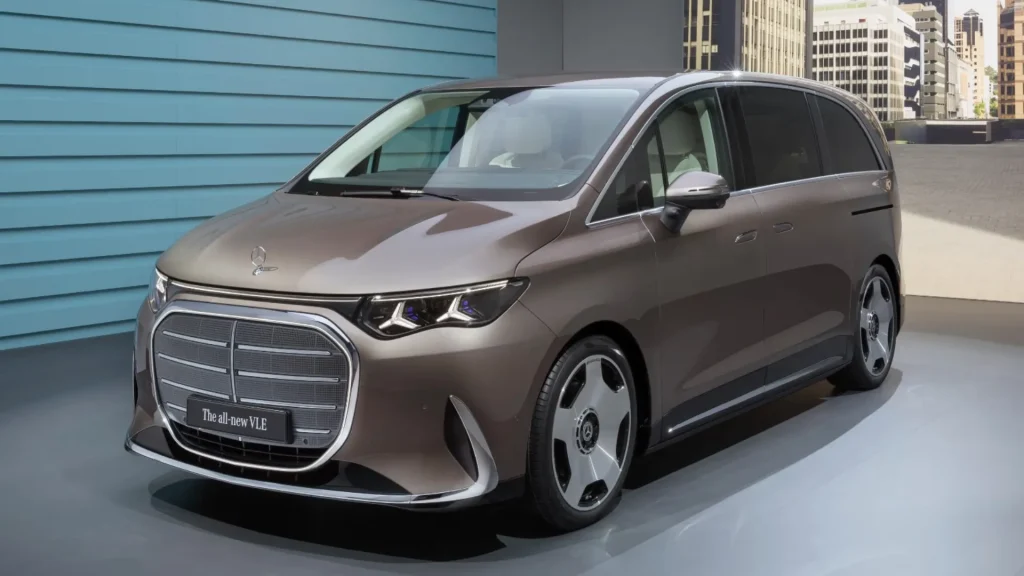
Spanish media reported in June that Mercedes invested close to €1 billion in the plant’s transformation for the new electric van program. The Vitoria facility will build the VLE alongside other van models, giving Mercedes flexibility as demand changes across markets.
The production launch moves the VLE from concept-stage promise to a real global product program. Mercedes first previewed the vehicle through the Vision V concept, which showed an even more extravagant interpretation of luxury van travel.
The production VLE is more practical, but it carries much of the same idea: passengers should receive an experience closer to a private lounge than a standard rear seat.
The U.S. arrival is expected in late 2027. Mercedes has not yet confirmed final trim levels, pricing, EPA range figures, or whether every European feature will reach American buyers. Those details will determine how broad the VLE’s appeal becomes.
The all-electric Mercedes-Benz VLE is not intended to be another ordinary family van. It is a premium electric people mover built to combine eight-passenger practicality with the technology, comfort, and image of a flagship luxury vehicle.
Its 800-volt electrical system, 115-kWh battery, 300-kW charging capability, available all-wheel drive, rear-wheel steering, air suspension, and theater-style rear cabin are features rarely found together in any vehicle, let alone a van.
The VLE may not persuade every SUV buyer to switch. Its expected price will limit its audience, and the U.S. market remains skeptical of vans regardless of how luxurious they become.
But Mercedes is not trying to sell the VLE to everyone. It is targeting buyers who need real passenger space and want an electric vehicle that treats that space as a luxury asset rather than a compromise.
Also Read: 10 Little-Known Features in the Mazda CX-5
