
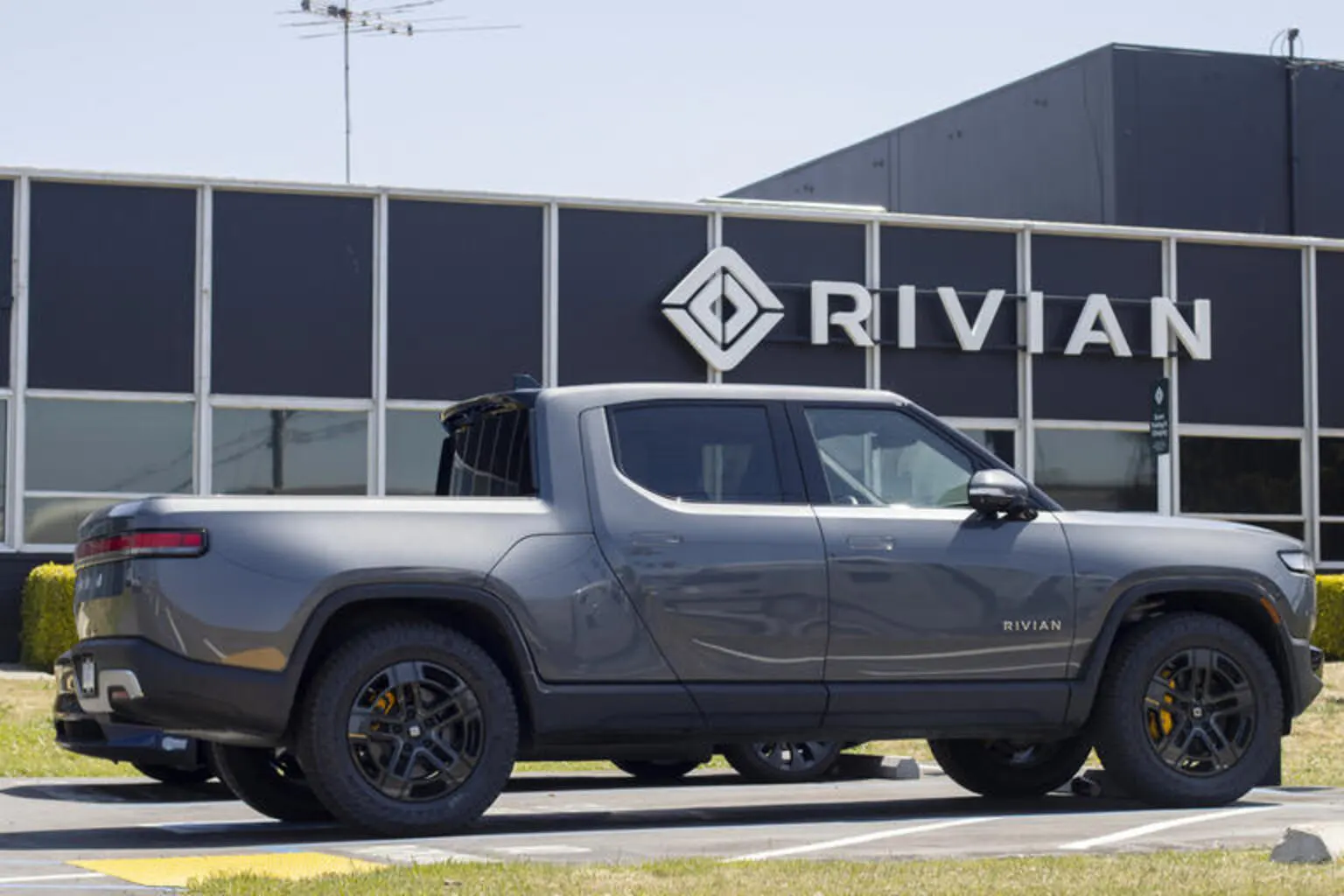
Rivian is making another significant investment in its after-sales infrastructure, announcing the expansion of its service network across the United States as the company prepares for continued growth in electric vehicle ownership.
The latest rollout includes additional service centers, expanded mobile repair operations, and increased service capacity designed to improve repair times and customer convenience.
While Rivian has earned praise for its R1T pickup, R1S SUV, and commercial electric delivery vans, rapid sales growth has also brought challenges.
As more Rivian vehicles reach customers across North America, owners have frequently cited service appointment availability and travel distances to service facilities as areas requiring improvement.
According to the Rivian Newsroom, the company has opened additional service centers in key U.S. markets while expanding its fleet of mobile service vehicles. The investment is intended to reduce wait times, bring repair services closer to customers, and support the growing number of Rivian vehicles now operating on American roads.
The expansion reflects Rivian’s broader strategy of strengthening the ownership experience alongside vehicle production and sales growth.
Also Read: 10 Maintenance Jobs Riders Can Do for Under $50
Service Infrastructure Becomes a Key Competitive Advantage
For traditional automakers, dealership networks have historically handled everything from routine maintenance to complex repairs. Rivian, however, operates under a different business model.
Rather than relying on independent franchised dealerships, Rivian owns and operates its service centers directly. This approach gives the company greater control over repair quality, technician training, software updates, and customer communication. However, it also requires significant investment in facilities, specialized equipment, and staffing.
According to Rivian, expanding the service network has become one of the company’s highest operational priorities as deliveries continue to increase.
The company noted that improving ownership satisfaction depends not only on building high-quality vehicles but also on ensuring customers can access timely maintenance and repairs throughout the vehicle’s life cycle.
Industry analysts have increasingly pointed out that service quality has become a major differentiator in the competitive EV market. While buyers often focus on battery range and performance, long-term ownership satisfaction is heavily influenced by repair availability and customer support.
New Service Centers Expand Geographic Coverage
The latest expansion includes several new Rivian-owned service centers strategically located in regions where customer demand has grown rapidly.
According to Rivian, these new facilities increase coverage in metropolitan areas while also reducing travel distances for customers living in surrounding communities. Each location is equipped to perform routine maintenance, warranty repairs, collision-related inspections, software diagnostics, and more complex mechanical repairs.
Unlike many conventional repair shops, Rivian service centers are specifically designed for electric vehicles, incorporating high-voltage battery equipment, advanced diagnostic systems, and technicians trained exclusively on Rivian products.
The company says every new facility is intended to increase full service capacity rather than simply replacing existing operations. This should help shorten appointment wait times as Rivian’s vehicle population continues to expand across the United States.
According to Rivian’s Newsroom, the company plans to continue opening additional service centers in markets where customer density supports long-term operations, making service accessibility a core part of its nationwide expansion strategy.
Mobile Service Continues to Grow
While new service centers represent an important investment, Rivian is also placing significant emphasis on expanding its mobile repair operations.
The company’s mobile service vehicles allow technicians to perform many repairs at customers’ homes or workplaces without requiring a visit to a service center.
According to Rivian, mobile technicians can complete a wide variety of services, including software updates, tire rotations, 12-volt battery replacements, minor hardware repairs, accessory installations, recall-related work, and diagnostic inspections.
For customers living several hours from the nearest service facility, mobile service can significantly reduce inconvenience while minimizing vehicle downtime.
Rivian says expanding the mobile fleet allows it to reach more owners in suburban and rural areas where building permanent service centers may not yet be economically practical.
This approach mirrors broader trends across the electric vehicle industry, where manufacturers increasingly use mobile service to complement physical repair facilities.
Supporting a Rapidly Growing Vehicle Population
The expansion comes at a time when Rivian’s customer base continues to grow across North America.
The company has steadily increased production of its R1T electric pickup and R1S SUV at its manufacturing facility in Normal, Illinois, while continuing deliveries of electric commercial vans to fleet customers.
According to Rivian’s production reports, cumulative vehicle deliveries have risen substantially over the past several years, creating greater demand for maintenance, warranty support, and software-related service.
Unlike internal combustion vehicles, electric vehicles generally require less routine maintenance because they eliminate oil changes, spark plugs, transmission servicing, and numerous engine components.
However, EVs still require tire replacement, suspension repairs, brake servicing, software updates, climate-control maintenance, steering inspections, and occasional battery or electrical diagnostics.
As the number of Rivian vehicles on the road increases, the company recognizes that service capacity must expand at a similar pace.
Technology Plays a Central Role in Vehicle Maintenance
One advantage Rivian enjoys is its software-focused vehicle architecture. Many vehicle issues can be diagnosed remotely before customers even visit a service location.
According to Rivian, connected vehicle technology allows technicians to analyze diagnostic information, monitor vehicle health, and determine whether certain problems can be resolved through over-the-air software updates.
In some cases, software fixes eliminate the need for a physical repair appointment. This capability helps reduce unnecessary service visits while allowing technicians to prepare replacement parts before customers arrive when repairs are required.
Remote diagnostics have become increasingly common across the EV industry, helping manufacturers improve efficiency while reducing service delays.
For Rivian, expanding service infrastructure is about more than repairing vehicles. It is also aimed at strengthening customer confidence in the brand.
Customer surveys across the automotive industry consistently show that ownership satisfaction depends heavily on after-sales support.
According to J.D. Power’s U.S. Customer Service Index studies, timely repairs, clear communication, and convenient service appointments remain among the strongest drivers of customer loyalty across all vehicle segments.
Recognizing this, Rivian has continued investing in technician training, digital scheduling tools, customer communication systems, and replacement parts availability.

The company says expanding service capacity should improve appointment flexibility while reducing repair turnaround times for many customers.
These improvements become particularly important as Rivian prepares to introduce additional vehicle models over the next several years.
The service network expansion also supports Rivian’s longer-term product strategy. Beyond its current R1 lineup, the company is preparing to launch the midsize R2 SUV, followed by the smaller R3 crossover and R3X performance variant.
These upcoming models are expected to significantly increase Rivian’s annual sales volume by targeting more affordable market segments than the premium-priced R1T and R1S.
According to Rivian, establishing service infrastructure before those vehicles arrive will help ensure the company can support a much larger customer base without compromising repair quality.
Industry analysts have noted that scaling service operations ahead of major product launches is often more efficient than attempting to expand after demand has already exceeded capacity.
Competition Is Expanding Service Networks as Well
Rivian is not alone in recognizing the importance of after-sales support. Tesla has continued adding service centers and mobile service vehicles across North America in response to growing customer demand.
Lucid Motors has similarly expanded its service footprint while increasing mobile repair availability.
Legacy automakers, including Ford, General Motors, Hyundai, Mercedes-Benz, BMW, and Volkswagen, continue leveraging their extensive dealership networks to support their growing electric vehicle portfolios.
This competition means that customer service quality has become nearly as important as battery range, charging speed, and vehicle performance when consumers compare electric vehicle brands.
Manufacturers that provide faster repairs and more convenient ownership experiences may gain an important competitive advantage as EV adoption continues to rise.
Expanding service facilities alone is not enough to improve repair times. Manufacturers must also ensure replacement parts are readily available.
According to Rivian, the company continues investing in its parts distribution network to improve inventory management and reduce delays caused by supply chain disruptions.
The company has worked to position components closer to regional service centers, allowing commonly replaced parts to reach technicians more quickly.
Industry experts note that efficient parts logistics can significantly reduce repair turnaround times, particularly for newer manufacturers still building nationwide support networks.
Combining expanded service centers with improved parts distribution gives Rivian greater flexibility to handle increasing repair volumes as vehicle ownership grows.
Rivian’s latest service expansion highlights an important shift in the electric vehicle market. As EV manufacturers mature, success increasingly depends on delivering a complete ownership experience rather than simply introducing new products.
According to the Rivian Newsroom, the company views its growing service network as a long-term investment that will support existing owners while preparing for future vehicle launches.
By expanding physical service centers, increasing mobile repair operations, enhancing remote diagnostics, and improving parts distribution, Rivian is addressing one of the most important aspects of customer satisfaction.
As the company moves toward launching the R2 and additional next-generation vehicles, a stronger nationwide service network will play an increasingly important role in maintaining customer confidence.
In a market where consumers expect premium technology to be matched by premium support, Rivian’s continued investment in after-sales service positions the company to compete more effectively as electric vehicle adoption accelerates across the United States.
Also Read: 10 Longest-Range Motorcycles on One Tank
