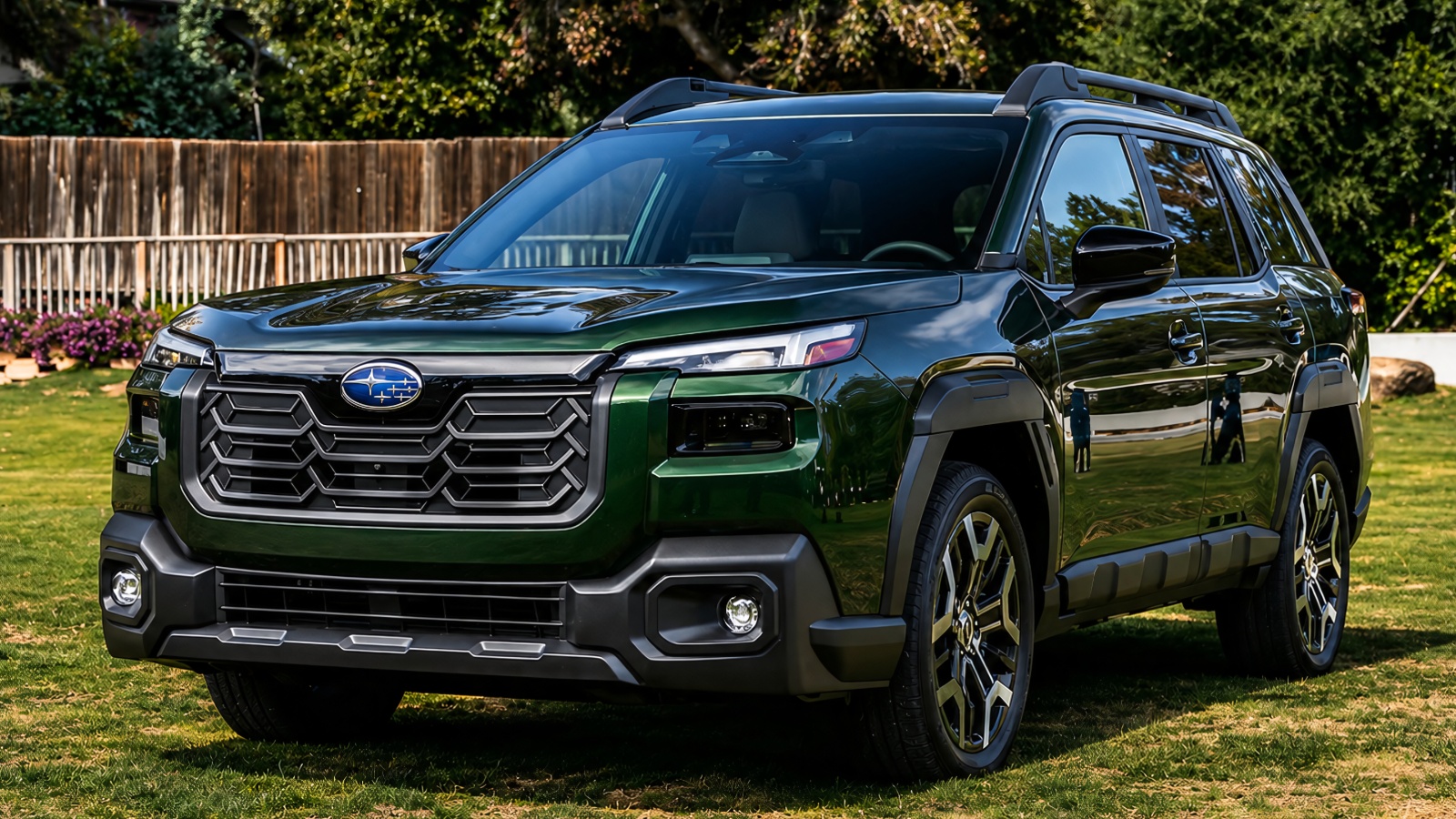
Subaru has released the first official details about the next-generation Outback, confirming that its iconic crossover wagon will place greater emphasis on hybrid powertrains, upgraded driver-assistance technologies, and a redesigned interior to improve comfort and connectivity.
The announcement signals another important step in Subaru’s broader electrification strategy as the automaker adapts one of its most recognizable nameplates to changing consumer expectations and increasingly stringent emissions regulations.
For nearly three decades, the Outback has carved out a unique position in the automotive market by blending the practicality of a station wagon with the capability of an SUV. It has become one of Subaru’s best-selling models in North America, earning a loyal customer base through standard all-wheel drive, generous ground clearance, and a reputation for durability.
As hybrid technology becomes increasingly important across the industry, Subaru is preparing to modernize the Outback while preserving the qualities that have made it a flagship vehicle for the brand.
According to Motor1, Subaru’s early preview confirms that the next-generation Outback will place greater emphasis on hybrid technology, introduce more advanced safety systems, and feature a thoroughly redesigned cabin with improved digital technology.
Although full specifications remain under wraps ahead of the model’s official debut, the company says the new Outback is being developed to meet growing demand for more efficient and technologically advanced vehicles without compromising the all-weather capability that defines the nameplate.
Also Read: 10 Free Service Offers That Legally Bind You to the Dealer
Hybrid Technology Takes Center Stage
Perhaps the biggest announcement surrounding the next-generation Outback is Subaru’s commitment to expanding hybrid technology across the lineup. While Subaru has previously offered hybrid variants in select markets, the upcoming Outback represents a much larger investment in electrification.
According to Motor1, Subaru is developing new hybrid powertrains designed to improve fuel efficiency, lower emissions, and deliver smoother performance during both city and highway driving.
The company believes hybrids will play an increasingly important role as consumers seek better fuel economy without giving up the convenience of conventional gasoline vehicles.
Unlike battery-electric vehicles, hybrid models eliminate concerns about charging infrastructure because the battery is automatically recharged through regenerative braking and the gasoline engine.
This allows drivers to benefit from improved efficiency while maintaining the long-distance capability that has always been one of the Outback’s strongest selling points.
Industry analysts note that hybrid demand has remained exceptionally strong in North America, where many buyers continue to prefer electrified vehicles that do not require significant changes to their daily routines.
Reuters has reported that several manufacturers, including Toyota and Honda, have increased hybrid production in response to sustained consumer demand, highlighting the growing popularity of this technology.
Subaru’s decision also reflects its closer technical collaboration with Toyota. The two automakers have worked together on multiple electrification projects over recent years, and industry observers expect some of that expertise to influence future Subaru hybrid systems.
While Subaru has not yet disclosed engine specifications or battery capacity, experts expect the new hybrid system to deliver improved fuel economy compared with today’s gasoline-powered Outback while maintaining the strong traction and off-road capability provided by Subaru’s Symmetrical All-Wheel Drive system.
Hybrid technology also offers another advantage for Subaru customers who frequently drive in rural areas or regions with harsh winters.
Since the gasoline engine remains available whenever needed, owners retain the confidence to travel long distances without depending on charging stations, making the hybrid Outback particularly attractive for outdoor enthusiasts and families who regularly venture beyond urban areas.
Safety and Digital Technology Receive Major Upgrades
Safety has long been a defining characteristic of Subaru vehicles, and the next-generation Outback is expected to further strengthen that reputation.
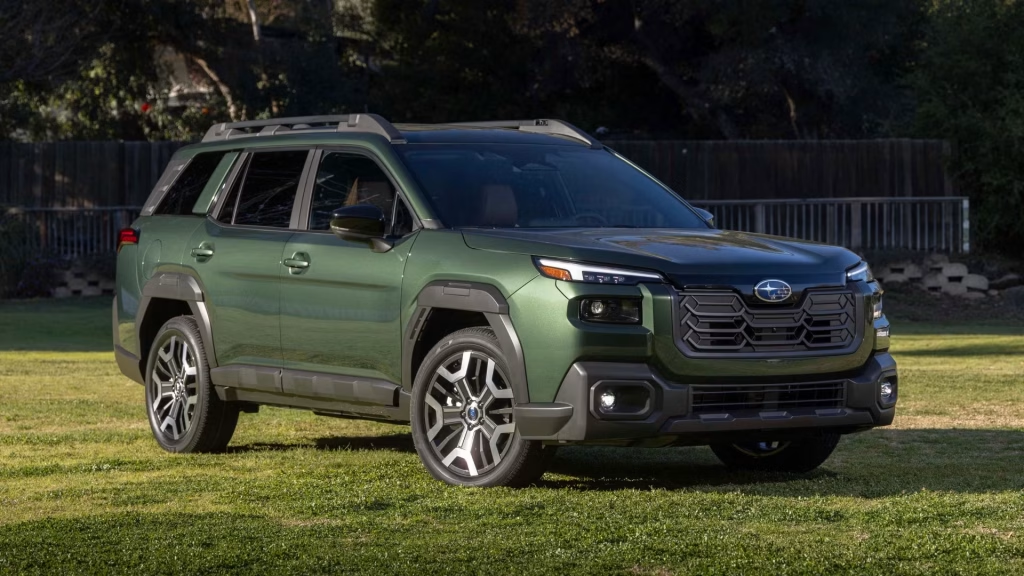
According to Motor1, Subaru will introduce an updated version of its EyeSight Driver Assist Technology featuring more advanced cameras, faster processing capability, and improved object recognition.
The system is expected to provide more accurate operation of features such as adaptive cruise control, lane-centering assistance, pre-collision braking, lane departure prevention, and automatic emergency steering support where available.
The company has consistently invested in improving its active safety systems, recognizing that advanced driver-assistance technologies are becoming increasingly important purchasing factors for consumers.
Beyond driver assistance, Subaru is expected to enhance structural safety through improvements to the vehicle’s platform and crash-energy management. Industry experts anticipate additional use of high-strength steel and optimized body construction to improve occupant protection while maintaining vehicle rigidity and ride quality.
The interior also receives a significant overhaul. According to Subaru, the redesigned cabin has been developed to provide a more modern and comfortable environment while incorporating the latest digital technologies.
Larger infotainment displays, improved graphics, faster processing speeds, and enhanced connectivity are all expected to be part of the package.
Wireless Apple CarPlay and Android Auto compatibility will likely continue, while over-the-air software update capability could allow future improvements to infotainment functions without requiring dealership visits.
Voice recognition is also expected to become more capable, allowing drivers to control navigation, climate settings, communication functions, and entertainment using natural speech commands. This aligns with a broader trend across the automotive industry, where software and connectivity have become nearly as important as mechanical engineering.
Passenger comfort remains another priority. Although Subaru has not revealed final interior specifications, early information suggests improvements to seat design, cabin materials, storage solutions, and full refinement.
Better sound insulation and upgraded climate control systems are also anticipated, helping position the Outback more competitively within the increasingly premium midsize crossover segment.
Building on a Proven Formula for the Future
Despite the significant technological changes, Subaru appears determined to preserve the core identity that has made the Outback successful for nearly 30 years.
The model has traditionally appealed to buyers seeking a vehicle capable of handling diverse driving conditions without sacrificing everyday practicality. Standard all-wheel drive, generous ground clearance, spacious cargo capacity, and dependable reliability have consistently distinguished the Outback from many crossover competitors.
Industry observers expect those characteristics to remain central to the next-generation model. Subaru’s Global Platform is likely to receive further refinements that improve ride comfort, handling precision, and full structural rigidity while supporting the addition of hybrid powertrains.
The redesigned Outback will enter an increasingly competitive market that includes rivals such as the Toyota Crown Signia, Honda Passport, Hyundai Santa Fe Hybrid, Kia Sorento Hybrid, Ford Bronco Sport, and several midsize crossovers offering electrified powertrains.
Competition has intensified as more manufacturers introduce hybrid technology across their SUV lineups. Buyers now expect improved fuel efficiency alongside advanced safety features, premium interior technology, and long-term reliability.
Subaru’s latest preview suggests the company understands these evolving expectations and is adapting one of its most important products accordingly.
The hybrid strategy also supports Subaru’s broader environmental goals. Like many global automakers, the company is working to reduce fleet emissions while gradually expanding its electrified vehicle portfolio.
Rather than moving exclusively toward battery-electric vehicles in the near term, Subaru believes hybrids represent a practical solution for many customers during the industry’s transition toward lower-emission transportation.
According to Motor1, additional technical details, including powertrain specifications, performance figures, pricing, and production timing, will be revealed closer to the Outback’s official global debut. Those announcements are expected to provide a clearer picture of how the new model will compete in one of the automotive industry’s most important segments.
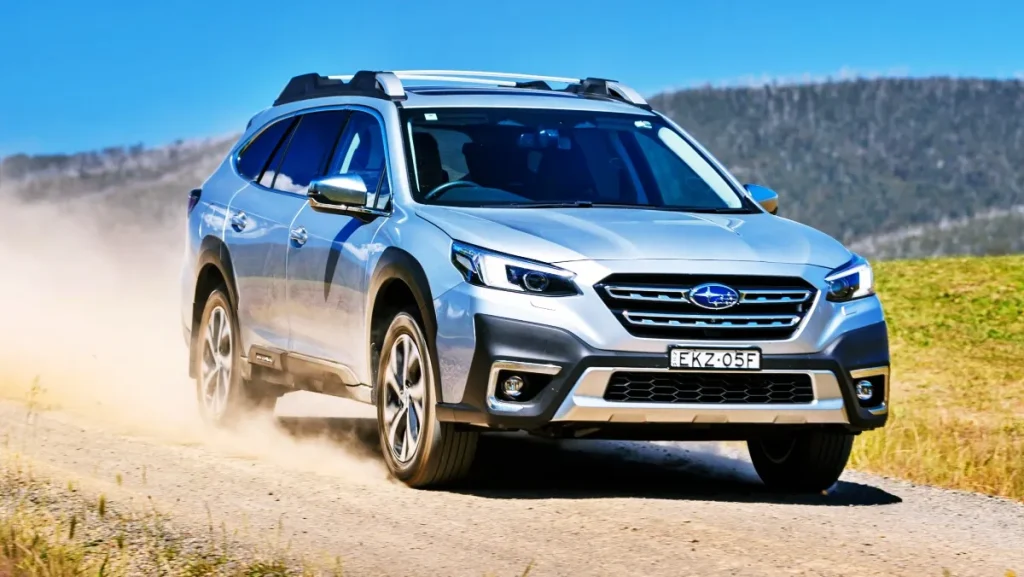
The early preview indicates that Subaru is not simply refreshing an existing vehicle but preparing a comprehensive evolution of one of its most recognizable nameplates.
By combining improved hybrid technology, expanded safety systems, modern digital features, and a redesigned interior with the rugged capability that has long defined the Outback, Subaru aims to ensure the model remains a leading choice for families, outdoor enthusiasts, and long-distance travelers alike.
As the automotive industry continues balancing electrification with consumer demand for practical and versatile vehicles, the next-generation Outback demonstrates Subaru’s commitment to evolving with the market while staying true to the qualities that have built its reputation.
If the production model delivers on the promises outlined in this initial preview, the Outback is likely to remain one of Subaru’s most important products and a strong competitor in the global crossover market for years to come.
Also Read: 10 Cars Recording Audio Before the Wake Word