
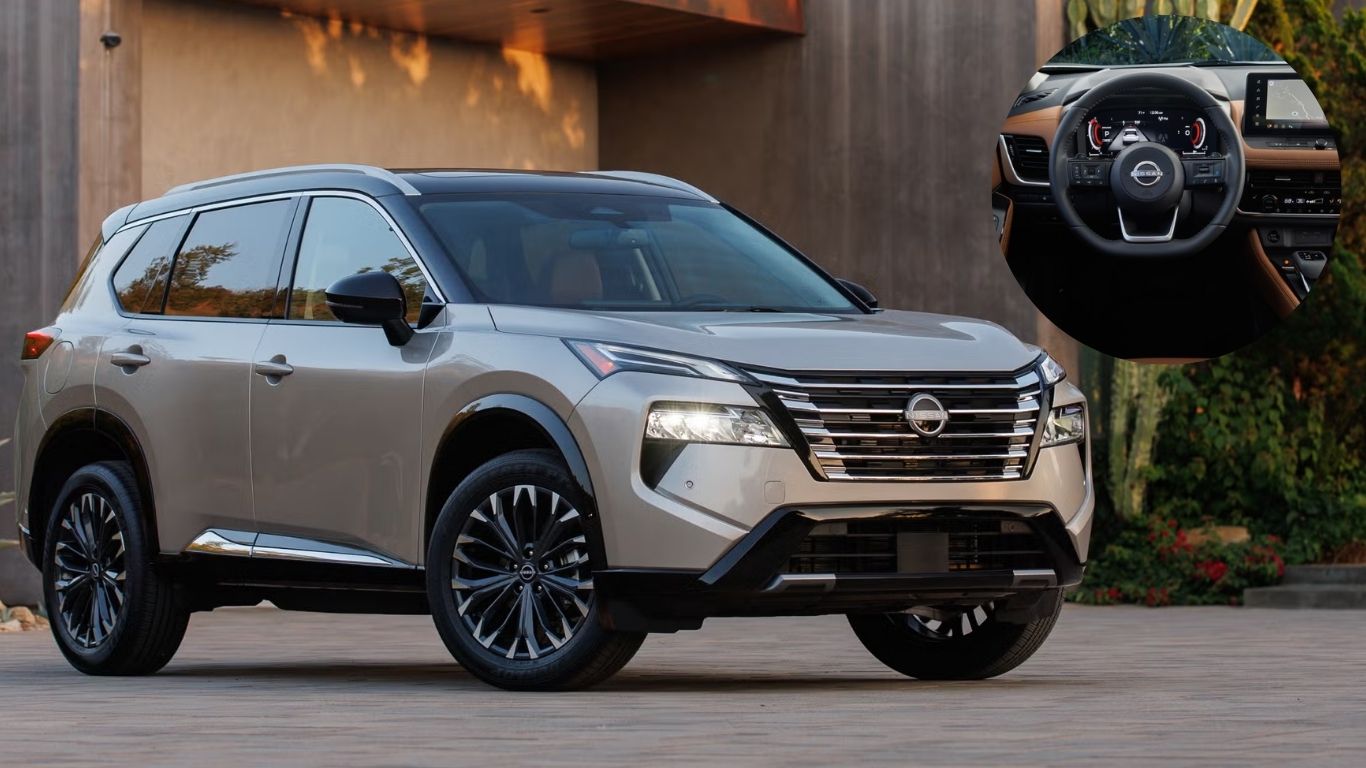
You probably know the Nissan Rogue as a practical, well-rounded SUV that gets you where you need to go without much drama. But here is what most owners miss: Nissan quietly packed this vehicle with clever tricks, shortcuts, and hidden configurations that make daily life noticeably easier. Most of these features never get mentioned at the dealership, and they are not exactly front-page news in the owner’s manual either.
Powering it all is Nissan’s 1.5-liter Variable Compression Turbo three-cylinder engine producing 201 horsepower and 225 lb-ft of torque, a genuinely smart piece of engineering that adjusts its own compression ratio on the fly for efficiency. Older models used a 2.5-liter four-cylinder rated at 181 horsepower and 181 lb-ft. At 183.0 inches long and 72.4 inches wide, it is compact enough for city parking and spacious enough for real family use.
Whether you bought your Rogue last month or have owned one for three years, there is a good chance that at least a few of these eight features are completely new to you. Some are convenience shortcuts. Some are safety tools. One might save you from a panic moment in a parking lot. Read through both sections and try each one. Your Rogue already does all of this. You just did not know it yet.
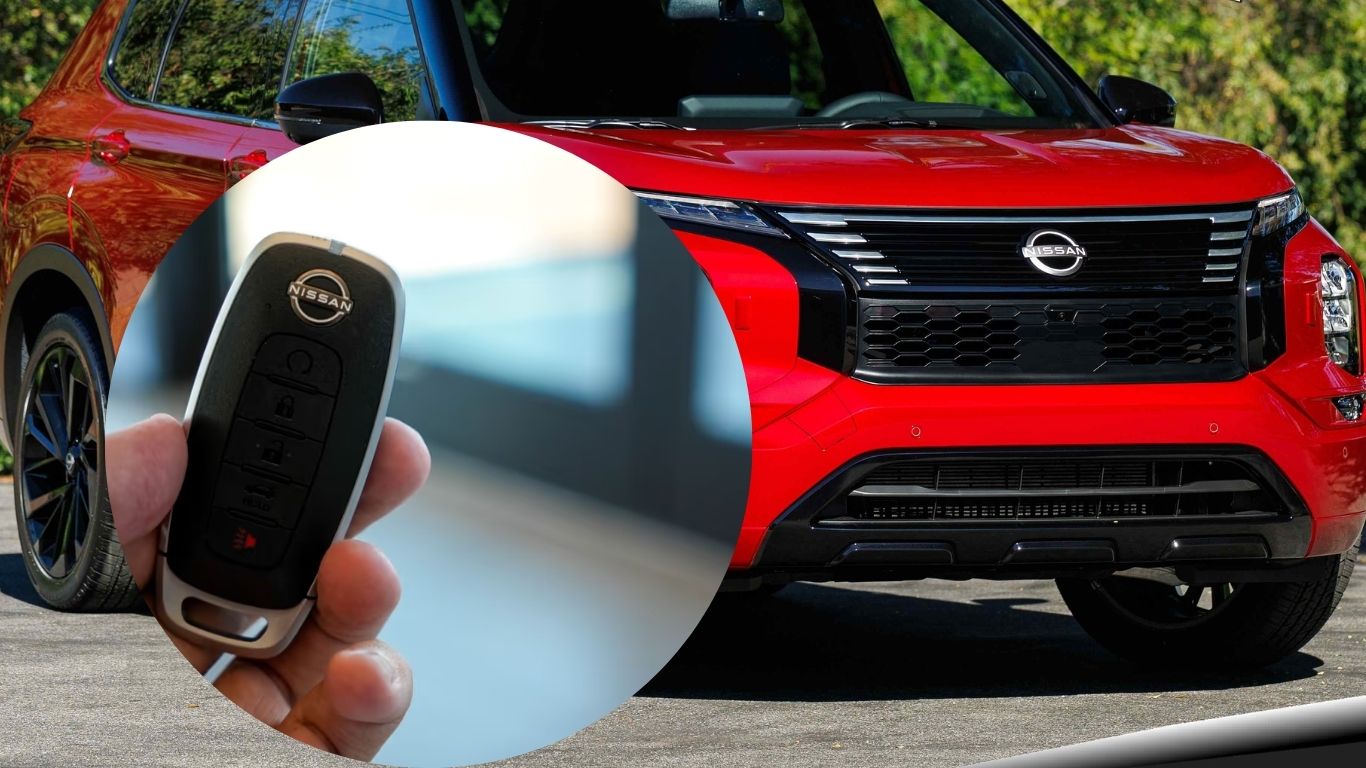
1. Remote Window Roll-Down
Summer heat can turn a parked vehicle into an oven within minutes. Nissan quietly included a solution that works before the door even opens. By pressing the unlock button on the key fob once, then pressing it again and holding it for several seconds, both front windows lower automatically. This releases trapped hot air immediately, reducing cabin temperature before anyone sits down.
Few owners learn this trick because it is not labeled on the remote or highlighted during delivery. Dealership walkthroughs often focus on screens and driver aids, leaving this feature undiscovered. Yet its usefulness becomes obvious during warm weather. Entering a cooler cabin reduces strain on the air conditioning system, helps leather surfaces stay comfortable, and makes short stops far more pleasant.
This function also helps during quick errands. When stepping back into the vehicle after a grocery run or school pickup, releasing heat first creates a calmer environment. Parents appreciate the immediate airflow when children climb into car seats. Drivers wearing work attire avoid that initial blast of trapped heat against fabric.
Security remains intact because only the front windows respond, and activation requires deliberate input from the fob. Accidental triggers are unlikely. Once inside, the driver simply closes the windows and continues as usual. Small conveniences like this demonstrate how thoughtful design supports real-life use. Rather than adding another button to the dashboard, Nissan relied on existing hardware to deliver comfort in a simple, efficient way.
2. Rear Door Alert Customization
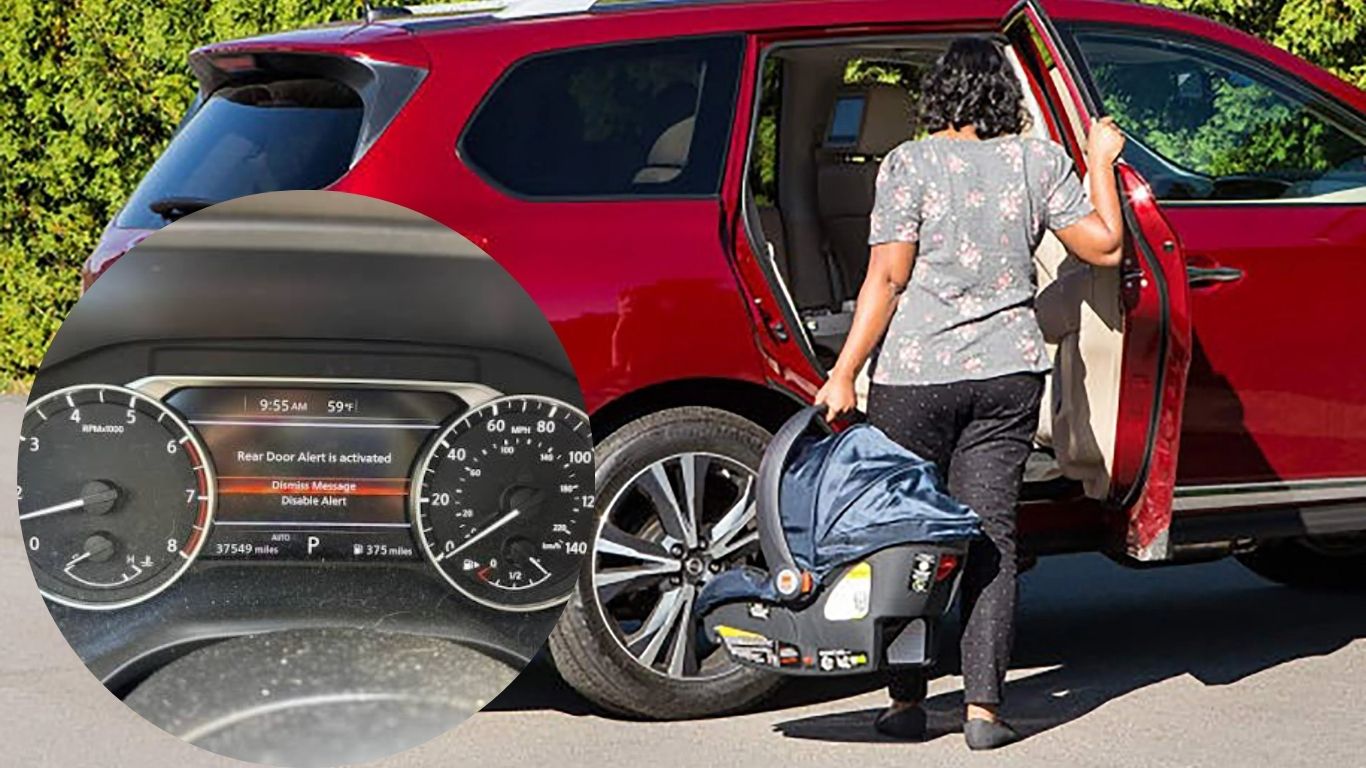
Safety reminders can be helpful, yet they should also respect driver preferences. The rear door alert system was created to reduce forgotten items or passengers in the back seat. When the rear doors open before a trip, the vehicle monitors that action and issues a reminder once the drive ends. By default, this reminder includes a horn sound when parking.
Some drivers appreciate the audible alert. Others find it disruptive, especially in quiet neighborhoods or early mornings. Hidden within the driver display menu is an option that allows customization. Through Settings, Vehicle Settings, and Rear Door Alert, owners can switch the reminder to a visual message on the dashboard screen instead of a horn sound.
This flexibility matters because routines differ. A parent running daily errands may prefer a quieter reminder. Someone transporting pets might want a consistent visual notice without drawing attention. Adjusting the alert allows the system to support habits rather than interrupt them.
The visual message appears clearly on the instrument display, ensuring it remains visible before exiting. No safety function is removed. Only the delivery method changes. This respects both awareness and personal comfort. Drivers often disable alerts entirely because they do not realize customization exists.
Learning this setting prevents that outcome. The system continues working quietly in the background, offering reassurance without irritation. Design choices like this show an effort to balance responsibility with driver control. Instead of forcing a single behavior, Nissan provided options that adapt to different lifestyles and environments.
Also Read: Top 10 Hidden Features In Nissan GTR
3. Divide-N-Hide Cargo System
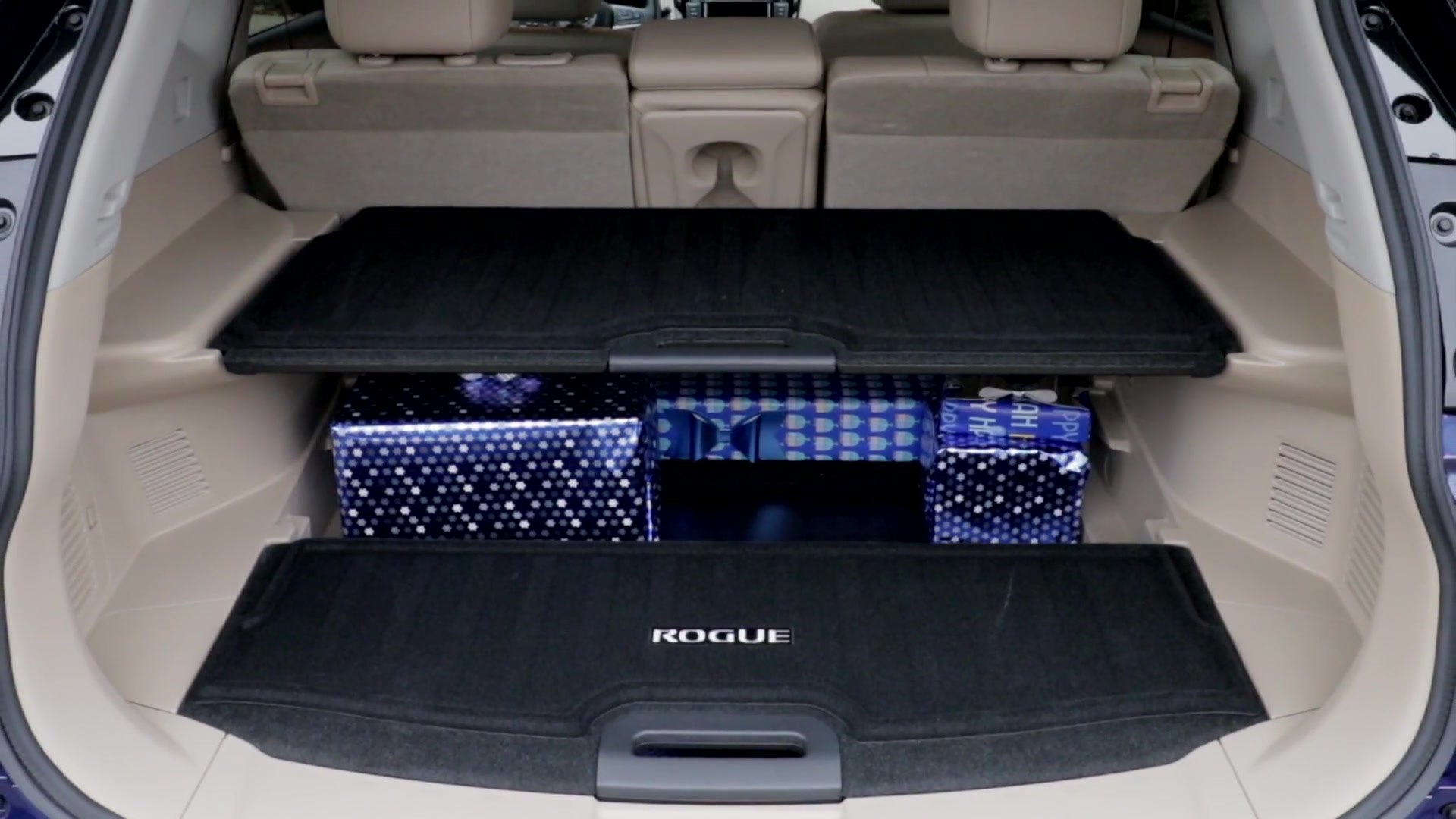
Open the rear cargo area of most Nissan Rogues on any given day, and you will find the floor boards sitting completely flat, which is exactly how the dealership delivered the vehicle and exactly how it has stayed ever since. What those owners are missing is one of the more genuinely practical cargo management systems available in a compact SUV at any price point. Nissan called it Divide-N-Hide, and it allows the rear cargo area to be reconfigured into multiple distinct storage arrangements without any tools or additional accessories.
Two removable floor panels form the foundation of the system. Both panels can be lifted out entirely and repositioned into different factory-designed tracks built into the cargo floor structure. Configured in their standard flat position, you get maximum floor space for large items.
Raise one panel to its upper position while leaving the other flat, and you create a two-level shelf that allows fragile items on top while heavier cargo sits underneath, out of sight. Position both panels vertically, and you create a full-depth hidden storage compartment below the floor level that disappears completely when the panels are returned flat.
There is also a divider configuration where one panel acts as a vertical barrier running side to side across the cargo area, which stops grocery bags, loose boxes, and sports equipment from sliding forward under braking. Anyone who has arrived home to find their grocery bags tipped over and eggs cracked against the back of the seat will immediately understand why this configuration alone justifies knowing the system exists.
Practical applications cover most of what compact SUV owners actually carry. A raised shelf configuration lets you separate a wet dog from dry gear after a trail walk. Hidden floor storage keeps valuables out of sight in parking lots where smash-and-grab theft is a concern. A vertical divider makes every grocery run arrive with everything upright and intact.
Nissan made this system genuinely durable. Both panels are designed to support meaningful weight when in the raised shelf configuration, not just to display products in a car show. The tracks that hold them in position engage with an audible click, so you know when the panel is properly seated rather than just resting in place.
For owners who have never experimented with these floor panels, spending five minutes in the cargo area trying each configuration costs nothing and may permanently change how you use the back half of your Rogue.
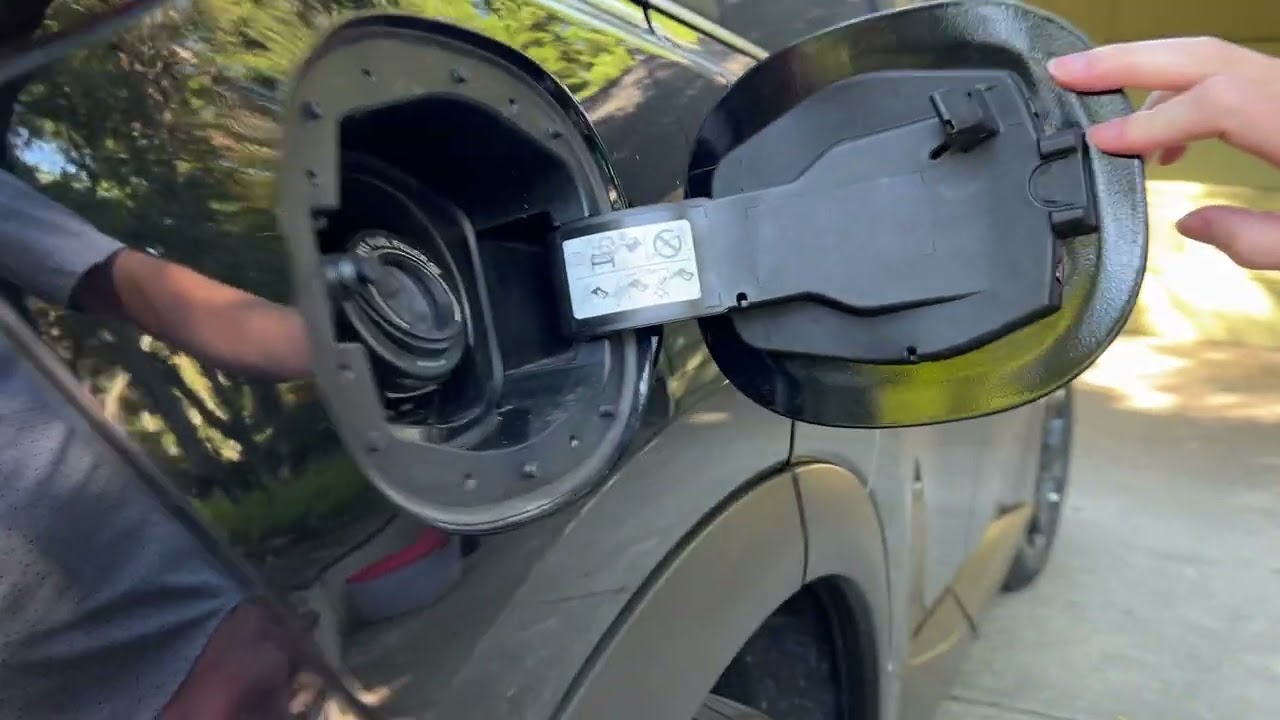
4. One-Touch Fuel Door Unlock
A surprisingly common point of confusion for new Rogue owners, and even for some experienced ones, is the fuel door mechanism. Owners familiar with older Nissan models, or with other brands that use a floor-mounted or dashboard-mounted interior lever, sometimes spend real time searching their cabin for a fuel door release that is not there.
A few have even called their dealer, assuming something was broken. Nothing is broken. Nissan changed the system entirely. Nissan’s modern Rogue links the fuel door directly to the vehicle’s electronic door lock system. When your doors are unlocked, the fuel door is also unlocked. Press down on the right side of the exterior fuel door flap, and it opens. That is the complete procedure. No lever, no secondary button, no interior mechanism to locate.
This change addressed a genuine usability problem that older release mechanisms created. Floor-mounted levers under the driver’s seat were easy to accidentally kick, could become stiff or jam with age, and required drivers to reach awkwardly downward or find a handle in an unfamiliar position when fueling at a gas station. Integrating the fuel door with the door lock system means the door is always ready to open when you are ready to fuel, provided the vehicle is unlocked.
One practical implication worth knowing: if you park your Rogue and walk away while it is still locked, someone cannot open your fuel door from the outside. This is a minor anti-tampering feature that comes as a byproduct of the lock integration rather than a deliberate security design, but it is genuinely useful in public parking situations.
The process at the pump is now simply: arrive, unlock doors either with the fob or by touching the door handle if equipped with Intelligent Key entry, walk to the fuel door, press the right side of the flap, and fuel. Owners who spent the first several fuel stops searching for a lever they read about in an older owner’s forum can stop searching. That lever belongs to a different generation of Nissan vehicles, and your Rogue moved on from it.
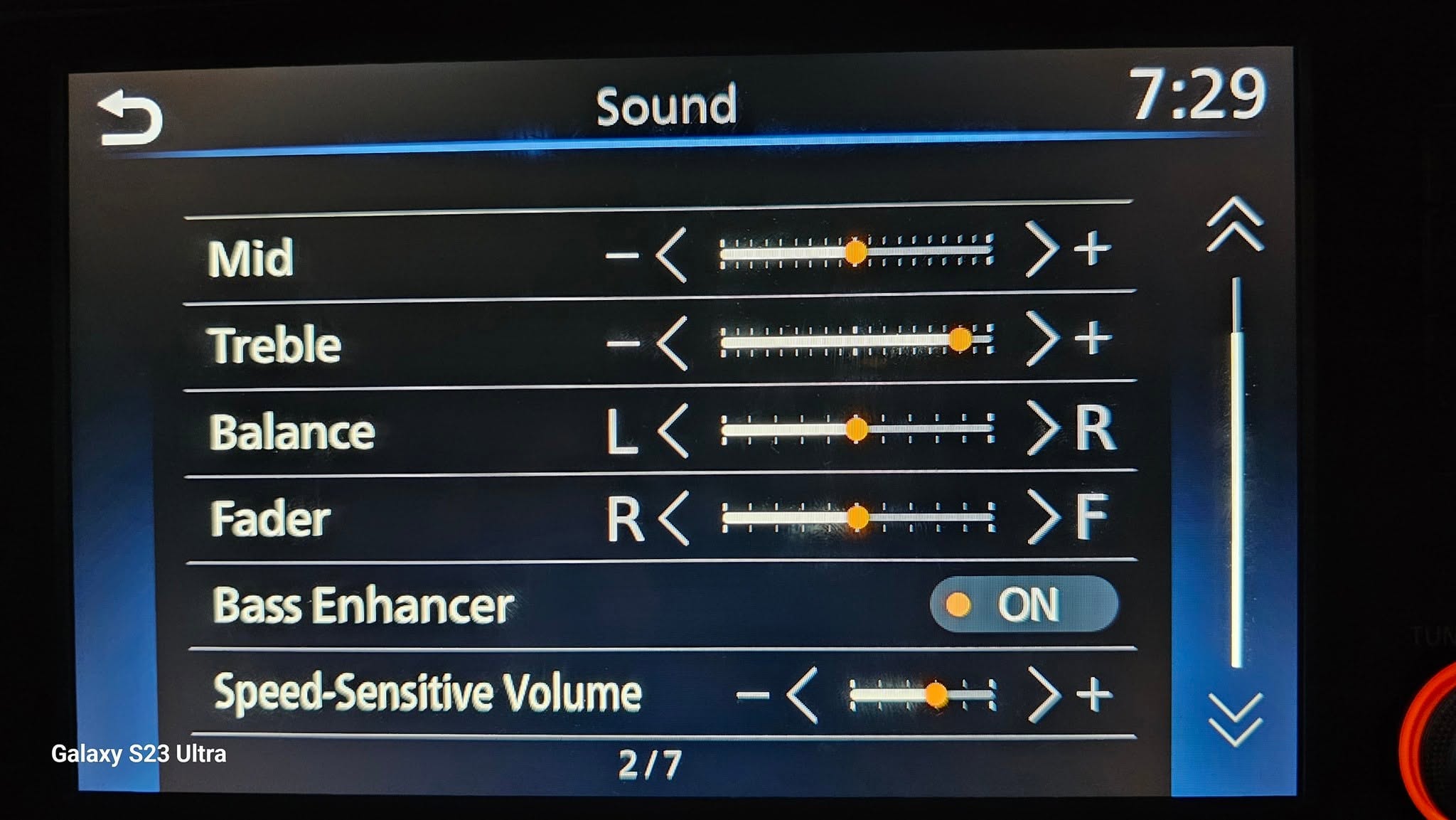
5. Speed-Sensitive Volume Control
Driving conditions rarely stay consistent. Wind noise increases on highways, while city traffic brings quieter moments. Speed-sensitive volume control adapts audio output based on vehicle speed. As speed increases, the system raises volume slightly. When slowing down, it reduces output automatically.
Activation requires a quick visit to the infotainment settings under Sound. Many owners never adjust audio settings beyond basic preferences, leaving this function unused. Once enabled, it operates quietly in the background without constant adjustments. The benefit becomes clear during long trips.
Music and navigation prompts remain audible without sudden jumps in volume. Drivers stay focused on the road rather than reaching for knobs during changing conditions. This feature also protects hearing. Instead of setting the volume high enough for highway noise, the system balances output gradually. Lower speeds remain comfortable and controlled.
Audio clarity matters during navigation guidance and hands-free calls. Speed-sensitive adjustment keeps voices clear without distortion. Passengers notice fewer abrupt changes, creating a calmer cabin environment. Technology works best when it removes small distractions. This function reduces the need for repeated manual adjustments, allowing attention to stay where it belongs. Once set, it requires no further input.
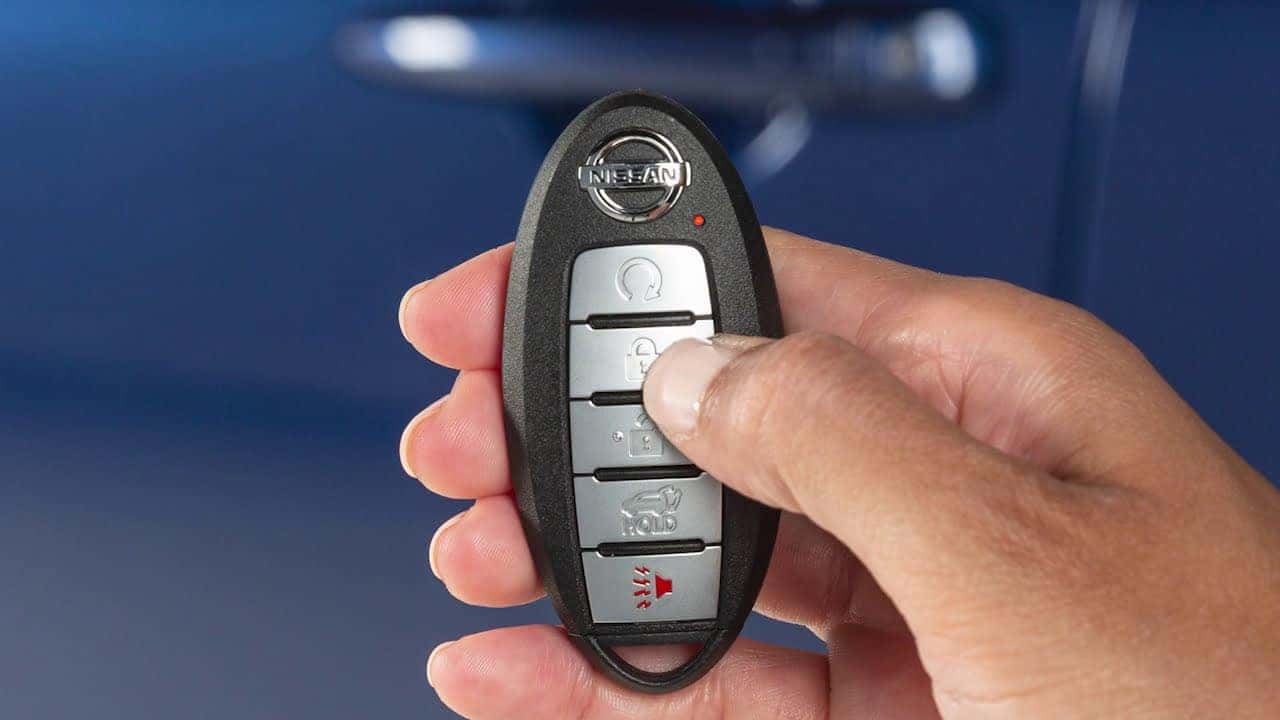
6. Key Fob Emergency Start
Few moments create faster panic in a parking lot than pressing your key fob repeatedly and getting nothing from your Rogue. No unlock click, no confirmation beep, no response at all. Many owners in this situation immediately assume something serious is wrong with the vehicle’s electrical system, call for roadside assistance, or start searching for a tow.
Almost all of them are overlooking a backup system Nissan engineered directly into the start button. Every Nissan Rogue key fob contains a passive transponder chip that does not require the fob’s battery to function. This chip does not communicate actively through radio frequency signals, the way the lock and unlock buttons do.
Instead, it responds to energy broadcast by a receiver built into the Engine Start/Stop button on the dashboard. When a fob is held close enough to the button, the receiver energizes the transponder chip wirelessly and reads its authentication code, allowing the vehicle’s immobilizer system to confirm the correct key is present.
To use this emergency start procedure, take your key fob and hold it directly against the face of the Engine Start/Stop button. Press the button down normally with your foot on the brake pedal. If you hold the fob flat against the button surface while pressing, the system reads the transponder through the physical proximity and starts the engine just as it would with a fully functional fob battery.
This backup system works because the proximity needed for passive transponder reading is very short range, only a few millimeters, which is exactly the distance achieved when the fob is pressed against the button itself. The fob does not need to broadcast. It only needs to respond to the button’s own energy pulse.
Replacing the fob battery afterward is straightforward. Open the fob case using the small physical key blade inside it (more on that in the next feature), and you will find a standard CR2032 coin cell battery available at any drug store, grocery store, or auto parts shop for under two dollars. Knowing the emergency start procedure means a dead fob battery is a minor inconvenience rather than a stranded vehicle situation.
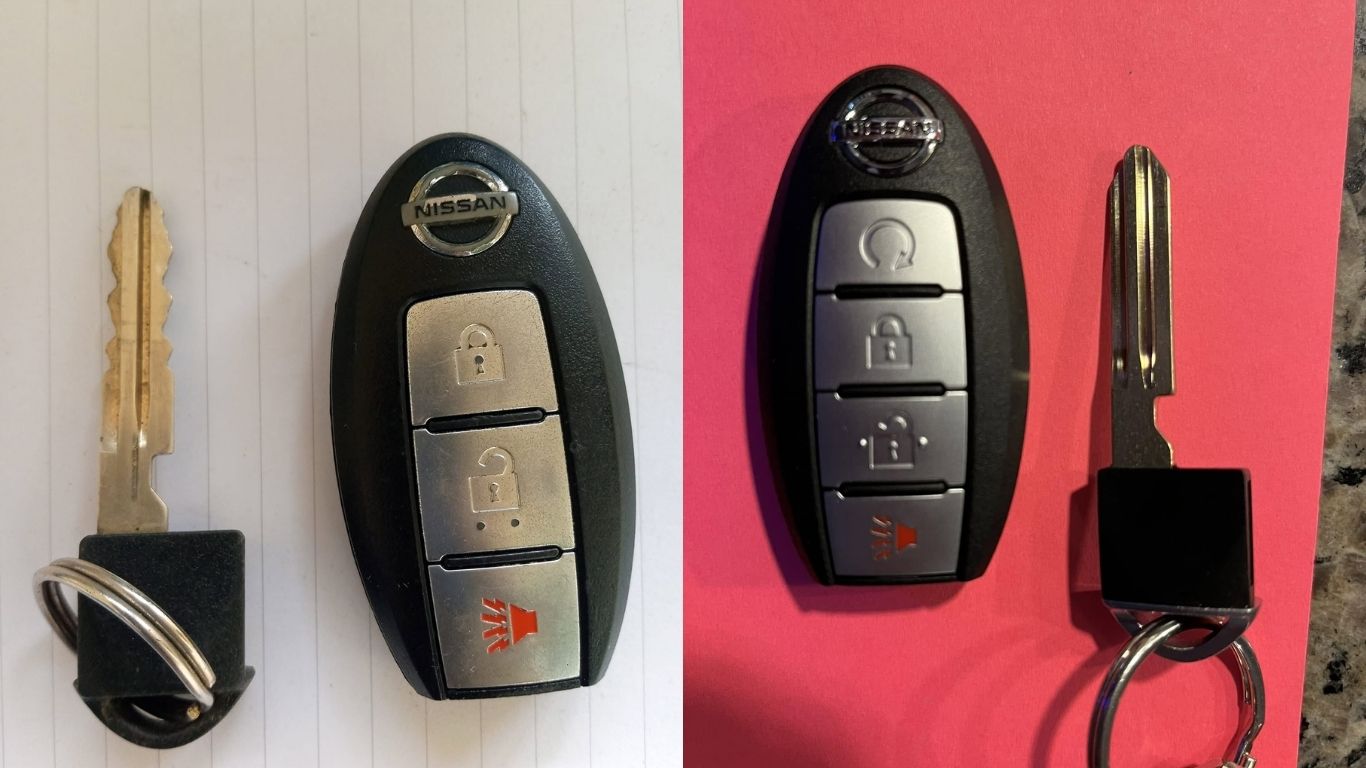
7. Hidden Mechanical Key Blade
Flip your Nissan Rogue key fob over and look at the back panel. There is a small sliding catch or release tab, typically on one of the narrow ends of the fob body. Slide that catch and pull gently, and a metal key blade will slide out from inside the fob housing. Most owners who have carried a Rogue fob for months or years have never done this and have no idea the key blade is there.
Nissan includes this mechanical key blade because electronic systems, no matter how reliable, require power to function. If your Rogue’s 12-volt auxiliary battery drains completely, the electronic door lock system loses power along with everything else. Remote fob signals cannot actuate dead solenoids. Proximity sensing cannot work without power. You could have a fully functional fob with a fresh battery and still be unable to open your door if the car’s own battery is completely discharged.
Look at the exterior driver’s door handle on your Rogue. In most configurations, there is a small covered lock cylinder on the door handle, often hidden behind a cap or cover that pops off with light pressure from the key tip. Insert the metal blade, turn it as a standard key, and the door unlocks mechanically without requiring any electrical power from the vehicle whatsoever.
From there, you can access the interior manually, reach the hood release, and connect a jump starter or jumper cables to the auxiliary battery under the hood. Once you restore power, the electronic systems return to normal function, and everything operates as expected.
Practical preparation is the real value of knowing this feature exists. Taking the physical key blade out of the fob once, confirming it is present, and locating the door cylinder on your specific Rogue takes about two minutes in your own driveway. Doing it for the first time in a dark parking structure with a completely dead car is considerably more stressful. Every Rogue owner should take those two minutes before they need to.
Also Read: Every Nissan Model Ranked by 2026 Consumer Reports Reliability
8. Wiper Service Mode
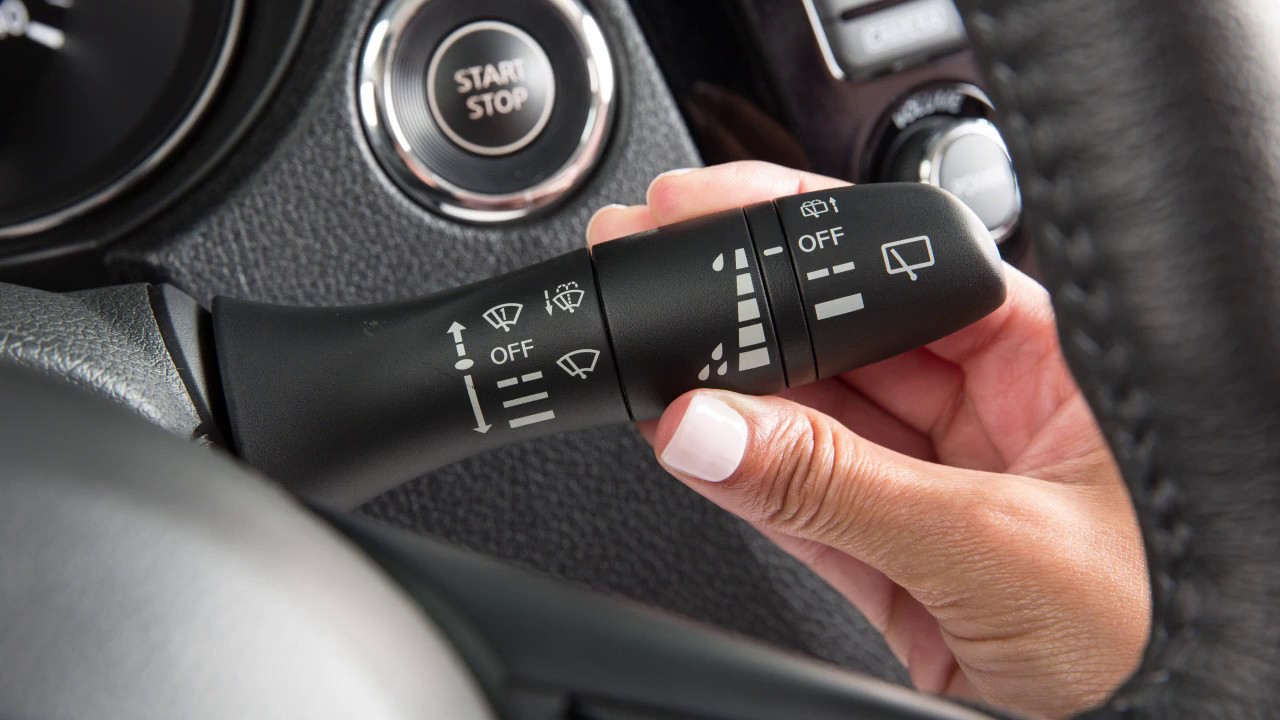
Windshield wipers require regular cleaning and replacement. On the Rogue, the hood design prevents lifting the wipers normally. Service mode solves this through a simple sequence. Within sixty seconds of turning the engine off, pushing the wiper stalk upward twice moves the arms into a vertical position and holds them there. This allows blade replacement and glass cleaning without contacting the hood.
Many owners accidentally scratch paint because they do not know this setting exists. Learning the sequence prevents damage and simplifies routine care. Service mode also helps during winter. Clearing ice becomes easier when the wipers stand upright. Cleaning the windshield thoroughly improves visibility and safety.
Once maintenance finishes, turning the vehicle on returns the wipers to their normal resting position. No tools or settings changes remain. Thoughtful details like this protect both the vehicle and the owner’s time. Proper maintenance becomes easier, safer, and less frustrating with a feature that quietly waits until needed.
Eight features. All of them are built into your Rogue from the factory. None of them cost extra to activate. Nissan engineered these details into its best-selling SUV because small conveniences, safety reminders, and practical shortcuts add up across years of daily use in ways that matter to real owners.
Work through each feature on this list at your own pace. Try the remote window roll-down on the next hot day. Adjust the Rear Door Alert before your next grocery run. Pull the wiper blade out of your fob and confirm it is there. Enable Speed Sensitive Volume before your next highway drive. Each one takes less than five minutes to activate or test, and several of them are likely to become habits so quickly that you will wonder how you managed without them.
