
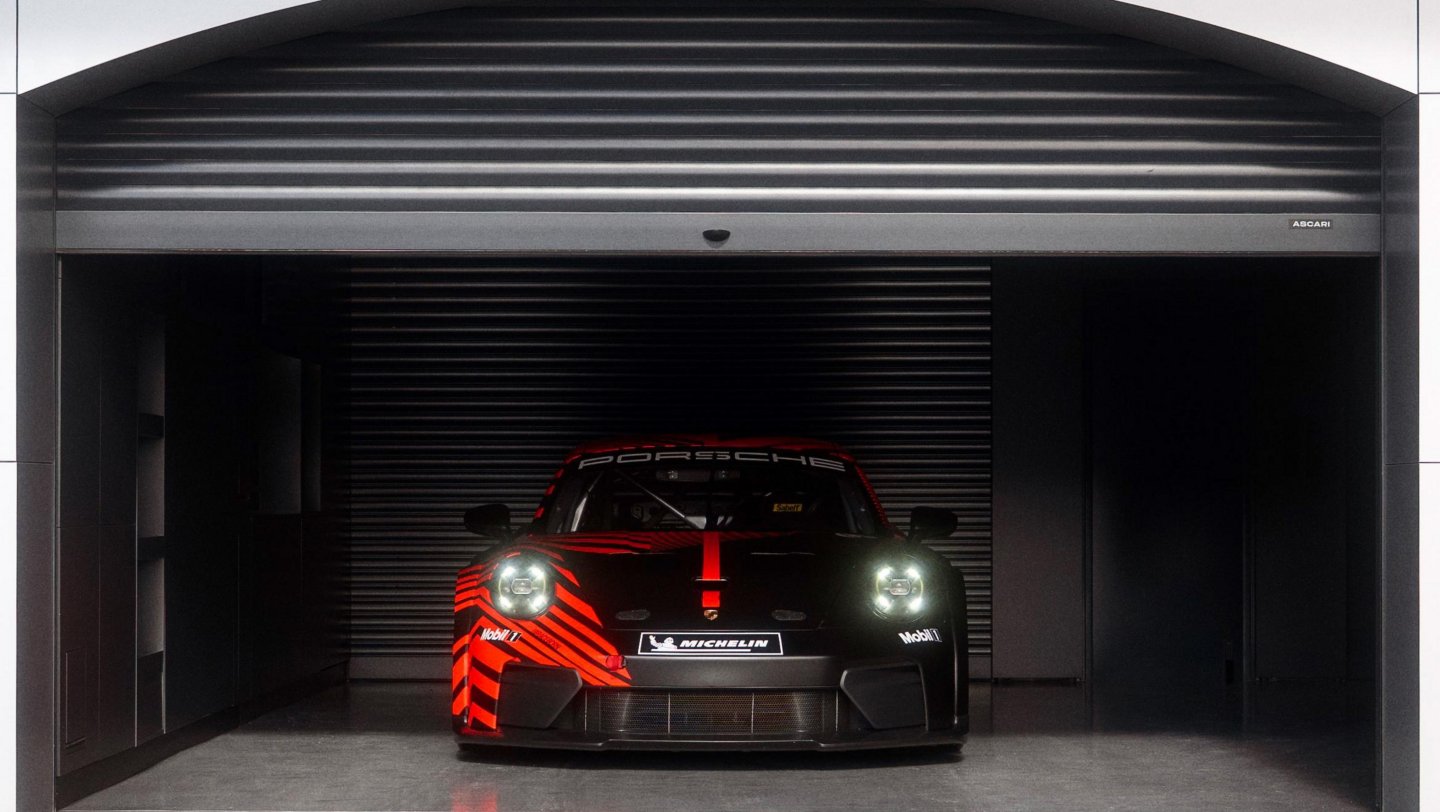
Porsche has opened a new chapter in its customer-racing program with the 911 GT4 R, the first GT4 competition car in the company’s history to use the 911 platform.
The new racer will replace the 718 Cayman GT4 RS Clubsport as Porsche’s entry-level car for international GT4 competition, while the Cayman-based machine will continue racing during the transition period.
The 911 GT4 R is scheduled to make its competitive debut in the 2027 motorsport season. It will be eligible for major customer-racing series, including SRO GT4 championships and the IMSA Michelin Pilot Challenge in North America. Porsche has set the U.S. price at $375,500, including import and delivery.
Also Read: 10 Best Jaguar Cars Ever Made & Ranked
A Major Change for Porsche’s GT4 Program
For more than a decade, Porsche’s GT4 identity has been tied to the mid-engine Cayman. The Cayman GT4 Clubsport, followed by the 718 Cayman GT4 RS Clubsport, gave customer teams a relatively accessible route into international GT racing.
Their mid-engine layout provided balanced handling, while the naturally aspirated flat-six engine gave drivers a direct and predictable racing experience.
The 911 GT4 R changes that formula. It brings the rear-engine 911 architecture into a class that Porsche has previously served with the Cayman. That makes it a significant move for the company, especially because the 911 has traditionally occupied Porsche’s higher-level GT3 racing programs.
Porsche Motorsport says the new GT4 R is intended to create a clearer progression for drivers. A racer can begin in Porsche one-make competition, move into GT4 racing, and eventually step toward GT3 competition while remaining in 911-based machinery.
The strategy also reflects the changing direction of Porsche’s road-car lineup. The 718 Cayman and Boxster are approaching the end of their current combustion-engine era in several markets, making it harder for Porsche to continue building a long-term global racing program around the existing platform.
A 520-PS Flat-Six From the 911 Cup
The 911 GT4 R uses a naturally aspirated 4.0-liter six-cylinder boxer engine derived from the 911 Cup race car. Porsche says the engine produces up to 520 PS, equivalent to about 513 horsepower, or 382 kW.
That figure is notably higher than the output associated with the outgoing 718 Cayman GT4 RS Clubsport. However, GT4 racing uses Balance of Performance rules, meaning series organizers can adjust power, weight, ride height, aerodynamic settings, and other factors to keep competing cars closely matched.
As a result, the 911 GT4 R will not necessarily race with all 520 PS available in every championship. The engine’s potential gives Porsche and race organizers room to calibrate the car for different series and tracks.
The high-revving flat-six is paired with a race-developed drivetrain and Porsche Motorsport Traction Control. The car also uses a Bosch MS 6.6 engine-control unit and an automatic engine-restart function designed to help drivers recover quickly if the engine stalls during a race.
Porsche’s decision to retain a naturally aspirated engine is important. Many GT4 rivals use turbocharged engines, which offer strong low-end torque but can require more complex boost management.
The 911 GT4 R’s flat-six should provide linear throttle response and a familiar Porsche racing sound, both of which remain valuable for customer teams and amateur drivers.
Built for Customer Teams, Not Just Factory Drivers
The 911 GT4 R is not a factory-only prototype. It is designed for customer teams, meaning private racing organizations can buy, run, and maintain the car in championships around the world.
That is the foundation of Porsche Motorsport’s business model. The company has long sold competition cars to private teams, supported them with spare parts, engineering assistance, technical documentation, and race-event service.
A successful customer race car must be fast, but it also needs to be durable, repairable, and manageable for teams without a major factory budget. Porsche has designed the 911 GT4 R with quick-release body panels, accessible cooling ducts, and a body structure that uses an aluminum-steel composite construction.
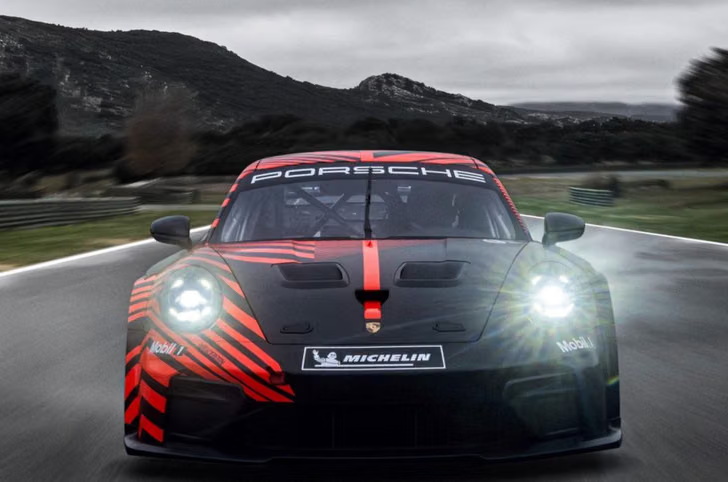
The car also uses forged 18-inch wheels, with 11-inch-wide wheels at the front and 12-inch-wide wheels at the rear. Michelin tires are shown on Porsche’s development car, although teams competing in SRO GT4 championships can use the Pirelli control tires required by those series.
The braking system includes six-piston front calipers and four-piston rear calipers, working with large ventilated steel brake discs.
These are not exotic carbon-ceramic road-car brakes. Steel discs remain the practical choice for GT4 competition because they are durable, easier to service, and better suited to the cost-control rules of customer racing.
Aerodynamics and Safety Take Priority
The 911 GT4 R has been developed around the demands of modern GT4 racing, where stability, durability, and driver confidence can matter as much as outright lap time.
Its bodywork includes a large rear wing, functional cooling outlets, a front splitter, revised fender openings, and aerodynamic surfaces designed to manage airflow around the rear-engine layout. Porsche has not released a full downforce figure, but the car’s shape makes clear that it is far more aggressive than any road-going 911.
The lighting system is also built for endurance racing. LED headlights include daytime running lights and optional corner-light capability, while the rear lights include a stroboscope function that can signal an engine stall. An FIA-compliant rain light is fitted for poor-weather visibility.
Inside, the 911 GT4 R is focused entirely on the driver. It uses a carbon-fiber racing steering wheel with quick-release hardware, shift paddles, illuminated buttons, and rotary controls for traction control and ABS settings. Porsche has also fitted an adjustable steering column and a driver-oriented touchscreen control panel with physical feedback.
These details may appear minor, but they matter in GT4 racing. Drivers often compete in long races, traffic-heavy fields, rain, darkness, and changing tire conditions. Controls must be easy to reach and clear enough to operate without distracting the driver.
Why the Cayman GT4 Is Not Disappearing Immediately
The 911 GT4 R will become Porsche’s future GT4 customer racer, but the Cayman-based 718 GT4 RS Clubsport will not vanish from circuits overnight.
The existing car remains eligible in GT4 competition, and many customer teams already own cars, spare parts, equipment, and engineering knowledge built around the Cayman platform. Porsche will need to support those teams during the transition, particularly because GT4 cars are often raced for several seasons before being replaced.
The 718 Cayman GT4 RS Clubsport is also still listed among the cars competing in the 2026 GT4 European Series.
The change is therefore evolutionary rather than abrupt. Teams can continue racing the Cayman while new buyers decide whether the 911 GT4 R’s updated platform, stronger engine, and future parts support justify the investment.
What It Means for GT4 Racing
The arrival of the 911 GT4 R strengthens a GT4 category that has become one of the most important levels of global customer motorsport.
GT4 racing attracts professional drivers, ambitious amateurs, manufacturers, and private teams because it offers competitive cars at a lower cost than GT3 or prototype racing.
The cars remain closely related to road-going sports cars, but they receive dedicated safety equipment, racing suspension, aerodynamic upgrades, stripped interiors, and series-specific technical controls.
Porsche will face competition from cars such as the Aston Martin Vantage AMR GT4 Evo, BMW M4 GT4 Evo, Ford Mustang GT4, McLaren Artura GT4, Mercedes-AMG GT4, Lotus Emira GT4, and Toyota GR Supra GT4 Evo2.
The 911 GT4 R gives Porsche a new way to compete in that group. It also ensures that the 911 remains central to Porsche Motorsport at nearly every level, from one-make cup racing to GT4, GT3, endurance racing, and top-level customer competition.
The Porsche 911 GT4 R is more than a new race car. It marks the end of Cayman’s long role as Porsche’s global GT4 platform and brings the company’s most famous sports-car name into a new part of customer motorsport.
With a 4.0-liter naturally aspirated flat-six producing up to 520 PS, race-developed electronics, endurance-ready lighting, serious braking hardware, and a customer-team focus, the 911 GT4 R is built to begin racing in 2027 with a clear purpose.
It will not replace the Cayman GT4 overnight, but it gives Porsche a modern GT4 racer designed for the next phase of international competition.
Also Read: 10 Best Porsche Cars Ever Made & Ranked
