
Few Japanese performance cars have earned the legendary status of the Toyota Supra. For more than four decades, the Supra has represented Toyota’s ambition to build a sports car that could compete with far more expensive European rivals while maintaining the reliability that made the brand famous.
From its humble beginnings as a stretched Celica variant to becoming one of the most recognizable tuner icons in automotive history, every Supra generation has left a distinct mark on enthusiasts.
Ranking the five generations is not as simple as choosing the fastest or the most powerful model. Some generations pushed engineering boundaries, while others focused on refinement, comfort, or introducing new technology.
Market conditions, competition, and changing customer expectations also influenced how each Supra evolved over the years. Certain versions became cult classics because of motorsport success or aftermarket potential, while others earned respect for balancing performance with everyday usability.
This ranking considers performance, engineering, historical significance, styling, driving experience, reliability, and long-term influence on the sports car market. Even the model at the bottom of this list deserves recognition because every Supra helped shape the legacy that enthusiasts celebrate today.
From naturally aspirated grand tourers to turbocharged performance legends capable of astonishing power, the Supra story is one of constant evolution. Here are the five Toyota Supra generations, ranked from the least impressive to the greatest ever built.
Also Read: 10 Reasons Cars Got Smaller Over the Last 60 Years.
5. First Generation Toyota Celica Supra (A40/A50) (1978 to 1981)
The original Supra occupies a unique place in Toyota history because it laid the groundwork for everything that followed. Instead of being designed as a completely separate sports car, Toyota extended the Celica platform, stretched the front end, and installed an inline six-cylinder engine to create a more refined grand touring coupe.
While it lacked the outright excitement of later Supras, it successfully introduced buyers to the formula that would define the nameplate for decades.
Performance by modern standards was modest. The available six-cylinder engines produced smooth power delivery rather than aggressive acceleration, making the first Supra better suited to comfortable highway cruising than spirited canyon driving.
Suspension tuning emphasized stability and ride quality, reflecting Toyota’s goal of challenging personal luxury coupes instead of dedicated sports cars.
Styling was another highlight. The sharp wedge-shaped body, chrome accents, and long hood captured the late 1970s design language beautifully. Inside, buyers received generous equipment for the era, including comfortable seating, premium trim, and a dashboard filled with gauges that gave the cabin a sophisticated appearance.
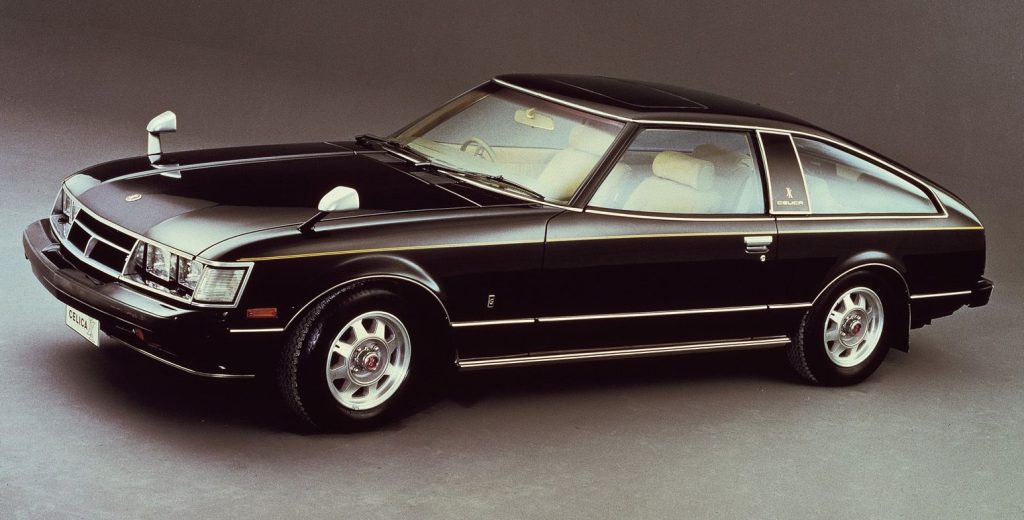
Its greatest contribution cannot be measured by horsepower figures. The first generation established the Supra identity by combining six-cylinder performance with Japanese reliability. Without this successful foundation, the legendary models that followed might never have existed.
Specifications
- Engine: 2.6 liter naturally aspirated inline six
- Torque: 145 lb ft
- Horsepower: 110 hp
- Length/Width: 181.3 inches / 65.2 inches
4. Second Generation Toyota Supra (A60) (1981 to 1986)
By the early 1980s, Toyota understood that the Supra needed to become more than an upgraded Celica. The second generation represented a significant leap forward by sharpening the car’s performance credentials while preserving its grand touring comfort.
Although it still shared much of its architecture with the Celica, the A60 looked far more purposeful thanks to its aggressive wedge profile, integrated pop-up headlights, pronounced fender flares, and wider stance. It immediately projected the image of a genuine performance coupe.
Toyota also invested heavily in chassis improvements. Independent rear suspension enhanced handling precision, while revised weight distribution made the car feel considerably more balanced through corners than its predecessor.
Depending on the market, buyers could choose between naturally aspirated and turbocharged inline six engines, with the turbo model delivering noticeably stronger acceleration.
While it was still not fast enough to challenge exotic sports cars, it comfortably competed against many contemporary Japanese and American coupes.
The cabin reflected Toyota’s growing confidence in the Supra name. Deeply bolstered seats, an aircraft-inspired dashboard, numerous electronic features, and excellent visibility made long journeys enjoyable. Build quality was exceptional, a characteristic that continues to make surviving examples attractive to collectors today.
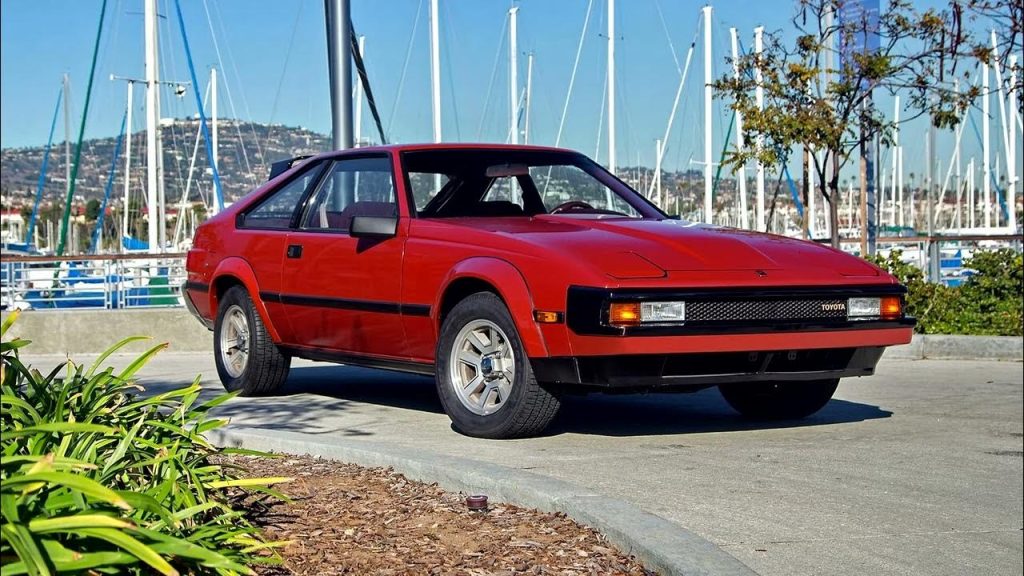
Even though later Supras would become much more famous, the A60 deserves recognition for transforming the model from a comfortable cruiser into a genuinely capable sports coupe.
It demonstrated that Toyota was serious about competing in the performance market and established many traits that enthusiasts would later associate with the Supra badge.
Specifications
- Engine: 2.8 liter turbocharged inline six
- Torque: 210 lb ft
- Horsepower: 160 hp
- Length/Width: 181.1 inches / 68.1 inches
3. Third Generation Toyota Supra (A70) (1986 to 1993)
The third generation marked one of the most important turning points in Supra history. For the first time, Toyota separated the Supra from the Celica, giving it an independent platform and a clear identity as a standalone sports car.
That decision allowed engineers to pursue higher performance without the compromises associated with sharing the car’s structure with a smaller coupe. The result was a machine that felt more mature, more sophisticated, and far more capable than anything wearing the Supra badge before it.
Rather than relying solely on engine upgrades, Toyota focused on creating a well-rounded performance package. The A70 introduced advanced suspension technology, optional electronically controlled dampers, four-wheel disc brakes with available ABS, and a rigid chassis that inspired confidence at high speeds.
Turbocharged versions featuring the celebrated 7M GTE engine delivered strong acceleration and effortless highway performance, making the Supra one of Japan’s most respected grand touring machines.
Inside, the cabin reflected late 1980s luxury with supportive seats, a driver-focused dashboard, premium materials, and a long list of available features. The car excelled during extended road trips while remaining entertaining on winding roads, successfully blending comfort with athletic ability.
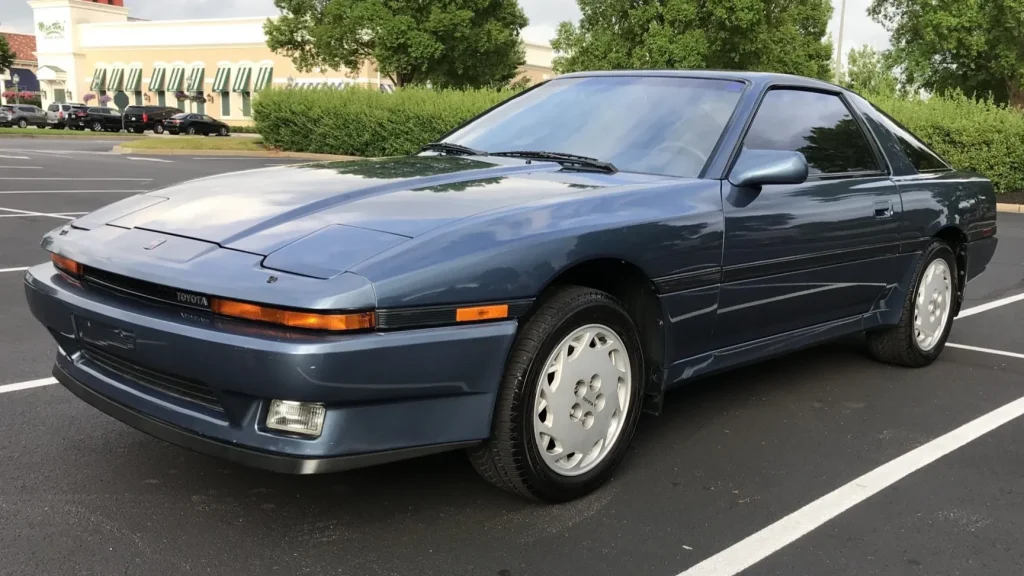
Its reputation today is sometimes overshadowed by the generation that followed, yet the A70 deserves enormous credit. It proved that Toyota could build a refined, technologically advanced sports coupe capable of challenging established rivals from Europe and America.
More importantly, it laid the engineering foundation that allowed the next Supra to achieve legendary status.
Specifications
- Engine: 3.0-liter turbocharged inline-six
- Torque: 254 lb ft
- Horsepower: 232 hp
- Length/Width: 181.9 inches / 68.7 inches
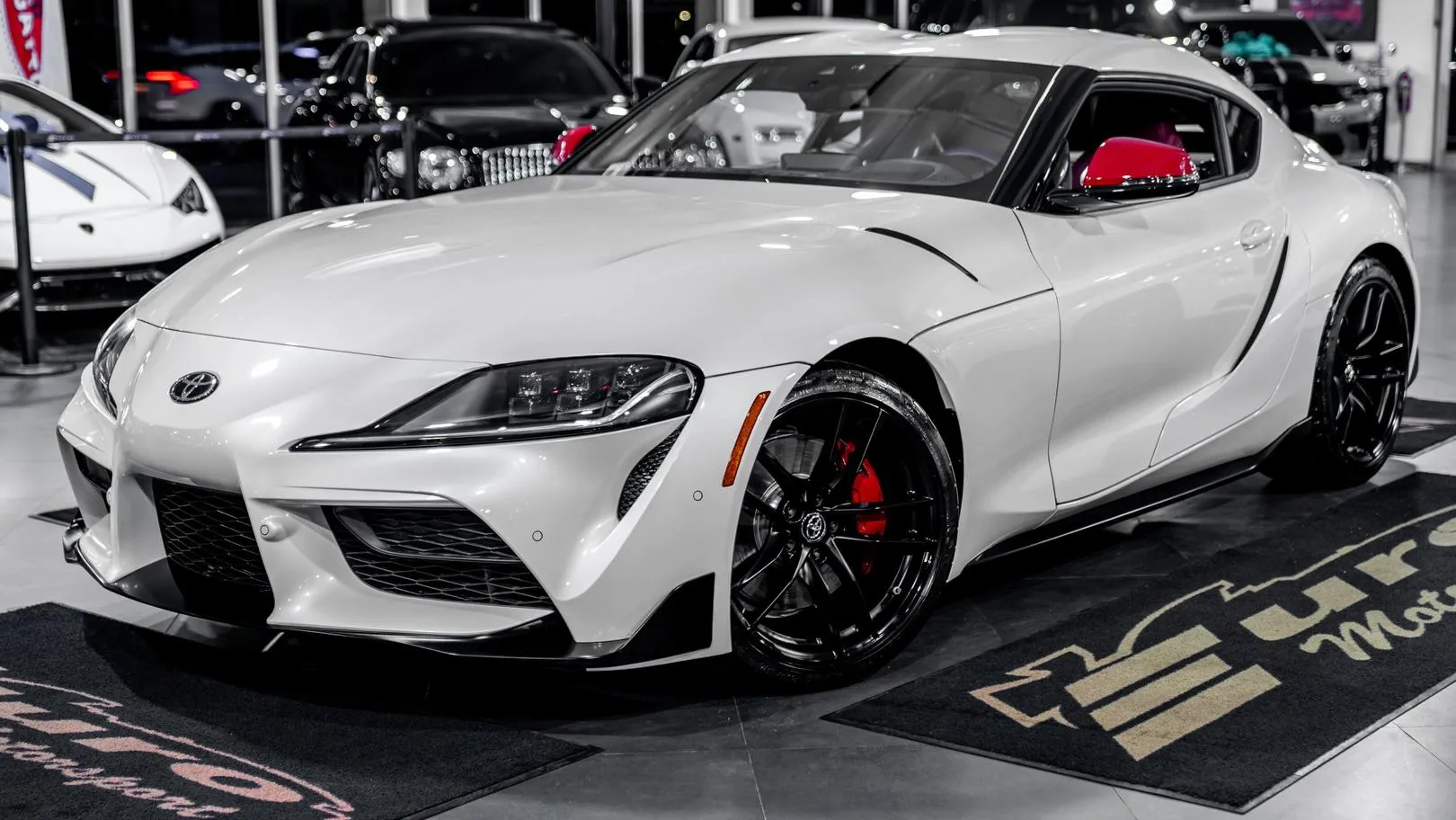
2. Fifth Generation Toyota GR Supra (A90/A91) (2019 to Present)
Reviving the Supra after nearly two decades was always going to divide opinion, and the fifth generation did exactly that. Developed through a partnership with BMW, the modern GR Supra shares much of its engineering with the BMW Z4, a decision that initially disappointed many long-time Toyota enthusiasts.
However, once the car reached the road, criticism gradually shifted toward appreciation as drivers experienced just how capable the finished product really was.
Instead of chasing nostalgia, Toyota concentrated on creating a compact, balanced sports car with exceptional handling. The short wheelbase, wide track, rigid chassis, and near-perfect weight distribution allow the GR Supra to change direction with remarkable precision.
Steering response is quick, body roll is well controlled, and the car feels eager whether driven on a mountain road or a race circuit.
Performance also exceeded expectations. The turbocharged 3.0-liter inline-six delivers strong acceleration throughout the rev range, while the later addition of a six-speed manual transmission satisfied enthusiasts who wanted greater driver involvement.
Toyota engineers extensively retuned the suspension, steering, and differential compared with its German cousin, giving the Supra its own distinctive personality rather than feeling like a simple rebadge.
The interior combines modern technology with supportive sports seats and quality materials, making the GR Supra comfortable enough for daily use without sacrificing its athletic character.
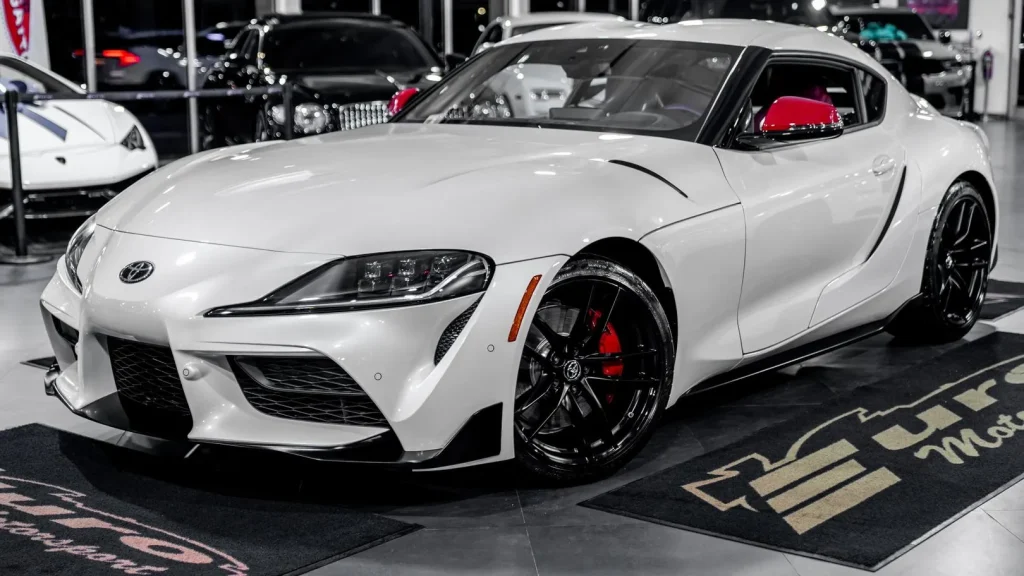
Although some purists continue to debate its shared platform, there is no denying that the fifth generation successfully returned the Supra name to the performance car conversation and proved that Toyota could still build an engaging driver’s car in the modern era.
Specifications
- Engine: 3.0-liter turbocharged inline six
- Torque: 368 lb ft
- Horsepower: 382 hp
- Length/Width: 172.5 inches / 73.0 inches
1. Fourth Generation Toyota Supra (A80) (1993 to 2002)
Few performance cars have influenced automotive culture as profoundly as the fourth-generation Toyota Supra.
Arriving during the golden age of Japanese sports cars, the A80 combined cutting-edge engineering, timeless styling, and extraordinary mechanical strength into a package that continues to command admiration decades after production ended.
It is widely regarded as the defining Supra and remains the benchmark against which every subsequent generation is judged.
At the heart of its reputation sits the legendary 2JZ engine. Available in naturally aspirated and twin-turbocharged forms, the engine became famous for its remarkable durability and immense tuning potential.
Countless owners have extracted power figures far beyond the factory output without sacrificing reliability, helping the A80 become one of the most respected performance platforms ever produced.
Even in standard form, the twin-turbo version delivered smooth, relentless acceleration that rivaled many European supercars of its era.
Toyota also reduced weight through the use of aluminum suspension components, a lightweight hood, hollow carpet fibers, and other carefully engineered measures.
Combined with excellent aerodynamics and sophisticated suspension tuning, the result was a sports car that remained stable at high speeds while offering precise handling through demanding corners.
The design has aged exceptionally well. Its flowing curves, distinctive rear wing, muscular rear haunches, and unmistakable silhouette remain instantly recognizable around the world. Inside, the driver-oriented cockpit emphasized function without sacrificing comfort, reinforcing the car’s grand touring credentials.
Beyond performance statistics, the A80 achieved cultural immortality through motorsport, tuning communities, films, and video games. It became a symbol of Japanese engineering excellence and continues to inspire enthusiasts across generations.
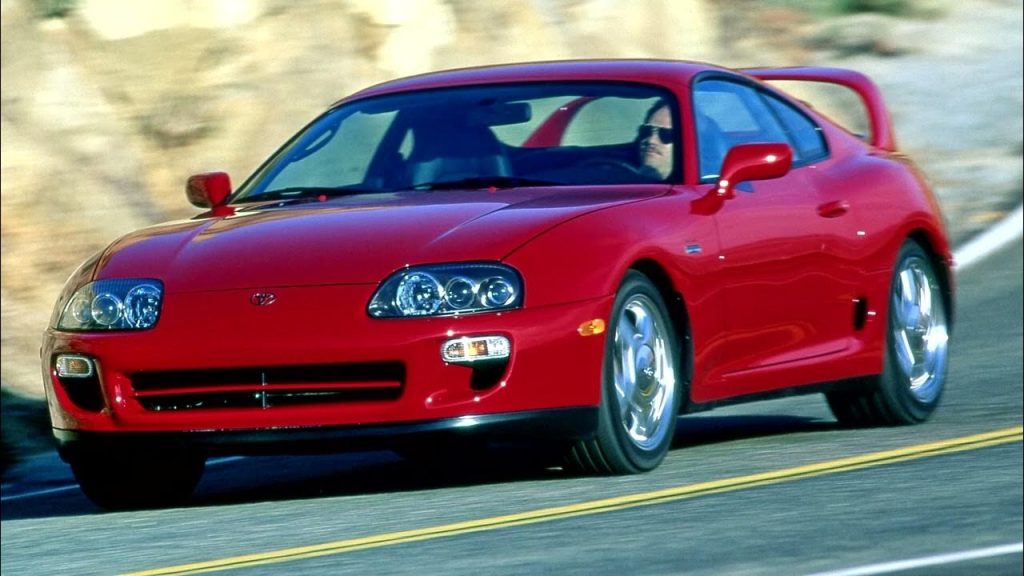
More than twenty years after production ended, demand remains incredibly strong, collector values continue to climb, and its reputation shows no signs of fading.
No other Supra generation has matched its combination of engineering brilliance, motorsport credibility, aftermarket versatility, and lasting global influence, making it the undisputed pinnacle of the Supra lineage.
Specifications
- Engine: 3.0-litre twin-turbocharged inline six
- Torque: 315 lb ft
- Horsepower: 320 hp
- Length/Width: 177.8 inches / 71.3 inches
Also Read: 10 SUVs With Third Rows That Are Too Cramped for Adults
