
Modern car buyers are paying closer attention to safety technology than ever before, and one feature gaining major importance is pedestrian detection.
Unlike older automatic emergency braking systems that focused mainly on preventing collisions with other vehicles, pedestrian detection technology is specifically designed to recognize people crossing roads, walking near intersections, or appearing suddenly in front of a moving vehicle.
In crowded cities and busy suburban areas, that extra layer of awareness can make a significant difference.
What makes pedestrian detection especially valuable is how unpredictable real-world driving can become. A distracted pedestrian stepping off a curb, a child running into a street, or poor nighttime visibility can create dangerous situations in seconds.
These systems use cameras, radar, sensors, and advanced software to monitor surroundings continuously and react faster than many drivers possibly could.
Not long ago, this technology existed mostly in expensive luxury vehicles packed with advanced driver assistance systems. Today, affordable cars increasingly include pedestrian detection as standard equipment rather than expensive optional upgrades.
That shift is important because safety technology becomes most effective when it reaches everyday drivers instead of remaining limited to premium price segments.
Automakers also understand that buyers now expect more than basic transportation from compact sedans and small SUVs. Affordable cars must provide strong value through fuel efficiency, comfort, technology, and increasingly sophisticated safety systems.
Pedestrian detection helps manufacturers remain competitive while improving public road safety at the same time.
Another positive development is how much these systems have improved over recent years. Earlier versions occasionally reacted inconsistently or struggled during bad weather conditions. Newer systems are faster, more accurate, and better integrated into modern braking technology.
The vehicles on this list prove buyers no longer need luxury budgets to access advanced safety features. These affordable cars include standard pedestrian detection while remaining practical for commuting, family use, and everyday driving needs.
Some are compact sedans; others are hatchbacks or crossovers, but all deliver important safety technology without pushing prices into premium territory.
Also Read: 10 Subcompact SUVs Ranked Worst to Best for 26
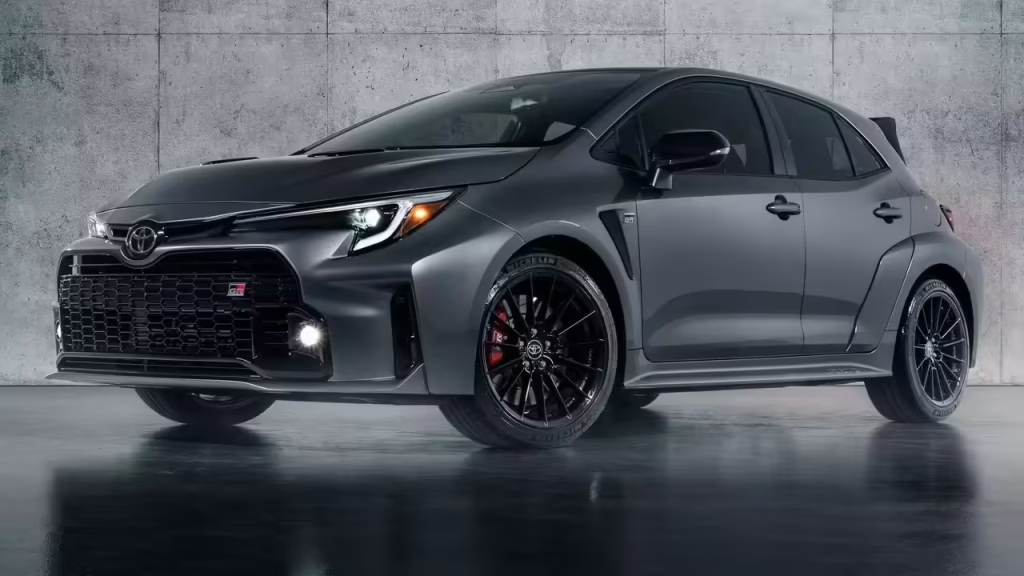
1. Toyota Corolla
The Toyota Corolla built its reputation through reliability, fuel efficiency, and practical daily transportation, but modern versions also stand out for offering advanced safety technology at accessible prices. One of the most important features included as standard equipment is pedestrian detection integrated within Toyota Safety Sense.
Toyota designed the system to monitor roads ahead using cameras and radar sensors capable of identifying both vehicles and pedestrians.
If the system detects a possible collision and the driver fails to react quickly enough, it can issue warnings and apply emergency braking automatically. In heavy urban traffic where pedestrians may appear suddenly between parked cars or at crowded intersections, that added protection becomes extremely valuable.
The Corolla’s affordability makes this especially impressive. Buyers no longer need to step into expensive luxury sedans just to access advanced driver assistance systems. Toyota includes pedestrian detection even on many lower trim levels, helping ordinary commuters benefit from technology once reserved for premium vehicles.
Another reason the Corolla stands out is consistency. Toyota spent years refining its safety systems carefully rather than rushing unfinished technology into production. The pedestrian detection setup works smoothly alongside lane departure warning, adaptive cruise control, and automatic emergency braking to create a more complete safety package.
The compact size of the Corolla also helps drivers navigate crowded city streets more confidently. Good visibility combined with electronic assistance makes the car feel manageable in environments where pedestrian activity remains constant.
Fuel efficiency remains another major advantage. Buyers choosing affordable transportation often prioritize low operating costs, and the Corolla delivers excellent economy without sacrificing safety equipment. That balance helps the car appeal to students, young professionals, families, and older drivers alike.
Inside the cabin, Toyota keeps controls simple and user-friendly. Drivers can access safety settings easily without feeling overwhelmed by complicated menus or distracting interfaces. The technology works quietly in the background rather than constantly interrupting the driving experience.
The Corolla proves affordable cars can still provide meaningful, modern protection. By making pedestrian detection standard across much of the lineup, Toyota helped push advanced safety technology closer to mainstream accessibility instead of limiting it to expensive luxury segments.
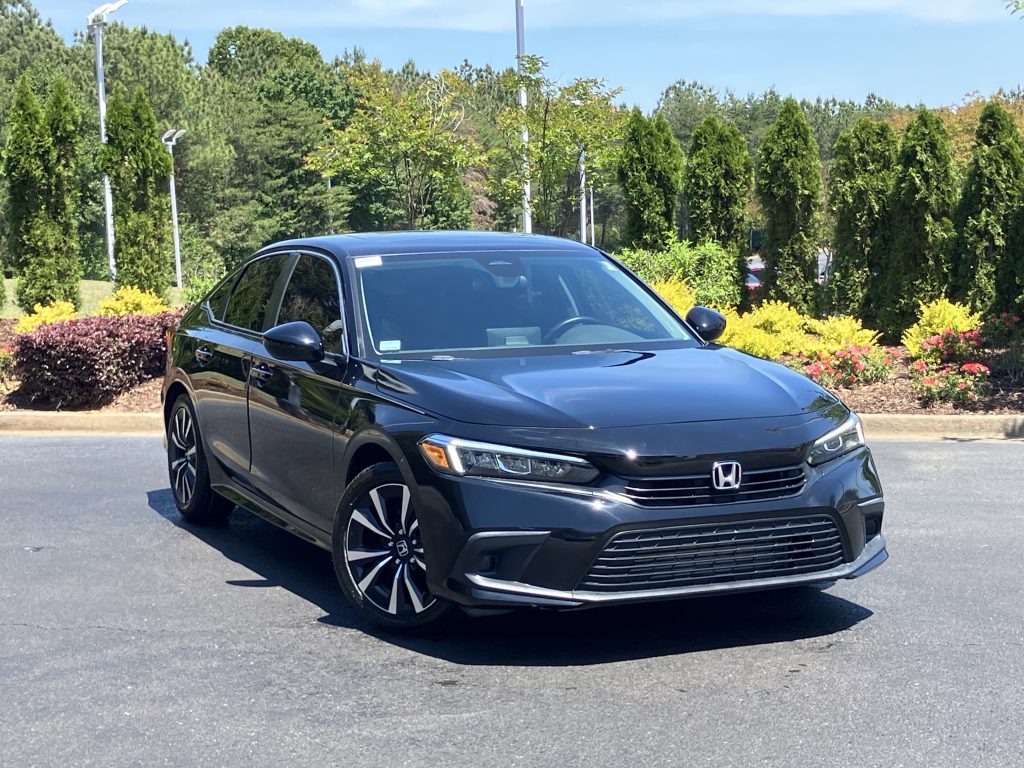
2. Honda Civic
The Honda Civic spent decades earning trust as one of the most dependable compact cars on the market, and newer generations strengthened that reputation further by adding advanced safety technology as standard equipment. Among the most important features included is pedestrian detection through the Honda Sensing suite.
Honda engineered the system to identify potential collisions involving both vehicles and pedestrians ahead of the car. Cameras and sensors continuously monitor traffic conditions, and if a person suddenly enters the vehicle’s path, the system can warn the driver and apply braking force automatically if necessary.
What makes this especially important is how frequently civics operates in crowded environments.
These cars are extremely popular with commuters, students, city drivers, and families who regularly travel through busy streets filled with crosswalks, bicycles, and pedestrian activity. Standard pedestrian detection adds reassurance during those unpredictable situations.
The Civic also benefits from excellent outward visibility compared to many modern compact cars. Slim roof pillars and thoughtful cabin design help drivers maintain awareness naturally, while the electronic safety systems provide additional backup protection when visibility becomes challenging.
Honda deserves credit for making the technology feel refined rather than intrusive. Some early driver assistance systems from other manufacturers reacted too aggressively or issued unnecessary warnings frequently. The Civic’s setup generally operates smoothly and predictably, helping drivers build trust in the system over time.
Another strength involves value. Even lower trim Civics include impressive safety equipment without forcing buyers into expensive upgrades. That approach makes advanced protection more widely accessible across different income levels and age groups.
The Civic additionally combines safety with strong practicality. Comfortable seating, good fuel economy, modern infotainment features, and dependable engineering help the car remain one of the strongest all-around choices in the compact segment.
Pedestrian detection works particularly well during urban commuting, where distractions, traffic congestion, and sudden movement create constant risk. Honda designed the system to support drivers quietly without removing personal responsibility from behind the wheel.
The Civic demonstrates how affordable compact cars evolved far beyond basic transportation applications. Buyers now receive sophisticated safety technology alongside reliability and efficiency, making the modern Civic one of the smartest value-focused cars available today.
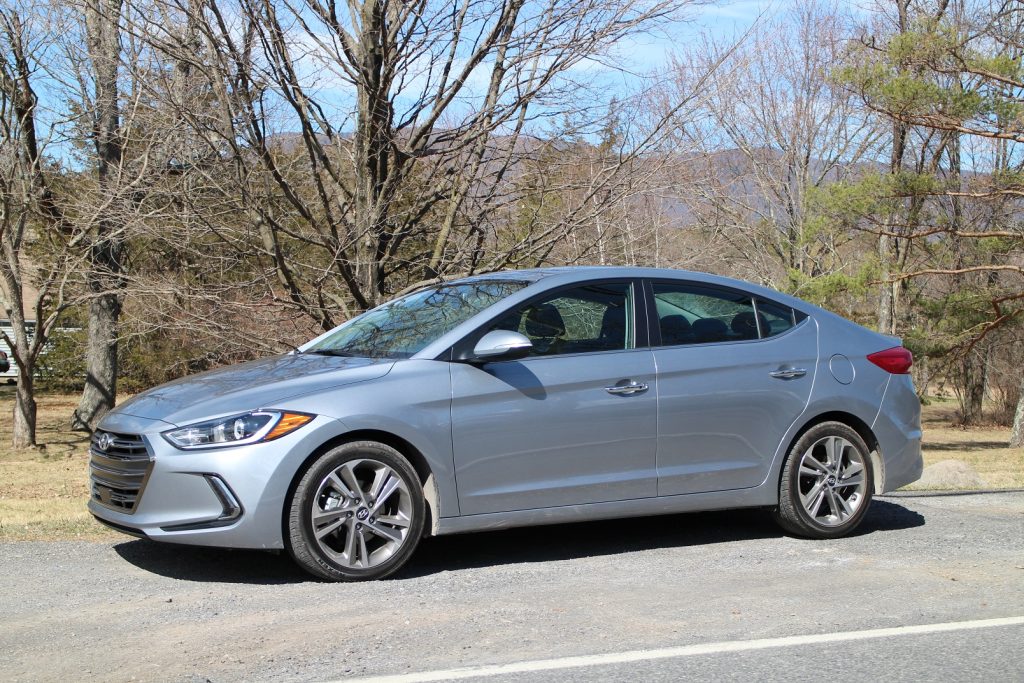
3. Hyundai Elantra
The Hyundai Elantra changed dramatically over the past decade, evolving from a simple budget compact into a surprisingly advanced sedan loaded with modern technology and safety features. One of the strongest examples of that progress is the inclusion of standard pedestrian detection through Hyundai’s SmartSense safety package.
Hyundai designed the system to recognize pedestrians crossing ahead of the vehicle using forward-facing cameras and radar sensors.
If the car determines a collision may happen and the driver does not react quickly enough, the system can issue alerts and apply emergency braking automatically. In dense traffic or crowded city areas, that added protection can become extremely valuable.
The Elantra’s affordable pricing makes the feature even more impressive. Buyers shopping in the compact sedan category often focus heavily on monthly budgets, fuel economy, and practicality. Hyundai managed to include sophisticated safety technology without pushing the car into luxury pricing territory.
Another strength of the Elantra involves technology integration. The safety systems work smoothly with the car’s digital displays and driver assistance features without feeling overly complicated. Hyundai organizes menus clearly so drivers can understand and adjust settings easily.
The car’s modern design also contributes positively to visibility and awareness. Sharp exterior styling, a comfortable seating position, and well-placed mirrors help drivers navigate busy streets where pedestrian traffic is common. The electronic systems act as additional support rather than replacing driver attention completely.
Fuel efficiency remains a major advantage, too. The Elantra delivers strong mileage while still providing advanced technology, making it attractive for commuters spending long hours in traffic every week. Hybrid versions extend efficiency even further without sacrificing safety features.
Hyundai also improved interior quality significantly in recent generations. The cabin feels more refined than many buyers expect at this price point, helping the Elantra compete strongly against established rivals from Japan.
One overlooked benefit of pedestrian detection involves nighttime driving. Poor lighting conditions increase risks dramatically, especially in crowded urban areas. The Elantra’s system adds another layer of awareness during situations where human visibility may become limited.
The Hyundai Elantra proves that affordable transportation no longer means sacrificing advanced protection. By including pedestrian detection as standard equipment, Hyundai helped raise expectations for what compact car buyers should receive even at lower price levels.
4. Mazda3
The Mazda3 approaches affordable transportation differently from many compact rivals. Instead of focusing purely on low-cost practicality, Mazda emphasizes driving refinement, premium design, and sophisticated engineering while still offering important safety features such as standard pedestrian detection.
Mazda includes pedestrian detection through its i-Activsense safety suite, using cameras and radar systems to monitor the road ahead continuously. If the car senses a pedestrian entering the vehicle’s path and the driver does not react in time, the system can provide warnings and apply emergency braking automatically.
One reason the Mazda3 stands out is how naturally the technology integrates into the driving experience. Mazda avoids overwhelming drivers with constant alerts or distracting interventions. The systems operate quietly in the background while allowing the driver to remain fully engaged with the car.
The Mazda3 also benefits from excellent chassis tuning and responsive steering, giving drivers stronger control during sudden situations. Good handling may not replace safety technology, but it certainly helps when quick reactions become necessary in crowded traffic environments.
Interior quality remains another major advantage. The cabin feels far more upscale than many affordable compact cars, featuring a clean design, quality materials, and intuitive controls. Mazda intentionally kept the interior less dependent on giant touchscreens, helping reduce distractions while driving.
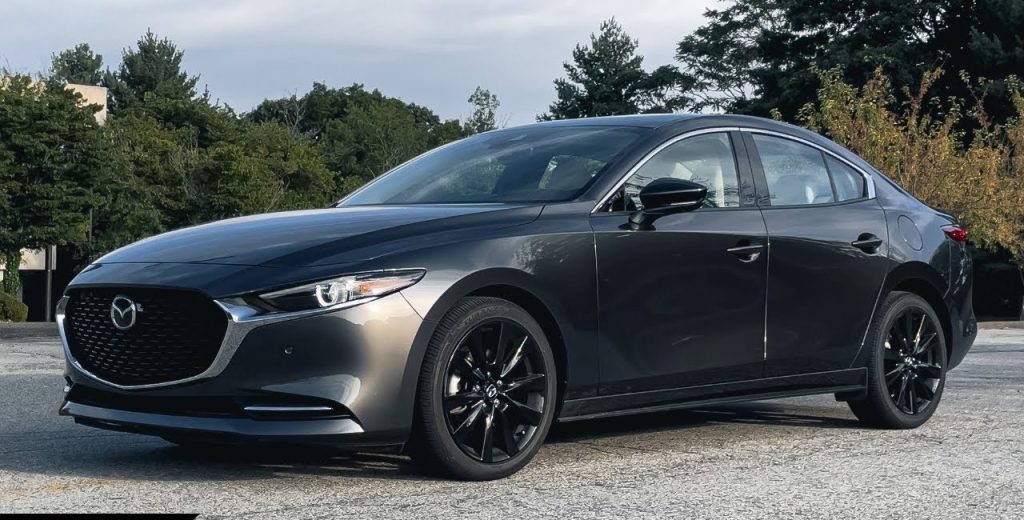
Pedestrian detection becomes especially useful in urban environments where many Mazda3 owners spend their time. Tight streets, parked vehicles, cyclists, and busy intersections create unpredictable conditions constantly. The system provides added reassurance without making the car feel overly computerized.
Mazda also prioritized visibility carefully. Driving position, mirror placement, and dashboard design all contribute to stronger awareness behind the wheel. Combined with the electronic safety systems, the car feels confident and composed during daily commuting.
Fuel economy remains competitive as well, particularly with naturally aspirated engine options that balance efficiency with smooth responsiveness. Buyers receive strong value through a mix of premium feel, practical operation, and advanced safety.
The Mazda3 demonstrates that affordable cars can deliver emotional driving character alongside serious safety technology. Standard pedestrian detection strengthens the package further by adding meaningful protection without compromising the car’s refined and driver-focused personality.
5. Subaru Impreza
The Subaru Impreza has long appealed to buyers who value practicality, all-weather confidence, and dependable transportation. Modern versions added another important advantage by including pedestrian detection as part of Subaru’s EyeSight driver assistance system, helping the compact car compete strongly in the safety category as well.
Subaru engineered the system using stereo cameras mounted near the windshield to monitor traffic conditions ahead. The setup can identify pedestrians, cyclists, and vehicles while calculating potential collision risks. If danger increases and the driver does not react quickly enough, the car can issue warnings and automatically apply braking force.
One reason the Impreza benefits greatly from pedestrian detection is its versatility. Many owners use the car in changing weather conditions, crowded suburban areas, and busy city traffic, where visibility can become unpredictable.
Subaru’s combination of standard all-wheel drive and advanced safety technology creates extra reassurance during difficult driving situations.
The Impreza also stands out because Subaru makes safety a central part of the vehicle’s identity rather than an expensive optional extra. Buyers shopping for affordable transportation receive meaningful driver assistance technology even on lower trims, which helps broaden access to advanced protection.
Another advantage involves visibility. Subaru designs its cabins with large windows and relatively open sightlines, allowing drivers to maintain strong awareness naturally. The pedestrian detection system works alongside that visibility instead of compensating for poor design.
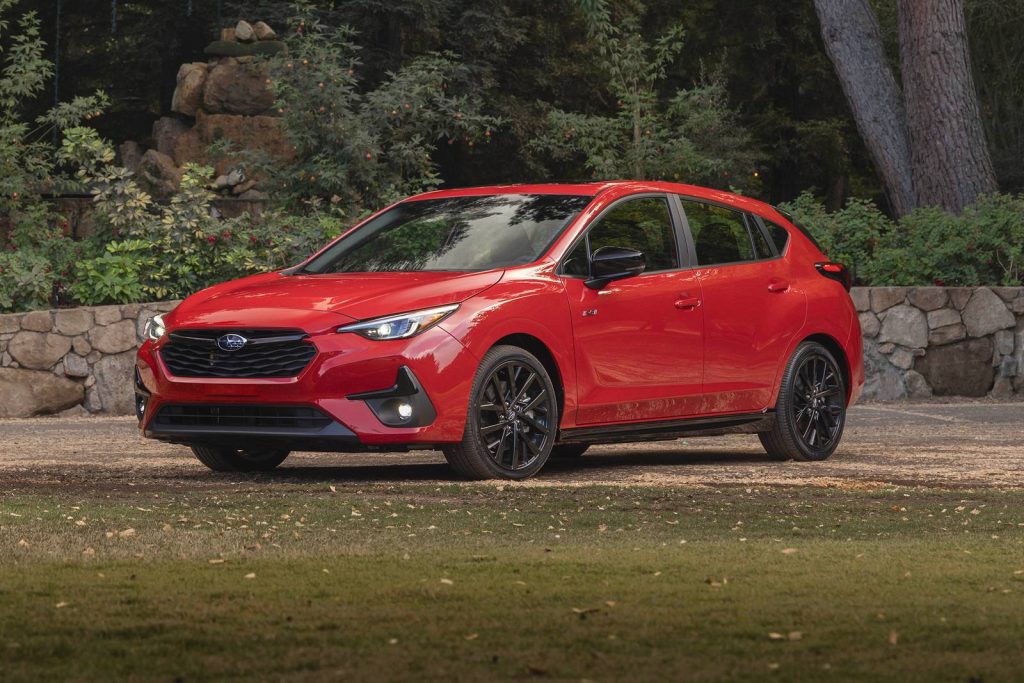
The car’s balanced handling contributes positively. Stable road manners and predictable steering make the Impreza feel controlled during sudden braking or emergency maneuvers. Drivers often appreciate how composed the car remains even in poor weather conditions.
Inside, the Impreza focuses on usability rather than flashy gimmicks. Controls are straightforward, seating remains comfortable, and the infotainment system avoids unnecessary complexity. That practical philosophy extends to the safety systems as well.
Fuel efficiency stays competitive despite the inclusion of all-wheel drive, making the Impreza attractive for commuters dealing with rain, snow, or rough seasonal conditions regularly.
The Subaru Impreza proves that affordable compact cars can combine advanced safety features with year-round capability and practical everyday usability. Standard pedestrian detection strengthens its appeal further by adding another important layer of protection for modern driving environments.
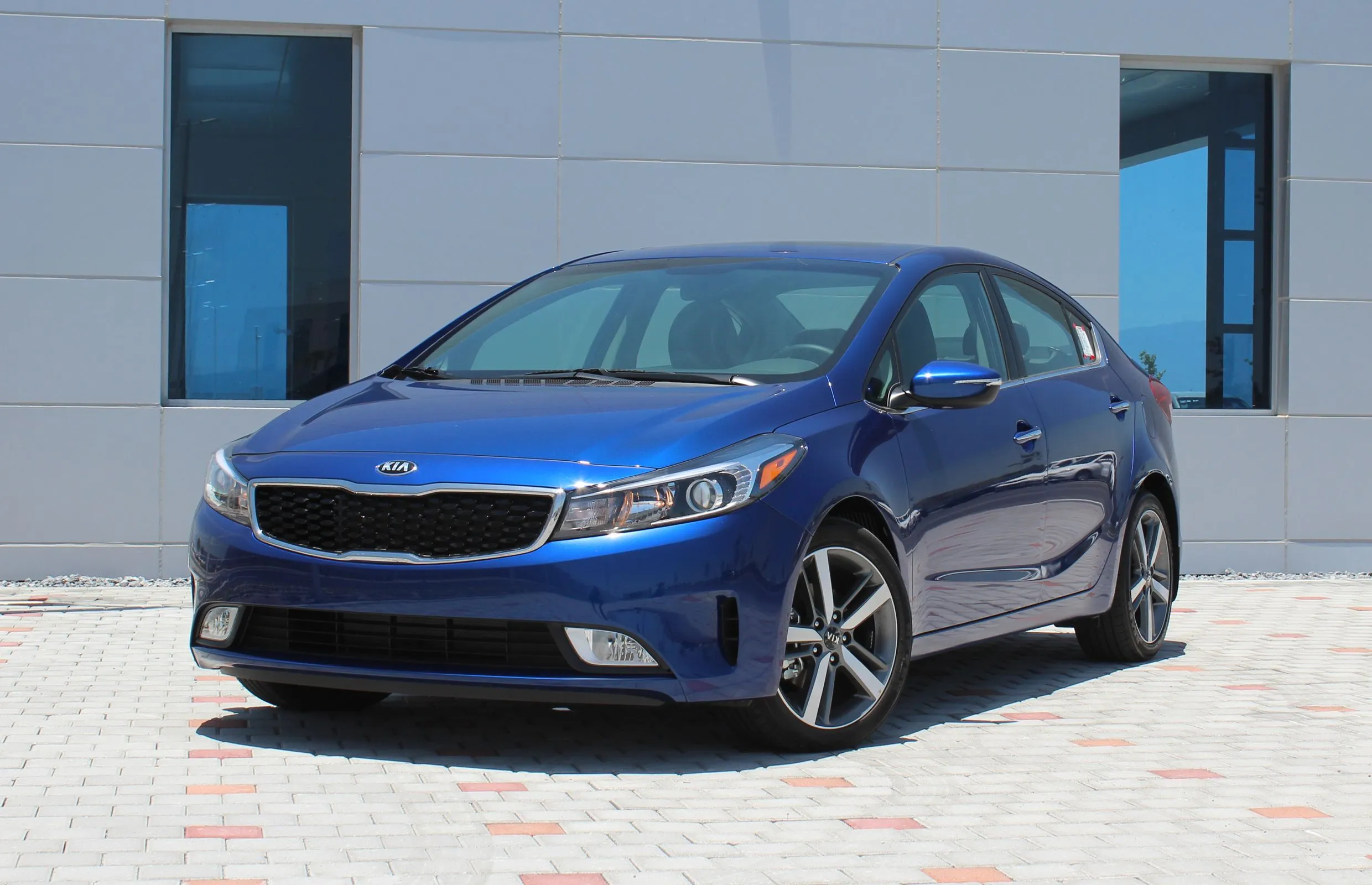
6. Kia Forte
The Kia Forte quietly became one of the strongest value-focused compact sedans on the market by combining modern styling, generous technology, and advanced safety equipment at an affordable price. Among the standout features available as standard equipment is pedestrian detection integrated into Kia’s driver assistance package.
The system uses forward-facing sensors and cameras to watch traffic conditions constantly. If a pedestrian suddenly appears ahead and the driver fails to react quickly enough, the Forte can issue alerts and apply emergency braking automatically. In crowded city traffic, where distractions happen constantly, technology can provide valuable extra reaction time.
One of the biggest strengths of the Forte is accessibility. Kia includes pedestrian detection on trims affordable to a wide range of buyers rather than restricting the feature to expensive premium versions. That approach helps make advanced safety technology available to younger drivers, small families, and commuters working within tighter budgets.
The Forte also delivers a surprisingly refined driving experience for its class. Ride quality remains comfortable, cabin noise stays reasonably controlled, and the steering feels predictable during daily driving.
The calm driving character works well alongside the safety systems because the car never feels stressful or overly complicated to operate.
Another positive factor involves the interior technology layout. Kia organized controls cleanly so drivers can access information quickly without excessive distraction. Touchscreen functions, climate controls, and safety settings remain easy to understand even for less tech-focused owners.
The car’s compact dimensions are especially beneficial in urban environments. Parking, maneuvering through traffic, and getting around crowded streets become easier compared to larger sedans or SUVs. Pedestrian detection adds another layer of confidence in situations where people may step unexpectedly into traffic.
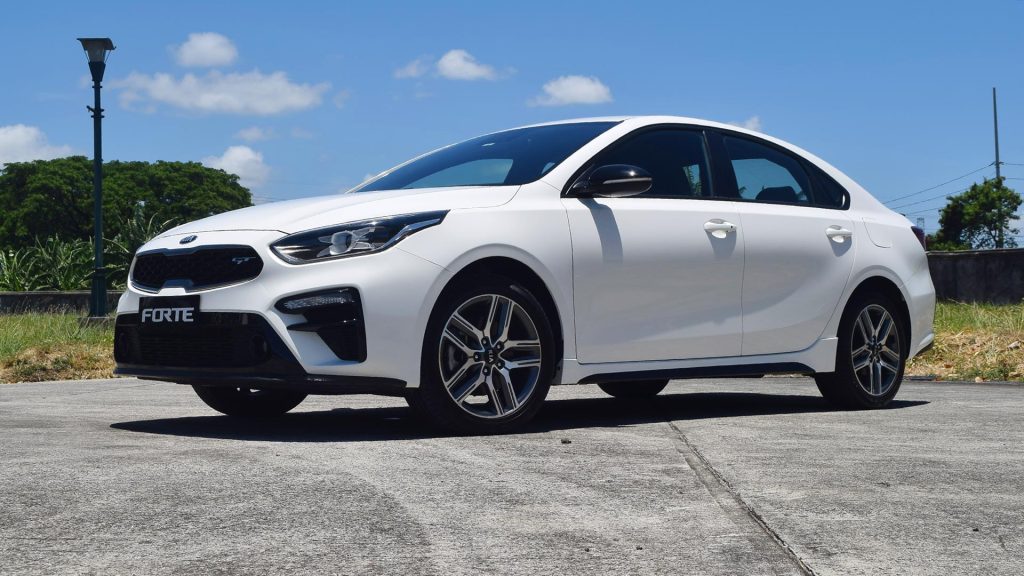
Fuel economy remains another important advantage. The Forte keeps operating costs manageable while still offering impressive modern safety equipment, helping buyers maximize long-term value.
Kia also improved design quality noticeably in recent years. The Forte no longer feels like a basic budget car inside or outside. Sharp styling and improved cabin materials help the sedan appear more upscale than its price might suggest.
The Kia Forte demonstrates how far affordable compact cars have progressed in modern safety standards. Standard pedestrian detection makes the car feel smarter, safer, and far more competitive than economy sedans from just a few years ago.
7. Nissan Sentra
The Nissan Sentra has evolved into a far more sophisticated compact sedan than many buyers expect, especially when it comes to safety technology.
One of its most valuable standard features is pedestrian detection integrated within Nissan Safety Shield 360, giving drivers extra protection in crowded traffic situations without forcing them into expensive trim levels.
The system uses radar and camera technology to monitor the road ahead continuously. If a pedestrian suddenly steps into the vehicle’s path and the driver fails to react quickly enough, the Sentra can issue warnings and automatically apply braking assistance.
In busy urban environments filled with crosswalks, parked cars, and unpredictable movement, that extra layer of awareness becomes extremely useful.
The Sentra benefits greatly from this technology because many owners use the car primarily for commuting. Daily driving often involves stop-and-go traffic, school zones, shopping areas, and packed intersections where pedestrian activity remains constant. The system helps reduce stress by acting as a secondary safety net during those situations.
Another reason the Sentra stands out is cabin comfort. Nissan designed the interior to feel more refined than earlier generations, with supportive seats, a clean dashboard layout, and intuitive controls. Drivers can focus on the road naturally without becoming distracted by overly complicated infotainment systems.
Ride quality also contributes positively to safety confidence. The suspension tuning keeps the car stable and predictable during sudden braking or quick lane adjustments, helping the driver remain in control when reacting to unexpected obstacles.
Fuel efficiency remains another major advantage. The Sentra delivers practical operating costs while still including advanced driver assistance features once associated mainly with premium vehicles.
Nissan additionally improved the car’s exterior styling significantly in recent years. Sharper lines and a more upscale appearance help the Sentra compete visually with stronger rivals in the compact sedan segment.
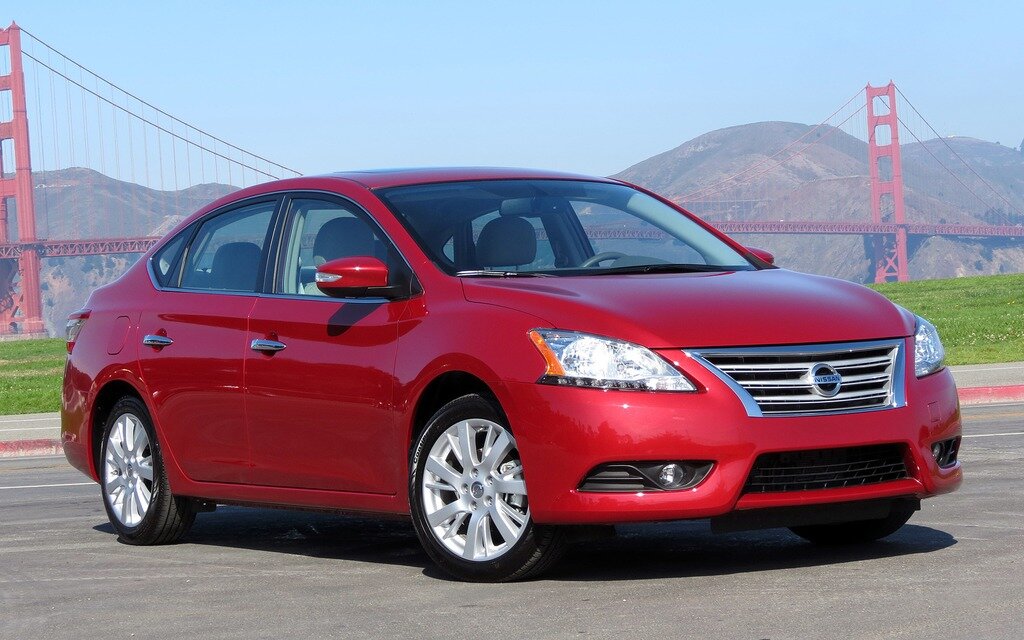
The modern Sentra proves that affordable transportation no longer needs to feel basic or outdated. Standard pedestrian detection adds meaningful real-world protection while reinforcing the sedan’s reputation as a practical and intelligent daily driver.
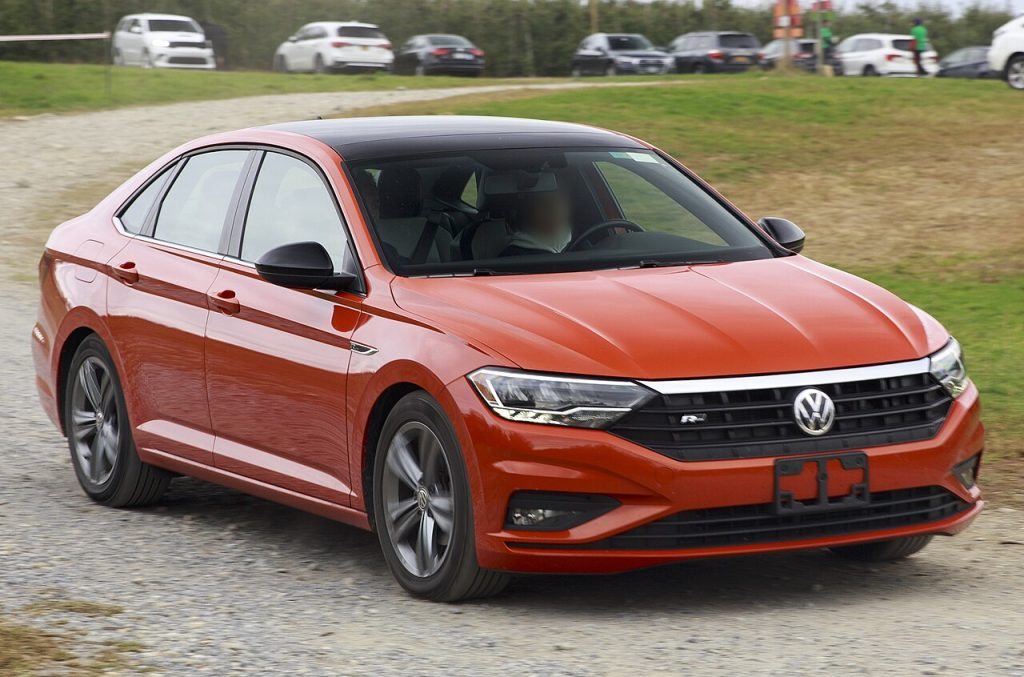
8. Volkswagen Jetta
The Volkswagen Jetta approaches affordable compact sedan design with a more mature and European-influenced personality than many competitors. Alongside its comfortable ride and refined cabin, the Jetta includes standard pedestrian detection technology that strengthens its appeal for drivers prioritizing modern safety features.
Volkswagen integrates pedestrian detection within its Front Assist system, using radar and camera sensors to monitor conditions ahead constantly. If the vehicle senses a possible collision involving a pedestrian and the driver does not react quickly enough, the system can provide warnings and apply emergency braking automatically.
One reason this technology works particularly well in the Jetta is the car’s calm driving character. The steering feels composed, the suspension remains balanced, and visibility stays reasonably strong, allowing drivers to feel relaxed even in dense traffic.
The pedestrian detection system operates smoothly in the background without making the experience feel intrusive or overly aggressive.
The Jetta also stands out because of its interior refinement. Soft-touch materials, simple dashboard design, and supportive seating give the cabin a more premium atmosphere than many affordable rivals. Volkswagen focuses heavily on making everyday driving feel less tiring, especially during long commutes.
Pedestrian detection becomes especially valuable during urban driving, where distractions and unpredictable movement increase constantly. The Jetta’s compact size helps with maneuverability in tight spaces, while the safety systems provide extra reassurance near intersections and busy crosswalks.
Another advantage involves highway comfort. The Jetta remains stable and quiet at higher speeds, making it attractive for commuters covering long distances regularly. Safety technology combined with strong fuel efficiency creates a balanced package for practical buyers.
Volkswagen also deserves credit for keeping controls relatively intuitive. Drivers can adjust settings and monitor safety functions without digging through confusing menus constantly.
The Jetta demonstrates that affordable sedans can still deliver a polished driving experience alongside advanced safety equipment. Standard pedestrian detection strengthens its value further by helping modern drivers navigate increasingly crowded roads with greater confidence.
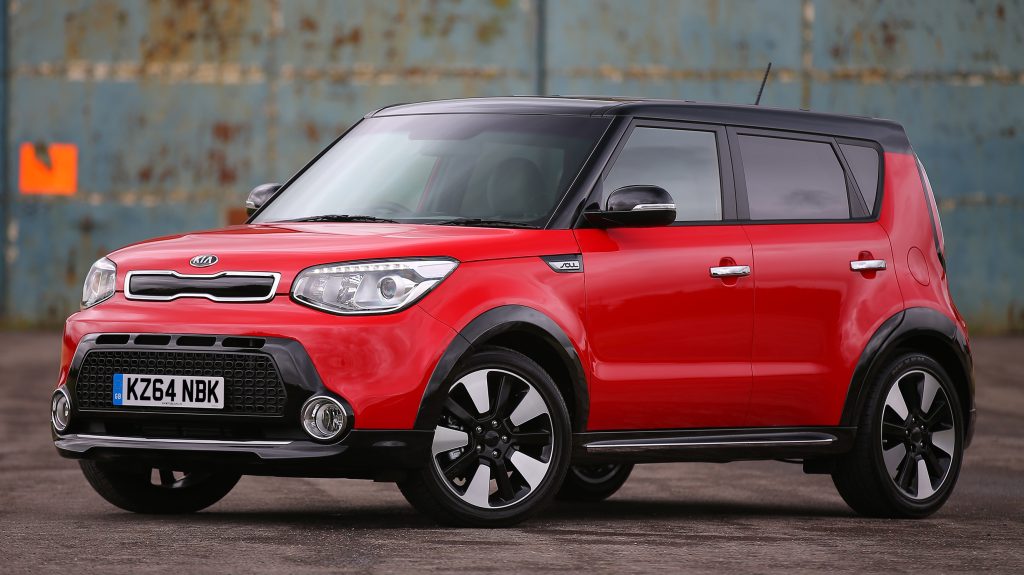
9. Kia Soul
The Kia Soul stands out in the affordable car market because of its unique shape, practical interior space, and surprisingly advanced safety technology. One of the most valuable features included on modern models is standard pedestrian detection, helping the compact crossover deliver stronger real-world protection for everyday drivers.
Kia integrates the system into its forward collision avoidance technology using cameras and sensors to constantly monitor the roads ahead. If a pedestrian suddenly enters the vehicle’s path and the driver does not react quickly enough, the Soul can provide alerts and automatically apply braking assistance.
The soul benefits especially from this technology because it is commonly used in busy urban and suburban environments.
Owners often drive through crowded shopping districts, school areas, parking lots, and narrow city streets where pedestrian activity remains unpredictable. The added electronic awareness becomes extremely useful during those daily situations.
Another reason the Soul works well as a city vehicle is visibility. The upright body design and large windows create an open feeling behind the wheel, helping drivers spot surrounding traffic and pedestrians more easily. Combined with the safety systems, the car feels confident and manageable in tight spaces.
Interior practicality also strengthens the Soul’s appeal. Despite compact exterior dimensions, the cabin provides generous headroom, flexible cargo space, and comfortable seating. Younger buyers and small families often appreciate that versatility.
Fuel economy stays competitive as well, making the Soul affordable to own long-term while still offering modern technology features many buyers now expect.
The Kia Soul proves that distinctive styling and practical value can coexist with serious safety equipment. Standard pedestrian detection helps transform the quirky compact crossover into a smarter and more reassuring everyday vehicle.
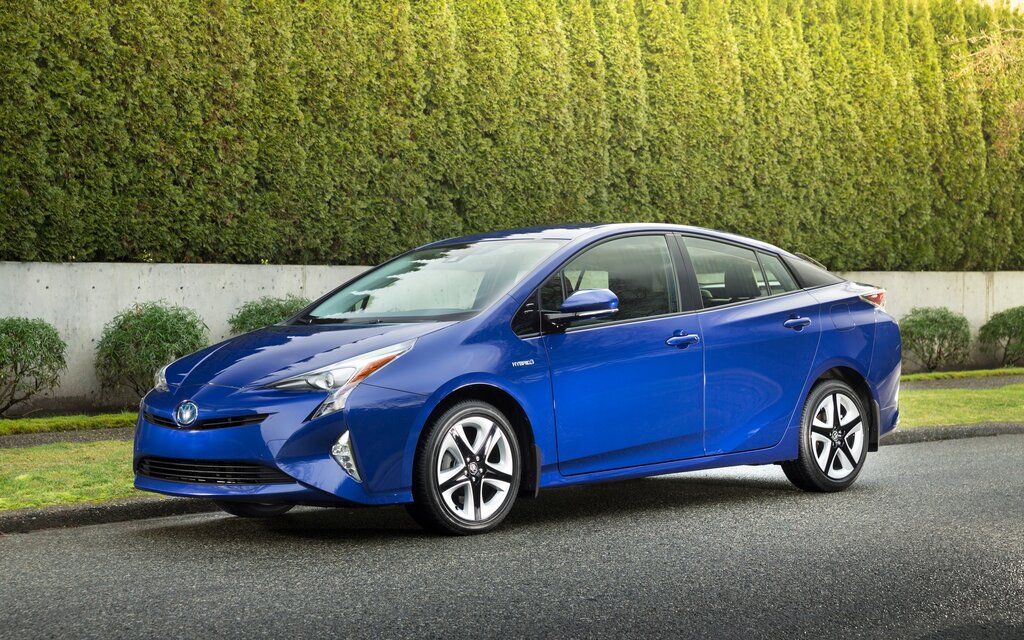
10. Toyota Prius
The Toyota Prius became famous worldwide for fuel efficiency, but modern versions offer far more than excellent gas mileage alone. Toyota now equips the Prius with advanced safety technology, including standard pedestrian detection through the Toyota Safety Sense package.
The system uses cameras and radar sensors to monitor traffic conditions ahead continuously. If a pedestrian appears in the vehicle’s path and the driver fails to respond quickly enough, the Prius can issue warnings and apply emergency braking automatically to reduce or potentially avoid a collision.
This feature works particularly well in the Prius because the car spends much of its life in urban commuting environments where pedestrian activity remains high. Drivers often navigate crowded intersections, downtown traffic, and parking structures where quick reactions become essential.
The Prius also benefits from smooth and predictable driving behavior. Steering feels light, visibility remains strong, and hybrid power delivery stays calm during low-speed operation. Those qualities help reduce stress while driving through busy areas.
Another important advantage involves operating costs. Buyers choosing the Prius typically prioritize efficiency and long-term savings, yet Toyota still includes sophisticated safety equipment without transforming the car into an expensive luxury product.
Inside the cabin, the Prius emphasizes practicality and usability. Controls remain simple, seating stays comfortable, and the technology layout avoids excessive complexity. Drivers can focus on traffic rather than struggling with confusing interfaces.
Toyota additionally refined the styling significantly in newer generations, giving the Prius a more modern and confident appearance than earlier versions.
The Prius demonstrates how affordable hybrid vehicles have evolved beyond simple fuel-saving machines. Standard pedestrian detection adds meaningful modern protection while reinforcing Toyota’s reputation for combining efficiency, practicality, and dependable safety technology in one accessible package.
Also Read: 10 Classic Pickups Selling for More Than Modern Replacements
