
Suzuki has established itself as one of the most influential motorcycle manufacturers in the world, with a legacy that spans several decades of engineering innovation, racing success, and mass market popularity.
From its early beginnings in the mid twentieth century, the company steadily evolved from a modest industrial manufacturer into a global powerhouse in the motorcycle industry. Today, Suzuki motorcycles are recognized for their balance of performance, durability, affordability, and technological refinement, making them a preferred choice for millions of riders across continents.
One of the defining characteristics of Suzuki motorcycles is their ability to appeal to a wide spectrum of riders. Whether someone is a beginner looking for a reliable entry-level machine, a commuter seeking efficiency and comfort, or an experienced rider chasing high-performance thrills, Suzuki has consistently delivered models that meet those needs.
This versatility has allowed the brand to maintain strong global relevance even as competition in the motorcycle industry has intensified.
Suzuki has also played a significant role in shaping modern motorcycle engineering. The company has contributed groundbreaking designs in sport bikes, pioneered lightweight chassis technology, and developed engines that balance power with reliability. Many of its motorcycles have become reference points in their respective categories, influencing competitors and setting benchmarks for performance and design.
Another important aspect of Suzuki’s success is its deep connection with motorsport, particularly road racing. The lessons learned on the racetrack have consistently been transferred to production motorcycles, improving handling, stability, and engine performance.
This race-derived engineering philosophy is clearly visible in models like the GSX-R series and the legendary RG line, which brought racing DNA directly to everyday riders.
This article explores ten of the best Suzuki motorcycles ever made, chosen based on their impact, popularity, innovation, and long-term legacy. Each model represents a milestone in Suzuki’s journey and highlights why the brand continues to be one of the most respected names in motorcycling worldwide.
Also Read: 8 Family Cars With Secret Performance Versions
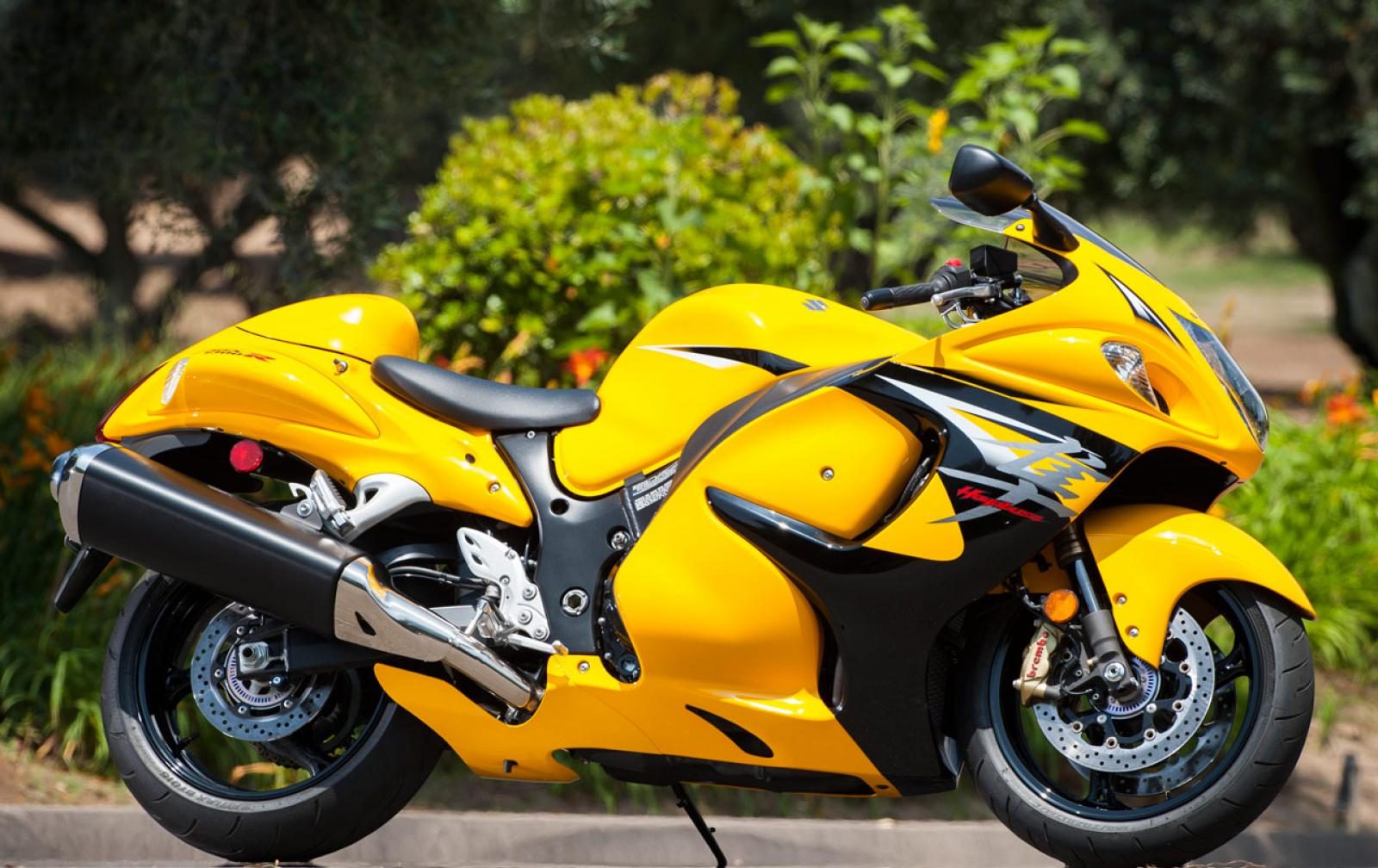
- Engine: 1340 cc inline 4, liquid cooled
- Horsepower: ~190 hp
- Torque: ~150 Nm
- Length: ~2180 mm
- Width: ~735 mm
1. Suzuki Hayabusa
The Suzuki Hayabusa is widely regarded as one of the most iconic motorcycles ever created, not only within Suzuki’s lineup but in the entire history of motorcycling. When it was first introduced in 1999, it instantly changed the conversation around motorcycle performance.
At a time when manufacturers were competing fiercely for speed supremacy, the Hayabusa emerged as a clear leader with unmatched aerodynamic efficiency and raw engine power.
The heart of the Hayabusa is its powerful inline four engine, which was engineered to deliver extreme performance while maintaining surprising smoothness.
Unlike many high-performance motorcycles that can feel aggressive or difficult to control, the Hayabusa offered a refined riding experience. This balance allowed riders to enjoy both thrilling acceleration and long-distance comfort without compromise.
Its design was equally revolutionary. The Hayabusa featured a distinctive aerodynamic body that prioritized high-speed stability. While its styling initially sparked debate due to its unconventional appearance, it was later recognized as a masterpiece of functional design. Every curve of the motorcycle served a purpose, reducing drag and improving control at extreme speeds.
Beyond performance and design, the Hayabusa also became a cultural icon. It gained popularity in tuning communities around the world, where enthusiasts modified it to achieve even greater performance levels. Its strong engine platform made it one of the most customizable superbikes ever built, further strengthening its legendary reputation.
Even today, the Hayabusa continues to evolve with modern updates, but its original impact remains unmatched. It is not just a motorcycle but a symbol of Suzuki’s engineering ambition and its ability to redefine what a production motorcycle can achieve.
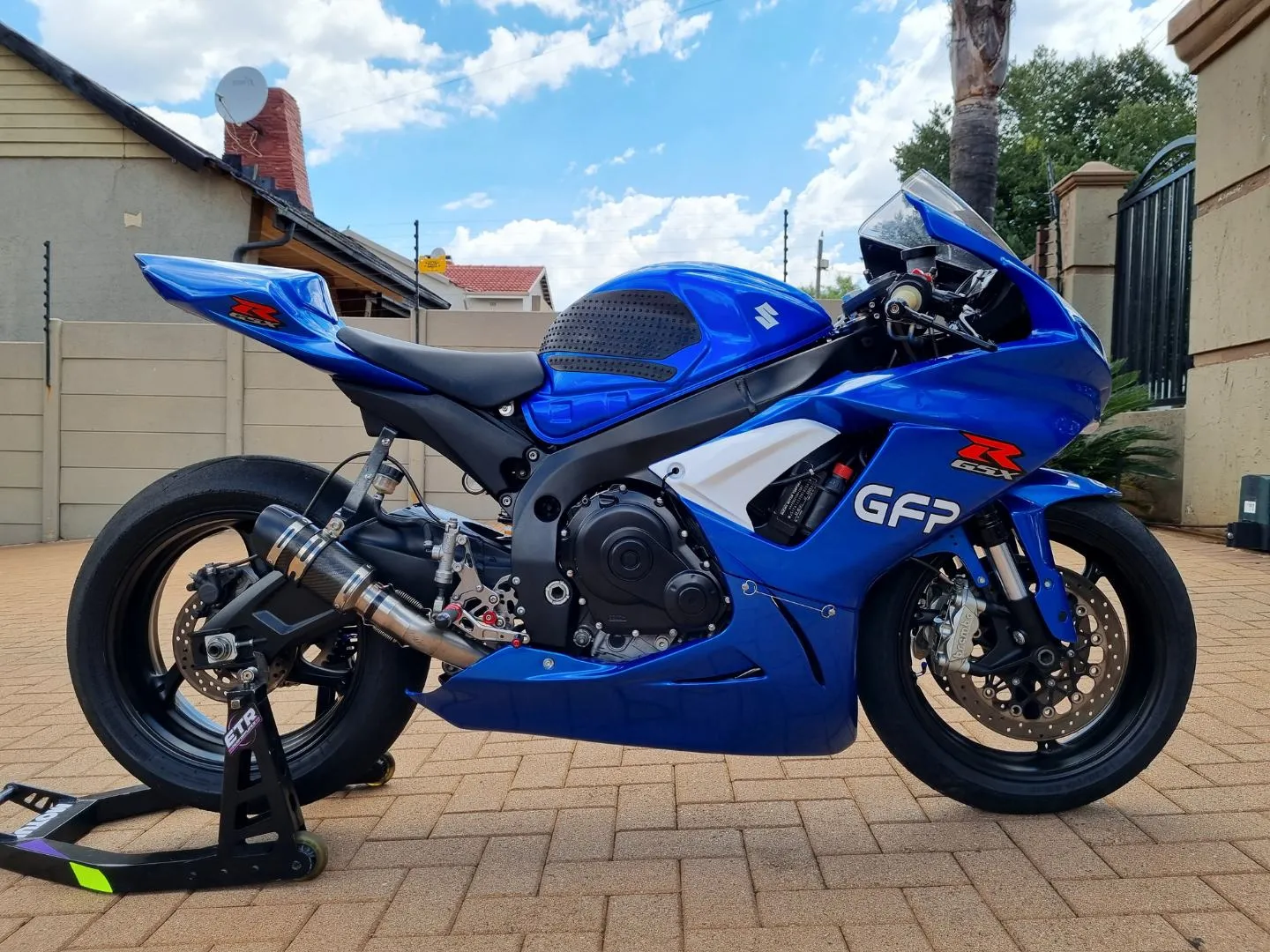
- Engine: 750 cc inline 4, liquid cooled
- Horsepower: ~148 hp
- Torque: ~86 Nm
- Length: ~2055 mm
- Width: ~710 mm
2. Suzuki GSX-R750
The Suzuki GSX-R750 holds a special place in motorcycle history as one of the machines that defined the modern sportbike category. Introduced in 1985, it was designed with a clear goal of bringing race-inspired performance to the street in a lightweight and accessible package.
At a time when many motorcycles were becoming heavier and more touring-oriented, the GSX-R750 took a radically different approach.
One of its most important innovations was its lightweight construction. Suzuki engineers focused on reducing unnecessary weight while maintaining structural strength, resulting in a motorcycle that delivered exceptional agility. This made it highly competitive not only on public roads but also in racing environments where handling is critical.
The engine performance of the GSX-R750 was equally impressive for its time. It delivered strong acceleration and responsive power delivery, making it a favorite among riders who valued excitement and precision. Its power-to-weight ratio became one of its defining strengths, setting new expectations for what a middleweight sportbike could achieve.
Over the years, the GSX R750 underwent continuous refinement. Each generation introduced improvements in suspension, braking, aerodynamics, and engine efficiency. Despite these advancements, Suzuki maintained the core philosophy of lightweight performance, ensuring that the motorcycle retained its original spirit.
Today, the GSX R750 is considered a foundational sportbike that influenced nearly every modern supersport machine. Its legacy continues to shape the industry and solidifies its place as one of Suzuki’s greatest achievements.
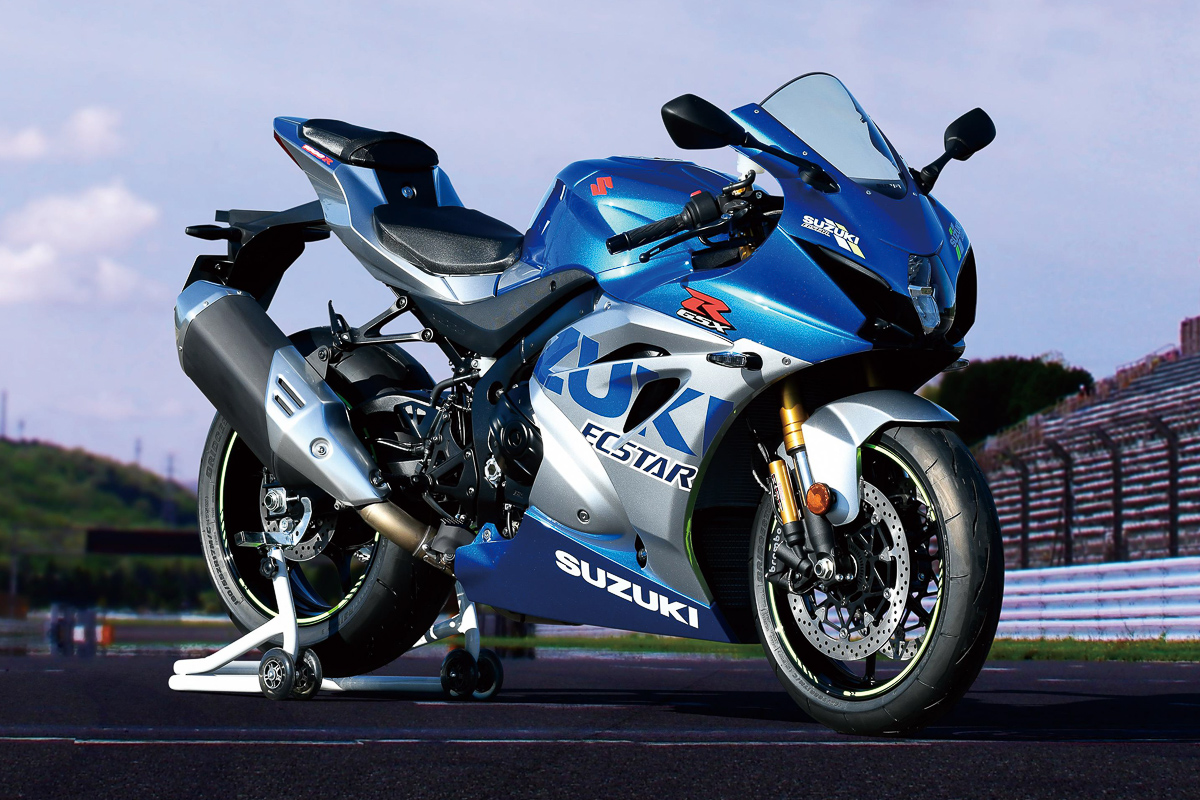
- Engine: 999 cc inline 4, liquid cooled
- Horsepower: ~199 hp
- Torque: ~117 Nm
- Length: ~2075 mm
- Width: ~705 mm
3. Suzuki GSX R1000
The Suzuki GSX-R1000 represents the pinnacle of Suzuki’s sportbike engineering, designed to compete at the highest levels of performance both on the street and in professional racing. Introduced in 2001, it quickly gained recognition as one of the most powerful and well-balanced superbikes in the world.
The motorcycle features a high-performance inline four engine that delivers exceptional horsepower while maintaining smooth and controlled power delivery. This combination allows riders to experience explosive acceleration without losing confidence or control, making it suitable for both track use and spirited road riding.
One of the key strengths of the GSX R1000 is its chassis design. Suzuki engineers focused heavily on stability and handling precision, ensuring that the motorcycle remains composed even at high speeds. This makes it highly effective in racing conditions where cornering ability and control are essential.
The GSX R1000 has also achieved significant success in motorsport competitions around the world. Its racing pedigree has reinforced its reputation as a serious performance machine capable of competing with the best superbikes from other manufacturers.
Over time, the GSX R1000 has evolved with advancements in electronics, suspension technology, and aerodynamic improvements. Despite these changes, it continues to represent Suzuki’s commitment to producing high-performance motorcycles that excel in both competitive and real-world environments.
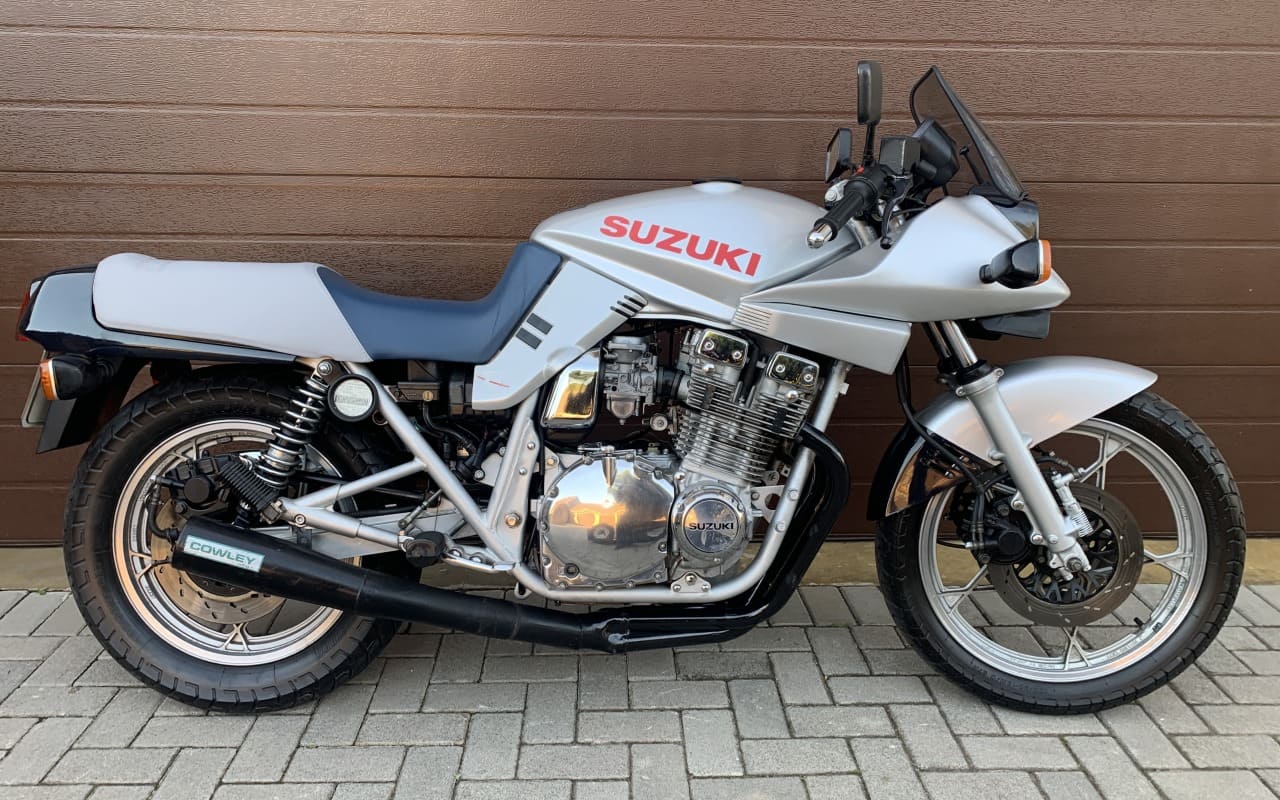
- Engine: 999 cc inline 4 (GSX-R derived)
- Horsepower: ~150 hp
- Torque: ~108 Nm
- Length: ~2135 mm
- Width: ~820 mm
4. Suzuki Katana
The Suzuki Katana is one of the most visually distinctive motorcycles ever created, and it played a major role in redefining motorcycle design philosophy during the early 1980s. When it was first introduced in 1981, its futuristic styling shocked the motorcycle world and set it apart from anything else on the market.
The design of the Katana was led by a vision of speed and aggression. Its sharp lines, angular bodywork, and low stance gave it a unique identity that was both controversial and revolutionary. While some critics were initially uncertain about its appearance, it quickly gained admiration for its boldness and originality.
Performance-wise, the Katana was equally impressive for its era. It featured a strong engine that provided competitive acceleration and top speed capabilities. Combined with its aerodynamic form, it delivered a riding experience that matched its aggressive appearance.
The Katana’s influence extended far beyond Suzuki. It inspired a new generation of motorcycle designers to explore more experimental and futuristic aesthetics. Many modern motorcycles owe part of their design language to the groundwork laid by the Katana.
Today, the Katana remains a symbol of innovation and artistic risk-taking in motorcycle design. Its legacy continues through modern reinterpretations that pay tribute to the original while incorporating contemporary engineering advancements.
- Engine: 645 cc V-twin, liquid-cooled
- Horsepower: ~70 hp
- Torque: ~62 Nm
- Length: ~2275 mm
- Width: ~835 mm
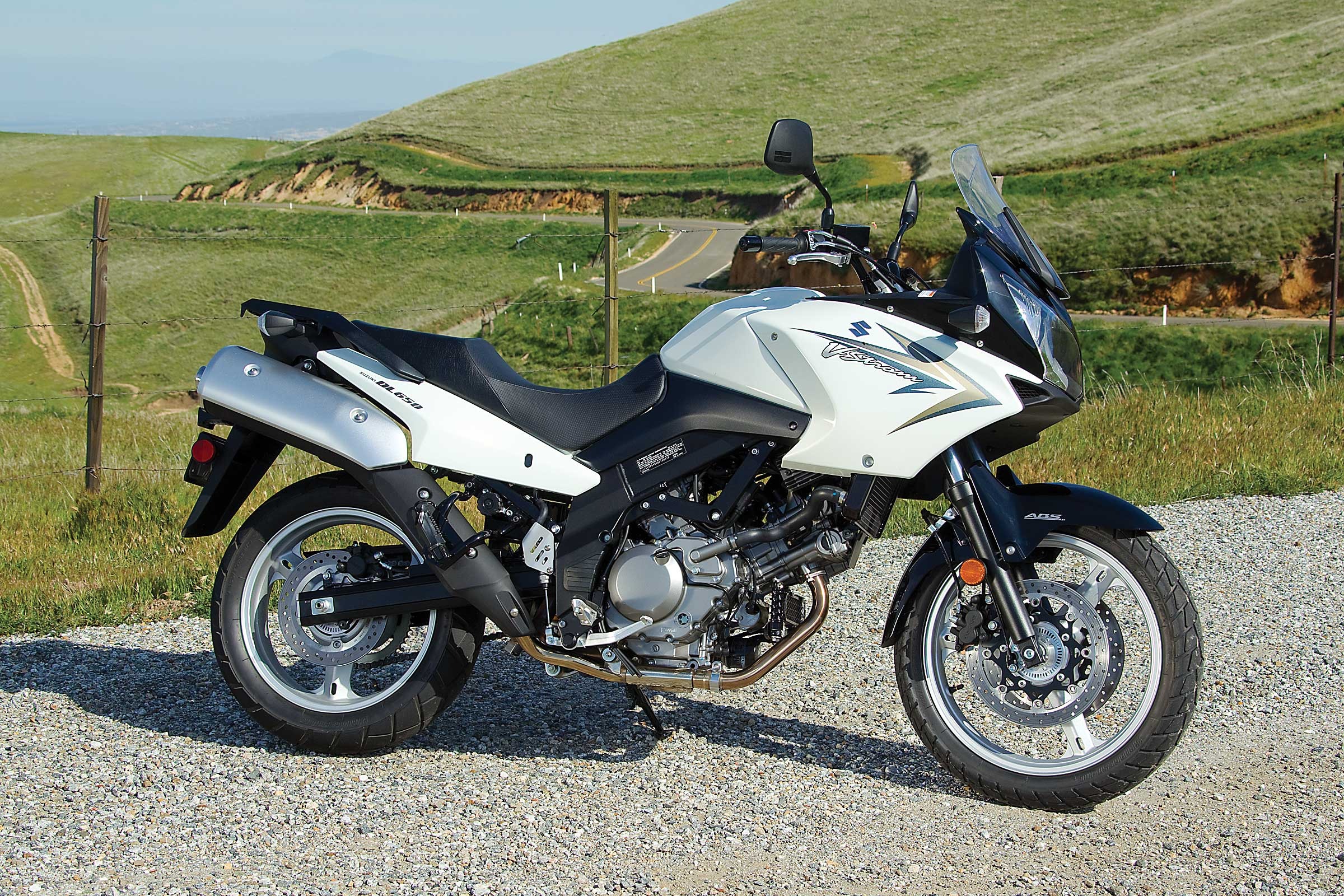
5. Suzuki V Strom 650
The Suzuki V Strom 650 is one of the most successful adventure touring motorcycles ever produced, known for its unmatched versatility and reliability. Since its introduction, it has become a favorite among riders who seek a single motorcycle capable of handling multiple riding conditions.
At the core of the V Strom 650 is its smooth V-twin engine, which delivers a perfect balance of power and efficiency. This engine is designed for long-distance comfort, offering predictable performance and excellent fuel economy, making it ideal for touring and daily commuting.
Comfort is one of the strongest attributes of the V Strom 650. Its upright seating position, ergonomic design, and well-padded seat allow riders to cover long distances without fatigue. This makes it particularly popular among adventure riders who travel across countries or regions.
The motorcycle is also known for its durability and low maintenance requirements. Many owners report high mileage usage with minimal mechanical issues, which reinforces its reputation as a dependable long-term investment.
The V Strom 650 stands out as one of Suzuki’s most practical and well-balanced motorcycles. It combines comfort, capability, and reliability in a way that few motorcycles in its category can match.
Also Read: 9 Vehicles with Worst Blind Spots
- Engine: 398 cc single-cylinder, liquid-cooled
- Horsepower: ~39 hp
- Torque: ~39 Nm
- Length: ~2310 mm
- Width: ~885 mm
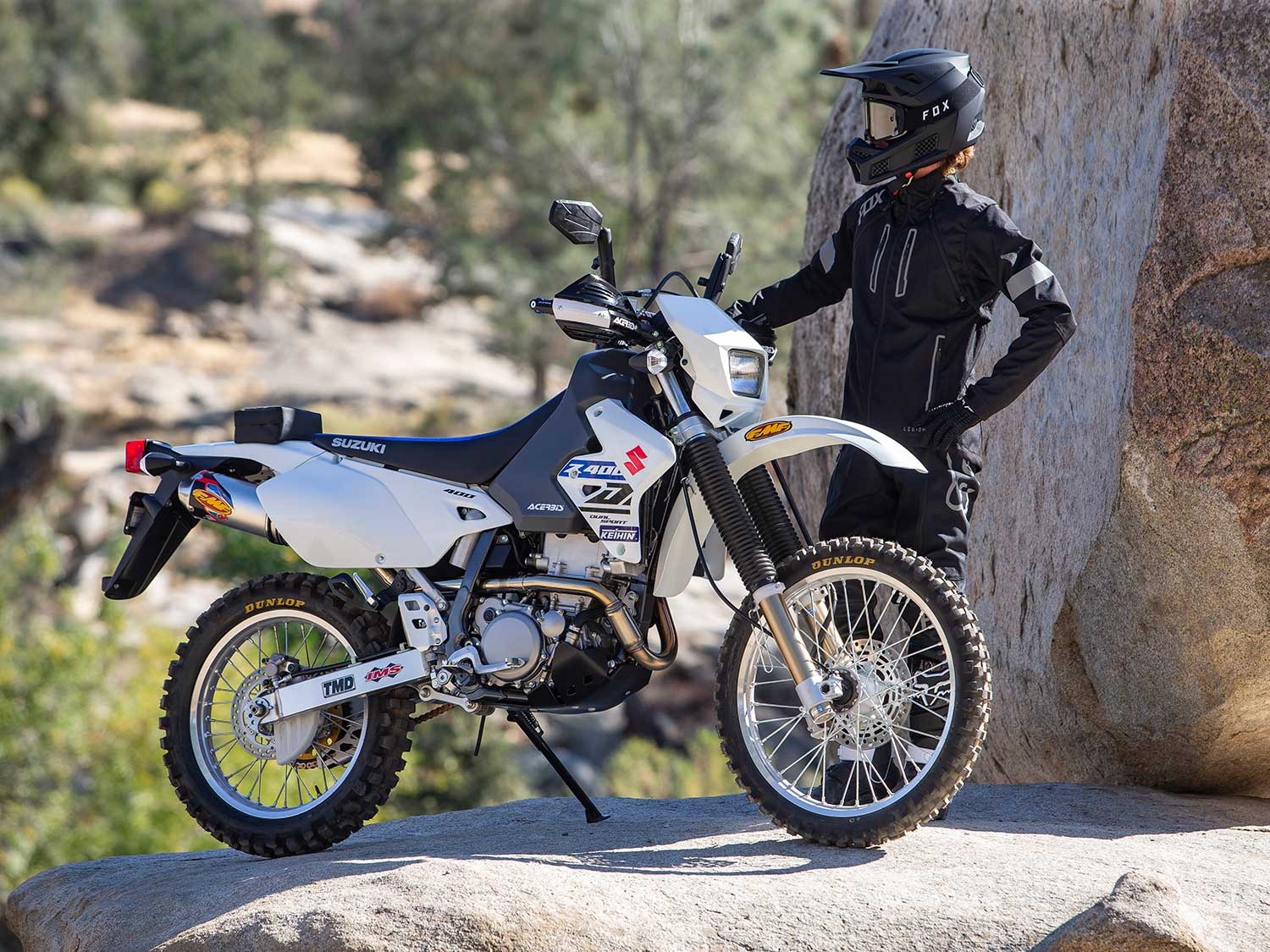
6. Suzuki DR Z400
The Suzuki DR Z400 is widely regarded as one of the most capable and reliable dual sport motorcycles ever produced. It was designed with a clear purpose, to offer riders a machine that could handle both off-road terrain and on-road commuting without compromising durability or usability. This dual nature is what makes it especially popular among adventure riders and outdoor enthusiasts.
One of the strongest characteristics of the DR Z400 is its lightweight construction. The relatively low weight makes it extremely easy to maneuver in technical off-road environments such as rocky trails, muddy paths, and steep inclines. Riders often highlight how controllable the motorcycle feels even in unpredictable terrain.
The engine is another important aspect of its success. The single-cylinder power unit delivers smooth and predictable torque, which is essential for off-road riding where throttle control matters more than outright speed. This makes the bike accessible to both beginners and experienced riders.
Suspension performance is also a key strength of the DR Z400. It is built to absorb shocks from uneven surfaces, allowing riders to maintain stability and confidence during off-road exploration. This makes it suitable for long trail rides and rugged conditions.
Despite being an off-road-focused motorcycle, the DR Z400 performs surprisingly well on paved roads. It offers enough comfort and stability for commuting, short highway rides, and urban use, making it a practical everyday machine.
Durability is one of the most respected qualities of this motorcycle. Many owners report extremely high mileage with minimal mechanical issues, which has helped it earn a reputation as a long-lasting and dependable machine.
The DR Z400 also benefits from a strong aftermarket support system. Riders often modify it with upgraded suspension, luggage systems, and performance parts to suit their specific needs, especially for long-distance adventure travel.
Even after many years in production, the DR Z400 remains relevant because of its simplicity and reliability. It does not rely heavily on electronics or complex systems, which makes it easier to maintain and repair in remote conditions.
The Suzuki DR Z400 continues to be one of the most trusted dual sport motorcycles ever made, offering a rare combination of toughness, versatility, and rider friendliness.
- Engine: 645 cc V-twin, liquid-cooled
- Horsepower: ~75 hp
- Torque: ~64 Nm
- Length: ~2140 mm
- Width: ~760 mm
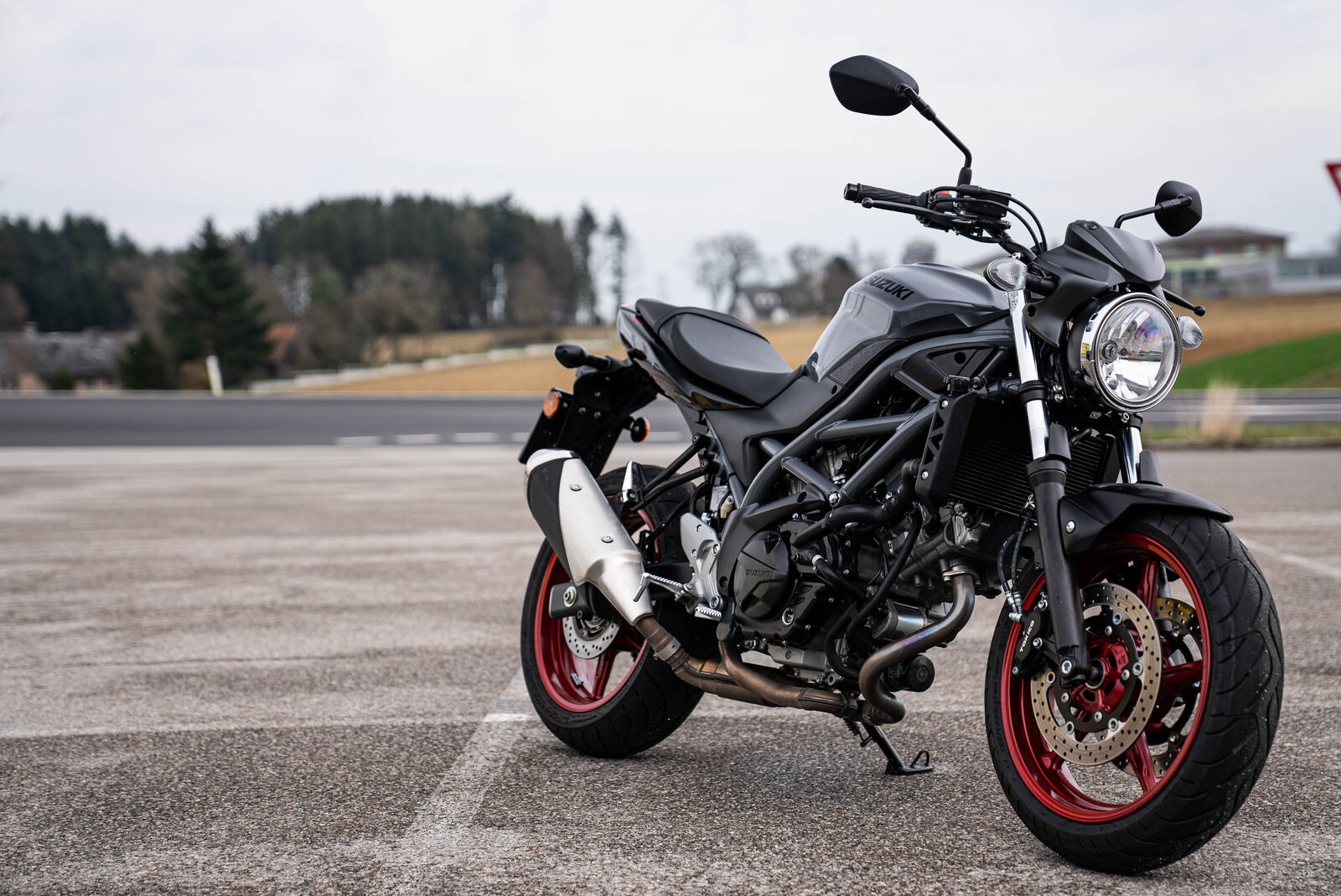
7. Suzuki SV650
The Suzuki SV650 is one of the most celebrated middleweight motorcycles ever built and is often considered a benchmark in its category. Since its introduction, it has gained widespread popularity due to its balanced performance, affordability, and versatility across different riding styles.
At the heart of the SV650 is its V-twin engine, which is known for its smooth and linear power delivery. This engine character makes the motorcycle extremely approachable for new riders while still being exciting enough for experienced motorcyclists who appreciate responsive performance.
One of the key reasons for its success is its lightweight chassis. The motorcycle feels agile and easy to control in various riding conditions, including urban traffic, winding roads, and even light track use. This flexibility is one of its strongest selling points.
The SV650 also delivers excellent fuel efficiency, which makes it a practical choice for daily commuting. Riders appreciate that they can enjoy spirited performance without sacrificing economy or affordability.
Comfort plays an important role in its design. The seating position is neutral and relaxed, allowing riders to cover long distances without excessive fatigue. This makes it suitable for both short trips and extended weekend rides.
Another major advantage is its low maintenance requirement. The SV650 is known for its mechanical simplicity and reliability, which keeps ownership costs low and makes it ideal for long-term use.
Over the years, Suzuki has refined the SV650 with modern updates such as improved fuel injection systems and updated styling, while preserving its core identity as a simple and effective all-around motorcycle.
The SV650 has also become popular in riding schools due to its forgiving nature and predictable handling. This has introduced countless new riders to motorcycling through a safe and manageable platform.
The Suzuki SV650 remains one of the most well-balanced motorcycles ever made, combining performance, practicality, and affordability in a way few motorcycles have matched.
- Engine: 498 cc two-stroke V4
- Horsepower: ~95–100 hp
- Torque: ~60 Nm (approx)
- Length: ~2090 mm
- Width: ~695 mm
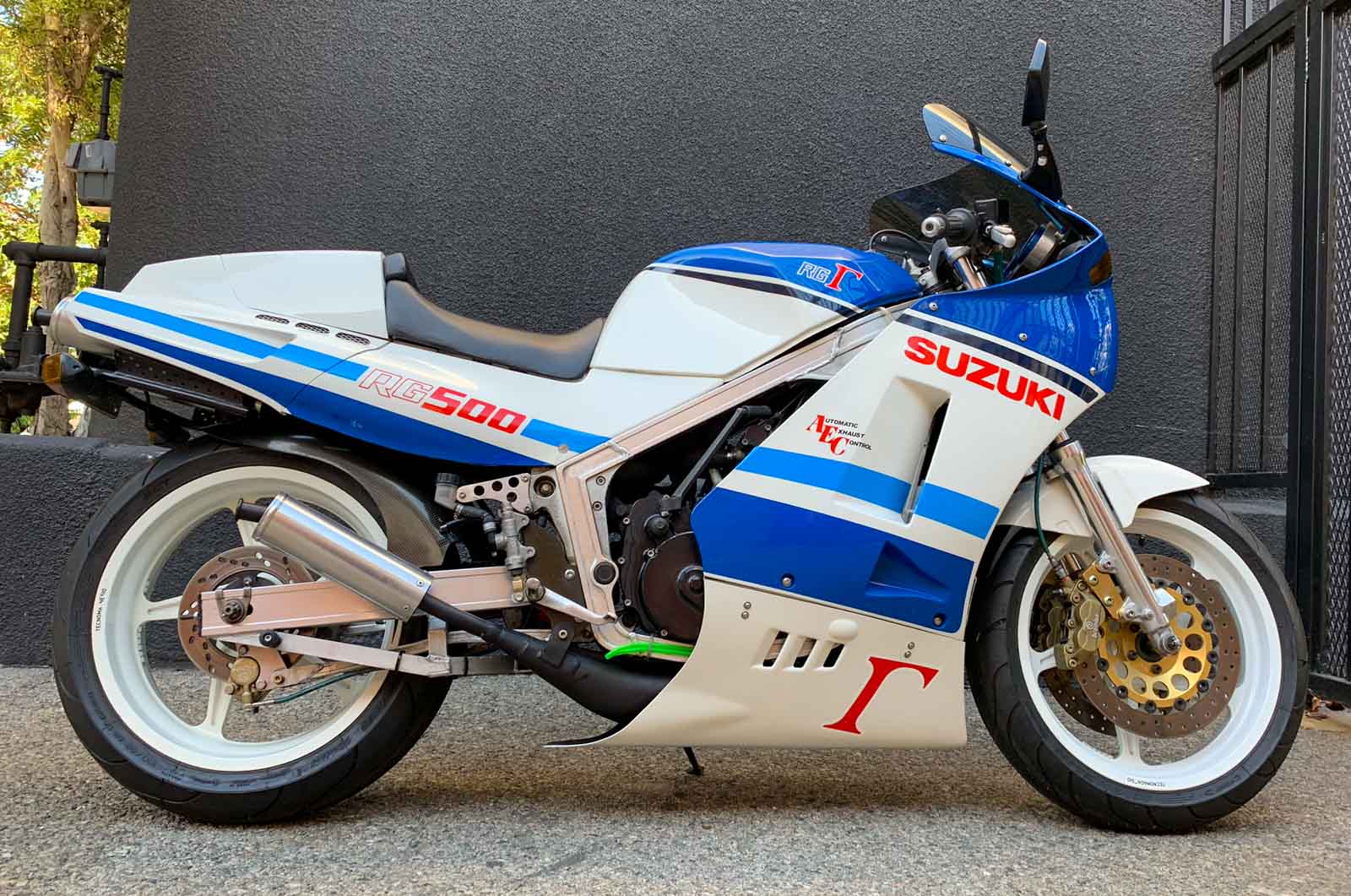
8. Suzuki RG500 Gamma
The Suzuki RG500 Gamma is one of the most extreme and race-inspired motorcycles ever released for public roads. It was developed directly from Suzuki’s successful Grand Prix racing machines, giving it an unmatched level of racing authenticity.
Its most defining feature is its two-stroke engine, which delivers explosive power and rapid acceleration. Unlike four-stroke engines, the power delivery is more aggressive, creating a thrilling and highly engaging riding experience.
The motorcycle’s lightweight construction is another major factor in its performance. Reduced weight allows for exceptional agility, making the RG500 Gamma incredibly responsive in corners and tight riding conditions.
The chassis was designed with racing principles in mind, offering sharp handling and precise control. This makes the motorcycle feel extremely connected to the road, especially at higher speeds.
Because of its racing origins, the RG500 Gamma was never intended to be a beginner-friendly motorcycle. It demands skill and experience, which adds to its exclusivity and appeal among enthusiasts.
Production numbers were relatively limited, which has significantly increased their value among collectors. Today, it is considered one of the most desirable vintage Suzuki motorcycles.
The RG500 Gamma also holds historical significance because it brought real Grand Prix technology to public roads. Few motorcycles have ever matched its level of direct racing influence.
Riders often describe it as one of the closest experiences to riding a professional racing motorcycle outside of competition.
Even today, it is admired not only for its performance but also for its bold engineering philosophy and commitment to pure racing performance.
- Engine: 1157 cc inline 4, air/oil cooled
- Horsepower: ~100–110 hp
- Torque: ~91 Nm
- Length: ~2160 mm
- Width: ~790 mm
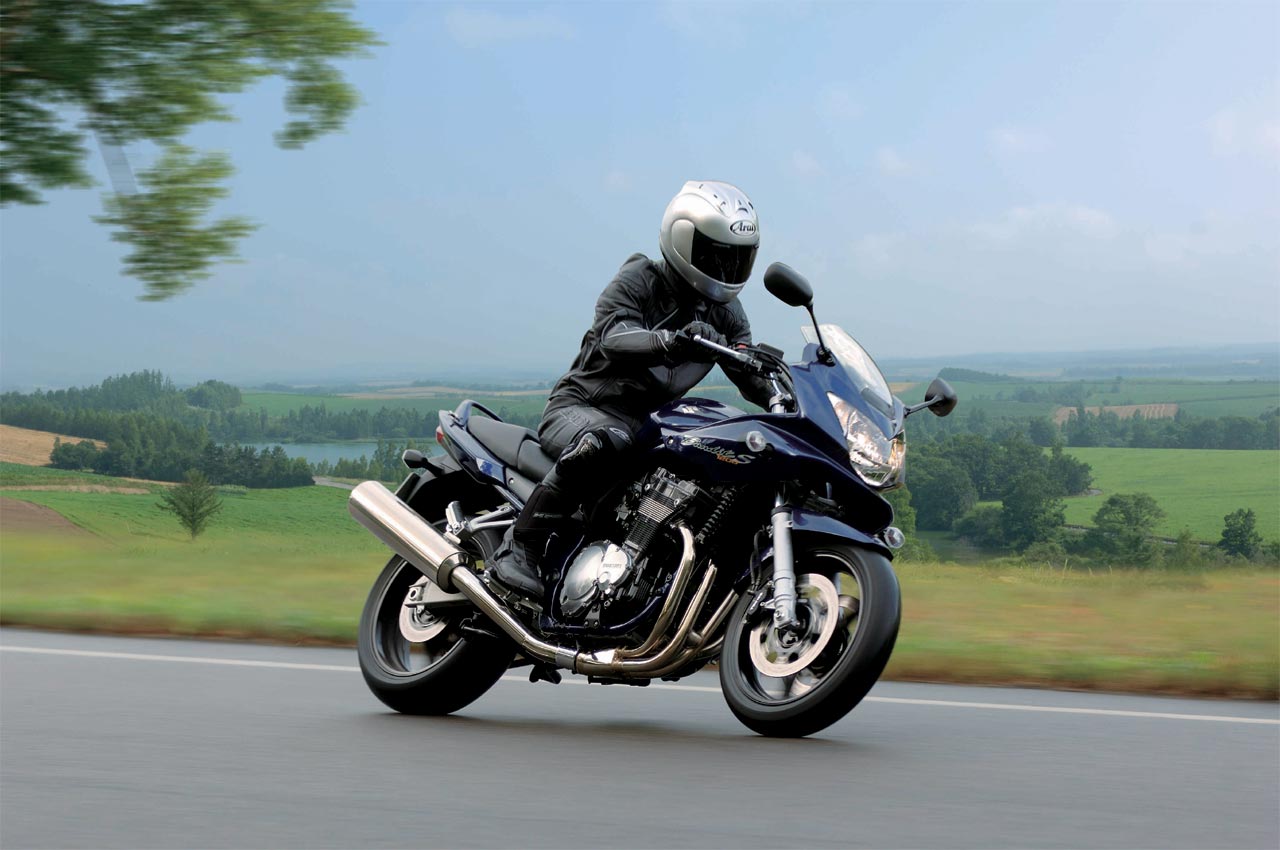
9. Suzuki Bandit 1200
The Suzuki Bandit 1200 is a legendary standard motorcycle known for its strong engine, practical design, and exceptional versatility. It became especially popular during the 1990s and early 2000s as a powerful yet approachable machine.
Its large displacement engine is one of its defining characteristics. It delivers strong torque across the rev range, making acceleration effortless whether riding in the city or on highways.
The motorcycle is designed for comfort as well as performance. Its upright seating position and relaxed ergonomics make it suitable for long-distance riding without causing rider fatigue.
One of the reasons for its popularity is its simplicity. The Bandit 1200 does not rely on overly complex systems, which makes it easy to maintain and repair, even for long-term ownership.
The motorcycle also became a favorite among customization enthusiasts. Riders frequently modify it into touring bikes, street fighters, or performance-focused machines depending on their preferences.
Its sturdy frame and reliable engine make it capable of handling high mileage without significant issues, contributing to its reputation as a dependable workhorse.
The Bandit 1200 also offers strong value for money, delivering performance levels comparable to more expensive motorcycles at a more accessible price point.
Its balance of power, comfort, and practicality helped it build a loyal global following. Even today, it remains a respected motorcycle for riders who want straightforward performance without unnecessary complexity.
- Engine: 997 cc inline 4, air cooled
- Horsepower: ~90–95 hp
- Torque: ~82 Nm
- Length: ~2210 mm
- Width: ~800 mm
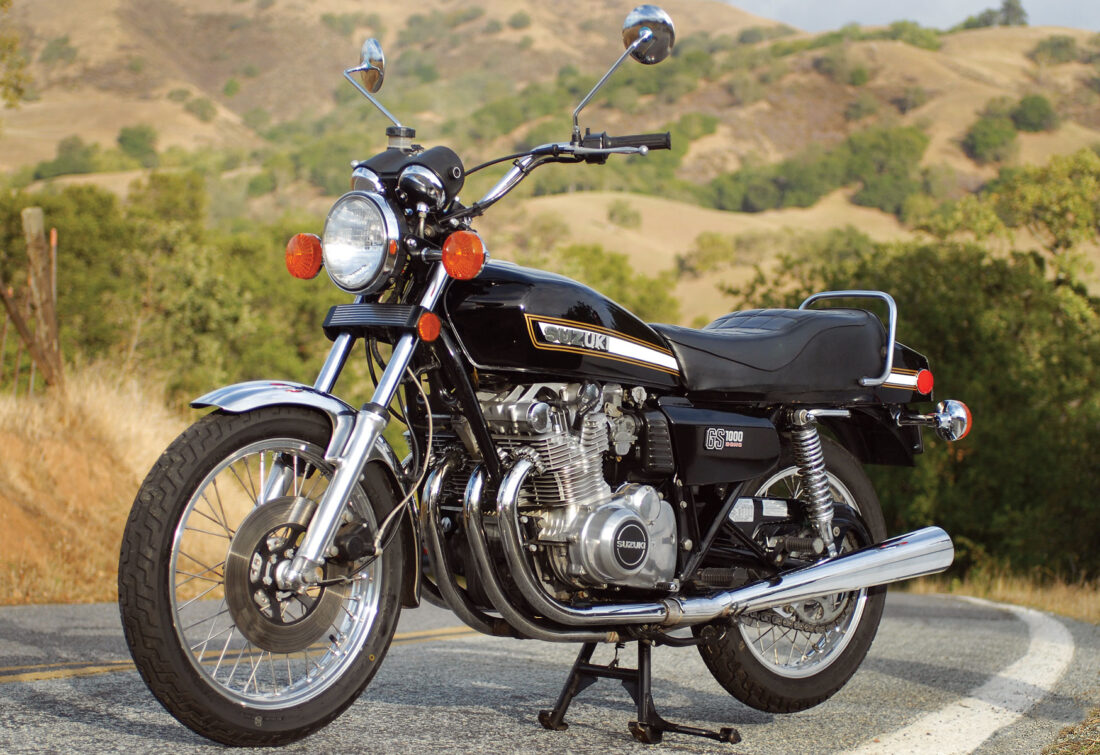
10. Suzuki GS1000
The Suzuki GS1000 is one of the most important motorcycles in Suzuki’s history, marking a turning point in the company’s rise as a global performance manufacturer. Introduced in the late 1970s, it demonstrated Suzuki’s ability to compete with leading motorcycle brands of the era.
Its inline four engine was a major highlight, offering strong performance and smooth power delivery. At the time, it was considered one of the most advanced engines available in production motorcycles.
The GS1000 also gained attention for its stability and handling. It was designed to provide confidence at high speeds, making it suitable for both road use and competitive racing environments.
In motorsport, the GS1000 achieved success, helping establish Suzuki’s credibility in international racing competitions. These achievements contributed significantly to the brand’s growing reputation.
Durability was another key strength. The motorcycle was built to withstand long-term use, and many units from that era are still running today, demonstrating its engineering quality.
The GS1000 also helped lay the foundation for future Suzuki sport and superbike models. Its success influenced the development of later GSX series motorcycles.
Riders appreciated its straightforward mechanical design, which made it easy to maintain and repair compared to more complex machines.
The motorcycle’s classic styling and historical importance have also made it a collectible model among vintage motorcycle enthusiasts.
Today, the GS1000 is remembered as a cornerstone in Suzuki’s history and one of the motorcycles that helped define the brand’s identity in the global market.
