The 1960s produced some of the most beautiful, daring, and influential cars ever created. It was a decade when automakers took risks, blending bold styling with powerful engineering to produce machines that felt exciting before the engine even started.
From sleek European grand tourers to muscular American performance icons, these vehicles were designed with unmistakable character and proportions that remain instantly recognizable today. Long hoods, elegant curves, dramatic grilles, and handcrafted details gave each model a personality that modern cars often struggle to replicate.
In this list of 10 Cars From the 1960s That Should Be Relaunched With the Same Design, we revisit automotive legends whose original styling still feels timeless decades later. Rather than receiving dramatic redesigns, these classics deserve faithful revivals that preserve the shapes, details, and road presence that made them iconic in the first place.
With updated engineering hidden beneath familiar silhouettes, they could offer the perfect balance between nostalgia and modern capability. These cars prove that sometimes the best designs are already complete and simply deserve another chance to shine on today’s roads.
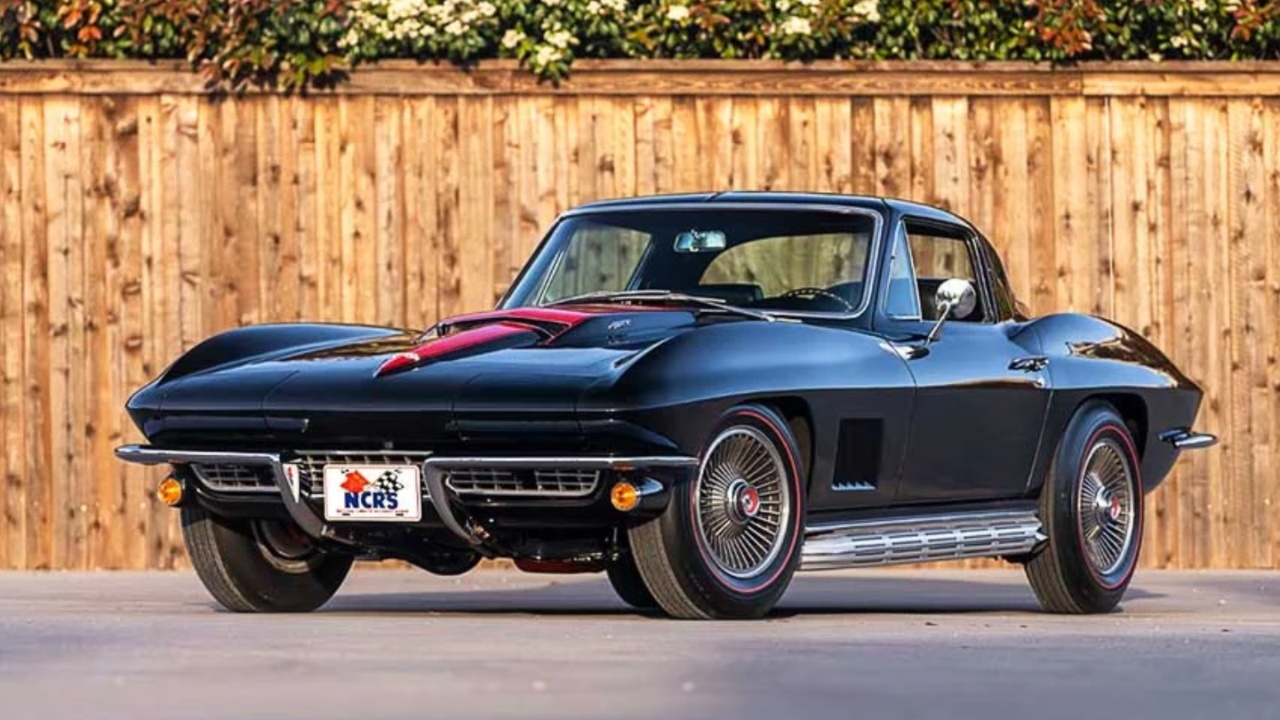
1. 1967 Chevrolet Corvette Sting Ray (C2)
The 1967 Chevrolet Corvette Sting Ray (C2) represents a high point in American automotive design, where bold aesthetics and performance-focused engineering come together in a single, cohesive form. Designed under Larry Shinoda, its shark-like silhouette is defined by crisp body lines, concealed headlights, and a streamlined rear section that visually reinforces its speed-oriented character. In its final production year, the model was further refined with reduced trim and revised vent detailing, giving it a cleaner, more purposeful appearance while maintaining its unmistakable presence.
Under the hood, the Corvette offered formidable powertrains, including the legendary 427-cubic-inch big-block V8 variants such as the L71 and L88, which delivered exceptional horsepower and straight-line speed. Paired with a lightweight yet sturdy chassis developed under Zora Arkus-Duntov, the C2 introduced independent rear suspension that significantly improved grip and handling precision. This balance of brute force and mechanical sophistication made it one of the most thrilling American performance cars of its time.
Road tests of the 1967 Corvette praised its stable high-speed manners, strong braking performance, and comfortable long-distance ride on smooth roads. Its disc brakes provided consistent stopping power, though tire adhesion ultimately limited the braking force. Steering feel varies depending on configuration, with power assist systems often criticized for inconsistent feedback. On rough surfaces, however, the suspension revealed its limitations, especially compared to refined European sports cars of the same era.
The Sting Ray remains a cultural symbol of 1960s American performance, valued by collectors for its design purity, strong engineering, and enduring desirability, standing today as one of the most influential and celebrated classic sports cars ever built worldwide.
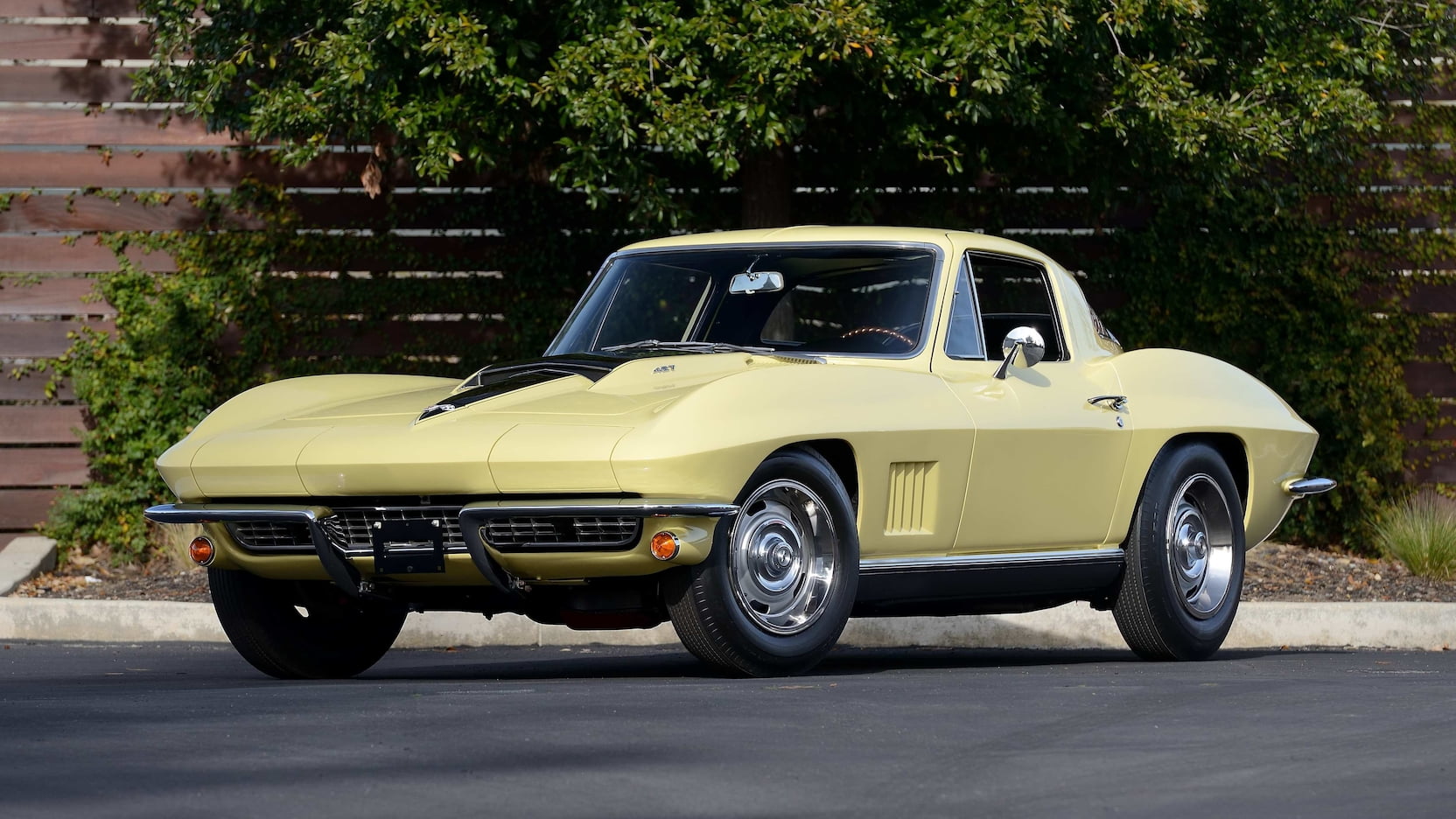
- Engine: 5.3L–7.0L V8 (327–427 cu in small-block / big-block options)
- Horsepower: 300–435 hp (depending on engine)
- Torque: 360–460 lb-ft
- Length: 175.1 in (4,447 mm)
- Width: 69.6 in (1,768 mm)
2. 1961 Jaguar E-Type
Introduced in 1961, the Jaguar E-Type quickly established itself as one of the most admired and influential sports cars ever created, with its beauty earning rare praise from Enzo Ferrari himself. Designed by Malcolm Sayer using aerodynamic principles rooted in mathematics and aviation thinking, the car features a dramatically long bonnet, flowing curves, and a compact cabin that together form a perfectly proportioned silhouette. Every element, from its wire wheels to its centered dual exhausts, contributes to a design that blends mechanical purpose with sculptural elegance.
The E-Type also represented a major step forward in performance engineering, drawing heavily from Jaguar’s racing experience with the D-Type. It introduced independent suspension at both ends, significantly improving handling and ride balance compared to many rivals of its era. Powered by the XK inline-six engine, it delivered outstanding speed for the time, approaching 150 mph, while remaining relatively accessible in price, which helped redefine expectations for high-performance road cars.
Early driving evaluations praised its strong acceleration, confident high-speed stability, and effective disc braking system that provided consistent stopping power. Rack-and-pinion steering delivered a sharp response and a connected feel, making the car rewarding to drive at speed. However, it was not without compromises, as reviewers noted a demanding gearbox, tight cabin dimensions, limited storage space, and seating that could become uncomfortable over longer distances, particularly for taller occupants.
Despite these shortcomings, the E-Type delivered a driving experience that combined excitement, refinement, and emotional appeal in a way few cars of its generation matched. Its success in both road use and motorsport solidified its status as an automotive icon, while its flowing form continues to influence car design decades later. A modern interpretation of this classic would likely preserve its distinctive proportions while integrating improved comfort, reliability, and everyday usability.
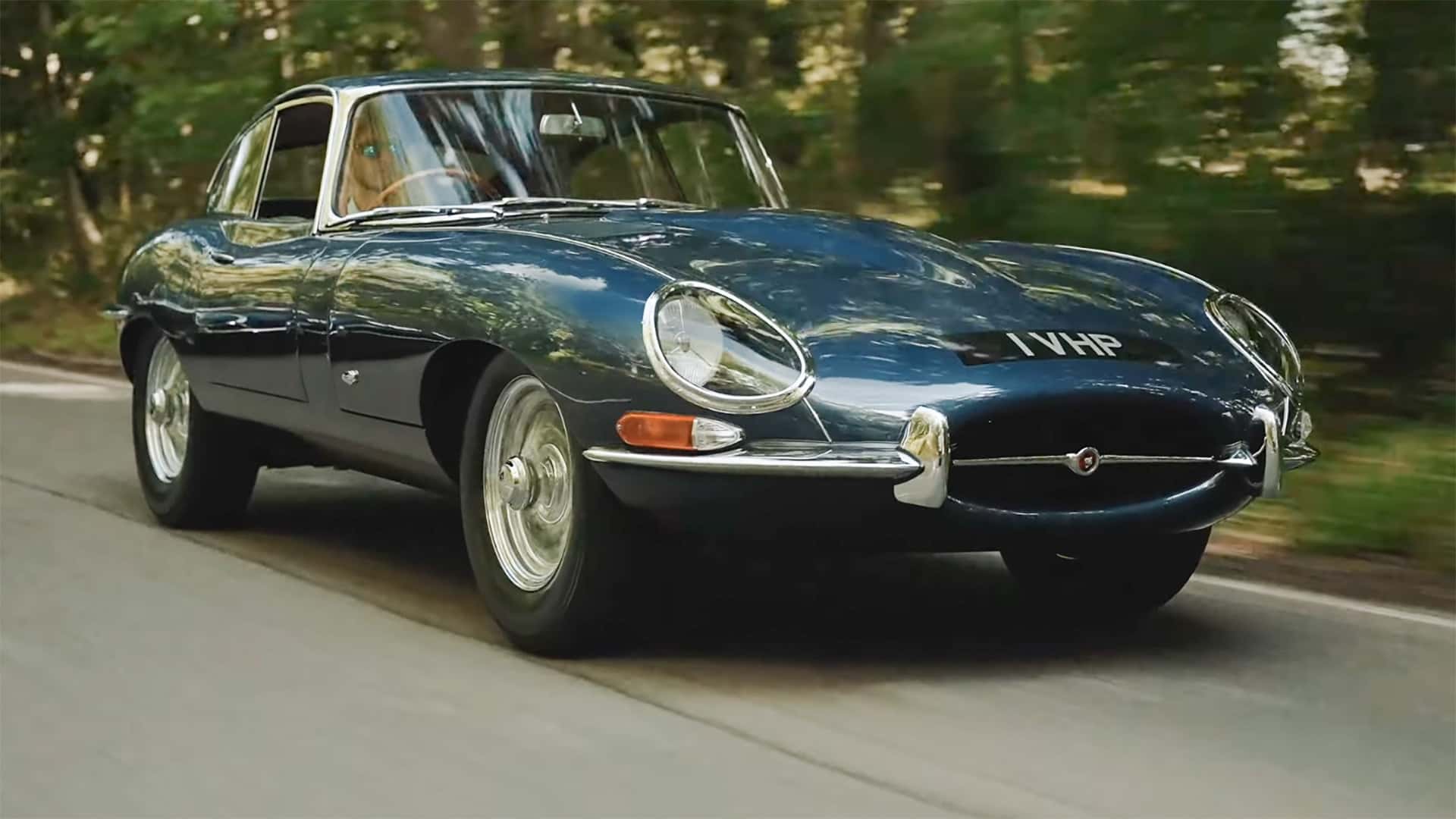
- Engine: 3.8L Inline-6 (DOHC XK engine, triple SU carburetors)
- Horsepower: 265 hp @ 5,500 rpm
- Torque: 260 lb-ft @ 4,000 rpm
- Length: 175.3 in (4,453 mm)
- Width: 65.25 in (1,657 mm)
3. 1969 Ford Mustang Boss 429
Born from Ford’s urgent need to homologate its new 429-cubic-inch racing engine for NASCAR competition, the 1969 Mustang Boss 429 was never intended to be an ordinary street performance car. Its design immediately communicates its purpose, with a wide, low fastback profile and an imposing functional hood scoop that dominates the front fascia.
Unlike many muscle cars of its era, it relies on clean surfaces, restrained badging, and a subtle front spoiler to create an aggressive presence rooted in engineering rather than decoration.
At the heart of the Boss 429 lies a race-developed semi-hemi V8 engine built for sustained high-RPM operation on oval tracks. Featuring forged internals, aluminum high-riser heads, and a large Holley carburetor, it was one of Ford’s most advanced powerplants of the time. However, its NASCAR-focused tuning meant it was not optimized for drag racing or instant low-end torque, which led to mixed expectations among performance enthusiasts who expected outright street dominance.
To fit the massive engine, Ford extensively reworked the Mustang’s structure, including a widened front suspension, reinforced chassis components, and upgraded cooling and braking systems. These modifications improved stability and gave the car unexpectedly capable handling characteristics for such a large-displacement muscle car. Supporting equipment such as performance tires and heavy-duty suspension parts further reinforced its competition-oriented engineering approach.
With only 1,356 units produced between 1969 and 1970, the Boss 429 remains one of the rarest and most collectible Mustangs ever built. While it did not fully meet the expectations of being a drag strip powerhouse, its combination of NASCAR heritage, limited production, and purposeful design has secured its reputation as a legendary symbol of the golden age of American muscle.
Underneath its muscular exterior lies a race-derived powertrain built for high-speed endurance rather than drag strip dominance. The semi-hemi 429 V8 engine features forged internals, aluminum high-riser heads, and a large Holley carburetor, making it a technically advanced unit for its time.
However, because it was designed primarily for NASCAR-style high-RPM performance, it did not always deliver the low-end torque or quarter-mile acceleration that muscle car enthusiasts expected. This mismatch between intention and public expectation shaped much of the Boss 429’s early reputation.
To accommodate the enormous engine, Ford heavily modified the Mustang’s chassis, including a reworked front suspension, widened track, and upgraded braking and cooling systems. These changes unexpectedly improved handling balance, giving the Boss 429 more stability and composure than many contemporaries.
Supporting hardware such as traction bars, performance tires, and reinforced components further emphasized its competition-focused engineering, even though straight-line acceleration was not its strongest trait.
Production of the Boss 429 was extremely limited, with only 1,356 units built between 1969 and 1970, making it one of the rarest Mustangs ever produced. Despite not fully achieving its intended racing dominance on the street or strip, its combination of NASCAR heritage, raw mechanical engineering, and restrained yet aggressive styling has secured its place as a highly prized collector’s icon in American automotive history.
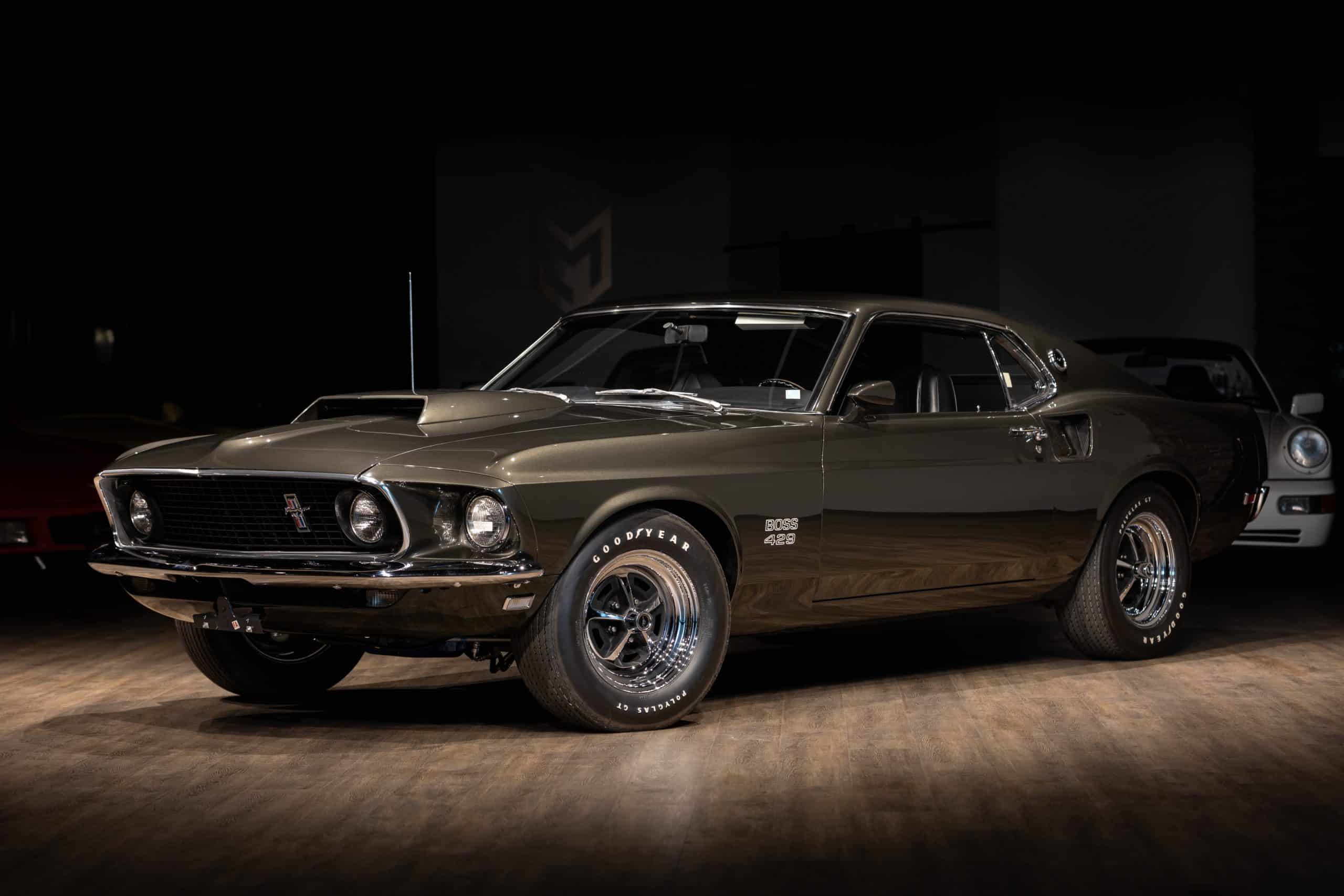
- Engine: 7.0L V8 (429 cu in Boss 429 “Semi-Hemi”, Holley 4-barrel)
- Horsepower: 375 hp @ 5,200 rpm (factory rated; higher in reality)
- Torque: 450 lb-ft @ 3,400 rpm
- Length: 187.4 in (4,760 mm)
- Width: 71.7 in (1,821 mm)
4. 1967 Alfa Romeo 33 Stradale
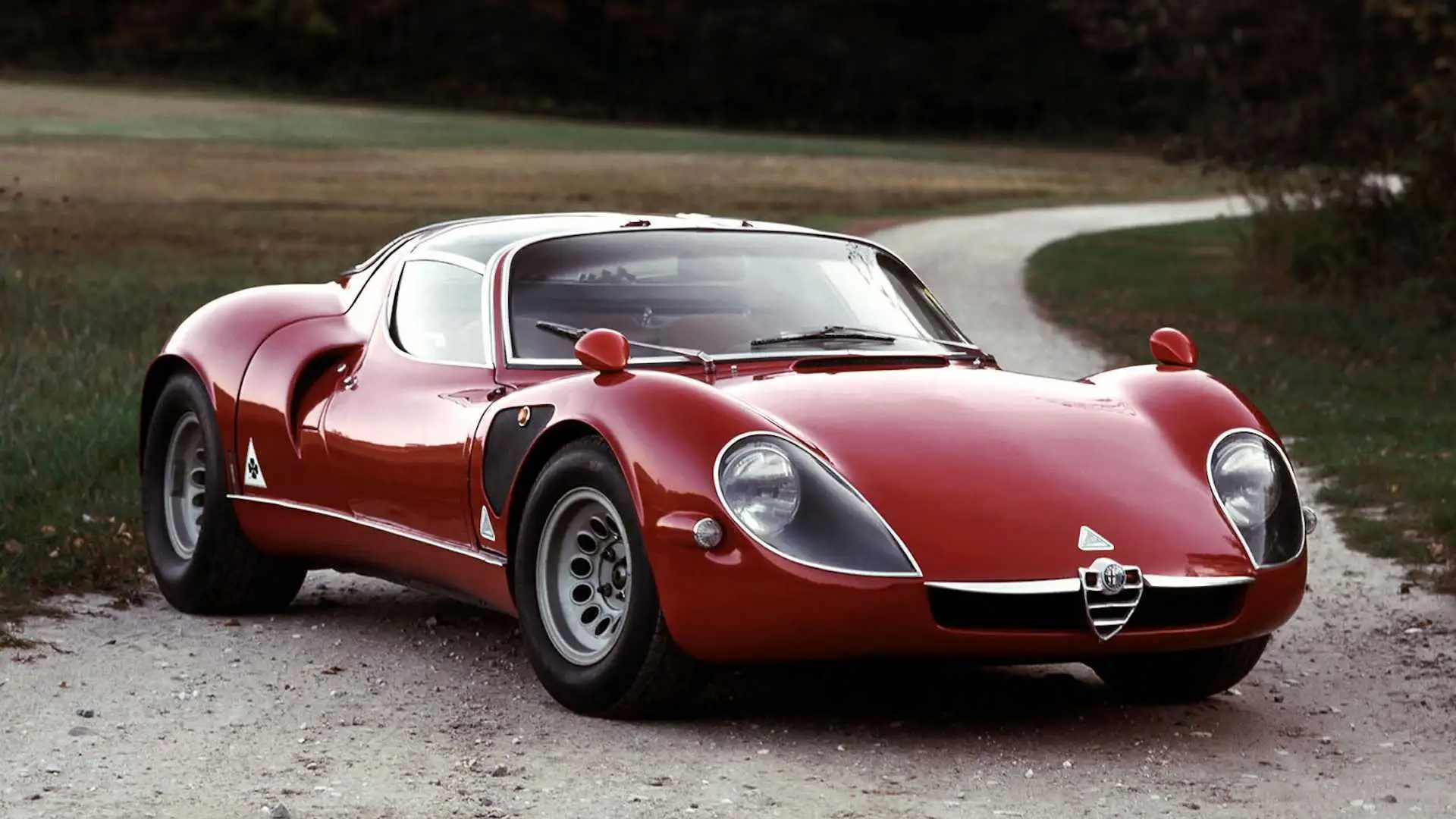
The 1967 Alfa Romeo 33 Stradale is often considered one of the greatest achievements in automotive design, admired for its rare combination of racing purpose and artistic elegance. Crafted by Franco Scaglione, this ultra-exclusive model saw only 18 examples produced, securing its status as one of the most coveted and collectible vehicles ever built.
Its design is defined by an exceptionally low stance and fluid, uninterrupted body lines that replace angular aggression with soft, organic forms, giving it the presence of a sculpture in motion rather than a conventional sports car.
One of its most defining characteristics is its pioneering use of butterfly-style doors, which open upward and forward in a dramatic motion that enhances the car’s futuristic character. The canopy-like glasshouse wraps tightly around the cockpit, while the long, tapering nose and wide rear fenders are shaped directly around its mid-engine racing chassis.
This design approach, inspired by Alfa Romeo’s Tipo 33 endurance racer, gives the car both visual elegance and authentic motorsport DNA. Powered by a lightweight 2.0-liter V8 producing around 230 horsepower, the Stradale delivered exceptional performance for its size, thanks in part to its extremely low weight of roughly 700 kilograms.
The exterior detailing further reinforces its artistic identity, with features such as Campagnolo magnesium wheels, carefully integrated air intakes, and minimalistic surfaces free from unnecessary ornamentation. Each car was hand-built in aluminum, meaning no two examples are exactly identical, with subtle differences in panel fit, vents, and even wiper placement. This handcrafted nature adds to its individuality and rarity, making every surviving example uniquely valuable.
Beyond its engineering and aesthetics, the 33 Stradale remains a cultural symbol of design purity and emotional automotive expression. Its influence continues to inspire modern supercars and concept designs, while Alfa Romeo itself has revisited its legacy with modern reinterpretations. Even decades later, it stands as a reminder that the most powerful automotive statements often come from simplicity, proportion, and human creativity rather than digital complexity.
- Engine: 2.0-liter (1,995 cc) 90° V8
- Horsepower: 227 hp @ 8,800 rpm
- Torque: 152 lb-ft @ 7,000 rpm (206 N·m)
- Length: 3,970 mm (156.3 in)
- Width: 1,709 mm (67.3 in)
5. 1963 Aston Martin DB5
Few automobiles have achieved the level of recognition and admiration held by the 1963 Aston Martin DB5, a grand tourer that perfectly captures the essence of British luxury and performance.
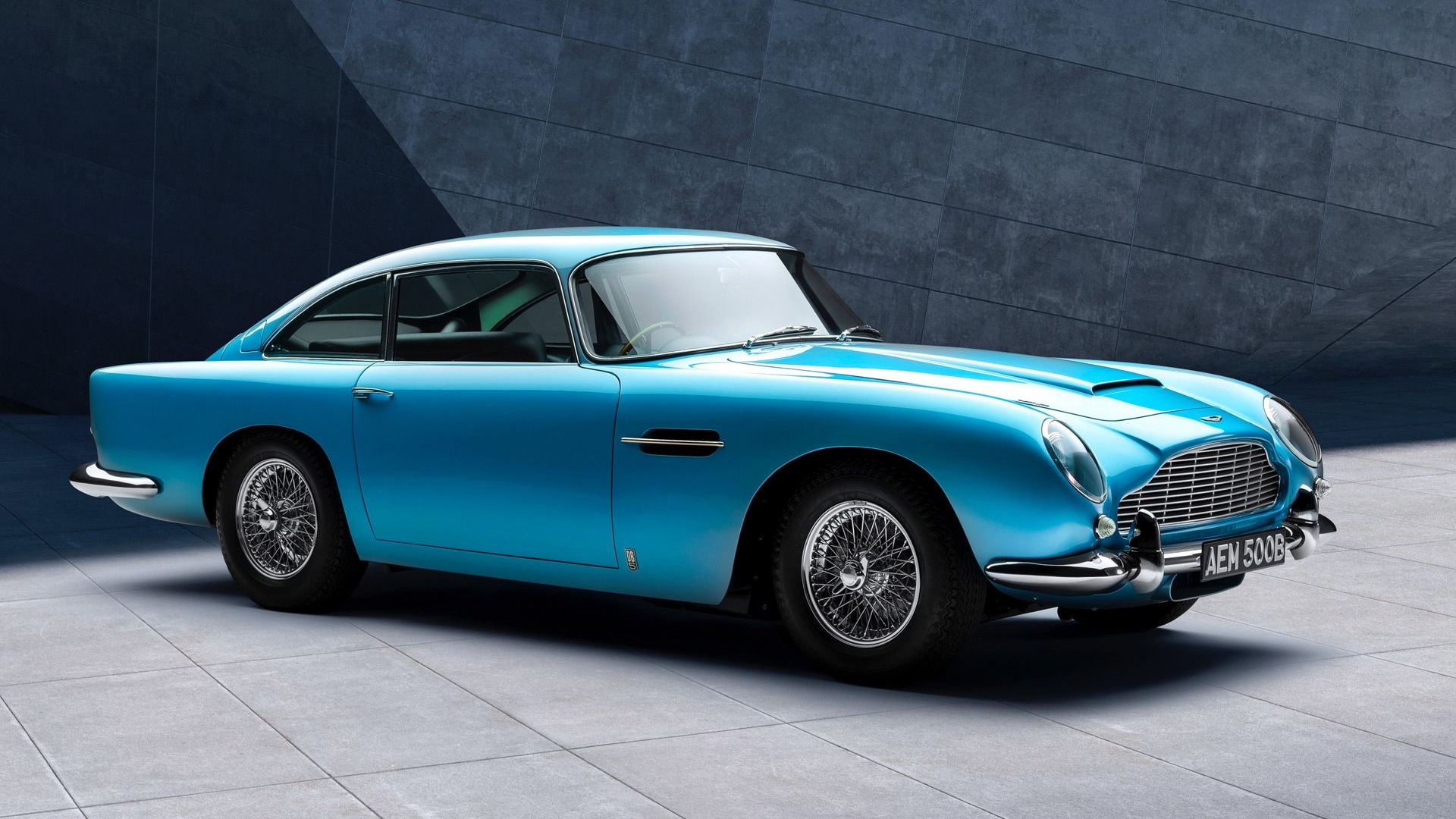
Developed as an evolution of the DB4 and styled by Carrozzeria Touring Superleggera, it refined Aston Martin’s design language into something more balanced, powerful, and timeless. Its long bonnet, compact cabin, and graceful proportions create a silhouette that feels both elegant and purposeful, while details such as chrome accents, covered headlights, and wire wheels reinforce its classic sophistication.
The DB5 pairs its refined styling with a capable and smooth powertrain, centered around a 4.0-liter inline-six engine that produces around 282 horsepower in standard form. This allowed it to reach speeds of approximately 145 mph while delivering a refined driving experience suited for long-distance grand touring. With manual and automatic transmission options, it offered flexibility for different driving preferences, combining performance with comfort in a way that defined luxury sports cars of its era.
Inside the cabin, the DB5 reflects meticulous craftsmanship, featuring hand-finished leather seats, polished wooden trim, and a cleanly organized instrument panel. Its 2+2 seating arrangement provided additional practicality, making it more versatile than many pure sports cars of the time. Variants such as the Vantage, convertible, and rare shooting brake further expanded its appeal, although total production remained limited to just over 1,000 units, enhancing its exclusivity.
The DB5’s legacy extends far beyond its engineering and design due to its iconic role in the James Bond franchise, beginning with Goldfinger in 1964. Its cinematic presence transformed it into a global cultural symbol associated with sophistication, technology, and style. Today, it remains one of the most desirable classic cars in the world, admired for its beauty, rarity, and enduring influence on automotive design and popular culture.
- Engine: 4.0L Inline-6 (DOHC, naturally aspirated)
- Horsepower: 282 hp @ 5,500 rpm
- Torque: 288 lb-ft @ 3,850 rpm
- Length: 180.0 in (4,572 mm)
- Width: 66.0 in (1,676 mm)
Also read: 10 Cars That Hit 60 MPH Faster Than Advertised
6. 1969 Dodge Charger Daytona
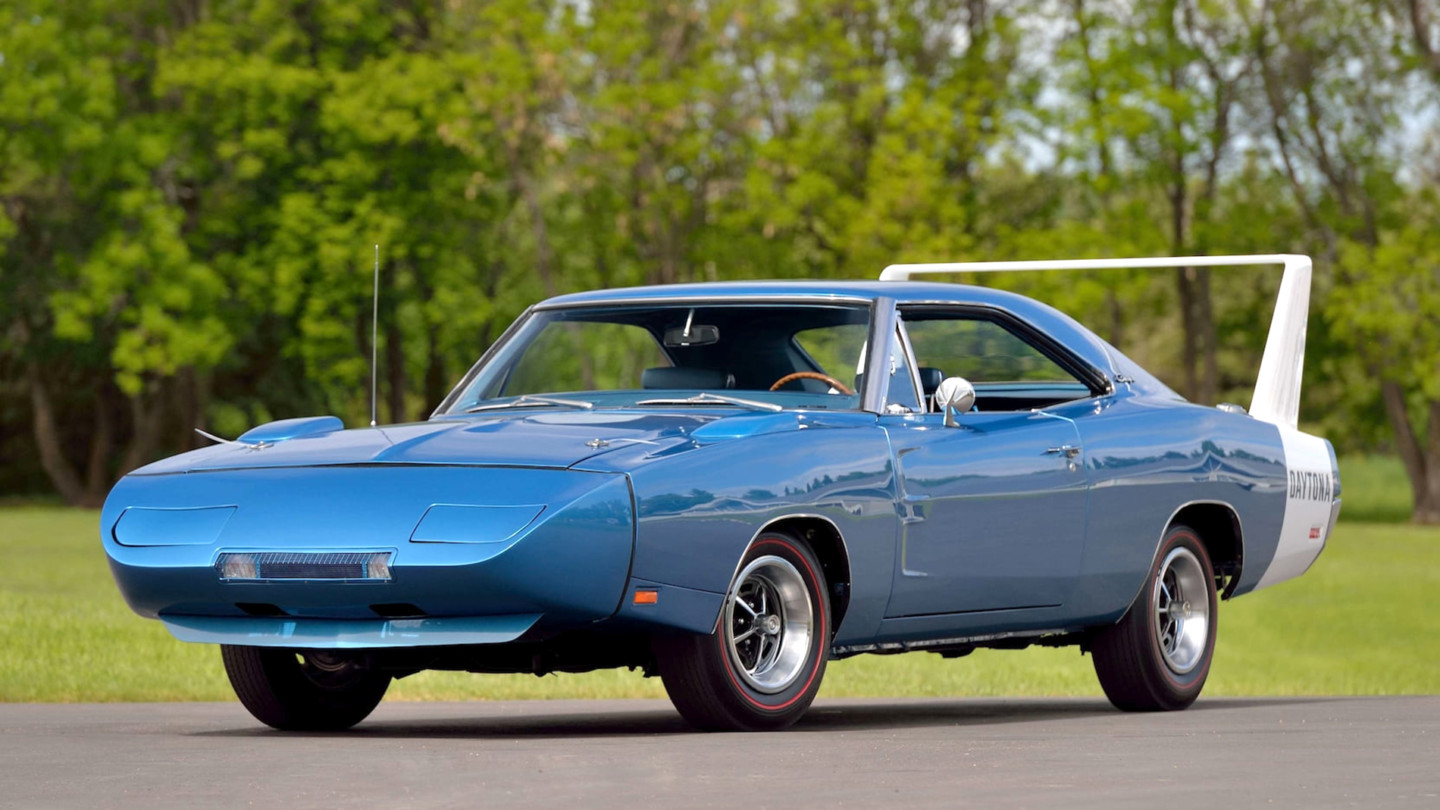
Born from the intense world of late 1960s NASCAR competition, the 1969 Dodge Charger Daytona is one of the most extreme and visually unforgettable American muscle cars ever built. It was engineered with a single purpose: to dominate high-speed oval racing through advanced aerodynamics rather than raw power alone.
To achieve this, Dodge transformed the standard Charger by adding a long fiberglass nose cone and a massive rear wing that worked together to stabilize the car at extreme speeds and reduce drag. This bold engineering approach made history when the Daytona became the first NASCAR car to surpass 200 mph, cementing its reputation as a groundbreaking performance machine.
Only 503 road-legal versions were produced to satisfy homologation rules, making the Daytona extremely rare and highly desirable among collectors today. It came equipped with powerful big block V8 engines, including the 440 Magnum and the legendary 426 Hemi, paired with either manual or automatic transmissions.
While designed for racing dominance, the street version delivered a surprisingly manageable and comfortable driving experience, especially with the 440 engine, which offered strong torque and smooth power delivery for everyday use.
Inside, the cabin was simple and functional, reflecting its performance-focused origins rather than luxury. Steering feel and braking performance were modest by modern standards, but the car’s long-distance comfort made it enjoyable for relaxed cruising. Despite mixed reactions at launch, the Daytona has grown into a highly respected classic, admired for its fearless design and engineering ambition.
Today, the 1969 Dodge Charger Daytona stands as a symbol of experimental American motorsport innovation. Its dramatic shape, racing pedigree, and rarity make it one of the most iconic and collectible muscle cars ever produced, with enduring appeal among enthusiasts and historians alike.
- Engine: 7.2L 440 Magnum V8 / 7.0L 426 HEMI V8
- Horsepower: 375 hp / 425 hp
- Torque: 480 lb-ft / 490 lb-ft
- Length: 226.5 in (5,753 mm)
- Width: 76.6 in (1,946 mm)
7. 1966 Shelby Cobra 427
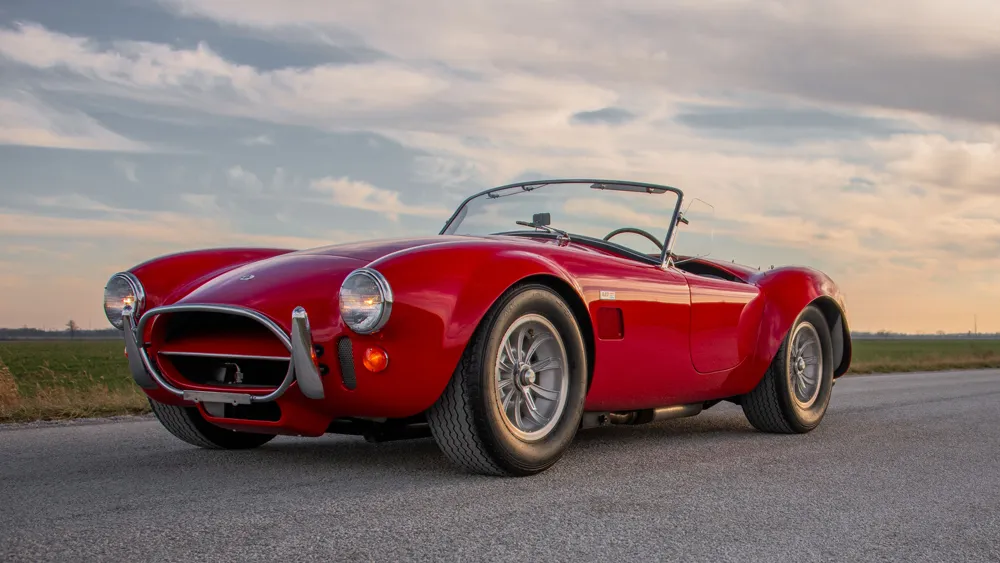
The 1966 Shelby Cobra 427 is one of the most extreme expressions of performance ever created, combining a lightweight British AC roadster chassis with a massive Ford V8 engine. This fusion produced a machine defined by brutal acceleration, minimal weight, and an uncompromising focus on driving purity.
Its design is instantly recognizable through oversized, muscular fenders that stretch over wide racing tires, a deep front grille that seems ready to consume the road, and exposed side exhaust pipes that emphasize its mechanical intensity. There is no emphasis on comfort or luxury, only purpose-driven engineering meant to deliver maximum performance with minimal distraction.
Built around a 7.0-liter Ford 427 V8, the Cobra delivers over 400 horsepower in a body weighing just over 2,300 pounds. This extraordinary power-to-weight ratio allows it to achieve 0 to 60 mph in around 3.4 seconds and reach speeds close to 160 mph, numbers that remain impressive even by modern standards. The absence of electronic aids such as traction control or power steering makes the driving experience raw and demanding, requiring skill, anticipation, and respect from the driver.
Inside, the cabin is stripped to the essentials, featuring simple gauges, tight seating, and a no-nonsense layout that reinforces its racing roots. This minimalism reflects Carroll Shelby’s philosophy of reducing weight to increase performance, resulting in a car that feels direct and mechanical in every input.
Despite its rarity, with fewer than 1,000 originals produced, the Shelby Cobra 427 remains one of the most replicated and admired performance cars in history. Its influence continues through continuation models and replicas that attempt to capture its unmistakable character.
Today, the Cobra stands as a symbol of unfiltered driving excitement, timeless design, and American performance engineering at its most fearless and iconic.
- Engine: 7.0L Ford FE “side-oiler” V8 (427 cu in)
- Horsepower: 425–485 hp (up to ~800 hp in Super Snake)
- Torque: 480 lb-ft
- Length: 156.0 in (3,962 mm)
- Width: 68.0 in (1,727 mm)
8. 1967 Toyota 2000GT
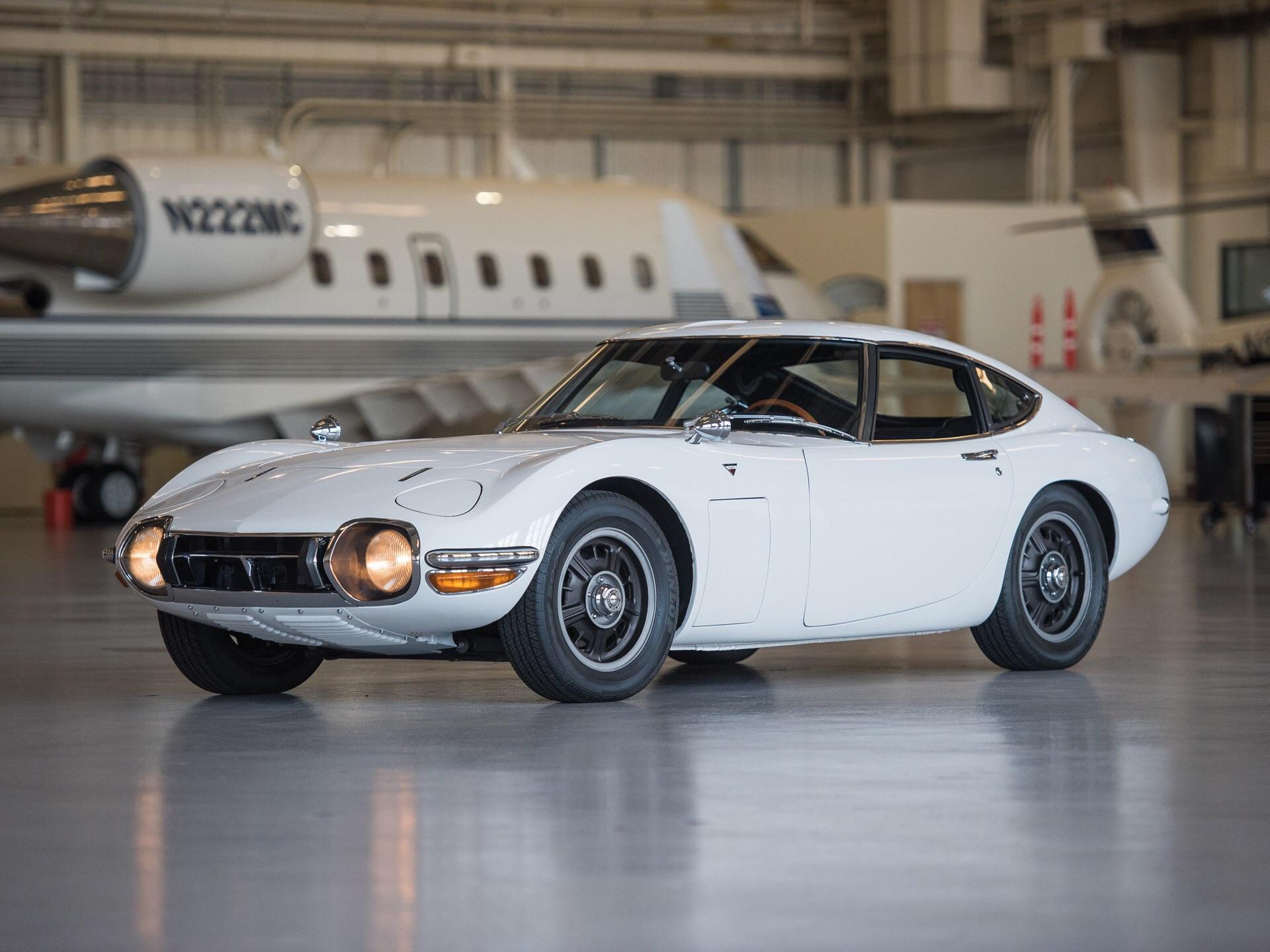
The 1967 Toyota 2000GT stands as a landmark achievement in automotive history, marking the moment Japan proved it could build a world-class luxury sports car. Developed in collaboration with Yamaha and designed by Satoru Nozaki, it features a stunning fastback silhouette defined by an ultra-low stance, pop-up headlights, a double-bubble roof, and seamlessly integrated front driving lamps. Its proportions are long, low, and tightly sculpted, combining European grand tourer elegance with a distinctly minimalist Japanese design language.
Introduced in the mid-1960s, the 2000GT shattered global perceptions of Japanese cars as purely practical machines. It became the country’s first true supercar, capable of competing with icons like the Porsche 911 and Jaguar E-Type. Built on a lightweight X-braced chassis with independent double-wishbone suspension, it paired advanced engineering with a Yamaha-tuned 2.0-liter inline-six producing 148 horsepower. A five-speed manual gearbox, limited-slip differential, and four-wheel disc brakes gave it remarkable balance and control for its era.
Only 351 units were hand-built between 1967 and 1970, making it exceptionally rare and highly valuable today, often reaching seven-figure auction prices. Its fame was further elevated by its appearance in the James Bond film You Only Live Twice, which cemented its global cultural status.
Despite its modest displacement, the engine’s high-revving nature and lightweight 1120 kg body delivered lively performance, including over 125 mph real-world capability and strong endurance records at Japan’s Yatabe proving ground. Road testers praised its neutral handling, precise steering, and surprising stability at speed.
Inside, the cabin blends wood trim, analog gauges, and functional simplicity, reflecting a driver-focused philosophy. On the road, the 2000GT offers direct steering feedback, engaging throttle response, and a mechanical purity increasingly rare in modern cars.
Beyond its rarity and beauty, the 2000GT remains a defining symbol of Japan’s rise in the global performance car world, admired as much for its elegance as for its engineering brilliance.
- Engine: 2.0-liter (1,988 cc) 3M inline-six engine with Yamaha-designed DOHC aluminum cylinder head
- Horsepower: 150 hp @ 6,600 rpm (110 kW / 150 PS)
- Torque: 130 lb-ft @ 5,000 rpm (177 N·m)
- Length: 4,175 mm (164.4 in)
- Width: 1,600 mm (63.0 in)
9. 1964 Lincoln Continental
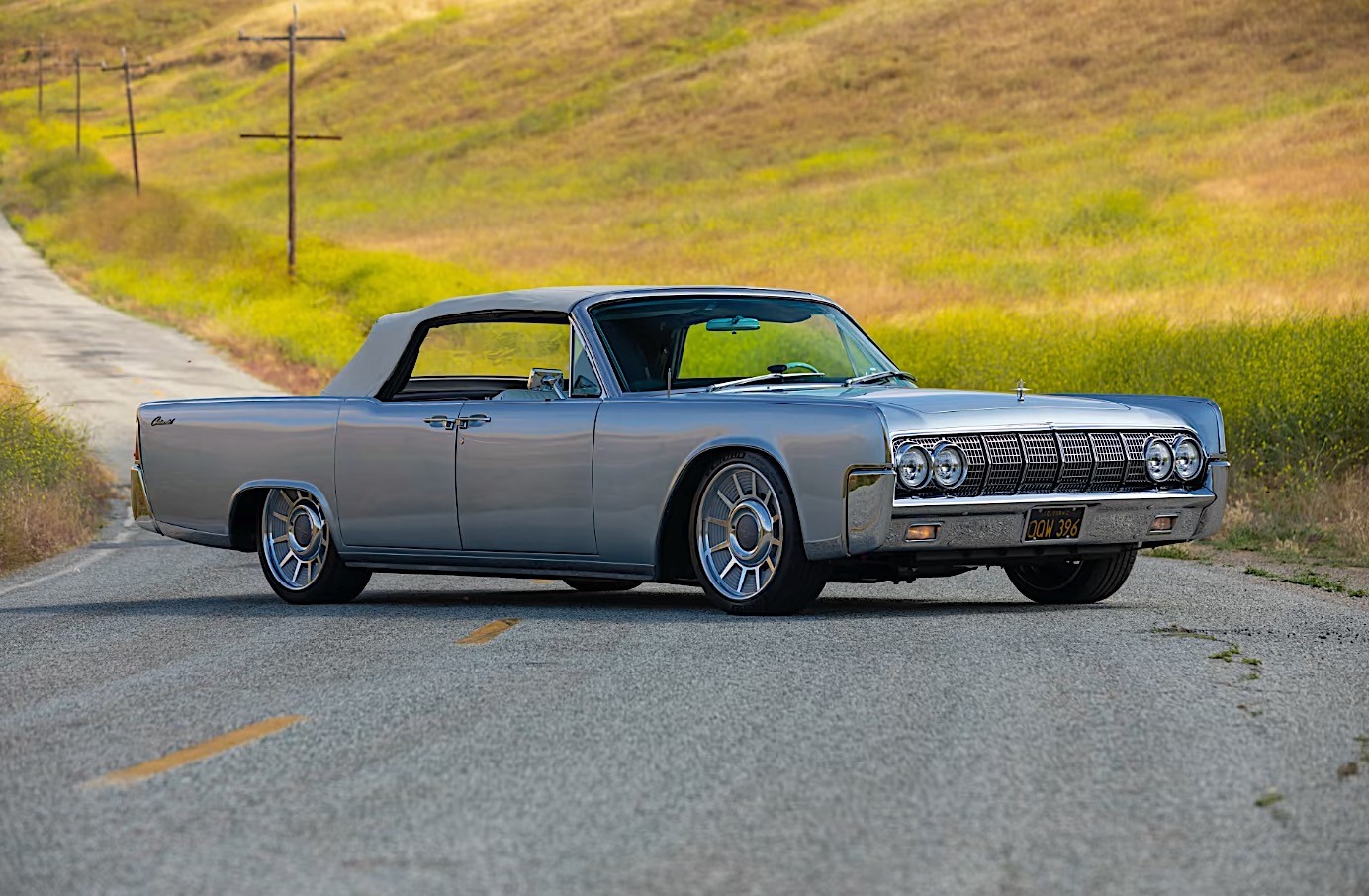
The 1964 Lincoln Continental represents the peak of understated American luxury design, defined by Elwood Engel’s clean and disciplined styling that replaced the heavy chrome and tailfins of the 1950s with smooth slab-sided panels and sharp, straight proportions.
Its long, low, and wide stance gives it a formal, presidential presence, while the signature center-opening “suicide doors” create one of the most dramatic and elegant entry experiences ever offered in a production car. This design established a new identity for Lincoln, emphasizing restraint and sophistication over flamboyance.
The 1964 update refined the original 1961 concept with a longer wheelbase that improved rear seat space, a wider roof for greater cabin comfort, and a redesigned dashboard that shifted the interior from a personal coupe feel to a more traditional luxury sedan layout. High-quality leather upholstery, spacious seating, and improved ergonomics reinforced its role as a true executive transport. Despite its size and weight, the Continental delivered a smooth and quiet ride that prioritized comfort over aggression.
Power came from a 430 cubic inch V8 producing 320 horsepower, paired with a Lincoln automatic transmission. While not particularly fast compared to rivals like Cadillac, its performance was adequate for its era, with relaxed acceleration and a focus on effortless cruising. The car’s substantial 5700-pound curb weight contributed to its calm highway demeanor, though it limited outright speed and fuel efficiency, averaging around 9 to 12 miles per gallon.
Inside, the Continental offered premium materials, refined trim, and a horizontally styled dashboard that reinforced its elegant character. Comfort and space were central to its design philosophy, making it a favorite among executives and public figures.
With its combination of minimalist design, cultural prestige, and smooth road manners, the 1964 Lincoln Continental remains a defining symbol of American luxury, representing an era when elegance meant simplicity, presence, and quiet authority rather than visual excess or performance theatrics.
- Engine: 7.0-liter (430 cu in) MEL OHV V8
- Horsepower: 320 hp @ 4,600 rpm
- Torque: 465 lb-ft @ 2,600 rpm
- Length: 5,494 mm (216.3 in)
- Width: 1,996 mm (78.6 in)
10. 1969 Chevrolet Camaro Z/28
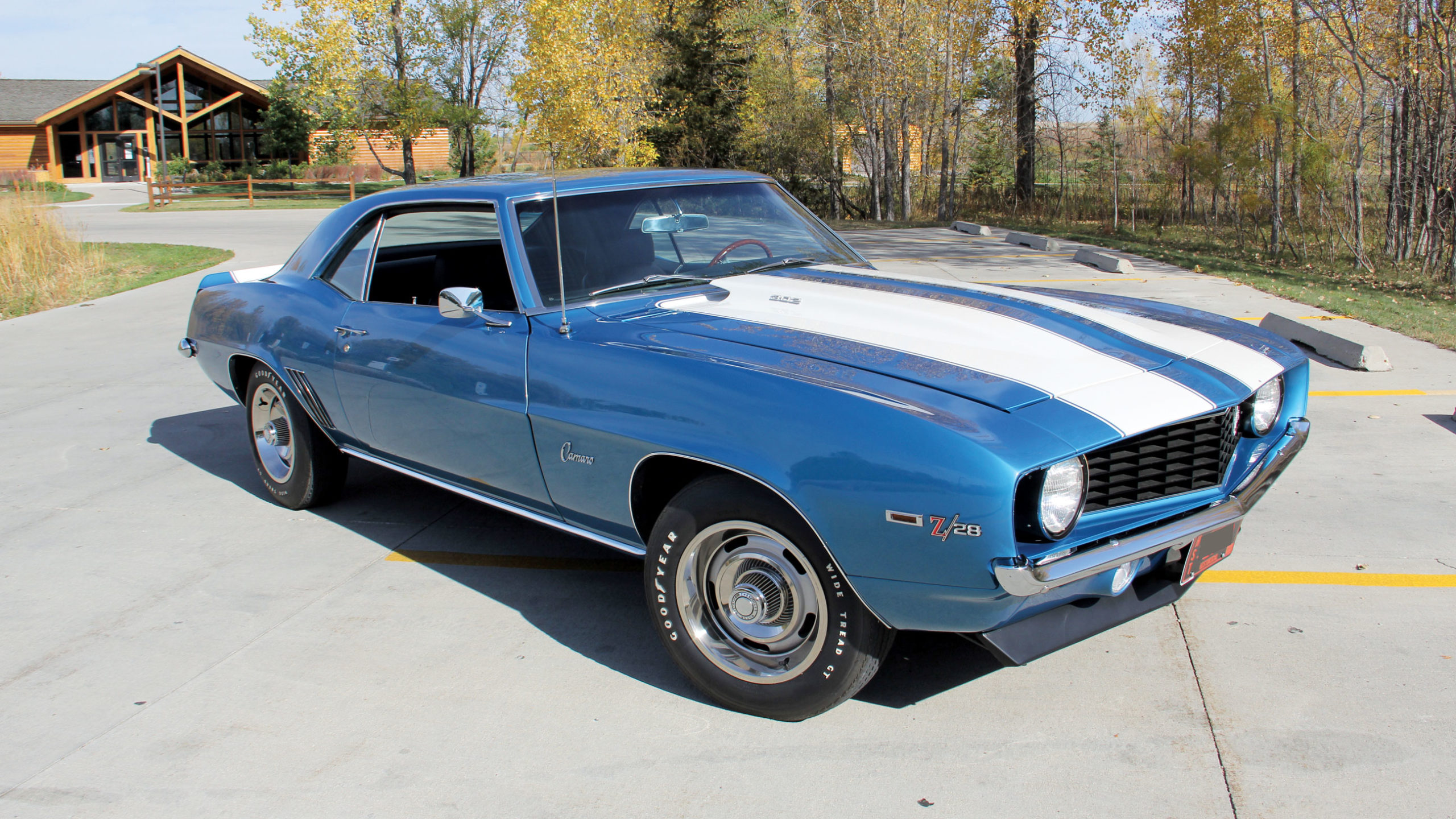
The 1969 Chevrolet Camaro Z/28 represents the pinnacle of first-generation American pony car design, blending aggressive styling with genuine race-bred engineering. Its sculpted “Coke-bottle” body, recessed grille, cowl-induction hood, and integrated spoilers create a low, wide, and athletic stance that looks purpose-built for speed while still maintaining clean, balanced proportions. It remains one of the most iconic muscle car shapes ever produced, admired for its toughness and visual harmony.
The Z/28 was born from the fierce Pony Car Wars of the 1960s, when Chevrolet developed the Camaro to challenge Ford’s Mustang in both showrooms and motorsports. Its true identity was forged in the SCCA Trans-Am racing series, where Chevrolet built a homologation special designed to compete in the 5.0-liter class.
Engineers created the legendary 302 cubic-inch V8 by combining elements of Chevrolet’s 283 and 327 engines, producing a high-revving small-block built for sustained racing performance. Officially rated at 290 horsepower, it realistically delivered over 375 horsepower and thrived in the upper rpm range, making it a pure competition engine adapted for the street.
Supporting the engine was a close-ratio four-speed manual transmission, heavy-duty suspension tuning, quick steering, and a performance-oriented axle ratio, all reinforcing its race-first philosophy. Optional equipment like cross-ram intake systems and cowl-induction hoods further enhanced its track capability, even if they made street driving less practical.
Although initially overlooked at launch, the Z/28 gained momentum as Chevrolet embraced its racing success. Dominating the Trans-Am series under the Penske team, it evolved into both a motorsport champion and a street performance icon. By 1969, sales had surged as enthusiasts recognized its capability and heritage.
Today, the Camaro Z/28 stands as a defining symbol of 1960s American performance culture, combining raw engineering ingenuity, motorsport dominance, and one of the most recognizable muscle car designs ever created.
- Engine: 5.0-liter (302 cu in) V8
- Horsepower: 290 hp @ 5,800 rpm (factory rating)
- Torque: 290 lb-ft @ 4,200 rpm (factory rating)
- Length: 4,724 mm (186.0 in)
- Width: 1,880 mm (74.0 in)
Also read: 5 Cars With Quiet Belt Tensioners vs 5 That Squeal Every Cold Morning