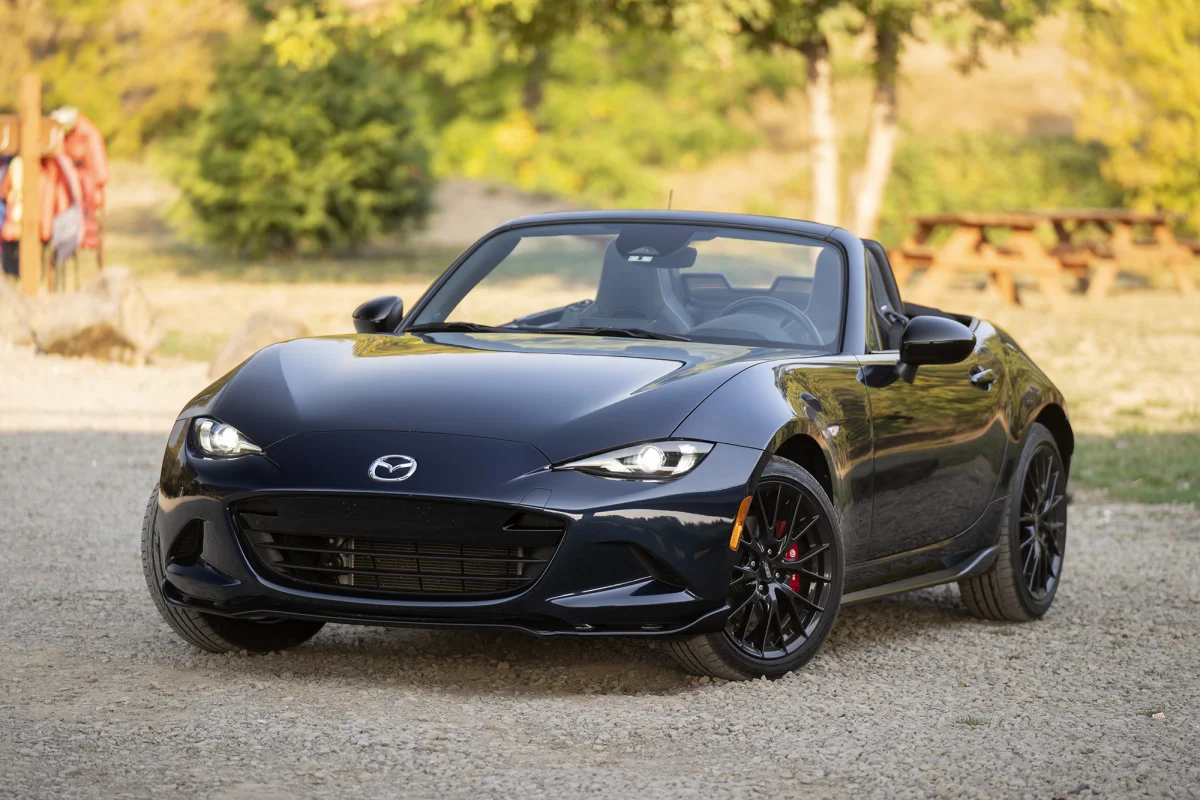
Manual transmissions are disappearing quickly in 2026, yet a small group of performance-focused cars continues to preserve the three-pedal experience. These models stand out not because they are the fastest or most technologically advanced, but because they keep driving engagement at the center of their identity.
From lightweight roadsters and affordable sport sedans to turbocharged hot hatches, rugged pickups, and high-end performance icons, each vehicle on this list represents a different interpretation of what it means to stay connected to the road. Some prioritize precision and balance, others emphasize power or versatility, but all share a commitment to driver involvement that automatics and dual-clutch systems cannot fully replicate.
In a market increasingly shaped by automation and electrification, these manual-equipped machines have become rare exceptions. They appeal to enthusiasts who still value timing, clutch control, and mechanical feedback as part of the driving experience, making them some of the most characterful new cars available today.
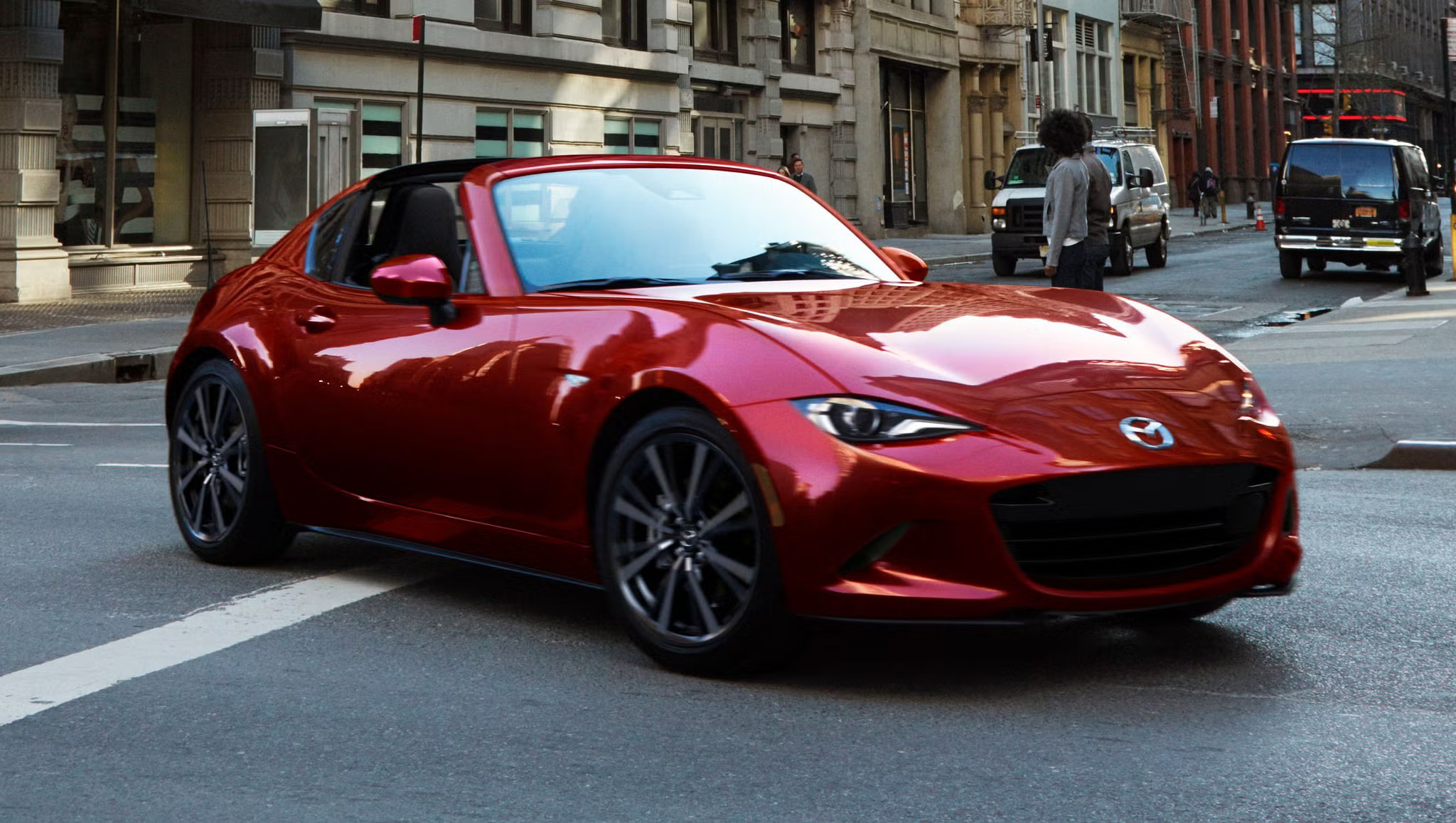
1. 2026 Mazda MX-5 Miata
The Mazda MX-5 Miata continues its long-standing mission of delivering an unfiltered and engaging driving experience. Instead of chasing heavy technology trends or extreme power figures, it focuses on light weight, balance, and driver connection. This approach keeps the Miata true to its roadster roots while still offering modern usability and refinement for everyday driving.
At the center of the experience is a 2.0-liter Skyactiv-G four-cylinder engine producing 181 horsepower and 151 lb-ft of torque. While not class-leading in raw output, the Miata’s sub-2,500-pound weight makes the performance feel energetic and responsive. Acceleration is smooth and predictable, with a linear power delivery that encourages drivers to explore higher rev ranges. Rear-wheel drive and a near-perfect 50/50 weight distribution contribute to its neutral handling, allowing the car to rotate easily through corners with confidence and control.
Transmission choice plays a major role in the driving character. The six-speed manual is widely considered the best match for the Miata, offering short, precise shifts and a connected feel between driver and machine. The automatic option adds convenience but reduces engagement and slightly increases weight, making it less appealing for enthusiasts.
Buyers can choose between two body styles. The Soft Top is lighter, simpler, and more focused on pure driving dynamics, with quick manual operation that enhances everyday usability. The RF retractable fastback adds a more insulated cabin and coupe-like appearance, improving comfort and refinement at the cost of added weight and complexity.
The Miata lineup includes three trims: Sport, Club, and Grand Touring. Sport emphasizes simplicity and lightweight purity. Club adds performance upgrades like Bilstein dampers and available Brembo brakes for track-focused driving. Grand Touring blends comfort and technology with features such as leather seating, navigation, and advanced safety systems while still preserving strong driving dynamics.
Inside, updated technology includes an 8.8-inch display with Apple CarPlay, Android Auto, and Alexa integration. Despite these modern additions, the cabin remains driver-focused, with intuitive controls and a tachometer positioned prominently to reinforce its performance-first philosophy.
- Engine: 2.0L SKYACTIV-G Inline-4 (naturally aspirated)
- Horsepower: 181 hp @ 7,000 rpm
- Torque: 151 lb-ft @ 4,000 rpm
- Length: 154.1 in (3.91 m)
- Width: 68.3 in (1.73 m)
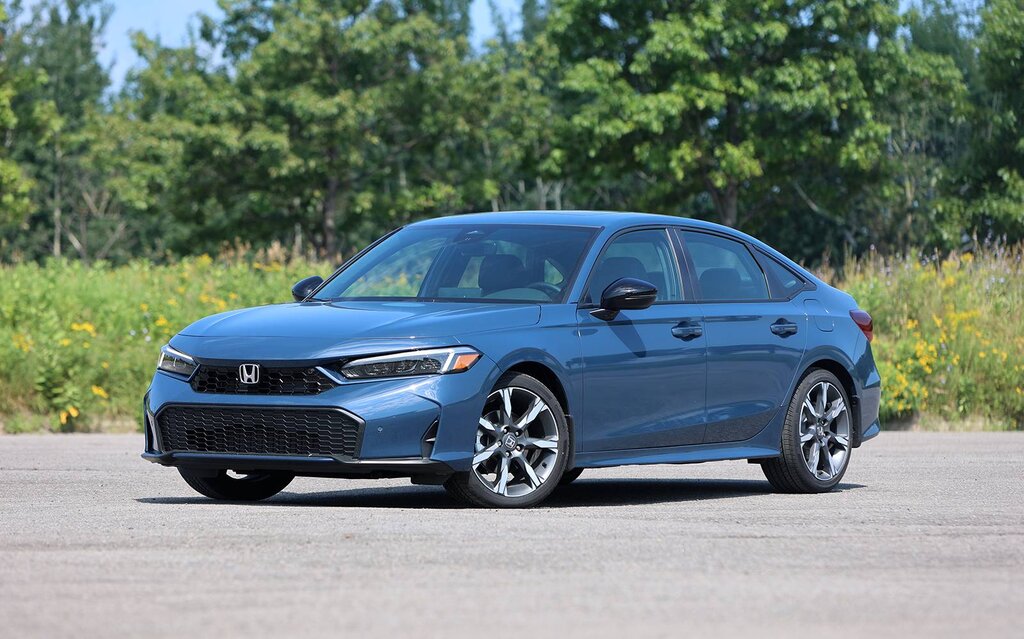
2. 2026 Honda Civic Si
The Honda Civic Si continues to serve as one of the most accessible performance sedans for driving enthusiasts who want engagement without the high cost of a full performance model. Positioned below the more extreme Civic Type R, the Civic Si offers a balanced mix of everyday comfort, sporty handling, and a strong focus on driver involvement at a starting price of about $30,995 to $32,690.
Power comes from a 1.5-liter turbocharged four-cylinder engine producing 200 horsepower and 192 lb-ft of torque. While not designed for outright speed dominance, the engine delivers smooth, usable performance suited for both city driving and spirited backroad runs. Front-wheel drive is standard, and acceleration to 60 mph takes about 6.8 seconds, which is more than adequate for real-world driving situations.
A major highlight of the Civic Si is its six-speed manual transmission, which is the only gearbox offered. It is widely praised for its short, precise throws and satisfying mechanical feel, making it one of the best manual experiences in its price range. A limited-slip differential further improves traction and cornering ability, allowing the car to put power down effectively when exiting turns. Features like automatic rev-matching can also assist newer drivers while still allowing full manual control for enthusiasts.
Chassis tuning plays a key role in the Si’s character. Compared to standard Civic models, it features a stiffer suspension setup and upgraded brakes, improving handling response and confidence during aggressive driving. Despite its sportier setup, it remains comfortable enough for daily commuting, striking a practical balance between performance and usability.
Inside, the Civic Si is well-equipped for its price point. Standard features include heated front seats, automatic climate control, a power moonroof, a leather-wrapped steering wheel, and supportive sport seats. Technology is also strong, with Apple CarPlay, Android Auto, and a suite of safety features such as adaptive cruise control, lane assistance, blind spot monitoring, and collision mitigation systems.
The Civic Si is designed for drivers who want a fun, manual-focused performance sedan that remains practical, efficient, and affordable. It does not aim to match the extreme performance of the Type R, but instead delivers a more approachable and versatile driving experience that works equally well on daily roads and spirited weekend drives.
- Engine: 1.5L turbocharged inline-4
- Horsepower: 200 hp @ 6,000 rpm
- Torque: 192 lb-ft @ 1,800–5,000 rpm
- Length: 184.0 in (4.67 m
- Width: 70.9 in (1.80 m)
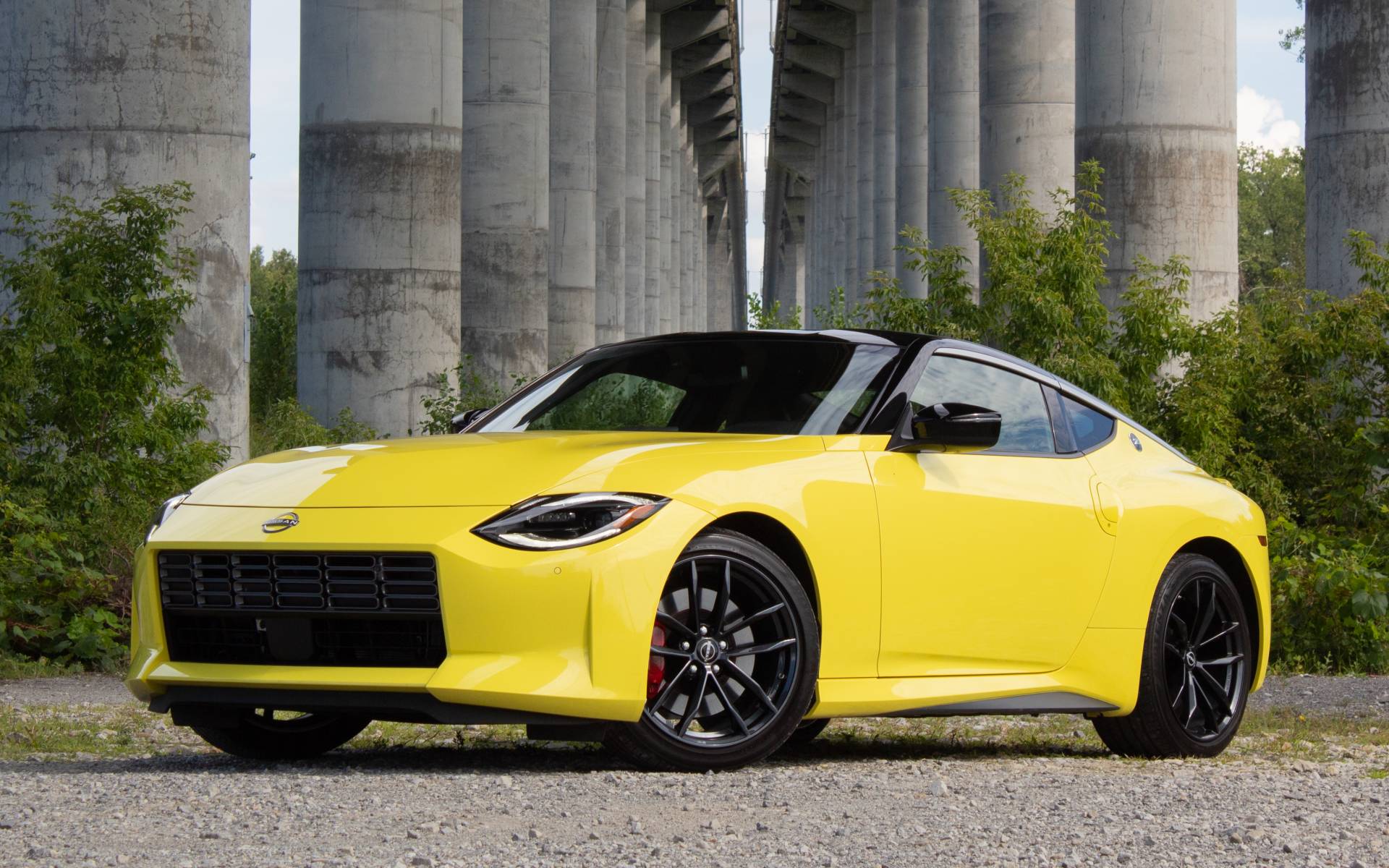
3. 2026 Nissan Z
The Nissan Z stands out as a rear-wheel-drive two-seat sports coupe that blends modern turbocharged performance with a classic manual transmission experience. Priced from about $44,165, it is powered by a 3.0-liter twin-turbo V6 producing around 400 to 420 horsepower depending on configuration. Power is sent to the rear wheels, reinforcing its traditional sports car character and delivering strong straight-line acceleration along with engaging cornering dynamics.
One of the biggest talking points is the availability of a six-speed manual transmission, which significantly improves driver engagement compared to the previously criticized automatic option. The manual version refines the Z’s personality by offering a more direct connection between driver and machine, with a shorter shift throw and improved mechanical feel. While not class-leading in precision compared to rivals like performance-oriented compact sports cars, it still marks a meaningful step up in involvement and excitement.
The NISMO variant of the Z further elevates performance with track-focused enhancements. It includes upgraded brakes inspired by GT-R technology, improved cooling, lightweight components, and stickier factory tires designed for sustained grip under aggressive driving. Suspension tuning has also been refined to improve balance and predictability at high speeds, while steering updates reduce friction and improve feedback, making the car more communicative and precise during cornering.
On track, the NISMO version demonstrates strong endurance and stability. Braking performance remains consistent even under repeated hard use, while chassis upgrades help maintain composure in high-speed corners. The car is engineered with track-first intent, featuring added structural rigidity, extra spot welds, and reinforced systems to handle sustained performance driving.
Despite its performance focus, the interior remains functional for everyday use. Sport bucket seats provide strong support during aggressive driving, while updated features like wireless phone charging improve convenience. However, some materials and design choices remain minimalist to prioritize weight reduction and performance.
The engine itself retains its output figures but benefits from improved throttle response and tuning refinements that enhance drivability. Exhaust sound is cleaner and less theatrical than earlier automatic versions, focusing more on natural engine tone and intake induction.
The Nissan Z with the manual transmission, especially in NISMO form, delivers a compelling mix of old-school driving engagement and modern turbocharged performance. It is best suited for enthusiasts who value track capability and hands-on driving feel over luxury or refinement, positioning it as a focused and rewarding sports coupe in its segment.
- Engine: 3.0L twin-turbo V6 (VR30DDTT) / NISMO-tuned 3.0L twin-turbo V6
- Horsepower: 400 hp (Sport/Performance/Heritage) / 420 hp (NISMO)
- Torque: 350 lb-ft (Sport/Performance/Heritage) / 384 lb-ft (NISMO)
- Length: 172.4 in (4.38 m) / 173.2 in (NISMO)
- Width: 72.6 in (1.85 m) / 73.6 in (NISMO)
4. 2026 Hyundai Elantra N
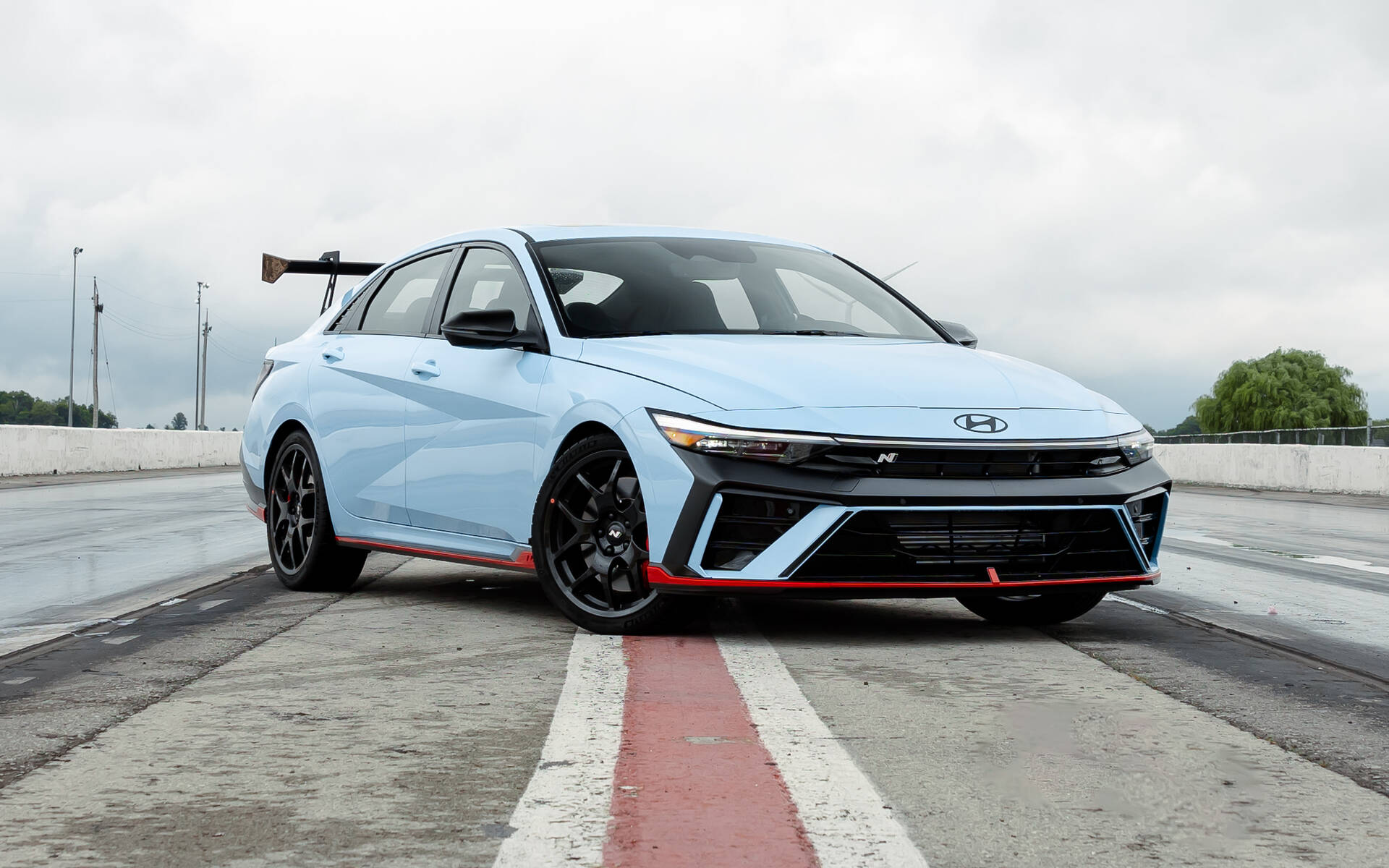
The Hyundai Elantra N continues to serve as Hyundai’s core internal combustion performance sedan, especially after the discontinuation of the Veloster N and Kona N. Priced at around $36,345, it carries the responsibility of keeping the N division’s enthusiast-focused identity alive alongside the electric Ioniq 5 N. It remains one of the few modern performance sedans still offering a six-speed manual transmission, reinforcing its appeal to driving purists.
Power comes from a turbocharged 2.0-liter four-cylinder engine producing 276 horsepower, with a temporary boost to 286 horsepower in dual-clutch automatic models via the N Grin Shift function. Buyers can choose between the six-speed manual or an eight-speed wet dual-clutch automatic, both sending power to the front wheels. The manual emphasizes engagement, while the automatic delivers quicker acceleration, reaching 0 to 60 mph in as little as 4.8 seconds compared to 6.1 seconds for the manual.
Despite its performance focus, the Elantra N is also practical. It offers competitive rear-seat space, even exceeding some rivals like the Honda Civic Type R, and a 14-cubic-foot trunk capable of handling everyday cargo needs. The cabin is designed with a sporty layout featuring bolstered seats, metal pedals, and driver-focused ergonomics, while two 10.3-inch displays handle instrumentation and infotainment duties.
Technology includes wireless charging, Apple CarPlay and Android Auto connectivity, and an 8-speaker Bose audio system. However, smartphone integration requires a wired connection, which slightly reduces convenience compared to some competitors. Safety equipment is strong, with standard features such as automatic emergency braking, blind-spot monitoring, and lane-keeping assist, though adaptive cruise control is not included.
On the road and track, the Elantra N is known for sharp handling, strong steering feedback, and an engaging exhaust note. It has also proven its capability in performance testing, outperforming some more expensive rivals in acceleration and track environments. Fuel economy is moderate for the segment, with up to 29 mpg highway for manual models and 27 mpg for automatics.
Hyundai further strengthens its appeal with one of the best warranties in the industry, including a 10-year or 100,000-mile powertrain warranty and three years of complimentary maintenance. The Elantra N blends affordability, performance, and everyday usability while maintaining a strong commitment to manual transmission driving enjoyment.
- Engine: 2.0L turbocharged inline-4
- Horsepower: 276 hp (standard) / up to 286 hp (N Grin Shift)
- Torque: 289 lb-ft
- Length: 185.4 in (4.71 m)
- Width: 71.9 in (1.83 m)
Also read: 10 Cars Where the Cheaper Option Was Always the Smarter One
5. 2026 Toyota GR Corolla
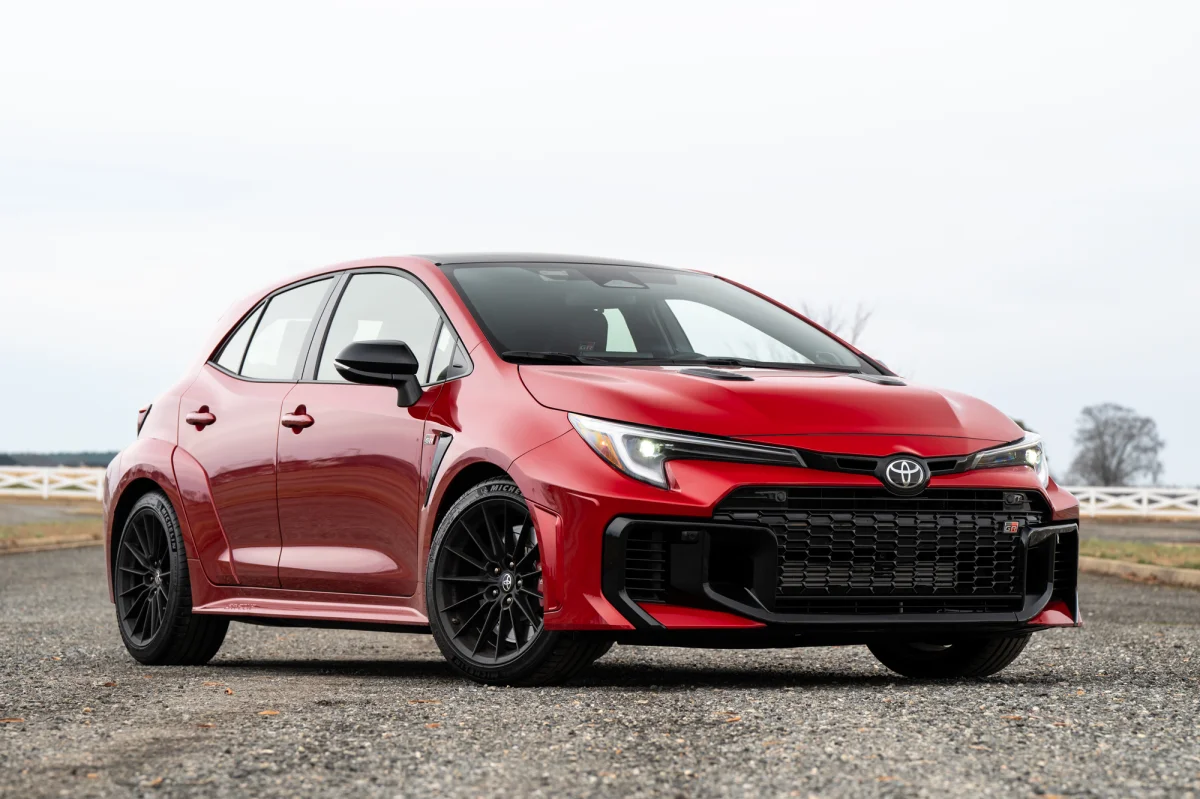
The 2026 Toyota GR Corolla is a rally-inspired hot hatch built around a 1.6-liter turbocharged three-cylinder engine producing 300 horsepower and 295 lb-ft of torque.
Power is delivered through Toyota’s GR-Four all-wheel-drive system, paired with a six-speed manual transmission that remains the preferred choice for enthusiasts, alongside an optional automatic. The manual version reaches 0–60 mph in about 4.7 seconds and delivers strong real-world usability, with responsive midrange power and steady pull across the rev range.
On the road, its strongest attribute is chassis performance. The steering stands out as exceptionally precise and well-weighted, offering a level of feedback and natural response that places it near the top of its class.
Grip levels are extremely high, and the AWD system distributes power in a way that allows the car to charge through corners with confidence, even on uneven surfaces. This makes it highly effective on tight, technical roads where traction and balance matter most. Fuel efficiency remains reasonable for the performance on offer, returning around 26 mpg in normal driving conditions.
The exterior design carries clear rally influences, especially in bold colors like Supersonic Red, where the widened fenders, aggressive stance, and carbon roof create a strong visual identity. The proportions communicate intent effectively, though certain elements, such as the triple-exit exhaust, feel less resolved in execution.
Inside, the GR Corolla reveals its origins as a mainstream compact. The sport seats are supportive and well-designed, but the dashboard and cabin layout lack visual excitement or premium character. This contrast creates a disconnect between the dynamic driving experience and the interior environment.
The six-speed manual transmission is easy to operate and smooth, but it does not match the precision or mechanical weight found in rivals like the Honda Civic Type R. Gear throws feel long, and the clutch is light, reducing mechanical engagement. Meanwhile, the GR-Four AWD system delivers remarkable stability and traction, but its high grip threshold limits playful driving on public roads, making it difficult to explore its more dynamic behavior outside track conditions.
The GR Corolla delivers strong capability and engineering depth, yet its calm, composed nature and basic interior reduce emotional impact. While it outperforms competitors like the Volkswagen Golf R in engagement and performance, it does not generate the same sense of occasion or driver drama found in alternatives such as the Civic Type R.
- Engine: 1.6L turbocharged inline-3 (G16E-GTS)
- Horsepower: 300 hp @ 6,500 rpm
- Torque: 295 lb-ft (400 N·m) @ 3,250–4,600 rpm
- Length: 173.6 in (4.41 m)
- Width: 72.8 in (1.85 m)
6. 2026 Toyota Tacoma
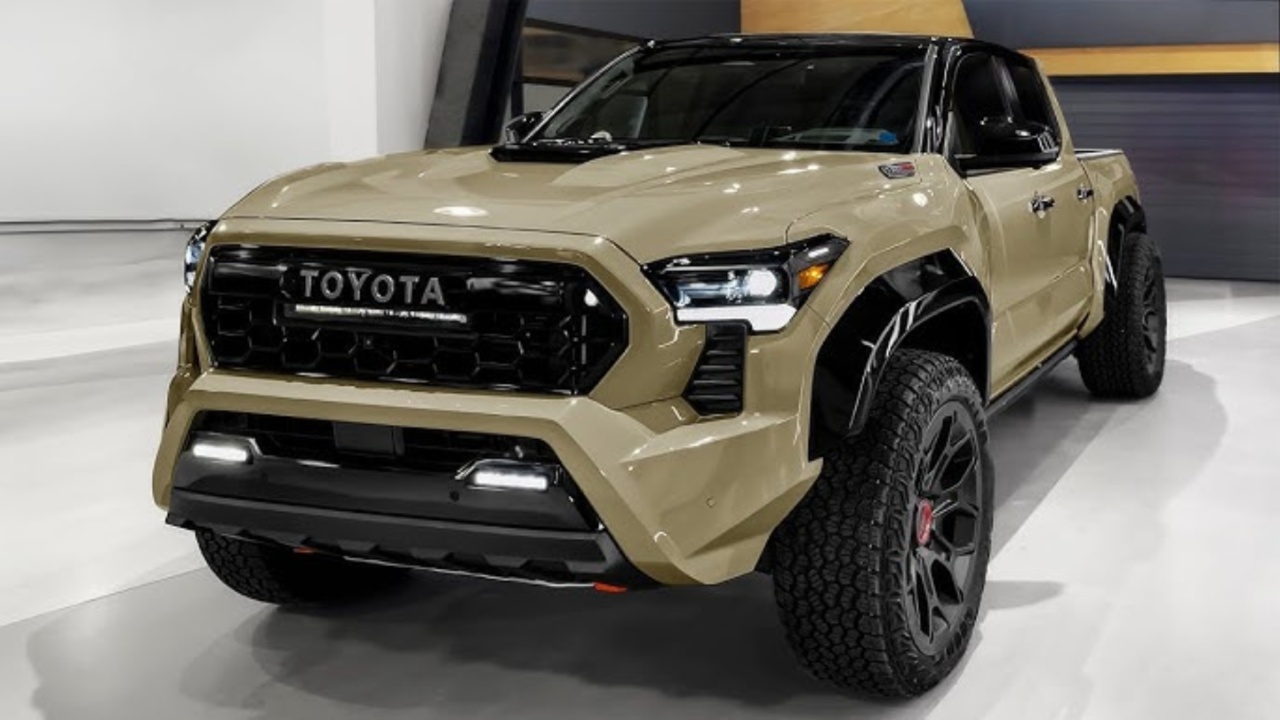
The 2026 Toyota Tacoma continues to stand out in today’s truck market by offering one of the last remaining manual transmissions in a new pickup. The six-speed manual is available only in specific configurations: a Double Cab with four-wheel drive, paired with either the SR, TRD Sport, or TRD Off-Road trims. It is matched to a turbocharged 2.4-liter four-cylinder engine producing around 270 horsepower and 310 lb-ft of torque, depending on configuration.
This rarity has made the manual Tacoma a focal point of debate among enthusiasts. For some, it represents a refreshing commitment to driver engagement in a segment increasingly dominated by automatics. For others, it feels like an outdated choice that struggles to justify itself in daily traffic conditions. Its limited availability further reinforces its status as a niche option rather than a mainstream configuration.
Toyota positions the manual transmission as a modernized system rather than a purely old-school setup. It includes features like rev-matching and stall prevention, designed to make shifting smoother in everyday driving while still preserving a hands-on experience. This balance aims to keep the manual relevant without removing its core mechanical interaction.
On the road, the manual Tacoma transforms ordinary driving into a more active experience. Gear changes require deliberate input, making even routine commutes feel more involved. In stop-and-go traffic, however, that engagement can become tiring, especially for drivers who prioritize convenience. The contrast becomes even clearer when used for weekend activities, where the added control feels more rewarding on backroads or when carrying gear for outdoor trips.
Toyota also highlights usability features such as no-clutch start capability, which helps reduce rollback in low-speed or off-road situations. This small but useful detail supports drivers in challenging conditions where precise control matters.
Compared to its automatic counterpart, the manual version produces slightly lower output in some trims, reinforcing its focus on engagement rather than outright performance. The trade-off reflects Toyota’s intent: this is not the quickest Tacoma, but the most interactive one.
The 2026 Tacoma manual exists as a deliberate choice for drivers who still value physical connection with their vehicle. It is best suited for those who enjoy shifting gears, prefer a more mechanical driving feel, and are willing to trade convenience for involvement. In a market where manual pickups are disappearing, this configuration stands as one of the final opportunities to buy a new truck with a traditional three-pedal setup.
- Engine: 2.4L turbocharged inline-4 (SR) / 2.4L turbocharged inline-4 (mid/upper trims) / 2.4L i-FORCE MAX hybrid turbo inline-4
- Horsepower: 228 hp (SR) / 270–278 hp (mid/upper trims) / 326 hp (i-FORCE MAX)
- Torque: 243 lb-ft (SR) / 310–317 lb-ft (mid/upper trims) / 465 lb-ft (i-FORCE MAX)
- Length: 213.0–226.2 in (5.41–5.75 m)
- Width: 76.9 in (1.95 m)
7. 2026 Porsche 911
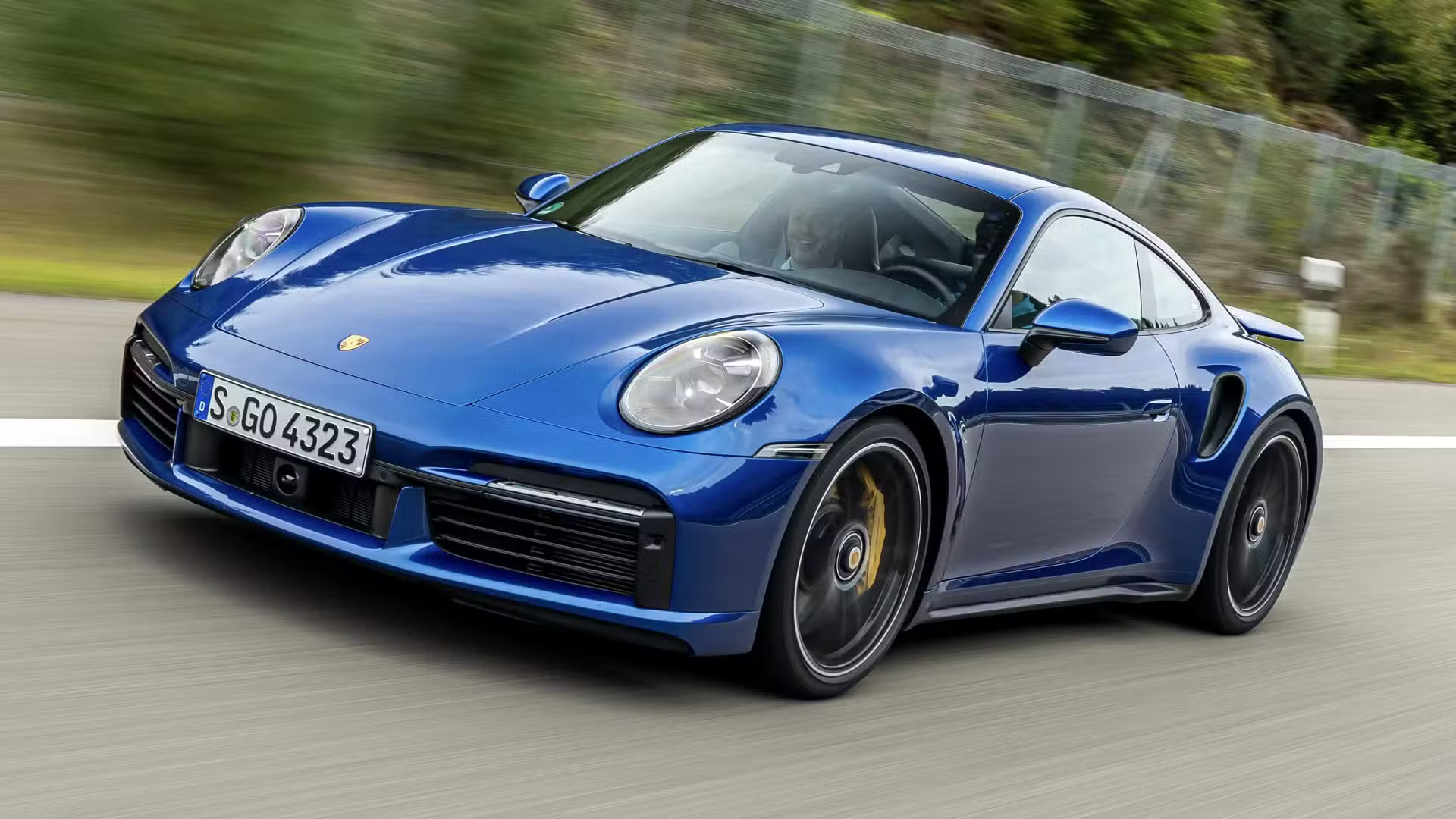
The 2026 Porsche 911 continues to offer a manual transmission, but only in two performance-focused variants: the Carrera T and the GT3. The Carrera T pairs a six-speed manual with a 388-hp twin-turbo flat-six, while the GT3 combines it with a 502-hp naturally aspirated engine. Both are slower in straight-line performance compared with Porsche’s PDK dual-clutch versions, yet they deliver a more involving and connected driving experience that remains central to their appeal.
Manual transmissions are becoming increasingly rare due to declining global demand and the industry-wide shift toward automatics. Porsche continues to support them based on regional buying patterns. In Europe, manual take rates are extremely low, often around 2–3 percent, which creates supply and production challenges. In contrast, the United States shows far stronger interest, with some past 911 variants seeing manual take rates near 50 percent. This difference makes North American buyers especially important in keeping manual 911 models viable.
To maintain interest, Porsche has concentrated manual availability in enthusiast-oriented trims such as the Carrera T, which emphasizes sharper responses and a more mechanical driving feel. Engineers refine components like shift linkage and gate precision to preserve engagement while ensuring everyday usability remains intact. This allows the manual 911 to remain relevant despite the dominance of faster automatic systems.
Even with this commitment, future integration of manual gearboxes becomes increasingly difficult as electrification expands. Porsche has indicated that hybridized models, including future Turbo variants, are unlikely to feature manual transmissions. The technical demands of hybrid systems make pairing them with traditional gearboxes far more complex, and Porsche has chosen not to pursue that path.
Looking ahead, manual 911 models are expected to continue, but in more limited or special-edition roles. Strong enthusiast demand, particularly in regions like California where convertible 911s are part of a lifestyle identity, still plays a meaningful role in product planning. Porsche has emphasized the importance of listening to customer preferences while balancing engineering practicality.
The 911 remains one of the strongest candidates to preserve a manual gearbox due to its heritage and loyal following. However, as technology evolves and performance priorities change, manual versions are likely to become increasingly rare, reserved for select trims rather than standard offerings.
- Engine: 3.0L twin-turbo flat-6 (Carrera/Carrera S) / 3.6L turbo hybrid flat-6 (GTS) / 4.0L naturally aspirated flat-6 (GT3/GT3 RS) / 3.6L twin-turbo T-Hybrid flat-6 (Turbo S)
- Horsepower: 388 hp (Carrera/Carrera T) / 473 hp (Carrera S/4S) / 532 hp (GTS) / 502–518 hp (GT3/GT3 RS) / 701 hp (Turbo S)
- Torque: 331 lb-ft (Carrera/Carrera T & GT3) / 390 lb-ft (Carrera S/4S) / 449 lb-ft (GTS) / 590 lb-ft (Turbo S)
- Length: 177.9 in (4.52 m)
- Width: 72.9 in (1.85 m)
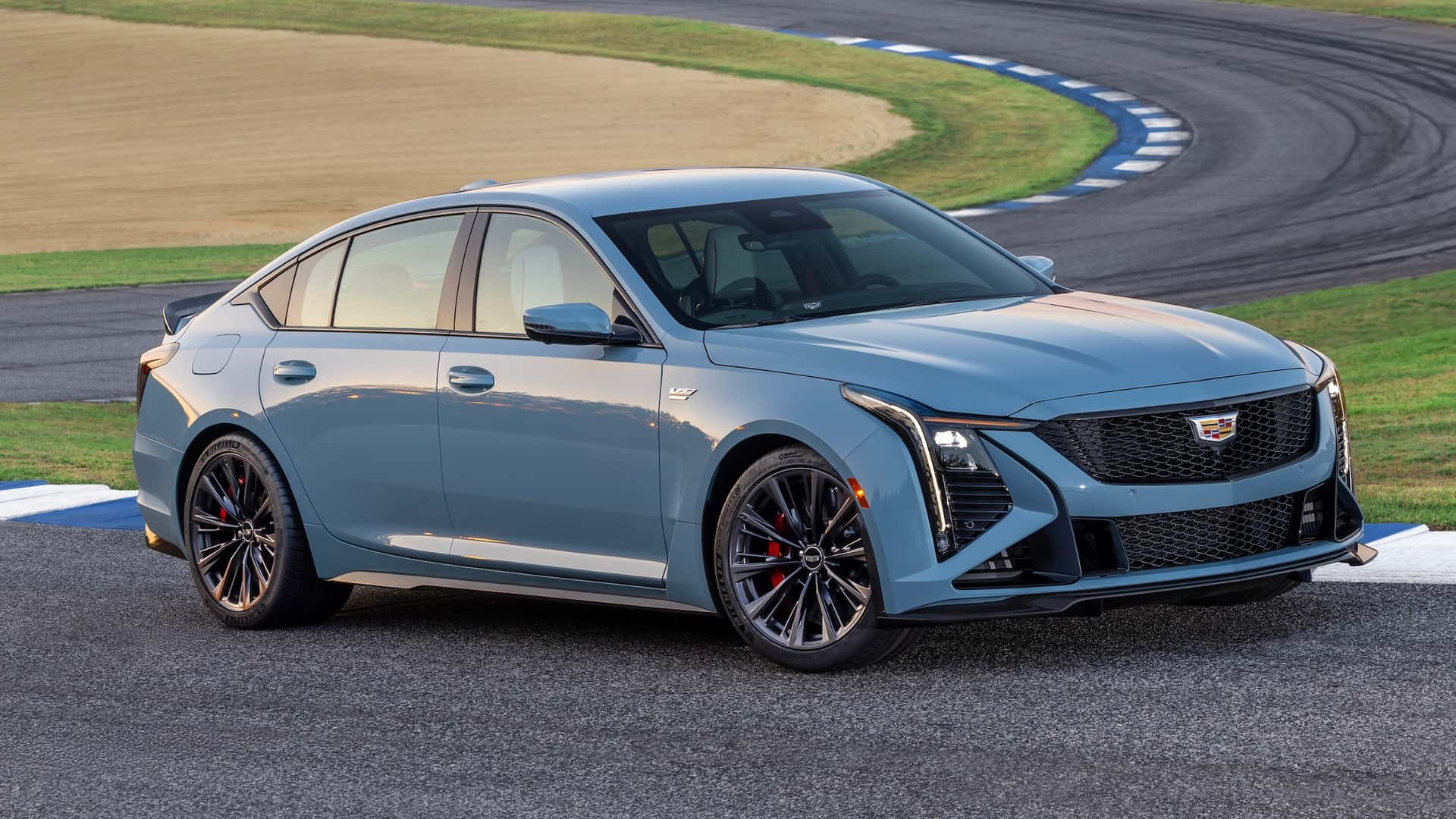
8. 2026 Cadillac CT5-V Blackwing
The 2026 Cadillac CT5-V Blackwing represents one of the final expressions of the traditional American performance sedan. Powered by a 6.2-liter supercharged V8 producing 668 horsepower and 659 lb-ft of torque, it delivers extreme performance through rear-wheel drive and an available six-speed manual transmission. While a 10-speed automatic is also offered, the manual version remains the enthusiast favorite, offering a level of driver engagement increasingly rare in modern high-performance cars.
At the heart of the manual experience is the Tremec TR-6060 gearbox, a well-regarded transmission used across numerous high-performance American vehicles over the past two decades, including the Chevrolet Camaro, Corvette, and Dodge Challenger. Built with durability and precision in mind, it features a lightweight aluminum housing and advanced synchronizers that allow smooth, reliable shifts even under high torque loads. Its reputation has made it a benchmark for V8 manual performance cars.
The CT5-V Blackwing combines this transmission with a chassis designed for serious performance. It features Brembo brakes, magnetic ride control, and advanced performance tracking systems, allowing it to compete with high-end European sedans while maintaining a more analog driving character. Despite its size and power, it can accelerate from 0–60 mph in about 3.4 seconds and reach speeds beyond 200 mph.
One of its defining traits is the balance between raw power and driver control. The manual transmission, paired with features like no-lift-shift capability, allows drivers to stay fully engaged even under hard acceleration. The long but manageable clutch and strong torque output make it accessible while still rewarding skillful driving.
However, the model is nearing the end of its production run, with Cadillac confirming 2026 as its final year. The decision reflects broader industry trends, where tightening emissions regulations, increased automation, and customer preference for automatic transmissions have reduced demand for manuals. Even so, reports suggest nearly half of Blackwing buyers still choose the manual, highlighting its strong enthusiast following.
As one of the last V8-powered, rear-wheel-drive sedans with a manual gearbox, the CT5-V Blackwing stands as a modern classic in the making. Its combination of power, precision, and driver involvement marks the close of an era defined by mechanical engagement and unfiltered performance.
- Engine: Hand-built 6.2L supercharged V8 (LT4)
- Horsepower: 668 hp
- Torque: 659 lb-ft
- Length: 194.9 in (4.95 m)
- Width: 74.1 in (1.88 m) / 80.3 in (2.04 m, with mirrors)
These eight vehicles show how the manual transmission still survives in 2026 across very different segments. The Mazda MX-5 Miata focuses on lightness and pure driving feel, while the Honda Civic Si delivers affordable engagement for everyday use. The Nissan Z and Porsche 911 bring performance and heritage into the mix, each offering a distinct interpretation of driver control.
The Hyundai Elantra N and Toyota GR Corolla balance practicality with serious speed, while the Toyota Tacoma keeps the manual alive in the truck world where it is nearly extinct. At the top end, the Cadillac CT5-V Blackwing represents one of the last great V8 sedans with a stick shift.
What connects them is not technology but philosophy. Each car prioritizes involvement over ease, even when faster or simpler alternatives exist. As the industry continues moving toward automation, these models stand as some of the final examples of driving in its most hands-on form.
Also read: 5 Cars Where Trade-In Beats Private Sale vs 5 Where It Doesn’t