
Mercedes-AMG engines have earned a reputation as some of the most powerful, refined, and technologically advanced internal combustion engines in the modern automotive world. Known for their hand-built assembly process, aggressive turbocharging systems, and motorsport-inspired engineering philosophy, AMG powertrains are no longer exclusive to Mercedes-Benz vehicles.
Over the past two decades, several high-performance automakers have turned to AMG engines to enhance the capabilities of their own vehicles, resulting in some of the most intriguing cross-brand partnerships in automotive history.
These partnerships are not random. They are the result of strategic engineering decisions where smaller or niche manufacturers choose to outsource engine development to focus on chassis dynamics, design, and exclusivity.
Developing a high-performance engine from scratch requires billions in investment, extensive testing, and compliance with strict global emissions standards. For boutique brands like Pagani or even established names like Aston Martin, during certain phases, using AMG engines becomes a practical and performance-driven solution.
Mercedes-AMG engines, especially the 4.0-liter twin-turbo V8 and the naturally aspirated or bespoke V12 units, are highly adaptable. They can be tuned for luxury cruising, extreme track performance, or even hybrid integration.
This flexibility is one of the main reasons they are widely used outside the Mercedes ecosystem. Whether it is a compact sports car, a luxury SUV, or a million-dollar hypercar, AMG engines provide a strong foundation of reliability and power delivery.
A key reason for their popularity is the emotional character they bring. Despite being modern turbocharged engines, AMG powertrains are engineered to deliver strong torque, distinctive exhaust notes, and sharp throttle response. When integrated into non-Mercedes vehicles, they are often retuned by the receiving manufacturer, creating a unique driving personality while retaining AMG DNA.
This article explores 10 non-Mercedes cars that use Mercedes-AMG engines. Each example highlights how AMG engineering has influenced global performance cars, from British grand tourers and SUVs to Italian hypercars and Danish extreme machines. These vehicles demonstrate how a single engineering philosophy can shape some of the most exciting cars ever built.
Also Read: 8 SUVs With The Most Space For Comfort
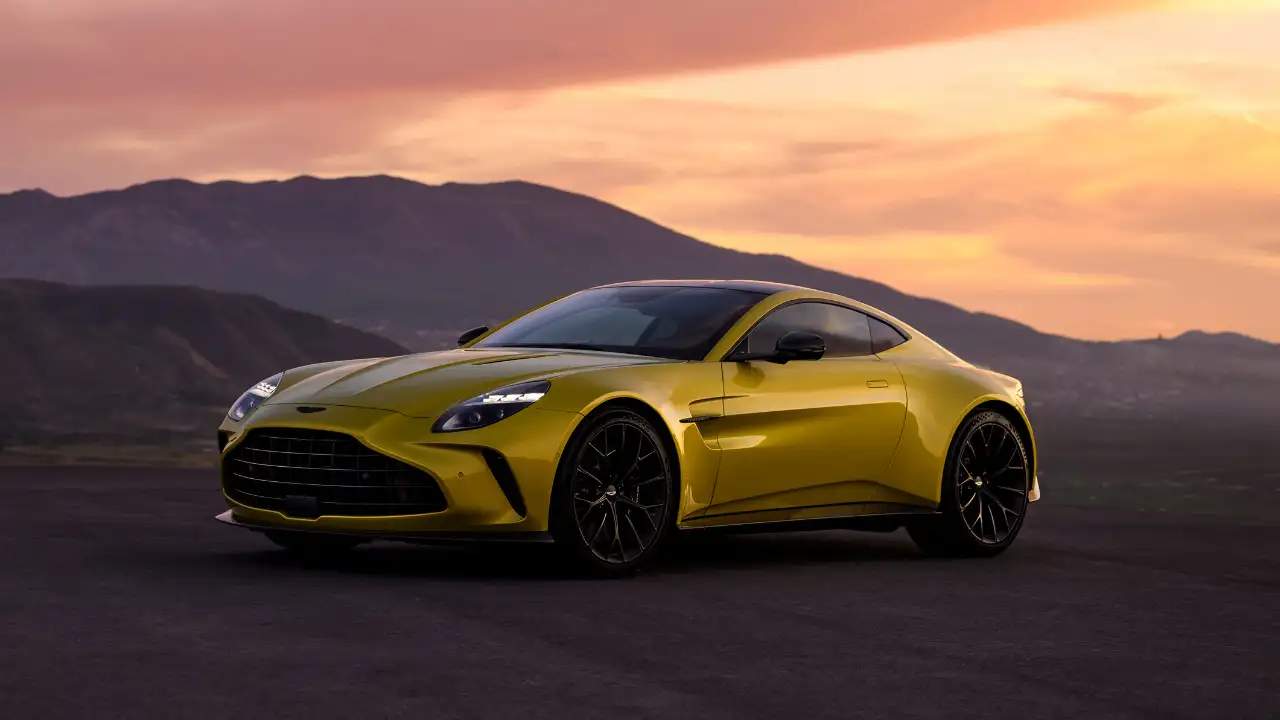
- Engine: 4.0L Twin Turbo V8 (Mercedes-AMG M177)
- Horsepower: 503 hp
- Torque: 685 Nm
- Length: 4,465 mm
- Width: 1,945 mm
1. Aston Martin Vantage
The Aston Martin Vantage represents one of the most successful modern partnerships between Aston Martin and Mercedes-AMG. In its latest generation, it is powered by the AMG 4.0-liter twin-turbo V8 engine, internally known as the M177.
This engine replaced Aston Martin’s older naturally aspirated V8, marking a major shift in the brand’s engineering direction. The AMG unit provides significantly more power, improved efficiency, and better emissions compliance, which was essential for Aston Martin’s global competitiveness.
In the Vantage, the AMG V8 is tuned for a more aggressive and driver-focused character. It produces strong horsepower figures and delivers immediate torque, allowing the car to accelerate with urgency. The engine’s mid-range performance is particularly impressive, making overtaking effortless and track driving highly engaging.
Aston Martin engineers recalibrate throttle response, exhaust tuning, and ECU mapping to ensure the engine feels distinct from AMG applications. This means that although the core engine is shared, the driving experience is uniquely Aston Martin.
Cooling and thermal management systems were also adapted for the Vantage’s compact sports car layout. This ensures consistent performance even under demanding driving conditions.
The result is a sports car that blends British elegance with German engineering precision. It maintains Aston Martin’s luxury identity while benefiting from AMG’s proven performance foundation.
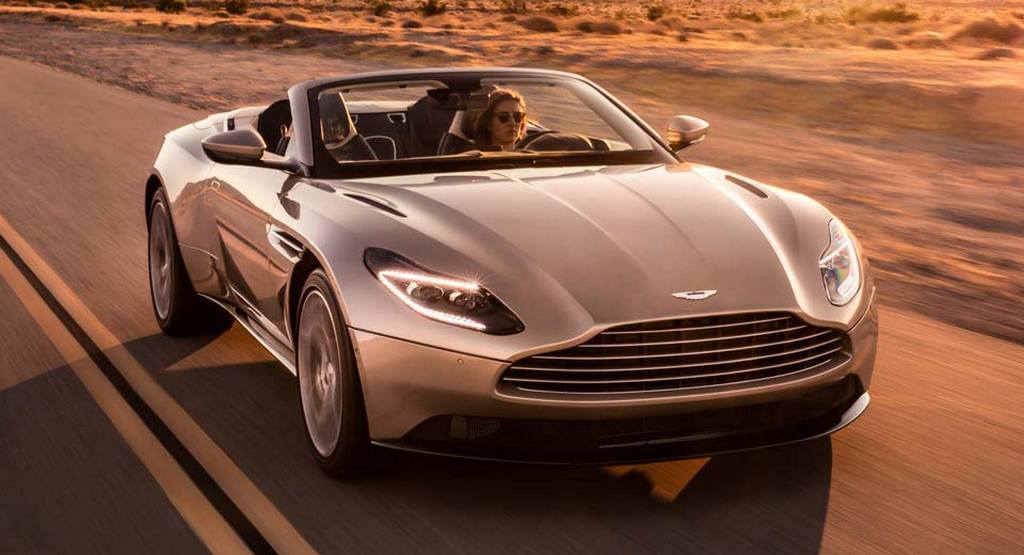
- Engine: 4.0L Twin Turbo V8 (Mercedes-AMG M177)
- Horsepower: 528 hp
- Torque: 675 Nm
- Length: 4,750 mm
- Width: 1,950 mm
2. Aston Martin DB11 V8
The Aston Martin DB11 V8 is a grand tourer that uses the same AMG 4.0-liter twin-turbo V8 engine found in the Vantage, but tuned for a very different purpose.
In the DB11, the engine is calibrated for smoothness and long-distance comfort rather than aggressive track performance. This makes it ideal for grand touring, where refinement is just as important as speed.
The AMG V8 provides strong low-end torque, allowing the DB11 to cruise effortlessly at highway speeds. The engine does not need to be revved aggressively to deliver power, which enhances comfort during long journeys.
Aston Martin engineers adjusted engine mounts, insulation, and throttle mapping to ensure a quieter and more refined driving experience compared to AMG sports cars. The exhaust note is still present but softened to match luxury expectations.
The compact size of the AMG V8 also helped improve packaging efficiency, allowing better weight distribution within the DB11 chassis. This contributes to stable handling characteristics at high speeds.
The DB11 V8 shows how the same engine can be transformed from a performance unit into a luxury grand touring powerhouse through tuning and calibration.
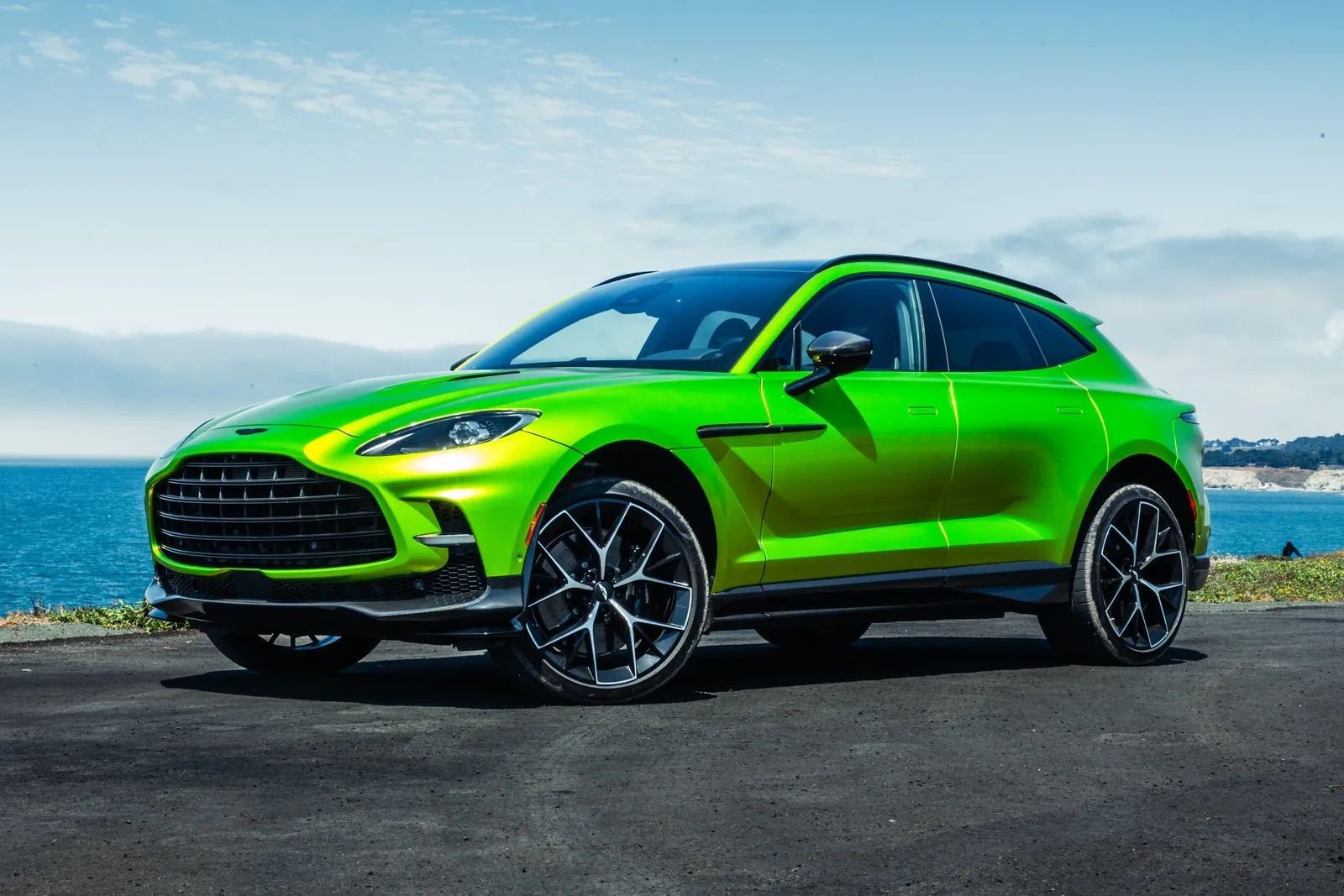
- Engine: 4.0L Twin Turbo V8 (Mercedes-AMG M177 heavily tuned)
- Horsepower: 707 hp
- Torque: 900 Nm
- Length: 5,039 mm
- Width: 2,220 mm
3. Aston Martin DBX 707
The Aston Martin DBX 707 is one of the most powerful luxury SUVs in the world and uses a heavily modified version of the AMG 4.0-liter twin-turbo V8 engine.
This engine produces over 700 horsepower in the DBX 707, making it significantly more powerful than many supercars. It transforms the SUV into a high-performance machine capable of rapid acceleration despite its size.
The AMG V8 serves as the foundation, but Aston Martin extensively upgrades turbochargers, internal components, and cooling systems to handle increased power output.
The result is an SUV that accelerates with surprising aggression while still offering luxury comfort. The engine delivers instant torque, making it highly responsive in urban driving and highway overtaking.
Despite its performance focus, the DBX 707 retains refinement at cruising speeds. The engine management system allows smooth operation when power demand is low.
This model demonstrates the versatility of AMG engines in high-performance SUV applications, where both power and practicality are required.
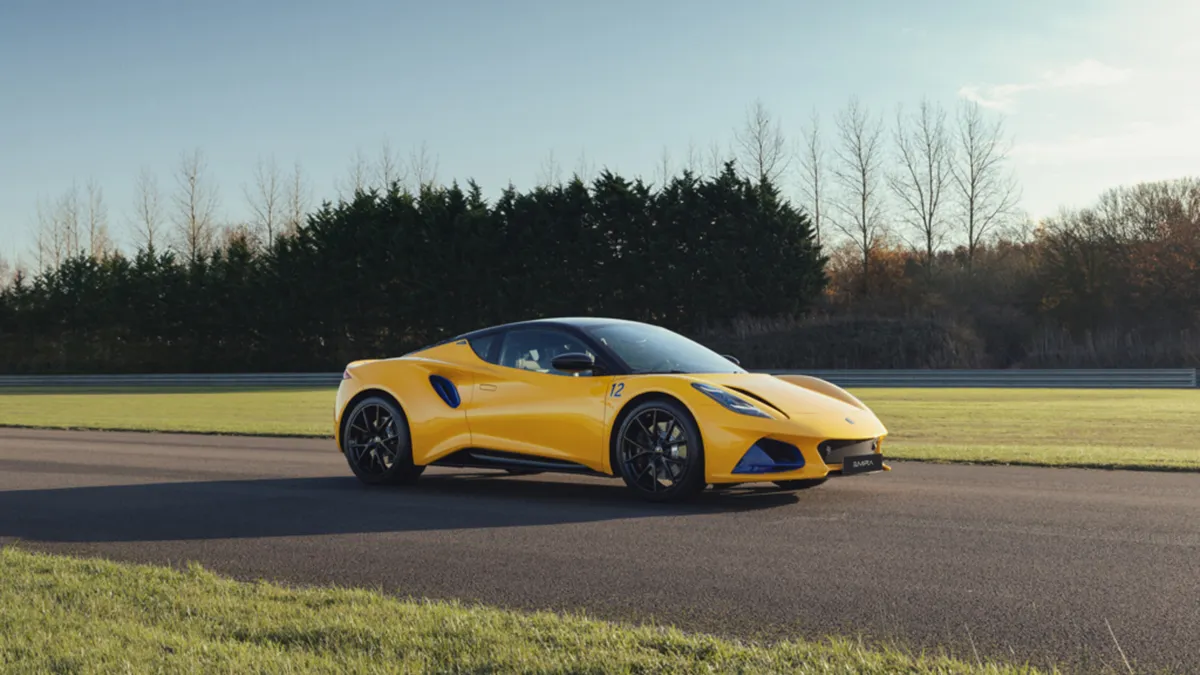
- Engine: 2.0L Turbocharged Inline-4 (Mercedes-AMG M139)
- Horsepower: 360 hp
- Torque: 430 Nm
- Length: 4,412 mm
- Width: 1,895 mm
4. Lotus Emira
The Lotus Emira represents a major evolution for Lotus, and one of its engine options is the Mercedes-AMG M139 2.0-liter turbocharged inline four engine.
This engine is notable for being one of the most powerful production four-cylinder engines in the world. It produces over 350 horsepower, depending on tuning, which is exceptional for its size.
In the Emira, the AMG engine is paired with a lightweight chassis, allowing an outstanding power-to-weight ratio. This results in very strong acceleration and sharp handling characteristics.
The turbocharged nature of the M139 means power delivery is broad and usable across a wide rev range. This makes the Emira both track-capable and suitable for everyday driving.
Lotus focuses heavily on chassis tuning, steering precision, and suspension setup to ensure the car retains its traditional driving purity.
The AMG engine provides the performance backbone, while Lotus ensures the driving experience remains focused on agility and responsiveness.
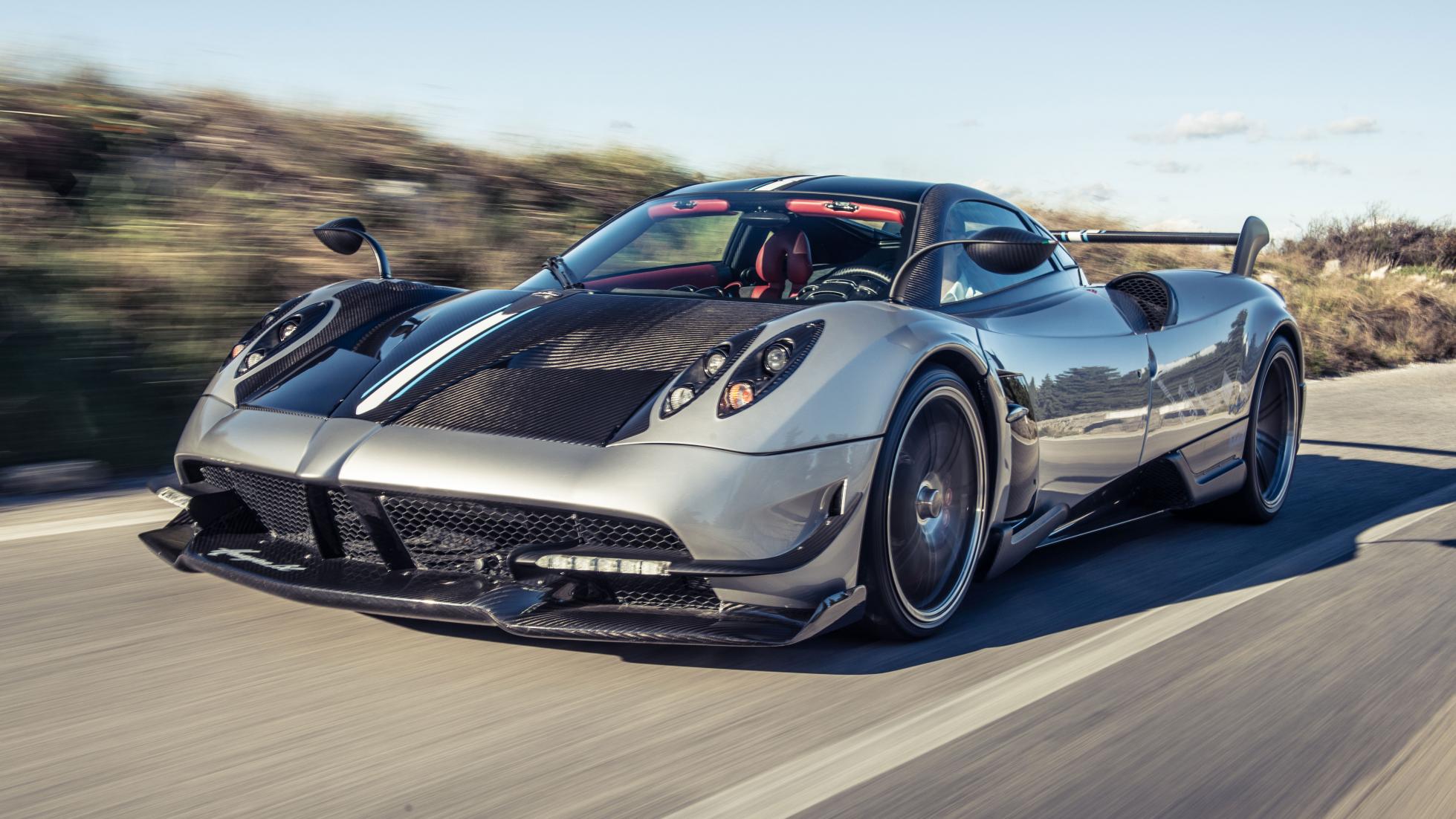
- Engine: 6.0L Twin Turbo V12 (Mercedes-AMG M158 bespoke)
- Horsepower: 730 hp (varies up to 850+ in special versions)
- Torque: 1,000 Nm
- Length: 4,605 mm
- Width: 2,036 mm
5. Pagani Huayra
The Pagani Huayra is one of the most exclusive hypercars ever built, and it is powered by a specially developed Mercedes-AMG V12 engine. This engine is not a mass-produced unit but a bespoke creation built specifically for Pagani, making it one of the rarest AMG collaborations in existence.
The AMG V12 in the Huayra produces over 700 horsepower, depending on the variant, with some special editions pushing even higher output. It delivers immense acceleration combined with a smooth yet aggressive power delivery that suits the Huayra’s extreme performance nature.
One of the most defining features of this engine is its sound. The exhaust note is carefully tuned to create a dramatic and emotional experience, often described as one of the most beautiful engine sounds ever produced in a road car. This is a key reason why Pagani insisted on continuing its partnership with AMG.
The engine is paired with a lightweight carbon fiber monocoque chassis developed by Pagani. This allows the Huayra to fully exploit the engine’s power while maintaining structural rigidity and safety at extreme speeds.
AMG engineers worked closely with Pagani to ensure the engine maintained both reliability and emotional character. Even under extreme performance conditions, the engine remains stable and responsive, which is crucial for a hypercar of this caliber.
Aerodynamics also play a major role in the Huayra’s performance. Active aero systems adjust in real time, ensuring the AMG V12 operates in optimal conditions whether on a straight line or during high-speed cornering.
The Huayra represents a perfect balance between German engineering precision and Italian artistic design philosophy. The AMG engine is not just a power unit but the emotional heart of the entire vehicle.
The Huayra demonstrates how AMG engines can transcend traditional performance roles and become part of automotive art.
Also Read: 7 Most Reliable Motorcycles You Can Buy Today
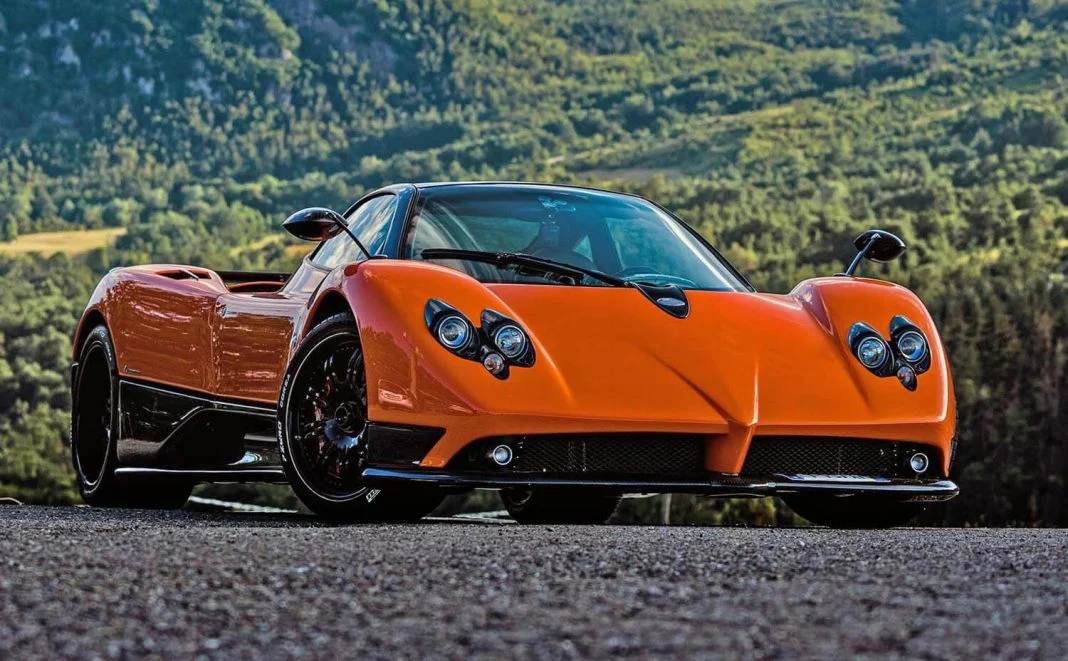
- Engine: 7.3L Naturally Aspirated V12 (Mercedes-AMG M297)
- Horsepower: 555 hp to 760+ hp (variant dependent)
- Torque: 750 Nm
- Length: 4,395 mm
- Width: 2,055 mm
6. Pagani Zonda
The Pagani Zonda is the predecessor to the Huayra and is widely regarded as one of the most iconic hypercars ever created. It is powered entirely by naturally aspirated Mercedes-AMG V12 engines across its various generations.
The early Zonda models used AMG-sourced V12 engines that produced impressive power for their time. As development progressed, later versions saw continuous improvements in output, reliability, and throttle response.
Unlike modern turbocharged engines, the AMG V12 in the Zonda delivers linear power delivery. This creates an extremely engaging driving experience where the driver feels directly connected to the engine response.
The sound of the Zonda’s engine is one of its most legendary characteristics. The high-revving naturally aspirated V12 produces a raw and mechanical soundtrack that enthusiasts often consider unmatched in modern automotive history.
Pagani refined the engine further with each iteration of the Zonda, tuning intake systems, exhaust layouts, and ECU mapping to extract maximum performance while preserving character.
The lightweight carbon fiber construction of the Zonda allowed the AMG engine to deliver exceptional acceleration and handling dynamics. The power-to-weight ratio was revolutionary at the time of its release.
Special editions like the Zonda F, Zonda R, and Zonda Cinque pushed the AMG V12 even further, turning the car into a track-focused weapon in some variants.
Today, the Zonda remains a symbol of AMG’s influence in the hypercar world and one of the most celebrated engine collaborations in automotive history.

- Engine: 6.0L Twin Turbo V12 (Mercedes-AMG M158 evolution)
- Horsepower: 852 hp
- Torque: 1,100 Nm
- Length: 4,595 mm
- Width: 2,060 mm
7. Pagani Utopia
The Pagani Utopia continues Pagani’s long-standing relationship with Mercedes-AMG by using a modernized V12 engine designed to meet current emissions and performance standards.
Unlike turbocharged AMG engines found in many modern vehicles, the Utopia retains a more analog driving feel, focusing on mechanical purity and responsiveness.
The engine produces high horsepower while maintaining a naturally aspirated character in terms of throttle response behavior. This ensures immediate power delivery without turbo lag.
Pagani places a strong emphasis on emotional driving experience, and the AMG engine plays a central role in achieving this. Every aspect of engine tuning is designed to enhance driver engagement.
Despite modern regulations, AMG and Pagani have managed to preserve the signature V12 sound. The exhaust note remains one of the most important aspects of Utopia’s identity.
The engine is paired with a lightweight carbon-titanium chassis, which allows it to deliver extreme performance while maintaining structural balance and agility.
Aerodynamic efficiency is also integrated into the design, ensuring the engine operates within optimal thermal and performance conditions even at high speeds.
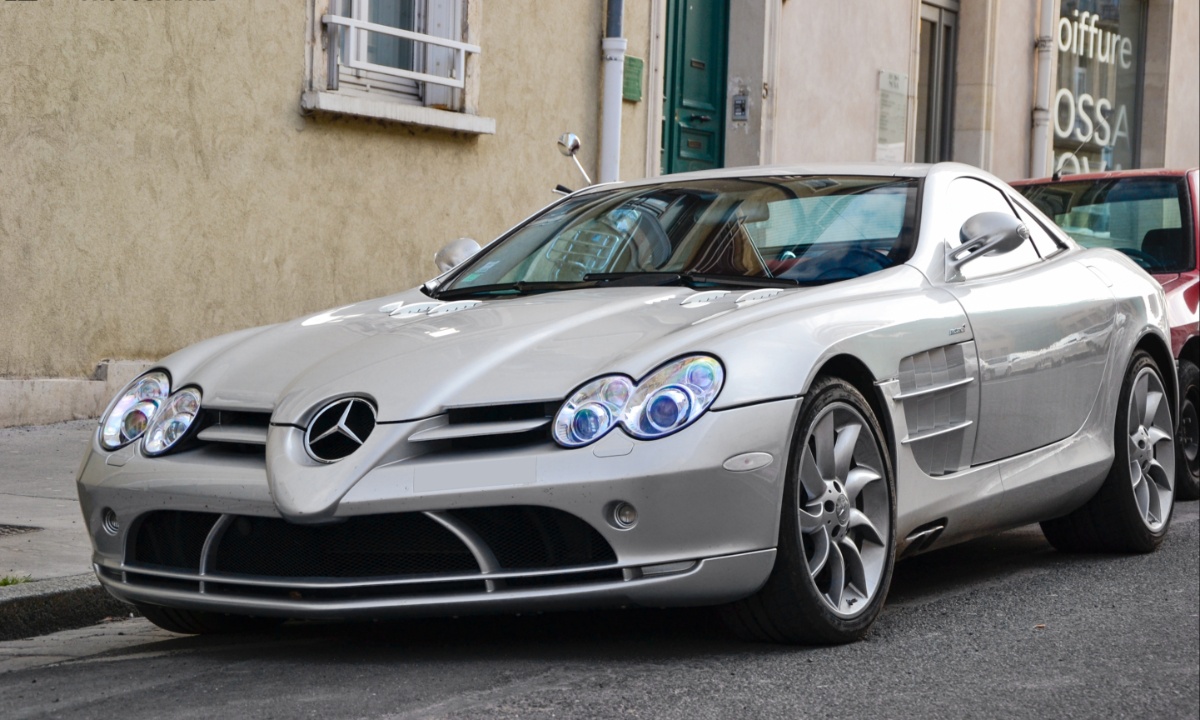
- Engine: 5.4L Supercharged V8 (Mercedes-AMG M155)
- Horsepower: 626 hp
- Torque: 780 Nm
- Length: 4,656 mm
- Width: 1,908 mm
8. McLaren SLR McLaren
The McLaren SLR McLaren is a unique collaboration between McLaren and Mercedes AMG, combining British engineering expertise with German powertrain technology.
It uses a supercharged 5.4-liter AMG V8 engine derived from the M113K platform. This engine was heavily modified for the SLR to meet performance and packaging requirements.
The engine produces massive power for its era, delivering rapid acceleration and extremely high top speed capability. It was designed to compete with Ferrari and Porsche grand tourers of the time.
Unlike many mid-engine supercars, the SLR uses a front mid-engine layout. This required AMG engineers to adapt the engine’s cooling, weight distribution, and structural mounting systems.
One of the standout characteristics of the engine is its supercharger whine, which adds to the dramatic driving experience. It enhances the emotional feel of acceleration.
The SLR was designed not only for performance but also for long-distance cruising. The AMG engine provides smooth power delivery even at high speeds on highways.
Carbon fiber construction was used extensively in the chassis, helping offset the weight of the front-mounted engine and improving handling dynamics.
The SLR McLaren remains one of the most distinctive AMG-powered collaborations, combining luxury, performance, and engineering innovation.
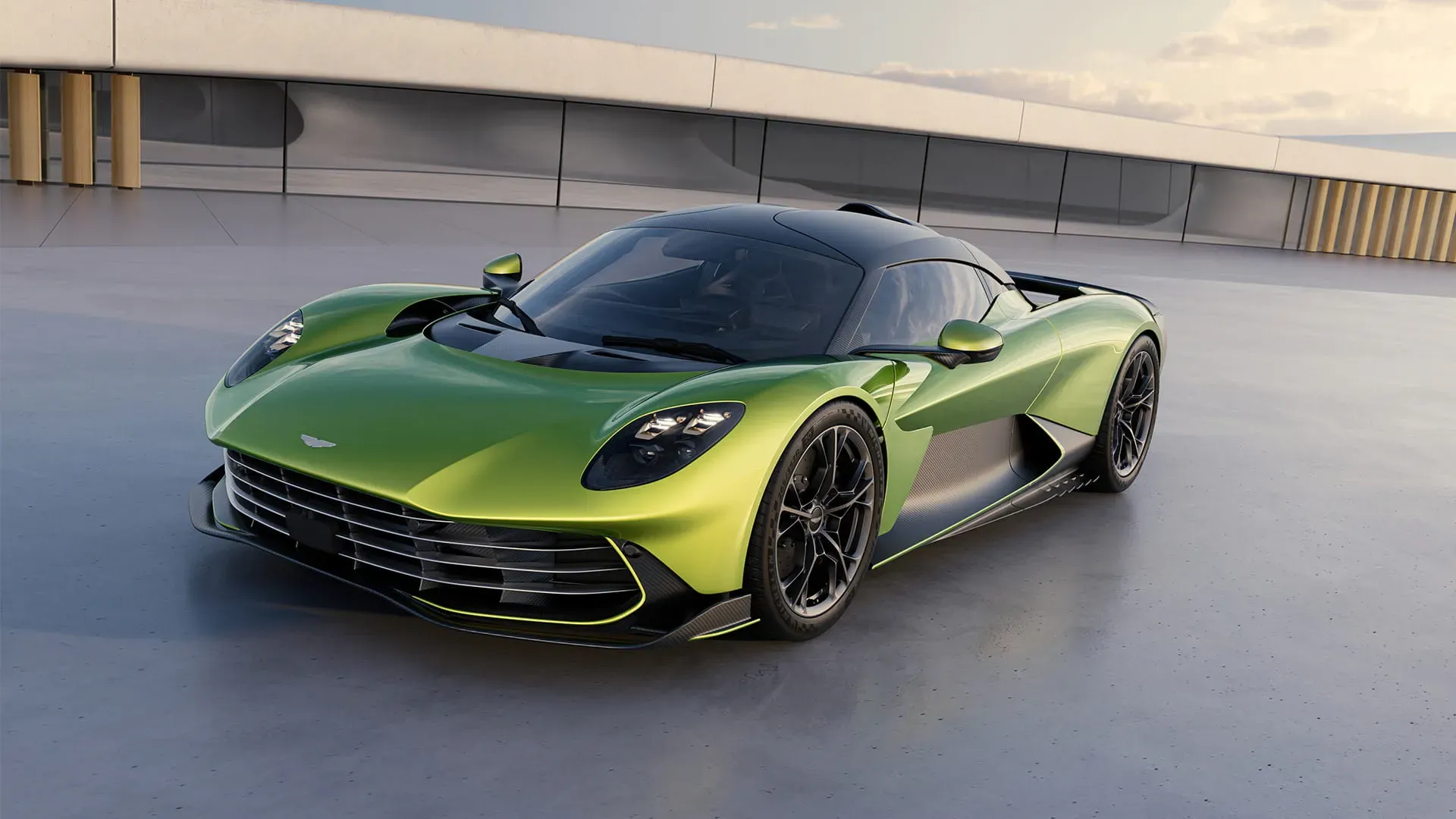
- Engine: 4.0L Twin Turbo V8 (Mercedes-AMG derived hybrid system)
- Horsepower: ~998 hp (combined system output)
- Torque: ~1,000 Nm (estimated combined)
- Length: ~4,600 mm
- Width: ~2,000 mm
9. Aston Martin Valhalla
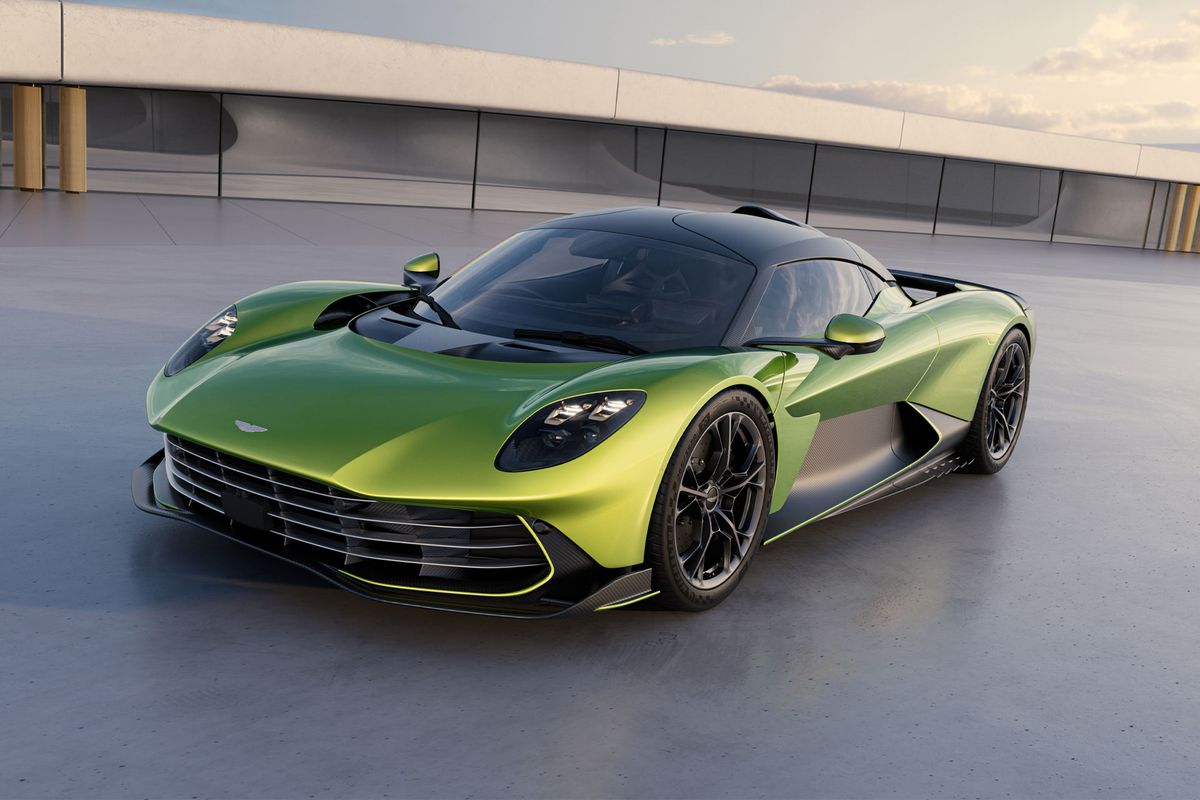
The Aston Martin Valhalla represents the brand’s entry into hybrid hypercar technology and uses a Mercedes-AMG-derived 4.0-liter twin-turbo V8 engine as its internal combustion component.
This engine is paired with electric motors to create a hybrid powertrain capable of extremely high combined output. The system is designed for both road and track performance.
The AMG V8 provides strong mid-range torque and serves as the backbone of the hybrid system. It ensures consistent performance even when the electric system is not fully engaged.
Aston Martin has re-engineered the engine for mid-engine placement, which required modifications to cooling systems, exhaust routing, and ECU calibration.
The hybrid integration allows for instant torque delivery at low speeds while maintaining high-speed performance from the combustion engine.
The key engineering goals were balancing efficiency with performance. The AMG engine contributes to both aspects by offering strong power output with modern emissions compliance.
The Valhalla also benefits from advanced aerodynamics, which work in combination with the engine to maximize downforce and stability.
This car represents the future direction of AMG engine usage, where internal combustion engines are integrated with electrification rather than replaced entirely.
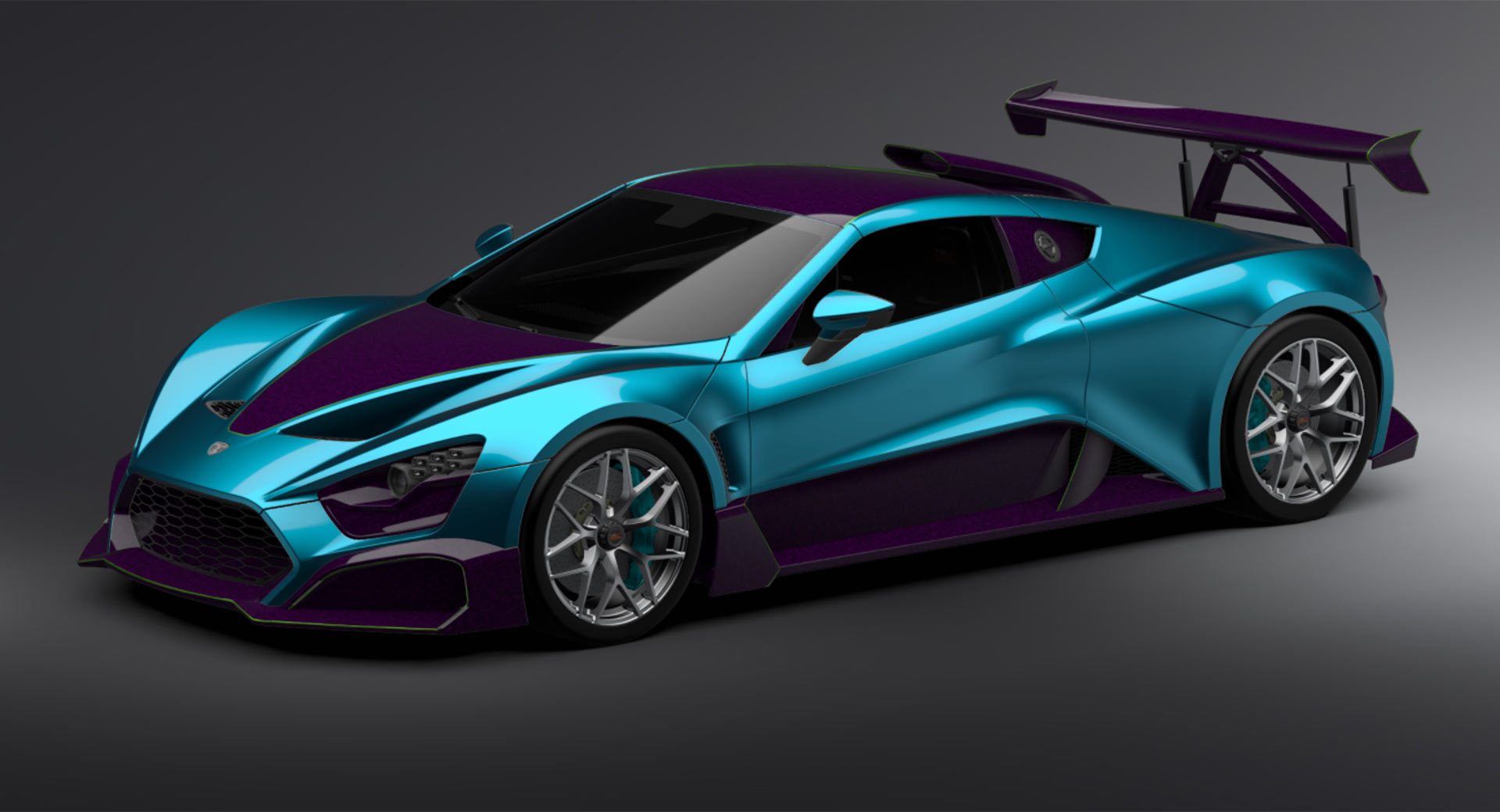
- Engine: 5.8L Twin Supercharged V8 (AMG-based architecture, heavily modified)
- Horsepower: 1,177 hp
- Torque: 1,100 Nm
- Length: 4,880 mm
- Width: 2,070 mm
10. Zenvo TSR S
The Zenvo TSR S is a Danish hypercar that uses a heavily modified Mercedes-AMG V8 engine as its foundation. It is one of the most extreme applications of AMG engineering in a production vehicle.
This engine is based on AMG architecture but is extensively reworked by Zenvo to produce extremely high horsepower figures suitable for hypercar performance.
Zenvo increases boost pressure, reinforces internal components, and modifies cooling systems to ensure the engine can withstand extreme track conditions.
The TSR S is known for its aggressive power delivery, which is matched by an equally extreme aerodynamic system featuring an active rear wing that tilts during cornering.
Despite heavy modifications, the AMG engine retains its core reliability and durability characteristics, which are essential for a high-performance track-focused hypercar.
The engine produces instant torque and rapid acceleration, making the TSR S one of the fastest-accelerating cars in its category.
Zenvo’s engineering approach focuses on pushing AMG hardware beyond its conventional limits while maintaining structural integrity.
