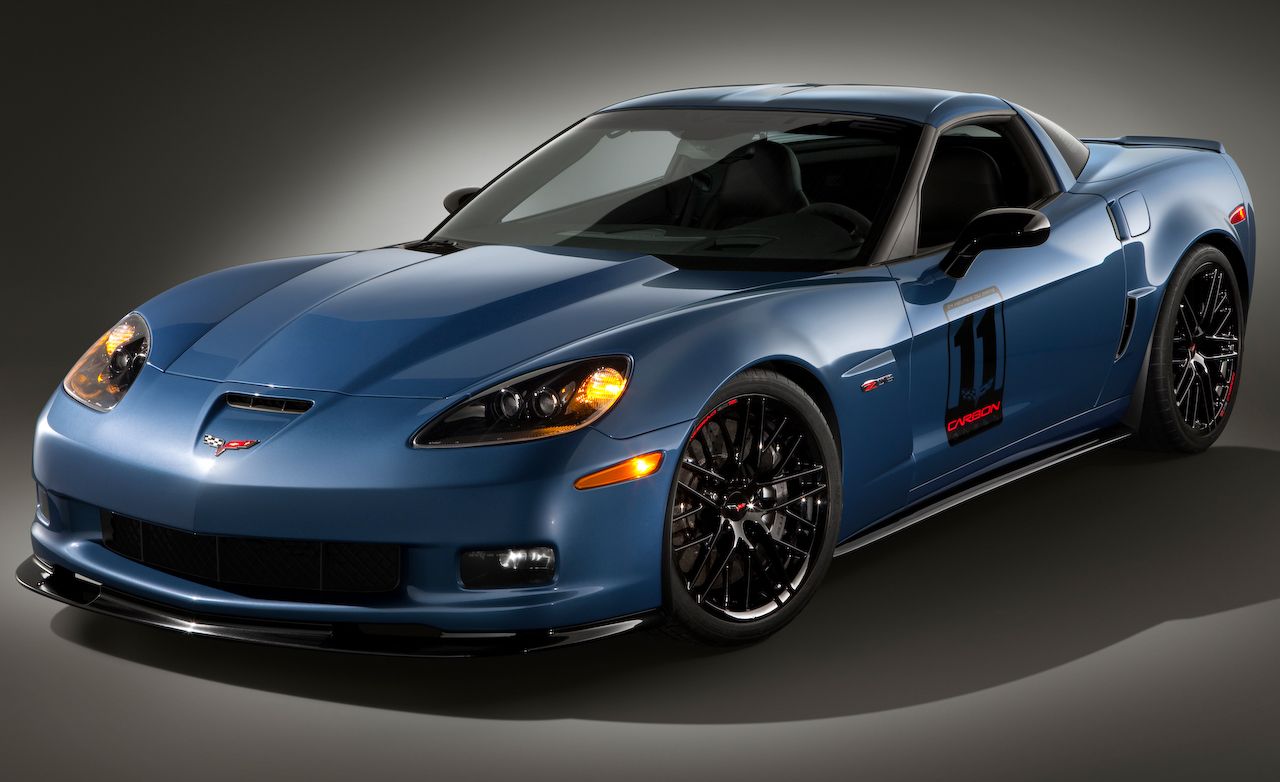
The performance car market has changed dramatically over the past decade. Sports cars that once seemed affordable have become collector’s items, while newer high-performance models often carry price tags well into six figures.
Yet one car continues to stand out as an exception: the 2006-2013 Chevrolet Corvette Z06, commonly known as the C6 Z06.
Despite being nearly two decades old, the C6 Z06 remains one of the best performance bargains available.
For the price of a well-equipped midsize SUV or an entry-level luxury sedan, buyers can own a naturally aspirated V8 sports car capable of supercar-level acceleration, exceptional track performance, and surprisingly reasonable ownership costs.
It is not simply nostalgia that keeps the Z06 relevant. Its combination of lightweight engineering, a hand-built racing-derived engine, aluminum chassis, and analog driving experience gives it qualities that are becoming increasingly rare in today’s performance-car market.
While newer sports cars may offer more technology and greater refinement, few deliver as much performance per dollar as the C6 Z06.
Also Read: 10 Electric Vehicles That Spend the Least Time at Charging Stations
A Supercar Engine Without the Supercar Price
The heart of the C6 Z06 is its legendary 7.0-liter LS7 V8, one of the most celebrated naturally aspirated engines General Motors has ever produced.
Producing 505 horsepower and 470 lb-ft of torque, the LS7 was hand-assembled at GM’s Performance Build Center and shared its basic architecture with the small-block V8 family while incorporating numerous race-inspired upgrades.
Unlike the LS2 found in the standard Corvette, the LS7 featured the following:
- Titanium connecting rods
- Titanium intake valves
- Forged steel crankshaft
- CNC-ported cylinder heads
- Dry-sump lubrication
- Lightweight pistons
- Larger displacement
These components allowed the engine to rev to 7,000 rpm, producing power that still feels impressive nearly twenty years after its introduction.
Perhaps more importantly, the LS7 delivers immediate throttle response without relying on turbochargers or superchargers. The power arrives progressively, accompanied by a mechanical soundtrack that many enthusiasts consider one of the finest ever produced by an American V8.
Performance That Still Holds Up Today
Even by modern standards, the numbers remain impressive. Factory performance figures included approximately:
- 0-60 mph: 3.7 seconds
- Quarter mile: around 11.7 seconds
- Top speed: approximately 198 mph
These figures placed the Z06 alongside exotic European sports cars costing two or three times as much when it was new.
Its Nürburgring lap time of 7 minutes 43 seconds was faster than several Ferraris, Lamborghinis, Aston Martins, and Porsches available during the same era.
Although today’s high-performance EVs accelerate harder in a straight line, the Z06 remains remarkably competitive once corners enter the equation.
Its balance, steering precision, and chassis communication continue earning praise from experienced track drivers.
Lightweight Engineering Makes a Huge Difference
One reason the C6 Z06 remains so rewarding to drive is its weight. At roughly 3,130 pounds, it weighs hundreds of pounds less than many modern performance cars.
Chevrolet achieved this through extensive use of lightweight materials, including the following:
- Aluminum chassis
- Magnesium engine cradle
- Carbon-fiber front fenders
- Carbon-fiber floor panels
- Aluminum frame components
The result is a power-to-weight ratio that still rivals many current sports cars. Lower weight improves nearly every aspect of performance. Acceleration feels stronger. Braking distances decrease. Cornering becomes more responsive. Tire wear is reduced.
Fuel economy even improves slightly compared with heavier competitors. Many modern sports cars now exceed 3,800 pounds because of increasingly strict safety requirements and added technology.
The Z06 represents an era when lightweight engineering remained one of the highest priorities.
A Proper Manual Transmission
Another reason enthusiasts continue seeking the C6 Z06 is its transmission. Every Z06 came with a six-speed Tremec TR-6060 manual gearbox.
There was no automatic option. That may have limited its appeal to some buyers when new, but today it has become one of the car’s biggest strengths.
Modern dual-clutch and automatic transmissions shift faster. However, they also remove much of the driver involvement that defines older performance cars.
The Z06 demands skill. Drivers control clutch engagement, rev matching, gear selection, and engine speed themselves. For many enthusiasts, that mechanical connection has become increasingly valuable.
Handling That Rewards Skilled Drivers
Straight-line speed has never been the Z06’s only strength. Its suspension combines aluminum control arms, large anti-roll bars, monotube dampers, and wide performance tires to create remarkable cornering capability.
Steering remains hydraulic rather than electric, providing detailed feedback that many newer vehicles struggle to match. Drivers often describe the car as communicative.
Rather than filtering road information electronically, the Z06 allows the driver to feel changes in grip through the steering wheel, chassis, and seat.
That confidence becomes particularly noticeable on winding roads and road courses. The car rewards smooth inputs rather than relying on electronics to correct mistakes.
It Is Surprisingly Affordable to Maintain
Compared with many European performance cars, the C6 Z06 can be remarkably affordable to own.
Routine maintenance includes the following:
- Engine oil changes
- Brake fluid
- Spark plugs
- Air filters
- Transmission fluid
- Differential fluid
Parts availability remains excellent because the LS engine family is one of the most widely supported V8 platforms in automotive history.
Independent repair shops across North America are familiar with the engine, and aftermarket support is enormous.
Unlike many exotic sports cars, owners generally do not need specialized dealerships for routine service.
Insurance costs can also be surprisingly reasonable because many Z06 owners drive their cars infrequently and maintain excellent driving records.
The LS7 Requires One Important Check
No discussion of the C6 Z06 would be complete without mentioning its best-known mechanical concern.
Certain early LS7 engines experienced problems related to valve-guide machining in the cylinder heads. If left unaddressed, excessive valve-guide wear could eventually contribute to valve failure.
The issue did not affect every engine, but it became well-known within the Corvette community. Fortunately, many vehicles have already received updated cylinder heads or undergone professional inspection during the past decade.
Prospective buyers should verify service records and consider a pre-purchase inspection by an experienced Corvette specialist.
Once properly addressed, the LS7 has generally proven to be a durable, long-lasting performance engine.
The Aftermarket Is Virtually Unlimited
Few American performance cars enjoy aftermarket support comparable to the C6 Corvette.
Owners can choose from thousands of upgrades, including:
- Camshafts
- Headers
- Exhaust systems
- Suspension kits
- Brake upgrades
- Wheels
- Aero packages
- Interior improvements
Naturally aspirated modifications alone can produce impressive gains. For owners seeking even greater performance, supercharger and twin-turbo kits capable of producing well over 700 horsepower remain readily available.
The platform’s flexibility has helped keep it relevant long after production ended.
Values Are Still Attractive
Perhaps the biggest reason the C6 Z06 remains such a bargain is its pricing. Well-maintained examples typically sell between $35,000 and $55,000, depending on mileage, condition, originality, and service history.
Even exceptional low-mileage collector examples often remain below the price of many new performance cars producing similar horsepower.
For comparison, many new sports cars offering roughly 500 horsepower now start above $80,000, while European alternatives frequently exceed $120,000.
The Z06 delivers comparable real-world performance at a fraction of those prices. Its value proposition becomes even stronger when considering depreciation.
Most C6 Z06s have already experienced the majority of their depreciation, meaning well-kept examples may hold their value better than many new vehicles.
Modern Cars Are Faster but Not Always More Enjoyable
Objectively, many modern performance cars outperform the Z06 in certain categories. Today’s vehicles benefit from:
- Dual-clutch transmissions
- Adaptive suspension
- Launch control
- Larger tires
- Sophisticated stability systems
- More powerful brakes
However, driving enjoyment cannot always be measured by lap times alone. Many enthusiasts argue that the C6 Z06 offers something increasingly uncommon.
It requires genuine driver involvement. There are no complicated drive modes to configure before every journey. There is no artificial engine sound played through speakers.
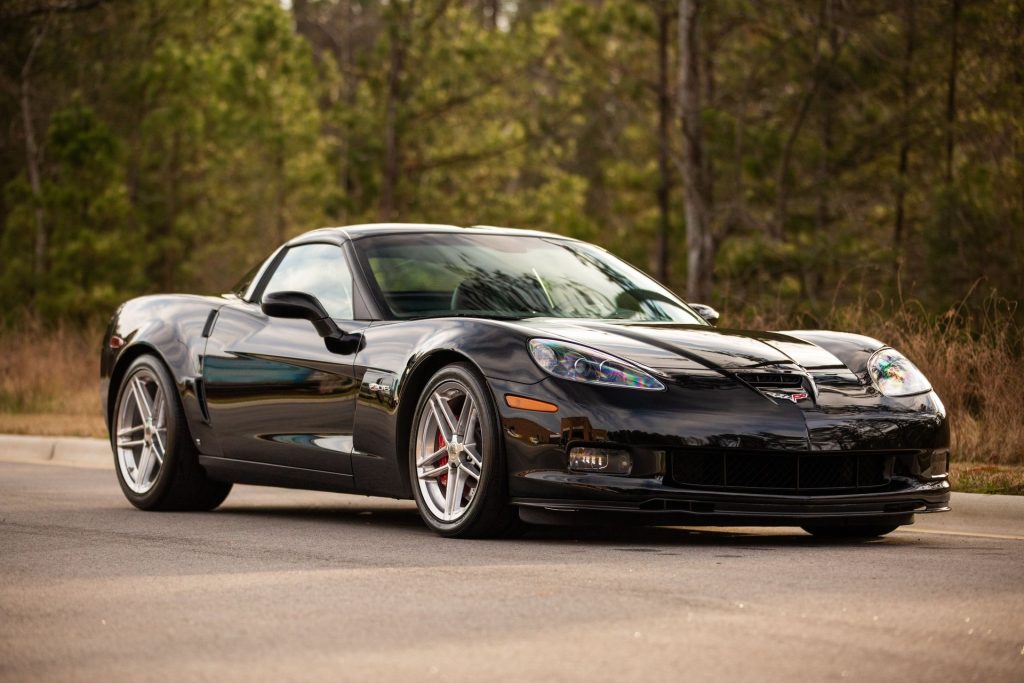
The naturally aspirated V8, hydraulic steering, manual transmission, and lightweight chassis create an experience that feels mechanical rather than digital.
As manufacturers move toward electrification and increasing automation, cars like the C6 Z06 become increasingly distinctive.
Who Should Buy One Today?
The C6 Z06 is ideal for enthusiasts seeking maximum performance without entering exotic-car ownership.
It suits buyers who:
- Enjoy manual transmissions.
- Want a naturally aspirated V8.
- Plan occasional track days.
- Appreciate analog driving dynamics.
- Are willing to perform preventative maintenance.
It is less suited to drivers seeking luxury, advanced infotainment, or daily commuting comfort. Road noise is noticeable. The cabin reflects mid-2000s General Motors design standards.
Modern driver-assistance features are absent. Yet those compromises are precisely what many enthusiasts appreciate. The car focuses almost entirely on driving.
The C6 Corvette Z06 remains one of the greatest performance bargains because it combines a hand-built 505-horsepower LS7 V8, lightweight engineering, a six-speed manual transmission, and genuine supercar capability at a price that remains accessible compared with today’s high-performance offerings.
While buyers should verify that any prospective purchase has been properly maintained and inspect the LS7 cylinder heads carefully, a well-sorted example offers an experience that few modern cars can replicate.
Nearly twenty years after its debut, the C6 Z06 continues proving that exceptional performance does not always require a six-figure budget.
Its blend of speed, mechanical purity, and long-term value makes it one of the smartest buys for enthusiasts who prioritize the driving experience over the latest technology.
Also Read: 10 Car Brands That Also Make Boats Engines