
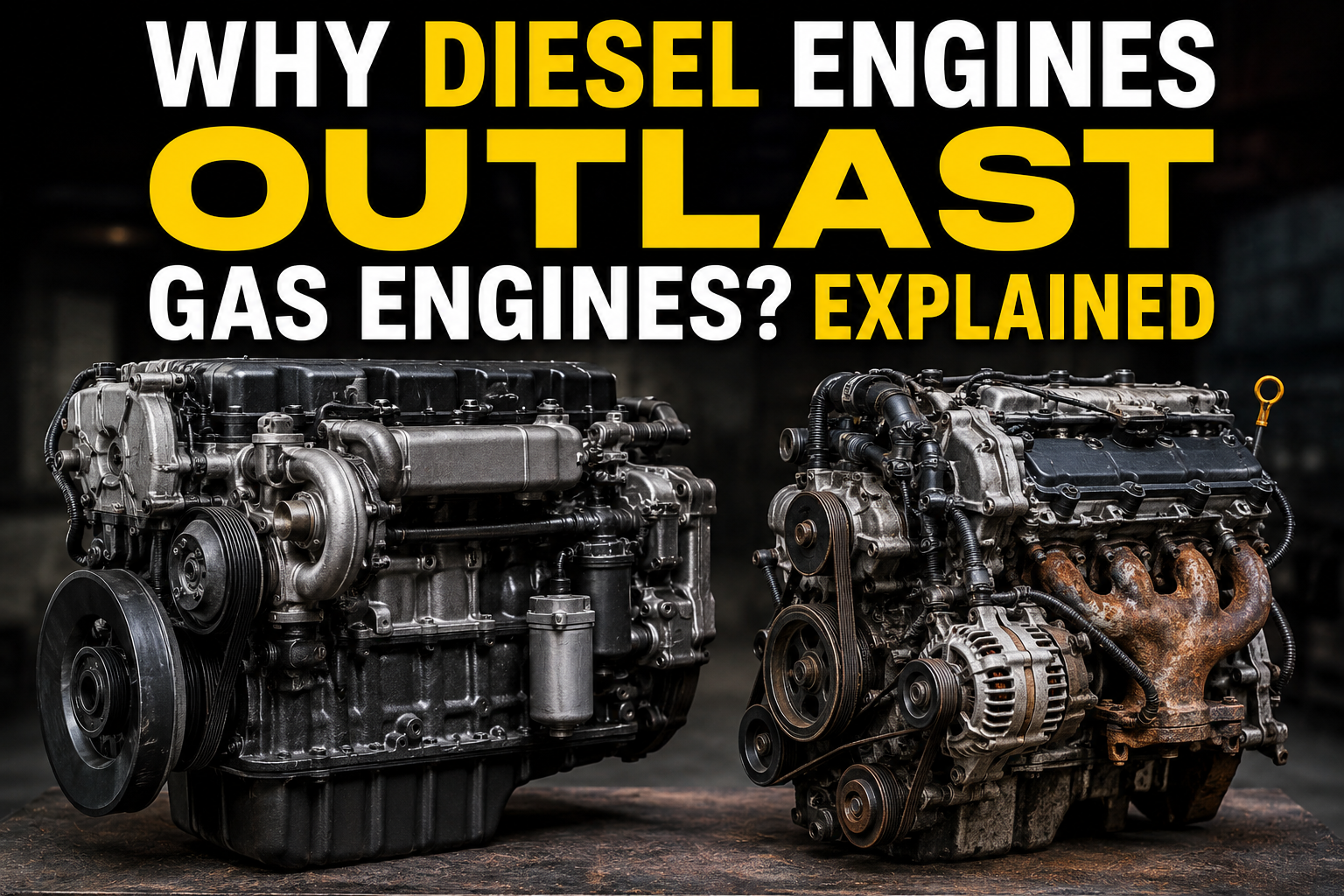
Few topics in the automotive world have generated as much admiration as the longevity of diesel engines.
Stories of diesel-powered trucks surpassing 500,000 miles, commercial vehicles crossing the million-mile mark, and heavy-duty equipment operating for decades are common enough that many people simply accept one idea as fact: diesel engines last longer than gasoline engines. In many cases, they do.
While modern gasoline engines have become remarkably durable and can easily exceed 200,000 miles with proper maintenance, diesel engines continue to enjoy a reputation for exceptional longevity.
This is particularly true in commercial trucking, industrial applications, agriculture, and heavy-duty pickup trucks, where diesel powerplants often remain in service far longer than comparable gasoline engines.
The reasons have less to do with magic and more to do with engineering. Diesel engines are built differently because they operate differently.
They must withstand higher internal pressures, produce enormous amounts of torque, and often spend their lives working under demanding conditions. To survive those stresses, manufacturers typically design them with stronger components and greater safety margins.
Research from organizations such as the U.S. Department of Energy and studies conducted throughout the commercial transportation industry consistently show that diesel engines can achieve significantly longer service lives when maintained properly.
Many heavy-duty diesel engines are designed with operational lifespans measured in hundreds of thousands of miles rather than merely meeting warranty expectations.
That durability comes with trade-offs, including higher purchase prices and potentially more expensive repairs. Yet for buyers focused on longevity, diesel engines continue to offer advantages that gasoline engines often struggle to match.
Also Read: Mille Miglia 2026 Runs June 9–13 Through Italy
Diesel Engines are Built Much Stronger from the Start
The biggest reason diesel engines tend to last longer is that they are engineered to handle extreme internal forces.
Diesel engines operate without spark plugs, instead using compression ignition to ignite the fuel. Air is compressed inside the cylinder until it reaches extremely high temperatures, allowing the injected fuel to ignite automatically. This combustion method depends on much higher compression ratios compared to those used in gasoline engines.
As a result, diesel engines must withstand enormous cylinder pressures. Manufacturers compensate by using heavier-duty components throughout the engine. Engine blocks, crankshafts, connecting rods, pistons, bearings, and cylinder heads are often significantly stronger than those used in comparable gasoline engines.
This extra strength creates durability benefits. When components are designed to survive severe operating conditions day after day, they often experience less relative stress during normal use. The result is an engine that can tolerate years of operation without suffering major internal wear.
Heavy-duty truck manufacturers routinely design diesel engines with durability targets far beyond what most passenger vehicles require. Some commercial engines are expected to operate for hundreds of thousands of miles before requiring major overhauls.
That design philosophy is a major reason diesel engines earn reputations for exceptional longevity.
Lower Engine Speeds Reduce Wear
Another factor working in diesel engines’ favor is their operating speed. Most diesel engines produce peak torque at relatively low revolutions per minute. Because of this, they generally operate at lower engine speeds than gasoline engines during everyday driving.
Lower RPMs matter because engine wear is heavily influenced by the number of operating cycles completed over time.
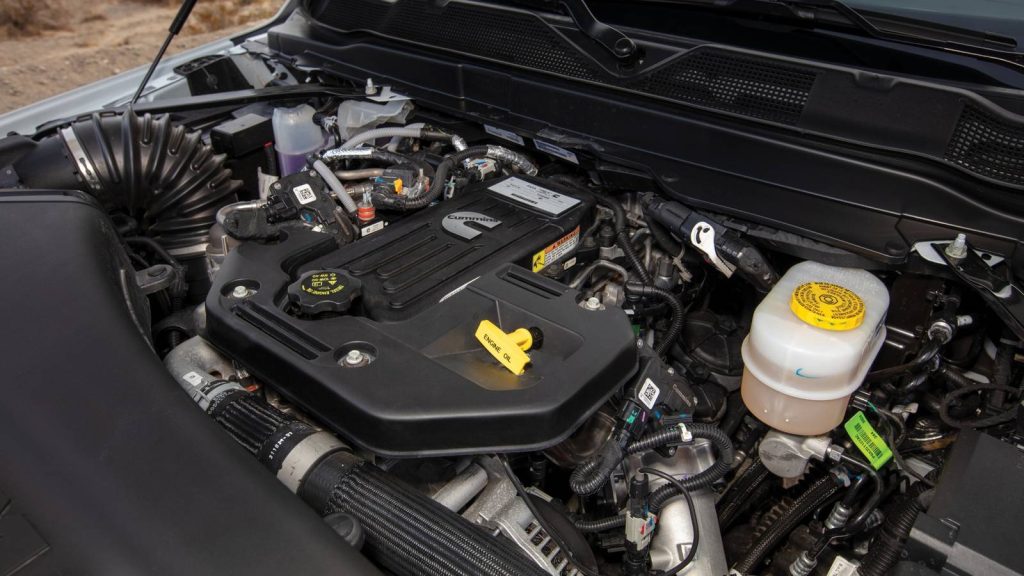
Every revolution creates friction between moving components. Pistons travel up and down, bearings rotate, valves open and close, and numerous mechanical interactions occur throughout the engine.
A diesel engine cruising at 1,800 RPM experiences fewer operating cycles than a gasoline engine traveling at 3,000 RPM under similar conditions.
Over hundreds of thousands of miles, that difference becomes significant. Commercial trucking provides a useful example.
Long-haul diesel engines often spend countless hours operating at steady, relatively low RPM levels while covering enormous distances. This operating environment contributes to their ability to accumulate exceptionally high mileage.
While engine speed is not the only factor influencing longevity, it plays an important role in reducing cumulative wear over time.
Diesel Fuel Provides Lubrication Benefits
The fuel itself also contributes to diesel-engine durability. Unlike gasoline, diesel fuel possesses natural lubricating properties. Modern diesel injection systems still require careful engineering and maintenance, but diesel fuel generally provides more lubrication than gasoline.
In earlier engine designs, this trait contributed to lower wear on fuel system parts. Although modern emissions standards and ultra-low-sulfur diesel have altered fuel composition, diesel engines still gain advantages from fuel characteristics that help maintain long-term component durability.
The difference becomes especially important in high-pressure injection systems. Modern diesel engines rely on extremely precise fuel-delivery equipment capable of operating under extraordinary pressures. Proper lubrication helps these components survive demanding conditions.
Fuel lubrication alone does not explain diesel longevity, but it represents another small advantage that contributes to the bigger picture.
When combined with stronger construction and lower operating speeds, it becomes part of a broader durability equation.
Diesel Engines Are Designed For Heavy Work
One reason diesel engines last so long is that manufacturers expect them to perform difficult jobs.
Diesel engines are commonly used in commercial trucks, construction equipment, agricultural machinery, generators, marine applications, and heavy-duty pickups. These applications require power plants capable of operating under sustained loads for extended periods.
As a result, engineers design diesel engines differently. Many diesel power plants include larger cooling systems, stronger lubrication systems, more robust internal components, and greater thermal management capacity than gasoline engines serving similar purposes.
This creates a significant durability reserve. A diesel engine built to pull heavy loads up steep grades for hundreds of thousands of miles often experiences relatively modest stress when used for lighter-duty applications. The engine is essentially operating below its maximum capabilities much of the time.
Industry studies examining commercial fleets frequently show diesel-powered vehicles achieving longer service lives than gasoline-powered alternatives in comparable operating environments.
The engines are not merely surviving difficult conditions. They were specifically designed for them.
That engineering philosophy remains one of the most important reasons diesel engines continue earning reputations for longevity.
Better Torque Means Less Strain
Torque plays a major role in how diesel engines perform. Diesel engines produce substantially more low-end torque than most gasoline engines. This allows them to move heavy loads without requiring high RPMs or aggressive throttle inputs.
The result is a more relaxed operating experience. A gasoline engine may need to rev significantly higher when towing or climbing grades. A diesel engine often accomplishes the same task while operating comfortably within its torque band.
Lower operating stress can contribute to longer component life. Because diesel engines do not need to work as hard to generate pulling power, they frequently experience less strain during demanding tasks. This advantage becomes particularly noticeable in towing and commercial applications.
Heavy-duty pickup buyers often choose diesel engines specifically because of this characteristic.
The engine can perform difficult work without constantly operating near its limits. Over time, this reduced stress helps support long-term durability.
It is another example of how diesel design characteristics combine to create engines capable of exceptional service lives.
Maintenance Still Matters More Than Fuel Type
Despite their reputation, diesel engines are not indestructible. A poorly maintained diesel can fail long before a properly maintained gasoline engine. Oil changes, fuel-system care, cooling-system maintenance, and timely repairs remain essential regardless of engine type.
Modern diesel engines have also become more complex. Emissions-control systems such as diesel particulate filters, selective catalytic reduction systems, and exhaust-fluid systems introduce additional maintenance considerations. While these technologies reduce emissions significantly, they can increase ownership complexity.
Consumer Reports and other automotive organizations have noted that modern diesel vehicles sometimes experience issues unrelated to the engine itself. Emissions equipment and supporting systems can become expensive to repair if neglected.
This is an important distinction. When discussing diesel longevity, people are often referring specifically to the engine’s internal durability rather than the entire vehicle.
The core engine may remain capable of operating for hundreds of thousands of miles even if surrounding systems require attention along the way.
Proper maintenance remains the deciding factor in determining whether that potential longevity is fully realized.
Modern Gas Engines Have Closed The Gap
It is also worth noting that gasoline engines have improved dramatically. Advances in materials, manufacturing precision, lubrication technology, and engine management systems have significantly increased gasoline-engine durability. Many modern gasoline vehicles routinely exceed 200,000 miles with proper care.
Reliability studies from J.D. Power and Consumer Reports consistently show numerous gasoline-powered vehicles achieving impressive long-term dependability.
The gap between gasoline and diesel longevity is not as large as it once was. For many consumers, a modern gasoline engine will last far longer than they plan to keep the vehicle. As a result, diesel’s durability advantage may not always justify its higher purchase price and maintenance costs.
The calculation depends heavily on intended use. Drivers who accumulate high annual mileage, tow frequently, or operate commercial vehicles often benefit most from diesel ownership. Casual drivers may never fully utilize the additional longevity a diesel engine can provide.
Why Diesel Engines Continue To Last Longer
Diesel engines earn their reputation for longevity because nearly every aspect of their design prioritizes durability.
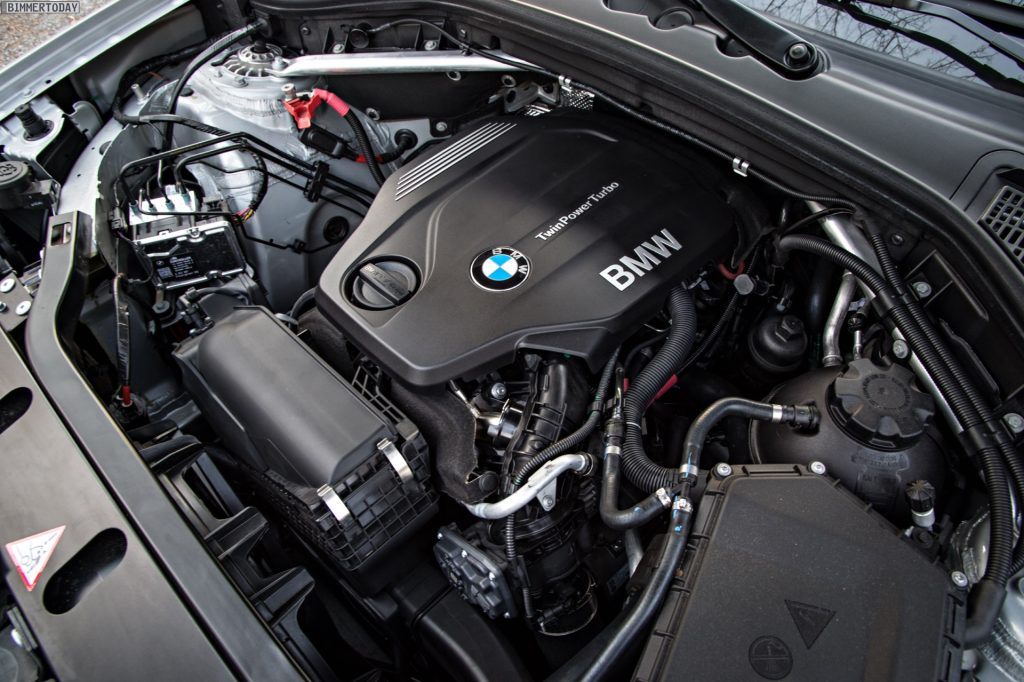
They use stronger internal components, operate at lower engine speeds, generate abundant low-end torque, and are engineered for demanding workloads. These characteristics reduce stress and wear while creating substantial safety margins throughout the engine.
Commercial transportation data, fleet studies, and decades of real-world experience all support the conclusion that diesel engines often outlast comparable gasoline engines when properly maintained.
That does not mean every diesel will automatically achieve extraordinary mileage. Maintenance, operating conditions, and full vehicle quality remain critical factors. Nor does it mean gasoline engines are fragile. Modern gasoline powerplants are more durable than ever before.
Still, when longevity is the primary goal, diesel engines maintain a meaningful advantage. The reason is not a single breakthrough or special technology. It is the result of countless engineering decisions focused on strength, durability, and endurance.
When those decisions are combined in a well-maintained engine, the outcome is often a powerplant capable of running for hundreds of thousands of miles long after many others have reached the end of their service lives.
