
Towing capability is one of the most important factors people consider when buying an SUV. Whether you’re hauling a camper across the country or just dragging a jet ski to the lake, not every SUV is built equally.
The difference between a capable tower and a struggling one can mean the difference between a smooth road trip and a white-knuckle nightmare. Manufacturers love to advertise impressive numbers, but real-world towing involves much more than a figure on a spec sheet. It includes transmission tuning, frame rigidity, cooling systems, and suspension geometry.
Many buyers learn this lesson the hard way, only discovering their SUV’s limits halfway up a mountain pass. This article breaks down four SUVs that genuinely excel at hauling a camper vehicles with the torque, stability, and engineering to make trailer life effortless.
Then it exposes four popular SUVs that surprisingly struggle to haul even a modest jet ski without showing serious strain. Read on to find out which side of the towing equation your SUV sits on, and why the numbers alone never tell the whole story.
4 SUVs That Tow a Camper With Ease
These SUVs are built with strong towing capacity, powerful engines, and truck-based platforms, making them ideal for hauling campers without stress. Models like the Ford Expedition and GMC Yukon can tow 8,000–9,000+ pounds, easily handling travel trailers and long-distance trips.
Vehicles such as the Chevrolet Tahoe and Dodge Durango also stand out with advanced towing tech, stability control, and strong braking systems, ensuring confidence on highways and steep inclines. These SUVs are designed to handle heavy loads without overheating or strain, making them perfect for regular towing use.
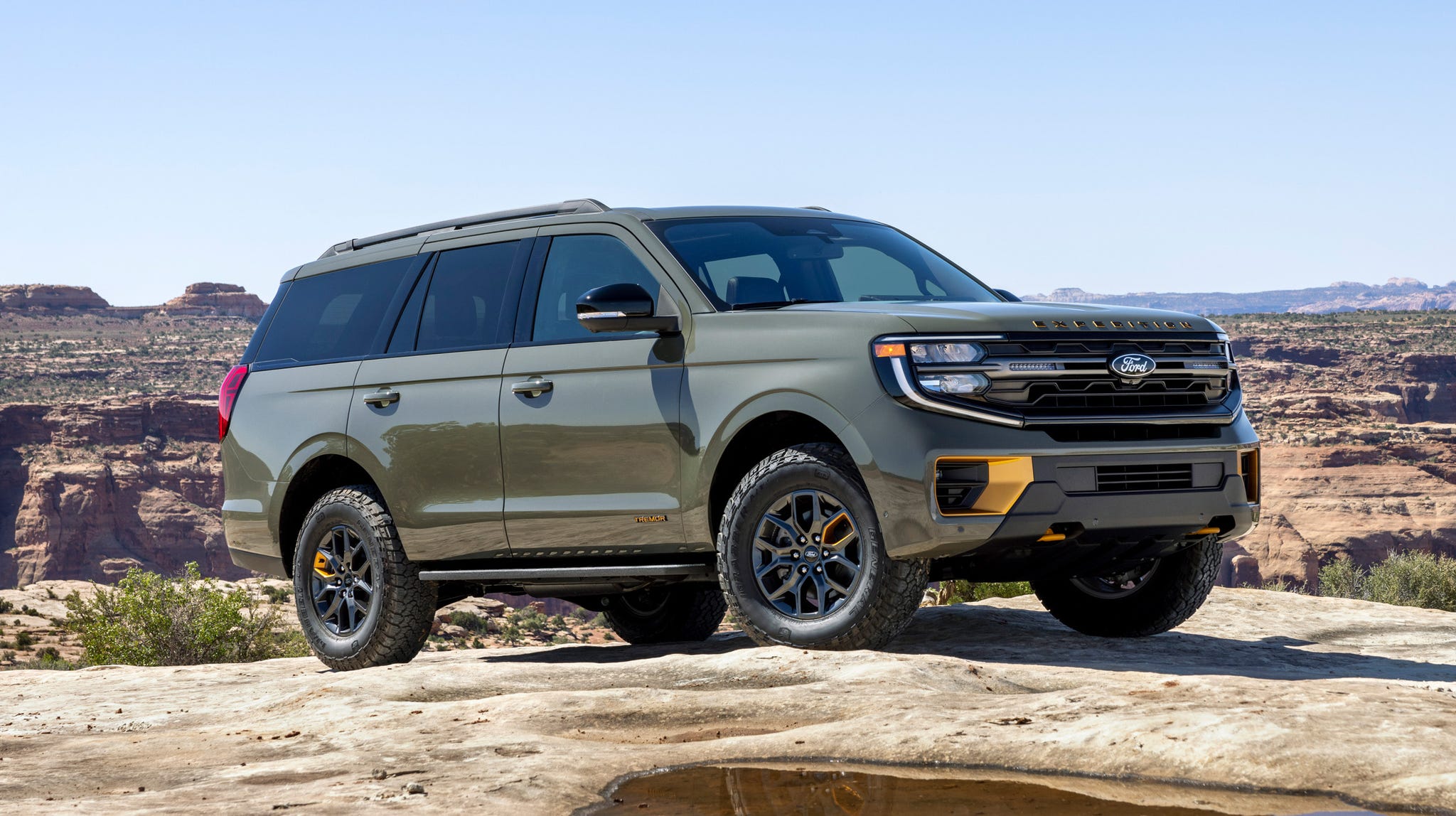
1. Ford Expedition
The Ford Expedition has long been the benchmark for full-size SUV towing capability. It is built on a truck-based body-on-frame platform that gives it the structural backbone most crossovers simply cannot match. When you hook up a mid-size travel trailer to an Expedition, the experience is remarkably composed and confident.
The Expedition’s twin-turbocharged 3.5-litre EcoBoost V6 engine produces up to 440 horsepower and 510 lb-ft of torque. That torque figure is the real story; it arrives low in the rev range, giving the Expedition instant pulling authority even on steep inclines. The 10-speed automatic transmission manages the load smoothly, rarely hunting for gears even on long climbs.
With a maximum towing capacity of up to 9,300 pounds, the Expedition can handle most mid-size and many full-size travel trailers without breaking a sweat. Popular campers like the Airstream Bambi or Lance 1985 fall well within this range. The Expedition pulls them with a stability that makes you forget there’s a trailer attached.
Ford’s Trailer Sway Control system is a key reason the Expedition inspires confidence. It uses individual wheel braking and engine torque reduction to detect and correct trailer sway before drivers even feel it. This is a sophisticated, life-saving feature that works quietly in the background.
The Pro Trailer Backup Assist system uses a knob on the dashboard to steer the trailer during reversals. It takes a skill that most drivers find genuinely difficult and turns it into a stress-free operation. Campsite manoeuvring becomes something you look forward to rather than dread.
The Expedition’s integrated trailer brake controller is another feature that sets it apart from lesser towing machines. It allows you to modulate trailer brakes from the cab without any aftermarket hardware installation. The system communicates braking intent smoothly, preventing the jarring stop-and-jerk common with cheaper setups.
The cooling system on the EcoBoost V6 is engineered to handle sustained high-load operation. Long pulls up mountain grades in summer heat don’t send temperature gauges climbing into danger zones. Ford has calibrated the cooling system’s fan engagement and oil cooler sizing specifically with towing in mind.
Inside the Expedition, you have a seven or eight-seat cabin that makes it a genuine family hauler even when pulling a camper. You aren’t sacrificing passenger room to gain towing capacity. The combination of payload, people capacity, and towing rating makes the Expedition genuinely hard to beat.
The Expedition Max version extends the wheelbase, adding both cargo space and towing stability. A longer wheelbase creates a more forgiving lever arm between the trailer hitch and front axle. This physics advantage translates directly into better highway manners when towing.
Fuel economy takes an expected hit when towing, expecting around 10 to 12 mpg combined in those conditions. However, the Expedition’s EcoBoost engine is notably more efficient than comparable V8-powered competitors under the same towing load. You get maximum capability without maximum thirst.
Real-world owners consistently report the Expedition as one of the most stress-free towing experiences in the full-size SUV segment. The combination of torque, technology, and structural integrity makes it a clear leader. If towing a camper regularly is your goal, the Expedition belongs at the very top of your consideration list.
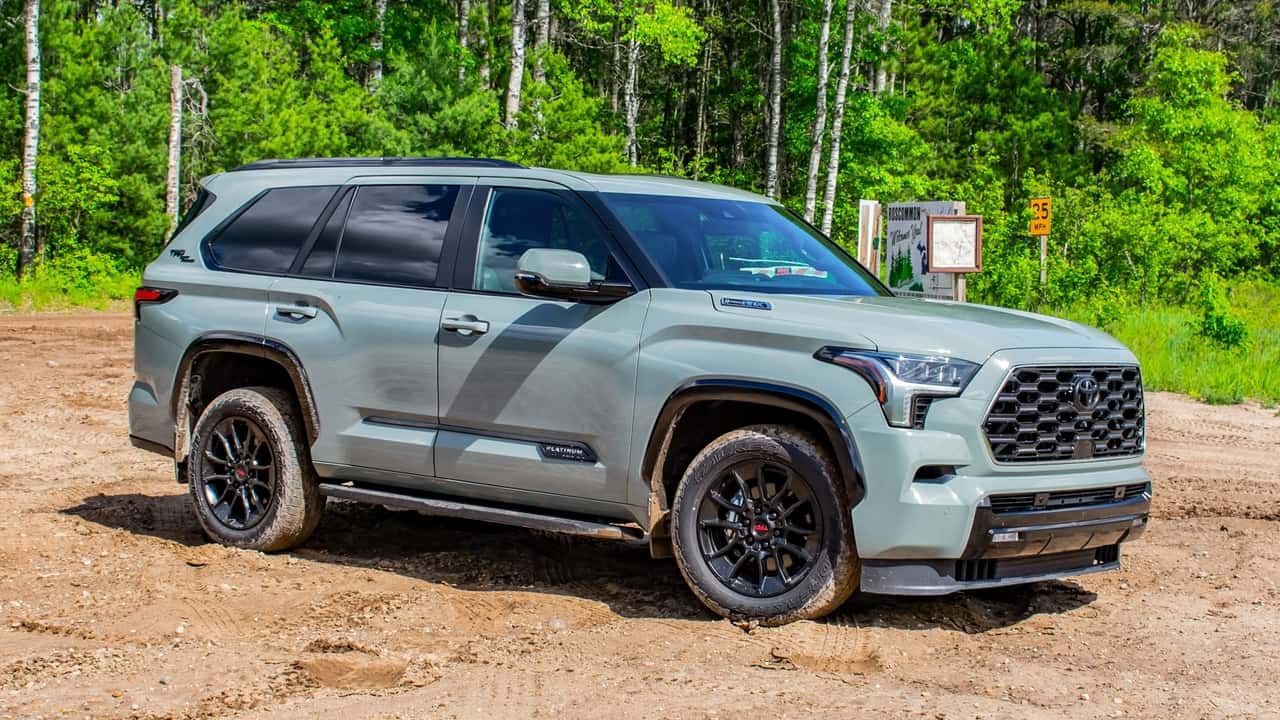
2. Toyota Sequoia
The third-generation Toyota Sequoia made a bold move when it abandoned its V8 engine in favour of a twin-turbocharged 3.5-litre V6 hybrid system. Critics initially questioned the decision. Those critics have since been thoroughly silenced by real-world performance data.
The Sequoia’s i-FORCE MAX hybrid powertrain produces 437 horsepower and an extraordinary 583 lb-ft of torque. That torque figure makes it the highest-torque standard SUV in its class by a significant margin. Electric motors add instant, linear pulling power from a dead stop, exactly what trailer towing demands most.
The maximum towing capacity sits at 9,000 pounds across most Sequoia configurations. This puts it squarely in the heavy-duty travel trailer territory without requiring any additional packages. Campers that would stress other SUVs come along with the Sequoia as though they weigh nothing.
Toyota’s hybrid system provides a compelling advantage for sustained towing that is rarely discussed. Electric motors maintain their torque output consistently regardless of RPM or engine heat build-up. Where a traditional petrol engine may lose power on a long climb as temperatures rise, the Sequoia’s hybrid system stays calm and authoritative.
The Sequoia uses a fully boxed ladder frame identical in construction philosophy to Toyota’s Tundra pickup truck. Frame rigidity is not a compromise point here it is an engineering priority. This foundation prevents the flex and shimmy that plagues unibody crossovers when trailer loads are applied.
The rear air suspension system on higher Sequoia trims is a towing asset that deserves attention. It automatically levels the vehicle when a heavy trailer is hitched, maintaining proper headlight aim and trailer geometry. Level towing geometry dramatically reduces sway tendencies and improves braking balance.
Toyota includes a Trailer Sway Control system that integrates with the hybrid regenerative braking to modulate speed during instability events. The system can recover from sway situations more smoothly than traditional engine-braking systems alone. It’s a sophisticated integration of two technologies working together seamlessly.
The Sequoia’s fuel economy advantage over traditional V8 rivals is most pronounced under towing load, a counterintuitive but important point. At light loads or cruise, the hybrid system recovers energy and stores it efficiently. Under heavy load, it deploys that energy to reduce the demands placed on the petrol engine.
The cabin experience in the Sequoia is best described as serene. Road noise, wind noise, and powertrain noise are all exceptionally well-managed even when the engine is working hard under load. Long-distance towing comfort is among the best in the segment.
Safety technology on the Sequoia is comprehensive and towing-aware. Toyota Safety Sense includes pre-collision braking that accounts for trailer length and weight in its calculations. This is a meaningful safety enhancement over systems that only monitor the tow vehicle itself.
For families who want to tow a camper on long road trips without the anxiety of watching temperature gauges or nursing gear changes, the Sequoia is the choice. Its hybrid technology turns a potential weakness, the absence of a traditional V8, into a genuine performance advantage. Toyota has redefined what a modern SUV tow vehicle looks like.
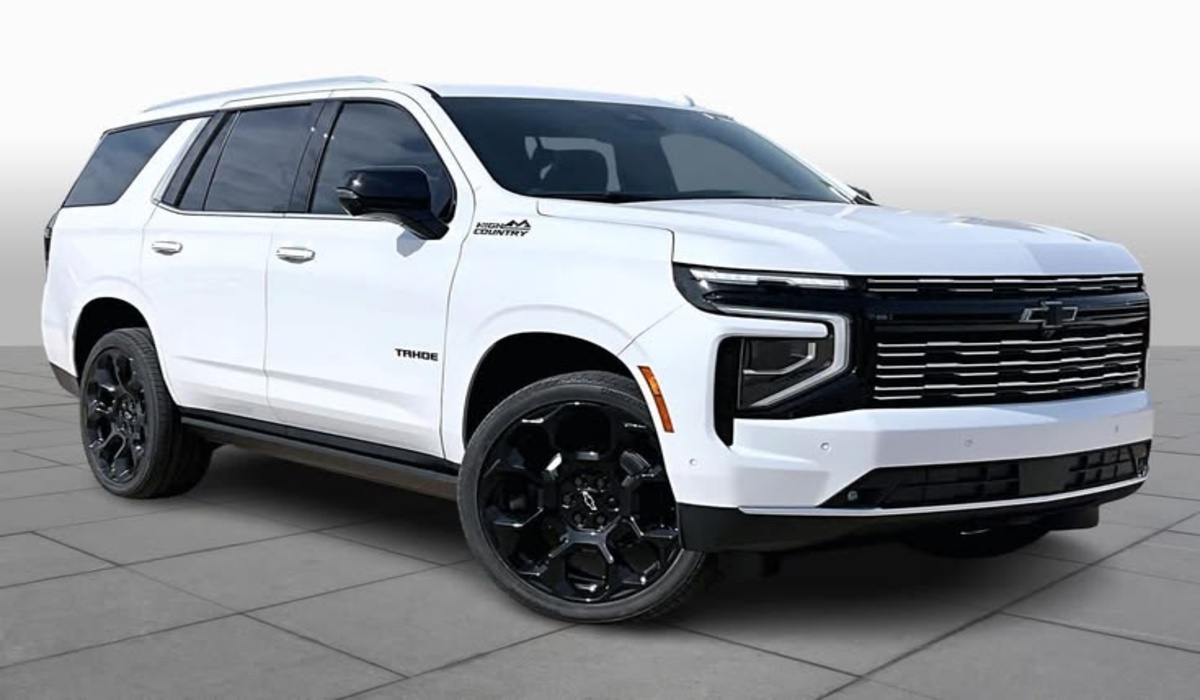
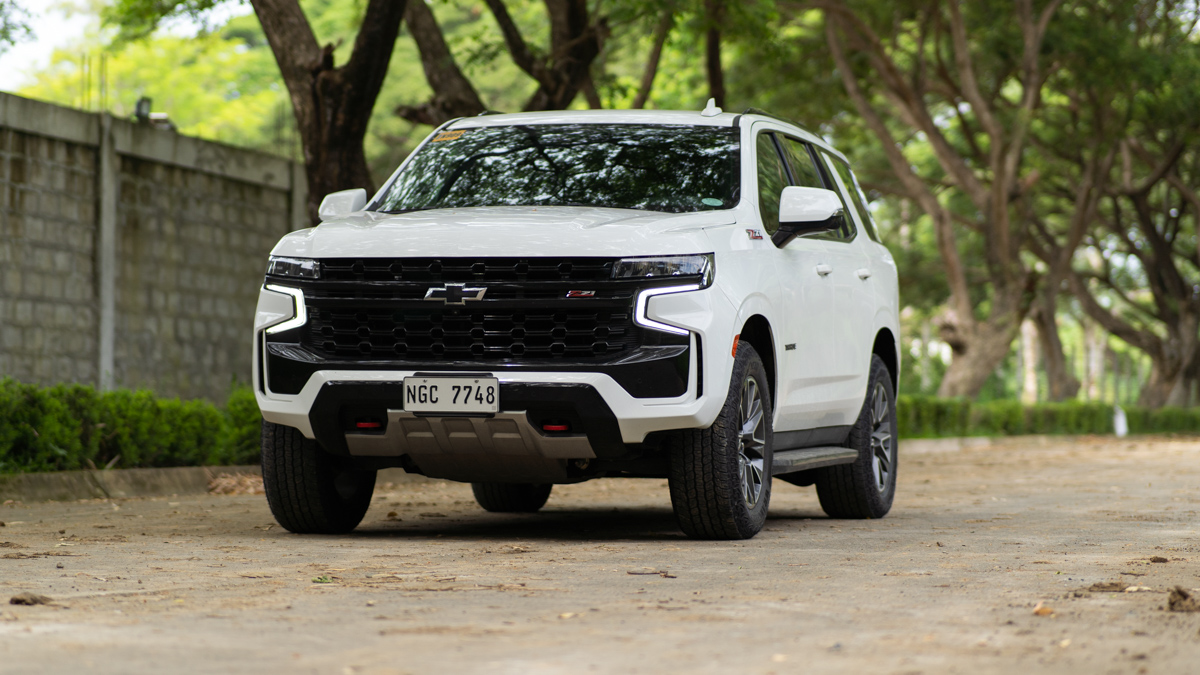
3. Chevrolet Tahoe
The Chevrolet Tahoe has earned its place among America’s most trusted towing SUVs over multiple generations of refinement. It represents a philosophy of proven engineering combined with modern capability enhancements. For camper towers who value reliability and familiarity as much as raw numbers, the Tahoe is deeply reassuring.
The standard 5.3-litre V8 in the Tahoe produces 355 horsepower and 383 lb-ft of torque. While these numbers appear modest compared to the Ford and Toyota figures, the naturally aspirated V8 delivers its power with exceptional linearity and predictability. There are no turbo lag concerns and no hybrid complexity to worry about.
Maximum towing capacity with the proper equipment package reaches 8,400 pounds. This covers the vast majority of popular travel trailers on the market today. The Tahoe’s towing capability is broadly accessible across trim levels, not locked behind expensive option packages.
Chevrolet’s Maximum Trailering Package adds a suite of hardware and calibration changes specifically for heavy towing duty. It includes an upgraded transmission cooler, a revised rear axle ratio, and an enhanced cooling system for both engine and oil. These are meaningful engineering changes, not just badge upgrades.
The 10-speed automatic transmission paired with the V8 keeps the engine in its optimal power band on grades and in crosswind conditions. Gear selection under load is confident, and the transmission rarely hesitates between ratios. This translates to smooth highway cruising even when a fully loaded camper is in tow.
Magnetic Ride Control suspension, available on higher trims, adapts damping forces in real time based on road conditions and load. When towing, the system detects the additional weight and stiffens the rear accordingly. The result is a vehicle that doesn’t squat or bounce under trailer load as lesser suspensions would.
The Tahoe’s available Hitch Guidance with Hitch View uses cameras to provide a real-time view of the hitch and trailer connection point. Hitching up alone in a parking lot becomes a straightforward task rather than a frustrating exercise. This is a practical quality-of-life feature that makes regular towing genuinely more convenient.
Integrated Trailer Brake Control is standard on the Tahoe’s towing-focused configurations, eliminating the need for aftermarket brake controllers. The system is set-and-forget, simple yet effective across a wide range of trailer brake types. First-time trailer towers find it intuitive, and experienced towers appreciate its refinement.
The Tahoe’s large, glass-rich greenhouse gives drivers outstanding rearward visibility important when manoeuvring a trailer in tight campground spaces. Combined with available rear-view cameras and surround-view systems, trailer placement is far less stressful than in vehicles with restricted sightlines. Campground confidence matters as much as highway capability.
Interior space in the Tahoe is genuinely generous, with a third row that adults can actually occupy on longer journeys. The combination of eight-passenger seating and serious towing capacity is relatively rare in the SUV market. Family towing road trips don’t require choosing between people and cargo.
The Tahoe’s durability record over decades of fleet and private use is part of what makes it so compelling for towing duty. High-mileage Tahoes hauling trailers regularly are not uncommon; many pass 200,000 miles in towing service. That kind of proven longevity is a strong confidence factor that no spec sheet can fully capture.
Also Read: Why Buying a 10-Year-Old Luxury Car Is Almost Always a Mistake
4. Ram 1500-Based Jeep Grand Wagoneer
The Grand Wagoneer occupies a unique position in the SUV market. It is simultaneously one of the most luxurious vehicles in its segment and one of the most capable towers. Built on Stellantis’s RAM truck platform, it brings truck-grade towing engineering to a premium SUV package.
The available 6.4-litre HEMI V8 in the Grand Wagoneer produces 471 horsepower and 455 lb-ft of torque. This naturally aspirated V8 pulls with the kind of smooth, wave-like power delivery that makes towing feel effortless rather than strained. The sound it makes doing so is genuinely satisfying.
Maximum towing capacity reaches 10,000 pounds, the highest figure in this list and among the highest in the full-size SUV segment. The Grand Wagoneer can pull large fifth-wheel campers and full-size travel trailers that would be impossible for most of the SUVs in this segment. That extra headroom in the towing rating means the vehicle is never working near its limits with typical campers.
The Quadra-Trac four-wheel drive system provides confident traction management when pulling onto uneven campground terrain or gravel approach roads. It transfers torque intelligently between axles without requiring driver intervention. The transition from highway towing to off-tarmac campsite navigation is seamless.
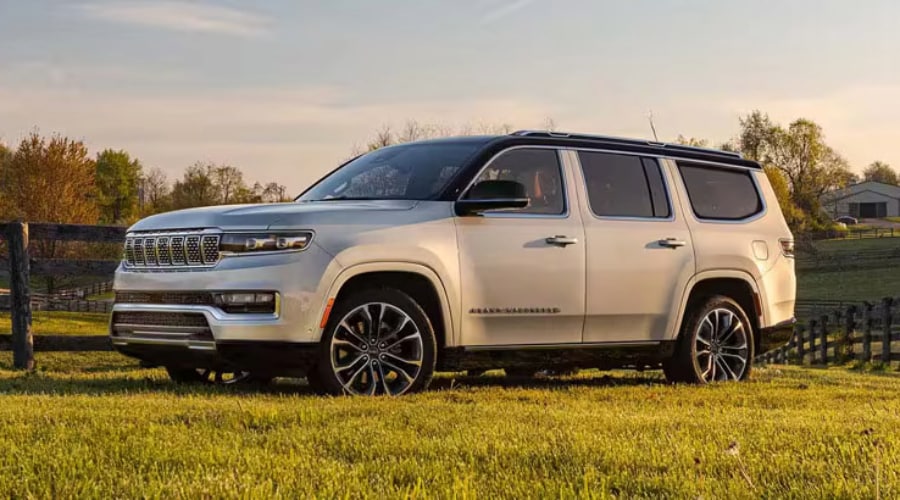
A Quadra-Lift air suspension system automatically manages ride height based on load and driving conditions. When a heavy trailer is attached, the suspension raises slightly to maintain proper geometry and prevent excessive nose-high attitude. Proper towing geometry is maintained automatically regardless of trailer tongue weight.
The Grand Wagoneer’s trailer detection technology recognises when a trailer is connected and automatically adjusts numerous vehicle systems. Stability control thresholds change, mirror adjustment recommendations appear, and the rear camera view switches to trailer-optimised display. The vehicle configures itself intelligently for the towing task.
Integrated Trailer Brake Control in the Grand Wagoneer is among the most sophisticated in the industry, with proportional braking capabilities that feel natural during stops. Stops with heavy trailers attached are smooth and progressive rather than lurching. Rear passengers barely notice the trailer’s presence during normal braking events.
The fuel economy with the 6.4-litre HEMI is lower than the turbocharged alternatives, except around 9 to 11 mpg when towing. However, Stellantis’s cylinder deactivation technology reduces the impact during light-load cruising between towing sessions. The system is transparent enough that most drivers never notice when cylinders are deactivated.
Interior appointments in the Grand Wagoneer rival the finest luxury sedans, with genuine wood trim, premium leather seating, and an expansive 12.0-inch passenger entertainment screen. Long towing journeys feel like premium travel experiences rather than demanding work tasks. Passengers arrive at campgrounds as refreshed as they would after any luxury road trip.
For buyers who refuse to compromise between towing capability and interior luxury, the Grand Wagoneer is the definitive answer. It proves that the two qualities are not mutually exclusive. If you are towing a large camper in genuine comfort and style, the Grand Wagoneer stands largely alone in its class.
4 That Struggle With a Jet Ski
These SUVs may look capable, but often come with low towing capacity, smaller engines, or CVT transmissions, making even light towing a challenge. Many compact crossovers fall into this category, with limits around 1,500–2,000 pounds, which is barely enough for a jet ski and trailer.
Vehicles without proper towing packages can struggle with acceleration, braking, and stability, especially on inclines or at highway speeds. Even for light loads, these limitations can make towing feel strained and less safe, turning simple trips into a frustrating experience
1. Kia Telluride
The Kia Telluride is one of the most celebrated crossover SUVs of the past decade. It consistently wins praise for its interior quality, ride comfort, and value. However, beneath the impressive interior lies a towing capability that genuinely struggles with loads as modest as a single jet ski on a trailer.
The Telluride is rated to tow a maximum of 5,000 pounds, a figure that sounds reasonable until you look at what real towing scenarios actually demand. A jet ski on a standard PWC trailer typically weighs between 1,800 and 2,800 pounds, depending on the machine. That puts even a jet ski at more than half the Telluride’s maximum capacity.
Operating consistently at 50 to 60 percent of maximum towing capacity is where problems often begin for crossover platforms. The Telluride’s 3.8-litre V6 produces 291 horsepower and 262 lb-ft of torque. Those numbers are adequate for the vehicle alone, but reveal their limitations when a trailer load is added on a warm day with a full passenger load.
The Telluride uses a unibody construction, the same structural approach as most passenger cars. Unibody platforms prioritise ride comfort and interior space over towing rigidity. When trailer forces are transmitted through a unibody hitch mount, the entire rear structure absorbs those forces in ways a ladder frame never would.
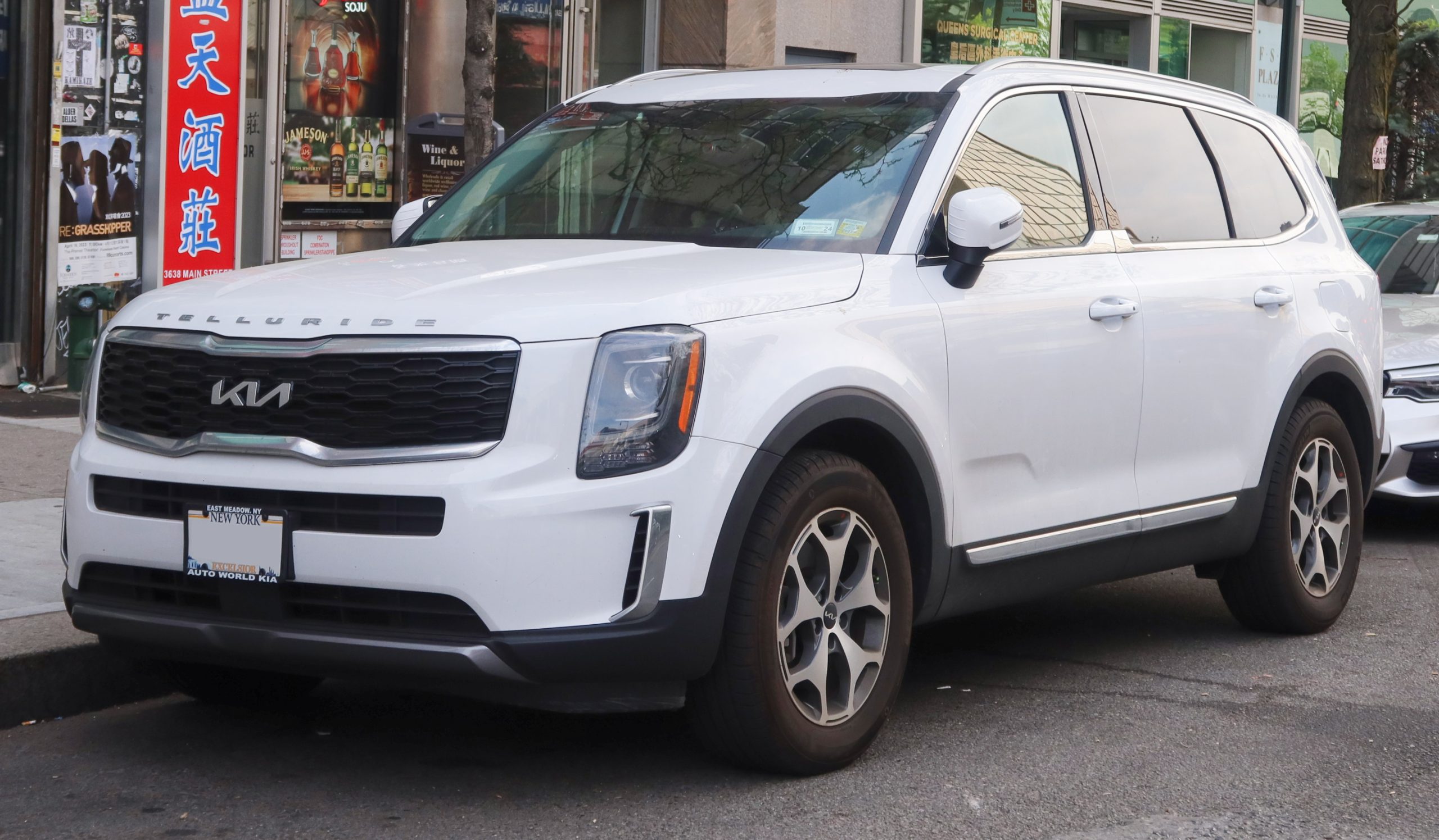
Transmission cooling is an area where the Telluride falls short of towing-dedicated vehicles. The Dual Clutch Transmission variants are particularly vulnerable to heat build-up during sustained towing on grades. Drivers have reported transmission temperature warnings during relatively modest towing situations in warm weather.
The Telluride’s electronic stability control systems were calibrated primarily for the unloaded vehicle. When trailer sway begins, a scenario that becomes more likely as trailer weight approaches the rated limit, the system’s response is less aggressive and less effective than dedicated towing management systems. The feeling is noticeably less controlled.
Stopping distances with a jet ski in tow are meaningfully longer than Kia’s marketing materials suggest. The Telluride’s braking system is sized for the vehicle itself, not for additional trailer load without trailer brakes. At moderate highway speeds with an average jet ski trailer, emergency stops require early planning and careful anticipation.
Road feel changes significantly when the Telluride is pulling even a modest load. The rear suspension, designed for passenger comfort rather than load-bearing stability, allows more pitch and yaw under trailer tension than comparable body-on-frame alternatives. Drivers who have never towed before may not notice, but experienced tow drivers feel the difference immediately.
The Telluride’s maximum payload rating, separate from towing, is another constraint that tightens quickly. With a full complement of passengers and luggage packed for a lake weekend, the available payload for tongue weight becomes critically limited. Exceeding tongue weight limits creates dangerous understeer and reduces front-axle traction.
Fuel economy penalties when towing with the Telluride are disproportionately large relative to the load being carried. Expect fuel economy to drop from a highway average of around 26 mpg to approximately 14 to 16 mpg with a jet ski attached. The 3.8-litre V6 is working near its comfort zone, and the fuel cost reflects it.
None of this means the Telluride is a bad vehicle; it clearly is not. It means it is a vehicle optimised for family road trips, school runs, and weekend adventures without a trailer. Adding a jet ski changes the equation dramatically, exposing limits that three-row crossover engineering was never intended to overcome. Buy a Telluride for its many genuine strengths, but plan your towing expectations accordingly.
2. Hyundai Palisade
The Hyundai Palisade is one of the finest three-row crossovers available in today’s market at its price point. Its cabin quality, safety ratings, and driving dynamics have earned it a devoted following. However, its towing capability is deeply modest in ways that become painfully apparent even with a jet ski on a trailer behind it.
The Palisade shares its 3.8-litre V6 engine with its Kia sibling, producing the same 291 horsepower and 262 lb-ft of torque. Maximum towing capacity is identically rated at 5,000 pounds. At first glance, this appears workable, but real-world towing behaviour tells a different story.
The Palisade’s eight-speed automatic transmission is well-engineered for normal driving conditions. Under towing load, particularly on grades, it exhibits hunting behaviour, repeatedly cycling between gears as it searches for the optimal ratio. This gear hunting is both inefficient and unsettling when the driver is trying to maintain a steady speed behind a heavy vehicle.
Engine management under sustained towing load causes the Palisade’s V6 to run at raised RPMs that translate to pronounced cabin noise. At normal highway speeds without a trailer, the Palisade is remarkably refined and quiet. Hook up a jet ski, and that refinement erodes noticeably; the engine note intrudes on conversations and fatigues occupants over long distances.
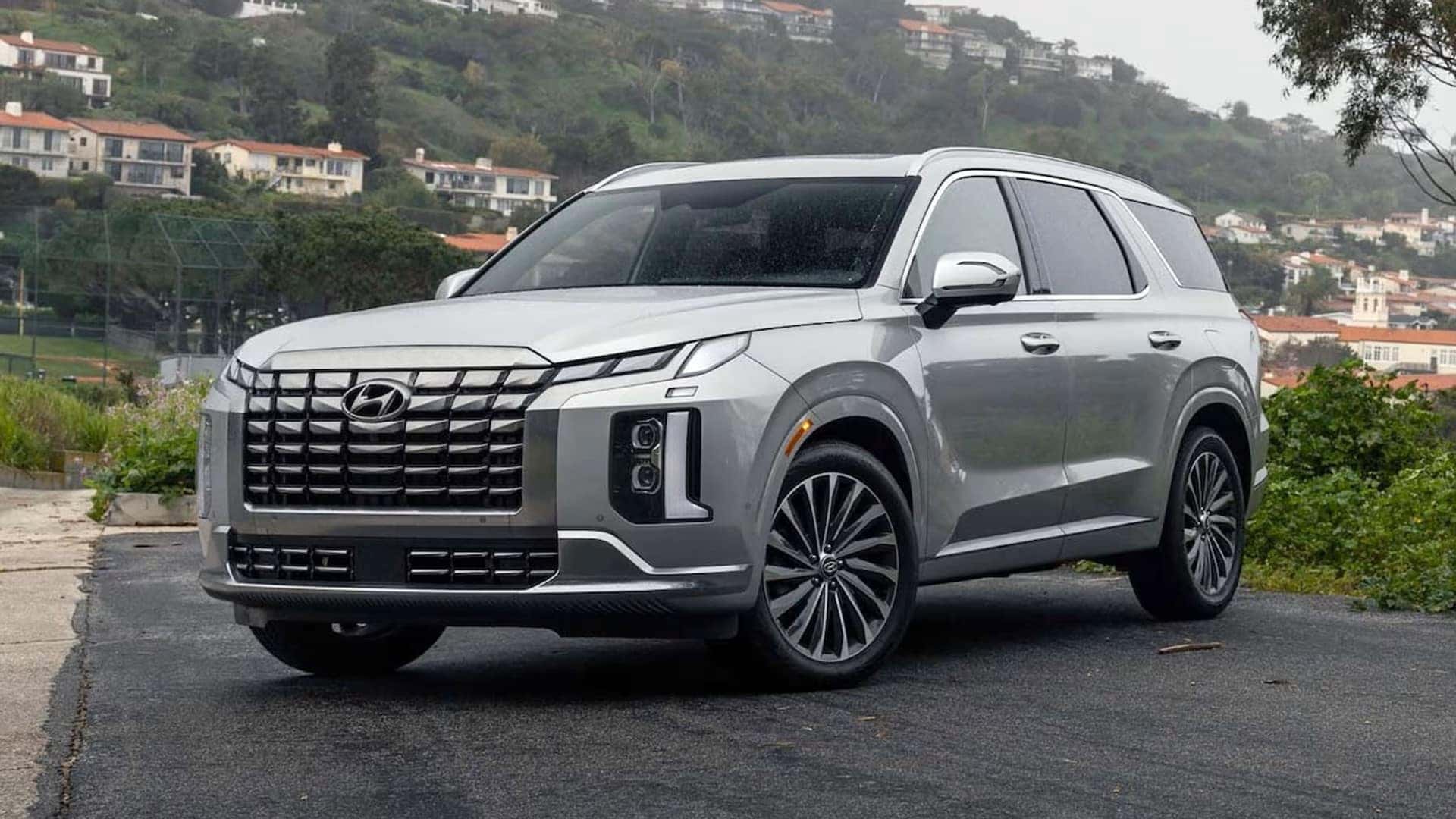
The Palisade’s cooling capacity for both the engine and transmission is sized for typical driving use rather than towing duty. Sustained climbing with a jet ski in tow causes coolant temperatures to rise at rates that would be unacceptable in towing-focused vehicles. Drivers in mountainous regions or warm climates, take note, this is a genuine operational concern.
Aerodynamic sensitivity with a trailer attached is higher on the Palisade than on more capable towing vehicles. Highway crosswinds that are barely noticeable in unladen driving become constant steering corrections when a trailer is connected. The wide, upright profile of a jet ski trailer acts as a sail, and the Palisade’s wheelbase and mass are insufficiently confidence-inspiring to compensate.
The Palisade lacks an integrated trailer brake controller as standard equipment. Aftermarket controllers can be fitted, but they add complexity and cost to what should be a straightforward towing setup. The absence of native brake controller support is a meaningful indication of where Hyundai positioned this vehicle in the towing hierarchy.
Rearward visibility in the Palisade when a wide jet ski trailer is attached is challenging. The standard rear camera view is adequate for reversing without a trailer, but provides a limited useful perspective when manoeuvring with a PWC alongside. Blind spot monitoring becomes unreliable with trailer overhang, creating genuine reversing anxiety.
Tongue weight management becomes a critical concern with the Palisade’s limited payload capacity. A typical jet ski with full fuel tanks, combined with a loaded three-row crossover interior, leaves very little margin before payload limits are exceeded. Exceeding these limits doesn’t just void warranties; it degrades handling in dangerous ways.
Real-world owners who have towed jet skis with the Palisade consistently report the same experience: adequate on flat highways under mild conditions, but increasingly stressful on any grade, in any significant heat, or with any crosswind. The vehicle communicates its strain in gear changes, engine note, and steering feel. These are not catastrophic failures; they are a vehicle working at the edge of what it was built to do.
The Palisade deserves enormous credit for what it actually excels at: comfortable, stylish, safe family transportation. It is simply not a towing machine, and a single jet ski on a trailer is sufficient to expose that reality clearly and consistently.
3. Volkswagen Atlas
The Volkswagen Atlas is a large, impressively spacious crossover that entered the American market with genuine commercial success. Volkswagen engineered it specifically for US family needs, giving it three rows and a wide, airy interior. Its towing rating, however, represents a significant limitation that even modest trailer use quickly reveals.
The Atlas is rated to tow 5,000 pounds with its V6 engine, an engine configuration that itself deserves scrutiny. The 3.6-litre V6 produces 276 horsepower and 266 lb-ft of torque. These figures are competitive for a family crossover but come up short when asked to manage a jet ski trailer on anything other than flat terrain.
Volkswagen’s eight-speed automatic transmission in the Atlas is a sophisticated unit that serves the unloaded vehicle well. Under towing conditions, however, it exhibits a characteristic European calibration bias toward fuel economy over performance. The transmission holds lower gears longer than American drivers accustomed to truck-based towing vehicles typically expect, creating a jerky, unsettled towing experience.
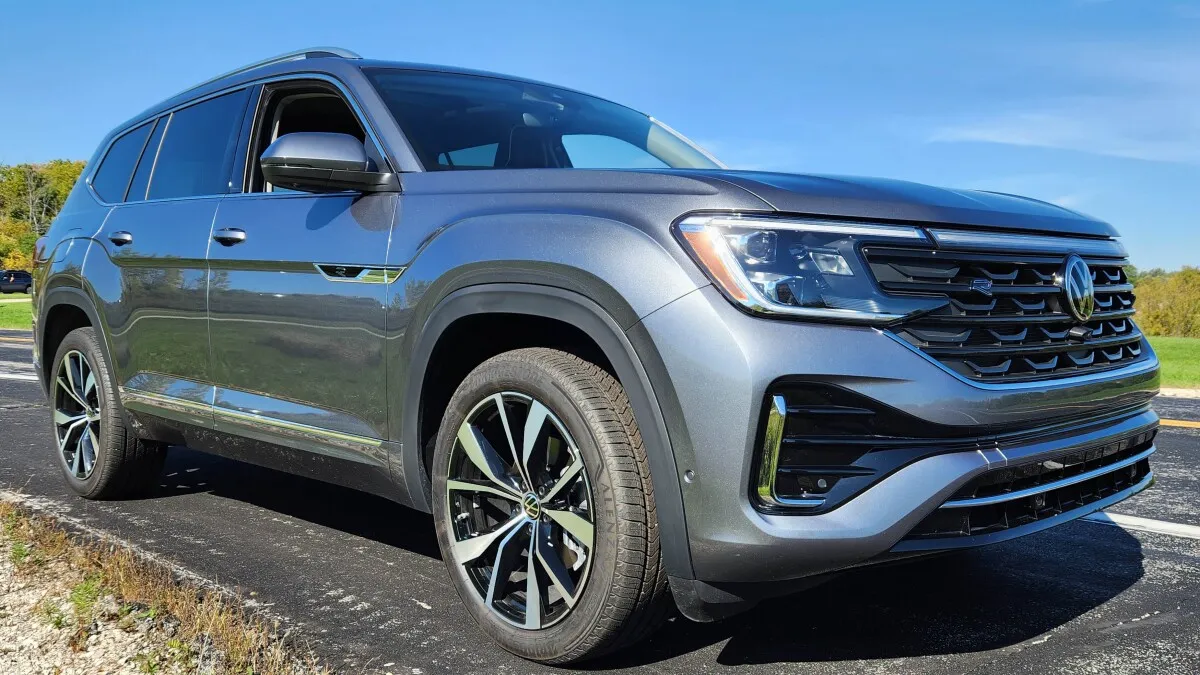
The Atlas’s unibody structure, while excellent for ride isolation and interior quietness in normal use, introduces flex under towing loads that makes trailer feedback less predictable. Drivers feel the trailer’s movements transmitted through the hitch and into the cabin in ways that a stiffer body-on-frame structure would absorb and dampen. This feedback can be disconcerting on challenging roads.
Electronic stability control intervention is more frequent in the Atlas during towing conditions than in purpose-built towing vehicles. The system reacts to trailer-induced instability by cutting engine power and applying individual wheel brakes. These interventions, while keeping the vehicle safe, create an unsteady, hesitant driving experience that erodes confidence quickly.
The Atlas’s fuel economy degradation under towing is severe relative to its unladen performance. Highway fuel economy of around 24 mpg drops to approximately 13 to 15 mpg with a jet ski in tow, a 40 percent reduction that becomes expensive over long distances. The V6 is simply not an efficient engine in high-demand towing situations.
VW’s dealer network and service training are less focused on towing-related maintenance than brands with truck-based SUV lineups. Atlas owners who tow regularly may find that transmission fluid change intervals recommended for towing conditions are not as clearly communicated during service visits. Long-term towing use without proper maintenance accelerates Atlas drivetrain wear measurably.
The Atlas does not offer a factory-integrated trailer brake controller, requiring aftermarket fitment for trailers equipped with brakes. This is a meaningful omission in a vehicle rated to tow 5,000 pounds. Trailer brake controllers are safety equipment, not convenience accessories, and their absence as a factory option reflects the Atlas’s true towing priorities.
The experience of towing a jet ski with an Atlas is best described as workable but uncomfortable. Everything technically functions, but nothing inspires confidence. The vehicle communicates through steering, powertrain noise, and suspension behaviour that it would very much prefer not to be doing this task.
For European-style driving, precise handling, refined dynamics, and stylish design, the Atlas delivers genuinely. For trailer towing, particularly in anything other than ideal conditions, the Atlas reveals the limitations inherent in its crossover engineering philosophy. A jet ski is theoretically within its rating. Making it feel that way in practice is another matter entirely.
4. Honda Pilot
The Honda Pilot has earned a sterling reputation as one of the most practical, reliable, and well-rounded three-row crossovers available. Its reliability record, resale values, and ownership satisfaction scores are consistently class-leading. On the towing front, however, the Pilot is one of the most commonly misrepresented vehicles in its segment, and many owners discover its limitations with a jet ski on the trailer hitch.
The current Pilot is rated to tow up to 5,000 pounds, identical to many of its crossover competitors. However, the 3.5-litre V6 engine producing 285 horsepower and 262 lb-ft of torque that achieves this rating is calibrated first and foremost for fuel economy and smooth passenger car-like driving dynamics. Its towing tuning is an afterthought, not an engineering priority.
Honda’s 10-speed automatic transmission is a technical achievement that delivers excellent fuel economy in normal driving. Under towing load, particularly when climbing grades, this transmission exhibits significant hunting between gears as it attempts to balance Honda’s programmed preference for fuel economy against the mechanical demands of the situation. The result is a herky-jerky, rev-surging climbing experience that experienced tow vehicle drivers find alarming.
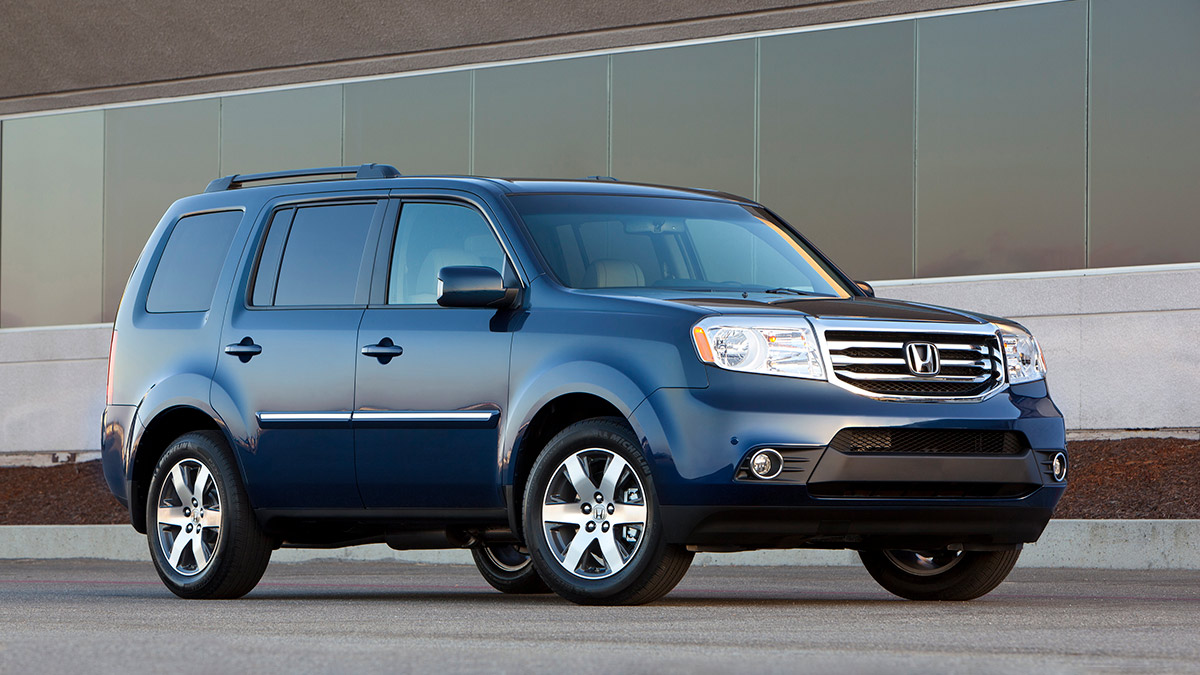
The Pilot’s independent rear suspension, a feature praised for its ride quality and handling, becomes a liability under towing conditions. Independent suspensions are inherently less stable under trailer-induced lateral forces than the solid rear axles found in truck-based towing vehicles. The rear end of the Pilot moves more freely in response to trailer sway, making sway recovery more challenging.
Trailer Stability Assist is available on the Pilot but operates on a reactive basis rather than a proactive one. By the time the system detects and responds to a sway event, the oscillation has already grown to a level that is perceptible and alarming to the driver. Proactive towing management systems in dedicated towing vehicles intervene earlier and more effectively.
The Pilot’s towing package does not include an integrated trailer brake controller. Honda omits this feature across the Pilot lineup, leaving owners to source aftermarket solutions for trailers equipped with electric brakes. Given that responsible towing protocol recommends trailer brakes for loads above 2,000 pounds, this omission affects almost every jet ski towing scenario.
Heat management under sustained towing load is an area where the Pilot’s limitations become most apparent. The transmission fluid temperature rises quickly when towing in warm conditions on grades. Honda dealers report that transmission warranty claims are noticeably correlated with towing use, a revealing indicator of how the system copes with trailer loads near the rated limit.
Owners who tow jet skis with the Pilot regularly describe necessary speed reductions of 10 to 15 mph below normal highway traffic flow when climbing significant grades. This speed reduction is not a driver preference; it is a practical necessity to prevent transmission temperature from entering warning territory. Being forced into the slow lane by a vehicle rated to tow 5,000 pounds with a 2,500-pound jet ski is a frustrating reality.
The Pilot does deliver one genuine advantage in the towing context. Honda’s legendary engine reliability means the V6 itself is unlikely to fail even under demanding use. The engine will survive the stress. The transmission, cooling systems, and driver confidence are the weaker links in the chain.
For families who occasionally tow a small single-axle utility trailer to the hardware store, the Pilot is entirely adequate. For anyone planning regular jet ski adventures with highway grades and summer heat in the mix, the Pilot’s towing limitations will become a defining characteristic of their ownership experience. Choose it for its many genuine virtues, but plan to leave the jet ski at home or invest in a more capable tow vehicle for those weekend lake escapes.
Also Read: The Real Cost of Owning an Electric Vehicle in a Cold Climate
