
The question of whether an electric vehicle actually saves money is not as simple as comparing sticker prices or fuel costs on the surface. The real answer sits inside a layer of mathematics that most buyers overlook, which is the cost of energy conversion, charging losses, battery efficiency, and electricity pricing structures.
When people talk about electric vehicles, they often focus on environmental benefits or futuristic technology, but the financial side is driven almost entirely by how much energy the vehicle consumes per kilometer and what you pay for each unit of electricity. This is where EV charging cost calculation becomes the deciding factor between real savings and disappointing expectations.
Electric vehicles such as those produced by Tesla, BYD, Tata Motors, and Hyundai Motor Company all rely on the same fundamental principle. They store electrical energy in a battery and convert it into motion through an electric motor.
However, the efficiency of this conversion, the size of the battery, and the way electricity is purchased can vary significantly across users and regions. In countries like India, where electricity tariffs differ between residential, commercial, and fast charging networks, the financial outcome can shift dramatically depending on how and where the vehicle is charged.
Unlike internal combustion engine vehicles, where fuel cost is relatively straightforward per liter, EVs require understanding kilowatt hours, charging losses, and driving efficiency measured in kilometers per kilowatt hour.
A driver who does not account for these variables may assume that EVs are always cheaper, but in reality, public fast charging or inefficient driving conditions can narrow or even eliminate the cost advantage. At the same time, home charging during off-peak hours can create substantial long-term savings that are difficult for traditional fuel vehicles to match.
Another critical factor is behavioral usage. A person who drives long daily distances on highways will experience different cost dynamics compared to someone who uses their vehicle for short urban commutes. Regenerative braking, traffic conditions, and temperature all influence energy consumption.
Cold or extremely hot climates can reduce efficiency, which increases the cost per kilometer. Similarly, aggressive driving styles or high-speed highway travel can significantly reduce range, making charging more frequent and expensive.
The financial equation of EV ownership is therefore not fixed but dynamic. It changes based on electricity pricing policies, infrastructure availability, battery technology, and even government incentives.
Understanding this charging math is essential for anyone considering switching from petrol or diesel vehicles to electric mobility. The following sections break down each component of this equation to reveal how EVs actually save money, where they may not, and what real-world ownership costs look like when all factors are combined.
Also Read: 8 Used Car Scams And How To Avoid Them
How EV Charging Economics Work
Electric vehicle charging economics begins with a simple concept: electricity is measured in kilowatt hours, and the cost of driving depends on how many kilowatt hours your vehicle consumes per kilometer. Most modern EVs consume between 0.12 and 0.20 kWh per kilometer, depending on size, weight, aerodynamics, and driving conditions.
Smaller compact EVs are typically more efficient, while larger SUVs consume more energy due to weight and drag. This baseline number is the foundation of all EV charging cost calculations and determines how far your money actually takes you.
However, the energy that goes into a battery is never perfectly used. There are losses during charging due to heat generation, inverter inefficiencies, and battery management systems. Typically, charging losses can range from 8 percent to 15 percent depending on charger type and battery condition.
This means that if you think you are paying for 10 kWh of electricity, only about 8.5 to 9.2 kWh might actually be usable for driving. This hidden loss is often ignored when comparing EV costs to fuel-based vehicles, but it directly impacts real savings.
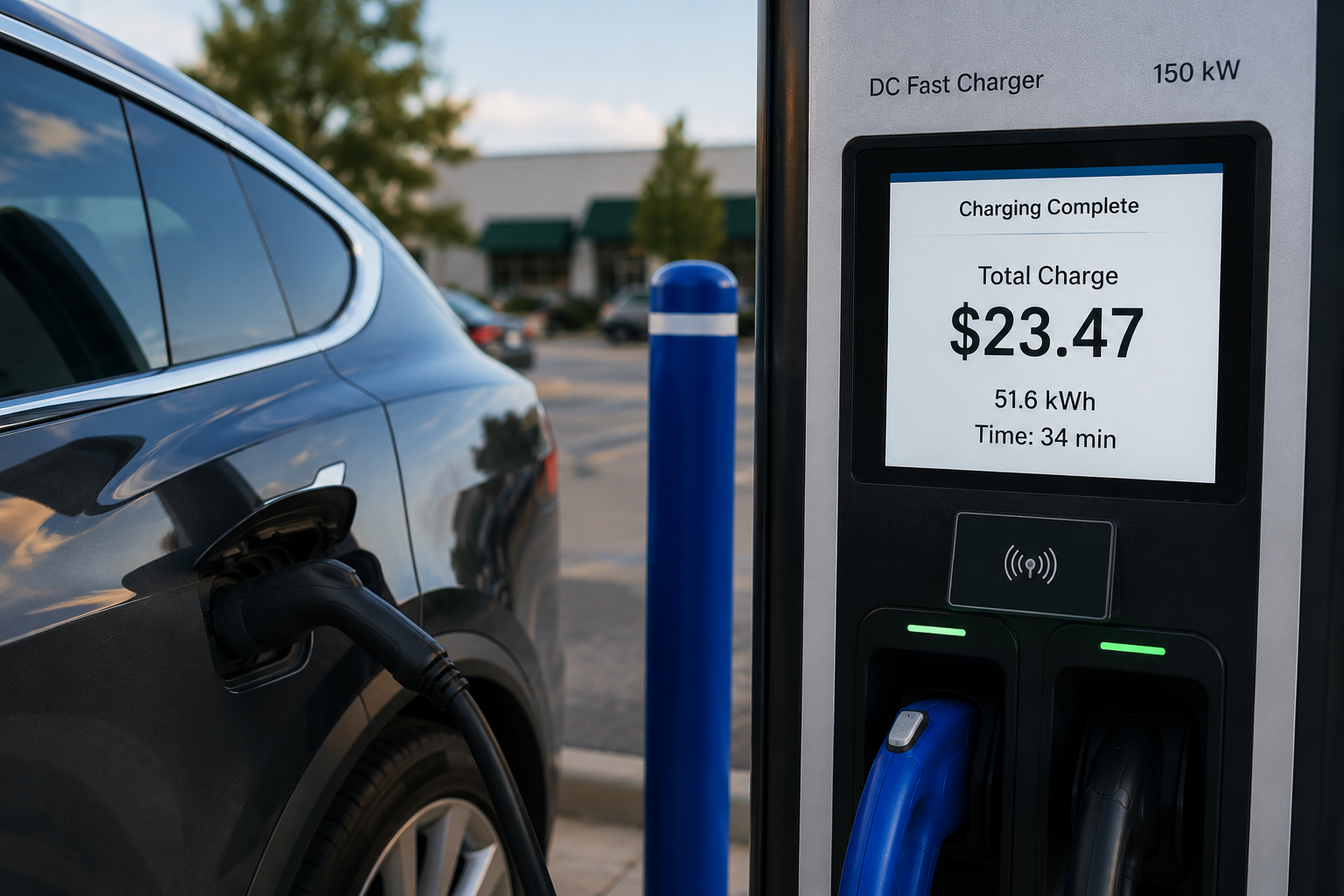
Another important factor is the difference between AC and DC charging. AC charging, commonly used at home, is slower but more efficient and cheaper. DC fast charging, used at public stations, is much faster but often comes with higher tariffs and additional demand charges.
This creates a split cost structure where convenience comes at a premium. For example, long-distance travel using fast chargers can sometimes cost nearly as much per kilometer as petrol vehicles, especially in regions where fast charging infrastructure is still developing.
Battery size also plays a role in economics. Larger batteries store more energy and provide a longer range, but they also require more electricity to fully charge. A 60 kWh battery will cost significantly more to charge than a 30 kWh battery, even if both vehicles are efficient.
However, larger batteries may reduce charging frequency, which can improve convenience and reduce reliance on expensive public charging stations. This trade-off between battery size and cost efficiency is central to EV ownership decisions.
Finally, energy pricing itself is not uniform. Residential electricity rates are usually much cheaper than commercial or highway charging rates. Some regions offer time-of-use tariffs where electricity is cheaper during off-peak hours, making overnight home charging significantly more economical.
This is where EV economics become highly favorable, because drivers who can charge at home during low tariff periods often achieve the lowest possible cost per kilometer compared to any fuel-based alternative.
Home Charging vs Public Charging Costs
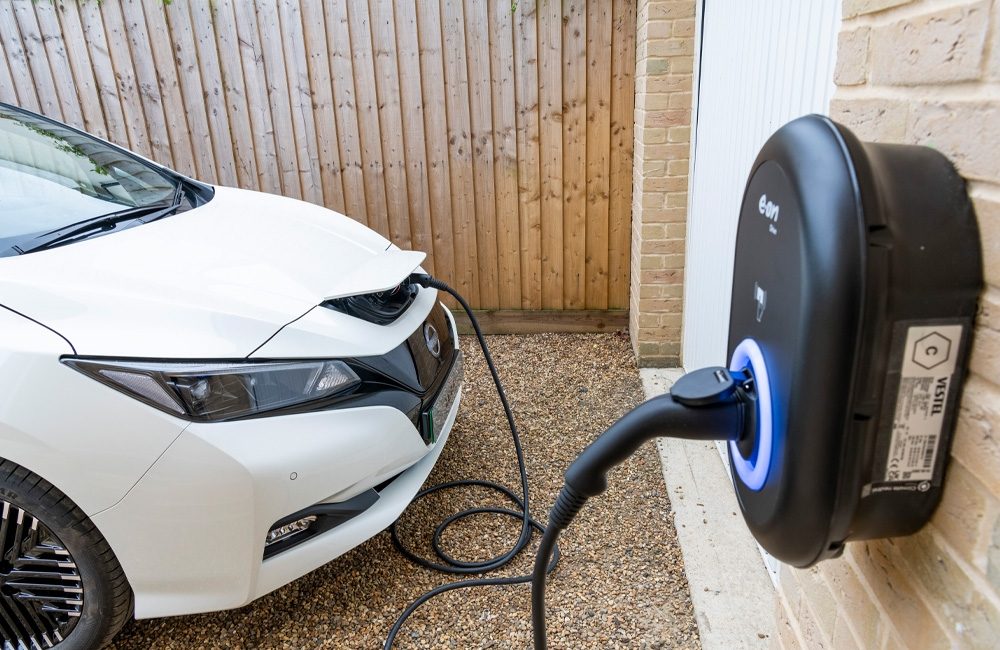
Home charging is the single most important factor that determines whether an electric vehicle saves money in the long run. When charging at home, electricity is typically billed at residential rates, which are significantly lower than public charging networks.
In many regions, including parts of India, residential electricity can cost less than half of what fast charging stations charge per kilowatt hour. This immediately creates a strong cost advantage for EV owners who have access to private parking and stable home electricity supply.
The economics of home charging also benefit from predictable usage patterns. Most EV owners plug in their vehicles overnight, allowing them to take advantage of off peak tariffs where available. This reduces stress on the grid and lowers costs further. Over time, this consistent charging behavior creates a stable cost per kilometer that is often lower than petrol or diesel expenses by a wide margin. This is especially true for daily commuters who drive fixed distances.
Public charging, on the other hand, introduces variability and higher costs. Fast charging stations are designed for speed and convenience, not cost efficiency.
They often include additional service charges, infrastructure fees, and peak demand pricing. As a result, the cost per kilowatt hour can be significantly higher than home charging. While this is acceptable for occasional long trips, relying on public charging as a primary energy source can reduce or eliminate EV cost savings.
There is also a hidden time cost associated with public charging. Even fast chargers require waiting periods, queue times, and charging sessions that can interrupt travel plans. Although this does not directly affect monetary cost, it influences the value proposition of EV ownership. Time saved or lost becomes an indirect economic factor that users must consider when evaluating the total cost of ownership.
The balance between home and public charging determines financial outcomes. EV owners who rely heavily on home charging almost always experience strong savings compared to internal combustion engine vehicles.
Those who depend frequently on public fast charging may find their savings reduced or inconsistent, especially in regions where charging infrastructure pricing is still evolving.
Battery Size, Efficiency, and Real World Consumption
Battery size is one of the most misunderstood aspects of electric vehicle economics. While larger batteries provide longer driving range, they also increase the total cost of energy required for a full charge.
For example, a 40 kWh battery will cost significantly less to charge than a 75 kWh battery, but it will also provide less range. This creates a direct trade-off between convenience and cost efficiency that every EV buyer must evaluate carefully.
Real-world energy consumption is influenced by multiple factors beyond battery size. Vehicle weight, aerodynamics, tire resistance, and driving conditions all affect how efficiently energy is used. In urban traffic with frequent braking, regenerative braking systems help recover energy, improving efficiency.
However, in high-speed highway driving, energy consumption increases due to air resistance, which reduces range and increases cost per kilometer.
Temperature also plays a major role in battery efficiency. Extreme heat or cold conditions force the battery management system to use energy for cooling or heating, which reduces driving efficiency. This means that two identical vehicles operating in different climates can have significantly different operating costs. In colder regions, EV range reduction can increase effective charging costs per kilometer by a noticeable margin.
Driving behavior is another major factor. Smooth acceleration and steady speeds improve efficiency, while aggressive driving can significantly increase energy consumption. This makes EVs highly responsive to driving style in terms of cost. Unlike petrol vehicles, where fuel efficiency varies moderately, EV efficiency can fluctuate more noticeably based on how the vehicle is driven.
When all these factors combine, real-world consumption often differs from official manufacturer estimates. This is why EV charging cost calculation must always include a buffer for inefficiencies and real-world usage conditions. Without this adjustment, cost savings may be overestimated, leading to unrealistic expectations about EV economics.
Also Read: The V8 Sports Sedan With Toyota Reliability And M-Car Pace
Electricity Tariffs, Time of Use, and Hidden Costs
Electricity pricing structures are one of the most important but least understood components of EV economics. In many regions, electricity is not priced uniformly.
Residential, commercial, and industrial tariffs differ significantly, and within residential tariffs, time-of-use pricing can further change costs depending on peak and off-peak hours. This means that when you charge your EV can be just as important as where you charge it.
Time-of-use tariffs reward users for charging during low-demand periods, usually late at night or early morning. This can reduce electricity costs substantially, making overnight EV charging extremely economical. However, users who charge during peak hours may pay significantly more per kilowatt hour, reducing or even eliminating savings compared to fuel-powered vehicles. Understanding these pricing windows is essential for maximizing EV cost efficiency.
Hidden costs also play a role in ownership economics. These can include installation costs for home charging equipment, upgrades to household electrical systems, and periodic maintenance of charging hardware.
While EVs generally have lower maintenance costs than internal combustion engines, charging infrastructure setup can represent an initial investment that must be considered in total cost calculations.
In some cases, demand charges from commercial or public charging stations can significantly increase costs. These charges are applied based on peak power usage rather than total energy consumed, making fast charging more expensive than it appears at first glance. This is particularly relevant for fleet operators or users without access to home charging facilities.
Government incentives can offset some of these costs, but they vary widely by region and policy changes. Subsidies for EV purchase or reduced electricity tariffs for EV charging can improve economics, but they are not always permanent. Therefore, long term EV savings depend not only on current pricing but also on future regulatory and tariff stability.
Total Cost of Ownership
The total cost of ownership comparison between electric vehicles and internal combustion engine vehicles is where the charging math proves its value.
While EVs may have higher upfront purchase prices in some cases, their operating costs are typically lower due to reduced energy expenses and fewer mechanical components requiring maintenance. This difference becomes more pronounced over longer ownership periods.
Fuel costs for petrol and diesel vehicles are directly tied to global oil prices, which can fluctuate significantly. In contrast, electricity prices are generally more stable and locally regulated. This gives EV owners a level of cost predictability that traditional fuel vehicle owners do not enjoy. Over time, this stability contributes to more consistent and often lower per-kilometer costs.
Maintenance is another area where EVs tend to outperform internal combustion engines. EVs do not require oil changes, have fewer moving parts, and experience less mechanical wear in the drivetrain.
This reduces long-term servicing costs significantly. However, battery degradation over time is a factor that must be considered, as battery replacement can be expensive if it becomes necessary after many years of use.
When combining energy costs, maintenance savings, and potential incentives, EVs often achieve a lower total cost of ownership under conditions where home charging is available and driving patterns are consistent. However, in scenarios where public fast charging is heavily relied upon, or electricity tariffs are high, the financial advantage can shrink.
The charging math determines everything. EV savings are not automatic, but conditional. They depend on energy pricing, charging behavior, vehicle efficiency, and infrastructure access.
When these factors align favorably, electric vehicles can deliver substantial long-term savings compared to traditional fuel-powered vehicles, making them not only an environmental choice but also a financially rational one.
